
Introduction: Why the Granulating Cutter Decides Pellet Quality
Choosing the right granulating cutter is the single most consequential decision in any recycled plastic pelletizing line, because the cutter is the last piece of equipment the material touches before it becomes a sellable pellet. Polyretec, a Wanplas factory, has built plastic recycling equipment since 2010 and established its brand in 2017, drawing on advanced Austrian technology paired with Chinese manufacturing expertise. With more than 100 completed recycling projects, service coverage in over 50 countries, and a team of 24 plus engineering specialists, Polyretec designs washing and pelletizing systems that turn post-consumer and post-industrial waste into reusable pellets for PET, PP, PE, and film.
The granulating cutter sits at the heart of the pelletizing stage. After a washing line cleans and dries the flakes or regrind, and after an extruder melts, filters, and homogenizes the material, the cutter chops the continuous melt or strand into uniform pellets. A poorly chosen cutter produces tails, streamers, fines, and off-spec sizes that lower bulk density, slow downstream feeding, and cut resale value. A correctly matched cutter delivers clean, round, uniform pellets that converters accept without complaint. This guide explains how to choose a granulating cutter for recycled plastic pellets across the dimensions that matter most: cutter type, blade material, throughput, material hardness, screen configuration, cooling method, and ongoing maintenance.
Within the Wanplas group, Polyretec owns the recycling equipment category, while the group’s shared pelletizing and cutting know-how supports matched downstream systems. This article keeps the focus squarely on granulating cutter selection for recycled pellets and does not revisit washing-line design, which is covered separately. By the end, you will be able to specify a cutter configuration and match it to a real Polyretec production line.
How a Granulating Cutter Works in a Recycling Pelletierlinie
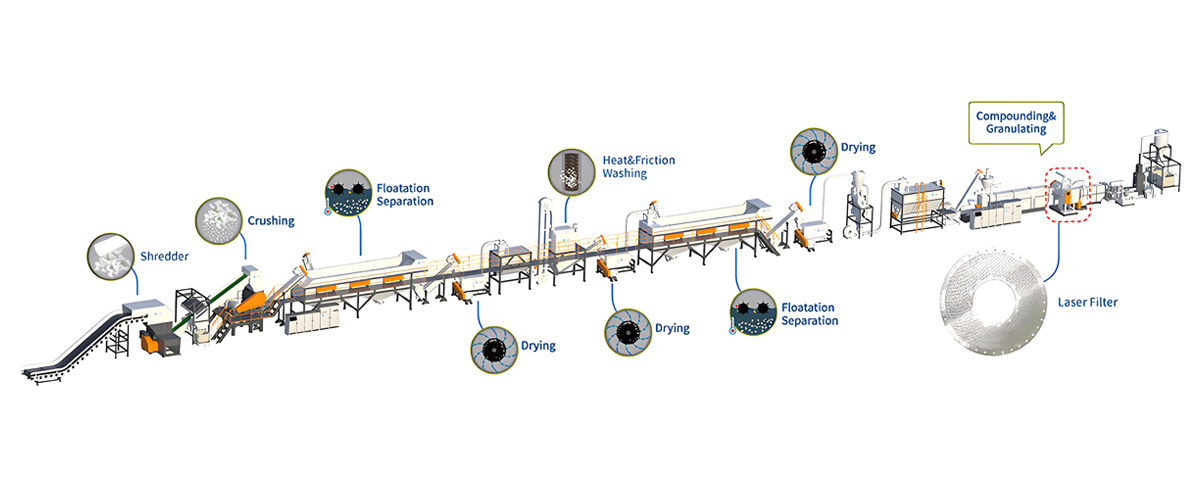
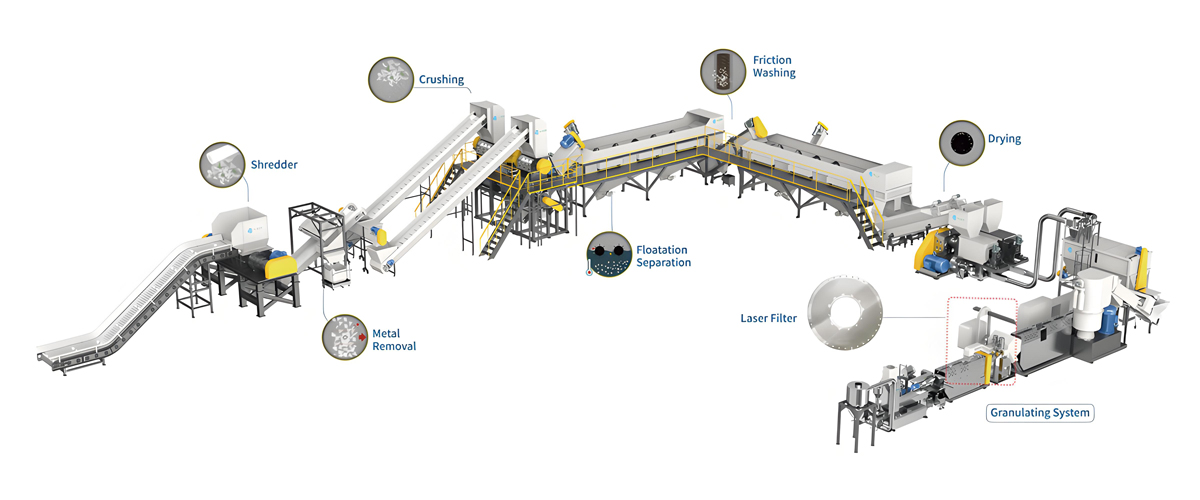
A granulating cutter converts a continuous plastic stream into discrete pellets of controlled size. The upstream sequence in a recycling line begins with a washing line that crushes, cleans, sorts, and dries the waste. Clean flakes or regrind then feed an extruder, where the barrel and screw plasticize the material, a screen changer removes contamination, and a metering pump stabilizes melt pressure. At the die head the melt emerges as either strands or a ring of melt streams, and the cutter performs the final cut.
There are two broad cutting geometries. In die-face cutting, a rotating blade assembly spins against the die plate while the melt is still hot, shearing each stream at the face. The freshly cut pellets are immediately quenched by air or water. This is the principle behind rotary cutters, water-ring cutters, and underwater granulators. In strand cutting, the melt is extruded as solid strands that pass through a water bath and a puller, then enter a rotary cutter wheel that slices them into pellets after they have cooled and solidified. The dicer is a specialized strand cutter for thick, flat or profile stock.
The cutting action itself is a controlled shear. The stationary bed blade and the rotating fly blade meet at a precise clearance, usually a few hundredths of a millimeter, to produce a clean edge. If the clearance opens up through wear, the cut becomes a tear rather than a slice, generating tails and dust. If the blade angle is wrong for the material, the melt can smear or stick. The granulating cutter therefore couples mechanical precision with material science, and both must be respected during selection.
After cutting, pellets are separated from the cooling medium, dried, and conveyed to a silo or bagging station. The consistency of the cut determines how clean this finishing stage is. Reduced fines mean less dust in the airflow, fewer blocked screens, and a cleaner final product. This is why the cutter is treated as a precision component rather than a simple chopper in a modern recycling plant.
Cutter Types: Rotary, Strand, and Dicer Compared
Three cutter families dominate recycled plastic pelletizing: the rotary die-face cutter, the strand pelletizer, and the dicer. Each suits a different material shape and output goal, and the choice drives the rest of the line configuration. The table below compares them on the dimensions most relevant to recycled content.
Cutter Type Comparison
| Cutter type | Best suited material | Typical capacity range | Cooling method | Pellet shape | Maintenance load |
|---|---|---|---|---|---|
| Rotary die-face cutter (hot cut) | PP, PE, rigid regrind, film | Low to very high | Air or water-ring | Cylindrical, slight oval | Medium |
| Underwater granulator | Film, low-viscosity, heat-sensitive polymers | Medium to very high | Water (submerged) | Spherical, very uniform | High |
| Strand pelletizer | Clean PP, PE, PET, uniform compounds | Low to medium | Water bath then air | Cylindrical, consistent length | Low to medium |
| Dicer | Thick sheet, profile, rigid block regrind | Low to medium | Water or air | Cubic, diced | Medium |
The rotary die-face cutter is the workhorse of recycled pelletizing because it handles both film and rigid material and scales to high output. The blade rotor spins in front of the die plate, and the cut pellets are flung into an air or water cooling chamber. It is compact and forgiving, which is why Polyretec configures it on the Neue Generation Pelletierlinie for both thin-walled LDPE film and thick-walled PE/PP regrind.
The strand pelletizer remains popular where pellet length uniformity matters, such as repropylene and recomopolymer grades destined for injection molding or fiber. It is mechanically simpler and cheaper to maintain, but it demands clean, consistent strands, so it favors lower-contamination feed. The dicer serves niche rigid and profile recycling where the feed is already thick stock rather than flake.
Blade Material and Geometry Selection
The blade is the cutter’s consumable heart. Its material determines edge life, the quality of the cut, and how often you stop the line. Recycled plastic is far harsher on blades than virgin material because contamination such as sand, paper fiber, aluminum, and residual label glue acts as an abrasive. For this reason, blade selection deserves the same attention as the cutter type.
High-speed steel blades are the entry choice. They are easy to re-sharpen and low cost, and they perform well on clean PP and PE film with little contamination. Their hardness, however, is modest, so they wear quickly on abrasive PET.
D2 and SKD-11 tool steels offer much higher wear resistance and hold an edge through long PET runs. They cost more and are harder to grind, but the extended interval between maintenance stops pays back on high-contamination lines. Tungsten carbide tipped blades are the premium option: the carbide edge resists abrasion best of all and is the right call for dirty post-consumer PET with sand and fines. The trade-off is brittleness, so they require careful handling and precise rotor balancing.
Blade Material Selection Guide
| Blade material | Hardness (HRC) | Best material | Relative edge life | Cost tier |
|---|---|---|---|---|
| High-speed steel (HSS) | 58 to 62 | Clean PP, PE film | Low | Low |
| D2 / SKD-11 tool steel | 60 to 64 | PET flakes, PP/PE with moderate contamination | Medium to high | Medium |
| Tungsten carbide tipped | 70 to 78 (edge) | Dirty post-consumer PET, abrasive regrind | Very high | High |
Blade geometry matters as much as material. A shallow helix or straight-edge blade gives a clean cut on rigid material, while a slight rake angle helps film release without wrapping. The number of blades on the rotor sets the cut frequency and therefore the pellet length at a given rotor speed: more blades produce shorter pellets at the same throughput. Polyretec configures rotor blade count and bed-knife clearance against the target pellet size during line commissioning so the customer does not tune it blind.
Balancing is non-negotiable. An unbalanced rotor at thousands of revolutions per minute induces vibration, accelerates bearing wear, and degrades cut quality. Always re-balance the rotor after a blade change, and keep a matched spare rotor or blade cassette on hand so changeovers are fast.
Matching Throughput to Your Recyclinglinie
Throughput is the easiest parameter to mismeasure, because the washing line’s nominal capacity is not the same as the extruder’s melt capacity, which is not the same as the cutter’s safe cutting rate. Drying losses, feeding variability, and melt-density changes all reduce the actual kilograms per hour that reach the cutter. Size the cutter to the steady-state extruder output, then add a margin.
As a practical rule, select a cutter rated 10 to 15 percent above the extruder’s continuous melt rate. This absorbs short surges when a screen changer indexes or when bulk density dips. Undersizing the cutter forces the rotor to stall or the motor to trip, while severe oversizing wastes energy and makes pellet length control harder at low rates. The relationship between rotor speed, blade count, and pellet length means that at low throughput you simply slow the rotor, but the cutter must still have enough power to avoid overload at peak.
Consider the polymer’s bulk density. Film flakes are light and fluffy, so a given mass flows as a larger volume than dense PET flakes. The cutter’s feed and rotor must handle that volume without bridging. Polyretec’s Neue Generation Pelletierlinie is engineered for both thin-walled LDPE film, which is low bulk density, and thick-walled PE/PP regrind, which is dense, so the feed throat and rotor geometry are sized for the worst case in the customer’s material mix.
When planning capacity, also account for availability. A line rated for 1000 kilograms per hour at 100 percent uptime delivers less in practice once you subtract changeovers, blade swaps, and screen changes. Build the cutter margin into the design so annual output targets remain reachable.
Material Hardness and Melt Behavior by Polymer
Different recycled polymers behave differently at the cutter, and the cutter must be tuned to each. The table summarizes the main recycled streams Polyretec handles and the cutter implications.
PET is semi-crystalline with a high melting point near 250 to 260 degrees Celsius and moderate melt strength. Recycled PET flakes are often contaminated with sand and label residue, making them abrasive. PET also absorbs moisture, so thorough drying before the extruder is essential; water in the melt causes splay and weak pellets. For PET, choose a wear-resistant blade (D2 or carbide) and a cutter that tolerates higher melt temperature. Die-face hot cutting with water-ring or strand cutting both work, but the strand route needs careful cooling to avoid sticking.
PP is softer, lower melting around 160 to 170 degrees Celsius, and has good melt strength, which makes it forgiving at the cutter. Recycled PP from packaging and fiber is usually low contamination, so high-speed steel blades are often sufficient. PP pellets cut cleanly and cool fast.
PE, especially LDPE film, is the most challenging because of its low melt strength and tendency to string and wrap at the die face. Thin-walled LDPE film produces a light, fluffy flake that is hard to feed and prone to forming long tails if the cutter speed is wrong. LDPE needs a cutter with strong air or water quench right at the face and a blade rake that releases the film. HDPE is denser and easier, closer to PP in behavior.
Film in general, whether LDPE, LLDPE, or PP woven, demands the tightest screen and the most aggressive cooling because of low melt strength. This is exactly why Polyretec positions the Neue Generation Pelletierlinie for thin-walled LDPE film with robust construction and maximum performance for post-consumer waste.
Polymer-Specific Cutter Settings
| Recycled material | Melt temperature window | Recommended blade | Preferred cutter |
|---|---|---|---|
| PET flakes | 250 to 280 C | D2 / carbide | Die-face hot cut, water-ring |
| PP regrind | 200 to 230 C | HSS or D2 | Die-face hot cut, strand |
| HDPE regrind | 190 to 220 C | HSS or D2 | Die-face hot cut, water-ring |
| LDPE / LLDPE film | 170 to 200 C | HSS or D2 | Underwater or water-ring |
Screen and Pellet-Size Control
The screen, or die-hole plate, defines pellet size. Round holes of 2 to 4 millimeters are standard in recycled pelletizing, with 3 millimeters the most common for re-extrusion and blanket feeding. Film grades benefit from a smaller 2 to 2.5 millimeter pellet because the smaller particle improves bulk density and feeds more steadily into a converter’s hopper. Rigid regrind can use up to 4 millimeters without feeding problems.
The hole pattern and total open area set how much melt the die can pass at a given pressure. Too few holes forces high melt pressure and risks die-face leakage; too many holes drops pressure and can weaken mixing. The screen changer upstream, which filters contamination before the melt reaches the cutter, is a separate but related component. A continuous screen changer keeps pressure stable during long runs, which protects cut quality.
Pellet length is set by the cutter, not the screen: it equals the melt velocity at the hole divided by the cut frequency, where cut frequency is rotor speed multiplied by blade count. Operators tune rotor speed to hit the target length-to-diameter ratio, typically 1.0 to 1.5 for recycled pellets. A length-to-diameter above 2 indicates the rotor is too slow or the blade count too low; below 1 indicates the opposite and risks tails. Polyretec sets these parameters during commissioning and documents them in the line’s recipe so operators reproduce the result shift after shift.
Off-spec size is the most common buyer complaint, so screen and cutter calibration should be part of the daily start-up check. Keep spare die plates for each product grade so a change from film to rigid does not require regrinding on the floor.
Cooling Methods: Air, Water-Ring, Underwater
Cooling locks in pellet shape immediately after the cut. The three main methods each suit different materials and budgets. Air cooling blows the hot cut pellets with ambient or chilled air; it is the simplest and cheapest, with no water circuit, but it is limited on heat-sensitive or low-viscosity polymers that can agglomerate. Water-ring cooling flings pellets into a rotating ring of water where they quench and are then dewatered; it gives rounder, more uniform pellets and handles higher output with modest water use. Underwater cutting submerges the die face in a water chamber so pellets are cut and quenched at once, producing spherical, very uniform pellets with minimal fines, but at the highest equipment and water-treatment cost.
Cooling Method Comparison
| Cooling method | Material suited | Cooling efficiency | Water use | Cost tier |
|---|---|---|---|---|
| Air-cooled | PP, HDPE, clean rigid | Moderate | None | Low |
| Water-ring | PP, PE, PET | High | Low to medium | Medium |
| Underwater | LDPE film, heat-sensitive, low-viscosity | Very high | Medium to high | High |
For recycled LDPE film, underwater or water-ring cutting is strongly preferred because the low melt strength causes tails and webbing under air cooling. For PP and HDPE, air or water-ring is adequate and cheaper to run. The cooling choice therefore loops back to material: decide the cutter and cooling as a pair, not separately.
Water quality matters in wet systems. Recirculated water should be filtered and, for food-contact PET, treated to avoid re-contamination. Polyretec integrates dewatering and drying so the final pellet moisture stays within specification before silo storage.
Product Focus: Polyretec Neue Generation Pelletierlinie
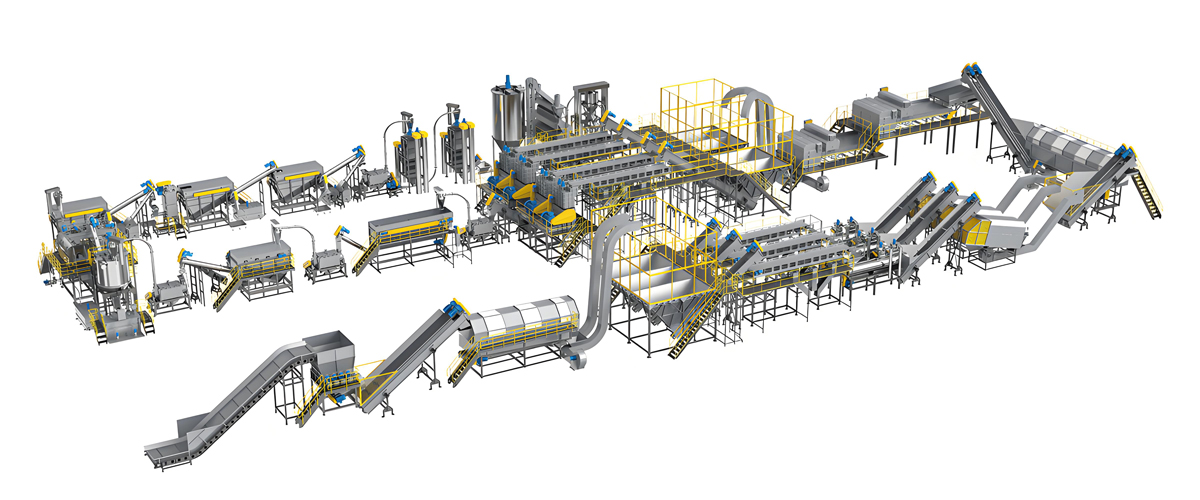
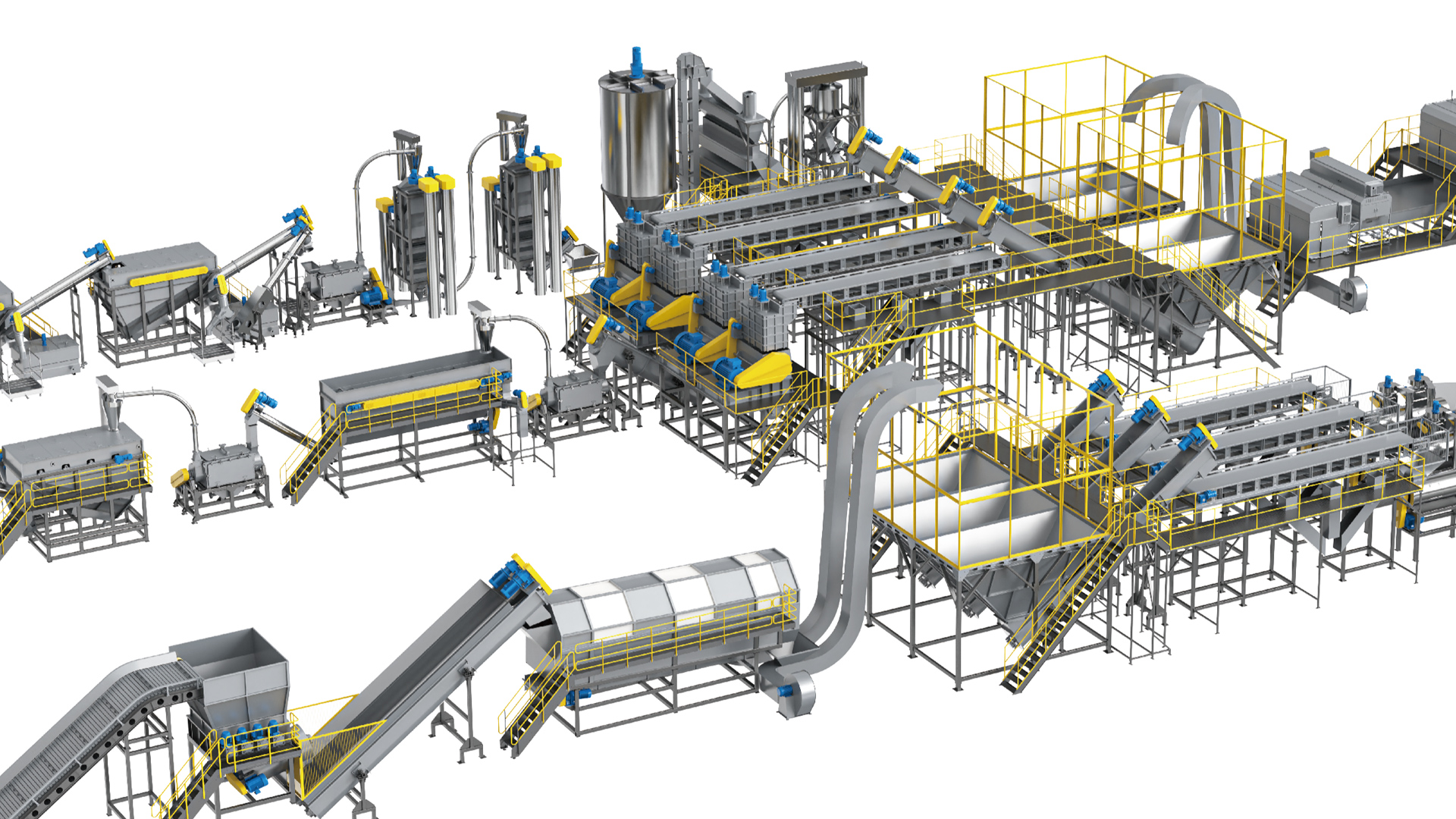
Polyretec’s Neue Generation Pelletierlinie is the company’s flagship recycling pelletizer, built for both thin-walled LDPE film and thick-walled PE/PP regrind with robust construction for maximum performance on post-consumer waste. It pairs a high-torque extruder with a configurable die-face cutter and supports air, water-ring, or underwater cutting depending on the material mix. The line is designed so the cutter head, screen pack, and cooling method can be matched to the customer’s dominant feedstock during commissioning.
The specification below reflects the documented capability ranges of the Polyretec Neue Generation Pelletierlinie and the standard cutter configurations applied to recycled film and rigid grades. Process parameters such as screw diameter and L/D follow conventional recycling extruder practice and should be confirmed against the final proposal for a specific order.
Polyretec Neue Generation Pelletierlinie — Specificationen
| Parameter | Film grade (LDPE / LLDPE film) | Rigid grade (PE / PP regrind) |
|---|---|---|
| Applicable material | Thin-walled LDPE / LLDPE film, printed film | Thick-walled PE / PP regrind, lumps, rigid scrap |
| Typical throughput range | 200 to 800 kg/h (film, low bulk density) | 500 to 1500 kg/h (dense regrind) |
| Cutter type | Underwater or water-ring die-face | Die-face hot cut, air or water-ring |
| Blade material | HSS or D2 tool steel | D2 tool steel |
| Pellet size (screen) | 2.0 to 2.5 mm | 2.5 to 4.0 mm |
| Cooling method | Water (submerged or ring) | Air or water-ring |
| Construction | Robust, for post-consumer waste | Robust, for post-consumer waste |
Because the line accepts both film and rigid feed, many customers run a mixed portfolio. The factory recommends keeping dedicated die plates and blade cassettes for each grade so changeovers stay fast and cut quality stays consistent. The Neue Generation Pelletierlinie is the right base when the primary goal is converting washed flakes or regrind into uniform pellets ready for re-extrusion or sale.
Product Focus: Polyretec PP/PE Washing and One-Step Pelletizing
For soft plastic waste such as film, woven bags, and agricultural film, Polyretec supplies the PP/PE Weiche Kunststoffzerkleinerung and Waschlinie rated from 500 to 1500 kg/h, with one-step pelletizing available. One-step pelletizing merges washing and pelletizing so the cleaned, dewatered material feeds directly into the extruder and cutter, reducing handling, energy, and floor space. This is especially attractive for film recyclers who want pellets without a separate densifying step.
The specification below uses the documented capacity range of the PP/PE Weiche Kunststoffzerkleinerung and Waschlinie and the parameters of its integrated pelletizing option.
Polyretec PP/PE Soft Plastic Waschlinie with One-Step Pelletizing — Specificationen
| Parameter | PP/PE Soft Plastic Line (one-step pelletizing) |
|---|---|
| Applicable material | PP / PE film, woven bags, agricultural film |
| Throughput range | 500 to 1500 kg/h |
| Process steps | Crushing, washing, dewatering, one-step pelletizing |
| Cutter integration | Die-face cutter at extruder output, water-ring or underwater |
| Blade material | HSS or D2 tool steel (film grade) |
| Pellet size | 2.0 to 3.0 mm |
| Footprint benefit | Combined washing and pelletizing saves space and handling |
The one-step configuration is a strong fit when the feed is consistently soft PP/PE film and the operator wants a compact, integrated line. For mixed or contaminated feed that needs more aggressive washing, the separate Neue Generation Pelletierlinie paired with a dedicated washing line gives more flexibility.
Selection Recommendation Table
The table below maps common customer requirements to a recommended Polyretec configuration. These recommendations combine the two product lines described above with the cutter and cooling choices from earlier sections.
Customer Need to Recommended Polyretec Configuration
| Customer need | Recommended line | Cutter and cooling |
|---|---|---|
| Post-consumer LDPE film, 200 to 800 kg/h | Neue Generation Pelletierlinie (film grade) | Underwater or water-ring, HSS/D2 blade, 2 to 2.5 mm |
| PE / PP rigid regrind, 500 to 1500 kg/h | Neue Generation Pelletierlinie (rigid grade) | Die-face hot cut, air or water-ring, D2 blade, 2.5 to 4 mm |
| PP / PE soft film with integrated washing | PP/PE Soft Plastic Waschlinie, one-step pelletizing | Die-face cutter, water-ring, 2 to 3 mm |
| Clean PP/PE for injection molding grade | Neue Generation Pelletierlinie (rigid grade) | Strand pelletizer option, HSS blade, consistent length |
| Mixed film and rigid portfolio | Neue Generation Pelletierlinie with spare die plates | Water-ring primary, air secondary, dual blade cassettes |
For PET pelletizing, Polyretec’s washing lines prepare food-grade flakes, and the group’s matched pelletizing and cutting systems integrate downstream. The cutter for PET follows the die-face hot cut or water-ring route with wear-resistant D2 or carbide blades as described in the material section. Discuss your exact contamination profile with the factory so the screen changer and cutter are sized for your feed.
Application Industries and End Products
Recycled pellets from a correctly specified granulating cutter feed a wide range of industries. Polyretec serves two broad application areas: plastic product production, where waste is converted into reusable pellets and blocks for new products, and renewable resource utilization, which reduces dependence on primary plastic resources. Concrete end products include the following.
Industries and Representative End Products
| Industry | Recycled pellet used | End product |
|---|---|---|
| Packaging | PP, PE film pellets | Stretch film, bags, containers |
| Construction | PE, PP rigid pellets | Pipes, profiles, boards |
| Automotive | PP, PET pellets | Bumpers, trims, fiber |
| Textile and fiber | PET pellets | Polyester fiber, non-woven |
| Consumer goods | PP, PE pellets | Housewares, crates, caps |
Pellet uniformity from the cutter directly affects these downstream processes. Uniform pellets meter more accurately in loss-in-weight feeders, plasticize more evenly in the barrel, and reduce black specks and gels. That is why the cutter is treated as a quality instrument rather than a commodity part.
Installation, Commissioning, and Maintenance
Correct installation and commissioning set the cutter up for a long, stable life. Polyretec engineers assist with on-site installation and commissioning, confirming rotor alignment, blade clearance, die-plate fit, and cooling circuit function before the line runs at full rate. The commissioning report records the rotor speed, blade count, screen size, and cooling parameters for each product grade so future operators reproduce the result.
Daily maintenance centers on the cutter. Inspect blades for wear and nicks at each start-up, check bed-knife clearance, and confirm rotor balance after any blade change. Watch motor current and pellet appearance: rising current or the appearance of tails and streamers signals that blades need attention. Keep a balanced spare blade cassette so a change takes minutes.
Weekly tasks include checking bearing temperature and vibration, verifying cooling water filtration, and inspecting the screen changer for pressure drift. Monthly tasks cover a full rotor re-balance, a review of pellet size distribution, and a check of the drive belt or coupling. Contamination control upstream protects the cutter most of all: a well-run washing line with effective metal separation and label removal is the cheapest insurance against premature blade wear.
Spare parts strategy matters for uptime. Stock at least one full blade cassette per grade, one spare die plate per screen size, and the wear items for the screen changer. Polyretec’s shared Wanplas group policy includes USD 500 free parts every year, which covers a meaningful share of these consumables for most lines.
Common Cutter Maintenance Mistakes to Avoid
Even a correctly specified granulating cutter loses performance when routine care goes wrong, and most downtime traced to the cutter is actually traced to maintenance habits. The most frequent mistake is running blades past their useful life to squeeze out a few more hours of production. A dull blade does not slice; it tears, and the result is tails, streamers, and a spike in fines that contaminate the airflow and clog downstream screens. The small saving in blade-change labor is quickly lost to off-spec pellets, rework, and customer complaints. A second common error is neglecting rotor balance after a blade swap. Because an unbalanced rotor spins at thousands of revolutions per minute, even a slight imbalance stresses the bearings, loosens the coupling, and shortens the life of the entire cutter head while also degrading cut quality.
A third mistake is mixing blade materials or vintages on the same rotor. Each blade in a mixed set wears at its own rate, so the rotor cuts inconsistently and forces the operator to change the whole cassette early. Keep the blades within a set matched, and re-sharpen or replace them together rather than one at a time. A fourth error is treating the screen changer and the cutter as separate systems. When the upstream filter clogs and melt pressure drifts, the cutter receives an unstable stream and produces variable pellet length even though the cutter itself is perfectly set. Watch pressure trend, not just blade appearance, and you will catch problems before they reach the pellet.
Maintenance Mistake, Consequence, and Preventive Action
| Common mistake | Consequence on pellet quality | Preventive action |
|---|---|---|
| Running blades past useful life | Tails, streamers, more fines, clogged screens | Replace at first sign of current rise or streamers |
| Skipping rotor re-balance after blade change | Vibration, bearing wear, uneven cut | Re-balance every rotor after each blade change |
| Mixing blade materials on one rotor | Inconsistent cut, early full changeover | Use matched sets, re-sharpen or replace together |
| Ignoring upstream screen-changer pressure drift | Variable pellet length, unstable melt stream | Monitor pressure trend, index changer on schedule |
| Poor upstream contamination control | Rapid blade wear from sand and metal | Run metal separation and label removal before extruder |
The cheapest insurance for any granulating cutter is a disciplined upstream washing line and a simple, written maintenance checklist. Polyretec documents the rotor speed, blade count, screen size, and cooling parameters for each product grade during commissioning, and operators should follow that recipe every shift rather than adjusting by feel. A line that is set once and checked often outperforms a line that is constantly re-tuned.
Quality Standards and Zertifizierungs
Polyretec builds recycling equipment to internationally recognized quality and safety standards. Equipment is supplied with CE certification and manufactured under ISO quality management, which govern electrical safety, machine guarding around the cutter, and documented process control. For food-contact recycled PET applications, the line design supports compliance with relevant food-contact frameworks, and the washing and drying stages are engineered to reduce residual contamination to acceptable levels before pelletizing.
Quality control extends to the pellet itself. Polyretec verifies pellet size distribution, bulk density, and moisture after commissioning, and the line’s control system records process data for traceability. The group’s quality promise backs the equipment with a refund and compensation commitment if quality fails to meet the agreed standard, giving buyers confidence that the cutter and line will perform as specified.
Cost Considerations by Relative Tier
Capital cost for a granulating cutter and its pelletizing line should be evaluated as a relative tier rather than a single number, because final pricing depends on capacity, cooling method, and automation. Air-cooled die-face cutting is the Low cost tier and suits budget film and rigid lines. Water-ring cutting sits in the Medium tier, offering better pellet quality for PP and PE at moderate added cost. Underwater cutting is the High to Very High tier, justified for film and heat-sensitive polymers where pellet quality drives resale value. Adding full one-step washing and pelletizing integration moves a line into the Medium to High tier but saves on handling and floor space.
Operating cost tracks blade consumption and cooling water treatment. Carbide blades cost more up front but cut blade-change labor on abrasive PET; air cooling eliminates water cost entirely. The right tier balances purchase price against the value of uniform pellets in your target market. Polyretec helps customers select the tier that matches their feed quality and pellet grade rather than overspending on capability they will not use.
Service and Support from Polyretec
Polyretec backs every recycling and pelletizing line with comprehensive after-sales support, consistent with the Wanplas group’s shared promises. Before shipment, each line undergoes testing so the cutter, extruder, and cooling run together and the customer sees real pellets. Engineers provide on-site installation and commissioning, train operators on blade change, clearance setting, and screen selection, and stay available for remote monitoring and troubleshooting.
The Wanplas group’s service commitments apply to Polyretec lines: USD 500 free parts every year, free replacement of damaged parts within warranty, a transportation guarantee, a production capacity guarantee, and a quality standards guarantee with refund plus compensation if quality fails. The open-factory policy welcomes customers to visit, audit the workshop, and witness a trial run on their own material before purchase. For a granulating cutter, this means you can send sample flakes or film and watch the exact pellet size and shape your line will produce.
Frequently Asked Questions
What is the difference between a rotary cutter and a strand pelletizer?
A rotary cutter, also called a die-face hot cutter, slices the melt directly at the extruder die head while the material is still molten, then the cut pellets are cooled immediately by air or water. A strand pelletizer pulls solidified strands through a puller and a rotating blade wheel that cuts them into pellets after cooling. Rotary cutters suit high-output film and rigid recycling; strand pelletizers suit clean, uniform materials where pellet length consistency is critical.
Which blade material lasts longest for recycled PET and PP/PE?
For abrasive recycled PET flakes, tungsten carbide tipped blades or D2/SKD-11 tool steel blades resist wear best and hold an edge through long runs. For softer PP and PE film, high-speed steel blades are adequate and cheaper to re-sharpen. The correct choice depends on contamination level and material hardness rather than only on price.
How do I match cutter throughput to my washing and pelletizing line?
Match the cutter’s rated kilograms per hour to the extruder melt capacity, not to the washing line’s nominal capacity, because drying and feeding losses reduce actual melt flow. As a rule, size the cutter for 10 to 15 percent above the steady-state extruder output so short surges do not overload the blades.
What pellet size should I select with the screen or die-hole configuration?
Standard recycled pellets run 2 to 4 millimeters, with 3 millimeters the most common for re-extrusion and blanket feeding. Film grades often use a slightly smaller 2 to 2.5 millimeter pellet to improve bulk density and feeding, while rigid regrind can use up to 4 millimeters. The screen or die-hole size sets this, so choose it against your downstream converter’s hopper and metering equipment.
Air-cooled, water-ring, or underwater cutting: which is better?
Air-cooled cutting is simplest and lowest cost, best for low to medium output of non-sticky materials. Water-ring cutting gives rounder, more uniform pellets for PP and PE and handles higher output with less dust. Underwater cutting is the premium choice for heat-sensitive or low-viscosity polymers and film, giving spherical pellets with minimal fines but the highest equipment and water-treatment cost.
How often should granulating cutter blades be sharpened or replaced?
Blade life depends on material abrasiveness and contamination. In clean post-industrial PP/PE, blades may run several weeks between re-sharpening; in dirty post-consumer PET with sand and labels, edges may need attention within days. Monitor pellet tails, streamers, and elevated motor current as the trigger, and keep a balanced spare set so changeovers take minutes rather than hours.
Can one Polyretec pelletizing line handle both film and rigid recycled plastic?
Polyretec’s Neue Generation Pelletierlinie is built for both thin-walled LDPE film and thick-walled PE/PP regrind, but the cutter head, screen pack, and cooling method should be configured per material. Film needs a tighter screen and often underwater or water-ring cutting, while rigid regrind runs well on die-face hot cutting with air or water-ring cooling. Discuss your material mix with the factory so the cutter and downstream are matched.
Conclusion
Selecting a granulating cutter for recycled plastic pellets is a system decision, not a single purchase. Start with your dominant material, because PET, PP, PE, and film each demand different blade materials, cutter types, and cooling. Match the cutter’s throughput to the extruder’s real melt rate with a safety margin, set pellet size with the screen, and pair the cutter with the right cooling method. Then protect the investment with disciplined maintenance and a stocked spare-parts kit.
Polyretec, a Wanplas factory with roots in 2010 and more than 100 recycling projects across 50 plus countries, builds the Neue Generation Pelletierlinie for film and rigid recycled plastic and the PP/PE Soft Plastic Waschlinie with one-step pelletizing, both configurable with the cutter and cooling your material needs. With CE and ISO certified construction, pre-shipment testing, engineer commissioning, USD 500 free parts every year, and an open-factory policy, Polyretec supports the full lifecycle of your pelletizing cutter.
If you are planning a recycled pelletizing line, send your material type, contamination profile, and target output to Polyretec. The technical team will recommend a cutter configuration, size the line, and invite you to the factory for a trial run on your own feedstock so you can confirm pellet quality before you commit. Whether your priority is film, rigid regrind, or a mixed portfolio, the right granulating cutter is the difference between pellets that sell and pellets that sit.