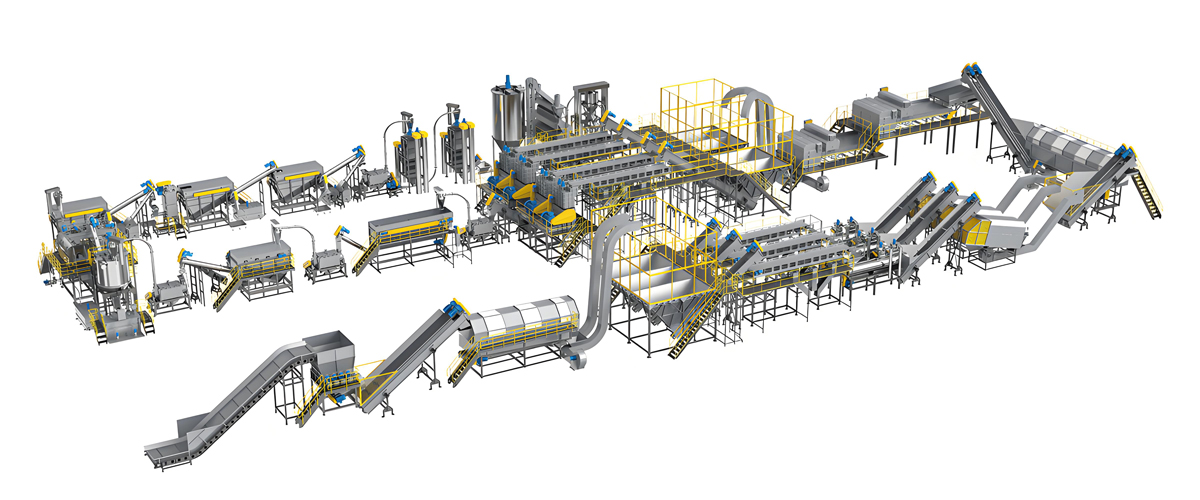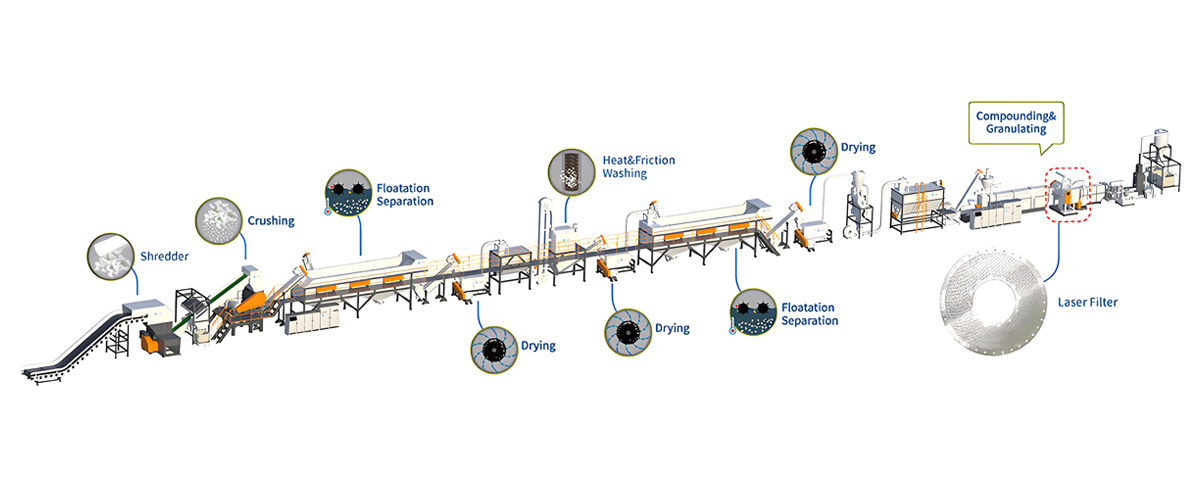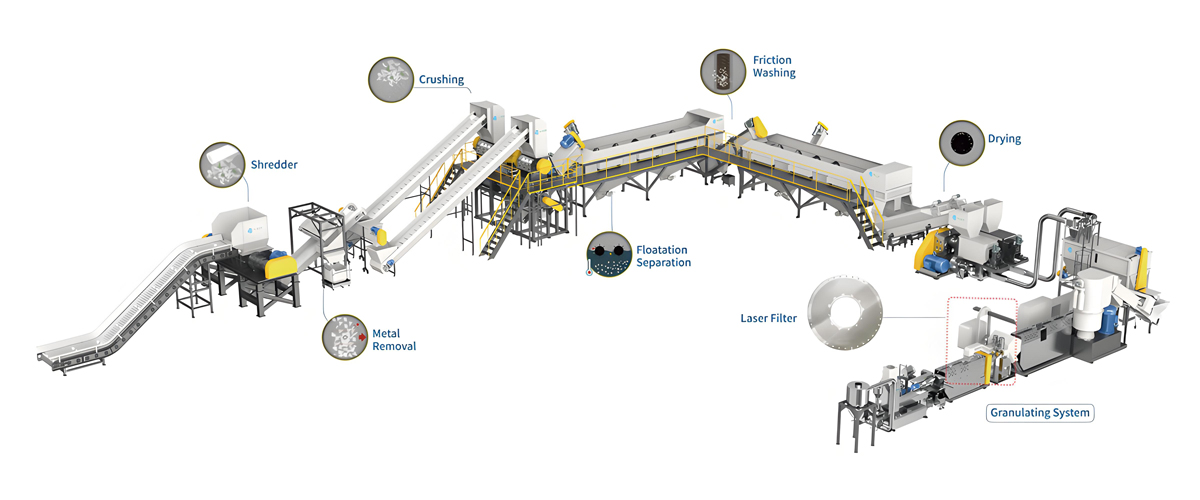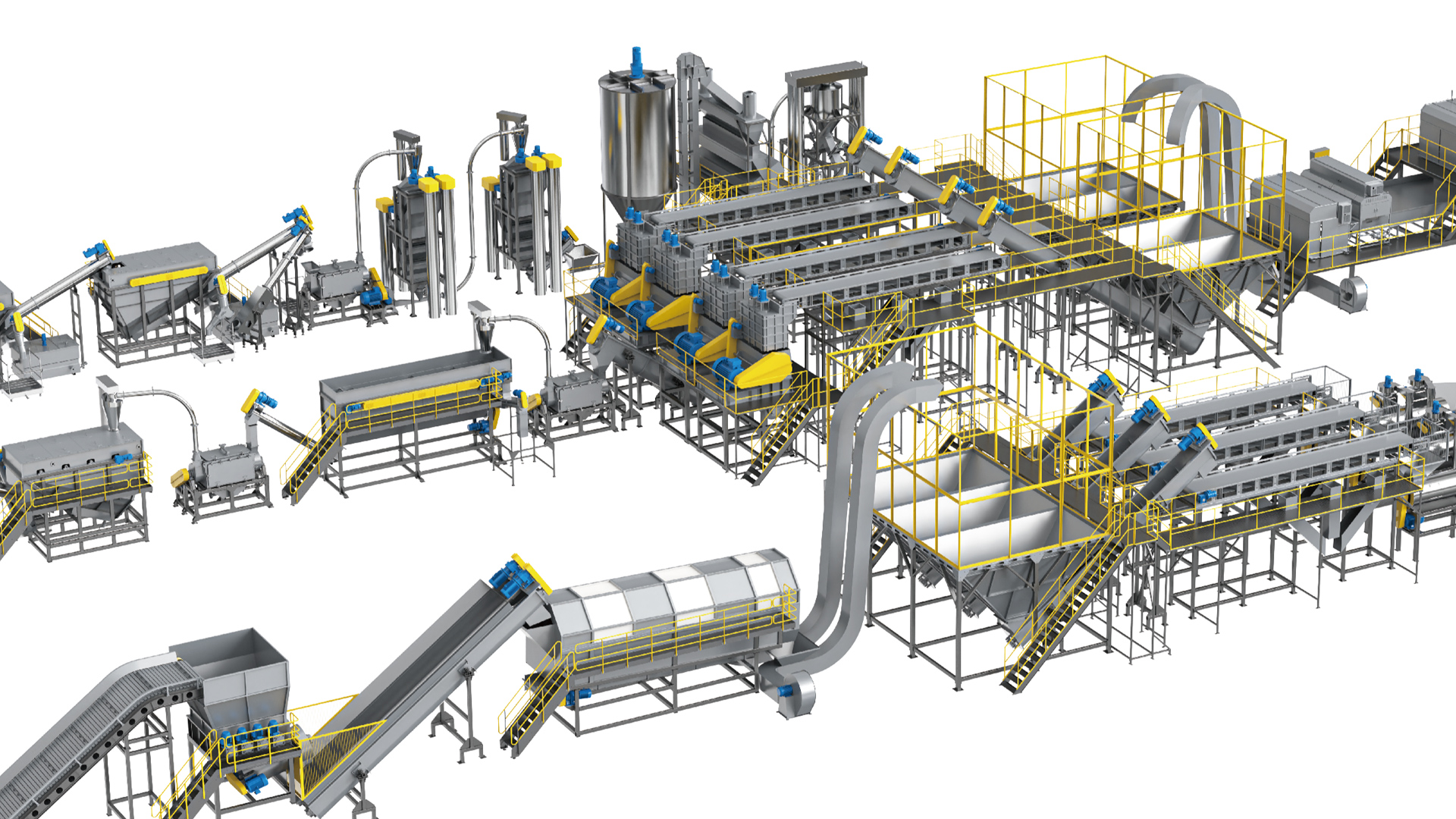

A beater, often called a friction washer or, in its dewatering form, a squeezer, is the workhorse of an LDPE film washing line, and keeping it clean is the single most neglected discipline that separates a line running at nameplate capacity from one that steadily loses throughput to clogging and scaling. In agricultural film and post-consumer packaging film, the beater is where mechanical scrubbing, high-velocity water, and sometimes alkali chemistry strip sand, pesticide residue, oils, label glue, and organic matter from the film before it reaches the rinse and dewatering stages. Polyretec, a Wanplas factory, builds beaters as part of its LDPE and PP/PE washing lines, and across installations from Mexico to Taiwan the plants with the lowest specific water and energy consumption are consistently the ones with the most disciplined beater cleaning regimen. This guide gives a complete, safety-first standard operating procedure for cleaning the beater: its mechanical anatomy, where foulants come from, daily, weekly, and monthly cleaning routines, the correct disassembly order and tools, the alkali concentrations and water temperatures that actually work, lockout-tagout before any intervention, bearing and seal care, the quality indicators that prove the cleaning succeeded, and how the beater coordinates with the hot wash, rinse, and dewatering equipment around it. Follow these steps and the beater will deliver consistent cleaning quality with minimal unplanned downtime.
Role of the Beater in an LDPE Film Waschlinie
The beater sits in the mechanical-cleaning section of an LDPE film washing line, after the pre-wash and shredding stages and before the final rinse and dewatering. Its job is to apply intense friction between the film and a rotating element inside a perforated screen drum, while a high-flow water jet flushes loosened contaminants through the screen. In effect, the beater does what a household washing machine cannot: it physically rubs the soiled film against itself and against the screen at high speed, dislodging tenacious foulants that simple soaking would leave behind.
In agricultural LDPE film, the dominant contaminants are mineral soil, sand, clay, and pesticide and fertilizer residues baked onto the film by sun and field exposure. In post-consumer packaging film, the contaminants are printing inks, label adhesives, food oils, and the ubiquitous dust of handling. The beater’s mechanical action is what removes the bonded layer; without it, the downstream float-sink and extrusion stages would inherit ash and odor that ruin the recycled pellet.
There are two common embodiments. The friction washer version uses a high-speed rotor with paddles or blades inside a screen drum, generating shear and turbulence. The squeezer version, sometimes still loosely called a beater in plant slang, uses a screw or rotor to both agitate and mechanically expel water from the cleaned film, reducing moisture before drying. Polyretec lines frequently pair a friction washer beater with a squeezer, and both share the same cleaning vulnerabilities: screen blockage, rotor fouling, and bearing-seal ingress of abrasive slurry.
The performance of the beater is measured by what leaves it: the film should emerge with low residual ash, low clinging organics, and a consistent moisture content that the dewatering stage can finish economically. When the beater is clean and correctly tuned, the hot wash and rinse stages need less chemical and less water; when it is fouled, those stages compensate by over-dosing alkali and over-spraying, raising operating cost and environmental load across the whole line.
| Line Stage | Function | What the Beater Must Deliver |
|---|---|---|
| Pre-wash and shred | Remove loose dirt, size film | Feed uniform, pre-wetted film |
| Beater (friction washer) | Mechanical scrubbing | Low ash, low organics |
| Hot wash | Chemical grease removal | Pre-scrubbed film, less alkali |
| Rinse and dewater | Neutralize, remove water | Low residual moisture |
Operators should treat the beater as the gatekeeper of line quality. A clean, well-maintained beater protects every downstream machine, while a fouled one forces the rest of the line to work harder and still delivers inferior flake. The cleaning routines that follow are therefore not optional housekeeping but core process control.
Beater Machine Anatomy: Rotor Blades, Screen Drum, Bearings, Seals
Understanding the beater’s anatomy is the prerequisite to cleaning it safely and thoroughly, because every foulant accumulates at a predictable location tied to a specific component. A Polyretec friction-washer beater is built around four subsystems: the rotor with its blades or paddles, the perforated screen drum, the bearing and shaft assembly, and the inlet-outlet housing with its seals.
The rotor is a horizontal shaft carrying multiple rows of angled blades or paddles set close to the screen. As it spins at high speed, the blades fling film against the screen and against itself, generating the friction that cleans. The blade edges and the rotor surface are the first places film fibers, label backing, and grease accumulate, forming a mat that reduces clearance and raises motor load. Inspecting and clearing the rotor is therefore the heart of any cleaning routine.
The screen drum surrounds the rotor and retains the film while letting water and dissolved contaminants pass through its perforations. In LDPE film service the screen holes are quickly blinded by a combination of compacted fines, label glue, and fibrous pulp, especially when the incoming film carries paper labels. A blinded screen restricts throughput and forces water to bypass, so screen cleaning is the highest-frequency task in beater maintenance.
The bearings support the rotor shaft at both ends and are the most expensive components to lose. They sit outside the process chamber but are vulnerable to water and slurry ingress through worn seals. Once abrasive soil enters a bearing, its life collapses from thousands of hours to hundreds, and a seized bearing can twist the shaft and wreck the rotor. Seal integrity is thus a primary cleaning and inspection focus.
The inlet and outlet ports are where film enters and exits and where the high-pressure water manifold distributes cleaning jets. These ports suffer from build-up at the lips and from spray-nozzle blockage; clogged nozzles create dead zones where film is not scrubbed, producing inconsistent quality. The housing drain and weir must also be kept clear so the contaminated slurry leaves the machine rather than recirculating.
| Component | Typical Foulant | Failure Mode If Ignored | Cleaning Focus |
|---|---|---|---|
| Rotor blades | Fiber mat, grease | Rising load, poor scrub | Scrape, pressure wash |
| Screen drum | Blinded holes, glue | Throughput loss | Brush, acid descale |
| Bearings and seals | Slurry ingress | Seizure, shaft damage | Seal check, lube |
| Inlet/outlet, nozzles | Build-up, blockage | Uneven cleaning | Clear ports, unclog jets |
The design philosophy at Polyretec emphasizes quick-access panels and a split screen drum so that each of these subsystems can be reached without a full teardown during routine cleaning. Plants should map these four zones on their specific machine and build the cleaning checklist around them, because a generic wipe-down that misses the screen or the seal weep will not restore performance.
Why Beaters Clog and Scale: Contaminant Sources
To clean a beater effectively, you must know what you are cleaning off, because the remedy for sand is different from the remedy for label glue or pesticide film. In LDPE film washing, foulants fall into five families, each with a characteristic source and a preferred removal method.
The first family is mineral soil: sand, clay, and silt from agricultural film and from roadside or landfill collection of packaging film. These are inert, abrasive particles that blind the screen and embed in the rotor mat. They are removed mechanically by brushing and flushing, and their presence is the main reason screen inspection must be frequent. Because they are abrasive, they also accelerate blade and seal wear, so high-soil feed justifies more frequent cleaning.
The second family is pesticide and fertilizer residue on agricultural film. These are often waxy or oily films that bond to LDPE and resist water alone. They respond to the combination of mechanical scrubbing in the beater and the alkali or surfactant in the hot-wash stage; if the beater is fouled, the hot wash must work harder, raising chemical cost. Pre-soaking heavily contaminated agricultural film before the beater reduces the load.
The third family is grease and food oil from post-consumer packaging, carry-out containers, and industrial wrap. Grease forms a slick coating on the rotor and screen that traps fines and grows into a thick deposit. Hot alkali is the correct countermeasure, and the beater’s own mechanical action helps emulsify the grease so it flushes through the screen rather than redepositing.
The fourth family is label adhesive and paper backing. Pressure-sensitive labels on packaging film shed glue that softens with heat and then re-hardens on cool surfaces, plastering the screen and forming sticky clumps that bridge holes. These require a warm alkali soak and, for stubborn cases, a targeted solvent-safe cleaner, followed by mechanical brushing. Paper fibers from the backing mat onto the rotor and must be scraped rather than merely rinsed.
The fifth family is fiber and film wrapping, where long strips of LDPE wrap around the rotor shaft or the blade roots, gradually building a tight rope that unbalances the rotor and can stall the drive. This is the most dangerous fouling because it develops between cleanings; the daily routine must include a visual check for early wrapping and immediate removal.
Every foulant on an LDPE film beater maps to a source stream and a remedy; matching the cleaning chemistry and frequency to the contaminant family is what keeps the machine productive instead of merely present.
| Contaminant Family | Source | Best Removal Method |
|---|---|---|
| Mineral soil and sand | Agricultural, roadside film | Brush, high-pressure flush |
| Pesticide, fertilizer | Farm film | Pre-soak, alkali, scrub |
| Grease, food oil | Packaging, industrial wrap | Hot alkali emulsify |
| Label glue, paper | Labeled packaging | Warm alkali, solvent-safe, brush |
| Fiber and film wrap | Long-strip LDPE | Manual unwrap, daily check |
The practical takeaway is to characterize your feed. A line processing clean post-industrial LDPE wrap needs only light daily cleaning, while one processing field-retrieved agricultural film with pesticide residue needs daily screen brushing, weekly alkali descaling, and careful monitoring of bearing seals for abrasive ingress. The cleaning plan must follow the contaminant, not a generic calendar.
Daily Cleaning Routine (Per-Shift SOP)
The daily cleaning routine is the foundation of beater reliability and should be performed at the end of every production shift, or more often if the feed is heavily soiled. Its goal is to prevent overnight set-up of deposits and to catch early wrapping before it becomes a stall. Critically, the daily routine is mostly external and visual and does not require opening the machine under power; it is the lightest-touch intervention in the cleaning hierarchy.
Step one is a controlled stop. The line is shut down in sequence, the beater is allowed to drain, and the rotor is confirmed stationary. Even for a visual check, the access panel interlock must be respected; never open a guard on a spinning or coasting rotor. A coasting rotor can take a minute or more to stop, and a film strip caught on a moving blade is a serious laceration hazard.
Step two is a visual inspection through the access panel or sight glass. The operator looks for film wrapping at the shaft and blade roots, mat build-up on the rotor, and obvious screen blinding in the visible sector. Any wrapping is removed by hand using a non-sparking hook after confirming zero rotation. Early removal here prevents the rope from tightening and unbalancing the rotor overnight.
Step three is a screen surface check. The operator shines a light through the visible screen sector; more than a thin film of residue should prompt a quick brush of the accessible area. The daily routine is not a full screen clean, which belongs to the weekly procedure, but it prevents the worst local blockages that cause uneven flow.
Step four is a nozzle and port check. The high-pressure wash nozzles are inspected for blockage and cleared with a wire or by back-flushing. The inlet and outlet lips are wiped free of build-up so film does not snag on entry or exit. The drain and weir are confirmed clear so slurry does not back up.
Step five is a seal and weep check. The operator looks for water weeping at the bearing housings, which signals a compromised seal and impending bearing risk. Any weep is logged and escalated to the weekly or monthly procedure rather than ignored, because seal failure is the fast track to a seized bearing.
| Daily Task | How | Pass Criteria |
|---|---|---|
| Confirm stop, zero rotation | Sequence shutdown, wait coast-down | Rotor stationary, guard intact |
| Remove wrapping | Hook by hand, no rotation | Shaft and blade roots clear |
| Screen visible-sector brush | Stiff brush through panel | Light residue only |
| Nozzle and port clear | Wire, back-flush, wipe | Even spray, free flow |
| Seal weep check | Visual at housings | No water at bearings |
Each daily check should be recorded on a simple log with the operator’s initials, the shift, and any anomaly. This log is the early-warning system: a trend of increasing wrapping or a new seal weep shows up here days before a breakdown, and the Wanplas service network can use the history to advise on feed changes or spare-part timing. Discipline at the daily level is what makes the heavier weekly and monthly work uneventful.
Weekly Deep-Cleaning Procedure
The weekly deep-cleaning procedure goes beyond the daily visual check and restores the beater to near-new internal condition. It is performed during a planned production stop, typically at the weekend or during a scheduled changeover, and it requires partial opening of the machine with appropriate lockout-tagout in place. The objective is to remove the deposits that daily brushing cannot reach: the full screen surface, the hidden side of the rotor blades, and the accumulated glue and grease in the housing corners.
The procedure begins with isolation and drainage. The beater is disconnected from power and water per the LOTO section, then drained so no slurry remains in the sump. Residual water in the chamber is mopped or blown down so the cleaning agent contacts metal rather than diluting immediately.
Next the access doors are opened and the rotor is manually rotated by hand (using the provided hand-rotate facility or a non-powered method) to expose each blade row. The operator scrapes the fiber mat and grease from the blade faces and roots with a plastic or brass scraper that will not damage the wear surface, then pressure-washes the rotor at a moderate pressure. High pressure is effective but must be kept away from bearing housings and seals to avoid forcing water past them.
The screen drum is the centerpiece of the weekly clean. Each segment is brushed on both the process side and, where accessible, the back side, to reopen blinded holes. For glue and paper build-up, a warm alkali solution is applied and left to dwell for the time specified in the chemical section, then brushed and flushed. Stubborn scale may need a mild acid descaling agent compatible with the screen material, applied carefully and rinsed thoroughly, because residual acid accelerates corrosion.
The housing interior, including the weir, drain, and spray manifold, is washed and any standing sludge removed. Nozzles are removed and soaked in a descale bath if clogged, then reinstalled. Finally the chamber is rinsed with clean water to remove all chemical traces, because leftover alkali would alter the process pH at restart and could attack seals over time.
The weekly deep clean is where blinded screens are reopened and hidden glue is lifted; skipping it trades a few hours now for a steady, invisible loss of throughput and quality every subsequent shift.
After reassembly, the beater is returned to service with a brief no-load run to confirm balanced rotation and absence of abnormal noise, followed by a short production run with a quality check on the outgoing film. The weekly clean should be scheduled, not reactive: a line that only cleans the beater when quality drops has already been losing yield for days. Polyretec’s commissioning documentation includes a weekly checklist tailored to the specific machine model, and the Wanplas brand’s service commitment covers on-site training to embed this routine in the plant’s culture.
Monthly Overhaul and Disassembly Sequence
The monthly overhaul is the most thorough cleaning intervention and includes partial disassembly to reach components impossible to clean in place. It is also the opportunity for condition inspection of wear parts, so it overlaps with preventive maintenance. A full teardown is not required every month, but the rotor, screen, and end-cap seals should be accessible for a deep clean and measurement.
The monthly sequence starts with the same isolation, drainage, and LOTO as the weekly clean, then proceeds to remove the screen drum in segments per the manufacturer’s method. With the screen out, the entire rotor is exposed and can be removed or cleaned in situ on a shaft-support cradle. Removing the rotor allows the chamber interior, normally hidden behind the drum, to be cleaned completely, including the often-neglected back wall where slurry films harden.
With the rotor out, the blade wear is measured. Blades in a beater are subject to abrasive wear from soil-laden film, and once they lose their profile the scrubbing intensity drops even if the machine looks clean. The monthly check measures blade thickness and edge profile, logging the values against the baseline so wear rate can be trended. Blades near the replacement limit are flagged for the next planned change, avoiding an emergency stop.
The bearing housings are inspected for seal condition and any sign of slurry ingress, such as discoloration or a gritty feel when the shaft is rotated by hand. The monthly overhaul is the right time to renew seals prophylactically if the feed is abrasive, because a seal changed on the bench during a planned stop costs a fraction of a bearing changed after a failure. End-cap gaskets are also checked and replaced if compressed or cracked.
The drive coupling and motor mounting are inspected for looseness or misalignment that the daily checks would not reveal, and the foundation bolts are torque-checked. Vibration that develops between monthly overhauls often traces to a loose coupling or bolt, so this step prevents a class of failures unrelated to cleaning but discovered during cleaning.
| Monthly Task | Purpose | Pass / Action |
|---|---|---|
| Remove screen drum | Full chamber access | Clean back wall, reinstall |
| Measure blade wear | Track scrub intensity | Flag near-limit blades |
| Inspect seals, bearings | Prevent ingress failure | Renew if abrasive feed |
| Coupling, bolts torque | Prevent vibration | Retorque to spec |
The monthly overhaul produces the data that drives the plant’s spare-parts planning. Blade wear rate, seal life, and screen condition recorded over months let the team predict the next downtime and stock the right parts through the Wanplas network in advance, turning maintenance from a crisis response into a scheduled, low-stress activity that protects both output and budget.
Disassembly Order and Required Tools
A correct disassembly order protects the operator and the machine. The wrong sequence can drop a heavy screen segment on the rotor, crush a seal, or leave the technician exposed to a stored-energy hazard from a pressurized line. Polyretec documents the exact order for each beater model, and the outline below is the generic safe sequence that plants should adapt to their manual.
First, isolate energy: lock out electrical supply, close and lock the water inlet valve, and relieve any residual pressure in the spray manifold by opening a drain. Tag the locks with the technician’s name and the time. Verify zero energy by attempting a start (which should fail) and by confirming the rotor is free to be turned by hand after any brake is released.
Second, drain and disconnect: open the bottom drain to empty the sump, disconnect the feed and discharge chutes if they obstruct access, and tag the disconnected lines so they are not reconnected prematurely. Cap open pipe ends to keep debris out during cleaning.
Third, open access: remove the access door fasteners in a cross pattern to avoid distorting the flange, then support the door. Do not rely on a single hinge to hold a heavy door; use the provided prop or a rated sling.
Fourth, extract the rotor: loosen the coupling guard, support the shaft at both ends, remove the drive-side coupling, then withdraw the rotor axially onto the service cradle. The rotor is the heaviest single part; use the plant’s rated hoist and never lift by the blades.
Fifth, remove the screen segments: undo the segment clamps in the documented order, lift each segment clear with the hoist or handling trolley, and place on a cleaning rack. Keep segments oriented so they return to the same position, because wear patterns differ around the drum.
Required tools are modest but specific: a rated hoist or gantry, shaft-support cradle, non-sparking scrapers, brass brushes, a moderate-pressure washer with a chemical-resistant lance, torque wrench set, feeler gauges for blade measurement, seal puller, and personal protective equipment including chemical-resistant gloves, eye protection, and slip-resistant footwear. Using the right tool prevents damage; for example, a steel scraper on a hardened blade can nick the edge and start a crack, while a brass tool cleans without harming the surface.
The disassembly order is a safety sequence first and a maintenance sequence second; every step exists to control energy, support weight, and preserve the surfaces that determine cleaning performance.
Document the order as a laminated checklist at the machine, and train every technician to follow it without improvisation. Plants that let experienced staff “shortcut” the sequence eventually suffer a dropped segment or a pinch injury; the few minutes saved are never worth the consequence, and ISO 9001 documentation discipline reinforces using the standard method every time.
Cleaning Agents, Alkali Concentration, and Water Temperature
Chemistry is as important as mechanics in beater cleaning, but it must be dosed correctly or it either fails to clean or damages the machine. The workhorse agent is an alkaline cleaner, typically a caustic-based or silicate-based formulation, chosen for its ability to saponify grease and loosen organic and glue films. The concentration and temperature must be matched to the foulant and to the machine’s material compatibility.
For routine grease and organic removal, a soak concentration in the range of 2 to 5 percent by weight of alkali in water is typical, applied warm at 50 to 70 degrees Celsius to accelerate saponification without attacking seals or screen coatings. Higher concentrations clean faster but increase the risk of seal swelling and operator hazard, so they should be reserved for stubborn glue during the weekly or monthly clean and never used as a daily default.
For heavy label-glue and paper build-up, the concentration can rise toward 5 to 8 percent with a dwell time of 20 to 40 minutes at 60 to 80 degrees Celsius, followed by vigorous brushing. Temperatures above 80 degrees Celsius are generally avoided on sealed beaters because they stress elastomer seals and increase vapor hazard in the confined chamber; if more aggression is needed, extend dwell time rather than raise temperature.
Acid descaling is used only for mineral scale and rust, not for organics, and at a low concentration with a compatible inhibitor, thoroughly rinsed afterward. Acid must never contact the alkali-soaked surfaces without a neutralization and rinse step in between, because the reaction produces heat and gas. Plants should keep acid use to a supervised monthly task, not a routine one.
Water temperature also governs rinse effectiveness and safety. Final rinses are done with clean water at ambient to 40 degrees Celsius; hot final rinses waste energy and can set residual alkali into crevices. All chemical solutions should be prepared in a dedicated dosing tank with agitation, measured by a calibrated meter, not by guesswork, because concentration drift is the most common cause of inconsistent cleaning.
| Foulant | Agent | Concentration (% wt) | Water Temp (°C) | Dwell (min) |
|---|---|---|---|---|
| Grease, organics | Alkali | 2 to 5 | 50 to 70 | 10 to 20 |
| Label glue, paper | Alkali (strong) | 5 to 8 | 60 to 80 | 20 to 40 |
| Mineral scale, rust | Acid (inhibited) | Low, per product | Ambient to 50 | As specified |
Operator safety around chemicals is non-negotiable. Alkali at these concentrations is corrosive to skin and eyes, and hot solutions cause scalding, so the dosing area needs eye wash, neutralizer, and spill containment. The Wanplas brand’s service training covers safe handling as part of commissioning, and the plant’s own chemical supplier safety data sheets must be on file and read before any soak. Correct chemistry, dosed and tempered, is what makes the mechanical brushing actually lift the deposit instead of just smearing it.
Lockout/Tagout (LOTO) Safety Before Any Intervention
Lockout-tagout is the single most important safety procedure associated with cleaning a beater, because the hazards are stored energy in the drive, residual pressure in the water system, and the sheer weight of the rotating assembly. No cleaning task, from a daily visual to a monthly teardown, should begin without a verified LOTO, and the procedure must follow a written, trained sequence rather than the technician’s memory.
The first step is to notify affected personnel that the beater will be isolated, so no one restarts the line remotely. The electrical disconnect is then opened and locked with a personal lock; on multi-shift plants, a group lockbox with each worker’s lock ensures no single person can re-energize. The lock is tagged with the name, date, and reason.
The second step is to isolate the water and chemical supplies. The inlet valve is closed and locked, and the spray manifold is depressurized through the drain. Stored energy in a pressurized line can eject a nozzle or spray hot alkali with enough force to injure, so verification of zero pressure is mandatory before opening any manifold connection.
The third step is to verify zero energy. The start command is attempted and must fail; the rotor is confirmed free to turn by hand after any brake is released. For beaters with a held-open access interlock, the interlock is confirmed to have dropped the supply, and the lock is applied at the disconnect so the interlock alone is not the only protection. A single guard interlock is a control, not a lockout, and must not be treated as sufficient for internal cleaning.
The fourth step is to control gravity and motion during disassembly. The rotor and screen segments are supported before any fastener is removed, using rated hoists and cradles. A dropped segment during cleaning causes crush injuries and expensive damage, so the lifting plan is part of the LOTO mindset even though it is mechanical rather than electrical energy.
Finally, the lock is removed only by the person who applied it, after a visual confirmation that all personnel are clear and all tools and temporary supports are removed. A forgotten scraper inside the chamber or a prop left under a segment will cause damage or injury at restart, so a final internal inspection precedes re-energization.
LOTO is not paperwork; it is the verified absence of every form of energy, electrical, hydraulic, pneumatic, and gravitational, that could move the beater or its parts while a person works inside it.
Polyretec machines are built with CE-compliant isolation and interlock provisions that make LOTO straightforward, and the company’s commissioning includes LOTO training as standard. Plants should audit LOTO compliance regularly, because a lax lockout culture is the leading cause of serious recycling-line injuries, and it is precisely during “quick” cleaning that shortcuts creep in. The Wanplas brand’s quality promise extends to safe operation, and safe cleaning is the foundation of that promise.
Bearing Lubrication and Seal Replacement
The bearings and seals are the components whose failure most disrupts a beater, and they are directly affected by how the machine is cleaned. Proper lubrication and timely seal replacement are therefore integral to the cleaning routine, not separate from it. The goal is to keep abrasive slurry out and the correct grease in, for the full bearing life.
Lubrication follows the manufacturer’s grease type and interval, typically a high-temperature, water-resistant lithium or polyurea grease suitable for washed-environment bearings. The grease must exclude water; a standard automotive grease will wash out and let slurry in. The relubrication interval is shortened for abrasive agricultural-film feed, because despite seals, a small amount of fine soil migrates past and acts as a lapping compound inside the bearing.
The correct lubrication technique matters as much as the interval. The relief port or old-grease exit must be open so fresh grease displaces the contaminated grease rather than pressurizing the chamber; over-greasing without an exit path can blow the seal from the inside. After greasing, the relief is checked for expelled old grease, confirming flow through the bearing.
Seals are the true first line of defense. The beater uses rotating shaft seals, often a lip seal or a mechanical seal arrangement, backed by a slinger or labyrinth that throws off slurry before it reaches the seal. During the weekly and monthly cleans, the seal is inspected for hardening, cracking, or weeping. A weep at the housing during the daily check is the early signal that the seal is losing the fight and should be renewed at the next planned stop rather than at failure.
Seal replacement during the monthly overhaul is straightforward if the rotor is already out: the old seal is pulled with a dedicated tool, the seat is cleaned and checked for scoring, and the new seal is installed with the correct orientation and a light film of compatible grease. Reusing a removed seal is never acceptable; a seal is a consumable whose cost is trivial against a bearing. The slinger and labyrinth are also cleaned so they can do their job.
| Item | Action | Frequency | Note |
|---|---|---|---|
| Bearing grease | Re-lubricate | Per manual, shorter if abrasive | Water-resistant grease |
| Seal inspection | Visual, weep check | Daily and weekly | Weep means renew soon |
| Seal replacement | Renew, never reuse | Monthly or on weep | Clean seat first |
| Slinger, labyrinth | Clean | Monthly | Supports seal |
The economic logic is simple: a set of seals and a tube of grease cost a small fraction of a bearing, and a bearing costs a small fraction of a rotor or a lost production day. Plants that fold lubrication and seal checks into the cleaning routine almost never suffer a bearing failure, while those that treat lubrication as separate often learn the hard way. The Wanplas service network keeps these consumables in regional stock so a planned seal change is never delayed waiting for parts.
Cleaning Quality Indicators: Residual Ash and Moisture
Cleaning the beater is only worthwhile if it produces a measurable improvement in film quality, so the procedure must end with verification using two simple indicators: residual ash content and moisture content of the processed film. These numbers tell you whether the beater, and the line around it, is actually clean.
Residual ash is the inorganic remainder after the cleaned, dried film is burned off in a controlled test, expressed as a percentage of the film mass. It captures sand, clay, filler, and non-combusted residues that survived the wash. For LDPE film destined for quality pelletizing, a well-cleaned beater and line should deliver film with residual ash in the low single digits, often below 3 to 5 percent depending on feed; agricultural film with heavy soil may start far higher and the beater’s mechanical scrubbing is what brings it down toward that range before the hot wash finishes the job.
Moisture content is the mass of water retained by the film after the beater and dewatering stages, again as a percentage. The beater’s squeezer action and the screen design influence how much water the film carries forward; excessive moisture forces the drying stage to work harder and can cause extruder surging downstream. A clean, correctly adjusted beater helps deliver film at a moisture level the dewatering centrifuge or dryer can finish economically, commonly in a range that the plant defines as its acceptance band.
The measurement method is straightforward and should be routine. A sample of film is taken at the beater outlet, weighed wet, dried to constant mass in an oven, and re-weighed; ash is found by combusting the dry sample in a muffle furnace and weighing the remainder. Although the lab steps are simple, the discipline of taking the sample at the same point every time and logging the result is what makes the indicator useful for trend analysis.
Acceptance criteria should be set per feed type and agreed with the pelletizing customer. A rise in residual ash at stable feed signals beater fouling, screen blinding, or weak wash chemistry; a rise in moisture signals a blinded screen, a worn squeezer element, or inadequate dewatering. Either signal triggers the relevant cleaning step before quality complaints arrive, turning the indicators into a control loop rather than an after-the-fact audit.
| Indicator | Definition | Typical Acceptance | If Out of Band |
|---|---|---|---|
| Residual ash (%) | Inorganic remainder after burn-off | Low single digits, feed-dependent | Clean beater, check wash |
| Moisture (%) | Water retained after dewater | Plant-defined band | Check screen, squeezer |
Polyretec commissions lines with a baseline quality report so the plant knows its starting point, and the company’s engineers help set the acceptance bands during startup. Treating these indicators as living control parameters, sampled after each major cleaning, closes the loop: you clean, you measure, you confirm, and only then do you return the beater to production with confidence that the next pellet will meet specification.
Coordination With Hot Wash, Rinse, and Dewatering Stages
The beater does not work alone, and its cleaning status directly affects the stages around it. A clean, well-tuned beater lightens the load on the hot wash tank, improves the rinse, and reduces the burden on the dewatering equipment; a fouled beater forces those stages to compensate, raising chemical, water, and energy consumption across the line. Coordination is therefore part of the cleaning discipline.
With the hot wash stage, the relationship is one of division of labor. The beater handles mechanical scrubbing and the bulk of loose and bonded soil; the hot wash handles chemical grease and organic removal with alkali at elevated temperature. When the beater is clean and scrubbing effectively, the hot wash can run at a lower alkali concentration and shorter dwell, saving chemical and reducing the load on the rinse to neutralize. Conversely, a fouled beater pushes greasy film into the hot wash, which then over-doses alkali, and the rinse struggles to remove it, leaving residual alkalinity that upsets extrusion later.
With the rinse stage, the beater influences how much contaminant the rinse must strip. A beater that blinds and bypasses water leaves more slurry on the film, so the rinse tank loads up faster and its water quality degrades, requiring more frequent exchange. Keeping the beater screen open and the nozzles clear means the rinse works on light residual alkali rather than heavy slurry, extending rinse-water life and lowering fresh-water consumption per tonne.
With the dewatering stage, typically a centrifuge or a squeezer, the beater’s own dewatering action and screen condition set the incoming moisture. A worn or blinded beater squeezer element passes wetter film, so the centrifuge spins longer or the dryer draws more energy to reach target moisture. Coordinating the beater’s monthly squeezer-element inspection with the dewatering stage’s maintenance window avoids two separate stops.
The control coordination is best done at the line level. The beater’s motor load, screen differential pressure, and outlet quality feed the line PLC, which can slow the infeed if the beater signals overload, protecting it and stabilizing the hot wash and rinse. Polyretec designs its washing lines with this integration, and the Wanplas group’s approach is to tune the whole line as one system rather than optimizing each machine in isolation.
| Adjacent Stage | Effect of a Clean Beater | Effect of a Fouled Beater |
|---|---|---|
| Hot wash | Lower alkali, shorter dwell | Over-dosing, higher cost |
| Rinse | Lighter load, longer water life | Slurry build-up, more exchange |
| Dewatering | Lower moisture in | Wetter film, more energy |
The operational rule is to schedule beater cleaning in step with the adjacent stages. A weekly beater clean paired with a hot-wash chemical top-up, and a monthly beater overhaul paired with dewatering maintenance, minimizes total stops while keeping every stage in its efficient window. This coordinated cadence is a hallmark of the integrated LDPE film washing lines Polyretec delivers, and it is the practice that keeps specific water and energy consumption among the lowest in the plant’s history.
CE and ISO 9001 Compliance in Maintenance
Cleaning and maintaining a beater is not only an engineering task but also a compliance activity, and two standards frame it: CE conformity for the machine’s safety design and ISO 9001 for the quality management of the maintenance process. Together they turn ad-hoc cleaning into a documented, auditable discipline that protects workers and customers alike.
CE conformity, as built into Polyretec beaters, provides the safe isolation points, guard interlocks, and emergency stops that make LOTO possible and effective. The maintenance procedure must respect these provisions: never bypass an interlock, never defeat a guard to “make cleaning easier,” and always use the designated lockout points. A CE-compliant machine is only as safe as the procedure followed on it, so the cleaning SOP references the machine’s declared safety functions and trains technicians to use them correctly.
ISO 9001 brings the documentation and continual-improvement discipline. The standard requires that processes be planned, documented, performed, and reviewed, and maintenance is explicitly such a process. The daily, weekly, and monthly cleaning routines should exist as controlled documents with version control, training records showing who is competent to perform them, and logs that evidence execution. An auditor should be able to trace a clean beater back to the checklist, the trained technician, and the recorded result.
The linkage to product quality is direct. ISO 9001’s focus on customer requirements means the cleaning procedure exists to meet the film-quality specification, particularly the residual ash and moisture targets discussed earlier. When ash drifts up, the corrective-action loop of ISO 9001 demands root-cause analysis, which typically points to a skipped or inadequate beater clean, and the procedure is then tightened. This closed loop is what lets a recycling plant certify consistent quality to pelletizing customers.
Records also support continuous improvement. Over a year, the logs reveal whether the weekly clean is sufficient or whether the feed has changed enough to require it more often; whether seal life matches the supplier claim; and whether blade wear rate justifies a different blade material. This evidence-based adjustment is the practical payoff of ISO 9001 discipline and is exactly the kind of structured approach the Wanplas brand encourages across its factory network.
CE gives the beater its safe design; ISO 9001 gives the plant the disciplined process to keep it safe and effective, turning cleaning from folklore into a controlled, auditable system.
For plants pursuing or holding certification, the beater cleaning SOP should be reviewed at management intervals, updated when feed or chemistry changes, and audited internally. Polyretec supplies the machine-specific documentation and supports customers through the Wanplas service organization to align maintenance with both CE safe-use guidance and ISO 9001 requirements, ensuring that a clean beater is also a compliant and certifiable one.
Troubleshooting Common Beater Cleaning Failures
Even with a good routine, specific failures appear, and knowing the likely cause saves hours. The following are the most common beater cleaning-related problems on LDPE film lines, with their typical root causes and fixes, drawn from field experience across Polyretec installations.
Problem one: throughput drops despite a seemingly clean machine. The usual cause is partial screen blinding in the sector not visible during the daily check, or a build-up behind the screen that the weekly brush missed. Fix: perform the monthly screen removal and clean the back wall; verify open-hole area with a light test before reassembly. Recurring quickly suggests the feed soil load has risen and the weekly clean must move to mid-week.
Problem two: high motor load or frequent overload trips after cleaning. This often means a blade was reinstalled incorrectly, a screen segment is seated proud and now contacts the rotor, or wrapping was missed and is tightening. Fix: recheck blade and screen seating against the manual, rotate the rotor by hand to feel for rubbing, and remove any wrap. Never simply raise the trip setting, which hides the problem and risks the reducer.
Problem three: bearing failure shortly after a clean. The classic cause is water forced past the seal during high-pressure washing aimed at the housing, or a seal left weeping and not renewed. Fix: keep pressure wash away from bearing housings, renew seals at the first weep, and confirm the slinger is clean. Post-mortem the failed bearing for slurry ingress to confirm the mechanism and prevent recurrence.
Problem four: film quality unchanged after cleaning, ash still high. This indicates the beater was not the limiting stage; the hot wash chemistry or the rinse is the culprit. Fix: check alkali concentration and temperature in the hot wash, verify rinse water exchange, and sample at each stage to localize the loss. Cleaning the beater was still necessary but not sufficient, and the line-level view from the coordination section applies.
Problem five: chemical cleaning ineffective or seals swell. This points to wrong concentration, wrong temperature, or an incompatible agent attacking elastomers. Fix: re-dose per the chemistry table, keep temperature within the seal-safe band, and confirm agent compatibility with the machine’s seal material. Over-strong alkali left too long is a common self-inflicted cause of seal swelling.
| Symptom | Likely Cause | Corrective Action |
|---|---|---|
| Throughput drop | Hidden screen blinding | Monthly screen, back-wall clean |
| Overload trips | Mis-seated screen, wrap | Recheck seating, remove wrap |
| Bearing fails post-clean | Water past seal | Shield housings, renew seals |
| Ash unchanged | Hot wash or rinse limit | Check chemistry, sample stages |
| Seal swell | Wrong chemical, too hot | Re-dose, verify compatibility |
The unifying lesson is that cleaning failures are almost always process failures, not machine defects. A disciplined daily-weekly-monthly routine, correct chemistry, rigorous LOTO, and honest quality measurement prevent every one of these problems, and when one appears it points to a specific break in the routine that the logs will reveal. Polyretec’s field engineers, operating through the Wanplas network, use exactly this troubleshooting logic during service visits to restore line performance quickly.
Frequently Asked Questions
What exactly is the beater in an LDPE film washing line?
The beater, also called a friction washer or, in its dewatering form, a squeezer, is the mechanical-scrubbing machine that uses a high-speed rotor inside a perforated screen drum to rub soiled LDPE film against itself and the screen while water flushes contaminants through, removing sand, grease, glue, and organics before the hot wash and rinse.
How often should the beater be cleaned?
A light visual and wrapping check should be done every production shift, a deep clean of the rotor and screen weekly during a planned stop, and a partial disassembly with blade and seal inspection monthly. Heavily soiled agricultural film may require moving the weekly clean to mid-week based on logged throughput trends.
What alkali concentration and water temperature work for beater cleaning?
For grease and organics, use 2 to 5 percent alkali by weight at 50 to 70 degrees Celsius with a 10 to 20 minute dwell. For stubborn label glue and paper, raise to 5 to 8 percent at 60 to 80 degrees Celsius for 20 to 40 minutes. Keep below 80 degrees Celsius to protect seals, and always rinse thoroughly afterward.
Why is lockout-tagout necessary to clean the beater?
The beater stores energy in its drive, pressurized water manifold, and heavy rotating assembly. LOTO verifies zero electrical, hydraulic, and gravitational energy before anyone works inside, preventing crush, scald, and laceration injuries. CE-compliant isolation points make LOTO straightforward, but it must be performed as a trained, documented sequence.
How do I know the cleaning actually worked?
Measure residual ash and moisture of film sampled at the beater outlet against your agreed acceptance bands. Rising ash signals fouling or weak wash chemistry; rising moisture signals a blinded screen or worn squeezer element. Sampling after each major clean closes the control loop and confirms quality before returning to production.
What causes bearing failure soon after a beater clean?
The usual cause is water forced past the seal by high-pressure washing aimed at the bearing housing, or a seal left weeping and not renewed. Keep pressure washing away from housings, renew seals at the first sign of weep, and clean the slinger so it can throw off slurry before it reaches the seal.
How does beater cleaning affect the rest of the washing line?
A clean beater lets the hot wash run at lower alkali and shorter dwell, keeps the rinse load light, and passes drier film to dewatering, lowering chemical, water, and energy use. A fouled beater forces every adjacent stage to compensate, raising operating cost and degrading quality across the line.
Does Polyretec support beater maintenance and training?
Yes. Polyretec, a Wanplas factory, provides machine-specific cleaning checklists, commissioning with operator and maintenance training including LOTO and safe chemical handling, and a baseline quality report. The Wanplas brand’s service network supplies spare seals, blades, and screens from regional stock and offers field engineering support.
Conclusion
Cleaning the beater in an LDPE film washing line is a systematic discipline, not occasional scrubbing, and it determines the throughput, quality, and operating cost of the entire recycling line. The procedure runs on three tiers: a daily visual and wrapping check that prevents overnight set-up and early rotor imbalance, a weekly deep clean that reopens the screen and lifts hidden glue and grease, and a monthly overhaul with partial disassembly that inspects blades, seals, and bearings before they fail. Success depends on knowing the contaminant family, from sand and pesticide to grease and label glue, and matching the remedy in chemistry, alkali concentration of 2 to 8 percent, and water temperature of 50 to 80 degrees Celsius, to the foulant. Every intervention begins with verified lockout-tagout, because the beater’s stored energy in drive, water, and weight is lethal if ignored. Bearing lubrication with water-resistant grease and proactive seal renewal protect the most expensive components, while residual ash and moisture measurements prove the cleaning worked and feed the line’s quality loop. Coordinated with the hot wash, rinse, and dewatering stages, a clean beater lowers chemical, water, and energy consumption across the plant, and under CE and ISO 9001 discipline the routine becomes a documented, auditable system. Polyretec, a Wanplas factory, designs its LDPE film washing lines and beaters for exactly this maintainability and supports customers with checklists, training, and spare parts through the Wanplas network. We recommend adopting the daily-weekly-monthly SOP as written, setting ash and moisture acceptance bands during commissioning, and treating every clean as a measured quality event, so your beater delivers consistent, certifiable film quality with minimal unplanned downtime.