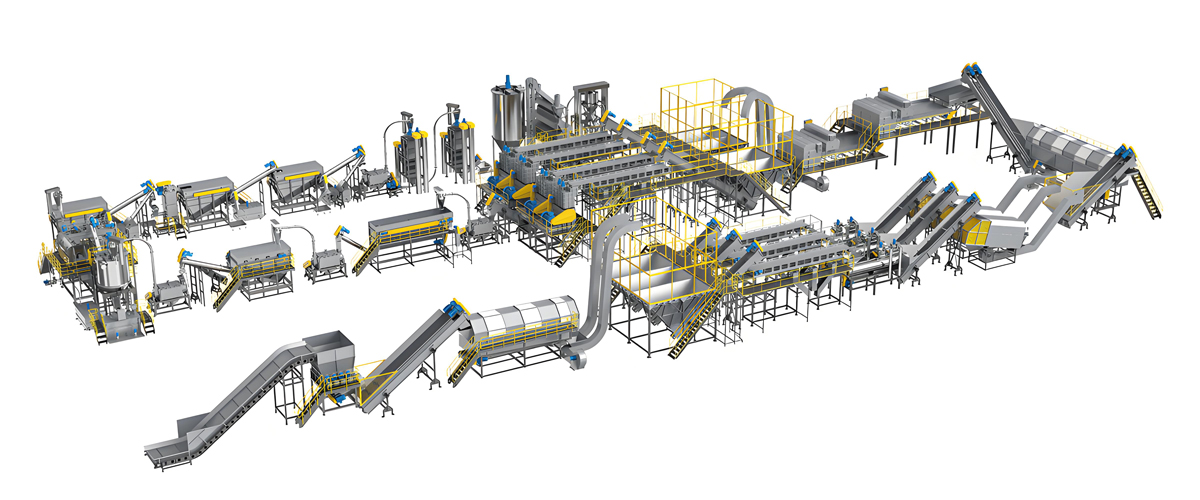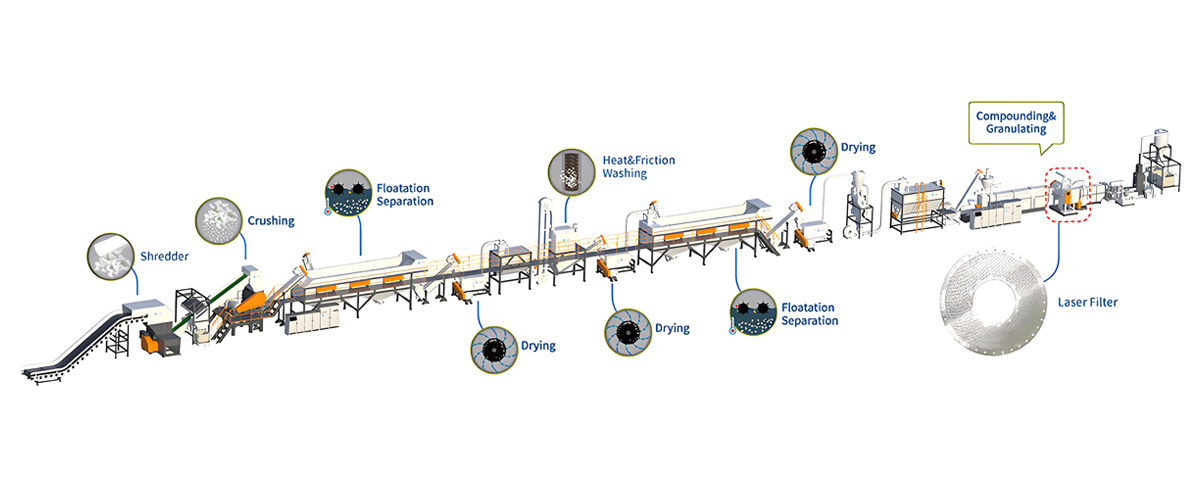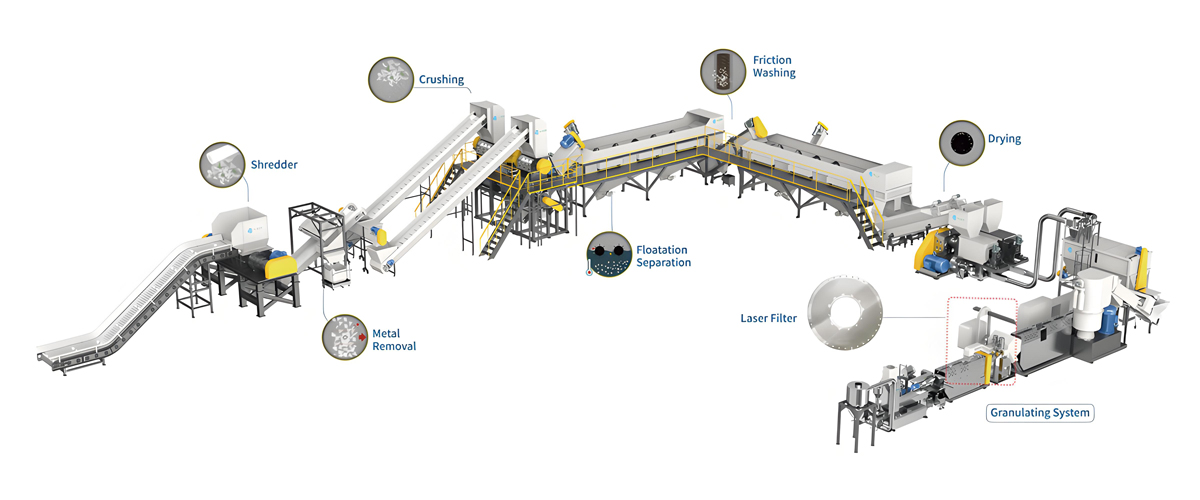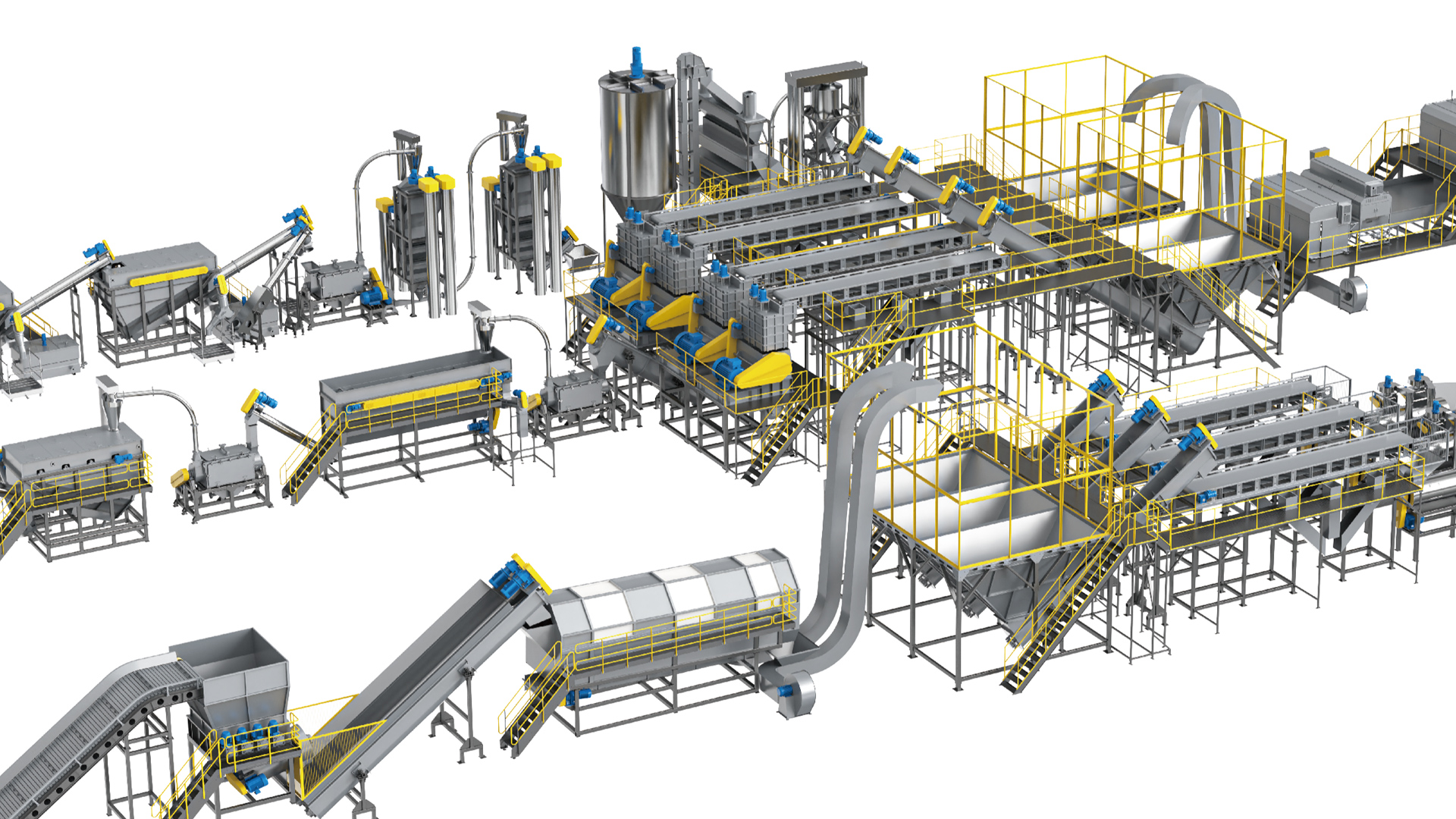

Cleaning conveyor belts is one of the most overlooked maintenance tasks in a plastic recycling washing line, yet it directly controls product quality, line availability, and operating cost. This guide explains how to clean conveyor belts in a plastic recycling washing line with a graded, shift-ready standard operating procedure that any plant can adopt. You will learn why belt hygiene is the hidden bottleneck of a washing line, how contamination differs from the dry infeed section to the clean product discharge section, which chemicals match which soil type, and how to build a five-level cleaning system that protects belt life while preventing cross-contamination between batches. The recommendations below reflect standard engineering practice for plastic recycling washing lines and the design philosophy of Polyretec, a Wanplas factory that has built washing and pelletizing lines since 2010 and now serves more than 50 countries.
Why Conveyor Belt Cleaning Is the Hidden Bottleneck
Most plant managers track throughput, power, and water, but few track the condition of the conveyor belts that move material between the crusher, friction washer, float tanks, dewatering, and drying stages. In a plastic recycling washing line the conveyor belt is not a passive transport device. It is a contamination carrier. Whatever sticks to the belt surface travels with the product, deposits on the next machine, and re-enters the stream at the worst possible moment.
The Real Cost of a Dirty Belt
A dirty conveyor belt creates five measurable problems, and each one compounds the next. First, cross-contamination: when a line runs agricultural film, then woven bags, then a colored HDPE batch, a thin film of previous material stays on the belt. Even a small residue shifts the color and melt behavior of the next batch. Second, material buildup on the belt surface causes tracking deviation. The belt rides off-center, the edges scrape the frame, and the line must be stopped to re-center it. Third, rollers and pulleys accumulate sludge, lose grip, and slip, which lowers effective belt speed and creates uneven gaps. Fourth, warm, wet sections grow biofilms and develop odor, which is unacceptable on lines that produce food-contact-regrade flakes. Fifth, dried-on deposits act like sandpaper against the belt and accelerate wear at the exact point where the belt bends around a pulley.
Quantifying the Impact Without Guesswork
The impact can be measured in percentages rather than opinions. On lines that clean belts only during long stoppages, unplanned downtime attributed to belt and roller faults typically represents 8 percent to 14 percent of total downtime. Material yield loss from belt-borne cross-contamination and rework commonly reaches 2 percent to 5 percent of throughput on lines that handle multiple colors or multiple polymer types in the same week. On food-grade PET lines, a single cross-color event can force a full shift of flakes into off-grade reuse, which is a much larger loss than the few minutes a proper clean would have taken. These numbers are not fixed; they move with discipline. Plants that adopt a graded cleaning routine usually cut belt-related downtime by roughly one third and reduce cross-batch rework substantially.
Bottom line: a clean conveyor belt is not a cosmetic detail. It is a quality gate. The belt is the cheapest place to stop contamination and the most expensive place to ignore it.
How Belt Condition Affects Downstream Pellet Quality
The end goal of a washing line is clean, dry flakes or regrind that feed a pelletizing line and become reusable pellets. Black specks and color shift in the final pellets almost always trace back to a contamination source upstream, and the conveyor belt is a frequent culprit. A belt that carries printed film residue into the friction washer deposits ink fragments that survive rinsing and appear later as dark spots in the melt. A belt that is not flushed after an alkaline hot-wash cycle carries residual alkali onto the next section, where it reacts with a different material and changes its surface. Treating belt cleaning as part of the quality system, not as a housekeeping afterthought, is the single most effective change a recycling plant can make to improve the black-point count and color stability of its recycled pellets.
How Working Conditions Differ Across Each Belt Section
A plastic recycling washing line is not uniform. The belt that carries dry, sandy bales at the infeed faces completely different abuse than the belt that carries clean, dry flakes to the silo. Designing one cleaning rule for the whole line is a mistake. The table below maps the typical sections of a washing line, the belt materials used, and the cleaning challenge in each zone. Use it as the backbone of your cleaning plan.
| Line Section | Typical Belt Material | Max Temperature | Alkali Resistance | Typical Contaminant | Cleaning Frequency |
|---|---|---|---|---|---|
| Dry infeed belt (baled or loose feed to manual sort or crusher) | PVC-coated fabric belt or rubber belt | up to 60 °C | Good | Soil, sand 5–20 percent, stones, metal, sharp rigid pieces | Per shift scrape; deep clean weekly |
| Crusher feed belt (to granulator or shredder) | Heavy-duty rubber belt or modular plastic belt (PP/PE) | up to 70 °C | Good to very good | Abrasive dust, edge cuts, embedded grit | Per shift inspect; deep clean weekly |
| Wet zone belt (after friction washer, hot wash, rinse) | Stainless steel wire mesh belt or modular plastic belt (PP/PE) | up to 95 °C | Excellent (stainless); very good (PP/PE) | NaOH 1–2 percent, surfactants, grease, ink, label glue, biofilm | Continuous rinse; alkaline cycle weekly |
| Post-dewatering transfer belt | Modular plastic belt (PP/PE) or perforated belt | up to 80 °C | Very good | Free moisture 3–8 percent, fine dust, residual detergent | Per shift wipe; deep clean weekly |
| Dry product belt (to silo or pelletizing) | PVC-coated fabric belt or food-grade modular belt | up to 60 °C | Good | Static dust, fiber, occasional flake, high cleanliness demand | Per shift vacuum/ionize; verify before each grade |
Why One Belt Type Cannot Serve Every Zone
The dry infeed belt prioritizes impact resistance and grip, so a PVC-coated fabric belt or a rubber belt is common. The wet zone prioritizes drainage and chemical resistance, so a stainless steel wire mesh belt or a modular plastic belt in PP/PE is preferred because it survives NaOH 1–2 percent at 60–85 °C without swelling. The dry product belt prioritizes surface cleanliness and low particle shedding, so a smooth, food-grade belt with an antistatic treatment works best. Matching the belt material to the zone is the first step in making cleaning easy; fighting the wrong belt material with the wrong chemical is the first step in premature failure.
Belt Material Quick Reference
- PVC-coated fabric belt: economical, smooth surface, good for dry and lightly damp duty, limited high-temperature and alkali endurance.
- Modular plastic belt, PP/PE: interlocked segments, easy to replace, excellent drainage, good chemical resistance, ideal for wet and product zones.
- Stainless steel wire mesh belt: maximum chemical and temperature resistance, full drainage, highest cost, best for hot alkaline and rinse zones.
- Rubber belt: high abrasion resistance for heavy, sharp infeed, but harder to clean thoroughly at the surface texture.
Classifying Contaminants and Matching Cleaning Chemistry
Effective cleaning starts with identifying what is actually on the belt. Different soils need different chemistry, temperature, and contact time. Using a strong chemical on a sand problem wastes money and risks the belt; using only water on a grease problem leaves a film that becomes a biofilm host. The table below is the decision matrix used to match soil to method.
| Contaminant | Recommended Method | Temperature / Concentration | Contact Time | Taboo |
|---|---|---|---|---|
| Sand, soil, inorganic grit | Mechanical rinse, brush, air blow | Ambient water, 3–8 MPa spray | Immediate, 2–5 min | No alkaline needed; avoid high pressure on fabric edges |
| Grease, wax, oil | Alkaline detergent plus non-ionic surfactant | NaOH 1–2 percent, 50–70 °C | 5–15 min circulation | Do not use on belts with unknown alkali tolerance |
| Ink, label glue | Alkaline wash plus mechanical scrub | NaOH 1–2 percent, 60–85 °C | 10–20 min, repeat scrub | Solvent wiping is discouraged on food-contact lines |
| Biofilm, mold spot | Sanitizing rinse | Sodium hypochlorite 50–200 ppm or peroxide-based sanitizer | 10–15 min contact | Check stainless and belt compatibility; never mix with acid |
| Scale, water deposit | Weak acid circulation | Citric or phosphoric acid, pH 3–5, ambient | 15–30 min, then neutralize | Do not leave acid on stainless; rinse to neutral |
| Static dust, fiber | Ionized air plus dust collection | Ambient, no chemical | Continuous at product zone | Avoid water that re-wets dry product |
Alkaline Detergent Details
The workhorse chemical for a recycling washing line is an alkaline detergent based on sodium hydroxide at 1–2 percent, boosted with a non-ionic surfactant. This combination emulsifies grease, saponifies wax, and loosens ink and glue. Keep the bath between 50 °C and 70 °C for routine grease, and up to 85 °C for heavy ink and glue in the hot-wash zone. Concentrations above 2 percent rarely improve cleaning and accelerate belt and seal aging, so 1–2 percent is the standard operating window. Always confirm the belt material can tolerate the chosen concentration; a stainless steel wire mesh belt tolerates the full range, while a PVC-coated fabric belt should stay in the lower end and at lower temperature.
Sanitizing Without Damaging the Line
For lines that produce food-contact-regrade material, a sanitizing step controls odor and biofilm. Sodium hypochlorite at 50–200 ppm is effective and economical, but it must be compatible with stainless steel and with the belt. Peroxide-based sanitizers are an alternative where chlorine odor or corrosion is a concern. The critical rule is never to mix sanitizer with acid, because that releases hazardous gas. After any sanitizing rinse, flush with clean water and confirm the belt surface returns to neutral pH before product contact.
The Five-Level Cleaning System: A Practical SOP
A single cleaning standard cannot cover a full week of operation. The most reliable plants use a five-level system in which each level has a defined frequency, labor, tool list, and acceptance check. The table below summarizes the system; the text after it explains each level as an executable procedure.
| Level | When | Time | Labor | Tools | Acceptance |
|---|---|---|---|---|---|
| Level 1 In-shift inspection clean | Every shift | 5–10 min | 1 operator | Scraper, handheld spray, brush | No visible buildup; scraper clears carryback |
| Level 2 End-of-shift wash | Daily | 20–40 min | 1–2 operators | High-pressure lance 3–8 MPa, rinse bar | No residue on return side; water runs clear |
| Level 3 Weekly deep clean | Weekly | 1–2 h | 2 operators | Alkali bath, brushes, roller access tools | White-cloth test passes; rollers clean |
| Level 4 Changeover clean | Material or color change | 30–90 min | 2 operators | Full kit, neutralization, sampling | Neutral pH, first-piece check approved |
| Level 5 Shutdown clean | Extended stop | 4–8 h | Maintenance team | Belt removal gear, bearing tools, descaling | Joint, bearing, tank, and pipe audit complete |
Level 1: In-Shift Inspection Clean
Run this every shift, ideally at each material break. Walk the line, check the primary and secondary scrapers, and clear any carryback that has built up at the discharge pulley. Use a handheld spray to knock off surface dust on dry belts and a stiff brush for caked spots. The whole task takes 5–10 minutes per belt and prevents small buildup from becoming a tracking fault. Acceptance is simple: no visible accumulation and the scraper is wiping the belt clean at the pulley.
Level 2: End-of-Shift Wash
At the end of each production day, wash the wet and post-dewatering belts with a high-pressure lance set within the material limit, typically 3–8 MPa. Keep the nozzle 200–400 mm from the belt, sweep at an angle rather than straight on, and never aim at the splice or the belt edge. Rinse until the return side and the rollers run clear. On dry belts, use a lower pressure and avoid wetting the bearings and motor. This level removes the day’s grease film and loose grit before it dries overnight.
Level 3: Weekly Deep Clean
Once a week, stop the relevant section and run an alkaline circulation on the wet zone, then hand-scrub the belt surfaces, the rollers, and the idlers. Pay special attention to the return side, which is where most plants fail their audit because it is out of sight. Flush the belt with clean water and run the white-cloth test: wipe a clean white cloth across the belt and confirm it stays free of color and residue. Document the result. This level is where biofilm and scale are interrupted before they establish.
Level 4: Changeover Clean to Prevent Cross-Contamination
This is the most important level for quality. Run it whenever you switch polymer type, color, or contamination level. The procedure is strict:
- Stop the line and lock out the drive (LOTO).
- Drain residual liquid from the section.
- Remove and clean the scrapers and any detachable side guides.
- Wash both the top and return surfaces with the matching chemical, then rinse.
- Rinse until a pH strip reads neutral on the belt surface.
- Perform the white-cloth wipe test on top and return sides.
- Run a first-piece check on the next batch and confirm no color or contamination transfer before full-speed production.
Skipping the neutralization or the first-piece check is the usual cause of a cross-color complaint. Treat Level 4 as a quality gate, not a cleaning chore.
Level 5: Shutdown Clean
During an extended stoppage, do the work that cannot be done while running. Remove the belt if the design allows, inspect the splice for delamination, check roller concentricity, regrease or replace bearings, descale the water tanks, and flush the supply piping. This level also resets the whole line to a known-clean state before a long idle, which prevents stale water and dried deposits from greeting the next startup.
Cleaning Hardware You Can Configure onto the Line
Manual cleaning works, but consistency comes from built-in hardware. The table below lists the options that can be specified on a new washing line or retrofitted to an existing one, with the zone each suits and the relative investment level.
| Configuration | Best Zone | Effect | Investment Level |
|---|---|---|---|
| Primary scraper (fixed blade) | All belts, discharge pulley | Removes bulk carryback continuously | Low |
| Secondary scraper (spring-loaded) | Wet and product belts | Cleans residual film after primary | Low |
| Rotary brush | Dry and post-dewatering belts | Loosens embedded grit and dust | Medium |
| High-pressure spray bar | Wet and rinse zones | Continuous wash; nozzle spacing 100–200 mm, 30–45 degree angle | Medium |
| Air knife | Post-dewatering and dry product | Strips surface water and light dust | Medium |
| Belt return wash tank | Wet zone return side | Cleans the hidden return surface | Medium |
| Water reuse and filtration | Whole line | Reuse rate 80–95 percent, cuts fresh water use | High |
| Settling and sand trap pit | Drainage collection | Captures grit before pump and filter | Medium |
| Ionized air plus dust extraction | Dry product belt | Removes static dust before silo | Premium |
Designing the Spray Bar Correctly
A high-pressure spray bar only works if the nozzles are spaced and angled to overlap. A spacing of 100–200 mm with a 30–45 degree fan angle covers the full belt width without gaps. Mount the bar so the spray hits the belt just after it leaves the pulley, where the surface is flat and accessible. Pair the spray bar with a scraper so the loosened soil is immediately carried away by the rinse water instead of re-depositing on the return run.
Why the Return Side Needs Its Own Hardware
The return side of the belt is the most neglected surface in any washing line, yet it is the one that drags contamination back under the machine and onto the next product. A belt return wash tank or a dedicated return-side spray loop closes this gap. On food-grade lines this is not optional; the return side must pass the same white-cloth test as the top.
Safety and Technical Boundaries for High-Pressure Flushing
High-pressure water is the fastest cleaner and the fastest way to damage a belt. The boundaries below keep the operator safe and the belt intact.
Pressure Limits by Belt Type
- Stainless steel wire mesh belt: up to 8 MPa is acceptable with proper nozzle distance.
- Modular plastic belt (PP/PE): keep within 4–6 MPa to avoid dislodging segments or stressing hinges.
- PVC-coated fabric belt: stay at 3–5 MPa; the coating can lift at higher pressure.
- Rubber belt: 3–6 MPa, but avoid the spliced joint entirely.
Operator and Equipment Safety
Keep the nozzle 200–400 mm from the surface. Never point the lance straight at a splice, the belt edge, a roller bearing, or a motor. Confirm the electrical enclosures are rated IP65 or IP66 before washing; if not, cover them. Apply LOTO (lockout/tagout) before any work that requires reaching into the belt path. Use the emergency stop and the belt mis-track switch as designed. When handling alkaline or sanitizing chemicals, follow the material safety data sheet, wear chemical-resistant gloves, goggles, and apron, and keep neutralization water nearby. Do not mix chemicals, especially sanitizer with acid.
Protecting Bearings and Motors
Water that enters a bearing or a motor is the most expensive cleaning mistake. Direct the spray away from pillow blocks, seal the cable entries, and verify the IP rating of every drive in the wet zone. After a high-pressure wash, run a short dry cycle so trapped water drains before the line is left idle.
How Cleaning Protects Belt Life and Tracking
Cleaning is not only about product quality; it is also the cheapest belt-insurance program you have. The three typical failures caused by poor cleaning are belt surface cracking from chemical or scale attack, splice delamination from trapped abrasive grit working at the joint, and edge curl from uneven loading and scraper drag.
What Correct Cleaning Buys You
A consistent, correctly chemical-matched cleaning routine typically extends usable belt life by a meaningful margin compared with reactive cleaning. Plants that move from occasional wash to a graded system commonly see belt service life improve in the range of 20 percent to 40 percent, because abrasive grit no longer rides the belt around every pulley and alkaline residue no longer attacks the coating between runs. The exact gain depends on material abrasiveness and how strictly the pressure and chemical rules are followed.
Tracking Faults from Dirty Rollers
When rollers and idlers accumulate sludge, they lose roundness or develop a high spot, and the belt begins to drift. Correct the symptom at the source: clean the rollers, then realign with the take-up tension, the training idlers, and the mis-track detection switch. Do not over-tension to force tracking, because over-tension accelerates splice fatigue. Clean rollers, correct tension, and a working mis-track switch are the stable triangle of belt reliability.
Wastewater, Drainage and Water Treatment for Belt Cleaning
Cleaning the belt creates dirty water, and that water has to go somewhere safe. The cleaning wastewater from a washing line typically carries a high solids load: soil, plastic fines, suspended detergent, and occasionally sanitizer. Handle it with a simple, layered system rather than letting it run to the floor drain.
Treatment Layers
- Settling and sand trap: captures the heavy grit that would otherwise erode pumps and clog filters.
- Screening or filtration: removes plastic fines and fiber before recycle.
- Reuse loop: returns clarified water to the spray bars, raising reuse rate to 80–95 percent.
- Alkali recovery and neutralization: recovers or neutralizes the alkaline stream before discharge.
- Compliance: discharge must meet local limits; in China the relevant GB standards for integrated wastewater discharge apply, and food-grade lines follow the stricter hygiene requirements.
Why Reuse Matters
A high reuse rate is not only environmental; it stabilizes your detergent concentration and reduces the volume that must be treated for discharge. Designing the belt-cleaning water into the same reuse loop as the washing line keeps the chemistry consistent and the operating cost lower.
Verifying Cleaning Results with Measurable Methods
Cleaning that is not verified is assumed, and assumptions fail audits. Use a mix of quick checks and periodic measurements.
Practical Verification Methods
- White-cloth wipe: the daily workhorse; a clean white cloth wiped across the belt must show no color or residue.
- Visual grading: grade each belt section from clean to fouled on a simple 1–5 scale at every Level 3 and Level 4 clean.
- Residue weighing: periodically wipe a defined area, collect the residue, and weigh it to trend cleanliness over time.
- Black-point count and color shift: compare the recycled pellets from a clean run versus a poorly cleaned run; count black specks and measure color difference (delta E) to quantify the belt’s impact.
- Microbial swab: on food-contact lines, swab the belt and confirm the sanitizing step holds counts within the required limit.
Closing the Loop to Pellet Quality
The most convincing verification is downstream. When the belt is cleaned to standard, the black-point count drops and the color difference between batches shrinks. Track these numbers monthly and the cleaning program pays for itself in reduced off-grade material.
Inspection and Record-Keeping for Continuous Hygiene
A cleaning system only lasts if it is recorded. Build three tiers of records.
Daily, Weekly, Monthly Records
- Daily: Level 1 and Level 2 checks, white-cloth result, operator signature.
- Weekly: Level 3 deep clean, roller condition, scraper wear, belt surface grade.
- Monthly: belt thickness measurement at wear points, splice status, roller concentricity, filter condition, water reuse rate.
What to Measure
Measure belt cover thickness with a gauge at the same fixed points each month; a steady loss tells you the cleaning pressure is correct, a sudden loss tells you grit is trapped or pressure is too high. Photograph the splice at each Level 5 clean so delamination is caught early. Record scraper blade wear and replace before it goes metal-to-belt. Keep the log in a visible location and review it monthly with the maintenance lead.
Common Mistakes That Ruin Belt Cleaning
Most belt-cleaning failures are repeated, predictable mistakes. Avoid these:
- Washing only the top surface and ignoring the return side, which carries contamination back under the line.
- Using the wrong chemical, such as a strong alkali on a belt that cannot tolerate it, causing swelling or cracking.
- Aiming high-pressure water straight at the splice or edge, which lifts the joint and curls the edge.
- Starting the next batch before the belt is dry and neutral after a changeover, which guarantees cross-contamination.
- Ignoring rollers and idlers, so sludge builds up and the belt starts to track off-center.
- Skipping the changeover verification, so a color or polymer transfer is discovered only in the final pellets.
- Letting water enter bearings and motors by ignoring IP ratings during washdown.
Connecting Belt Hygiene to Whole-Line Sanitation Management
Belt cleaning does not stand alone. On lines that produce food-contact-regrade material, belt hygiene is part of a documented sanitation program. Food-grade recycled content follows recognized frameworks such as EFSA and FDA review pathways, and the line must support the associated hygiene evidence: zone segregation between dirty and clean areas, controlled personnel flow so operators do not carry soil from the infeed to the product end, and validated cleaning records. A washing line designed with clear dirty and clean zones, covered transfers, and auditable belt-cleaning logs is far easier to qualify than one retrofitted after the fact. Treat the conveyor belt as the boundary marker between dirty and clean, and your sanitation management becomes straightforward.
Polyretec Washing and Linha de pelletizaçãos Built for Easy Cleaning
Polyretec, a Wanplas factory, designs washing and pelletizing lines with cleanability engineered in from the layout stage. The company has manufactured plastic recycling equipment since 2010, has delivered more than 100 projects worldwide, and supports operations in over 50 countries with a team of 24-plus engineers. Wanplas, the parent brand, unites a network of specialized factories under one quality standard and one service promise, so a Polyretec washing line arrives with group-level engineering discipline. Two product families are most relevant to belt-cleaning strategy.
Linha de lavagem de garrafas PET de qualidade alimentar
This line preprocesses post-consumer PET bottles through sorting, crushing, cold and hot washing, friction washing, rinsing, dewatering, and drying, producing clean flakes graded for food-contact-regrade use. Because it handles a single-polymer, high-value stream, belt hygiene directly protects flake brightness and black-point count.
| Especificação | Linha de lavagem de garrafas PET de qualidade alimentar |
|---|---|
| Capacidade | 500 kg/h to 6000 kg/h, configurable by flake grade |
| Infeed conveyor | Modular plastic belt (PP/PE), width 800–1400 mm |
| Wet zone belt | Stainless steel wire mesh belt, rated to 95 °C, NaOH 1–2 percent tolerant |
| Installed power | Approximately 150–450 kW depending on capacity |
| Water consumption | 1.5–3.5 m³/h with reuse loop |
| Footprint | 35–70 m length by 6–10 m width (layout dependent) |
| Applicable material | Post-consumer PET bottles, colored and transparent PET |
Exact power, water, and footprint values are confirmed per final order configuration and local utility conditions.
PP/PE Trituração de plástico mole and Linha de lavagem
This line processes soft films, woven bags, and agricultural film through crushing, washing, friction cleaning, dewatering, and drying, with one-step pelletizing available. Soft films shed more fine fiber and dust, so the dry infeed and post-dewatering belts need stronger mechanical cleaning and dust control.
| Especificação | PP/PE Trituração de plástico mole and Linha de lavagem |
|---|---|
| Capacidade | 500 kg/h to 1500 kg/h |
| Infeed conveyor | PVC-coated fabric belt or modular belt, width 1000–1600 mm |
| Wet zone belt | Modular plastic belt (PP/PE) or stainless steel wire mesh belt |
| Installed power | Approximately 120–280 kW depending on capacity |
| Water consumption | 1.0–2.5 m³/h with reuse loop |
| Footprint | 25–45 m length by 5–8 m width (layout dependent) |
| Applicable material | PE agricultural film, packaging film, woven bags, PP raffia |
Exact power, water, and footprint values are confirmed per final order configuration and local utility conditions.
Linha de pelotização de nova geração
For plants that pelletize in-house, the Polyretec Linha de pelotização de nova geração handles thin-walled LDPE film or thick-walled PE/PP regrind with robust construction. Belt cleaning on the upstream washing line protects the melt quality at the pelletizer, because cleaner flakes mean fewer black specks and a more stable process. The pelletizing stage itself is matched to the washed output rather than discussed here in process depth.
Application Industries and Recycled Materials
Polyretec washing and pelletizing lines serve the full range of post-consumer and post-industrial plastic recovery. The recycled materials that the lines are built to handle include PE agricultural film, PE and PP packaging film, woven bags and raffia, rigid PP, HDPE containers and drums, and PET bottle flakes. These feed downstream industries that depend on consistent, clean regrind and pellets: film and bag producers, pipe and profile extruders, injection molders, sheet and board extruders, and compounders that rebuild resin with filler or additive. By keeping the conveyor belts clean through the five-level system, a plant protects the value of every one of these material streams and keeps the recycled pellets within the color and contamination spec that buyers require.
Demand-to-Model Selection Guide
Use the table below to match your feed condition to a Polyretec line and the belt-cleaning configuration that protects it. This is a starting point; final configuration is confirmed against a sample and site survey.
| Material Type | Contamination Level | Target Capacity | Recommended Line | Belt and Cleaning Configuration |
|---|---|---|---|---|
| PET bottles | Low to medium, labels and glue | 500–6000 kg/h | Linha de lavagem de garrafas PET de qualidade alimentar | Stainless wire mesh wet belt; Level 3 alkaline + Level 4 changeover; sanitize option |
| PE agricultural film | High, soil 5–20 percent, grit | 500–1500 kg/h | PP/PE Trituração de plástico mole and Linha de lavagem | PVC or modular infeed; rotary brush; return wash; high-pressure wet bar |
| Packaging film, printed | Medium, ink and wax | 500–1500 kg/h | PP/PE Trituração de plástico mole and Linha de lavagem | Alkaline hot wash 60–85 °C; white-cloth verification each batch |
| Woven bags, raffia | Medium, dust | 500–1500 kg/h | PP/PE Trituração de plástico mole and Linha de lavagem | Modular belt; air knife post-dewatering; ionized air at product belt |
| Rigid PP, HDPE containers | Low to medium | 500–1500 kg/h | PP/PE Soft or Hard Crushing and Linha de lavagem | Rubber or modular infeed; primary plus secondary scraper; weekly deep clean |
| Film or regrind to pellets | Pre-washed input | Matched to washer | Linha de pelotização de nova geração | Upstream belt hygiene verified; clean transfer to feed hopper |
Service and Support from Polyretec, a Wanplas Factory
Polyretec backs its lines with the Wanplas group service standard. Before shipment, each line is run and tested so belt drives, scrapers, and spray bars are verified under load. On-site installation and commissioning are performed by engineers who also train your team on the five-level cleaning routine and the chemical limits described above. The Wanplas group policy provides USD 500 free parts per year, warranty replacement of damaged parts, and an open-factory invitation so you can audit the build quality in person. Remote monitoring and support let the engineering team check line data and advise on hygiene or tracking issues without delay. For plants moving into food-contact-regrade material, Polyretec can advise on the belt and sanitation configuration that supports EFSA and FDA related documentation pathways.
Frequently Asked Questions
How often should I clean the conveyor belts on a plastic recycling washing line?
At minimum, run a Level 1 in-shift scrape and inspection every shift, a Level 2 high-pressure wash at the end of each day, a Level 3 alkaline deep clean weekly, and a full Level 4 changeover clean whenever you switch material, color, or contamination level. Lines producing food-contact-regrade flakes should also keep sanitizing and microbial checks on the same cadence.
What chemical is safest for cleaning belts in the wet zone?
An alkaline detergent based on sodium hydroxide at 1–2 percent with a non-ionic surfactant, held at 50–70 °C for grease and up to 85 °C for heavy ink and glue, is the standard choice. A stainless steel wire mesh belt tolerates this fully; a PVC-coated fabric belt should stay at the lower concentration and temperature. Always rinse to neutral pH before product contact.
What pressure can I use with a high-pressure lance on the belt?
Keep the lance 200–400 mm from the surface and stay within material limits: up to 8 MPa for stainless steel wire mesh, 4–6 MPa for modular plastic belt, 3–5 MPa for PVC-coated fabric, and 3–6 MPa for rubber. Never aim straight at the splice, the belt edge, or any bearing or motor enclosure.
Why does my belt keep drifting after cleaning?
The usual cause is sludge on the rollers and idlers, which creates a high spot and throws the belt off-center. Clean the rollers, then correct tracking with take-up tension, training idlers, and the mis-track switch. Do not over-tension, because that fatigues the splice. Dirty return-side belts also deposit grit that accelerates edge wear and curl.
How do I verify that a belt is actually clean?
Use the white-cloth wipe on both top and return surfaces, apply a visual 1–5 grade, and periodically weigh residue from a defined area. The strongest proof is downstream: compare black-point count and color difference in the recycled pellets from a clean run versus a poorly cleaned run. Food-grade lines add a microbial swab after sanitizing.
Does belt cleaning really affect pellet quality?
Yes, directly. A belt that carries ink residue, alkali, or previous-color material into the washer deposits it back into the stream, and those fragments survive into the melt as black specks or color shift. Consistent belt hygiene is one of the cheapest, highest-impact ways to lower the black-point count and stabilize the color of recycled pellets.
Can I retrofit cleaning hardware onto an existing washing line?
Mostly yes. Primary and secondary scrapers, a rotary brush, a high-pressure spray bar, an air knife, and a return-side wash are common retrofits with Low to Medium investment. Water reuse, filtration, and a settling pit are Medium, while ionized air with dust extraction at the product belt is a Premium option best planned during a line upgrade.
Conclusion
Cleaning conveyor belts in a plastic recycling washing line is a graded discipline, not an occasional chore. Map each section to its true working condition, match the soil to the right chemistry within the 1–2 percent alkaline window, and run the five-level system from in-shift scrape to shutdown audit. Protect the belt with correct pressure limits, LOTO safety, and IP-rated washdown, and verify results with the white-cloth test and downstream black-point count. Polyretec, a Wanplas factory with more than 100 delivered projects across 50-plus countries, builds washing and pelletizing lines whose belt zones are engineered for exactly this routine, from the Linha de lavagem de garrafas PET de qualidade alimentar to the PP/PE Trituração de plástico mole and Linha de lavagem and the Linha de pelotização de nova geração. If you want a configuration matched to your material, contamination level, and target capacity, send your feed sample and site conditions for a tailored proposal, and visit the factory to see the line and the cleaning hardware running under load.