
Best Plastic Recycling Line with Austrian Tech for Turkey LDPE Waste
Polyretec, a Wanplas factory, has spent more than a decade engineering plastic recycling systems for film and flexible packaging waste, and Turkish operators represent one of the most active and demanding project groups in its global portfolio. This guide explains how to specify the best plastic recycling line for Turkey’s LDPE waste stream, why a central-European process know-how matters for film quality, and which Polyretec washing and pelletizing configurations fit plants of different sizes and contamination levels. If you run a collection yard, a packaging converter, or an extrusion plant in Turkey and you handle printed bags, agriculture film, or post-industrial LDPE offcuts, the next several thousand words will help you build a defensible technical and commercial case before you request a quotation.
LDPE, or low-density polyethylene, is the workhorse resin behind retail carrier bags, stretch wrap, agricultural mulch film, frozen-food pouches, and a large share of flexible industrial packaging. It is light, cheap, easy to seal, and remarkably durable, which is precisely why it accumulates so quickly and why mechanical recycling of it is both urgent and technically tricky. Turkey sits at a crossroads of European, Middle Eastern, and Central Asian trade flows, so its LDPE waste is unusually mixed: clean industrial offcuts sit side by side with heavily printed consumer bags, dust-laden agriculture film, and sticky label-bearing packaging. A generic shred-and-melt approach produces a dark, odorous, low-value regrind. A purpose-built line built on a European-origin process route, paired with robust Chinese manufacturing and responsive service from the Wanplas network, produces bright, low-gel, reusable pellets that command a premium in film blowing and pipe applications.
In this article you will learn how to grade your incoming LDPE waste, how a washing and pelletizing line is laid out station by station, which Polyretec machines and configurations are proven for Turkish feedstock, what output quality you should contract for, how to size the line against your available floor space and utilities, and how to select the right configuration without over- or under-buying. We close with a detailed FAQ and a plain-text invitation to engage the Polyretec engineering team for a tailored proposal. Every comparison here is technology against technology and specification against specification; we benchmark against generic equipment categories rather than naming any supplier.
Why Turkey’s LDPE Waste Stream Needs a Purpose-Built Recycling Line
Turkey generates and imports substantial volumes of flexible polyethylene film. Domestic retail, food, textile, and agriculture sectors consume LDPE packaging at scale, and the country also functions as a sorting and re-export hub for post-consumer plastics moving between Europe and Asia. The result is a feedstock that is rich in volume but inconsistent in quality. A recycling line specified for clean, single-source industrial scrap will struggle on this material, while a line designed around the realities of Turkish LDPE waste will run steadily and deliver a bankable pellet.
Three structural factors make a purpose-built line essential. First, print coverage is high. Turkish retail and bakery bags, as well as imported packaging, carry heavy flexographic and rotogravure ink. Ink is not polyethylene; it loads the melt with carbon and color bodies that form gels and dark specks unless removed upstream. Second, agriculture film arrives dirty. Greenhouse cover, mulch, and silage film carry sand, plant matter, and fertilizer residue that abrade screws and clog screens if not washed out. Third, the stream is thin and low-bulk-density. Loose film occupies a huge volume relative to its weight, so feeding, metering, and agglomeration must be engineered to avoid bridging and starvation at the extruder throat.
From a business perspective, the driver is margin. Virgin LDPE pricing in the region is exposed to feedstock and logistics volatility, so converters are motivated to secure a stable recycled-LDPE supply. A well-run line turns a disposal cost into a feedstock profit center. Polyretec, as part of the Wanplas group, frames the equipment decision around total recovered value per tonne of input, not just the purchase price of the machinery. That framing matters because the right line pays for itself through higher pellet grade, lower rejects, and lower consumable and energy use per kilogram of saleable output.
The regulatory backdrop also pushes toward better sorting and washing. Extended producer responsibility thinking, import and export controls on plastic waste, and growing buyer requirements for recycled content all reward plants that can document clean, consistent, traceable output. A line that records throughput, water chemistry, and pellet quality is easier to certify and easier to sell into brand-owner supply chains than a black-box shredder.
Understanding LDPE Film Waste: Properties, Contamination, and Input Spec
Before sizing any machine, you must grade the waste. LDPE film behaves differently from rigid bottles or profiles in almost every handling step. It is flexible, tends to ball up, floats in water, melts at a low temperature, and oxidizes if overheated. These traits dictate the entire line layout. The following subsections break the material down into the properties that affect equipment choice, the contamination you should expect in Turkish feedstock, and a specification table you can use as a intake acceptance sheet.
Physical and Chemical Profile of Post-Consumer LDPE Film
Low-density polyethylene has a density around 0.915 to 0.935 grams per cubic centimeter, which is lower than water, so it floats during sink-float separation. Its melting point sits near 105 to 115 degrees Celsius, and its melt flow index for film grades typically ranges from about 0.3 to 2.0 grams per ten minutes depending on the original application. Film thickness varies from ultra-thin stretch wrap at less than 10 microns to heavy agricultural sheet above 200 microns. The thinner the film, the more surface area per kilogram, which means more ink, more dust, and more entrained air per tonne, and therefore more aggressive washing and densification.
Chemically, LDPE is inert and compatible with itself across most grades, which is a recycling advantage. However, the same stream often contains small fractions of linear low-density polyethylene, metallocene grades, ethylene-vinyl acetate, and polypropylene, plus non-polyolefin contaminants such as polyvinyl chloride, polyethylene terephthalate, and paper or metal. Polyvinyl chloride is the most dangerous impurity because it releases hydrochloric acid and crosslinks the melt; even a fraction of a percent can ruin a batch, so detection and rejection of PVC must be designed into intake and, ideally, into the line.
Typical Contamination Load in Turkish LDPE Waste
Based on field experience across Mediterranean and Anatolian collection streams, printed retail bags show ink coverage that can reach 30 to 60 percent of surface area on heavily branded products, with residual organics such as food grease and adhesive labels. Agriculture film commonly carries 3 to 15 percent by weight of inorganic soil, sand, and crop residue after baling, and often carries pesticide or fertilizer films that demand thorough rinsing. Industrial offcuts are the cleanest, frequently below 1 percent contamination, but they may include staples, tape, and tie-wrap that must be removed mechanically.
Moisture is double-edged. Film arrives dry but absorbs water during washing, and if not dried below about 1 percent before extrusion it causes steam voids and surging at the die. Label stock introduces paper and adhesive that must be detached in the friction washer and floated off. Metal, mostly from closures and baling wire, must be caught by magnetic and ideally eddy-current separation before it reaches the shredder, protecting blades and downstream screens.
Input Specification Table — What a Line Must Accept
| Parameter | Typical Turkish LDPE film waste | Acceptance limit for a steady line |
|---|---|---|
| Material composition | LDPE dominant, up to 20 percent LLDPE or PP blend | Minimum 85 percent polyolefin; PVC below 0.1 percent |
| Film thickness | 8 to 250 microns | Full range accepted with adjustable shredder gap |
| Bulk density (loose) | 30 to 90 kg per cubic meter | Pre-densification required below 120 kg per cubic meter |
| Surface moisture on arrival | 0 to 5 percent | Up to 8 percent tolerable before pre-dry |
| Inorganic contamination (soil, sand) | 1 to 15 percent on agriculture film | Washable up to 12 percent; above needs pre-rinse |
| Ink coverage | 0 to 60 percent of surface | Full print tolerated with friction wash and filtration |
| Paper and label content | 0.5 to 4 percent | Removable by float separation and washing |
| Metal (ferrous and non-ferrous) | Trace to 0.3 percent | Magnetic plus eddy-current removal mandatory |
| Non-polyolefin plastic | Up to 3 percent (PET, PS) | Sink-float and optical sorting to below 1 percent |
| Bale or loose feed | Both common | Bale breaker plus metering hopper required |
Use this table as a contract between your intake team and your plant. If incoming loads exceed the acceptance limit on inorganic or PVC content, the line will underperform regardless of how good the extruder is. Screening at the gate protects your equipment and your pellet grade.
The European-Origin Process Route for LDPE Recycling
The phrase “best plastic recycling line” is meaningless without a process philosophy behind it. The approach that has proven itself on difficult film waste draws on central-European process know-how developed over decades of tight environmental standards and high energy costs. The defining idea is to do as much cleaning and separation as possible in the cold, wet phase, before the plastic is ever melted, and to protect the melt with continuous filtration and careful temperature control. This is sometimes described as an advanced Alpine-region engineering discipline: conserve energy, minimize water and additive use, and refuse to compromise on separation.
Polyretec combines this European-origin process route with Chinese manufacturing scale, which is why the Wanplas group positions these lines as cost-effective without compromising quality. The manufacturing footprint keeps the capital cost index near a baseline of 100, while imported units from high-wage regions often sit at an index of 180 to 230 for comparable capacity. The engineering logic, however, is the same disciplined route described below.
Pre-Treatment and Size Reduction
The first real operation is opening the bale and metering it. A bale breaker loosens compressed film, a vibrating or weighted metering hopper feeds at a controlled rate, and a pre-wash or pre-soak tank begins to soften labels and release loose dirt. Only then does size reduction happen. For film, a single-shaft shredder with a wide throat produces wet, manageable flake rather than attempting to granulate dry film, which tends to smear and heat up. Wet shredding also suppresses dust and reduces the risk of ignition from static, an under-appreciated safety benefit.
Washing, Friction, and Separation
After shredding, the flake enters a hot or warm caustic-free wash with mechanical agitation, then a friction washer that rubs flake against flake and against a perforated screen to dislodge ink and fines. A sink-float tank exploits the density gap: LDPE floats and is skimmed, while PVC, PET, glass, and dense minerals sink and are purged. A second friction and rinse stage, sometimes with a mild detergent or a dedicated de-inking agent for heavily printed bags, brings residual surface contamination down to a contractable level. Finally a centrifuge and thermal dryer reduce moisture to below 1 percent.
Drying and Agglomeration
Dry flake is light and fluffy, which is hard to feed uniformly into an extruder. Agglomeration, or densification, gently heats the flake with controlled shear and a little added water to form a denser, free-flowing bulk that meters reliably. The goal is to raise bulk density without melting the polymer, keeping the material in a solid, re-processable state. This step is critical for thin printed film, which otherwise bridges in the hopper and causes extruder surging.
Melt Filtration and Pelletizing
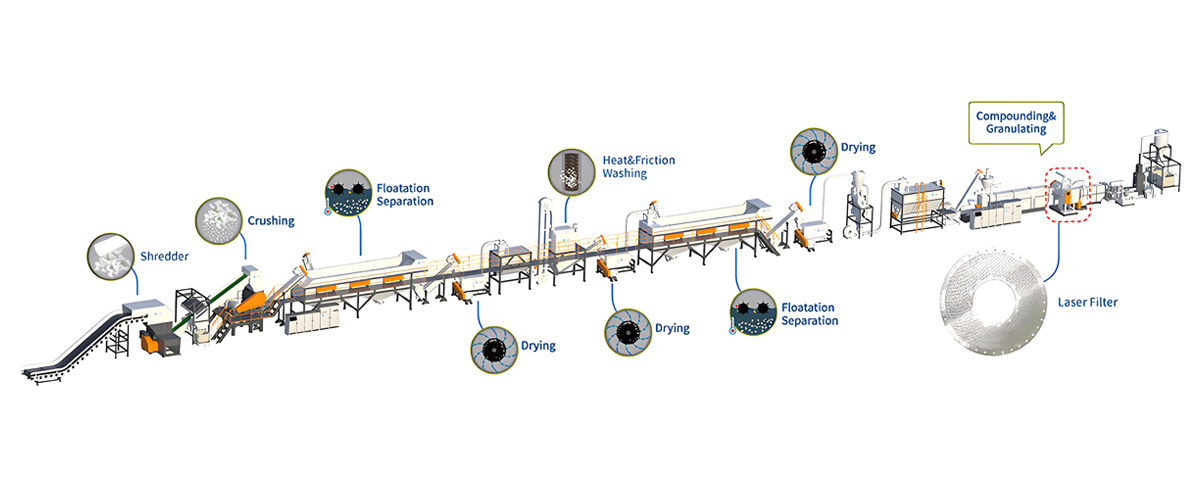
Clean, dry, densified flake is melted in a single-screw or twin-screw extruder, devolatilized under vacuum to strip odor and residual moisture, and forced through a continuous screen changer that catches any remaining gels, carbon, or tramp solids. The filtered melt is cut into pellets by a strand, water-ring, or die-face system chosen for the application. For film-to-film reuse, a die-face or water-ring cut gives uniform, low-dust pellets ideal for blending back into blown film. The entire melt path is run cool and stable to minimize thermal degradation of the LDPE.
Polyretec PP/PE Soft Plastic Crushing and Washing Line
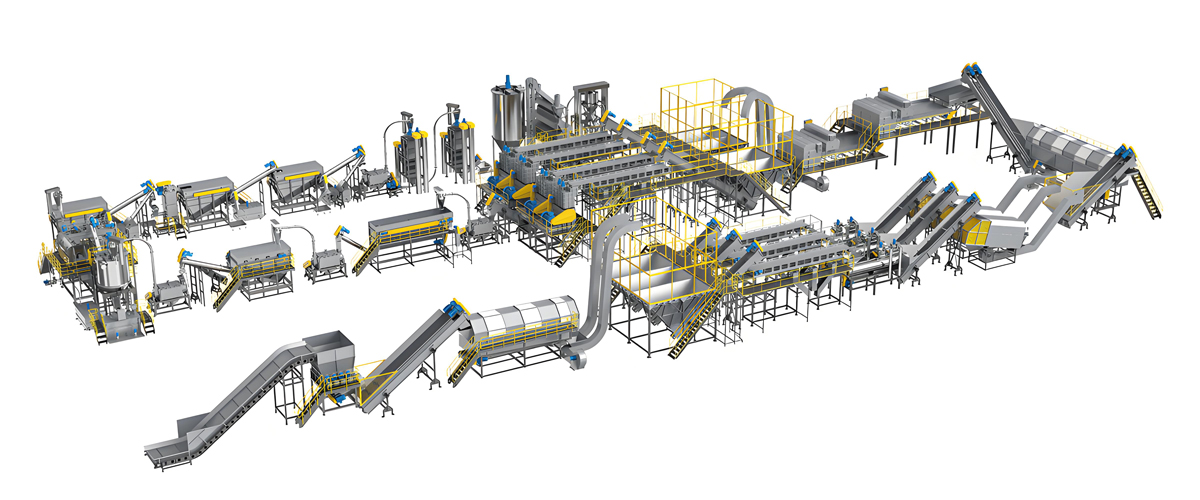
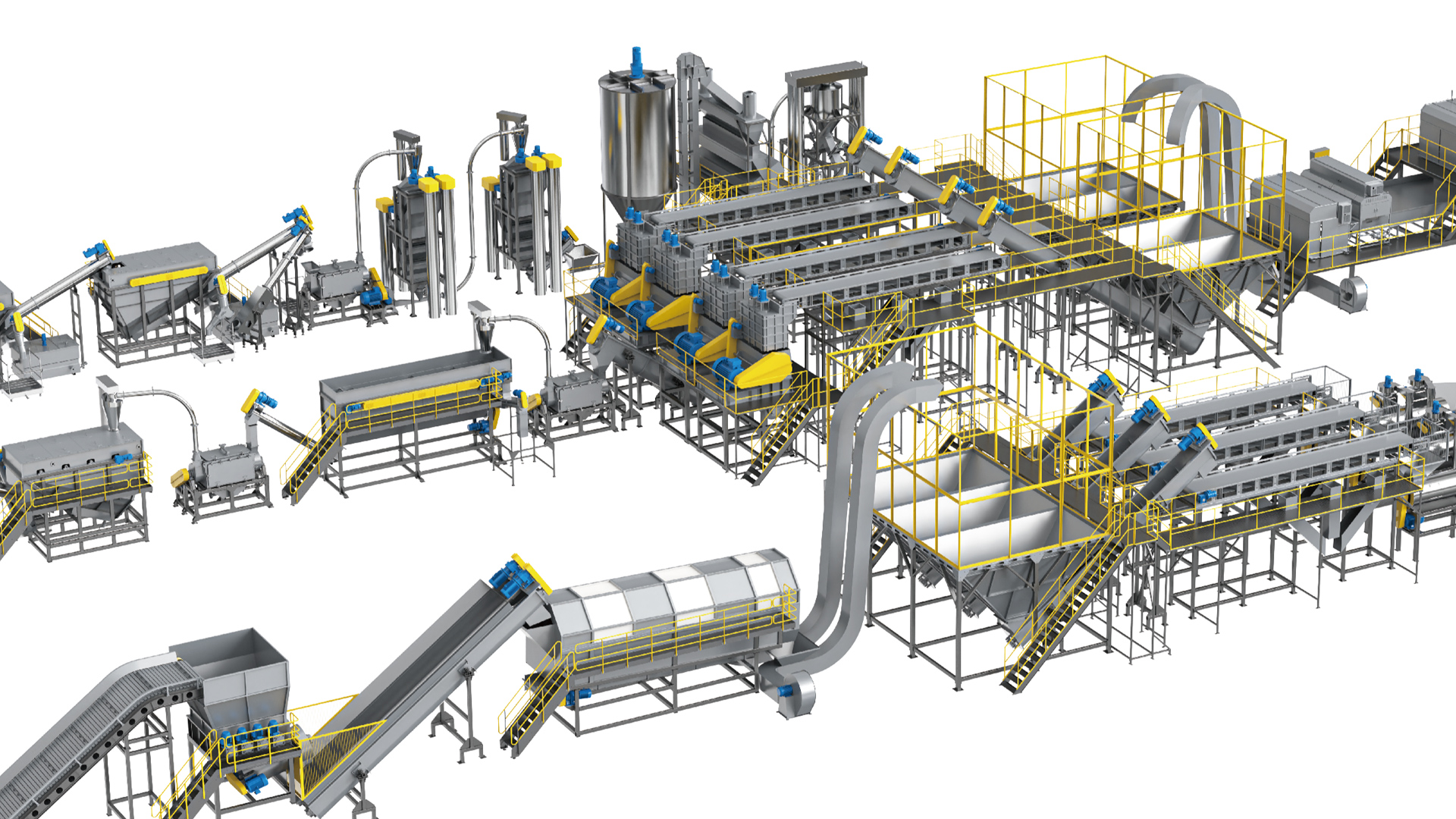
Polyretec’s PP/PE Soft Plastic Crushing and Washing Line is the wet-front workhorse for film and flexible packaging. It is offered as the PTW series built around throughput tiers, and the PTW1000 configuration has been field-proven on fully automated PP and PE film washing in demanding installations, confirming the design for high-print, high-contamination feedstock. The line is modular: you select the bale handling, shredding, washing, and drying stations to match your contamination profile and target throughput.
The design philosophy mirrors the European-origin process route: aggressive cold-phase cleaning, generous friction capacity, multi-stage separation, and a final drying train that protects the downstream extruder. For Turkish printed bags and agriculture film, Polyretec typically recommends a reinforced friction washer pair and an extended sink-float stage to pull out labels and dense minerals. The line integrates directly with a Polyretec pelletizing line, so the washed flake can move by conveyor or agglomerator into the extruder without manual re-handling.
Core Stations of the Washing Line
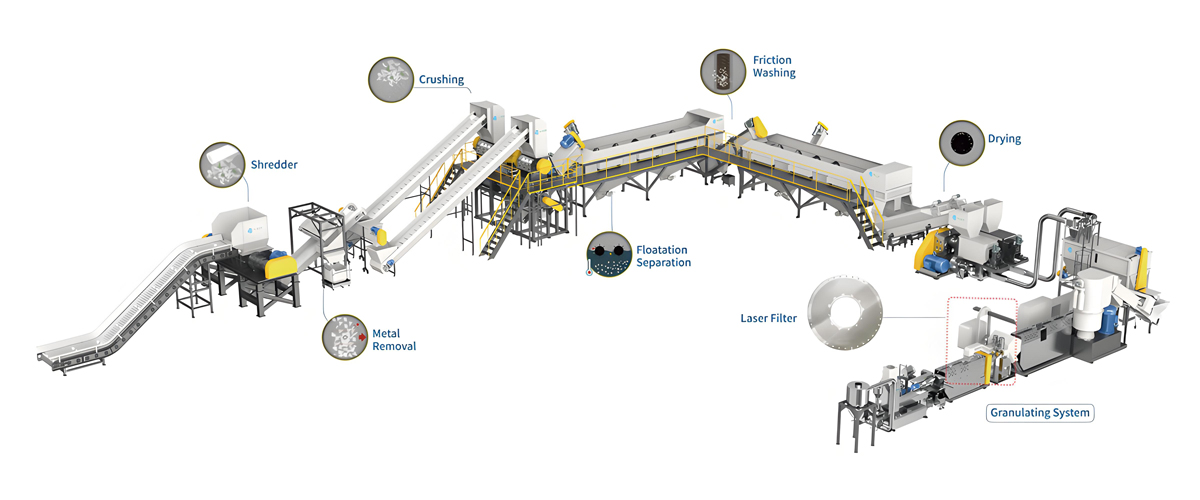
The standard station sequence is a bale breaker and metering hopper, a single-shaft wet shredder, a pre-wash tank, a hot or warm wash drum, a first friction washer, a sink-float separation tank, a second friction washer with optional de-inking, a centrifuge, a thermal dryer, and a screening and storage silo. Magnetic separation sits at the intake and again after shredding; an optional optical or density sorter can be inserted before the float tank for mixed-post-consumer streams. Every station is skid-mounted and pre-piped for fast installation, with a centralized control cabinet running the line in a synchronized, load-following mode.
Washing Line Configuration Table
| Configuration | Throughput kg/h | Shredder motor kW | Friction washer power kW | Water demand m3/h | Footprint m2 | Best-fit feedstock |
|---|---|---|---|---|---|---|
| PTW-500 | 500 | 55 | 2 x 22 | 2.5 to 3.5 | 120 | Clean industrial offcuts, post-industrial film |
| PTW-800 | 800 | 75 | 2 x 30 | 3.5 to 5.0 | 160 | Mixed retail bags, light agriculture film |
| PTW-1000 | 1000 | 90 | 2 x 37 | 4.5 to 6.0 | 200 | Heavily printed bags, dirty agriculture film |
| PTW-1500 | 1500 | 132 | 3 x 37 | 6.0 to 8.5 | 260 | High-volume mixed post-consumer LDPE |
Throughput figures assume film in the typical 30 to 90 kilogram per cubic meter loose bulk range and contamination within the acceptance limits described earlier. Very thin stretch wrap or very dirty mulch film will trend toward the lower end of each range until the line is tuned. Polyretec engineers tune rotor speed, wash temperature, and dwell time during commissioning to lock in the rated output on your actual material.
Polyretec New Generation Pelletizing Line
The Polyretec New Generation Pelletizing Line turns washed, dried, and densified LDPE flake into uniform, reusable pellets. It is built for thin-walled LDPE films and thick-walled PE and PP regrind alike, with a robust construction intended for continuous post-consumer operation. For Turkey’s film-dominant waste, the line is usually paired directly after the PTW washing line so that flake never touches the floor between stages, reducing re-contamination and labor.
The extruder is a high-torque single-screw unit with a long, well-zoned barrel for stable melting and devolatilization. A large-surface screen changer with continuous or rapid-exchange operation protects the die from gels and grit. Cooling and cutting are selected per application: water-ring or die-face hot cutting for film-grade pellet that must blend cleanly into blown-film lines, or strand cutting where the customer prefers a familiar, easy-to-handle pellet. The Wanplas group supplies matched downstream and controls so the washing and pelletizing halves run as one synchronized line rather than two machines bolted together.
Pelletizing Modes for LDPE Film
For LDPE film going back into film, die-face hot cutting with a water-ring quench gives the most uniform, dust-free pellet and the best subsequent melt homogeneity. Strand cutting is more forgiving on maintenance and is a good choice when part of the output is sold to compounders or pipe producers who are less sensitive to pellet geometry. The choice is driven by your customer’s extruder and by whether you value maximum film clarity versus maximum operating simplicity. Both modes run on the same New Generation platform with a swappable cutting head.
Crusher and Pelletizer Specification Table
| Equipment | Key specification | Typical range | Function in the line |
|---|---|---|---|
| Single-shaft wet shredder | Rotor width and speed | 1000 to 1500 mm, 60 to 90 rpm | Opens film into manageable wet flake |
| Friction washer | Motor and screen | 22 to 37 kW, perforated 4 to 8 mm | Dislodges ink, fines, and labels |
| Sink-float tank | Effective volume | 4 to 10 cubic meters | Separates LDPE from dense contaminants |
| Centrifugal dryer | Rotation speed | 900 to 1400 rpm | Removes surface water before thermal dry |
| Compounding extruder | Screw diameter | 100 to 180 mm, L/D 28 to 36 | Melts, devolatilizes, and homogenizes |
| Screen changer | Filter area and type | Continuous belt or rapid plate, 60 to 120 mesh | Traps gels, carbon, and tramp solids |
| Pelletizer | Cutting mode | Die-face water-ring or strand, 800 to 2000 kg/h | Forms uniform reusable pellets |
The table lists the equipment families that make up a complete Polyretec film recycling line, with the specification bands that apply across the LDPE range. Exact figures are fixed during configuration based on your throughput and contamination targets, and they are verified during the factory test run before shipment.
Output Flake and Pellet Quality Specifications
Quality is where a disciplined line earns its keep. You should contract output against measurable parameters, not vague adjectives. The tables below set realistic, attainable targets for washed flake and for final pellet, calibrated to Turkish feedstock after a correctly specified Polyretec line. These numbers assume feedstock within the intake acceptance limits; pushing dirtier input will shift results unless the washing stage is upsized accordingly.
Flake Quality Parameters
Washed flake is judged on size uniformity, residual moisture, and remaining contamination. For film derivatives the flake is typically smaller and lighter than bottle flake, so the size band is set to feed the agglomerator cleanly. Residual organic and inorganic contamination below a few tenths of a percent is the marker of a line that is actually washing, not just rinsing.
Pellet Quality Parameters
Pellet quality is judged on appearance, homogeneity, and processability. Brightness matters for film-to-film reuse; gel count and black specks matter for printability and for customers running fine dies; melt flow index stability matters for consistent extrusion. A good LDPE recycle pellet should be re-introducible into blown film at meaningful loadings without haze or odor complaints.
| Parameter | Target for washed flake | Target for final pellet | Test note |
|---|---|---|---|
| Flake or pellet size | 8 to 16 mm flake | 2.5 to 4 mm pellet | Screen and cutter set per grade |
| Moisture after drying | Below 1.0 percent | Below 0.2 percent | Karl Fischer or oven method |
| Residual contamination | Below 0.3 percent | Below 0.1 percent | Ash and extraction analysis |
| Black specks and gels | n/a | Below 15 per 50 square cm plaque | Press plaque inspection |
| Bulk density | Above 250 kg per cubic meter (agglomerated) | Above 450 kg per cubic meter | Free-flow required for hopper |
| Melt flow index drift | n/a | Within plus or minus 0.3 g per 10 min | Matched to virgin blend window |
| Odor | Neutral after wash | Neutral, no burnt note | Devolatilization verified |
| PVC content | Below 50 ppm | Below 20 ppm | Critical for melt stability |
These targets are achievable on printed and agriculture film when the washing front is sized correctly. If a buyer demands near-virgin brightness, the line should include an extended rinse and, for the highest grades, an optional optical sorting or a second de-inking stage. The Wanplas engineering team will model the required stages against a sample of your actual waste before quotation.
Application Industries for Recycled LDPE Pellets and Flakes
Recycled LDPE from a properly run line is not a downgrade; it is a versatile feedstock with a broad industrial base in Turkey and the wider region. The application determines how strict your quality contract must be, which in turn guides the washing and pelletizing configuration. Mapping output grade to end use is the most reliable way to avoid both over-specifying (wasted cost) and under-specifying (rejected loads).
The largest outlet is film blowing for carrier bags, shrink and stretch wrap, and agricultural film, where recycled LDPE is blended with virgin at loadings that depend on the required clarity and strength. Construction uses recycled LDPE in damp-proof membranes, vapor barriers, and irrigation pipe, segments that tolerate slightly wider specs. The pipe and profile sector, served across the Wanplas group’s extrusion expertise, absorbs steady volumes of film-grade pellet for non-potable and conduit applications. Injection and rotomolding shops use densified flake and pellet for bins, caps, and containers where color and minor gel content are acceptable.
Beyond these, recycled LDPE feeds masterbatch and compound production, where it serves as a carrier resin, and it supports the growing market for refuse sacks and industrial liners that do not require food contact. For any food-contact claim you must validate against the applicable regional regulation using certified test reports; this article describes machinery capability, not regulatory certification, and food-grade status must be established with formal testing on the actual output.
| Application industry | Typical product | Required pellet grade | Recommended Polyretec config |
|---|---|---|---|
| Flexible packaging | Carrier bags, stretch wrap | High brightness, low gel, low odor | PTW-1000 plus double de-ink and water-ring pelletizing |
| Agriculture | Mulch, greenhouse film | Medium brightness, strong mechanicals | PTW-1000 or 1500 with extended wash |
| Construction | Membranes, conduit pipe | Standard grade, mechanicals priority | PTW-800 plus standard pelletizing |
| Compounding | Masterbatch carrier | Consistent MFI, low contamination | PTW-1000 plus continuous filtration |
| Household goods | Bins, liners, caps | Standard to medium grade | PTW-500 or 800, strand cutting acceptable |
Capacity versus Footprint: Sizing Your Plant
Floor space is a frequent constraint in Turkish urban and peri-urban plants, so capacity must be planned against the building, not just against the market. The washing front is the largest consumer of area because it includes tanks, conveyors, and drying, while the pelletizing line is more compact but taller. The table below gives planning footprints for a complete line, including maintenance aisles, but excluding raw-material and finished-goods storage, which you should budget separately.
| Throughput kg/h | Line length m | Line width m | Area m2 | Operators per shift | Installed power kW | Water recycle rate |
|---|---|---|---|---|---|---|
| 500 | 22 | 6 | 132 | 1 to 2 | 180 to 220 | Up to 85 percent closed loop |
| 800 | 26 | 7 | 182 | 2 | 260 to 320 | Up to 85 percent closed loop |
| 1000 | 30 | 8 | 240 | 2 to 3 | 340 to 420 | Up to 90 percent closed loop |
| 1500 | 36 | 9 | 324 | 3 | 480 to 600 | Up to 90 percent closed loop |
Water management deserves special attention. A closed-loop water system with sedimentation and filtration recycles the majority of process water, cutting both consumption and discharge. Polyretec configures the wash circuit with a balance tank and a slime-handling stage so that the small bleed stream is manageable under local environmental rules. Planning for a water-treatment footprint alongside the machine footprint avoids unpleasant surprises at commissioning.
Power is another planning input. The figures above are installed capacity; actual draw depends on throughput and how much of the washing is heated. Running the wash warm rather than hot, and recovering heat where practical, moves energy cost from High toward Medium on a per-tonne basis. The Wanplas group’s shared engineering standard encourages these efficiencies so that operating cost, not just capital cost, stays competitive.
Selection Guidance: Matching Requirement to Polyretec Configuration
Choosing a line is a mapping exercise: define your feedstock, your target throughput, your available space, and your most demanding customer, then let those four inputs point to a configuration. The table below is a practical decision aid. Use it together with the intake acceptance sheet from the LDPE-character section, because the two together prevent the most common mistake, which is buying a line sized for clean industrial scrap and then feeding it dirty post-consumer film.
| Customer situation | Recommended Polyretec configuration | Throughput | Why this fits |
|---|---|---|---|
| Converter with clean in-house offcuts only | PTW-500 washing plus standard pelletizing | 500 kg/h | Low contamination needs lighter wash, protects budget |
| Retail-bag collector, mixed printed film | PTW-800 with double friction wash | 800 kg/h | Handles ink and labels without overbuilding |
| Agriculture-film recycler, heavy soil | PTW-1000 with pre-rinse and extended float | 1000 kg/h | Removes sand and organics before shredding |
| Post-consumer sorter, very mixed stream | PTW-1500 with optical or density sorting | 1500 kg/h | High capacity plus upstream purity control |
| Tight urban site, limited floor space | PTW-800 compact layout, vertical dryer | 800 kg/h | Smaller footprint, same grade |
| Film-to-film premium grade required | PTW-1000 plus water-ring pelletizing and continuous filtration | 1000 kg/h | Maximizes brightness and pellet uniformity |
Decision Checklist
Before requesting a quotation, answer these questions and attach them to your inquiry: what is the average and peak monthly volume of LDPE waste; what is the print coverage and contamination range; what is the cleanest and dirtiest load you expect; what pellet grade do your customers require; what floor area and ceiling height are available; what three-phase power and water connections exist on site; and what is your target payback horizon. Polyretec uses this dossier to fix the configuration and to set the quality contract, so completeness directly improves the accuracy of the proposal.
Technology Comparison: Process Routes for LDPE Film
It helps to see the Polyretec wet-wash-plus-pelletize route next to the cheaper alternatives, because the lowest purchase price is rarely the lowest cost per saleable kilogram. The comparison below is technology against technology, not brand against brand. The baseline cost index of 100 represents a correctly specified Polyretec-style wet line; alternatives are indexed relative to that baseline for capital outlay.
| Criterion | Wet washing plus pelletizing | Agglomeration only | Direct extrusion without wash |
|---|---|---|---|
| Output quality | High, bright, low gel | Medium, variable | Low, dark, odorous |
| Contamination tolerance | High (print, soil, labels) | Low to medium | Very low |
| Energy use | Medium | Low | Lowest |
| Water use | Medium (mostly recycled) | None | None |
| Capital cost index | 100 (baseline) | 55 to 70 | 40 to 55 |
| Operating cost per tonne | Medium | Low | Lowest but high reject cost |
| End-use value | Film, pipe, compound | Low-grade molding only | Downgraded, limited outlets |
| Reject and rework risk | Low | Medium | High |
The pattern is consistent: the wet route costs more to build and run, but it unlocks the highest-value outlets and the lowest reject risk, which is exactly what matters for Turkish feedstock that is print- and soil-heavy. Agglomeration-only makes sense only for consistently clean industrial offcuts. Direct extrusion without washing should be reserved for the cleanest, single-source scrap and is a poor fit for the mixed post-consumer stream that defines the Turkish market.
Service, Commissioning, and the USD 500 Free Parts per Year Policy
A recycling line is a long-term relationship, not a one-off purchase. Polyretec, as a Wanplas factory, stands behind its equipment with the group’s shared service commitments, and the most concrete of these is the USD 500 free parts per year policy that applies across the Wanplas brand network. This means that within the covered period, a defined annual value of wear parts is supplied without additional charge, smoothing the cost of blades, screens, seals, and routine consumables that any washing and pelletizing line consumes.
Installation, Testing, and Training
Each line is assembled, piped, and electrically checked at the factory, then run on a representative material during a witnessed test before shipment. After arrival, Polyretec engineers supervise installation and commissioning, tune the stations to your actual waste, and train your operators and maintenance staff on safe operation, blade changes, screen management, water-chemistry control, and basic fault diagnosis. The objective is that your team can run the line confidently and independently within the first weeks of operation.
Spare Parts and Warranty
Beyond the USD 500 free parts per year allowance, damaged components within the warranty window are replaced per the Wanplas quality commitment, which ties delivery to stated production capacity and quality standards. Polyretec maintains a recommended spare-parts list so you can stock the high-turnover items locally and avoid unplanned downtime. Critical wear parts are designed for fast exchange, and the continuous screen changer in particular is specified to minimize interruption during long runs.
Open Factory and Remote Support
The Wanplas group operates an open-factory policy: prospective and existing customers are welcome to visit, inspect running lines, and audit process discipline before committing. For day-to-day support, remote monitoring and diagnostic assistance let engineers review control data and guide your team through adjustments without waiting for a site visit. Combined with the free-parts policy, this keeps the lifetime cost of ownership predictable and the line available.
Frequently Asked Questions
What exactly is an LDPE recycling line?
An LDPE recycling line is an integrated set of machines that converts low-density polyethylene film waste into clean flakes and reusable pellets. It combines size reduction, wet washing and separation, drying and densification, melting with filtration, and pellet cutting. Polyretec supplies both the washing front and the pelletizing line so the two run as one synchronized system rather than disconnected machines.
Why is LDPE film harder to recycle than rigid plastic?
Film is thin, light, and flexible, so it occupies huge volume per kilogram, floats in water, and tends to ball up or bridge in hoppers. Its large surface area carries more ink and dust than rigid items, and its low melt point makes it prone to thermal damage if overheated. These traits demand pre-densification, aggressive washing, and careful temperature control that rigid-bottle lines do not need.
How much floor space does a 1000 kg/h line need?
A complete Polyretec line at 1000 kg/h typically needs about 240 square meters including maintenance aisles, with a length near 30 meters and width near 8 meters. This excludes raw-material and finished-goods storage and the water-treatment footprint. Tight sites can choose a compact layout with a vertical dryer to reduce the area while keeping the same output grade.
What contamination level can the washing line handle?
The PTW series is designed for post-consumer film with print coverage up to about 60 percent and inorganic soil up to roughly 12 percent after baling, provided the stream stays above 85 percent polyolefin with PVC below 0.1 percent. Beyond those ranges, an extended pre-rinse, a second de-inking stage, or upstream optical sorting is recommended to protect pellet quality.
What pellet quality can I expect for film blowing?
With a correctly specified line and feedstock within acceptance limits, expect washed flake below 1 percent moisture, final pellet below 0.2 percent moisture, contamination below 0.1 percent, black-spec and gel counts suitable for blended blown film, and PVC below 20 parts per million. Brightness depends on how many de-inking and rinse stages you include.
How long is commissioning and what does the USD 500 parts policy cover?
Commissioning typically spans the installation period plus a tuning and training window of a few weeks, capped by a witnessed test run on your material. The USD 500 free parts per year policy covers a defined annual value of routine wear consumables such as shredder blades, washer screens, seals, and minor components, smoothing the recurring cost of running a washing and pelletizing line.
Can the line process heavily printed bags?
Yes. Printed retail and bakery bags are a normal Turkish feedstock. The route uses a reinforced friction washer pair and, for the heaviest inks, an optional de-inking stage, followed by continuous melt filtration to catch residual carbon and gels. The result is a pellet suitable for blending back into film rather than a dark, low-value regrind.
What utilities does the line require on site?
You need three-phase industrial power sized to the installed capacity, which ranges from about 180 kW at 500 kg/h to about 600 kW at 1500 kg/h, plus a water supply and drainage for the wash circuit. A closed-loop water system recycles up to 85 to 90 percent of process water, so the net consumption is a fraction of the circuit volume, and a small bleed stream is managed through the site’s treatment provisions.
Conclusion
Building the best plastic recycling line for Turkey’s LDPE waste is less about buying the cheapest machine and more about matching a disciplined process route to a difficult, print- and soil-heavy feedstock. Polyretec, a Wanplas factory, brings a European-origin process route, central-European process know-how, and advanced Alpine-region engineering discipline together with Chinese manufacturing scale, delivering a line whose capital cost index sits near a baseline of 100 while imported alternatives often reach 180 to 230 for comparable capacity. The PTW series washing line and the New Generation Pelletizing Line cover the full range from 500 to 1500 kg/h, turning printed bags, agriculture film, and industrial offcuts into bright, low-gel, reusable pellets for film, pipe, and compound applications.
The practical path is straightforward. Grade your incoming waste against the intake acceptance sheet, decide your target throughput and pellet grade, size the washing front for your worst realistic load rather than your best, and confirm the footprint, power, and water provisions on site. Lean on the selection table to avoid over- or under-buying, and contract output against the measurable quality parameters rather than vague promises. Back the investment with the Wanplas group’s service commitments, including the USD 500 free parts per year policy, factory test runs, supervised commissioning, and open-factory visits.
If you are planning a recycling line for LDPE film in Turkey, send a sample of your waste and your target hourly throughput to the Polyretec engineering team for a tailored configuration proposal, a quality contract, and an invitation to audit a running line at the factory. A short, well-prepared conversation at the specification stage will save far more than it costs once the plant is in operation, and it is the surest way to turn Turkey’s LDPE waste stream into a stable, profitable, and environmentally sound feedstock.