
When a pelletizing line suddenly starts to jam, the entire recycling plant feels it. Output drops, the granulating system trips on overload, strands pile up in front of the cutter, and operators spend more time clearing blockages than producing reusable pellets. Polyretec, a Wanplas factory, has spent more than a decade building plastic recycling equipment that turns post-consumer waste into clean, uniform pellets, and the single most common field complaint we hear from operators is granulating system jamming. This guide explains, in practical engineering terms, why jamming happens in a plastic pelletizing line, how to locate the real root cause instead of the obvious symptom, and how to fix it with adjustments to speed ratio, screen cleaning, knife alignment, temperature profile, raw material pre-drying, and disciplined maintenance. By the end you will have a step-by-step troubleshooting framework, a parameter window you can apply on the floor, and a clear view of how Polyretec pelletizing and washing lines are engineered to keep the cutting section running continuously.
How a Pelletizing Line Granulating System Works
A pelletizing line converts flake, film, or regrind into free-flowing, uniform plastic pellets. The granulating system is the final, most delicate stage, and it is where jamming almost always shows up first. To troubleshoot it, you must understand the two dominant cutting architectures and the path the melt travels before it becomes a pellet.
In a strand pelletizing system, also called strand cutting, the extruded melt passes through a die plate with multiple holes and forms continuous strands. A water bath or air cooling line solidifies those strands, a haul-off device pulls them at a controlled speed, and a rotary cutter slices them into cylindrical pellets. Strand pelletizing is robust, easy to clean, and forgiving with contaminated or heat-sensitive recycled material, which is why it remains a workhorse for post-consumer recycling. The jamming risk concentrates at the strand guide, the cooling trough, the puller, and the cutter throat.
In an underwater pelletizing system, sometimes described as die-face cutting underwater, the melt is cut directly at the die face by rotating knives inside a pressurized water chamber. The pellets are immediately transported by the process water to a centrifugal dryer. Underwater pelletizing offers excellent pellet uniformity and very high throughput, but it is less forgiving: any die-face imbalance, water-temperature fluctuation, or knife wear creates instant agglomeration and chamber blockage. Many operators also use water-ring or air-cooled die-face hot-cut variants, which share the die-face cutting principle but manage the pellet cooling differently.
The granulating system therefore sits at the intersection of melt quality, mechanical alignment, and thermal balance. When jamming occurs, the fault is rarely the cutter alone. It is usually a downstream symptom of an upstream problem: degraded melt, unstable feed, or a mis-tuned temperature and speed relationship. The table below contrasts the two architectures so you can frame the right diagnosis.
| Aspect | Strand Pelletizing | Underwater Pelletizing |
|---|---|---|
| Cutting location | Away from die, after cooling | At the die face, inside water chamber |
| Typical jam point | Strand guide, puller, cutter throat | Die-face chamber, knife, pellet transport |
| Material tolerance | High; handles contaminated regrind | Moderate; cleaner melt preferred |
| Throughput ceiling | Medium | High |
| Cleaning effort on jam | Low to medium | Higher, chamber disassembly |
| Best fit in recycling | Post-consumer film, mixed waste | Clean flakes, high-volume lines |
Both architectures share the same diagnostic logic: jamming is the visible result of a mismatch between how much melt arrives, how well it is solidified, and how precisely the cutter converts it into pellets. The next section gives you a diagnostic map you can use on the floor within minutes.
Symptom-to-Root-Cause Map for Jamming
The fastest way to stop repeat jamming is to stop treating every blockage as a cutter problem. Operators naturally blame the blades, but in recycling lines the blades are usually the last thing to fail. Build your diagnosis from the symptom, trace it backward to the cause, then apply the fix. The table below is the master reference used by Polyretec field engineers during commissioning and service calls.
| Symptom | Likely Root Cause | Corrective Action |
|---|---|---|
| Strands break before reaching cutter | Melt temperature too low, poor plasticization, high moisture | Raise die and barrel temperature, increase residence time, pre-dry feedstock |
| Pellets fused into agglomerates | Cutter speed mismatch, insufficient cooling, knife gap too large | Adjust cutter-to-haul-off ratio, increase cooling water flow, reduce knife gap |
| Screen changer pressure spikes and stalls | Contamination, mesh too fine, carbon buildup | Use coarser mesh, schedule more frequent screen changes, purge system |
| Material bridges in hopper or feeder | Moisture, fines, inconsistent bulk density | Install crammer feeder, add agitator, pre-dry and screen feedstock |
| Uneven pellet length with long tails | Knife misalignment, dull blade, wrong speed ratio | Realign knife to die face, sharpen or rotate blades, recalculate ratio |
| Dead die holes, uneven strand count | Degraded polymer, carbon deposit, cold start | Purge with cleaning compound, raise die temperature, clean die plate |
| Excessive fines and dust | Blade wear, incorrect gap, brittle melt | Replace blades, set correct gap, raise melt temperature slightly |
| Frequent overload trips on cutter motor | Feeding instability, oversized pellets, mechanical bind | Stabilize feed with loss-in-weight feeder, check bearing, balance load |
Rule of thumb from the field: if the jam returns within one shift after you clear it, the root cause is upstream of the cutter. If it returns after weeks of good running, the cause is wear or drift. Treat the two differently.
Documentation turns this map from a reference into a learning system. When operators record the symptom, the measured melt pressure, the gap reading, and the corrective action for every stoppage, the line builds a failure history that predicts the next jam before it happens. Polyretec commissioning engineers set up this log as part of the handover, so the knowledge stays with the plant rather than with individual operators. Over a few months the log reveals patterns that no single inspection can, such as a specific material grade that always trips the cutter within a set tonnage.
With this map in hand, the following sections walk through each major cause category in depth, so you can confirm the diagnosis rather than guess.
Material Bridging and Feed Instability
Bridging is the silent cause of most intermittent jamming. Recycled flake and film regrind rarely behave like virgin pellets. They carry moisture, fine dust, and variable bulk density, all of which encourage arches to form inside the hopper or the side feeder. When the bridge releases, a slug of material hits the screw, the melt pressure surges, and the granulating system receives an uneven stream that the cutter cannot handle cleanly.
The first fix is mechanical: install a crammer feeder or a hopper agitator that keeps the bulk material moving. A crammer feeder forces low-bulk-density film fluff forward at a steady rate, which is essential for soft PP/PE film recycling where the material would otherwise float and stall. The second fix is physical conditioning of the feedstock. Pre-drying removes surface moisture that turns fines into a sticky paste; screening removes the sub-millimeter dust that lubricates bridge formation. For hygroscopic materials such as PET, a crystallizing dryer is not optional, it is the difference between stable feeding and constant stoppage.
The third fix is metering discipline. A volumetric feeder guesses; a loss-in-weight feeder measures. For jam-prone recycling lines, gravimetric feeding keeps the melt pressure inside a narrow band, which keeps the strand diameter and pellet size constant. When the strand diameter varies, the cutter speed ratio that was correct yesterday is wrong today, and the line jams. Stable feed is the foundation of stable cutting.
Ambient conditions also play a role that is easy to overlook. High humidity in the plant raises the effective moisture load on the feedstock even after pre-drying, so lines in humid climates need a tighter drying specification and more frequent checks of the hopper breather and the desiccant. A small rise in inlet moisture is enough to restart bridging and to weaken strands at the cutter, which is why the best-run plants track ambient humidity alongside melt pressure as a routine process variable.
Screen Changer Blockage and Melt Filtration
Post-consumer waste contains contaminants that virgin resin never presents: paper fibers, sand, aluminum flakes, residual labels, and carbonized polymer. The melt filter and screen changer are your defense, but they are also a frequent jam trigger when mis-specified. A screen that is too fine for the contamination level clogs within minutes, melt pressure climbs past the relief setting, and the extruder strain induces a surge that the granulating system cannot absorb.
The corrective strategy has three layers. First, match the mesh count to the contamination. Heavily printed LDPE film with stickers, such as the heavy-duty shredder and beater configurations used in demanding projects, needs a coarser initial screen and a robust melt filtration stage. Second, use a continuous or dual-bolt screen changer so the line never stops to swap screens; the pressure stays flat while the screen advances. Third, schedule proactive screen changes based on pressure trend, not on a fixed clock. Watch the melt pressure gauge: a steady upward slope is your early-warning signal long before the trip.
Carbon buildup deserves special attention. When degraded polymer bakes onto the screen or the die, it restricts flow unevenly, creating dead zones that starve some die holes and overload others. A planned purge with a cleaning compound at every grade change prevents the slow accumulation that eventually forces a full teardown. Polyretec lines are engineered with accessible melt filtration and screen changer geometry so this maintenance is fast, but the discipline must come from the operator.
Knife and Cutting Wheel Misalignment
Misalignment between the rotating knife and the die face is the most direct mechanical cause of granulating jamming. When the blade does not sit flush and parallel to the cutting surface, it either tears the strand instead of slicing it, or it leaves a gap that lets melt squeeze past and form a fused collar. Both outcomes produce oversized, irregular pieces that jam the cutter throat and the conveying system.
The fix is precise, repeatable alignment. The knife must be set with a controlled, minimal gap to the die face, typically measured with feeler gauges and verified by a uniform, bright cut mark across the full blade width. Any proud spot on the die plate, any warp in the blade holder, or any bearing play in the rotor will defeat the setting. After alignment, the cutter must run true: check runout on the rotor, confirm the blade seats evenly, and verify that the clamping torque is consistent across all fixing points.
The table below lists the cutter specifications that Polyretec engineers use when configuring the granulating system on the New Generation Pelletizing Line. These values are starting points; the exact setting depends on material and pellet size, and they are always confirmed during factory commissioning.
| Cutter Parameter | Typical Setting | Effect on Jamming |
|---|---|---|
| Knife-to-die gap | 0.03 to 0.08 mm | Too large causes fused collars and jams |
| Rotor knife count | 2 to 4 blades | More blades lower per-cut load, smoother flow |
| Cutter rotor speed | 200 to 1,200 rpm | Must match strand speed to set pellet length |
| Blade material | D2 / SKD11 tool steel | Hard edge resists wear that widens the gap |
| Rotor runout tolerance | Below 0.02 mm | Excess runout beats the gap open and jams |
| Drive motor power | Matched to throughput | Undersized drive trips on load spikes |
Alignment is not a one-time commissioning task. Thermal cycling, vibration, and repeated blade changes all drift the setting. A weekly gap check, documented on the maintenance log, prevents most alignment-related jams before they start.
Melt Temperature Too Low and the Temperature Profile
Low melt temperature is the most underestimated cause of strand breakage and cutter jamming. When the polymer is not fully plasticized, the strand lacks tensile strength, snaps under the puller tension, and the broken ends wrap around the rollers and the cutter shaft. Operators sometimes respond by slowing the line, which only worsens the cooling imbalance and compounds the jam.
The correction is a deliberate temperature profile across the barrel and the die. Recycling grades, especially post-consumer film, need enough thermal energy in the melt zone to homogenize without degrading. The profile should rise from the feed throat toward the metering zone and hold steady at the die, with the die temperature high enough to keep the polymer fluid at the hole exit. For heat-sensitive materials, the art is to add residence time through screw design rather than pushing temperature into the degradation window.
Moisture makes low-temperature breakage far worse, because trapped water flashes to steam inside the melt, creating voids and weak points. This is why pre-drying and a proper vacuum exhaust section matter so much on a recycling pelletizing line. When strands break even after you raise the temperature, suspect moisture before you raise the temperature further, because over-heating recycled polymer degrades it and creates carbon that clogs the die.
Cold start is a special case: never force the cutter into service until the die plate reaches operating temperature. Cutting a half-melted strand is the fastest route to a jammed throat and a chipped blade.
Insufficient Cooling and Pellet Quality
Even with perfect melt and perfect alignment, inadequate cooling produces soft pellets that deform, clump, and jam the downstream conveying and screening. In strand pelletizing, the water bath must remove enough heat before the strand reaches the puller that the pellet exits the cutter fully solid. In underwater and water-ring systems, the process water temperature and flow must keep the cut pellet quenched the instant it leaves the knife.
Cooling problems usually announce themselves as agglomerates, elongated pellets, or a hot, sticky mass at the dryer inlet. The fixes are straightforward but must be checked in order: confirm water flow and temperature, confirm the bath level and strand immersion length, and confirm that the cooling section length matches the line speed. Running a line faster than the cooling capacity allows is a common mistake when operators chase throughput; the cutter simply cannot make clean pellets from material that is still soft.
For recycled content, cooling water quality also matters. Dirty water deposits scale on heat-exchange surfaces and silently reduces cooling capacity until the line starts jamming for no obvious reason. A simple water filter and a periodic descaling of the cooling circuit removes a whole class of mysterious, intermittent jams.
Blade Wear and Cutting Tool Maintenance
Blades wear. In a recycling line, they wear faster than in virgin resin service because the melt carries filler, sand, and degraded particles that act like abrasive grit at the cut. A worn blade does not slice; it crushes and tears. The result is longer pellets, more tails, more fines, and a steadily widening gap that ends in fused collars and jamming.
The maintenance answer is a disciplined blade program, not a reactive one. Rotate blades at a set interval rather than waiting for visible defects. Keep a spare, pre-ground set on the shelf so a change is a ten-minute swap, not a shutdown while someone grinds steel. Track blade life against throughput and material type, because film regrind and rigid flake wear blades at different rates. When you replace blades, re-align to the die face immediately; a new blade in an old, drifted setting still jams.
Tool steel selection is part of the original equipment decision. Polyretec configures the granulating cutter with hardened tool-steel blades chosen for the expected abrasion level of the recycled feedstock. For lines processing heavily contaminated post-consumer waste, the harder grade extends the interval between changes and keeps the cut clean. This is one area where the upfront specification pays back continuously in uptime.
Key Process Parameters That Drive Stable Cutting
Stable cutting is the result of a balanced parameter set, not a single magic number. The five parameters below interact, and jamming usually means one of them has drifted out of relationship with the others. Use them as a coupled system.
- Pellet size sets the required cutter speed for a given strand speed. Larger pellets need slower cutting or faster strands.
- Throughput determines melt pressure and strand count. Pushing output beyond the die capacity starves holes and overloads the cutter.
- Cutter speed must be locked to the haul-off speed by a fixed ratio so pellet length stays constant.
- Melt temperature controls strand strength and cooling load; too low breaks strands, too high degrades polymer.
- Die hole diameter (die Ø) sets strand cross-section and therefore the cooling and cutting load per hole.
The relationship between cutter speed and strand speed is the one operators adjust most often, and the one they get wrong most often. Pellet length equals strand speed divided by cutter speed times the number of blades, so a small change in either speed moves pellet length noticeably. When jamming appears as uneven length, return to the ratio rather than chasing the blade. The reference values in the table below are typical operating windows for a recycling pelletizing line and are confirmed during Polyretec commissioning for each material.
To make the ratio concrete, treat pellet length as the controlling output. If your target pellet is three millimeters and your strand diameter is three millimeters, the cutter must advance one strand diameter per cut, and the required rotor speed follows directly from the haul-off linear speed and the number of blades. Operators who keep this simple identity in mind stop chasing vague symptoms and start adjusting the two speeds as a pair. When the line is running, confirm the actual pellet length with a gauge rather than by eye, because a half-millimeter error compounds into thousands of off-spec pellets per hour and quietly raises the fines load that eventually jams the system.
| Parameter | Typical Window | Why It Matters for Jamming |
|---|---|---|
| Pellet size | 2 to 5 mm | Sets cutter-to-strand speed ratio |
| Throughput | Matched to die capacity | Overload starves holes, jams cutter |
| Cutter speed | 200 to 1,200 rpm | Locked to haul-off by fixed ratio |
| Melt temperature | Material dependent | Controls strand strength and cooling load |
| Die hole diameter (die Ø) | 2 to 6 mm | Sets strand cross-section and cooling load |
Polyretec New Generation Pelletizing Line
When the diagnosis points to equipment rather than adjustment, the right machine makes the difference. Polyretec, a Wanplas factory, builds the New Generation Pelletizing Line for exactly the conditions that cause jamming in conventional lines: thin-walled LDPE films and thick-walled PE/PP regrind, post-consumer waste with variable contamination, and continuous operation targets that punish every minute of downtime. The design philosophy combines advanced Austrian process technology with Chinese manufacturing capability, delivering cost-effective solutions without compromising quality.
The New Generation Pelletizing Line is built with a robust construction intended for maximum performance on post-consumer waste. Its granulating system is engineered for stable cutting under fluctuating feed quality, and the line is matched to the upstream washing and agglomerating stages so the melt arrives consistent. For the operator, that means fewer surge events, fewer screen changes, and a cutter that holds alignment shift after shift.
| Specification | New Generation Pelletizing Line | Notes for Troubleshooting |
|---|---|---|
| Target materials | LDPE film, PE/PP regrind, post-consumer waste | Handles both thin film and thick regrind |
| Throughput range | Matched to washing line capacity | Avoid mismatch that overloads cutter |
| Pelletizing method | Robust strand or die-face cutting | Selected per material and output |
| Construction | Heavy-duty frame, continuous duty | Resists vibration-induced misalignment |
| Granulating system | Aligned cutter with tool-steel blades | Minimal gap reduces fused-collar jams |
| Process integration | Direct link to washing and agglomeration | Stable melt feed prevents surge jams |
Because the pelletizing line is part of a complete recycling system, Wanplas supplies matched upstream and downstream equipment that integrates directly with Polyretec washing lines, so the melt entering the granulating system is consistent and the cutter sees a steady load. That integration is the single biggest reason Polyretec lines resist the jamming that plagues loosely coupled, mixed-brand plants.
Washing Lines That Feed the Pelletizer
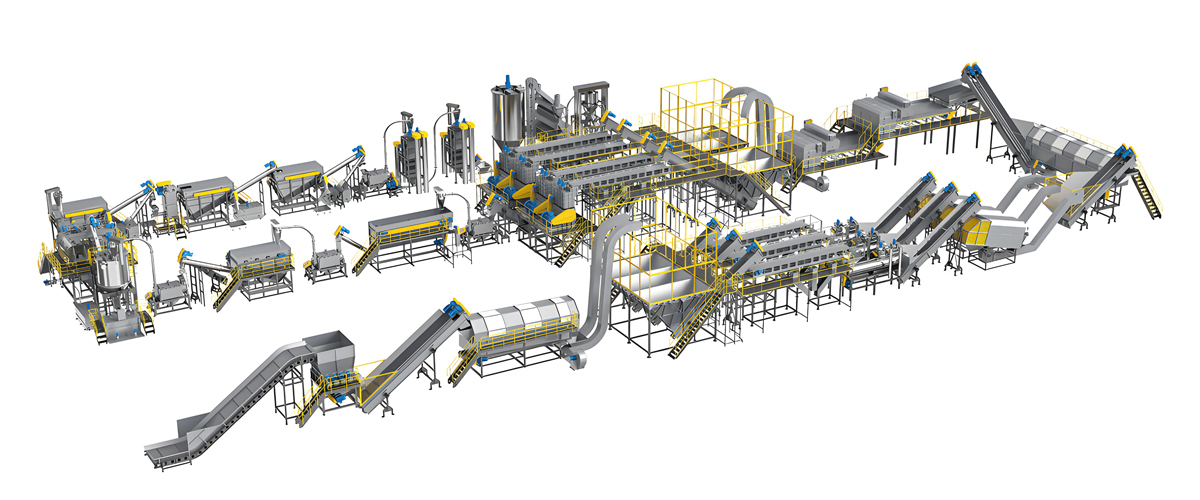
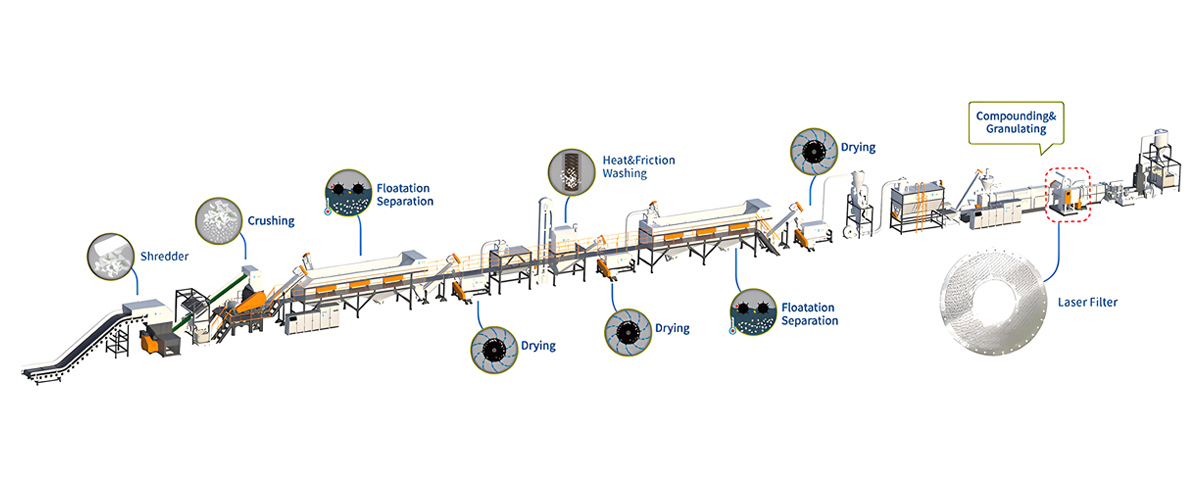
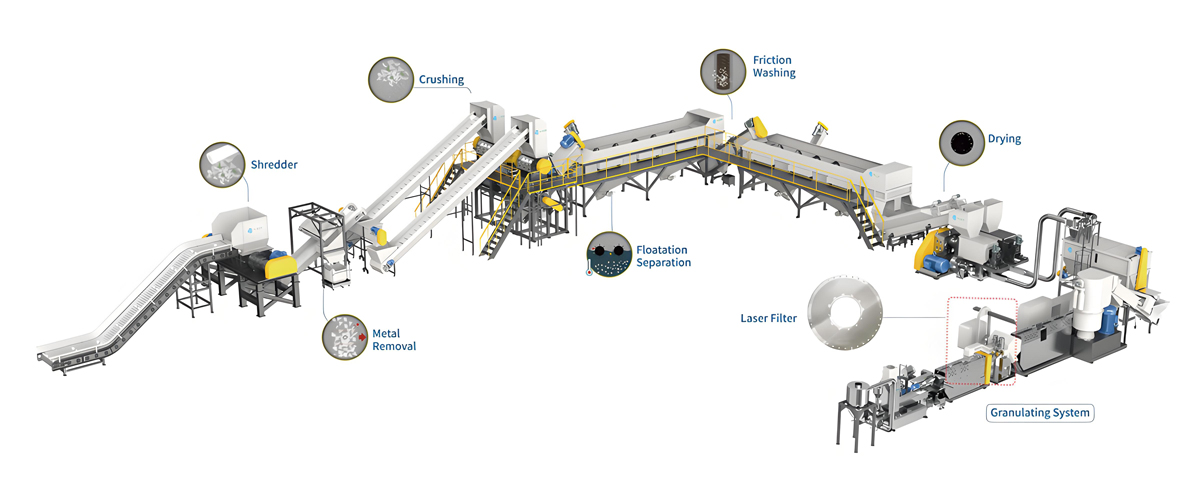
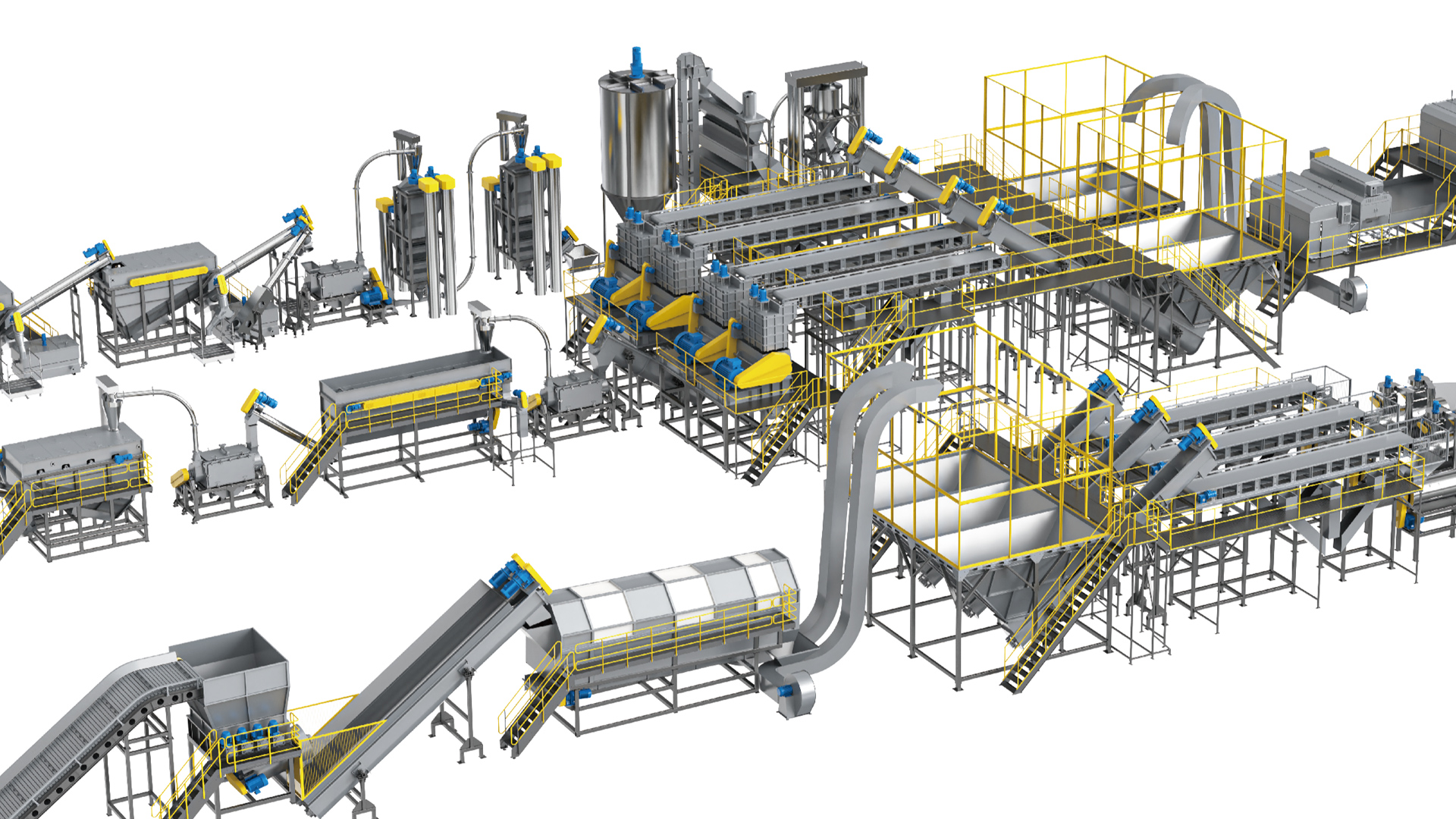
A pelletizing line is only as clean as the material its washing line delivers. Polyretec offers dedicated washing lines that precondition waste plastics through crushing, cleaning, sorting, and drying before they ever reach the extruder. The cleaner and drier the flake, the fewer screen changes, the fewer dead die holes, and the fewer jams.
The Food Grade PET Bottle Washing Line processes PET bottle waste into high-quality flakes at capacities from 500 kg/h up to 6,000 kg/h, designed for different flake grades. The PP/PE Soft Plastic Crushing and Washing Line handles film, woven bags, and agricultural film at 500 kg/h to 1,500 kg/h, with one-step pelletizing available for suitable feedstock. Both feed the pelletizer with conditioned material that is far less likely to bridge, clog, or degrade.
| Washing Line | Capacity | Feedstock | Jam-Reduction Benefit |
|---|---|---|---|
| Food Grade PET Bottle Washing Line | 500 to 6,000 kg/h | PET bottles, post-consumer | Clean, dry flakes cut screen clogging |
| PP/PE Soft Plastic Crushing and Washing Line | 500 to 1,500 kg/h | Film, woven bags, agriculture film | One-step option reduces handling jams |
Real-world deployments show the pattern. In Turkey, a system recycles printed LDPE films and bags into pellets. In Vietnam, a project handles PP non-woven fabric and TPE gloves. In Mexico, a washing line processes LDPE film carrying stickers using a heavy-duty shredder and beater machine. In Taiwan, a fully automated PP PE film washing machine conditions material for pelletizing. In each case, the washing stage sets up the pelletizer for stable cutting.
Material-to-Setting Reference Table
Different recycled materials behave differently at the die and the cutter. The table below is a practical starting reference for matching the granulating system settings to the feedstock. Always confirm against the actual material and adjust during commissioning; recycled streams vary by source and contamination.
| Material | Melt Temperature Tendency | Cooling Need | Knife Gap | Jam Risk Focus |
|---|---|---|---|---|
| PET flakes | Higher, dry required | Medium | Tight | Moisture voids, bridging |
| LDPE film | Lower, heat sensitive | High | Standard | Surge feeding, agglomerates |
| HDPE rigid | Medium | Medium | Standard | Contamination, screen clog |
| PP regrind | Medium | Medium | Standard | Filler abrasion, blade wear |
| Mixed post-consumer | Wide band | High | Tighter check | All of the above |
Preventive Maintenance Plan
The cheapest jam is the one that never happens. A structured preventive maintenance plan turns random stoppages into scheduled, minutes-long tasks. The plan below is the one Polyretec recommends for the granulating system on its pelletizing lines, scaled to the duty cycle.
| Interval | Task | Jam-Prevention Effect |
|---|---|---|
| Every shift | Inspect strand path, clear guides, check water flow | Catches early buildup before a blockage |
| Weekly | Verify knife-to-die gap, check rotor runout | Stops alignment drift from causing jams |
| Monthly | Replace or rotate blades, lubricate bearings | Maintains clean cut, avoids wear jams |
| Per grade change | Purge system, clean die plate and screen | Removes carbon that starves die holes |
| Quarterly | Descale cooling circuit, calibrate feeders | Restores cooling and feed stability |
| Annual | Full cutter rebuild, gearbox service | Restores mechanical integrity |
The discipline that matters most is documentation. When every gap check, blade change, and purge is logged against throughput and material, patterns emerge: a blade that lasts 40 tons on film but only 25 tons on filled PP tells you exactly when to schedule the next change before the jam forces it.
How to Select the Right Pelletizing Configuration
Choosing the wrong cutting architecture for your material is the root cause that no amount of troubleshooting can fully fix. Use the table below to match your input and target output to the appropriate Polyretec configuration. For downstream pelletizing, Wanplas supplies matched twin-screw pelletizing systems that integrate directly with Polyretec washing lines, so the complete plant runs as one coordinated system.
| Your Input and Target | Recommended Polyretec Configuration | Why |
|---|---|---|
| PET bottles, food-grade flake, 500 to 6,000 kg/h | Food Grade PET Bottle Washing Line plus pelletizing | Clean dry flake minimizes screen and die jams |
| LDPE film, printed bags, post-consumer | New Generation Pelletizing Line, strand cutting | Forgiving on surge and contamination |
| PP/PE soft film, woven bags, 500 to 1,500 kg/h | PP/PE Soft Plastic Crushing and Washing Line, one-step pelletizing | Fewer handling steps, fewer transfer jams |
| Thick-walled PE/PP regrind, high output | New Generation Pelletizing Line, robust construction | Built for maximum performance on regrind |
| Heavy contamination, stickers, labels | Washing line with heavy-duty shredder and beater, then pelletizing | Pre-removes contaminants that clog screens |
Application Industries and End Products
Polyretec recycling equipment serves two connected purposes that span many industries. The first is plastic product production: converting waste plastics into reusable pellets and blocks that become new products. The second is renewable resource utilization: reducing dependence on primary plastic resources. In practice, the pelletized output from a Polyretec line re-enters the value chain as raw material for film blown into packaging, sheet thermoformed into trays, fibers spun into non-woven fabrics, pipes extruded for construction, and compounds molded into consumer goods.
Because the granulating system determines pellet quality, its freedom from jamming directly affects the downstream product. Uniform pellets flow consistently in gravimetric feeders at the converter, melt evenly in the next extruder, and produce fewer defects in the final article. That is why troubleshooting jamming is not a maintenance chore; it is a product-quality activity. A line that jams produces off-spec pellets that cost more in rework than the downtime itself.
Service and Support You Can Rely On
Polyretec, as a Wanplas factory, stands behind its equipment with comprehensive and effective after-sales support. With more than 100 project references, service coverage across 50 plus countries, and 24 plus engineers available for assistance, the support extends well beyond shipment. Every line is tested and inspected before delivery, and engineers support installation and commissioning so the granulating system is set up correctly from the first run.
The Wanplas brand commitment includes USD 500 free parts per year, free replacement of damaged parts within warranty, and an open-factory policy that welcomes customers to visit and audit the manufacturing process. Training is provided so your operators can run the line, perform the alignment checks, and execute the preventive maintenance plan described above. Remote monitoring and support let engineers review operating data and guide corrections without waiting for a site visit, which is especially valuable when a jam pattern first appears and quick diagnosis prevents a prolonged stoppage.
This shared Wanplas group promise, covering free parts, transport guarantee, production capacity, and quality standards, is the safety net under every Polyretec line. When you invest in a recycling system, you are also investing in a support structure designed to keep it running.
Frequently Asked Questions
Why does my pelletizing line jam only after a grade change?
Grade changes leave residual polymer in the die, screen, and barrel that degrades and restricts flow. If the line is not purged and the die plate cleaned at the changeover, the old material burns into carbon, starves die holes, and jams the cutter. Always purge with a cleaning compound and inspect the die face after switching materials.
Should I slow the line when strands start breaking?
Not as the first response. Strand breakage usually means low melt temperature, moisture, or insufficient plasticization. Slowing the line worsens the cooling imbalance and can increase jamming. First raise the die and barrel temperature within the material window, confirm feedstock is dry, then adjust speed only if needed.
How often should I replace granulating blades?
Replace or rotate blades on a fixed throughput interval, not when defects appear. Typical recycling service wears blades faster than virgin resin because of filler and grit in the melt. Track blade life against material type, keep pre-ground spares on hand, and re-align to the die face immediately after every change.
What knife-to-die gap should I aim for?
A controlled minimal gap, generally in the range of 0.03 to 0.08 mm depending on the cutter design, keeps the cut clean and prevents fused collars. Measure with feeler gauges, verify a uniform cut mark across the blade, and recheck weekly because thermal cycling and vibration drift the setting.
Why does the screen changer pressure keep climbing?
Rising pressure means the melt filter is loading with contamination or carbon. The fix is to match the mesh count to your contamination level, use a continuous screen changer to keep pressure flat, and schedule changes by pressure trend. Pre-cleaning feedstock in the washing line is the most effective long-term cure.
Is strand or underwater pelletizing better for post-consumer waste?
Strand pelletizing is more forgiving for contaminated, variable post-consumer film and mixed waste, which is why Polyretec favors robust strand or die-face cutting on its recycling lines. Underwater cutting suits cleaner flakes and higher throughput but demands a more consistent melt. Match the method to your material, not to a generic preference.
Can poor cooling alone cause jamming?
Yes. If pellets leave the cutter soft because cooling is inadequate, they deform and clump, blocking conveying and screening. Confirm water flow, temperature, and bath immersion length, and verify the cooling section length matches line speed. Running faster than cooling capacity allows is a common, avoidable cause.
Conclusion
Granulating system jamming in a pelletizing line is rarely a single fault. It is the visible tip of a chain that runs from feedstock conditioning, through melt filtration and temperature profile, to mechanical alignment and cutting speed. The reliable path out of repeat stoppages is to map the symptom to its true root cause, stabilize feeding with proper drying and gravimetric metering, keep the melt filter and screen matched to contamination, hold the knife-to-die gap with disciplined checks, and protect the cutter with a scheduled blade and maintenance program.
For operations processing post-consumer waste, the equipment choice sets the ceiling on uptime. Polyretec, a Wanplas factory, builds the New Generation Pelletizing Line and the washing lines that feed it with clean, conditioned material, integrating the complete system so the granulating section receives a steady melt and runs continuously. If your line is jamming, send us your material type, current output, and the symptoms you observe, and our engineers will recommend the right configuration, arrange a factory visit, and support a sample trial run so you can verify stable cutting before commitment.