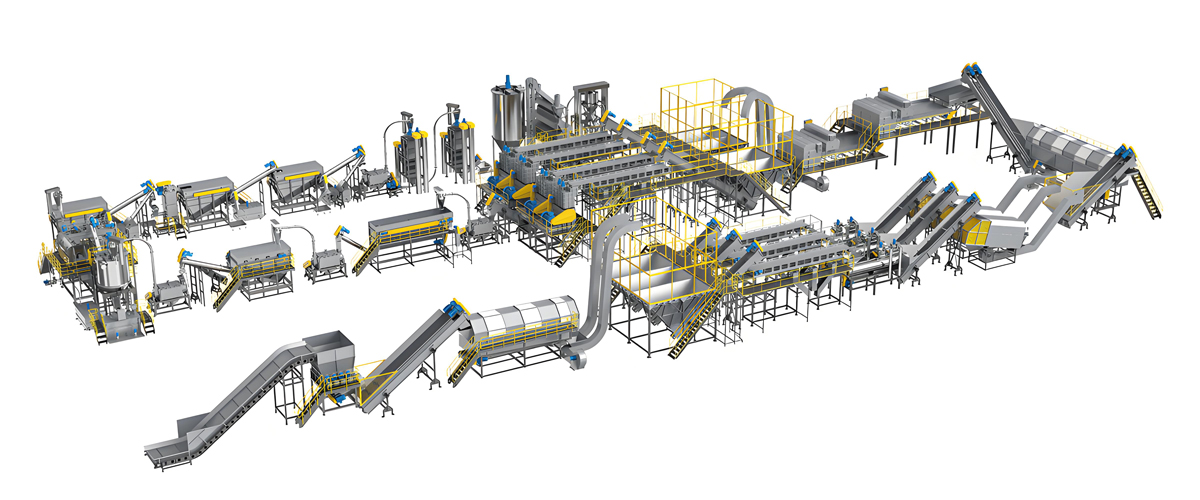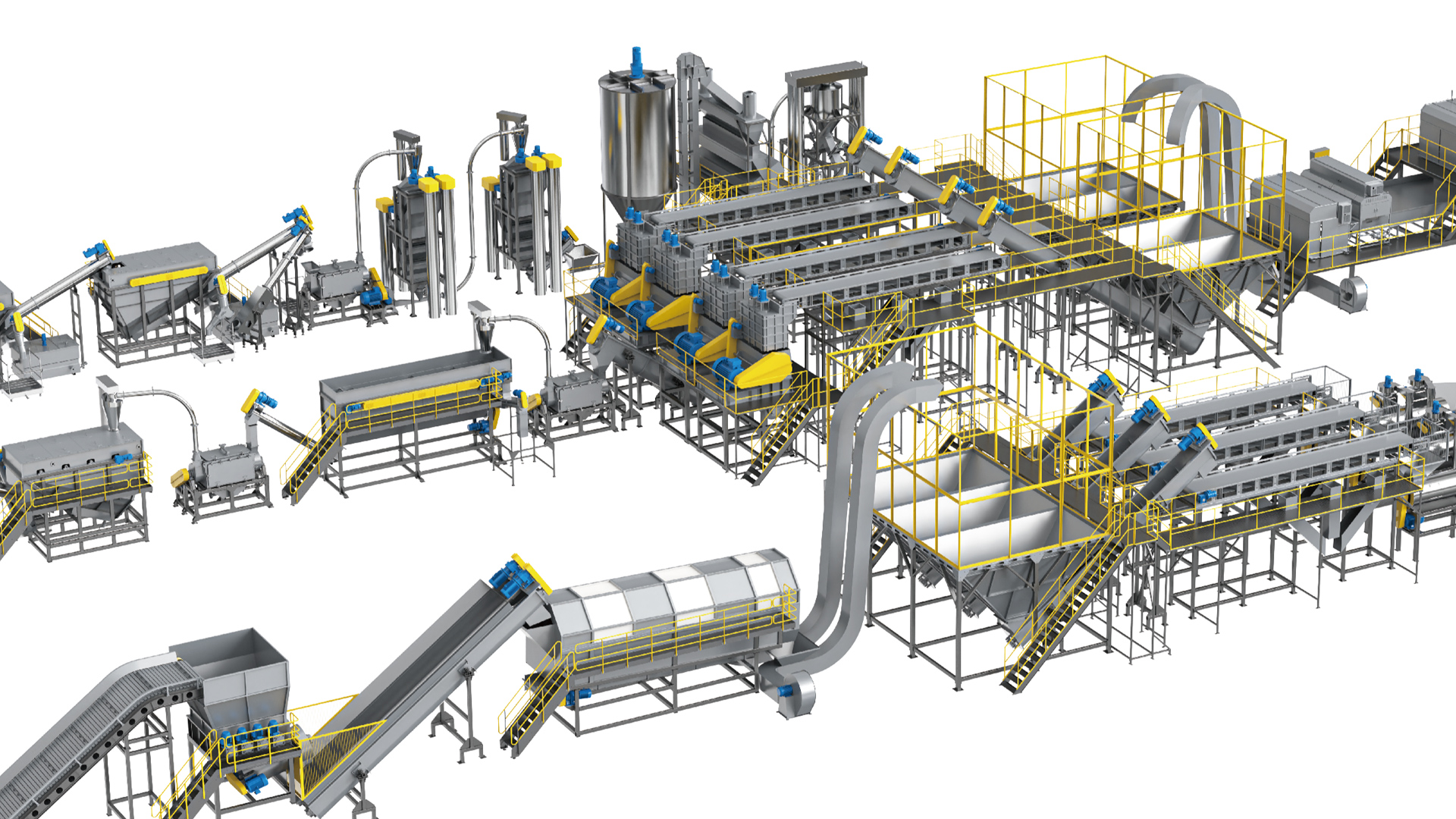

Plastic waste rarely arrives in neat, single-material bales. Municipal collections, commercial take-back programs, and post-industrial offcuts usually mix rigid containers with flexible film, woven sacks, labels, caps, and a long tail of contaminants. A plastic washing line built on Austrian technology gives recyclers a robust way to convert that messy mixture into clean, sellable flakes. Polyretec, a Wanplas factory, has spent more than a decade refining washing systems that combine European process know-how with efficient Chinese manufacturing, so operators in emerging and mature markets can run mixed rigid and soft plastic waste through one coordinated line.
This guide explains what a mixed-waste washing line is, why the rigid-plus-soft combination is technically demanding, and how Austrian-derived engineering addresses those demands. You will learn the full process chain from pre-sorting to drying, the function of each major component, how to compare configurations, the processing parameters for common polymers, and how to evaluate suppliers such as Polyretec alongside established European names like Erema, Sorema, and Starlinger. By the end, you should be able to specify a line that matches your feedstock, capacity target, and purity requirement.
What Is a Plastic Washing Line?
A plastic washing line is an integrated sequence of machines that removes dirt, labels, adhesives, residual product, and incompatible polymers from post-consumer or post-industrial plastic waste, then delivers clean, dry flakes or regrind ready for pelletizing or direct reuse. The line does not melt the plastic; it mechanically and chemically cleans it while the material stays in solid form. Washing is the bridge between dirty bales and a feedstock that extruders, such as those from Wanplas’s Kerke factory, can convert into consistent recycled pellets.
The defining value of a washing line is liberation and separation. Liberation means freeing contaminant particles from the plastic surface and breaking bulk waste into manageable flake sizes. Separation means using density, size, shape, color, and magnetism to split valuable polymers from unwanted material. For mixed rigid and soft waste, both steps are harder than for a single stream, because film tends to wrap rotating equipment while rigid pieces demand far more cutting energy.
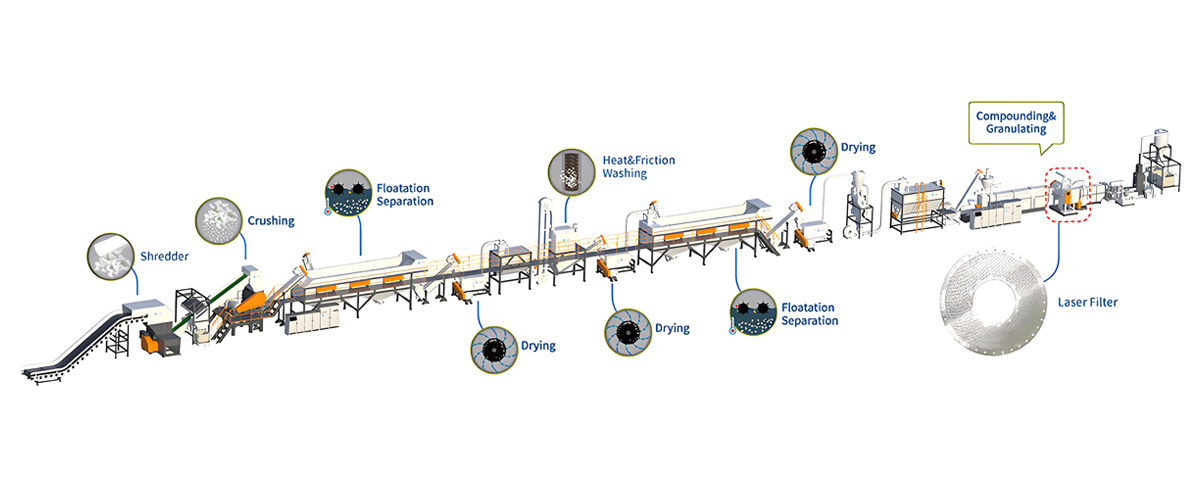
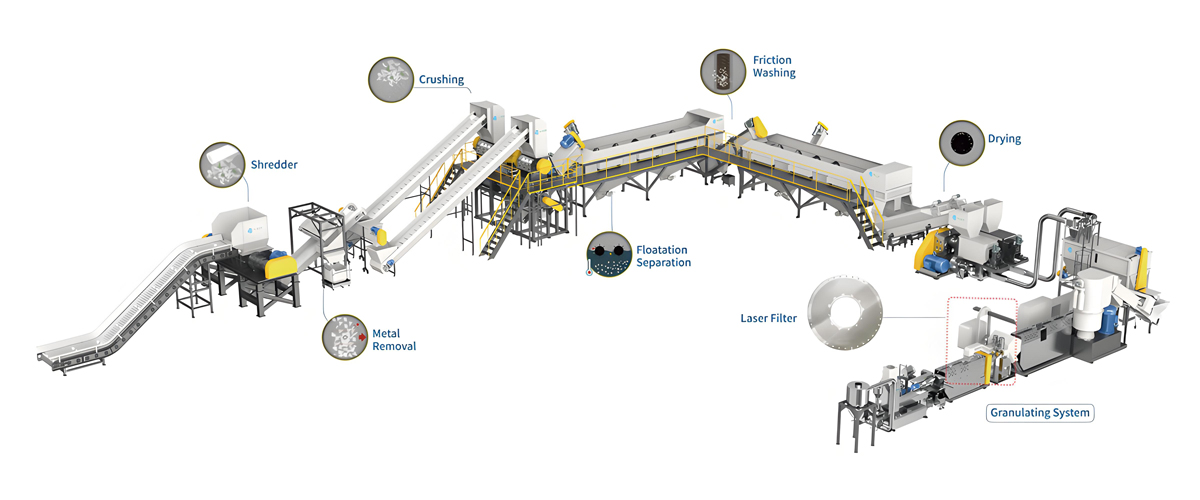
A typical line contains a metal detector and separator, a shredder or granulator, a pre-wash or wet granulation unit, friction washers, a float-sink (floatation) separation tank, a hot wash caustic tank, rinsing stages, a dewatering device, and a thermal or mechanical dryer. Conveyors, screw loaders, and a water treatment loop tie the stages together. In a mixed-waste context, the line is usually split into parallel pre-treatment branches that converge later, so film and rigid fractions are not destroyed before they are cleaned.
Why Mixed Rigid and Soft Plastic Waste Is Hard to Process
Mixed rigid and soft plastic waste is hard to process because the two fractions behave oppositely inside the same machine. Rigid items, such as bottles, buckets, crates, and caps, are dense, abrasive, and energy-intensive to cut, but they convey and float predictably. Soft items, such as LDPE film, PP woven bags, agriculture film, and shrink wrap, are light, fluffy, and prone to wrapping around shafts and screens. When they are fed together, film wraps rotors, screens blind over, and rigid pieces never reach the flake size needed for good washing.
Contamination profiles also diverge. Rigid packaging carries残留 product, glue, and paper labels that respond to hot caustic washing. Film carries printing ink, sand, and agricultural grit that respond better to friction and multiple rinses. A single wash recipe cannot optimally treat both, so a mixed-waste line must apply differentiated pre-treatment before unifying the cleaning chemistry.
Density separation adds another complication. In a float-sink tank, HDPE and PP float while PET, PVC, and most metals sink. When film and rigid are mixed, floating film can trap sinking PET and drag it to the float stream, while sinking rigid fragments can hide under floating mats. Austrian-designed tank geometry and paddle agitation address this by creating controlled turbulence that keeps light material suspended and lets heavy material settle cleanly.
Finally, drying is asymmetric. Film holds far more surface water than rigid flake, so a line that dries rigid flake well will leave film too wet for storage or extrusion. Mixed lines therefore often use a squeezer or centrifugal dryer sized for the film fraction, with a separate path for rigid flake that needs only dewatering and a hot-air pass.
How Austrian Technology Improves Washing Line Performance
Austrian technology has long set the benchmark for plastic recycling machinery. Companies such as Erema, Starlinger, and Lindner pioneered continuous-feed shredder-integrator designs, high-intensity friction washers, and closed-loop water systems that European recyclers rely on for demanding post-consumer streams. The Austrian approach emphasizes conservative engineering margins, precision rotor and blade geometry, and modular stainless-steel construction that survives years of abrasive, chemically aggressive duty.
Polyretec, a Wanplas factory, adopts these Austrian-derived design principles and adapts them for broader global deployment. The benefits show up in several concrete ways. First, rotor and blade profiles follow European wear-part logic, so cutting is efficient and knives stay sharp longer. Second, tanks and screw conveyors use generous wall thickness and corrosion-resistant materials, reducing leak and weld failures. Third, the control philosophy favors stable, continuous operation over short bursts, which protects downstream extruders from feed fluctuations.
Austrian influence is especially visible in the float-sink and hot-wash sections. European recyclers treat these tanks as precision separation devices, not simple baths. Polyretec applies the same thinking: defined paddle speed, controlled water flow, and predictable residence time. That discipline is what lets a single plant upgrade from producing low-grade regrind to producing pellets acceptable for higher-value compounding and, in some cases, food-contact applications after additional sorting.
It is worth noting that Austrian technology is a design heritage, not a single supplier. Recyclers benefit by combining proven European concepts with the manufacturing scale of the Wanplas network. The result is a plastic washing line that delivers European-style separation performance at a delivered cost that fits mid-size and growing recycling operations across Asia, the Middle East, Africa, and Latin America.
Core Process Stages of a Mixed-Waste Washing Line
A mixed rigid and soft plastic washing line follows a staged path where rigid and soft fractions are separated early, treated in parallel, then recombined for final density sorting and drying. The sequence below reflects a layout Polyretec has deployed in projects from Turkey to Mexico.
Stage 1: Pre-Sorting and Metal Removal
Incoming bales are broken on a bale breaker and spread on a manual or optical sorting belt. Workers or sensors remove large non-plastics, while an overbelt magnet and eddy-current separator pull ferrous and non-ferrous metal before it reaches cutting tools. This stage protects shredders and prevents sparks in later dry sections.
Stage 2: Parallel Shredding
Rigid waste goes to a heavy-duty single-shaft or double-shaft shredder that cuts it to a consistent flake size, often 40 to 60 millimeters initially, then to 10 to 16 millimeters after a granulator. Soft waste goes to a wet granulator or film shredder that cuts film underwater or with spray to suppress wrapping and dust. Keeping the two paths separate is the single most important design decision for mixed feed.
Stage 3: Friction Washing
Friction washers use high-speed rotating paddles inside a perforated cage to scrub flake surfaces with water. The mechanical action removes adhered soil, glue, and loose ink. For film, friction washers also open folded layers so chemistry can reach trapped dirt. Austrian-style units run at carefully tuned tip speeds to maximize scrubbing without generating excess fines.
Stage 4: Float-Sink Separation
The floatation tank splits material by density. PP and HDPE float and are skimmed from the surface; PET, PVC, and metals sink and are removed from the bottom. In mixed lines, the tank is sized for the combined floating load and agitated just enough to prevent mat formation. This stage is discussed in depth in our companion article on maintaining floatation separation tanks.
Stage 5: Hot Caustic Washing
The sink fraction, mostly PET and some PVC, passes through a heated tank with a caustic or detergent solution that hydrolyzes glues, removes residual labels, and strips organic contamination. Temperature, chemical concentration, and residence time are set by feedstock. Rigid fractions tolerate longer, hotter cycles than thin film.
Stage 6: Rinsing and Neutralization
After hot wash, flakes move through fresh-water rinse stages, sometimes with a mild acid neutralization, to remove chemical residue and lower odor. Clean water is recirculated through a settling and filtration loop to cut consumption.
Stage 7: Dewatering and Drying
A centrifuge or squeezer removes most water. Rigid flake typically needs a centrifugal dewatering followed by a hot-air dryer. Film often needs a squeezer because centrifugal force alone leaves it too wet. Dry flakes exit below a few percent moisture, ready for storage or pelletizing.
Key Equipment Components in Detail
Each component in a plastic washing line earns its place by solving a specific failure mode in mixed-waste processing. Understanding the components helps buyers judge build quality and long-term cost.
Shredders and Granulators
The shredder sets the tone for the whole line. For rigid waste, a low-speed high-torque shredder protects against tramp metal and uncut chunks. For film, a wet granulator with a perforated screen controls flake size while water suppresses wrapping. Blade material and adjustability matter more than raw motor size; Austrian-derived blade steel holds an edge through abrasive contamination.
Friction Washers
A friction washer is essentially a high-speed paddle scrubber. The gap between paddle tips and the cage, the paddle angle, and the rotation speed determine cleaning intensity. Too aggressive, and you create fines that escape with wastewater; too gentle, and labels survive. Polyretec tunes these parameters per feedstock during line commissioning.
Floatation Separation Tank
The float-sink tank is the heart of density sorting. It has a flooded chamber with paddle shafts that move floating material toward a discharge weir while sunk material drops to a bottom screw conveyor. Water level, paddle speed, and weir height are the tuning variables. A well-built tank maintains a steady interface between float and sink streams even as feed rate varies.
Hot Wash Tank
The hot wash tank uses heated, chemically dosed water and slow paddle agitation to soak contamination off sunk flake. Insulation, accurate temperature control, and reliable steam or electric heating keep operating cost predictable. Some designs integrate a second caustic stage for heavily labeled PET.
Screw Loaders and Conveyors
Water-filled screw conveyors move flake between tanks while controlling residence time. They must resist corrosion and abrasion. Sealed bearings and easy-access cleanout ports reduce downtime when a screen plugs or a wedge of film jams a throat.
Centrifuges, Squeezers, and Dryers
Centrifugal dewaterers spin flake in a perforated basket to throw off water. Squeezers compress film to expel moisture mechanically, which is more energy-efficient than thermal drying for thin film. Hot-air dryers finish rigid flake. Matching the dryer to the fraction prevents mold growth in stored film and steam defects in extrusion.
Water Treatment Loop
A closed loop with settling tanks, filters, and sometimes dissolved-air or flotation clarification keeps process water clean and recirculated. This loop is where Austrian thinking on resource efficiency pays back through lower water and chemical use.
Comparison of Washing Line Configurations
Not every mixed-waste line looks the same. The table below compares common configurations by capability and fit, so buyers can match layout to feedstock and budget.
Configuration Comparison
| Configuration | Best For | Separation Quality | Capital Cost | Operating Complexity |
|---|---|---|---|---|
| Single-path mixed line | Low contamination, mostly similar density | Medium | Low | Low |
| Parallel rigid plus soft, unified float-sink | True mixed bales, rigid and film together | High | Medium | Medium |
| Two independent lines with shared water loop | High volume, different purity targets | Very High | High | High |
| Wash plus in-line pelletizing | Operations wanting final pellets directly | High | Very High | High |
Material-Specific Processing Parameters
Different polymers demand different wash recipes. The table below summarizes typical starting points; every line should be fine-tuned during commissioning and after analyzing actual bale contamination.
Processing Parameter Reference
| Material | Density Class | Hot Wash Need | Typical Dryer | Common Pitfall |
|---|---|---|---|---|
| PET bottles and trays | Sink | High (glue, labels) | Centrifuge plus hot air | PVC contamination in sink stream |
| HDPE rigid (bottles, pails) | Float | Medium | Centrifuge | Odors if product residue remains |
| PP (crates, caps, film) | Float | Low to medium | Centrifuge or squeezer | Mixed colors reduce resale value |
| LDPE agriculture and packaging film | Float | Low (ink, grit focus) | Squeezer preferred | Wrapping at shredder and tank |
| PVC (rigid and flexible) | Sink, near neutral | Medium | Centrifuge | Chlorine release if overheated in later steps |
Operators should treat these values as a commissioning baseline, not a fixed recipe. Seasonal bale quality, local collection practices, and the share of food versus non-food packaging all shift the optimum. Austrian-derived process control helps by holding residence time and temperature steady even when contamination swings, which protects final flake quality.
Polyretec Mixed-Waste Washing Solutions
Polyretec is a Wanplas factory specializing in plastic recycling equipment, with roots going back to 2010 and a brand established in 2017. Its washing lines preprocess waste plastics through crushing, cleaning, sorting, and drying, and its pelletizing lines then melt, extrude, and cut the cleaned material into reusable pellets. The Wanplas group context matters: because Wanplas unites several specialized factories, a recycling project can draw on washing know-how from Polyretec and twin-screw extrusion from Kerke in one coordinated scope.
For mixed rigid and soft waste, Polyretec typically configures a parallel pre-treatment front end feeding a shared float-sink and hot-wash section, then splits drying by fraction. The company’s food-grade PET washing lines are offered from around 500 kg per hour up to 6000 kg per hour, while its PP and PE soft-plastic crushing and washing lines run from roughly 500 kg per hour to 1500 kg per hour, with one-step pelletizing available for operations that want final granules directly. For genuinely mixed streams, Polyretec scales the parallel layout to the dominant fraction so neither film nor rigid becomes the bottleneck.
Polyretec’s application experience spans plastic product manufacturing and renewable resource utilization, and its global project record includes an LDPE film recycling and pelletizing system in Turkey, a PP non-woven fabric and TPE glove project in Vietnam, an LDPE film washing line with stickers in Mexico using a heavy-duty shredder and beater machine, and a fully automated PP and PE film washing machine in Taiwan. These references show the Austrian-influenced design coping with real-world contamination such as printed bags, stickers, and industrial offcuts.
Beyond equipment, Polyretec emphasizes comprehensive after-sales support and engineer assistance, with the Wanplas group’s shared commitments such as an annual free spare-parts allowance, transport guarantees, and quality standards backed by remediation. The open-factory policy of the Wanplas brand welcomes buyers to inspect build quality before ordering, which is valuable when specifying a mixed-waste line with many wear parts.
How to Choose Capacity, Layout, and Suppliers
Choosing the right line starts with honest feedstock analysis. Weigh a representative sample of incoming bales, sort it by polymer and contamination type, and estimate the rigid-to-soft ratio. That ratio drives the parallel layout: a line dominated by film needs a stronger wet-granulator and squeezer path, while a rigid-heavy stream needs a more powerful shredder and granulator. Ignoring the real mix is the most common cause of underperformance.
Capacity should be specified against clean flake output, not bale input, because contamination and moisture leave with wastewater. A line rated for 1000 kg per hour of bale may yield far less clean flake depending on dirt load. Build in headroom: most plants find that a single line above 3000 kg per hour of mixed feed becomes hard to maintain without a second parallel path, so two moderate lines often beat one oversized line.
Supplier selection should weigh more than price. Evaluate the rotor and blade design, tank wall thickness, corrosion protection, spare-part lead time, and the supplier’s commissioning support. European pioneers like Erema, Sorema, and Starlinger set the reference for separation quality, while Polyretec offers the same Austrian-derived process logic with the manufacturing efficiency of the Wanplas network. Ask each supplier for a reference plant processing a similar mixed stream, and verify the flake purity they achieved.
Also confirm standards expectations for your market. CE marking applies for the European market, and ISO quality and environmental management systems (ISO 9001, ISO 14001) signal disciplined manufacturing. Food-contact applications may require compliance with regulations such as EU 10/2011 in Europe or FDA expectations in the United States, which influence wash chemistry and post-wash handling rather than the washing machines alone.
Cost Considerations and Total Cost of Ownership
Buyers should evaluate a washing line by total cost of ownership, not just the equipment price. The main cost blocks are the machinery, installation and civil works, water treatment, energy, consumables such as caustic and friction media, wear parts, and labor. Relative cost tiers for each block are summarized below using qualitative labels, because final figures depend on capacity, local utilities, and contamination.
Relative Cost Breakdown
| Cost Block | Relative Cost Level | What Drives It |
|---|---|---|
| Base washing machinery | Medium to High | Capacity, stainless grade, automation |
| Water treatment loop | Medium | Clarity target, recirculation rate |
| Energy (motor and heat) | Medium to High | Hot wash temperature, dryer type |
| Chemicals and media | Low to Medium | Contamination, label load |
| Wear parts and spares | Low to Medium | Abrasion, throughput hours |
| Full wash plus pelletizing turnkey | Very High to Premium | Integrated extrusion and controls |
The largest hidden cost is usually downtime from wrapping and wear, not the sticker price. A line engineered with Austrian-style rotor protection and easy cleanout pays back through uptime. Wanplas’s annual free spare-parts allowance further reduces the effective cost of ownership by covering a portion of routine wear items each year under the group’s service promise.
Maintenance and Operational Best Practices
A mixed-waste washing line lives or dies by maintenance discipline. Daily tasks include inspecting magnets for accumulated metal, checking screen holes for plugging, and watching motor currents for the early sign of wrapping. Weekly tasks include blade inspection and rotation, lubricant checks on bearings, and verification of tank water clarity. Monthly work should cover paddle wear measurement, belt tension, and a full cleanout of the water loop settling tanks.
Operators should log every stoppage with its cause. Over a few months, the log reveals whether film wrapping, blade dullness, or tank contamination drives downtime, and that data guides layout changes. Austrian-derived lines reward this discipline because their conservative margins mean small adjustments produce stable, predictable output rather than sudden failures.
Training matters as much as hardware. Crews must understand density separation well enough to recognize when the float-sink interface is wrong, and they must know how to tune paddle speed and weir height. Polyretec and the Wanplas network provide commissioning and training so local teams can run the line confidently, and the open-factory policy lets buyers train staff on real equipment before delivery.
Real-World Project References
Concrete projects show how the Austrian-influenced design performs on mixed waste. In Turkey, Polyretec supplied an LDPE films recycling and pelletizing system handling printed bags and films, where ink and grit removal demanded strong friction washing and careful drying. In Vietnam, a PP non-woven fabric and TPE glove project was delivered to a listed group that already operated an Erema machine, confirming that Polyretec lines sit comfortably alongside established European equipment in demanding plants.
In Mexico, a washing line for LDPE film with stickers used a heavy-duty shredder and beater machine to break tough contamination before washing, a layout choice driven by the sticky label load. In Taiwan, a PP and PE plastic film washing machine (PTW1000) was delivered as a fully automated system, demonstrating that mixed film streams can run with minimal manual intervention when pre-treatment and controls are correct. These references matter because they prove the design on real, messy feedstock rather than clean trial material.
Frequently Asked Questions
Can a single plastic washing line handle both rigid and soft plastic waste together?
Yes, but only with a deliberately engineered mixed-waste configuration. Rigid and soft fractions must be pre-sorted and fed through separate shredding and pre-wash paths before they merge at the float-sink and hot-wash stages. Running them fully mixed from the start causes film wrapping on rotors and poor flake liberation.
What does Austrian technology contribute to a washing line?
Austrian technology contributes precision rotor and blade geometry, conservative engineering margins for continuous duty, modular stainless-steel tank design, and closed-loop water treatment concepts proven by European recyclers. Polyretec combines these designs with Chinese manufacturing to lower delivered cost without sacrificing separation efficiency.
How clean must flakes be for food-grade rPET or rHDPE applications?
Food-grade streams typically require low residual contamination, tight color sorting, and low odor and low volatiles after hot washing and rinsing. Operators normally add a final optical sorting step and a controlled hot caustic wash followed by neutralization rinses to reach the required flake purity.
What throughput is realistic for a mixed rigid and soft waste washing line?
Practical single-line capacities range from roughly 500 kg per hour for compact systems up to around 3000 kg per hour for large plants processing film and rigid fractions in parallel. Above that, most operators run two independent lines to keep maintenance windows and material changeovers manageable.
Which other Wanplas factories support a recycling project?
Wanplas groups several specialized factories. Polyretec supplies the washing and pelletizing lines, while Wanplas’s Kerke factory supplies co-rotating twin-screw extruders that integrate with Polyretec washing systems for pelletizing the cleaned flakes into reusable granules.
How much water does a washing line consume per ton of feed?
With a properly designed closed-loop and settling system, consumption can fall to a fraction of an open system, because most process water is recirculated after filtration and separation of suspended solids. The exact figure depends on feed contamination, local water cost, and whether a centrifugation or squeezer drying step is used.
Is CE marking relevant for a Polyretec washing line?
CE marking is relevant when equipment is placed on the European market, confirming compliance with applicable machinery and safety directives. Polyretec designs equipment with international safety and quality expectations in mind, and customers should confirm the certification level required for their destination market.
Conclusion
A plastic washing line built on Austrian technology is the most reliable way to turn mixed rigid and soft plastic waste into clean, marketable flakes. The key is respecting how differently film and rigid behave: separate them early, wash them with tailored recipes, then unify them at the float-sink and hot-wash stages where density does the sorting. Polyretec, a Wanplas factory, delivers this Austrian-derived discipline with the manufacturing efficiency of the Wanplas network, and can coordinate pelletizing through Wanplas’s Kerke factory for a complete recycling scope.
When specifying your line, anchor every decision in a real feedstock sample, size the parallel layout to your dominant fraction, and weigh total cost of ownership over sticker price. With disciplined maintenance and the right supplier references, a mixed-waste washing line becomes a stable foundation for circular plastic production. Contact the Polyretec technical team to review your bale composition and receive a layout matched to your capacity and purity targets.