
Storing recycled plastic flakes correctly before the pelletizing process is one of the most underestimated steps in a plastics recycling plant, yet it silently determines whether your clean flakes become high-value pellets or rejected off-spec material. As recycled-content mandates tighten through 2026, the economic gap between well-stored and poorly stored flake is widening, making storage strategy a board-level concern rather than a warehouse afterthought. A recycled flake leaving a washing line is dry, sorted, and pure, but that state is fragile; exposed to humid air, dust, or mixed grades, it can lose value within hours. Knowing how to store recycled plastic flakes before pelletizing is therefore the discipline that protects the investment made in washing, sorting, and separation.
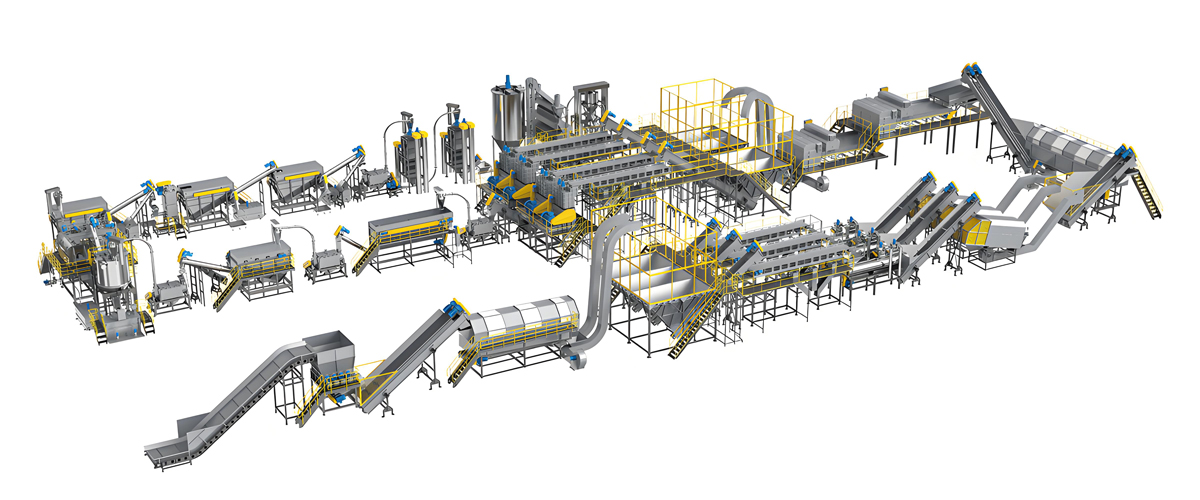
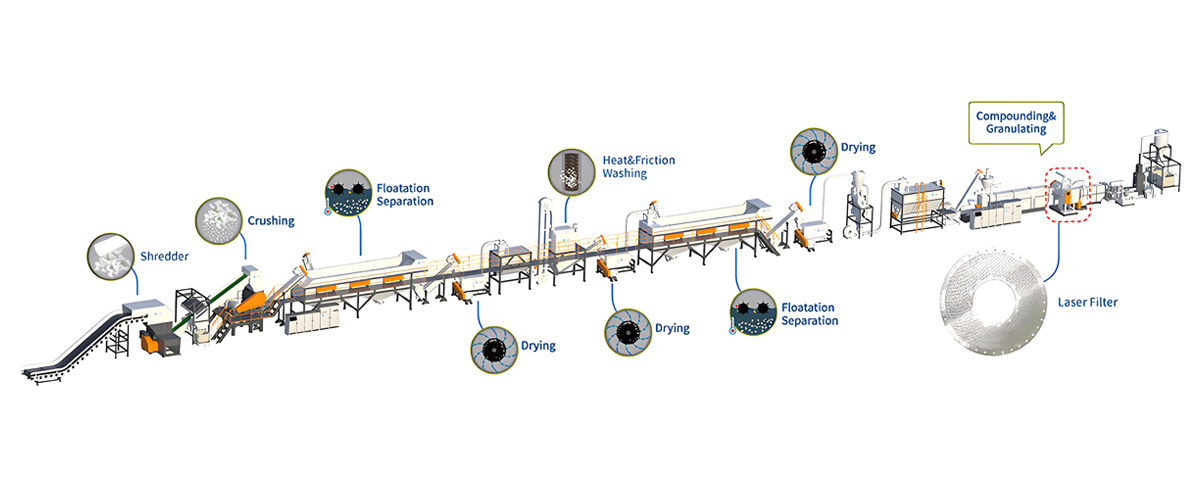
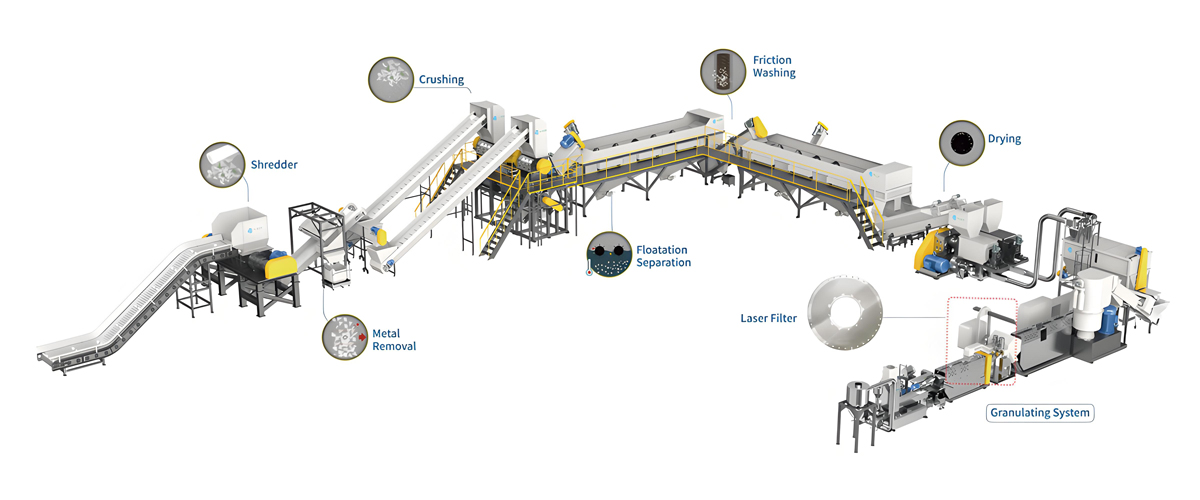
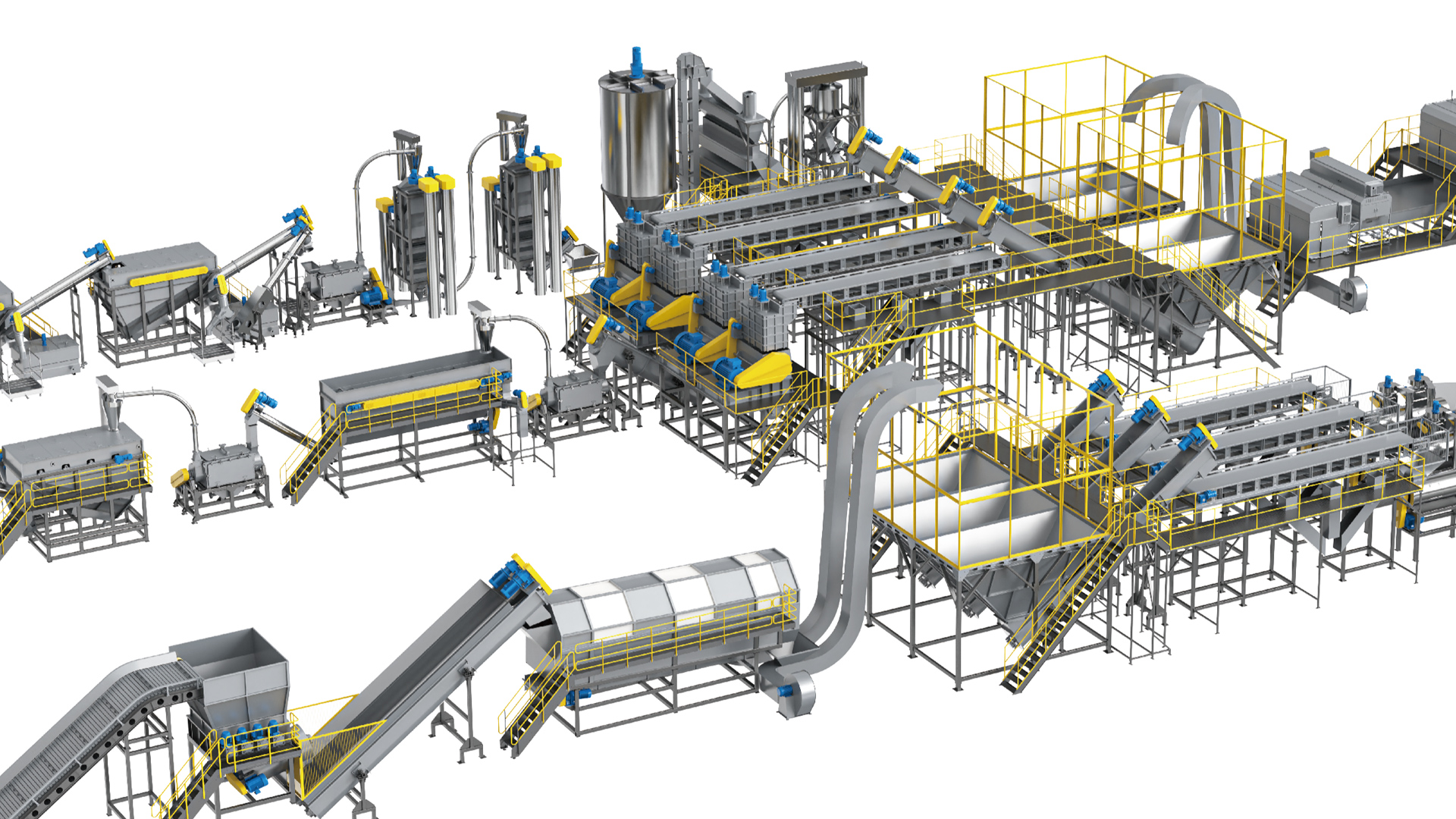
Polyretec, a Wanplas factory, builds washing and recycling systems that deliver clean flakes, and experience across more than 100 recycling projects shows that storage is where many plants either preserve or destroy that quality. This guide explains why storage matters, how different polymers must be stored, the risks of getting it wrong, the best practices that keep flakes pellet-ready, how storage integrates with the pelletizing extruder, and which equipment manufacturers lead the field. By the end, you will have a practical framework for designing a flake-storage and buffer system that supports consistent, profitable pellet production.
Whether you run a PET bottle recycling line, a post-consumer film and rigid recovery plant, or an electronic-plastic recycling operation, the principles below apply, because every pelletizing line is only as good as the flake it receives at the throat of the extruder.
Why Proper Storage of Recycled Plastic Flakes Matters
Proper flake storage is the bridge between the washing line and the pelletizing line, and it exists to preserve three things: dryness, purity, and grade identity. The washing line spends energy and water removing contamination and lowering moisture, but flakes are not stable once they leave the dryer. If storage is careless, the flakes simply reabsorb humidity and re-collect dust, undoing the work upstream. In that sense, storage is not passive warehousing; it is an active quality-control stage.
Moisture is the first reason storage matters. Many recycled polymers, especially PET and polyamide, are hygroscopic and pull water from the surrounding air. When moist flake enters a pelletizing extruder, the trapped water turns to steam inside the melt, creating bubbles, splay marks, and porous pellets with weak mechanical properties. Even small moisture gains can force the extruder to work harder, raise energy use, and increase degassing load. Correct storage holds moisture at the low level achieved by the dryer until the moment of extrusion.
Purity is the second reason. A flake that has been washed to above 98 percent cleanliness can be re-contaminated by dirty floors, open handling, or mixed-grade contact during storage. Because pellet buyers increasingly demand documented purity and traceability, especially for food-contact recycled PET governed by EU 10/2011 and FDA expectations, any re-contamination in storage can disqualify an otherwise excellent batch. Storage discipline protects the brand promise of the recycling operation.
Grade identity is the third reason. Recycling plants handle multiple polymers and colors, and a mix-up in storage turns a valuable sorted fraction into generic low-grade material. Clear segregation, labeling, and first-in-first-out discipline keep each grade identifiable and salable. Through 2026, as recycled-content certificates and chain-of-custody documentation become standard, this traceability function of storage grows in importance rather than diminishing.
Finally, storage acts as a production buffer. Washing lines and pelletizing extruders rarely run at identical rates or schedules, and a buffer silo lets each stage operate at its own optimum instead of throttling to the slower partner. This decoupling raises overall plant utilization and shields pelletizing from short washing-line stoppages, which is why storage design is a throughput decision as much as a quality decision.
Another dimension is cost. The expense of a calibrated storage and drying subsystem is small relative to the value it protects. A single off-spec pellet batch caused by moist or contaminated flake can exceed the cost of the entire storage investment, and repeated quality incidents erode customer trust faster than any equipment saving recovers. In 2026, with recycled resin competing on specification consistency rather than price alone, storage is a margin-protecting function rather than a passive cost center. Plants that treat it seriously report fewer customer complaints and steadier extruder performance, which together justify the engineering attention storage deserves.
Common Types of Recycled Plastic Flakes and Their Storage Needs
Not all flakes behave the same in storage, and the dominant polymer dictates the controls you must apply. The table below summarizes the storage profile of the most common recycled flakes, but the underlying principle is constant: match the storage environment to the polymer’s sensitivity to moisture, oxidation, and contamination.
Storage Profile by Polymer
| Flake Type | Hygroscopicity | Ideal Storage | Special Note |
|---|---|---|---|
| PET | Very high | Sealed dehumidified silo | Food-grade needs EU 10/2011 and FDA care |
| PP and PE | Low | Closed silo, dry air | Watch odor and oxidation |
| ABS and HIPS | Moderate | Sealed silo, low humidity | Moisture hurts impact strength |
| PA (nylon) | Extreme | Dehumidified, warm silo | Needs aggressive pre-drying |
PET flakes are the most demanding because they combine high hygroscopicity with the strictest end-use rules. For food-contact recycled PET, the storage environment must be clean, sealed, and documented so that the material retains its status under EU 10/2011 and FDA expectations. PP and PE are more forgiving on moisture but can develop odor or oxidation if stored warm and exposed to air, so a simple closed silo with dry air is usually enough. ABS and HIPS, common in electronic-plastic recycling, are moderately hygroscopic and sensitive to moisture-driven loss of impact strength, so sealed low-humidity storage is prudent.
PA, or nylon, is the extreme case: it absorbs water rapidly and must be stored warm and dehumidified, then dried aggressively before extrusion. Treating all flakes with a single generic storage method is a frequent mistake; the matrix above should guide a differentiated design where each polymer gets the control it requires.
Beyond moisture, plants should consider color and additive stability in storage. Colored flakes can shift shade if exposed to heat or ultraviolet light, and some additive packages migrate or degrade over long storage, changing the behavior of the final pellet. Storing flakes away from direct sunlight and temperature swings protects both color and additive function. For plants handling both natural and colored grades, separate silos prevent cross-tinting that would downgrade a clear grade into a mixed one. Recycled-content certification schemes also increasingly require documented handling, so storage records feed directly into chain-of-custody claims that customers now expect as standard in 2026.
It is also worth distinguishing flake from regrind. Flake is the output of a washing line, typically uniform small pieces, while regrind is in-house scrap re-ground for direct reuse. They share storage principles but differ in contamination history, so mixing them in one silo blurs traceability. A disciplined plant stores washed flake, in-house regrind, and any purchased feedstock in separately identified systems, which keeps each material’s quality story intact from receipt to pellet.
Key Risks of Poor Flake Storage
Poor flake storage introduces risks that surface later as pellet defects, customer complaints, or regulatory problems. The first and most common risk is moisture regain. A flake dried to below one percent can climb back above that threshold in hours of open storage during humid weather, and the extruder then produces porous, splayed, or brittle pellets. This is especially damaging for PET and PA, where moisture directly degrades melt quality.
The second risk is re-contamination. Open piles, unsealed bags, and shared floors allow dust, foreign plastic, paper, and metal to mix back into the flake. Because the washing line already removed these, storage re-contamination is purely self-inflicted loss, and it is painful because it erases paid-for quality. For food-grade streams, any foreign contact can breach EU 10/2011 and FDA expectations and force the batch out of the premium market.
The third risk is thermal and oxidative degradation. Storing flakes warm, in sunlight, or for long unmanaged periods can begin polymer chain changes, especially for heat-sensitive or UV-stabilizer-poor recycled material. While flakes do not melt in storage, prolonged exposure to heat and air accelerates yellowing and property loss that no extruder can fully reverse.
The fourth risk is grade mix-up. Without strict labeling and segregation, an operator can load the wrong flake into the pelletizing line, producing a blended pellet that meets no customer specification. This risk grows with the number of grades a plant handles, and it is why storage must be treated as part of the quality system, not just logistics. Finally, failure of first-in-first-out discipline means some material ages far longer than intended, potentially exceeding shelf-life guidance and complicating traceability audits in 2026.
Moisture regain is not always obvious on inspection, which makes it especially dangerous: operators may load seemingly normal flake that is secretly above the moisture ceiling, and the defect appears only as pitted or splayed pellets at the die. Re-contamination carries a similar hidden cost because a few grams of foreign polymer in a silo can speckle an entire production run. Thermal and oxidative degradation, meanwhile, often shows up as yellowing or as reduced elongation in the final product, failures that are hard to trace back to a storage lapse after the fact. Dust and pest intrusion, though easy to overlook in a busy plant, introduce both quality and hygiene problems that are expensive to correct once pellets are already packaged.
The financial impact compounds quietly. A plant that loses even a few percent of output to storage-related scrap absorbs that loss across all orders, and the inconsistency also forces wider specification margins that lower the sale price of otherwise good material. Because the root cause sits in storage rather than in the extruder, teams often misdiagnose the problem and chase it on the wrong equipment. Documenting storage conditions alongside pellet test results is the most reliable way to separate storage effects from extrusion effects.
Best Practices for Storing Flakes Before Pelletizing
Effective flake storage follows a small set of proven practices. The first is to store in sealed, dehumidified silos rather than open bags or warehouse floors. Silos keep humidity and contamination out, and when paired with dry-air or dehumidified purging they hold the low moisture achieved by the flake dryer. For hygroscopic polymers, the silo itself should be part of the drying system, not merely a container.
The second practice is environmental control: maintain low relative humidity and a stable, moderate temperature in the storage and conveying zone. Humidity is the enemy of dried flake, so monitoring and alarming on humidity protects quality. The third practice is first-in-first-out inventory, managed by software or disciplined procedure, so no grade sits longer than its recommended window and traceability stays intact.
The fourth practice is strict segregation by polymer and grade, with clear labeling and dedicated silos or compartments. The fifth is closed pneumatic conveying from silo to extruder throat, which avoids the open transfer that re-introduces dust and foreign material. The sixth is a final pre-drying or crystallizing step immediately before the extruder, especially for PET and PA, so the flake enters the melt at the correct moisture regardless of storage duration.
Practice-to-Benefit Summary
| Best Practice | Primary Benefit | Applies Especially To |
|---|---|---|
| Sealed dehumidified silo | Holds low moisture | PET, PA, ABS |
| First-in-first-out discipline | Prevents aging, aids traceability | All grades |
| Grade segregation | Avoids mix-up, off-spec | Multi-grade plants |
| Closed pneumatic convey | No re-contamination | Food-grade PET |
| Final pre-drying | Stable extrusion | PET, PA |
A practical tip is to design storage capacity around production rhythm rather than peak volume. A buffer equal to several hours of pelletizing output smooths stoppages, while excessive silage just increases the surface area for moisture and contamination risk. Wanplas, the parent brand of Polyretec, encourages plants to view storage as an engineered subsystem with sensors, alarms, and documented procedures, consistent with its ISO 9001 and ISO 14001 aligned quality and environmental management approach.
Two further practices deserve emphasis. The first is instrumentation: humidity and temperature sensors inside silos, with alarms that alert operators before moisture crosses the limit, turn storage from a passive tank into a managed process. The second is housekeeping and safety: fine plastic dust from flake handling is combustible, so storage zones need good extraction, grounding, and cleaning routines to control explosion and fire risk, an obligation reinforced by workplace safety standards in many regions. Regular silo cleaning also prevents old material from caking and contaminating fresh batches, and it protects the accuracy of any sampling used for quality release.
Staff training closes the loop. Even the best silo fails if operators bypass it to save a few minutes, so the procedure for moving flake from dryer to silo to extruder must be simple, enforced, and understood. Many plants post the target moisture, the maximum storage time per grade, and the correct silo assignment at the point of use, turning storage discipline into a daily habit rather than a quarterly audit finding. Combined with the monitoring above, this human factor is what converts a good storage design into consistently good pellets.
How Storage Affects the Pelletizing Process
Storage is not separate from pelletizing; it is the hand-off that decides extruder behavior. When flakes arrive at the pelletizing extruder with correct, stable moisture and no contamination, the melt is homogeneous, degassing is manageable, and pellets come out dense and uniform. When flakes arrive wet or dirty, the extruder fights steam, plateau pressure swings, and contamination, producing porous or off-color pellets and raising scrap rate. In short, how you store recycled plastic flakes before pelletizing is directly visible in the pellet quality leaving the die face.
The buffer silo also changes plant economics. By decoupling washing and pelletizing, it lets the washing line run at its natural rate while the extruder runs at its own optimum, and it absorbs short stoppages on either side. A metered feeder from the silo delivers uniform flake mass flow to the extruder, which stabilizes shear, temperature, and pressure, the three variables that govern pellet consistency. Stability here is what lets a plant hit tight customer specifications batch after batch.
Integration across the process chain matters more than any single machine. Wanplas’s Kerke factory supplies twin-screw pelletizing extruders that integrate with Polyretec washing lines and buffer storage, so washed, dried flakes move through sealed handling into a co-rotating twin-screw extruder and emerge as uniform recycled pellets in one continuous, controlled flow. This kind of coordinated washing-to-storage-to-pelletizing design, available across the Wanplas group, removes the weak hand-offs where quality is usually lost. For a recycler deciding how to store recycled plastic flakes before pelletizing, the right answer is rarely a standalone silo but a silo designed as the inlet of a known, compatible extruder.
Conveying design deserves specific attention. Even a perfect silo cannot help if the flake is dropped through open chutes or blown with humid plant air on the way to the extruder. Closed, dehumidified pneumatic conveyance preserves the storage gains all the way to the feed throat, which is why storage and conveying should be specified together rather than purchased separately.
A useful rule is to size the buffer silo to cover the longest realistic washing-line stoppage, not the longest possible one; oversized buffers add cost and surface area without proportional benefit. On the pelletizing side, storage quality shows up in melt-pressure stability and in reduced screen-changer clogging, both of which extend filter life and cut downtime. Plants that instrument flake moisture at the silo outlet often find they can tighten extruder parameters, gaining throughput and pellet consistency at the same time. In 2026, this kind of data-driven link between storage and extrusion is a competitive differentiator, because buyers increasingly ask for the process data behind each pellet lot rather than accepting a generic specification sheet.
The choice of extruder also interacts with storage tolerance. A co-rotating twin-screw extruder with strong devolatilization can forgive slightly higher moisture than a single-screw machine, but relying on that forgiveness is poor practice because it masks storage problems and pushes the extruder beyond its efficient range. The robust approach is to keep flakes within the tight moisture window regardless of extruder type, so the pelletizing line runs in its designed comfort zone and delivers repeatable quality shift after shift.
Top Manufacturers of Storage and Drying Systems
The equipment needed to store and dry flakes before pelletizing spans washing-line builders, extruder makers, and specialist material-handling suppliers. Evaluating several helps a recycler match the subsystem to the broader plant rather than buying incompatible pieces.
Polyretec, a Wanplas factory, supplies washing lines and the downstream buffer and handling equipment that keeps flakes pellet-ready, with design experience from 100 plus recycling projects across 50 plus countries. Because Polyretec already delivers the clean flake, its storage and buffer recommendations are tuned to the washing output, reducing integration risk for the buyer.
Wanplas’s Kerke factory specializes in twin-screw compounding and pelletizing extruders rather than storage alone, but it is central to this discussion because its extruders are the natural destination of stored flake. Considering Kerke’s extruder feed requirements while designing storage ensures the silo, feeder, and dryer hand off flake in exactly the condition the extruder needs.
Motan, a German material-handling specialist, is widely used for centralized drying, Conveying, and silo systems in plastics processing, and its dehumidifying dryers are a common choice where PET and PA demand aggressive moisture control. Piovan, an Italian supplier, offers drying, Conveying, and storage solutions with strong process-control software, frequently selected for plants that want detailed monitoring of moisture and throughput.
Manufacturer Comparison
| Manufacturer | Origin | Core Offering | Investment Tier |
|---|---|---|---|
| Polyretec | China (a Wanplas factory) | Washing plus buffer handling | Medium |
| Wanplas’s Kerke factory | China (a Wanplas factory) | Twin-screw pelletizing extruders | Medium |
| Motan | Germany | Drying and Conveying systems | High |
| Piovan | Italy | Dryers and storage control | High |
When selecting, prioritize compatibility with your extruder and washing line over brand prestige. For many mid-volume recyclers, a Polyretec washing and buffer package feeding Wanplas’s Kerke factory twin-screw pelletizing extruders, with drying supplied by a specialist such as Motan or Piovan, delivers a coherent, lower-risk route from flake to pellet. The key is to specify storage as part of the whole pelletizing process, not as an isolated warehouse purchase.
The advantage of sourcing storage and drying through the Wanplas group ecosystem is integration certainty. Because Polyretec washing lines and Kerke twin-screw pelletizing extruders are designed within the same brand family, the buffer silo and feeder in between can be specified with exact knowledge of both ends, avoiding the mismatch that often occurs when three unrelated vendors each optimize their own machine. Specialist drying suppliers then plug into that defined interface rather than redefining it, which shortens commissioning and reduces the finger-pointing that plagues fragmented installations. For plants building or upgrading in 2026, this coordinated path is often the fastest route to stable, documented pellet quality.
Budget expectations vary by scope. A basic closed-silo and conveying package sits at a Medium investment tier, while full dehumidified drying with centralized control from a European specialist moves toward High. The right spend depends on how hygroscopic your flakes are and how strict your pellet specifications must be; over-investing on inert grades wastes capital, while under-investing on PET or PA guarantees scrap. A staged approach, starting with sealed silos and adding dehumidified drying where the polymer demands it, lets a plant match spend to actual risk.
Frequently Asked Questions
Why does flake storage matter before pelletizing?
Flake storage is the bridge between washing and pelletizing. Poor storage lets flakes regain moisture, pick up contamination, or degrade, which causes splay, porosity, and off-spec pellets. Correct storage protects the purity earned during washing.
How should PET flakes be stored before pelletizing?
PET is highly hygroscopic and should be kept in sealed, dehumidified silos with low humidity and a first-in-first-out system. For food-grade applications it must also meet EU 10/2011 and FDA expectations, so the storage environment must stay clean and traceable.
What moisture level is safe before extrusion pelletizing?
Most recycled flakes should enter the pelletizing extruder below one percent moisture, and hygroscopic polymers such as PET and PA require aggressive drying to well under that. The exact target depends on the polymer and the extruder configuration.
Can washed flakes be stored in open bags or warehouses?
Open storage is risky because flakes reabsorb humidity from air, collect dust, and can be mixed with other grades. For consistent pellet quality, closed silos with controlled atmosphere and sealed pneumatic conveying are strongly preferred.
How does storage connect to the pelletizing line?
A buffer silo decouples washing and pelletizing so each line can run at its own rate, while a metered feeder delivers uniform flake to the extruder. Wanplas’s Kerke factory supplies twin-screw pelletizing extruders that integrate with Polyretec washing and storage systems.
Which standards apply to recycled flake storage and handling?
Relevant references include ISO 9001 for quality management, ISO 14001 for environmental management, and EU 10/2011 or FDA rules for food-contact applications of recycled PET. Following these frameworks supports consistent, documented, compliant storage.
Conclusion
Knowing how to store recycled plastic flakes before pelletizing is the discipline that turns clean washed flake into consistent, salable recycled pellets. The essentials are sealed dehumidified storage matched to each polymer, first-in-first-out and grade-segregation discipline, closed Conveying, and a final pre-dry before the extruder throat. Storage also serves as the buffer that lets washing and pelletizing run at their own optimum rates, and its design should be integrated with the extruder from the start. Polyretec, a Wanplas factory, delivers the washing and buffer handling, while Wanplas’s Kerke factory supplies the twin-screw pelletizing extruders that complete the chain, and specialist suppliers such as Motan and Piovan provide the drying and control depth. By treating storage as an engineered quality stage aligned with ISO 9001 and ISO 14001 practices, recyclers in 2026 can protect flake value and produce pellets that meet the tightening demands of brand owners and regulators alike.