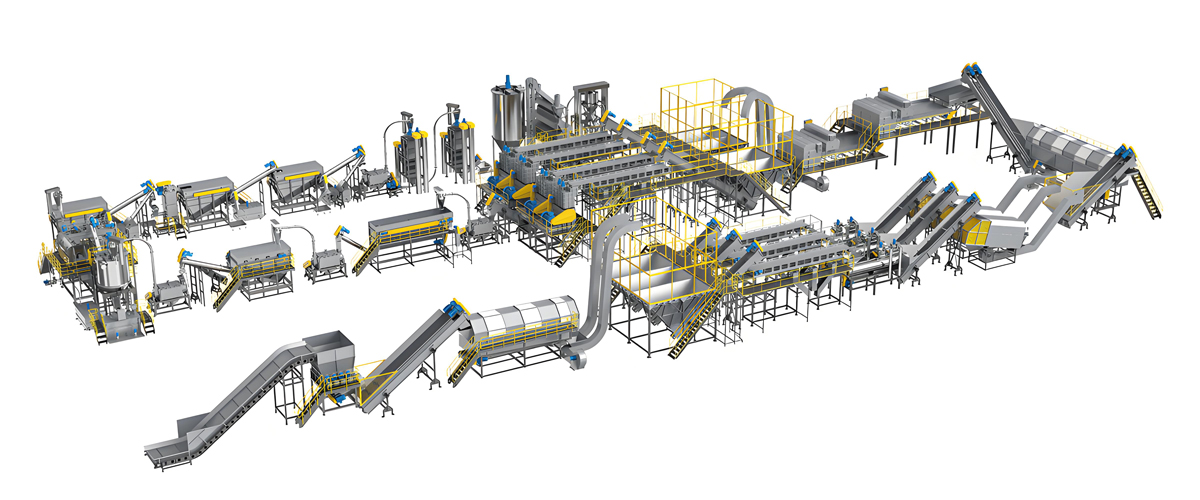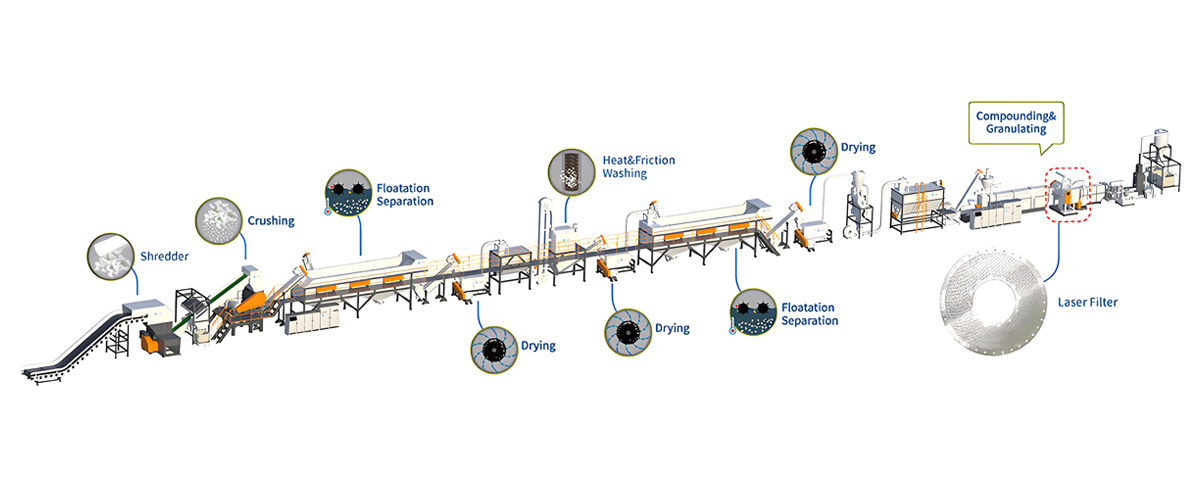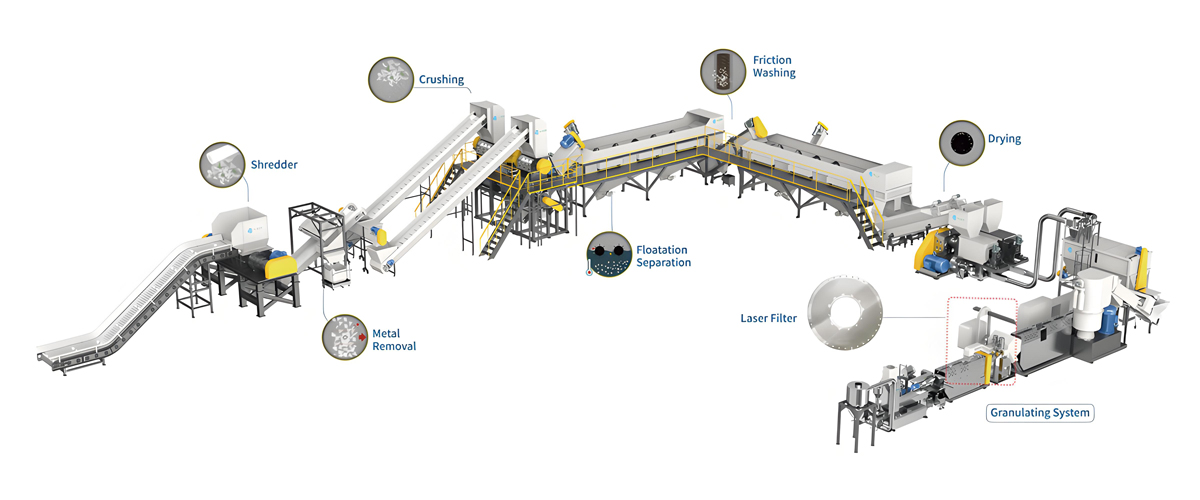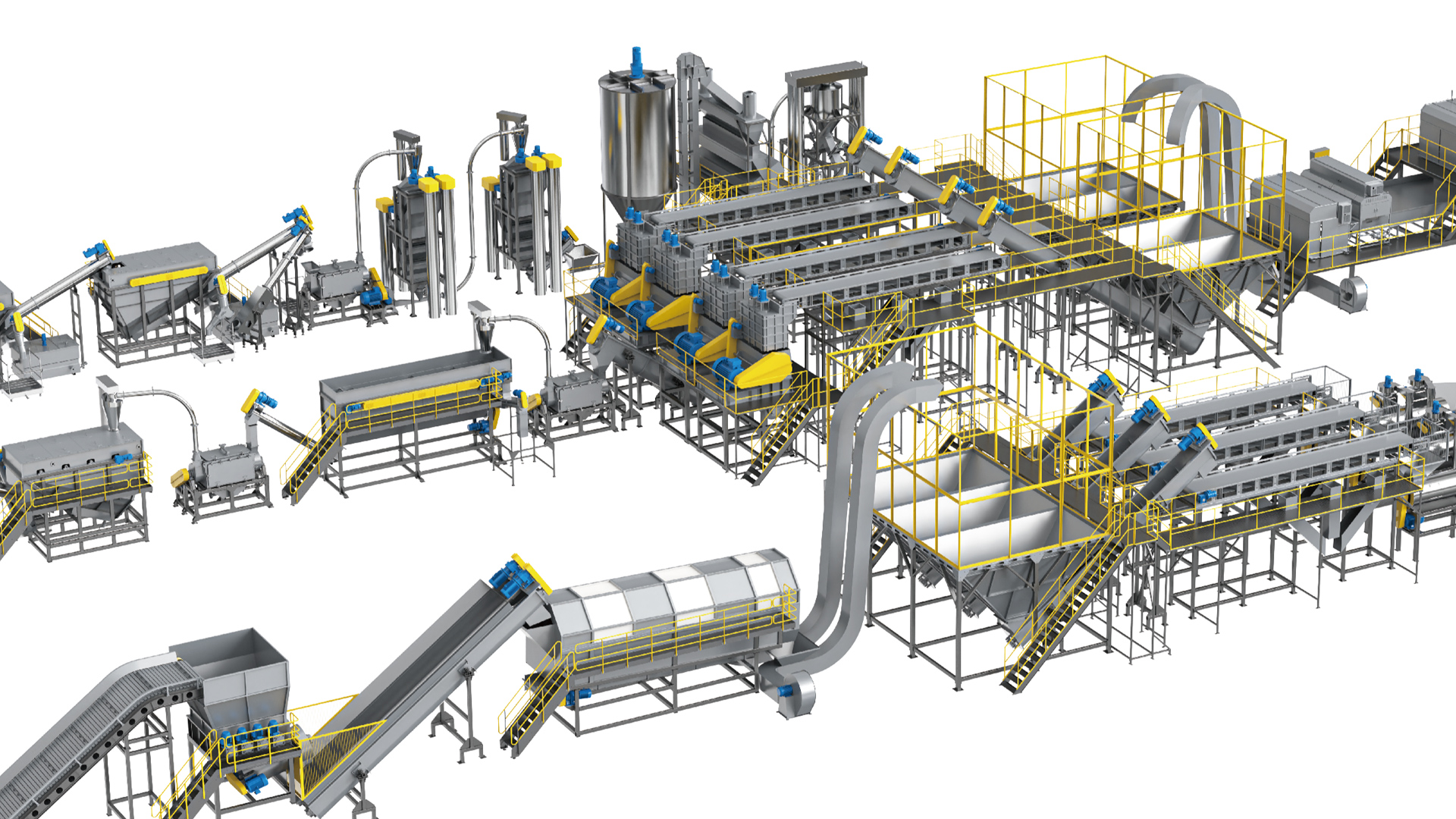

Heavy duty plastic recycling lines form the backbone of modern industrial plastic waste reprocessing, handling large-volume, high-density, and highly contaminated plastic materials including thick rigid plastic blocks, industrial plastic pipes, waste plastic pallets, mixed hard plastics, and bulky plastic packaging materials. As the core consumable and functional component of plastic shredder equipment, shredder blades directly determine the shredding efficiency, material particle uniformity, equipment operating stability, and overall production cost of the entire recycling line. Unlike general-purpose light-duty shredder blades used for thin film and lightweight plastic waste, blades applied in heavy duty plastic recycling lines bear continuous high-load impact, strong friction, and long-duration shear force, making them prone to wear, passivation, edge chipping, deformation, and even fracture without standardized maintenance.
POLYRETEC heavy duty plastic recycling lines are designed for long-term industrial continuous operation, equipped with high-strength alloy shredder blades tailored for high-load shredding scenarios. A complete scientific blade maintenance system is the key to extending blade service life, reducing replacement frequency, stabilizing shredding quality, and cutting down long-term operating costs for recycling enterprises. Many plastic recycling factories face common problems such as frequent blade replacement, unstable shredding particle size, increased equipment failure rate, and rising production costs due to irregular maintenance, unreasonable operation, and untimely blade inspection.
This article comprehensively elaborates on the structural characteristics and working principles of heavy duty shredder blades, analyzes common blade failure causes in industrial recycling lines, and provides systematic and standardized daily maintenance, periodic inspection, sharpening, replacement, and storage management specifications. It also includes detailed blade procurement price analysis, maintenance cost budgeting, and efficiency improvement strategies, covering all core maintenance knowledge that industrial recycling line operators need to master. The full set of maintenance guidelines is fully adapted to POLYRETEC heavy duty plastic shredders and complete recycling washing lines, helping enterprises achieve low-cost, high-efficiency, and stable long-term operation of recycling equipment.
1. Basic Overview of Heavy Duty Shredder Blades for Plastic Recyclinglinies
1.1 Structural and Material Characteristics of Industrial-Grade Shredder Blades
Heavy duty shredder blades used in industrial plastic recycling lines are significantly different from ordinary light-duty shredding blades in material selection, structural design, and process manufacturing. POLYRETEC heavy duty shredder blades adopt high-hardness high-alloy steel integral forging technology, with overall hardness reaching HRC 58-62, possessing excellent wear resistance, impact resistance, and shear fatigue resistance. This material configuration can adapt to long-term high-load shredding of thick hard plastics, mixed impurity plastics, and high-density industrial plastic waste, avoiding rapid wear and brittle fracture caused by frequent impact.
In terms of structural design, heavy duty blades adopt a thickened integral structure with optimized cutter tooth angle and shear gap. The double-sided edge design supports reversible use, effectively improving material utilization rate. The precision positioning hole and locking structure ensure zero displacement during high-speed operation, maintaining stable shear clearance and consistent shredding particle size. Different from single-edge thin blades of small shredders, POLYRETEC industrial blades feature thickened cutter body, reinforced root structure, and anti-impact buffer design, which can resist instantaneous impact force generated by mixed hard impurities such as metal blocks and stones in waste plastics, reducing blade damage probability.
The service life of standard heavy duty shredder blades is directly related to daily maintenance. Under standardized maintenance and operation specifications, the continuous service life of POLYRETEC heavy duty blades can reach 800 to 1200 working hours, while irregular operation and lack of maintenance will shorten the service life to less than 300 working hours, greatly increasing equipment operating costs and production downtime losses.
1.2 Core Functions of Shredder Blades in Heavy Duty Recyclinglinies
Shredder blades are the core execution component of the entire plastic recycling front-end processing link. In heavy duty recycling lines, waste plastic raw materials are mostly unprocessed bulky and thick materials that cannot directly enter crushing, washing, and granulation equipment. High-performance shredder blades complete primary shear shredding of large plastic materials, breaking bulky raw materials into uniform small fragments that meet the feeding specifications of subsequent fine crushing and washing lines.
Stable blade status ensures uniform shredding particle size, which is the premise of stable operation of subsequent washing, sorting, and dehydration processes. Blades with severe wear and uneven edges will produce irregular plastic fragments of different sizes, leading to uneven material feeding of subsequent equipment, reduced cleaning efficiency, increased equipment load, and even blockage failures. In addition, intact blades can avoid excessive powder generation during shredding, reduce material loss rate, and improve the overall yield of recycled plastic materials.
1.3 Differences Between Heavy-Duty and Light-Duty Shredder Blade Maintenance Logic
Light-duty shredder blades are mainly used for thin films, soft plastics, and lightweight packaging waste, with low operating load and single stress state, and the maintenance cycle is relatively loose. In contrast, heavy duty blades for industrial recycling lines bear alternating shear force, impact force, and friction force for a long time, with complex stress conditions and high failure risk, requiring more refined and standardized maintenance management.
Heavy duty blades have stricter requirements for clearance calibration, edge sharpness detection, and fastening inspection. Slight blade wear, gap deviation, or loose fastening will be amplified in high-load operation, resulting in overall production line efficiency decline. At the same time, heavy duty blades have higher maintenance cost and replacement cost, so scientific daily maintenance can effectively avoid unnecessary replacement losses and control long-term operating costs of the recycling line.
2. Common Shredder Blade Failures and Root Causes in Heavy Duty Recyclinglinies
2.1 Blade Passivation and Uniform Wear
Blade passivation is the most common failure of heavy duty shredder blades. After long-term shear friction of hard plastic materials, the sharp cutting edge gradually becomes blunt, the cutting resistance increases significantly, and the shredding effect changes from shear cutting to extrusion crushing. Passivated blades will produce a large number of irregular plastic fragments and plastic powders, resulting in low material utilization rate and increased subsequent cleaning difficulty.
The main causes of uniform passivation and wear include long-term continuous high-load operation without regular sharpening, long-term processing of high-hardness mixed plastic raw materials, and lack of regular blade surface cleaning and lubrication. For POLYRETEC heavy duty shredders, continuous operation for more than 200 hours without maintenance will lead to obvious blade passivation, which directly reduces the shredding efficiency of the recycling line by 15% to 25%.
2.2 Local Edge Chipping and Cracking
Local edge chipping and micro-cracking are sudden failure problems of heavy duty blades, mostly caused by impact load exceeding blade bearing capacity. Waste industrial plastics are often mixed with hard impurities such as metal fragments, stones, and glass. When these hard foreign matter enter the shredding cavity, instantaneous high impact force will cause blade edge chipping, and long-term cumulative impact will produce micro-cracks at the blade root, which will gradually expand and lead to blade fracture if not detected and handled in time.
Unreasonable feeding operation is also an important cause of blade chipping. Forcibly feeding oversized bulky plastic materials and excessive stacking feeding will cause unbalanced blade stress and local overload, resulting in edge damage. This kind of local damage will lead to uneven shredding gap, abnormal vibration of equipment, and further aggravate the wear of the entire blade set.
2.3 Blade Deformation and Gap Deviation
Long-term high-temperature operation and overload load will cause slight bending deformation of heavy duty shredder blades. Continuous friction and shear will generate a lot of heat, resulting in local high temperature of the blade, material thermal fatigue, and permanent deformation. Deformed blades will cause uneven gap between moving and fixed blades, resulting in inconsistent shredding particle size, material jamming, and equipment vibration.
In addition, loose blade fastening bolts and incomplete positioning during installation will also lead to blade displacement and gap deviation. Uncalibrated blade gaps will not only reduce shredding quality but also increase equipment operating load and power consumption, improving the comprehensive energy consumption cost of the recycling line.
2.4 Blade Corrosion and Surface Oxidation
Plastic recycling lines involve wet cleaning and humid operating environment. Long-term exposure of shredder blades to humid air and residual plastic sewage will cause surface oxidation and slight corrosion. Especially when processing waste plastics with residual acid and alkali substances and oil stains, chemical corrosion will occur on the blade surface, accelerating blade wear and reducing blade hardness and service life.
Most recycling enterprises ignore anti-corrosion maintenance of blades after shutdown, resulting in residual sewage and plastic attachments on the blade surface. Long-term accumulation will form corrosive layers, damage the blade wear-resistant layer, and greatly shorten the effective service cycle of heavy duty blades.
3. Standard Daily Maintenance Specificationenen for Heavy Duty Shredder Blades
3.1 Post-Shutdown Daily Cleaning Maintenance
Daily blade cleaning is the most basic and core maintenance work, which can effectively avoid residual material accumulation and corrosive substance adhesion. After the daily production operation of the heavy duty recycling line is completed, the equipment must be completely shut down and powered off first, and the residual plastic fragments, powder, and sticky oil stains in the shredding cavity and on the blade surface must be thoroughly cleaned.
Use professional soft tools to clean blade surface attachments, avoid hard steel tools scratching the blade wear-resistant layer and cutting edge. For stubborn oil stains and sticky plastic residues, use neutral environmental protection cleaning agent for wiping and cleaning. After cleaning, ensure that all blade surfaces, cutter tooth gaps, and equipment inner walls are clean and free of residues. After cleaning, place the equipment in a ventilated state to completely dry the blade surface, avoiding humid residue leading to oxidation and corrosion.
Standard daily cleaning maintenance can eliminate 60% of blade wear and corrosion problems, effectively delaying blade passivation speed and extending the effective service life of heavy duty blades. The daily cleaning operation takes 15 to 20 minutes, with almost no additional cost, but brings significant long-term cost-saving benefits.
3.2 Daily Inspection and Fault Pre-Detection
Before the daily startup of the recycling line, operators need to complete a full inspection of the shredder blade set. The inspection contents include blade fastening firmness, cutting edge integrity, surface wear status, and foreign matter residue. Check whether the blade fastening bolts are loose, whether there are micro-cracks, edge chipping and passivation on the blade edge, and whether the shredding gap is uniform.
During the equipment startup idle running stage, observe whether the equipment operates stably without abnormal vibration and abnormal noise. Abnormal vibration and impact noise are typical signs of loose blades, deformed gaps or local blade damage. Once abnormal conditions are found, stop the machine immediately for inspection and adjustment, and prohibit forced startup operation to avoid expanding blade damage and causing larger equipment failures.
Establish daily blade maintenance inspection records, record blade wear status, operation hours, and abnormal problems every day, form continuous maintenance data files, and provide data support for subsequent regular sharpening, calibration and replacement work.
3.3 Reasonable Operation Protection to Reduce Blade Load
Standardized feeding operation is the key to reduce blade loss and avoid blade damage. In daily production, strictly prohibit overload feeding and oversized material feeding. According to the processing capacity of POLYRETEC heavy duty shredder, control the feeding speed and feeding volume evenly, avoid a large number of bulky hard plastics entering the shredding cavity in a short time, resulting in instantaneous blade overload impact.
Set up pre-screening protection before feeding to intercept hard foreign matter such as metal blocks and stones mixed in waste plastics, avoiding hard impurities directly impacting the blade and causing edge chipping and fracture. For extra-thick and oversized plastic materials, pre-split treatment is required before feeding to reduce blade shear load.
Reasonable operation protection can effectively reduce the abnormal loss rate of blades by more than 70%, avoid sudden blade failure shutdown, and ensure the continuous and stable operation of the heavy duty recycling line.
4. Regular Periodic Maintenance and Calibration Technology
4.1 Regular Blade Sharpening Cycle and Standard Process
Heavy duty shredder blades need regular professional sharpening to restore cutting sharpness and shredding performance. According to the load characteristics of industrial recycling lines, the standard sharpening cycle of POLYRETEC heavy duty blades is 200 to 250 continuous working hours. Timely sharpening can eliminate blade passivation, reduce equipment operating resistance and power consumption, and restore uniform shredding particle size.
Blade sharpening must be carried out by professional personnel with professional grinding equipment. Adopt fine grinding process, control the grinding thickness uniformly, avoid excessive single grinding leading to reduced blade thickness and reduced impact resistance. The sharpening angle is consistent with the original blade design angle to ensure the best shear performance and avoid unreasonable angle change leading to increased wear.
After sharpening, polish the blade surface smoothly to remove grinding burrs and micro-cracks on the cutting edge, and conduct hardness detection and flatness calibration to ensure that the sharpened blade meets industrial operating standards. A single professional sharpening operation can restore more than 95% of the blade's original performance, and each heavy duty blade can be sharpened repeatedly 4 to 6 times before replacement, maximizing the utilization rate of blade materials.
4.2 Blade Gap Calibration and Adjustment Specificationenen
The gap between moving blades and fixed blades directly determines the shredding quality and blade wear degree. Long-term operation will lead to gap deviation caused by vibration and wear, which needs regular professional calibration. The standard gap of POLYRETEC heavy duty shredder blades is strictly controlled within 0.2mm to 0.5mm, and the gap error of the whole blade set is not allowed to exceed 0.1mm.
The periodic gap calibration cycle is 300 working hours. During calibration, first shut down and power off completely, disassemble the blade protective cover, use professional measuring tools to detect the gap of each group of blades one by one, adjust the blade position and fastening tightness according to the detection data, and ensure uniform and consistent gap of the whole machine. After adjustment, perform idle running test and small batch trial shredding to confirm stable equipment operation and uniform material particle size.
Timely gap calibration can avoid uneven blade wear, reduce equipment power consumption, and ensure long-term stable shredding quality of the recycling line, effectively reducing the defective rate of subsequent processing links.
4.3 Regular Anti-Corrosion and Lubrication Maintenance
Aiming at the humid operating environment of plastic recycling lines, heavy duty blades need regular anti-corrosion maintenance. After equipment cleaning and drying, apply a small amount of special anti-rust lubricating oil for industrial cutter tools on the blade surface and cutting edge. The lubricating oil can form a protective film on the blade surface to isolate humid air and corrosive substances, preventing oxidation and corrosion.
The regular lubrication and anti-corrosion cycle is 7 to 10 days for daily continuous production equipment, and comprehensive anti-corrosion protection must be done before long-term shutdown and storage. It is forbidden to use inferior lubricating oil containing impurities to avoid adhesion of plastic materials and affecting shredding effect.
5. Blade Replacement Standards, Installation Specificationenen and Cost Analysis
5.1 Scientific Blade Replacement Judgment Standards
Heavy duty shredder blades belong to consumable parts, which need to be replaced in time after reaching the service limit to avoid affecting production efficiency and equipment safety. The clear replacement standards include: the blade wear thickness exceeds 20% of the original thickness, the cutting edge has continuous chipping and crack defects that cannot be repaired by sharpening, the blade is permanently deformed and cannot be calibrated to the standard gap, and the blade surface has severe corrosion and hardness attenuation.
Blades that have been sharpened for more than 6 times have reached the fatigue service limit, and the overall structural strength and impact resistance are significantly reduced, so they must be replaced with new blades in time to avoid sudden fracture failure during high-load operation and causing equipment damage and safety accidents.
5.2 Professional Blade Installation and Debugging Specificationenen
Blade replacement and installation are high-precision operation processes, and non-standard installation will lead to blade eccentricity, gap deviation, and equipment vibration failure. Before installation, thoroughly clean the blade installation base, positioning holes and fastening bolts to remove residual impurities and oil stains, ensuring accurate positioning and firm fitting.
Install blades in strict accordance with the original equipment assembly sequence, adopt symmetrical installation and uniform fastening method, avoid single-side over-tightening or loose fastening. After installation, calibrate the blade gap comprehensively, conduct 30 minutes of idle running test, check whether the equipment operates stably without abnormal noise and vibration, and carry out small batch trial production after confirming no abnormality to ensure that the new blade meets the production standards.
5.3 Blade Procurement Price and Replacement Cost Budget
POLYRETEC original industrial heavy duty shredder blades adopt high-alloy forging process, with stable performance and long service life. In 2026, the FOB unit price of standard single heavy duty shredder blade is 180 to 240 US dollars. A complete set of blade assembly for conventional heavy duty recycling line shredders is priced at 5,200 to 6,800 US dollars. The upgraded high-hardness wear-resistant blade set suitable for ultra-high load mixed plastic shredding is priced at 6,900 to 8,500 US dollars.
Compared with ordinary low-cost blades on the market, POLYRETEC original blades have obvious cost performance advantages. The service life of original blades is 2 to 3 times that of ordinary blades, and the number of repeated sharpening is more. Although the one-time procurement price is slightly higher, the annual replacement frequency is reduced by more than 60%, and the comprehensive annual blade replacement cost can be saved by 35% to 45%.
In terms of labor cost, the professional blade replacement and calibration service cost is 300 to 500 US dollars per time. Standardized daily maintenance can extend the blade replacement cycle from 3 to 4 months to 6 to 8 months, greatly reducing the labor cost and shutdown loss caused by frequent replacement.
5.4 Long-Term Maintenance Comprehensive Cost Accounting
The daily maintenance cost of heavy duty shredder blades is extremely low, mainly including cleaning tools and special anti-rust lubricating oil, with a monthly comprehensive maintenance consumable cost of only 40 to 60 US dollars. The regular professional sharpening cost is 180 to 250 US dollars per set each time. Through scientific maintenance, the annual comprehensive cost of blade maintenance and replacement for a single heavy duty shredder can be controlled within 9,000 to 12,000 US dollars.
Without standardized maintenance, the annual blade replacement and maintenance cost will exceed 18,000 US dollars, accompanied by huge invisible losses such as production shutdown, reduced production efficiency, and increased defective rate. It can be seen that standardized blade maintenance is the most effective way to control the long-term operating cost of heavy duty plastic recycling lines.
6. Blade Storage Management and Long-Term Failure Prevention Strategy
6.1 Standard Spare Blade Storage Specificationenen
Recycling enterprises need to reserve a certain number of spare heavy duty blades for emergency replacement. Spare blades need standardized storage management to avoid performance attenuation caused by improper storage. Store new blades in a dry, ventilated and constant-temperature warehouse environment, avoid humid, high-temperature and corrosive gas environment.
Each blade is individually packaged and placed flat, avoiding stacking extrusion leading to blade deformation and edge damage. Regularly inspect and maintain spare blades every month, wipe the blade surface, supplement anti-rust lubricating oil, and record the storage time and status of spare blades to ensure that the performance of spare blades is intact when put into use.
6.2 Long-Term Blade Fatigue Failure Prevention
Long-term continuous high-load operation will lead to metal fatigue of heavy duty blades, resulting in invisible micro-cracks and performance degradation. To prevent fatigue failure, enterprises need to formulate scientific equipment operation scheduling rules, avoid long-term uninterrupted overload operation of shredders, and arrange reasonable equipment rest and maintenance cycles.
Regularly conduct non-destructive testing on blades with long service time to detect internal micro-crack defects in advance, replace fatigue blades in advance, and avoid sudden failure during peak production. Cooperate with daily inspection and periodic maintenance to form a full-cycle blade health management system, ensuring long-term stable and safe operation of the shredder.
7. Common Blade Maintenance Mistakes and Correct Optimization Schemes
7.1 Blind High-Precision Sharpening Leading to Blade Thinning
Many operators blindly pursue ultra-sharp blade effect and excessive grinding during sharpening, resulting in excessive thinning of the blade edge, reduced impact resistance, and easy chipping during operation. The correct optimization scheme is to formulate quantitative grinding standards according to blade wear degree, retain reasonable blade edge thickness while restoring sharpness, and balance cutting performance and impact resistance.
7.2 Ignoring Post-Shutdown Residue Cleaning
Long-term retention of plastic residues and sewage on the blade surface will cause corrosion and accelerated wear. The wrong operation of only cleaning when the blade is severely blocked will lead to continuous attenuation of blade performance. The correct scheme is to implement full cleaning after daily shutdown, eliminate residual corrosive substances from the source, and protect the blade surface wear-resistant layer.
7.3 Random Blade Gap Adjustment
Random adjustment of blade gap according to production experience without professional detection will lead to inconsistent gap of the whole machine, uneven shredding, and increased equipment load. The correct scheme is to rely on professional measuring tools to calibrate the gap strictly in accordance with the equipment standard parameters, and unify the gap error within the allowable range to ensure stable shredding quality and low-loss operation.
8. Benefits of Standardized Blade Maintenance for Recyclinglinie Operation
8.1 Improve Production Efficiency and Stabilize Product Quality
Standardized blade maintenance keeps the shredder blade in the best cutting state, ensuring uniform shredding particle size and stable feeding of subsequent washing and sorting equipment. The overall operation efficiency of the heavy duty recycling line is increased by 20% to 30%, the material powder loss rate is reduced by more than 80%, and the yield of high-quality recycled materials is significantly improved. Stable blade performance avoids frequent equipment failure and shutdown, ensuring continuous and efficient production of the recycling line.
8.2 Reduce Comprehensive Operating Costs
Scientific maintenance greatly extends the service life of heavy duty shredder blades, reduces blade replacement frequency and procurement cost, and reduces labor cost and shutdown loss caused by frequent maintenance. At the same time, sharp and stable blades reduce equipment operating load and power consumption, saving long-term energy consumption costs for enterprises. The comprehensive operating cost of the recycling line can be reduced by 15% to 25% annually.
8.3 Extend Overall Equipment Service Life
Blade failure is one of the main causes of auxiliary damage of shredder main engine. Abnormal blade vibration, jamming and impact will cause wear and damage of equipment bearing, spindle and transmission components. Standardized blade maintenance eliminates abnormal operating states, protects the core transmission structure of the equipment, and effectively extends the overall service life of the heavy duty shredder and the complete recycling line.
9. Conclusion
Shredder blades are the core vulnerable components of heavy duty plastic recycling lines, and their maintenance management level directly determines the production efficiency, product quality and long-term operating cost of the entire recycling project. Heavy duty industrial blades bear complex high-load stress for a long time, and are prone to passivation, wear, chipping, deformation and corrosion without standardized maintenance, which brings multiple losses such as reduced production efficiency, increased defective rate, frequent equipment failures and rising operating costs to recycling enterprises.
A complete set of scientific maintenance systems including daily cleaning and inspection, periodic sharpening and calibration, standardized replacement and installation, and professional storage management can maximize the service life of POLYRETEC heavy duty shredder blades, maintain stable high-efficiency shredding performance, and effectively control the comprehensive maintenance and replacement cost of blades. For modern industrial plastic recycling enterprises, standardized blade full-cycle maintenance management is not only the basic guarantee for stable equipment operation, but also an important means to reduce production costs, improve product competitiveness and realize sustainable development of recycling projects.