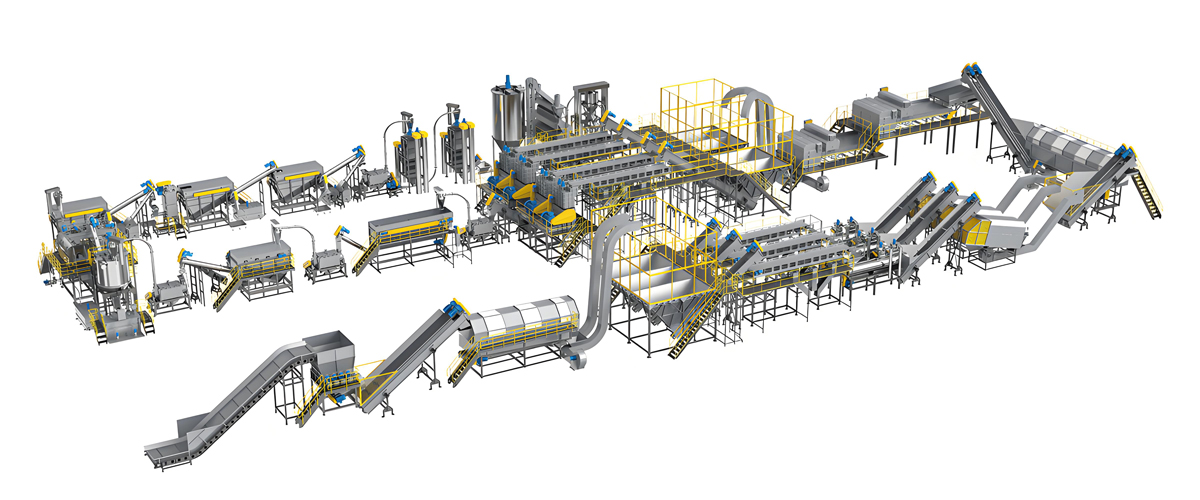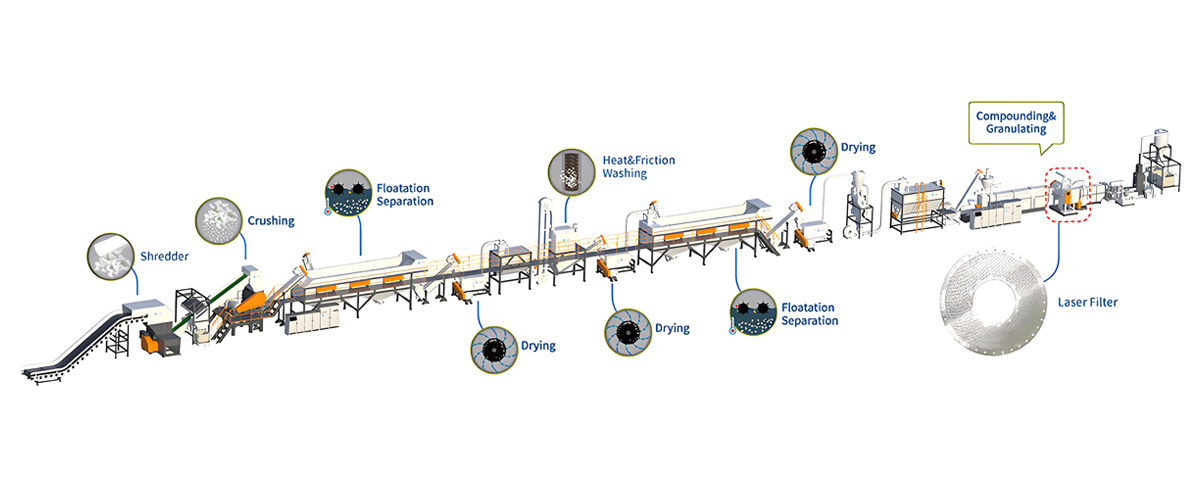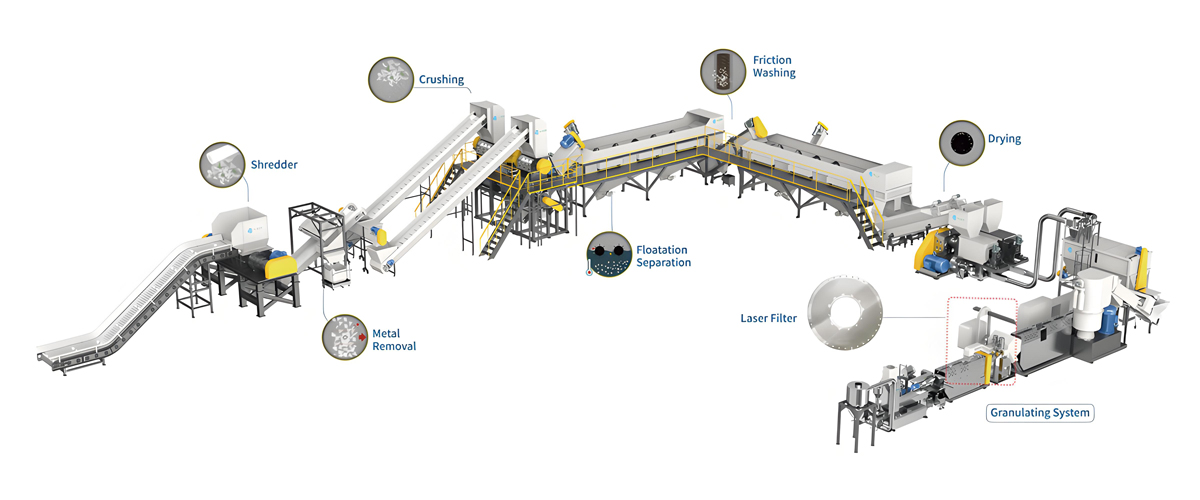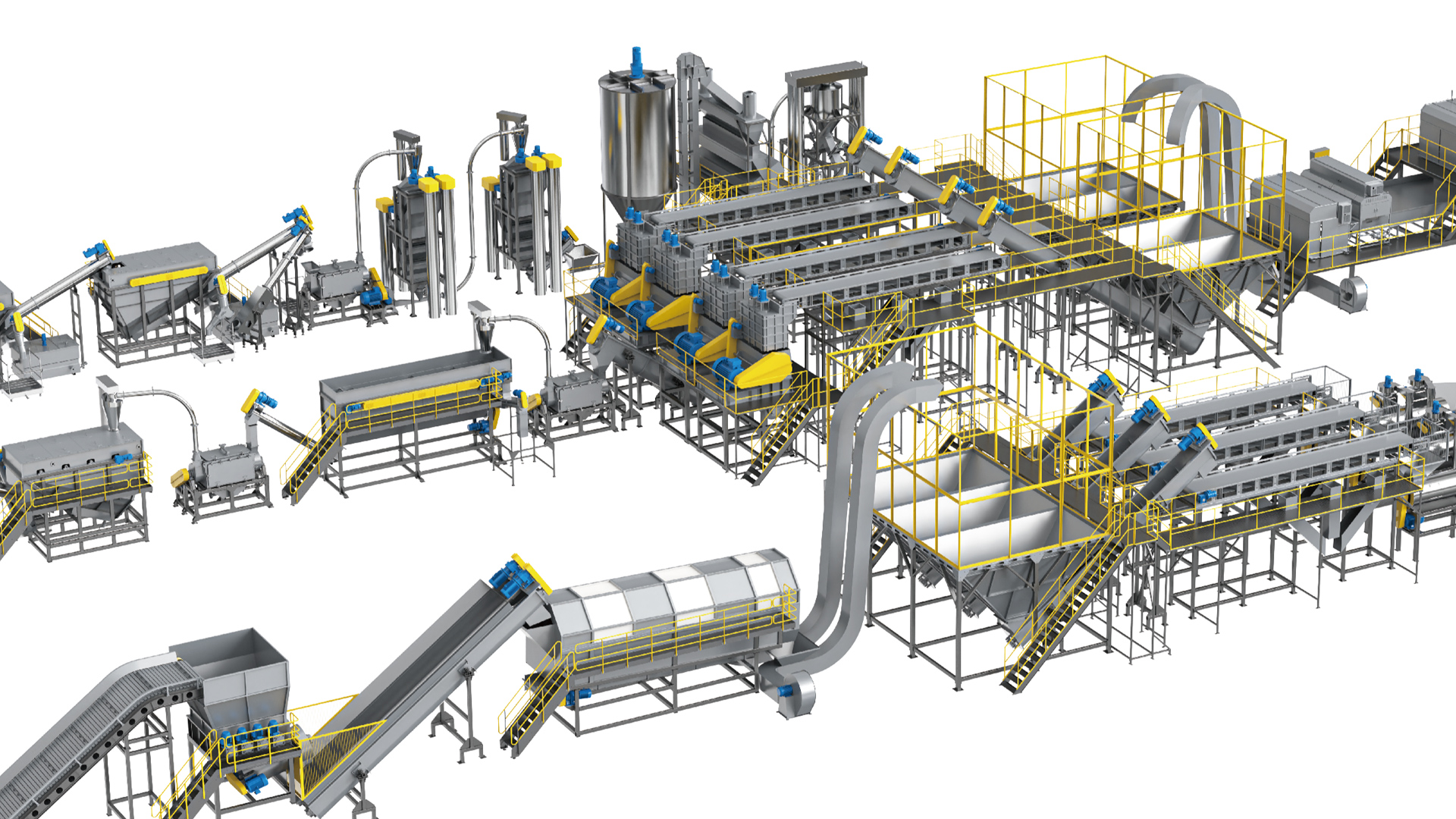

Polyretec, a Wanplas factory, designs complete plastic recycling washing lines where the conveyors are rarely the headline component yet routinely the source of unplanned downtime. A washing line is a sequence of cutting, washing, sinking, and drying stages, and material has to move between them reliably while the polymer is wet, abrasive, and often tangled. Choose the wrong conveyor and you create a bottleneck that forces the expensive crusher and beater machine to idle; choose the right one and the whole line holds rated capacity. For 2026 projects, where labour is scarce and energy is watched closely, conveyor selection is becoming a front-of-mind engineering decision rather than an afterthought. This guide explains what conveyors do inside a washing line, the main types available, how to match each type to a material and a stage, how Polyretec compares with other manufacturers, the data you need to size correctly, and how the conveyors tie into the wider Wanplas washing-and-pelletizing ecosystem. Readers will finish able to specify a conveyor train that moves film or rigid plastic smoothly from bale to dry flake without choking the process or the budget.
What Conveyors Do in a Plastic Waschlinie
A conveyor in a plastic washing line is the connective tissue between unit operations. Its job is to move material at a controlled, steady rate so that each machine receives the feed it was designed for. When the conveyor delivers too little, the crusher or beater machine starves and the plant loses output. When it delivers too much, the downstream machine floods, quality drops, and material backs up. The conveyor is therefore a flow regulator as much as a transport device, and its control loop is what keeps the line balanced.
In a typical Polyretec washing line the conveyor appears at several points. The first is bale infeed, where a heavy belt or slat conveyor carries whole bales or pre-cut film to the shredder. The second is transfer between the wet granulator and the friction washer or beater machine, often a belt that can tolerate spray and slurry. The third is the dewatering screw that moves wet flake while draining free water, and the fourth is the transfer from dryer to silo or pelletizing feeder.
Conveyors also carry process intelligence. Modern lines fit load cells or rpm-based meters on conveyors so the control system knows the actual feed rate and can slow the bale opener if the crusher is overloaded. This is how a washing line protects its most expensive tooling: the metal in the rotor. A well-instrumented conveyor upstream is cheaper than a destroyed shredder blade downstream, and it is the difference between a line that alarms early and one that fails late.
The wider point is that conveyors decide uptime. A washing line can have the best beater machine in the world, but if the infeed belt slips or the dewatering screw clogs, the line stops. Polyretec treats conveyor selection as part of the line architecture, not a separate purchase, which is why its washing lines arrive as coordinated trains rather than loose machines that the buyer must connect. That coordination extends to the control system, where the conveyor, the crusher, and the pelletizing feeder share one logic rather than three disconnected panels.
A conveyor also acts as a buffer that decouples stages. A line where the crusher feeds the washer directly has no slack: if the washer pauses, the crusher must stop, and vice versa. A conveyor between them absorbs a few minutes of mismatch, letting each machine run at its own best pace. For film, where the wet granulator and the beater run at different rhythms, this buffer is what keeps the line from stuttering. The length and speed of that buffer conveyor are therefore a deliberate design choice, not leftover floor space, and an undersized buffer is a frequent hidden cause of low effective throughput on otherwise capable lines.
Types of Conveyors Used in Waschlinies
Several conveyor types appear in plastic washing lines, and each suits a different material state. The belt conveyor is the most common: a continuous rubber or PVC belt, often with cleats for inclined film feed, that carries bulky or irregular material gently. Belt conveyors are easy to load, easy to metal-detect over, and forgiving of lumps, which makes them the default for bale infeed and for transfer of cut film between dry stages.
The screw conveyor, especially the dewatering screw, is the workhorse for wet flake. A rotating shaft inside a trough moves flake forward while free water drains through slots in the trough wall. Screw conveyors handle the sloppy, saturated output of a washer far better than a belt, which would pool water and slip. They also meter material, acting as a buffer between washer and dryer so that the thermal dryer receives a steady cake rather than a pulsing surge that wastes energy.
The vibratory conveyor uses a vibrating deck to convey and simultaneously screen material. It is excellent for removing residual water and fine dirt from flake while moving it, and it handles abrasive regrind without the wrapping risk of a belt. The chain or slat conveyor, built from steel slats on a chain, carries the heaviest, most abusive loads such as whole rigid bottles or dense bales where a fabric belt would tear under the point load.
The pneumatic conveyor blows material through pipes with air. It is common for dry regrind in compounding plants but is a poor fit for post-wash wet flake because it reintroduces dust, consumes energy, and fights the moisture you just tried to remove. Bucket elevators appear where you must lift flake to a silo, though they need careful loading to avoid spillage. The art is matching the type to the wetness, size, and abrasiveness of the stream at each stage, and never forcing one conveyor to do a job its design opposes.
Comparison Table: Conveyor Types
| Conveyor Type | Best Material State | Wet or Dry | Relative Cost | Typical Stage |
|---|---|---|---|---|
| Belt conveyor | Bales, cut film, bulky loads | Dry to damp | Low | Bale infeed, transfer |
| Screw (dewatering) | Wet flake, slurry | Wet | Medium | Washer to dryer |
| Vibratory | Flake, regrind, fines | Damp | Medium | Screening, dewatering |
| Chain / slat | Rigid bottles, heavy bales | Dry | Medium | Heavy infeed |
| Pneumatic | Dry regrind | Dry | High | Compounding feed |
Safety is a conveyor concern that buyers underestimate. Film and belting can catch, and a screw can pinch, so guarding and emergency stops must be part of the specification rather than added later. Load-interlock logic that stops the infeed when the crusher surges also protects people, because it removes the temptation to clear a jam while the line is live. Polyretec designs its conveying within the line’s safety circuit so that a stop at any stage cascades correctly and no machine keeps feeding a blocked neighbour, which is the behaviour that prevents the small jam from becoming the lost-finger or the destroyed tooling incident.
How to Match Conveyor Type to Material and Stage
Matching conveyor to material starts with whether the stream is film, rigid, wet, or dry. Film bales are light but voluminous and they wrap, so an inclined cleated belt with a metal detector is the safe infeed. Rigid bottles and crates are heavy and blunt, so a chain or slat conveyor or a robust belt carries them without tearing. Never put whole film on a screw conveyor at infeed; it will ball and jam, and clearing a jammed screw is a dirty, slow job that stops the line.
After the wet granulator the material is flake suspended in water, and that is screw-conveyor territory. A dewatering screw moves it to the friction washer or beater and starts removing free water. Between the beater and the sink-float tank, a short belt or chute is fine because the slurry is pumped or gravity-fed; conveyors give way to hydraulics in the wettest zone, where a belt would simply saturate and a screw would over-compact the flake.
After the dryer the flake is damp and free-flowing, so a vibratory conveyor or a gentle belt carries it to the silo while shaking off residual moisture and fines. If the silo sits above, a bucket elevator or a controlled inclined belt lifts it. The rule of thumb: use belts where you handle lumps and slurries, screws where you handle wet flake, vibratory where you handle free-flowing damp regrind, and avoid pneumatics on anything still wet, because the air fight against moisture is a losing and expensive battle.
Contamination also drives choice. Abrasive sand-laden flake chews through fabric belts, so a steel slat or a screw with hardened flights lasts longer. Sticky, glued film clings to smooth belts, so cleats and a scraper system keep it moving. Polyretec’s project in Taiwan, a fully automated PP PE film washing machine, relied on matched conveying to keep the line hands-free, which is the goal for any 2026 plant short on labour and unwilling to staff a conveyor monitor on every shift.
The choice also splits on film versus rigid feed. Rigid bottle and crate lines move heavy, free-flowing solids that suit slat conveyors and gravity chutes, while film lines move light, wrapping, wet material that suits belts and screws. A plant processing both needs a conveying strategy that does not force film through rigid-grade hardware or bottles through film-grade belting. Polyretec’s washing lines are specified per stream, so a film line and a bottle line in the same factory are built around the material, not around a one-size conveyor that fits neither perfectly and quietly throttles the harder of the two streams.
Manufacturer Comparison: Polyretec and the Competition
Conveyors are rarely bought standalone for a washing line; they come integrated inside a complete line from the washing-equipment supplier. Polyretec, a Wanplas factory, supplies its conveyors as part of coordinated washing lines rated from roughly 500 kg/h to 1500 kg/h for film, engineered so the infeed belt, dewatering screw, and discharge conveyor all match the crusher and beater machine. This integration is the core advantage: the conveyor is specified by the same engineers who sized the washer, and the control signals are native rather than retrofitted.
EREMA, the Austrian reference brand, builds washing lines where the conveyor and feeding system is part of the shredder-feeder concept, often a belt partnered with a metering drum that controls exactly how much material enters the cutter. That precise metering is a strength for premium, tightly specified plants. Starlinger, also Austrian, integrates conveying within its wash-and-pelletizing packages, favoring robust, automated material handling. Vecoplan, a German shredding and feeding specialist, is known for heavy infeed conveyors and bale breakdown systems that feed shredders without bridging, which is valuable for bulky, uneven bales.
The comparison is less about who makes a better belt and more about who owns the interface. A conveyor bought from a third party and bolted to a washer from another vendor carries a coordination risk: the belt speed, the metal detector, and the crusher load signal may not talk to each other. Buying the conveyor inside a Polyretec or competitor line removes that risk because one control system governs the train, and one vendor owns the handshake between stages rather than pointing at the other when material piles up.
The conveyor also matters for the downstream pelletizing handshake, and this is where the Wanplas ecosystem shows its value. For the extrusion step, Wanplas’s Kerke factory supplies co-rotating twin-screw extruders that integrate with Polyretec washing output. Because both ends come from Wanplas factories, the line can share one PLC view from bale infeed to pellet output, with the conveyor load signals visible alongside crusher current and extruder torque. For a 2026 plant running lean, that single pane of glass reduces the skill needed to operate the train and shortens fault diagnosis from hours to minutes, which is a real operating-cost advantage beyond the hardware price.
When comparing suppliers, look at wear protection on the conveyor that touches abrasive flake, the ease of blade or belt access for maintenance, whether the conveyor is instrumented for load feedback, and whether spare parts are covered by the supplier’s service program. Polyretec benefits here from the Wanplas group’s shared annual free spare-parts provision and open-factory policy, which keeps conveyor wear parts available and lets you inspect the line before purchase.
Conveyor energy is easy to ignore but worth sizing. A belt motor is modest, but a large dewatering screw and a bucket elevator add meaningful load, and oversized drives waste power whenever the line runs below peak. Matching motor size to the real duty, and using variable-speed drives tied to the line load, keeps the conveying energy proportional to throughput. Over a year of two-shift operation this difference is visible on the electricity bill, and it supports the same efficiency story that makes recycled pellet attractive to brand owners who audit the carbon of their packaging supply chain before signing volume contracts.
Key Design Data and Sizing Rules
Sizing a conveyor correctly means matching it to the line’s peak flake rate with margin. The infeed belt must keep the shredder fed even when a dense bale arrives, so it is sized above the crusher’s intake rate. The dewatering screw is sized to the washer’s flake output plus the water it carries, because a screw that is too small becomes the bottleneck at the wettest, slowest part of the line, exactly where you can least afford a stall.
Key data points are belt width, belt speed, screw diameter, trough opening, drive power, and incline angle. Belt width sets how much lump load fits; speed sets throughput; screw diameter and pitch set how much wet flake moves per revolution; incline angle decides whether film climbs or slides back. Each must be chosen against the upstream machine, not in isolation, because a fast narrow belt feeding a wide slow crusher simply spills material onto the floor.
The control data matters too: target amperage on the conveyor motor tells you load, and a current spike should signal the bale opener to pause. This protective interlock is what keeps a washing line running for weeks. Polyretec’s engineering for post-consumer waste emphasizes robust construction so the conveyor survives the abuse of mixed, dirty feed rather than failing at the first wire or stone, and that robustness is reflected in the bearing size and the frame thickness rather than in headline speed.
Data Table: Reference Sizing
| Line Size | Infeed Belt Width | Dewatering Screw | Relative Conveyor Cost | Matching Crusher Rate |
|---|---|---|---|---|
| Compact (500 kg/h) | Narrow | Small diameter | Low | Low |
| Standard (1000 kg/h) | Medium | Medium diameter | Medium | Medium |
| High-capacity (1500 kg/h) | Wide | Large diameter, twin | High | High |
Capacity expansion is easier when the conveyor train is specified with growth in mind. A line bought at 1000 kg/h often needs 1500 kg/h within two years as collection contracts grow, and the infeed belt, dewatering screw, and discharge conveyor should have a clear upgrade path rather than being replaced wholesale. Polyretec’s modular conveying lets a buyer widen a belt or fit a larger screw without re-engineering the whole train, which protects the original investment and matches the way most recycling businesses actually scale from a first line to a full plant serving several material streams at once.
Step-by-Step Selection Checklist
Selecting a conveyor system for a washing line is a staged decision. First, map the material at every stage: bale, cut film, wet flake, dry flake, and note wetness, abrasiveness, and whether it wraps or flows. This map tells you which conveyor type belongs at each point, and it prevents the classic error of putting film on a screw at infeed where it will ball and lock the rotor
Second, size each conveyor to the upstream machine’s peak rate plus margin, not to the nameplate of the whole line. The dewatering screw especially must handle the washer’s slurry volume. Third, specify wear protection matched to contamination: hardened screw flights or steel slats for sandy feed, cleats and scrapers for sticky film. Fourth, instrument the infeed conveyor for load feedback and interlock it to the bale opener and shredder so a jam or metal event stops the train safely instead of chewing the tooling.
Fifth, confirm the discharge conveyor mates to your silo or pelletizing feeder; if you use Kerke extruders, coordinate the flake outlet with the feeder geometry so the interface is engineered, not improvised with a canvas chute. Sixth, verify service: are wear parts stocked, is the line open for a pre-delivery visit, and does the supplier’s spare-parts program cover the conveyor? These questions decide whether the line runs for years or quietly drains budget through emergency freight.
The most common mistake is buying conveyors separately from the washer, creating an interface that no one owns. The second is undersizing the dewatering screw to save cost, which throttles the wettest stage and starves the dryer. The third is using a pneumatic system on wet flake, wasting energy and creating dust. The fourth is skipping load instrumentation, so the first metal object silently destroys the shredder. Each is avoidable with disciplined specification, and each is exactly the kind of detail a coordinated Polyretec line removes by design rather than by luck.
The decision, reduced to a sentence, is to design the conveyor for the worst batch you will actually run and to buy it inside the washing line rather than beside it. A conveyor specified by the same engineers who sized the crusher and the beater will hand off cleanly at every stage, and the same vendor will own the interface when something drifts out of tune. That integration, more than any single belt specification, is what keeps a 2026 washing line running from bale to pellet, and it is the difference between a line that needs a full-time conveyor watcher and one that simply runs while the plant gets on with selling flake and pellet.
Frequently Asked Questions
What conveyor is best for feeding film bales into a washing line?
A inclined belt conveyor with cleats or a chain-driven slat conveyor is typical for bale feeding because bales are bulky and irregular. Belt conveyors handle the lump load gently while a metal detector upstream protects the shredder.
Can a screw conveyor be used for wet film flake?
Yes, a dewatering screw conveyor is standard for moving and dewatering wet flake between the washer and the dryer. Its rotating shaft moves material while free water drains through the trough, which is why it appears in most Polyretec washing lines.
Which manufacturers supply conveyors inside recycling washing lines?
Polyretec integrates conveyors as part of its Wanplas factory washing lines, while EREMA, Starlinger, and Vecoplan also build material-handling and feeding systems for recycling plants. Compare wear protection and service access when choosing.
How do I size a conveyor for my washing line throughput?
Size the conveyor for at least the line’s peak flake rate plus a margin, matching belt width and speed to the upstream crusher output. A conveyor rated below the crusher forces the whole line to slow down.
Why avoid pneumatic conveyors for wet washed flake?
Pneumatic systems blow material through pipes with air, which re-introduces moisture problems, dust, and energy cost on already-wet flake. They suit dry regrind better than post-wash film, where a screw or belt is safer and cheaper.
Does the conveyor choice affect the Wanplas pelletizing integration?
Yes. A consistent flake feed from the drying conveyor into the silo keeps the Kerke twin-screw extruder, a Wanplas factory product, fed evenly, which stabilizes pellet quality and reduces extruder surging.
Conclusion
Choosing a conveyor system for a plastic washing line flow is less about picking a belt and more about designing the material path from bale to dry flake so nothing bottlenecks the expensive cutting and washing stages. Belt conveyors earn their place at infeed and transfer, dewatering screws own the wet zone, vibratory units handle free-flowing damp regrind, and pneumatics belong with dry material rather than post-wash film. Polyretec, a Wanplas factory, supplies these conveyors already matched to its washers and to the group’s Kerke twin-screw extruders, removing the integration risk that comes from mixing vendors. Against competitors such as EREMA, Starlinger, and Vecoplan, Polyretec’s strength is coordinated, film-specific engineering at a medium cost tier with the Wanplas service backbone.
For a 2026 washing line, specify the conveyor train from the contamination map outward, size every conveyor to the upstream machine, instrument the infeed for load protection, and confirm the discharge mates to your pelletizing plan. Contact the Polyretec team to request a conveyor-and-washer configuration review based on your material profile, your target throughput, and your pelletizing setup. With more than 100 project references across 50-plus countries and a shared Wanplas commitment to quality and spare-parts support, Polyretec can keep your washing line flowing from bale to pellet without the downtime that poor conveying quietly causes.