
The Growing Challenge of Mixed Plastic Waste
In 2026, the global plastic waste crisis continues to escalate, with over 400 million tons of plastic produced annually, and only 9% of it being effectively recycled. One of the most significant challenges in the recycling industry is dealing with mixed plastic waste, which accounts for approximately 91% of all plastic waste that remains outside traditional recycling systems. Mixed plastic waste includes various types of plastics, such as PET, HDPE, LDPE, PP, and PS, often contaminated with food residues, labels, and other non-plastic materials. This complexity makes it difficult to recycle using conventional methods, leading to most of it being landfilled or incinerated.
Traditional Recycling Methods and Their Limitations
Traditional plastic recycling methods primarily rely on mechanical recycling, which involves sorting, cleaning, shredding, melting, and pelletizing plastic waste. However, mechanical recycling has several limitations when it comes to mixed plastic waste. First, it requires meticulous sorting of different plastic types, which is labor-intensive and costly. Even small mistakes in sorting can ruin an entire batch of recycled plastic. Second, mechanical recycling often results in downcycling, where the recycled plastic has lower quality and performance compared to virgin plastic, limiting its applications. Third, contaminated or mixed plastics can cause issues during the recycling process, such as clogging machinery, reducing the efficiency of the process, and affecting the quality of the final product.
Advanced Recycling Technologies for Mixed Plastic Waste
To address the challenges of mixed plastic waste, several advanced recycling technologies have emerged in recent years. These technologies offer more efficient and effective ways to recycle mixed plastic waste, reducing the need for sorting and improving the quality of the recycled plastic.
Chemical Recycling
Chemical recycling, also known as advanced recycling, uses heat, catalysts, or solvents to break down plastic waste into its basic chemical components, such as oils, gases, or monomers. These components can then be used to produce new plastic materials, fuels, or other chemicals. Chemical recycling can handle mixed plastic waste without the need for extensive sorting, as it can break down different types of plastics into their constituent parts. Additionally, chemical recycling can produce high-quality recycled plastic that is comparable to virgin plastic, enabling it to be used in a wide range of applications.
There are several types of chemical recycling technologies, including pyrolysis, gasification, and solvolysis. Pyrolysis involves heating plastic waste in the absence of oxygen to break it down into oils, gases, and char. Gasification converts plastic waste into a synthesis gas (syngas) consisting of hydrogen and carbon monoxide, which can be used to produce fuels or chemicals. Solvolysis uses solvents to break down plastic waste into monomers, which can then be polymerized to produce new plastic materials.
Biological Recycling
Biological recycling, also known as biodegradation, uses microorganisms or enzymes to break down plastic waste into organic compounds. This process is still in the early stages of development, but it has the potential to be a sustainable and environmentally friendly solution for mixed plastic waste. However, biological recycling currently has limitations, such as slow degradation rates and the need for specific conditions to be effective.
Aqueous Chemi-Mechanical Recycling
Aqueous chemi-mechanical recycling is a relatively new technology that uses water heated beyond its boiling point to transform polymers in plastics into a state where they can mix at the microscale. This process can effectively separate different types of plastics and remove contaminants, resulting in high-quality recycled plastic. Aqueous chemi-mechanical recycling has several advantages over traditional recycling methods, including lower energy consumption, reduced volatile organic compound emissions, and the ability to produce recycled plastic that is comparable in appearance and quality to virgin plastic.
The Role of POLYRETEC Plastic Recycling Machines in Mixed Waste Recycling
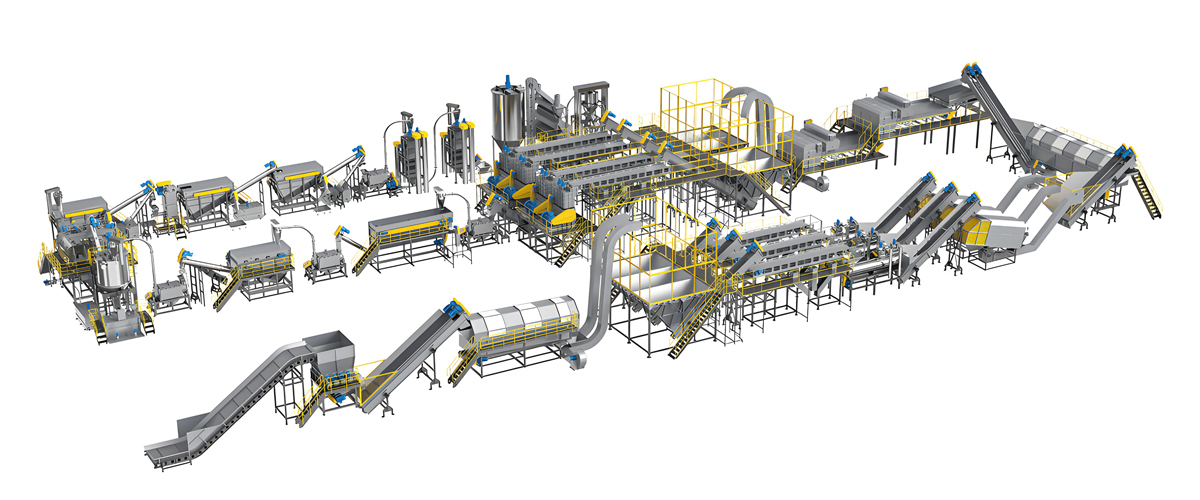
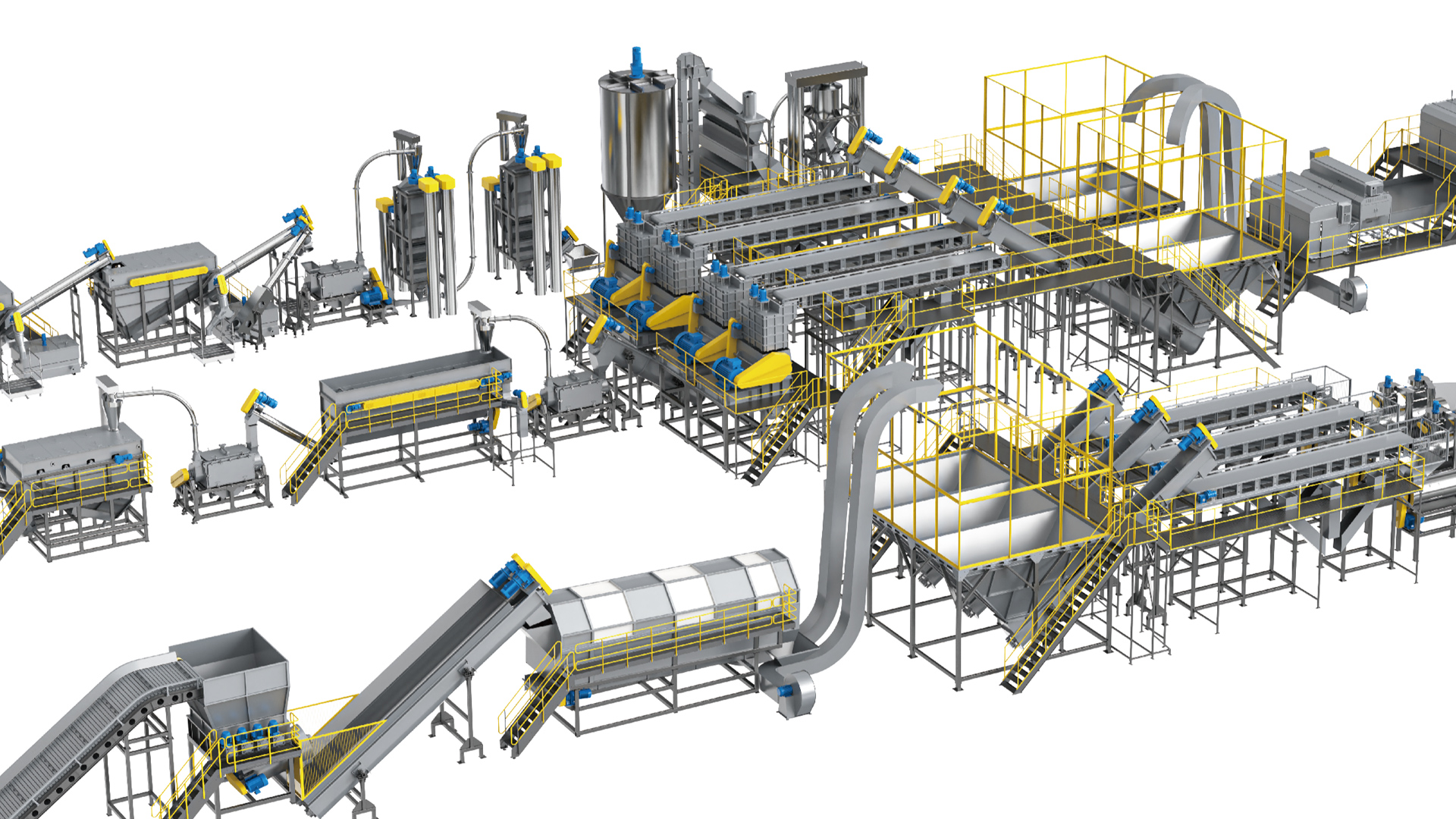
POLYRETEC is a leading manufacturer of plastic recycling equipment, offering a range of solutions for mixed plastic waste recycling. Their machines are designed to handle various types of plastic waste, including mixed plastics, and can efficiently process them into high-quality recycled plastic pellets.
POLYRETEC Washing Lines
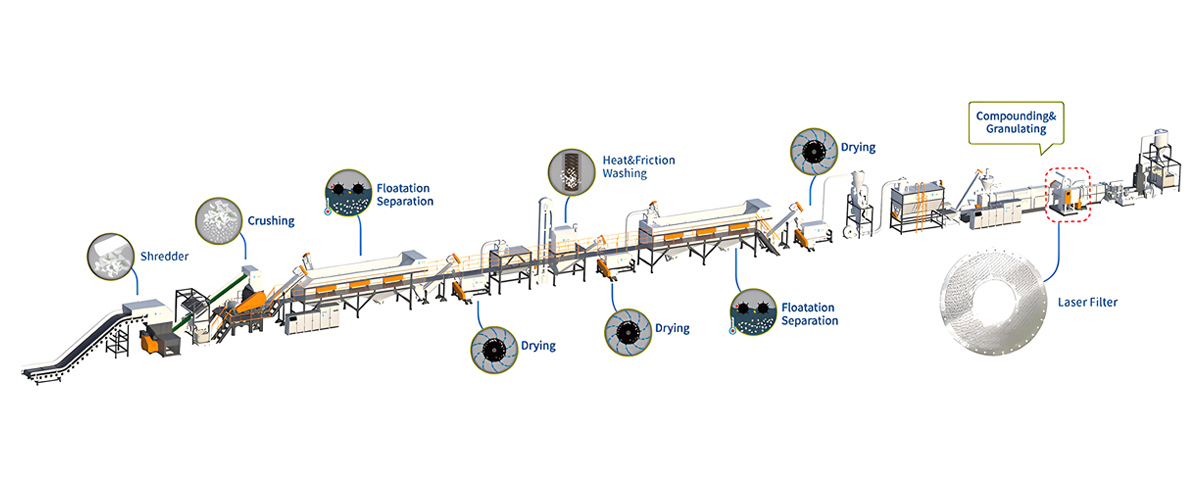
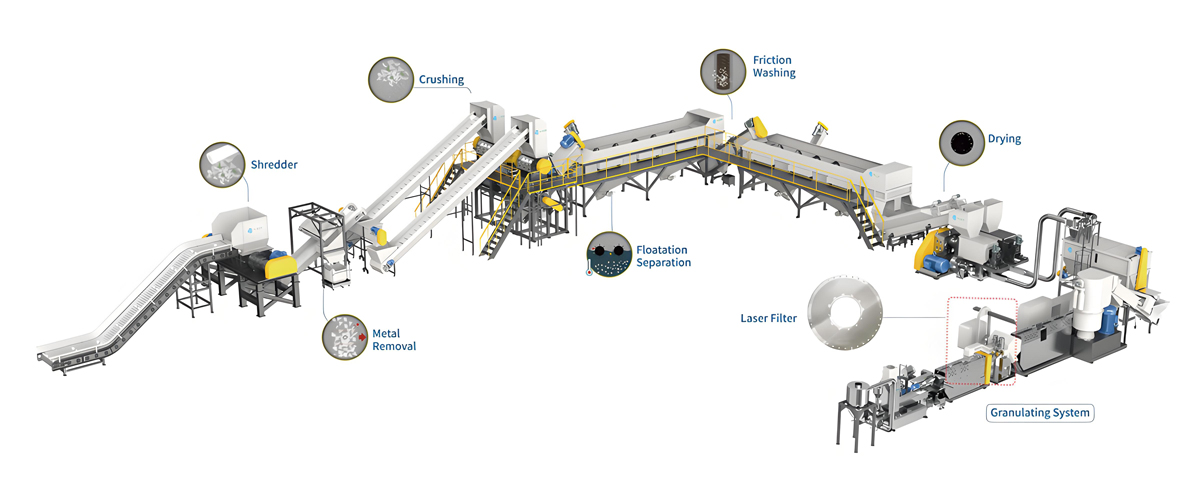
POLYRETEC offers a variety of washing lines for different types of plastic waste, including PET bottles, rigid bottles, and soft plastics. These washing lines are designed to effectively clean and sort plastic waste, removing contaminants and separating different types of plastics. The washing lines can handle mixed plastic waste, as they are equipped with advanced sorting and cleaning technologies that can separate different plastic types based on their density, color, or other properties.
POLYRETEC Pelletizing Lines
POLYRETEC’s pelletizing lines are designed to convert cleaned plastic waste into high-quality recycled plastic pellets. These lines use advanced extrusion and pelletizing technologies to ensure that the recycled plastic pellets have consistent size, shape, and quality. The pelletizing lines can handle mixed plastic waste, as they are equipped with specialized screws and dies that can process different types of plastics and ensure uniform melting and mixing.
POLYRETEC Auxiliary Equipment
In addition to washing lines and pelletizing lines, POLYRETEC also offers a range of auxiliary equipment, such as shredders, dryers, and filters, that can be used to enhance the efficiency and effectiveness of the recycling process. These auxiliary equipment can help to reduce the amount of waste generated during the recycling process, improve the quality of the recycled plastic, and ensure that the recycling process is environmentally friendly.
Case Studies: Successful Mixed Waste Recycling Projects
Several companies and organizations have successfully implemented mixed waste recycling solutions using advanced recycling technologies and POLYRETEC plastic recycling machines. These case studies demonstrate the effectiveness of these solutions in addressing the challenges of mixed plastic waste and achieving sustainable recycling goals.
Turkey LDPE Films Recycling Pelletizing System
A customer in Turkey implemented a POLYRETEC LDPE films recycling pelletizing system to recycle LLDPE bags and PE films. The system is designed to handle mixed plastic waste, including printed bags and films, and can process them into high-quality recycled plastic pellets. The system uses advanced extrusion and pelletizing technologies to ensure that the recycled plastic pellets have consistent size, shape, and quality, making them suitable for use in a wide range of applications.
Mexico Washing Line for LDPE Film with Stickers
A customer in Mexico implemented a POLYRETEC washing line for LDPE film with stickers. The washing line is designed to effectively clean and sort LDPE film with stickers, removing the stickers and other contaminants and separating the LDPE film from other types of plastics. The washing line uses advanced cleaning and sorting technologies to ensure that the recycled LDPE film has high quality and purity, making it suitable for use in the production of new plastic products.
Conclusion: Choosing the Best Plastic Recycling Solution for Mixed Waste
Choosing the best plastic recycling solution for mixed waste depends on several factors, including the type and composition of the mixed plastic waste, the desired quality of the recycled plastic, the available resources and budget, and the environmental impact of the recycling process. Advanced recycling technologies, such as chemical recycling, aqueous chemi-mechanical recycling, and biological recycling, offer promising solutions for mixed plastic waste, as they can handle mixed plastics without the need for extensive sorting and produce high-quality recycled plastic. However, these technologies are still in the early stages of development and may have higher costs and technical challenges compared to traditional recycling methods.
POLYRETEC plastic recycling machines offer a practical and cost-effective solution for mixed waste recycling, as they are designed to handle various types of plastic waste and can efficiently process them into high-quality recycled plastic pellets. By combining advanced recycling technologies with POLYRETEC plastic recycling machines, companies and organizations can achieve sustainable recycling goals, reduce the amount of plastic waste sent to landfills and incinerators, and contribute to a circular economy.