
Effective workflow management is the single most important factor determining the profitability and sustainability of a plastic recycling plant. In an industry characterized by volatile raw material prices, strict quality requirements, and increasing competition, even small improvements in workflow efficiency can result in significant cost savings and higher profit margins. However, many plastic recycling plants operate with outdated, inefficient workflows that lead to excessive downtime, high labor costs, inconsistent product quality, and low material recovery rates. According to industry data, poorly managed recycling plants typically operate at only 60-70% of their maximum capacity, with scrap rates exceeding 15% and unplanned downtime accounting for 20-30% of total production time.
POLYRETEC, a global leader in plastic recycling technology, has developed comprehensive workflow optimization solutions based on over 15 years of experience in designing and installing plastic recycling lines and plastic washing lines worldwide. POLYRETEC’s approach combines advanced equipment technology, intelligent process control, and lean manufacturing principles to create streamlined, efficient workflows that maximize production capacity, minimize operational costs, and ensure consistent product quality. Whether you are operating a small-scale recycling facility or a large industrial plant, implementing POLYRETEC’s workflow optimization strategies can transform your operations and significantly improve your bottom line.
This comprehensive guide provides a detailed roadmap for optimizing workflow in plastic recycling plant management. It covers the core challenges in traditional recycling workflows, the fundamental principles of workflow optimization, step-by-step strategies for improving each stage of the recycling process, and how POLYRETEC’s integrated solutions can help you achieve your operational goals. The guide also includes detailed cost and return on investment analysis, best practices for continuous improvement, and solutions to common workflow-related issues. Whether you are looking to upgrade an existing plant or design a new facility from scratch, this guide serves as a definitive resource for achieving world-class operational efficiency in plastic recycling.
1. Core Challenges in Traditional Plastic Recycling Plant Workflows
Before implementing workflow optimization strategies, it is essential to understand the core challenges that plague traditional plastic recycling plant operations. These challenges are often interconnected and can have a cascading effect on overall plant performance, leading to reduced efficiency, higher costs, and lower profitability.
1.1 Inefficient Raw Material Management
Raw material management is the first and often most problematic stage in the plastic recycling workflow. Many plants struggle with inconsistent raw material quality, unpredictable supply, and poor inventory management. Incoming plastic waste often varies significantly in composition, contamination level, and moisture content, making it difficult to maintain consistent processing conditions and product quality. Poor storage practices can lead to material degradation, cross-contamination, and increased moisture absorption, further complicating the recycling process.
Additionally, many plants lack effective systems for tracking and managing raw material inventory, leading to overstocking of some materials and shortages of others. This can result in production delays, increased storage costs, and lost revenue. Without proper raw material management, even the most advanced recycling equipment will struggle to deliver consistent performance and product quality.
1.2 Bottlenecks in Processing Stages
Processing bottlenecks are a common problem in traditional plastic recycling plants, where different stages of the recycling process operate at different capacities. The slowest stage in the process determines the overall plant throughput, while faster stages may experience idle time or require temporary storage of intermediate products. Common bottlenecks include shredding, washing, and pelletizing stages, which are often under-sized or poorly matched to the overall plant capacity.
Bottlenecks can also be caused by inefficient material handling between processing stages. Many plants rely on manual material handling or poorly designed conveyor systems, leading to delays, material loss, and increased labor costs. These bottlenecks not only reduce overall production capacity but also increase energy consumption and maintenance costs as equipment operates inefficiently.
1.3 High Labor Dependency and Low Productivity
Traditional plastic recycling plants are often highly labor-intensive, particularly in the sorting and material handling stages. Manual sorting is not only slow and expensive but also prone to error, leading to high levels of cross-contamination and reduced product quality. Manual material handling is also physically demanding and can lead to high employee turnover and increased safety risks.
High labor dependency not only increases operational costs but also limits the scalability of the business. As labor costs continue to rise worldwide, recycling plants that rely heavily on manual labor are finding it increasingly difficult to remain competitive. Additionally, manual processes are difficult to standardize, leading to inconsistent performance and product quality.
1.4 Poor Process Control and Quality Inconsistency
Many traditional recycling plants rely on manual process control, where operators adjust machine settings based on experience and visual inspection. This approach is highly subjective and can lead to significant variations in process conditions and product quality from batch to batch. Without real-time monitoring and control of critical process parameters, it is difficult to identify and correct issues before they result in product defects or equipment damage.
Poor quality control can also lead to high scrap rates and customer complaints. Recycled resin that does not meet customer specifications may need to be reprocessed or sold at a discounted price, significantly reducing profitability. In today’s competitive market, where customers demand consistent, high-quality recycled resin, poor quality control can lead to lost business and damage to the company’s reputation.
1.5 Reactive Maintenance and High Downtime
Most traditional recycling plants operate on a reactive maintenance model, where equipment is repaired only after it breaks down. This approach leads to unplanned downtime, which can be extremely costly, particularly for plants operating 24 hours a day. Unplanned downtime not only results in lost production revenue but also increases maintenance costs as emergency repairs are often more expensive than scheduled maintenance.
Reactive maintenance also shortens the lifespan of equipment, as small issues that could have been addressed during routine maintenance are allowed to develop into major problems. This leads to more frequent equipment replacement and higher capital expenditures over time. Additionally, unexpected equipment failures can create safety hazards for plant personnel.
2. Fundamental Principles of Plastic Recycling Workflow Optimization
Effective workflow optimization in plastic recycling plants is based on several fundamental principles that guide the design and implementation of efficient, streamlined processes. These principles are derived from lean manufacturing, process engineering, and decades of experience in the recycling industry.
2.1 Continuous Flow Processing
Continuous flow processing is the cornerstone of efficient workflow management. The goal is to create a smooth, uninterrupted flow of material through the recycling process, from raw material receiving to finished product shipping. This eliminates bottlenecks, reduces inventory levels, and minimizes material handling and storage costs.
To achieve continuous flow, all processing stages must be balanced to operate at the same capacity. This may involve upgrading or modifying equipment to match the overall plant throughput, or implementing buffer storage systems to manage temporary fluctuations in material flow. Continuous flow processing also requires efficient material handling systems that move material between stages without delay or manual intervention.
2.2 Standardization of Processes
Standardization is essential for ensuring consistent performance and product quality. All processes, from raw material receiving to finished product testing, should be documented and standardized to ensure that they are performed the same way every time, regardless of who is operating the equipment. This reduces variability, improves quality, and makes it easier to train new employees.
Standardization also involves establishing clear performance metrics and quality standards for each stage of the process. This allows managers to monitor performance, identify areas for improvement, and ensure that the plant is operating at optimal efficiency. Standardized processes are also easier to automate, further reducing labor costs and improving consistency.
2.3 Automation and Digitalization
Automation and digitalization are powerful tools for improving workflow efficiency and reducing labor dependency. Automated systems can perform repetitive tasks such as sorting, material handling, and process control with greater speed, accuracy, and consistency than human workers. Digitalization allows for real-time monitoring and control of the entire production process, providing managers with valuable data to make informed decisions.
Advanced technologies such as AI-powered optical sorting, automated material handling systems, and intelligent process control systems are transforming the plastic recycling industry. These technologies not only improve efficiency and reduce costs but also enable plants to produce higher quality recycled resin that meets the strict requirements of premium markets.
2.4 Lean Manufacturing and Waste Reduction
Lean manufacturing principles focus on eliminating waste in all forms, including overproduction, waiting time, unnecessary transportation, over-processing, excess inventory, motion, and defects. By identifying and eliminating these wastes, recycling plants can significantly improve efficiency and reduce costs.
Waste reduction in plastic recycling plants also involves maximizing material recovery rates and minimizing scrap generation. This requires optimizing processing parameters, improving quality control, and implementing systems for reprocessing off-specification material. Lean manufacturing also emphasizes continuous improvement, where employees are encouraged to identify and implement small, incremental improvements to the workflow on an ongoing basis.
2.5 Safety and Environmental Compliance
Safety and environmental compliance are non-negotiable aspects of modern plastic recycling plant management. An unsafe workplace not only puts employees at risk but also leads to increased downtime, higher insurance costs, and potential legal liabilities. Similarly, non-compliance with environmental regulations can result in fines, production shutdowns, and damage to the company’s reputation.
Workflow optimization should always incorporate safety and environmental considerations. This includes designing processes and equipment with safety in mind, implementing proper safety procedures and training, and ensuring that the plant meets all applicable environmental regulations. A safe and environmentally responsible workplace is also more productive and has higher employee morale and retention.
3. Step-by-Step Workflow Optimization Strategies
Optimizing the workflow in a plastic recycling plant requires a systematic approach that addresses each stage of the recycling process. The following step-by-step strategies provide a comprehensive framework for improving efficiency, reducing costs, and enhancing product quality.
3.1 Raw Material Receiving and Inventory Management Optimization
The first step in optimizing the recycling workflow is to improve raw material receiving and inventory management. This involves implementing systems to ensure consistent raw material quality, efficient material handling, and accurate inventory tracking.
Establish clear raw material specifications and quality standards for all incoming materials. This includes limits on contamination levels, moisture content, and polymer composition. Inspect all incoming shipments to ensure that they meet these specifications, and reject any shipments that do not comply. This will help to ensure consistent processing conditions and product quality downstream.
Implement a structured raw material storage system that separates different types of plastics and prevents cross-contamination. Store materials in a clean, dry environment to prevent moisture absorption and degradation. Use clearly labeled bins or bays to identify different material types and grades, and implement a first-in, first-out (FIFO) inventory system to ensure that older materials are used first.
Invest in a digital inventory management system to track raw material levels, usage rates, and supplier performance. This will help you to optimize inventory levels, reduce stockouts and overstocking, and improve purchasing decisions. Integrate the inventory system with your production planning system to ensure that you have the right materials available when needed.
3.2 Preprocessing Stage Optimization: Sorting and Shredding
The preprocessing stage, which includes sorting and shredding, is critical for producing high-quality recycled resin. Optimizing this stage can significantly improve downstream processing efficiency and product quality.
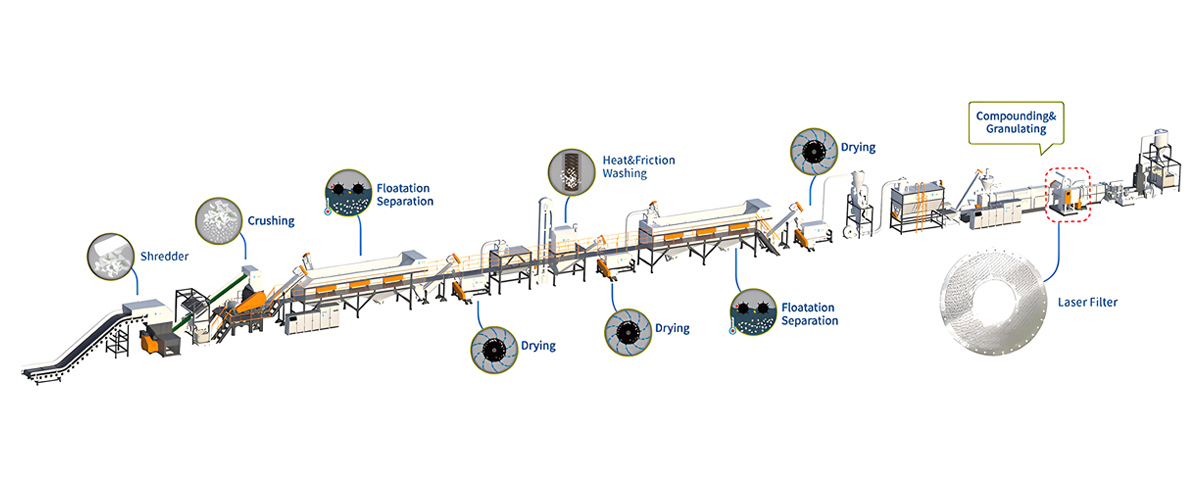
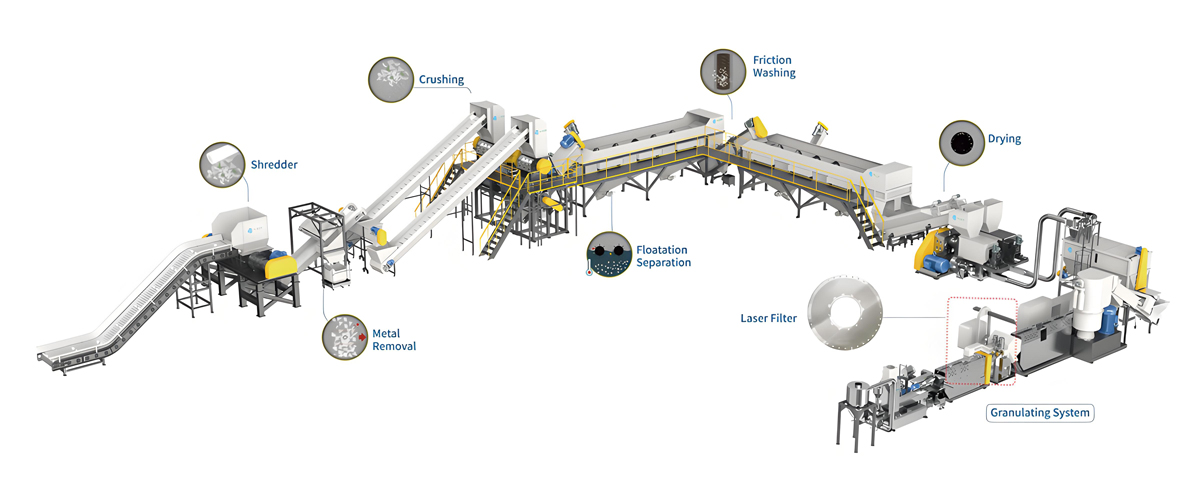
Replace manual sorting with automated sorting technologies to improve accuracy and reduce labor costs. POLYRETEC offers advanced AI-powered optical sorters that can identify and separate different types of plastics based on their polymer composition, color, and shape with up to 99% accuracy. These sorters can significantly reduce cross-contamination and improve the purity of the recycled resin. Complement optical sorting with magnetic separation and eddy current separation to remove ferrous and non-ferrous metals, protecting downstream equipment from damage.
Optimize your shredding process to produce consistent particle size and shape. POLYRETEC’s heavy-duty shredders are designed to handle various types of plastic waste, including rigid plastics, films, and bottles. The shredders feature specialized cutting geometry that efficiently breaks down plastic waste into uniform pieces, reducing tangling and improving feeding efficiency. Ensure that the shredder screen size is appropriate for your downstream processing requirements, and regularly inspect and replace worn cutting blades to maintain optimal performance.
Implement buffer storage systems between the sorting and shredding stages to manage fluctuations in material flow and prevent bottlenecks. This will ensure that the shredder operates at a consistent rate, maximizing throughput and efficiency.
3.3 Washing and Separation Process Optimization
The washing and separation process is one of the most critical stages in plastic recycling, as it determines the purity of the final product. Optimizing this stage can significantly improve product quality and reduce operational costs.
Implement a multi-stage washing system that includes pre-washing, friction washing, hot washing, and rinsing stages. POLYRETEC’s plastic washing lines are designed to effectively remove even the most stubborn contaminants, including dirt, sand, paper, labels, glue, oil, and grease. The lines feature high-intensity friction washers that mechanically scrub the plastic flakes, removing surface contaminants, and hot washing systems that dissolve and remove oily and greasy residues.
Optimize the washing parameters, including water temperature, detergent concentration, and residence time, to achieve the best cleaning results with minimal water and energy consumption. POLYRETEC’s washing lines feature advanced water recycling systems that can recycle up to 95% of the process water, significantly reducing water consumption and wastewater treatment costs. The lines also include water treatment systems that remove contaminants from the process water, ensuring that it can be reused effectively.
Implement effective separation technologies to remove different types of contaminants and separate different polymer types. Density separation using float-sink tanks is effective for separating heavy plastics such as PET from lighter plastics such as PE and PP. For more difficult separations, POLYRETEC offers advanced technologies such as electrostatic separation and flotation separation, which can separate plastics with similar densities.
3.4 Dehydration and Drying Optimization
Proper dehydration and drying are essential for producing high-quality recycled pellets. Excess moisture in the plastic flakes can lead to processing problems such as bubbling, foaming, and degradation during extrusion, resulting in poor pellet quality.
Implement a two-stage drying system consisting of mechanical dehydration followed by thermal drying. POLYRETEC’s high-efficiency centrifugal dryers use centrifugal force to remove up to 98% of the surface moisture from the plastic flakes. This is followed by a hot air drying system that removes any remaining moisture, reducing the moisture content to less than 1%, which is ideal for pelletizing.
Optimize the drying parameters, including air temperature, air flow rate, and residence time, to achieve the desired moisture content with minimal energy consumption. POLYRETEC’s drying systems feature energy-efficient design and heat recovery technology, reducing energy consumption by up to 30% compared to traditional dryers. The systems also include temperature and moisture sensors that automatically adjust the drying parameters to maintain consistent moisture levels.
Ensure that the dried plastic flakes are properly stored in a dry environment to prevent reabsorption of moisture before pelletizing. Use sealed storage bins or silos with dehumidification systems to maintain low moisture levels.
3.5 Pelletizing Process Optimization
The pelletizing process converts the cleaned and dried plastic flakes into uniform pellets that are ready for use in various applications. Optimizing this stage is essential for producing high-quality pellets with consistent properties.
Select the appropriate pelletizing technology for your specific application. POLYRETEC offers a range of pelletizing systems, including water-ring pelletizing, underwater pelletizing, and strand pelletizing. Water-ring pelletizing is the most common and cost-effective option for most applications, producing uniform cylindrical pellets. Underwater pelletizing produces spherical pellets with excellent flow properties and is ideal for high-viscosity materials and high-capacity production.
Optimize the extrusion parameters, including temperature profile, screw speed, and feed rate, to ensure uniform melting and mixing of the plastic flakes. POLYRETEC’s pelletizing extruders feature optimized screw designs that provide excellent melting and mixing performance while minimizing polymer degradation. The extruders also include advanced temperature control systems that maintain precise temperature control throughout the extrusion process.
Implement a melt filtration system to remove any remaining contaminants from the molten plastic. POLYRETEC offers a range of screen changers, including continuous screen changers that allow for filter replacement without interrupting production. This ensures that the final pellets are free from contaminants and meet the highest quality standards.
Implement a pellet cooling and classification system to ensure that the pellets are properly cooled and sized. Remove any undersized or oversized pellets and reprocess them to maximize material recovery. POLYRETEC’s pelletizing lines include integrated cooling and classification systems that produce uniform, high-quality pellets ready for packaging and shipping.
3.6 Finished Product Storage and Shipping Optimization
The final stage in the recycling workflow is finished product storage and shipping. Optimizing this stage can help to ensure that the product remains in good condition and is delivered to customers on time.
Implement a structured finished product storage system that separates different grades and types of pellets. Use clearly labeled bins or silos to identify different products, and implement a first-in, first-out (FIFO) inventory system to ensure that older products are shipped first. Store the pellets in a clean, dry environment to prevent contamination and moisture absorption.
Implement a quality control program to test each batch of finished pellets before shipping. Test for key properties such as melt flow rate, density, moisture content, and ash content to ensure that they meet customer specifications. Keep detailed records of all quality tests to provide traceability and demonstrate compliance with customer requirements.
Optimize your shipping and logistics processes to minimize transportation costs and ensure on-time delivery. Work with reliable shipping partners to negotiate favorable rates and ensure that your products are delivered safely and on time. Implement a shipping management system to track shipments and provide customers with real-time delivery information.
4. POLYRETEC Integrated Workflow Optimization Solutions
POLYRETEC offers a comprehensive range of integrated solutions designed to optimize every aspect of plastic recycling plant workflow. These solutions combine advanced equipment technology, intelligent process control, and expert engineering services to create streamlined, efficient operations that maximize profitability and sustainability.
4.1 Modular and Scalable Plant Design
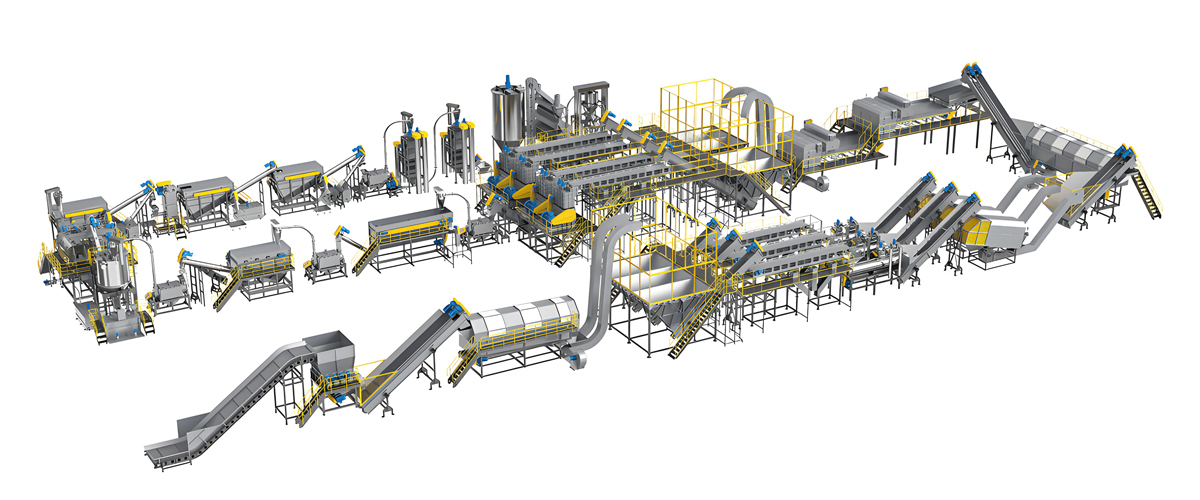
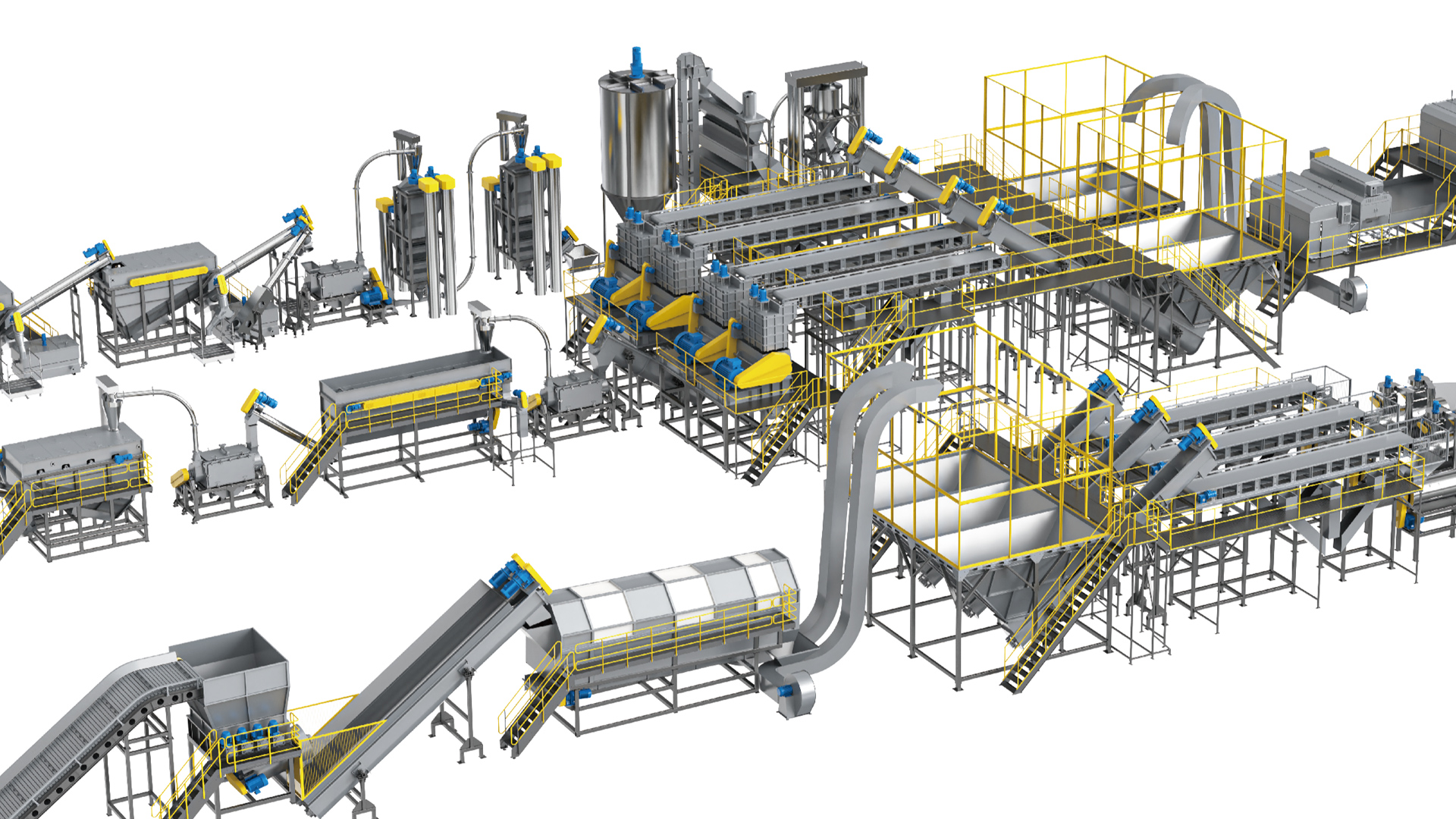
POLYRETEC’s plastic recycling lines are built with a modular philosophy that allows for easy customization and scalability. Each line consists of standardized modules that can be combined in different ways to create a recycling system that meets your specific needs and budget. The modular design also makes it easy to upgrade or expand the line in the future as your production requirements change.
POLYRETEC’s engineering team works closely with each customer to design a plant layout that optimizes material flow, minimizes material handling, and maximizes operational efficiency. The team takes into account factors such as available space, raw material characteristics, production capacity requirements, and future expansion plans to create a layout that is tailored to your unique situation. This ensures that your plant operates at maximum efficiency from day one.
4.2 Intelligent Process Control and Automation
POLYRETEC recycling lines are equipped with advanced intelligent process control systems that provide real-time monitoring and control of all critical process parameters. The systems feature user-friendly touch screen interfaces that allow operators to easily monitor and adjust process settings, and include automatic fault diagnosis and alarm functions to alert operators to any issues.
The control systems use advanced PID control algorithms with auto-tuning capabilities to maintain precise control of temperature, pressure, speed, and other parameters. This ensures consistent processing conditions and product quality, even when raw material characteristics vary. The systems also include data logging functions that record all process parameters during production, providing a complete production history for quality control and traceability purposes.
For customers requiring higher levels of automation, POLYRETEC offers fully integrated automation solutions that include automated material handling systems, robotic palletizing, and remote monitoring and control capabilities. These solutions further reduce labor costs, improve efficiency, and enable 24/7 operation with minimal human intervention.
4.3 Advanced Sorting and Separation Technologies
POLYRETEC integrates the latest advanced sorting and separation technologies into its recycling lines to achieve the highest levels of material purity and recovery rates. The company’s AI-powered optical sorters use near-infrared (NIR) spectroscopy and machine learning algorithms to identify and separate different types of plastics with exceptional accuracy. These sorters can be programmed to recognize and separate a wide range of polymers, including PE, PP, PET, ABS, PC, and PA, as well as different colors and grades.
In addition to optical sorting, POLYRETEC offers a range of other separation technologies, including magnetic separation, eddy current separation, density separation, electrostatic separation, and flotation separation. These technologies work together to effectively remove contaminants and separate different polymer types, ensuring that the final recycled resin meets the strictest quality standards.
4.4 Energy and Water Efficiency Solutions
POLYRETEC places a strong emphasis on energy and water efficiency in all its products. The company’s recycling lines feature a range of energy-saving technologies, including high-efficiency IE4-rated motors, variable frequency drives, heat recovery systems, and electromagnetic heating. These technologies can reduce energy consumption by up to 40% compared to traditional recycling lines, significantly lowering operational costs and reducing the environmental impact of plastic recycling.
POLYRETEC’s washing lines also feature advanced water recycling systems that can recycle up to 95% of the process water. The systems include multi-stage water treatment processes that remove contaminants from the process water, ensuring that it can be reused effectively. This not only reduces water consumption and wastewater treatment costs but also helps to conserve this valuable natural resource.
4.5 Predictive Maintenance and Remote Support
POLYRETEC offers advanced predictive maintenance solutions that help to minimize downtime and extend the lifespan of your equipment. The company’s predictive maintenance systems use sensors to monitor key equipment parameters such as vibration, temperature, and oil condition. Advanced algorithms analyze this data to detect potential issues before they result in equipment failure, allowing for proactive maintenance to be scheduled during planned downtime.
POLYRETEC also provides comprehensive remote support services to its customers worldwide. The company’s engineers can remotely access the control system of your recycling line to diagnose issues, adjust process parameters, and provide troubleshooting assistance. This ensures that any problems are resolved quickly and efficiently, minimizing downtime and maximizing production uptime.
5. Cost and ROI Analysis of Workflow Optimization
Investing in workflow optimization for your plastic recycling plant requires a significant capital expenditure, but it provides substantial long-term benefits through reduced operational costs, increased production capacity, and higher product quality. The following analysis provides a detailed breakdown of the costs and return on investment associated with implementing POLYRETEC’s workflow optimization solutions.
5.1 Initial Investment Requirements
The initial investment required to optimize the workflow of a plastic recycling plant depends on several factors, including the size of the plant, the level of automation, and the specific technologies implemented. The following are approximate investment ranges for different plant sizes:
- Small-scale plant (100-300 kg/h capacity): $50,000 to $150,000 for basic workflow optimization, including improved sorting equipment, process control upgrades, and basic automation.
- Medium-scale plant (500-1000 kg/h capacity): $150,000 to $400,000 for comprehensive workflow optimization, including automated sorting systems, advanced process control, and material handling automation.
- Large-scale plant (1500-5000 kg/h capacity): $400,000 to $1,200,000 for full-scale workflow optimization, including fully integrated automation systems, AI-powered sorting, and digital plant management solutions.
It is important to note that these are approximate investment ranges, and the actual cost will depend on the specific requirements of your plant. POLYRETEC works closely with each customer to develop a customized solution that meets their production needs and budget constraints.
5.2 Operational Cost Savings
Workflow optimization results in significant operational cost savings across multiple areas:
- Labor cost savings: Automation of sorting, material handling, and process control can reduce labor requirements by 30-60%, resulting in annual labor cost savings of $50,000 to $300,000 depending on plant size.
- Energy cost savings: POLYRETEC’s energy-efficient technologies can reduce energy consumption by 20-40%, resulting in annual energy cost savings of $20,000 to $150,000.
- Water cost savings: Advanced water recycling systems can reduce water consumption by 70-90%, resulting in annual water and wastewater treatment cost savings of $10,000 to $80,000.
- Maintenance cost savings: Predictive maintenance and improved equipment reliability can reduce maintenance costs by 30-50%, resulting in annual savings of $15,000 to $100,000.
- Material loss reduction: Improved process efficiency and higher recovery rates can reduce material loss by 5-15%, resulting in annual savings of $30,000 to $200,000 depending on raw material costs.
In total, workflow optimization can reduce annual operational costs by 25-40%, resulting in significant long-term savings for recycling plant operators.
5.3 Revenue Enhancement Opportunities
In addition to cost savings, workflow optimization also creates significant revenue enhancement opportunities:
- Increased production capacity: Eliminating bottlenecks and improving process efficiency can increase production capacity by 20-50%, resulting in higher revenue from increased sales volume.
- Higher product quality: Improved process control and better contamination removal enable the production of higher quality recycled resin that commands premium prices in the market. High-quality recycled resin typically sells for 20-50% more than low-quality resin.
- Access to premium markets: Consistent, high-quality recycled resin allows you to access premium markets such as food packaging, automotive, and electronics, which offer higher profit margins.
- Reduced scrap rates: Improved quality control can reduce scrap rates from 10-15% to less than 3%, increasing the amount of saleable product and reducing waste disposal costs.
These revenue enhancements can significantly increase the profitability of your recycling plant and accelerate the return on your investment.
5.4 Return on Investment Calculation
The return on investment for workflow optimization varies depending on the size of the plant and the specific improvements implemented, but it is typically very attractive. The following is an example ROI calculation for a medium-scale plastic recycling plant with a capacity of 1000 kg/h:
- Initial investment in workflow optimization: $250,000
- Annual operational