
The global plastic recycling industry is undergoing a transformative shift towards high-quality recycled resin production, driven by stringent environmental regulations, corporate sustainability commitments, and the growing demand for circular economy solutions. As virgin plastic prices continue to fluctuate and supply chain disruptions persist, manufacturers across packaging, automotive, construction, and consumer goods industries are increasingly turning to high-quality recycled resin as a cost-effective and sustainable alternative. However, producing recycled resin that meets the strict quality requirements of these high-value applications requires advanced plastic recycling technology that can effectively remove contaminants, preserve polymer properties, and deliver consistent product quality.
POLYRETEC has emerged as a leading global manufacturer of advanced plastic recycling lines and plastic washing lines specifically designed to produce high-quality recycled resin. With over 15 years of industry experience and a presence in more than 60 countries, POLYRETEC has developed comprehensive recycling solutions that address the unique challenges of processing various plastic waste streams, including post-consumer plastic, post-industrial plastic, agricultural plastic, and industrial plastic waste. POLYRETEC plastic recycling machines are engineered to deliver exceptional cleaning efficiency, high recovery rates, and consistent resin quality, enabling recyclers to access premium markets and achieve higher profit margins.
This comprehensive article explores the rapidly growing high-quality recycled resin market, the key requirements for producing premium recycled resin, the limitations of traditional recycling technology, and how POLYRETEC advanced plastic recycling lines are setting new standards in the industry. The article also provides detailed cost and price analysis, investment return calculations, best practices for maximizing resin quality, and solutions to common recycling challenges. Whether you are an existing recycler looking to upgrade your equipment or a new investor entering the plastic recycling industry, this article serves as a definitive guide to selecting the best plastic recycling line for the high-quality recycled resin market.
1. Global High Quality Recycled Resin Market Overview
The global high-quality recycled resin market is experiencing unprecedented growth, driven by a combination of regulatory pressures, consumer demand for sustainable products, and economic factors. This section provides a detailed analysis of the market dynamics, growth drivers, quality standards, and application areas that are shaping the industry.
1.1 Market Size and Growth Projections
The global recycled plastic market was valued at approximately $46 billion in 2025 and is projected to grow at a compound annual growth rate (CAGR) of 6.8% through 2032, reaching $73 billion by the end of the forecast period. The high-quality recycled resin segment is growing even faster, with a CAGR of 9.2%, as demand for food-contact grade, automotive grade, and engineering grade recycled resin continues to outpace supply.
Europe currently leads the global high-quality recycled resin market, accounting for approximately 38% of total demand, followed by North America with 29% and Asia-Pacific with 25%. However, the Asia-Pacific region is expected to witness the fastest growth over the next five years, driven by rapid industrialization, increasing environmental awareness, and the implementation of stricter plastic waste management regulations in countries such as China, India, and Japan.
1.2 Key Market Drivers
Several factors are driving the rapid growth of the high-quality recycled resin market:
- Stringent environmental regulations: Governments worldwide are implementing extended producer responsibility (EPR) laws, plastic packaging taxes, and recycled content mandates that require manufacturers to use a minimum percentage of recycled plastic in their products. For example, the European Union’s Single-Use Plastics Directive requires that all plastic bottles contain at least 25% recycled content by 2025 and 30% by 2030.
- Corporate sustainability commitments: Over 1,000 major corporations, including Coca-Cola, PepsiCo, Unilever, and Walmart, have committed to using 100% recyclable, reusable, or compostable packaging by 2025 or 2030. These commitments are creating significant demand for high-quality recycled resin that can meet their performance and safety requirements.
- Volatile virgin plastic prices: The price of virgin plastic has experienced significant fluctuations in recent years due to changes in oil prices, supply chain disruptions, and geopolitical tensions. High-quality recycled resin offers a more stable and cost-effective alternative, with prices typically 10-30% lower than virgin plastic.
- Consumer demand for sustainable products: Consumers are increasingly choosing products made from recycled materials, with surveys showing that over 70% of consumers are willing to pay a premium for sustainable products. This is pushing manufacturers to incorporate more recycled content into their products to remain competitive.
- Advancements in recycling technology: Recent advancements in plastic recycling technology have made it possible to produce recycled resin with properties that are nearly identical to virgin plastic, opening up new high-value applications that were previously unavailable to recycled materials.
1.3 Quality Standards and Certifications for High Quality Recycled Resin
High-quality recycled resin must meet strict quality standards and certifications to be used in premium applications. The most important standards and certifications include:
- Food contact certification: Recycled resin used in food packaging applications must meet strict food safety standards, including FDA 21 CFR Part 177.1520 in the United States and EU Regulation 10/2011 in Europe. These standards limit the migration of harmful substances from the plastic into food and require rigorous testing and documentation.
- ISO 14001 environmental management system certification: This certification demonstrates that a company has implemented an effective environmental management system to minimize its environmental impact.
- Global Recycled Standard (GRS): This third-party certification verifies the recycled content of products and ensures that they are produced in an environmentally and socially responsible manner.
- Automotive industry standards: Recycled resin used in automotive applications must meet strict performance standards set by automotive manufacturers, including requirements for mechanical properties, heat resistance, and durability.
- REACH compliance: Recycled resin sold in the European Union must comply with the Registration, Evaluation, Authorization and Restriction of Chemicals (REACH) regulation, which restricts the use of certain hazardous substances.
1.4 Key Application Areas for High Quality Recycled Resin
High-quality recycled resin is used in a wide range of applications across various industries:
- Packaging: This is the largest application area for high-quality recycled resin, accounting for approximately 45% of total demand. Applications include food and beverage containers, cosmetic packaging, detergent bottles, and flexible packaging.
- Automotive: The automotive industry is the fastest-growing application area, with demand increasing as manufacturers seek to reduce the weight of vehicles and improve their environmental performance. Recycled resin is used in interior components, exterior parts, and under-the-hood applications.
- Construction: Recycled resin is used in a variety of construction applications, including pipes, fittings, window profiles, flooring, and insulation materials.
- Consumer goods: High-quality recycled resin is used in the production of furniture, appliances, toys, and other consumer products.
- Electronics: The electronics industry is increasingly using recycled resin in the production of housings, connectors, and other components to meet sustainability goals.
2. Key Requirements for Producing High Quality Recycled Resin
Producing high-quality recycled resin that meets the strict requirements of premium applications requires a comprehensive approach that addresses every stage of the recycling process, from raw material collection and sorting to final pelletizing and quality control. The following are the most critical requirements for producing high-quality recycled resin.
2.1 Effective Contaminant Removal
Contaminant removal is the most critical step in producing high-quality recycled resin. Plastic waste typically contains a variety of contaminants, including dirt, sand, paper, labels, glue, food residue, oil, grease, and other foreign materials. These contaminants can negatively affect the appearance, mechanical properties, and processing characteristics of the recycled resin, making it unsuitable for high-value applications.
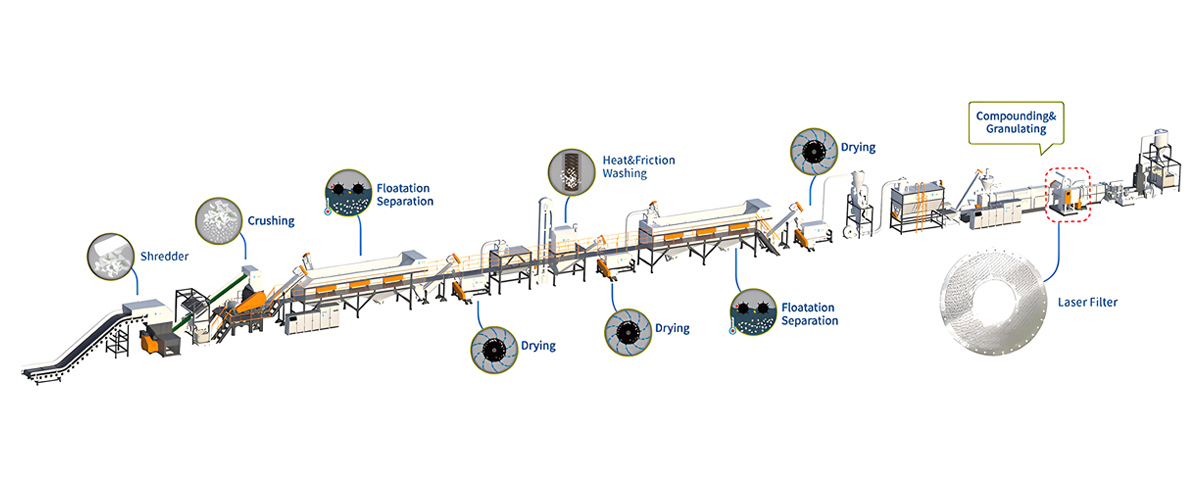
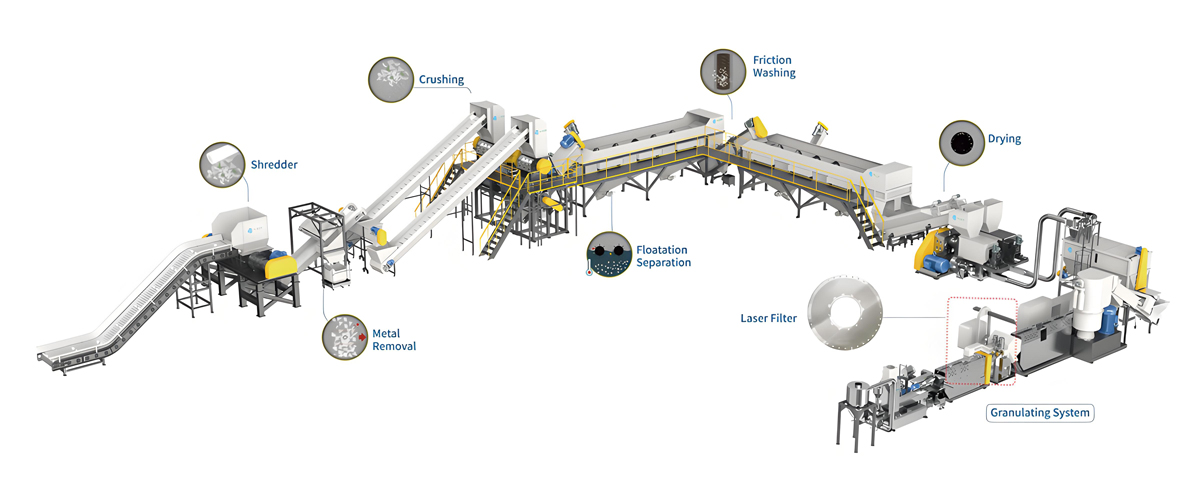
Effective contaminant removal requires a multi-stage process that includes pre-sorting, shredding, washing, friction cleaning, density separation, and drying. Each stage is designed to remove specific types of contaminants, and the effectiveness of each stage directly impacts the final quality of the recycled resin.
2.2 Precise Material Sorting
Precise material sorting is essential for producing high-quality recycled resin with consistent properties. Mixed plastic waste must be sorted by polymer type, color, and quality to ensure that the final product has uniform characteristics. Even small amounts of incompatible polymers can significantly reduce the mechanical properties of the recycled resin and cause processing problems.
Traditional manual sorting methods are labor-intensive, slow, and prone to error, making them unsuitable for producing high-quality recycled resin. Modern recycling lines use advanced automated sorting technologies, including optical sorting, density separation, and metal detection, to achieve high sorting accuracy and efficiency.
2.3 Preservation of Polymer Properties
Preserving the inherent properties of the polymer is another critical requirement for producing high-quality recycled resin. Plastic waste undergoes thermal and mechanical degradation during the recycling process, which can reduce the molecular weight of the polymer and negatively affect its mechanical properties, such as tensile strength, impact strength, and elongation at break.
To minimize polymer degradation, the recycling process must be carefully controlled to avoid excessive heat, shear, and residence time. This requires precise temperature control, optimized screw design, and efficient processing equipment that can process the plastic with minimal degradation.
2.4 Consistent Product Quality
Consistent product quality is essential for building long-term relationships with customers and accessing premium markets. Recycled resin must have consistent properties from batch to batch, including melt flow rate, density, color, and mechanical properties. Any variation in these properties can cause processing problems for customers and result in rejected orders.
Achieving consistent product quality requires strict process control, real-time monitoring of critical parameters, and comprehensive quality testing. Modern recycling lines use advanced control systems that automatically adjust process parameters to maintain stable conditions and ensure consistent product quality.
2.5 High Recovery Rate
High recovery rate is essential for the economic viability of plastic recycling operations. The recovery rate is the percentage of input plastic waste that is converted into usable recycled resin. Low recovery rates increase production costs and reduce profitability, as more material is lost as waste during the recycling process.
To achieve high recovery rates, the recycling line must be designed to minimize material loss at every stage of the process. This includes efficient shredding, effective washing and separation, and optimized pelletizing. High-quality recycling lines typically achieve recovery rates of 85-95%, depending on the type and condition of the input material.
3. Limitations of Traditional Plastic Recycling Lines
Traditional plastic recycling lines, which were primarily designed for producing low-quality recycled resin for non-critical applications, are unable to meet the strict requirements of the high-quality recycled resin market. The following are the main limitations of traditional recycling technology.
3.1 Inadequate Cleaning Efficiency
Traditional recycling lines typically use a simple washing process that is unable to effectively remove stubborn contaminants such as oil, grease, glue, and food residue. This results in recycled resin with high levels of impurities, which negatively affects its appearance, mechanical properties, and processing characteristics. The presence of contaminants also makes the resin unsuitable for food contact and other high-value applications.
In addition, traditional washing lines often use excessive amounts of water and detergents, increasing operational costs and environmental impact. They also generate large amounts of wastewater that requires extensive treatment before it can be discharged.
3.2 Low Sorting Accuracy
Traditional recycling lines rely heavily on manual sorting, which is labor-intensive, slow, and prone to error. Manual sorters can typically achieve sorting accuracy of only 70-80%, resulting in significant amounts of cross-contamination between different polymer types. This cross-contamination reduces the quality and value of the recycled resin and limits its use to low-end applications.
Even when automated sorting equipment is used, traditional systems often lack the precision and flexibility to sort plastic waste by polymer type, color, and quality with the high accuracy required for producing high-quality recycled resin.
3.3 High Energy Consumption
Traditional plastic recycling lines are notoriously energy-intensive, with energy costs accounting for a significant portion of total production costs. The high energy consumption is primarily due to inefficient motors, outdated heating systems, and poor process design. This not only increases operational costs but also reduces the environmental benefits of plastic recycling.
For example, traditional washing lines often use electric heating elements to heat the washing water, which is much less efficient than modern heat recovery systems. Traditional extruders also have low energy efficiency, with specific energy consumption often exceeding 0.8 kWh/kg.
3.4 Poor Process Control and Automation
Traditional recycling lines typically have limited automation and process control capabilities, relying on manual adjustment of process parameters by operators. This makes it difficult to maintain consistent process conditions, resulting in significant variation in product quality from batch to batch.
In addition, traditional lines lack real-time monitoring and data logging capabilities, making it difficult to identify and address process issues before they result in product quality problems. This leads to higher scrap rates and lower overall production efficiency.
3.5 Limited Flexibility
Traditional recycling lines are often designed to process only one type of plastic waste, making them inflexible and unable to adapt to changing market conditions. This is a significant disadvantage in today’s dynamic recycling market, where the availability and composition of plastic waste can vary significantly over time.
Converting a traditional recycling line to process a different type of plastic waste typically requires extensive modifications and downtime, resulting in lost production and increased costs.
4. POLYRETEC Advanced Plastic Recycling Lines for High Quality Resin
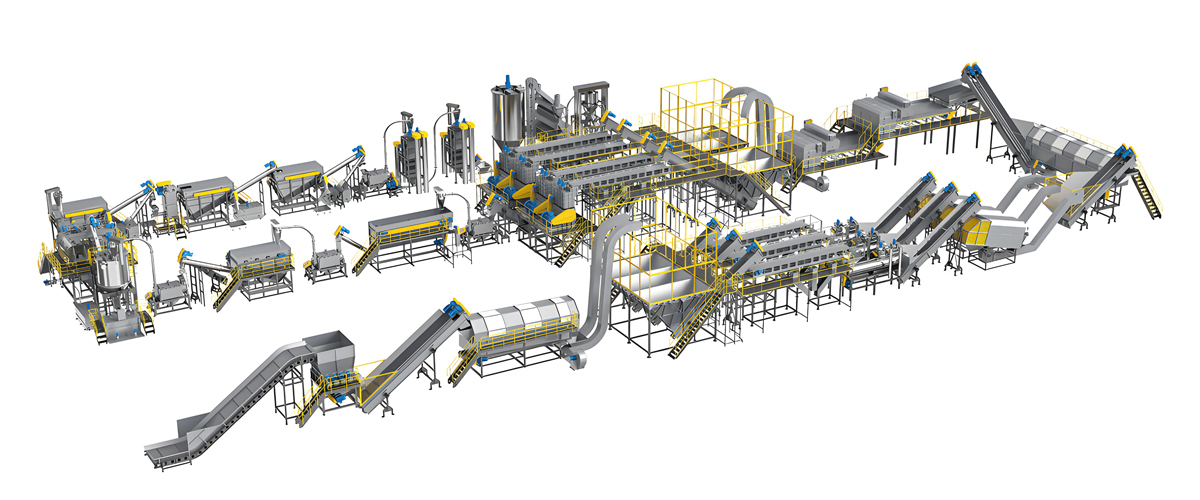
POLYRETEC has developed a comprehensive range of advanced plastic recycling lines and plastic washing lines specifically designed to address the limitations of traditional recycling technology and produce high-quality recycled resin that meets the strict requirements of premium applications. POLYRETEC recycling lines integrate the latest technological innovations in sorting, washing, drying, and pelletizing to deliver exceptional cleaning efficiency, high recovery rates, and consistent product quality.
4.1 POLYRETEC Company Overview
POLYRETEC is a global leader in plastic recycling technology, with over 15 years of experience in designing, manufacturing, and installing plastic recycling lines worldwide. The company is headquartered in China and has production facilities and service centers in Europe, North America, and Asia, enabling it to provide local support to customers around the world.
POLYRETEC is committed to innovation and continuous improvement, investing heavily in research and development to develop new technologies that improve the efficiency and effectiveness of plastic recycling. The company holds over 50 patents in plastic recycling technology and has received numerous awards for its innovative products and solutions.
Today, POLYRETEC has installed more than 1,200 plastic recycling lines in over 60 countries, processing millions of tons of plastic waste annually. The company’s customers include small independent recyclers, large multinational corporations, and government organizations, all of whom rely on POLYRETEC technology to produce high-quality recycled resin.
4.2 POLYRETEC Core Product Lines
POLYRETEC offers a comprehensive range of plastic recycling lines designed to process various types of plastic waste and produce high-quality recycled resin. The company’s core product lines include:
- PE/PP Plastic Washing Line: This line is specifically designed for processing post-consumer and post-industrial PE and PP plastic waste, including bottles, films, bags, containers, and rigid plastics. The line features advanced washing and separation technology that effectively removes contaminants and produces high-quality recycled resin suitable for a wide range of applications.
- PET Bottle Recycling Line: This line is designed for processing post-consumer PET bottles, producing food-grade PET flakes and pellets that meet the strictest international food safety standards. The line includes advanced decontamination technology that removes volatile organic compounds and other contaminants, making the recycled PET suitable for food contact applications.
- Agricultural Plastic Recycling Line: This line is specifically designed for processing heavily contaminated agricultural plastic waste, including mulch film, greenhouse film, and irrigation pipes. The line features a robust design and advanced cleaning technology that can handle the high levels of dirt, sand, and pesticide residue typically found in agricultural plastic waste.
- Industrial Plastic Recycling Line: This line is designed for processing post-industrial plastic waste, including injection molding scrap, extrusion scrap, and blow molding scrap. The line can process a wide range of engineering plastics, including ABS, PC, PA, and PS, producing high-quality recycled resin that can be reused in the same applications.
- Plastic Pelletizing Line: POLYRETEC offers a range of plastic pelletizing lines, including single screw extruders, twin screw extruders, and underwater pelletizing systems, designed to convert washed plastic flakes into high-quality pellets with consistent properties.
4.3 Key Technological Advantages of POLYRETEC Recycling Lines
POLYRETEC recycling lines integrate a number of advanced technologies that set them apart from traditional recycling equipment and enable them to produce high-quality recycled resin:
- Multi-stage intensive washing system: POLYRETEC washing lines feature a multi-stage washing process that includes pre-washing, friction washing, hot washing, and rinsing. This comprehensive washing process effectively removes even the most stubborn contaminants, including oil, grease, glue, and food residue, resulting in recycled resin with purity levels exceeding 99.5%.
- Advanced automated sorting system: POLYRETEC recycling lines integrate the latest automated sorting technologies, including optical sorters, density separators, metal detectors, and electrostatic separators. These technologies work together to achieve sorting accuracy of over 99%, ensuring that the final product is free from cross-contamination and has consistent properties.
- High-efficiency dehydration and drying system: POLYRETEC has developed a high-efficiency centrifugal dryer and hot air drying system that can reduce the moisture content of washed plastic flakes to less than 1%, which is critical for producing high-quality pellets. The drying system features energy-efficient design and heat recovery technology, reducing energy consumption by up to 30% compared to traditional dryers.
- Intelligent control system: POLYRETEC recycling lines are equipped with an advanced PLC control system with a user-friendly touch screen interface. The system provides real-time monitoring and control of all critical process parameters, including temperature, pressure, speed, and level. It also features automatic fault diagnosis and alarm functions, making operation and maintenance easier and more efficient.
- Energy-saving design: POLYRETEC places a strong emphasis on energy efficiency in all its products. The company’s recycling lines feature high-efficiency motors, variable frequency drives, heat recovery systems, and optimized process design that reduce energy consumption by up to 40% compared to traditional recycling lines. This not only lowers operational costs but also reduces the environmental impact of plastic recycling.
- Modular design: POLYRETEC recycling lines feature a modular design that allows for easy customization and expansion. Customers can choose from a range of modules and options to create a recycling line that meets their specific needs and budget. The modular design also makes it easy to upgrade the line in the future as production requirements change.
4.4 POLYRETEC Quality Assurance and After-Sales Service
POLYRETEC is committed to providing the highest quality products and services to its customers. The company implements a strict quality control system that covers every stage of production, from raw material procurement to final equipment testing. All POLYRETEC recycling lines undergo rigorous testing and inspection before delivery to ensure that they meet the highest quality standards and performance specifications.
In addition to high-quality products, POLYRETEC also provides comprehensive after-sales service to its customers worldwide. The company’s service offerings include:
- Turnkey installation and commissioning: POLYRETEC provides professional installation and commissioning services by experienced engineers who ensure that the recycling line is installed correctly and operates at optimal performance.
- Comprehensive training: POLYRETEC provides free training for customers’ operators and maintenance personnel, covering all aspects of equipment operation, maintenance, and troubleshooting.
- Spare parts supply: POLYRETEC maintains a large inventory of spare parts at its service centers worldwide, ensuring fast delivery and minimizing downtime.
- Technical support: POLYRETEC provides 24/7 technical support to its customers, with engineers available to assist with any issues that may arise.
- Preventive maintenance: POLYRETEC offers preventive maintenance programs that help customers keep their recycling lines operating at peak efficiency and extend their service life.
5. Cost and Price Analysis of POLYRETEC Plastic Recycling Lines
Investing in a plastic recycling line is a significant capital expenditure, and it is important for investors to understand the costs involved and the potential return on investment. The total cost of a POLYRETEC plastic recycling line depends on several factors, including the type of plastic being processed, the production capacity, the level of automation, and the optional features included. The following is a detailed cost and price analysis of POLYRETEC recycling lines.
5.1 Initial Equipment Investment by Capacity and Type
The initial equipment investment is the largest component of the total cost of a plastic recycling line. POLYRETEC offers recycling lines in a range of capacities to meet the needs of different customers, from small-scale operations to large industrial facilities. The following are the approximate price ranges for different POLYRETEC recycling lines.
Small-scale recycling lines (capacity: 100-300 kg/h):
- PE/PP film washing line: $45,000 to $120,000
- PET bottle washing line: $60,000 to $150,000
- Plastic pelletizing line: $30,000 to $80,000
Medium-scale recycling lines (capacity: 500-1000 kg/h):
- PE/PP rigid plastic washing line: $150,000 to $350,000
- PET bottle recycling line with decontamination: $250,000 to $600,000
- Agricultural plastic recycling line: $200,000 to $450,000
- High-performance pelletizing line: $80,000 to $200,000
Large-scale industrial recycling lines (capacity: 1500-5000 kg/h):
- PE/PP post-consumer plastic washing line: $400,000 to $1,200,000
- Food-grade PET bottle recycling line: $600,000 to $1,800,000
- Industrial plastic recycling line: $500,000 to $1,500,000
- Complete turnkey recycling plant: $1,000,000 to $3,000,000
It is important to note that these are approximate price ranges, and the actual price of a POLYRETEC recycling line will depend on the specific requirements of the customer. POLYRETEC works closely with each customer to develop a customized solution that meets their production needs and budget constraints.
5.2 Operational Cost Breakdown
In addition to the initial equipment investment, investors must also consider the ongoing operational costs of running a plastic recycling line. The main operational costs include:
- Energy consumption: Energy is one of the largest operational costs for plastic recycling. POLYRETEC recycling lines are designed to be energy-efficient, with specific energy consumption ranging from 0.3 to 0.6 kWh/kg, depending on the type of plastic and the production capacity. For a medium-scale line with a capacity of 1000 kg/h operating 24 hours a day, 300 days a year, the annual energy cost would be approximately $72,000 to $144,000 at an electricity price of $0.10 per kWh.
- Raw material cost: The cost of plastic waste feedstock is the largest component of the total production cost, typically accounting for 50-70% of the cost of the final recycled resin. The price of plastic waste varies significantly depending on the type, quality, and location, ranging from $50 to $300 per ton.
- Labor cost: The labor cost depends on the level of automation of the recycling line and the local labor market. A semi-automated medium-scale line typically requires 4-6 operators per shift, while a fully automated large-scale line may only require 2-3 operators per shift. At an average labor cost of $15 per hour, the annual labor cost for a medium-scale line operating 24 hours a day would be approximately $156,000 to $234,000.
- Water and wastewater treatment cost: Water is used extensively in the washing process, and wastewater must be treated before it can be discharged. POLYRETEC recycling lines feature water recycling systems that can recycle up to 95% of the process water, significantly reducing water consumption and wastewater treatment costs. The annual water and wastewater treatment cost for a medium-scale line is typically $20,000 to $40,000.
- Maintenance and spare parts cost: POLYRETEC recycling lines are built to last, with a service life of 10-15 years or more with proper maintenance. The annual maintenance and spare parts cost typically ranges from 2% to 4% of the initial equipment investment.
- Other costs: Other operational costs include rent, insurance, taxes, and transportation costs.
5.3 Return on Investment (ROI) Estimation
The return on investment for a POLYRETEC plastic recycling line depends on several factors, including the production capacity, the type of plastic being processed, the quality of the recycled resin, and the market conditions. In general, plastic recycling operations using POLYRETEC equipment can achieve attractive returns on investment, with payback periods typically ranging from 1.5 to 3 years.
The following is an example ROI calculation for a medium-scale POLYRETEC PE/PP rigid plastic washing and pelletizing line with a capacity of 1000 kg/h:
- Initial equipment investment: $300,000
- Annual production capacity: 7,200 tons (operating 24 hours a day, 300 days a year)
- Raw material cost: $150 per ton
- Total annual raw material cost: $1,080,000
- Total annual operational cost (energy, labor, water, maintenance, etc.): $350,000
- Total annual production cost: $1,430,000
- Selling price of high-quality recycled PE/PP pellets: $350 per ton
- Total annual revenue: $2,520,000
- Annual profit: $2,520,000 – $1,430,000 = $1,090,000
- Payback period: $300,000 / $1,090,000 = 0.28 years (approximately 3.3 months)
This is a conservative estimate, and actual ROI can be even higher for operations producing food-grade or automotive-grade recycled resin, which commands higher prices in the market. POLYRETEC’s high-quality recycling lines enable customers to produce premium recycled resin that sells for 20-50% more than low-quality recycled resin, significantly improving profitability.
5.4 Cost Comparison with Traditional Recycling Lines
While POLYRETEC recycling lines have a higher initial investment than traditional recycling lines, they offer significant long-term cost savings and higher profitability. The following comparison highlights the key differences between POLYRETEC recycling lines and traditional lines:
- Initial investment: POLYRETEC lines typically cost 20-30% more than traditional lines of the same capacity.
- Energy consumption: POLYRETEC lines consume 30-40% less energy than traditional lines, resulting in significant annual energy cost savings.
- Recovery rate: POLYRETEC lines achieve recovery rates of 85-95%, compared to 60-70% for traditional lines. This means that more plastic waste is converted into valuable recycled resin, increasing revenue and reducing waste disposal costs.
- Product quality: POLYRETEC lines produce high-quality recycled resin that sells for 20-50% more than the low-quality resin produced by traditional lines.
- Maintenance cost: POLYRETEC lines are built with high-quality components and require less maintenance than traditional lines, resulting in lower maintenance costs over the life of the equipment.
- Service life: POLYRETEC lines have a service life of 10-15 years, compared to 5-8 years for traditional lines.
When considering the total cost of ownership over the life of the equipment, POLYRETEC recycling lines are significantly more cost-effective than traditional lines. The higher initial investment is quickly offset by lower operational costs, higher revenue, and longer service life.
6. Best Practices for Maximizing Recycled Resin Quality
While POLYRETEC recycling lines are designed to produce high-quality recycled resin, proper operation and maintenance are essential for achieving the best possible results. The following best practices will help you maximize the quality of your recycled resin and get the most out of your POLYRETEC recycling line.
6.1 Implement Strict Raw Material Quality Control
The quality of the input raw material has a significant impact on the quality of the final recycled resin. It is essential to implement strict raw material quality control procedures to ensure that only clean, sorted plastic waste is processed in your recycling line.
Establish clear specifications for the raw material you accept, including limits on contamination levels, moisture content, and foreign materials. Inspect all incoming shipments of plastic waste and reject any shipments that do not meet your specifications. Properly store raw materials in a clean, dry environment to prevent contamination and moisture absorption.
6.2 Optimize Process Parameters
Optimizing the process parameters of your recycling line is essential for producing high-quality recycled resin. Each type of plastic waste requires different process parameters, including temperature, speed, and washing time, to achieve the best results.
Work with POLYRETEC’s technical team to develop optimized process parameters for your specific raw material and product requirements. Conduct regular tests to evaluate the effect of different parameters on the quality of the recycled resin and make adjustments as needed. Store the optimized parameters in the control system’s recipe library to ensure consistent production quality.
6.3 Perform Regular Maintenance and Calibration
Regular maintenance and calibration are essential for keeping your recycling line operating at peak performance and producing consistent high-quality resin. Follow POLYRETEC’s recommended maintenance schedule, which includes daily, weekly, monthly, and annual maintenance tasks.
Regularly inspect and clean all components of the recycling line, including shredders, washers, separators, dryers, and extruders. Replace worn or damaged components promptly to prevent performance degradation and product quality issues. Calibrate sensors, temperature controllers, and other instrumentation regularly to ensure accurate process control.
6.4 Implement Comprehensive Quality Testing
Implement a comprehensive quality testing program to monitor the quality of your recycled resin and ensure that it meets the required specifications. Test each batch of recycled resin for key properties, including melt flow rate, density, moisture content, ash content, and mechanical properties.
Use advanced testing equipment, such as melt flow indexers, tensile testers, and impact testers, to accurately measure the properties of the recycled resin. Keep detailed records of all quality tests to track product quality over time and identify any trends or issues that need to be addressed.
6.5 Train Your Operators Properly
Well-trained operators are essential for maximizing the performance of your recycling line and producing high-quality recycled resin. Provide comprehensive training for all operators on the proper operation, maintenance, and troubleshooting of the equipment.
Ensure that operators understand how to adjust process parameters, identify and resolve common issues, and perform routine maintenance tasks. Encourage operators to take ownership of the equipment and to report any problems or potential improvements. Provide ongoing training to keep operators up-to-date on the latest technologies and best practices.
7. Common Challenges in High Quality Recycled Resin Production and Solutions
Even with the best equipment and practices, recyclers may encounter challenges when producing high-quality recycled resin. The following are the most common challenges and the solutions that POLYRETEC recommends.
7.1 Processing Heavily Contaminated Plastic Waste
Heavily contaminated plastic waste, such as agricultural film, post-consumer food containers, and industrial plastic waste, can be difficult to process and may result in recycled resin with high levels of impurities.
Solution: POLYRETEC has developed specialized washing lines for heavily contaminated plastic waste that feature additional pre-washing stages, high-intensity friction washers, and hot washing systems. These lines can effectively remove even the most stubborn contaminants, producing high-quality recycled resin from even the dirtiest plastic waste.
7.2 Sorting Mixed Plastic Waste
Mixed plastic waste is a common challenge for recyclers, as even small amounts of incompatible polymers can significantly reduce the quality of the recycled resin.
Solution: POLYRETEC recycling lines integrate advanced automated sorting technologies, including near-infrared (NIR) optical sorters, that can accurately sort plastic waste by polymer type and color with over 99% accuracy. These sorters can be programmed to identify and separate a wide range of polymers, including PE, PP, PET, ABS, PC, and PA.
7.3 Polymer Degradation During Processing
Polymer degradation during the recycling process can reduce the mechanical properties of the recycled resin and limit its use in high-value applications.
Solution: POLYRETEC recycling lines are designed to minimize polymer degradation through precise temperature control, optimized screw design, and efficient processing. The lines feature low-shear extruders that process the plastic with minimal mechanical degradation, and the control system maintains precise temperature control to prevent thermal degradation.
7.4 Achieving Food Contact Certification
Achieving food contact certification for recycled resin is a significant challenge, as it requires strict control over the entire recycling process and rigorous testing to ensure that the resin is safe for food contact.
Solution: POLYRETEC offers food-grade PET and polyolefin recycling lines that feature advanced decontamination technology to remove volatile organic compounds and other contaminants. These lines are designed to meet the strict requirements of FDA and EU food contact regulations, and POLYRETEC provides technical support to help customers achieve food contact certification.
7.5 Meeting Customer Quality Requirements
Customers in high-value markets have strict quality requirements for recycled resin, and any variation in quality can result in rejected orders and lost business.
Solution: POLYRETEC recycling lines feature advanced process control systems that maintain consistent process conditions and ensure consistent product quality. The systems provide real-time monitoring of all critical parameters and automatically adjust process conditions to maintain stability. Implementing a comprehensive quality control program and working closely with customers to understand their requirements will also help ensure that your recycled resin meets their needs.
8. Conclusion
The global high-quality recycled resin market is experiencing rapid growth, driven by regulatory pressures, corporate sustainability commitments, and economic factors. Producing high-quality recycled resin that meets the strict requirements of premium applications requires advanced plastic recycling technology that can effectively remove contaminants, preserve polymer properties, and deliver consistent product quality.
POLYRETEC has established itself as a leading global manufacturer of advanced plastic recycling lines and plastic washing lines specifically designed for the high-quality recycled resin market. POLYRETEC recycling lines integrate the latest technological innovations in sorting, washing, drying, and pelletizing to deliver exceptional cleaning efficiency, high recovery rates, and consistent product quality. With a comprehensive range of products, a commitment to innovation, and a global service network, POLYRETEC is the ideal partner for recyclers looking to enter or expand in the high-quality recycled resin market.
While POLYRETEC recycling lines have a higher initial investment than traditional recycling lines, they offer significant long-term cost savings and higher profitability. The higher initial investment is quickly offset by lower operational costs, higher revenue from premium recycled resin, and longer service life. With payback periods typically ranging from 1.5 to 3 years, investing in a POLYRETEC recycling line is a smart financial decision for recyclers of all sizes.
By implementing best practices such as strict raw material quality control, process parameter optimization, regular maintenance, comprehensive quality testing, and proper operator training, recyclers can maximize the quality of their recycled resin and achieve the highest possible return on their investment.
In conclusion, POLYRETEC plastic recycling lines represent the best solution for producing high-quality recycled resin in today’s competitive market. With their advanced technology, reliable performance, and comprehensive support services, POLYRETEC recycling lines enable recyclers to meet the growing demand for high-quality recycled resin and contribute to a more sustainable circular economy.