
The global food-grade recycled PET (rPET) market is experiencing unprecedented growth, projected to reach $28.7 billion in 2026 with a compound annual growth rate (CAGR) of 12.4% through 2032. Driven by strict extended producer responsibility (EPR) regulations, corporate sustainability mandates requiring 25-100% recycled content in packaging, and consumer demand for eco-friendly products, food-grade rPET has become one of the most valuable commodities in the recycling industry. Among all production capacities, the 500kg/h food grade PET bottle washing line has emerged as the most popular choice for entrepreneurs and established recyclers alike, offering the perfect balance of investment cost, production volume, and market flexibility.
Choosing the right 500kg/h food grade PET washing line is one of the most critical decisions you will make for your recycling business. A well-designed line can produce high-quality rPET flakes that meet EFSA and FDA requirements, command premium prices of $800-$1,500 per ton, and deliver a return on investment in as little as 12-18 months. Conversely, a poorly designed line will produce low-quality flakes that can only be sold for industrial applications at $400-$800 per ton, resulting in lower profit margins and longer payback periods. In severe cases, inadequate equipment can lead to frequent downtime, high maintenance costs, and even business failure.
As a leading global manufacturer of advanced plastic recycling equipment with over 15 years of experience, POLYRETEC has helped hundreds of customers worldwide establish successful food-grade PET recycling operations. Our Austrian-technology 500kg/h food grade PET washing lines are specifically designed to produce rPET flakes with purity levels exceeding 99.5%, meeting the strictest international food safety standards. With over 1,200 machines installed in more than 60 countries, POLYRETEC has the expertise and technology to help you choose the perfect washing line for your specific needs and goals.
This comprehensive guide provides everything you need to know about choosing a 500kg/h food grade PET bottle washing line. It examines the critical regulatory requirements for food-grade rPET production, details the essential components and technical specifications of a high-quality washing line, identifies common design flaws to avoid, provides a detailed cost analysis and return on investment calculation, and features real-world case studies of successful recycling operations. Whether you are starting a new recycling business or upgrading existing equipment, this guide will help you make an informed decision and ensure the long-term success of your operation.
1. Why 500kg/h is the Optimal Entry-Level Food Grade Capacity
When entering the food-grade PET recycling industry, choosing the right production capacity is essential for maximizing profitability and minimizing risk. While larger capacities offer economies of scale, they also require significantly higher initial investment and greater feedstock supply. The 500kg/h capacity has emerged as the optimal entry-level food grade production capacity for several compelling reasons.
1.1 Balanced Investment and Risk Profile
A 500kg/h food grade PET washing line represents a manageable initial investment while still offering substantial profit potential. The total initial investment for a complete 500kg/h food grade line typically ranges from $150,000 to $250,000, which is significantly lower than the $300,000-$500,000 required for a 1500kg/h line. This lower investment reduces financial risk and makes food-grade recycling accessible to a wider range of entrepreneurs and small businesses.
Additionally, the 500kg/h capacity allows you to start small and scale up as your business grows. You can begin with a basic line and add advanced features such as optical sorting or enhanced decontamination as your revenue increases and market demand grows. This incremental approach minimizes risk and allows you to validate your business model before making larger investments.
1.2 Ideal for Regional and Niche Markets
The 500kg/h capacity is perfectly suited for regional and niche markets where feedstock supply is limited or specialized. A 500kg/h line operating 24 hours per day, 300 days per year can process approximately 3,600 tons of PET bottles annually, producing approximately 3,240 tons of rPET flakes. This production volume is sufficient to supply most regional manufacturers and niche applications such as local beverage bottlers, food packaging companies, and textile manufacturers.
Additionally, the smaller production volume allows you to focus on producing high-quality, specialized products that command premium prices. For example, you can specialize in processing clear PET bottles only, producing ultra-pure flakes that are in high demand for food contact applications. This specialization can help you differentiate your business from larger competitors and achieve higher profit margins.
1.3 Manageable Feedstock Supply Requirements
One of the biggest challenges in food-grade PET recycling is securing a consistent supply of high-quality post-consumer PET bottles. A 500kg/h line requires approximately 12 tons of PET bottle bales per day, which is much easier to secure than the 36 tons per day required for a 1500kg/h line. This lower feedstock requirement makes it possible to source material from local collection programs, retail stores, and industrial generators, reducing transportation costs and ensuring a more stable supply chain.
Additionally, the smaller feedstock requirement allows you to establish closer relationships with your suppliers, ensuring better quality control and more consistent material supply. You can work directly with local municipalities and businesses to implement collection programs tailored to your specific needs, ensuring a steady stream of high-quality PET bottles for your operation.
1.4 Lower Operational and Maintenance Costs
A 500kg/h food grade PET washing line has significantly lower operational and maintenance costs compared to larger lines. The smaller equipment size requires less energy, water, and chemicals to operate, reducing ongoing operational expenses. Additionally, the simpler design of smaller lines makes them easier to maintain and repair, reducing downtime and maintenance costs.
A typical 500kg/h line requires only 2-3 operators per shift, compared to 4-5 operators for a 1500kg/h line. This lower labor requirement further reduces operational costs and makes it easier to find and train qualified personnel. Additionally, the smaller equipment size requires less floor space, reducing facility costs and allowing you to operate in smaller industrial spaces.
2. Critical Regulatory Requirements for Food Grade rPET Production
Producing food-grade rPET is subject to strict regulatory requirements in all major markets worldwide. These regulations are designed to ensure that recycled PET is safe for direct contact with food and beverages and does not pose any health risks to consumers. Before investing in a food grade PET washing line, it is essential to understand these regulatory requirements and ensure that the equipment you choose can meet them.
2.1 European Food Safety Authority (EFSA) Requirements
The European Food Safety Authority (EFSA) has established strict guidelines for the production of food-grade rPET. According to EFSA regulations, any recycling process used to produce food-grade rPET must be validated through a challenge test to demonstrate its ability to remove contaminants to safe levels. The challenge test involves spiking PET bottles with known concentrations of surrogate contaminants and processing them through the recycling line to measure the decontamination efficiency.
EFSA requires that the recycling process achieve a decontamination efficiency of at least 99.9% for all tested contaminants. Additionally, the final rPET product must have a residual contaminant level below 0.01 mg/kg for each surrogate contaminant. EFSA also requires that the recycling process include at least one dedicated decontamination step that operates under controlled conditions of temperature, time, and vacuum.
To obtain EFSA approval, recycling process owners must submit a detailed technical dossier including the results of the challenge test, process description, and quality control procedures. EFSA reviews the dossier and issues a positive opinion if the process meets all safety requirements. This positive opinion is valid for 10 years and allows the use of rPET produced using the process in food contact applications throughout the European Union.
2.2 United States Food and Drug Administration (FDA) Requirements
The United States Food and Drug Administration (FDA) regulates food-grade rPET through its Food Contact Notification (FCN) program. Under this program, manufacturers of food contact substances must submit a notification to the FDA demonstrating that the substance is safe for its intended use. The FDA reviews the notification and issues a Letter of Non-Objection (LNO) if it determines that the substance is safe.
For recycled PET, the FDA requires that the recycling process be capable of removing contaminants to levels that are safe for food contact. The FDA has established specific criteria for evaluating recycling processes, including the type of feedstock used, the processing conditions, and the quality control procedures. The FDA generally requires that food-grade rPET be produced from post-consumer PET bottles that have been sorted to remove non-food containers and other contaminants.
Like EFSA, the FDA requires that recycling processes be validated through challenge testing to demonstrate their decontamination efficiency. The FDA’s challenge test protocol is similar to EFSA’s, requiring the use of surrogate contaminants and measurement of residual levels in the final product. Once the FDA issues an LNO, the recycling process can be used to produce food-grade rPET for sale in the United States.
2.3 Key Quality Specifications for Food Grade rPET Flakes
In addition to regulatory requirements, food-grade rPET flakes must meet strict quality specifications to be acceptable to downstream manufacturers. These specifications vary depending on the application, but the following are the most common requirements for food-grade rPET flakes:
Purity: Minimum 99.5% PET content, with less than 0.5% non-PET contaminants such as PP, PE, PVC, and paper.
PVC content: Maximum 50 ppm (parts per million), as PVC can cause thermal degradation and discoloration during processing.
Moisture content: Maximum 0.1%, as excess moisture can cause hydrolysis and reduce the intrinsic viscosity of the PET.
Label and adhesive residue: Maximum 0.1%, as residual labels and adhesives can cause defects in the final product.
Metal content: Maximum 10 ppm, as metal contaminants can damage downstream equipment and cause product defects.
Intrinsic viscosity (IV): 0.70-0.85 dl/g, depending on the application, with a variation of less than ±0.02 dl/g.
Color: For clear rPET, L* value > 85, a* value between -1 and 1, and b* value between 0 and 3.
These quality specifications are significantly more stringent than those for industrial-grade rPET, requiring advanced processing technology and strict quality control procedures to achieve consistently.
3. Essential Components of a 500kg/h Food Grade PET Washing Line
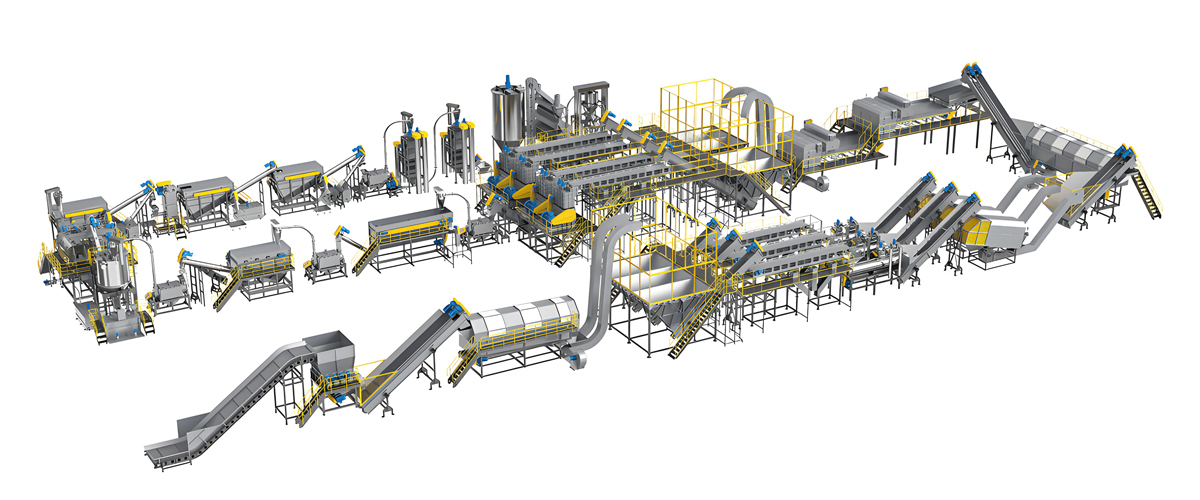
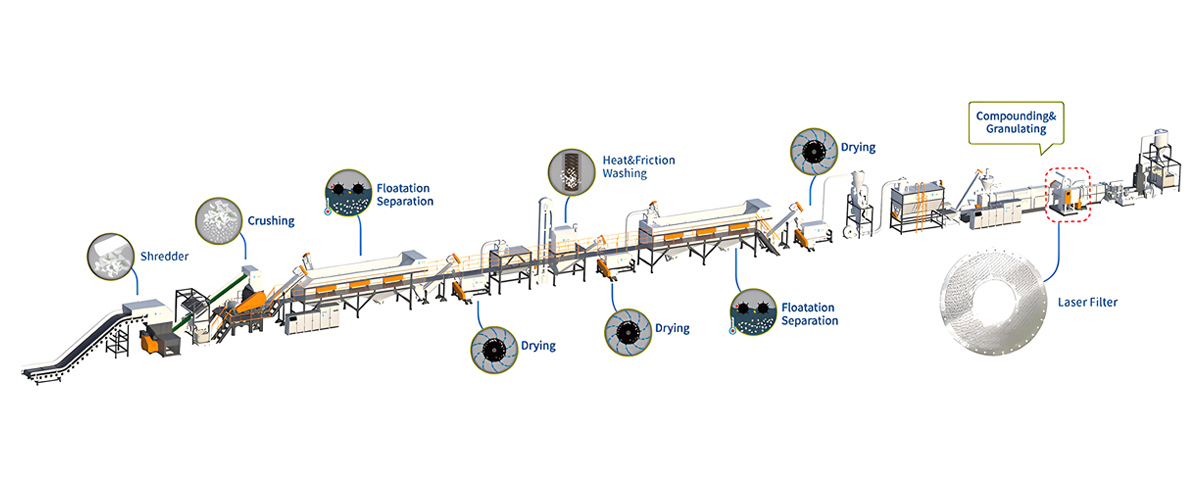
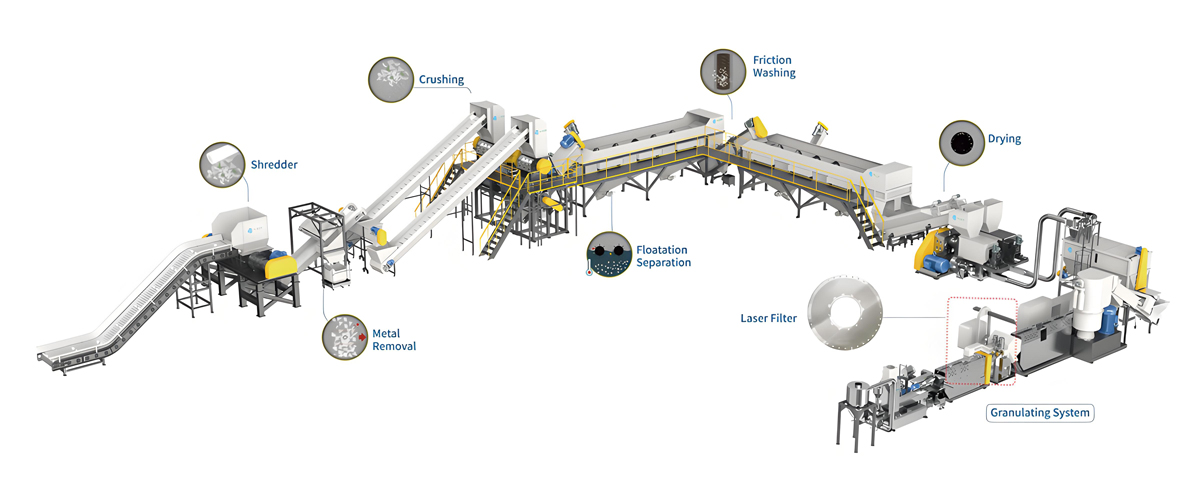
A high-quality 500kg/h food grade PET washing line consists of several interconnected components that work together to convert post-consumer PET bottles into clean, food-grade rPET flakes. Each component plays a critical role in the process, and the overall performance of the line depends on the quality and design of each individual component. The following are the essential components of a 500kg/h food grade PET washing line.
3.1 Automatic De-Baling and Pre-Sorting System
The first stage of the PET recycling process is automatic de-baling and pre-sorting. Post-consumer PET bottles are typically collected and compressed into large bales weighing 300-500 kg each for efficient transportation and storage. The automatic de-baler breaks these bales apart into individual bottles, preparing them for further processing.
A high-quality de-baler for a 500kg/h line should feature a robust chain conveyor and hydraulic bale breaker that can handle even the densest bales without jamming. The system should include a magnetic separator to remove ferrous metals such as nails and wire that may be present in the bales, protecting downstream equipment from damage. Additionally, the de-baler should have adjustable speed control to match the feed rate to the capacity of the rest of the line.
After de-baling, the bottles pass through a pre-sorting conveyor where large non-PET contaminants such as cardboard, plastic film, and glass are removed. For food-grade production, it is essential to remove as much non-PET material as possible at this stage to reduce the load on downstream sorting and cleaning processes. Some advanced lines include an initial optical sorting stage at this point to automatically remove non-PET bottles and colored bottles if only clear PET is being processed.
3.2 High-Efficiency Label Removal System
Label removal is one of the most critical stages in food-grade PET washing, as residual labels and adhesives are a major source of contamination. A high-efficiency label removal system should achieve a label removal rate of at least 99% to meet food-grade quality standards.
The most effective label removal systems use a combination of mechanical friction and water to separate labels from PET bottles. The system typically consists of a rotating drum with specially designed paddles that create a turbulent water flow, causing the bottles to rub against each other and remove labels and adhesives. The separated labels are then removed from the process water using a rotary screen and screw conveyor, ensuring they do not recontaminate the PET bottles.
For food-grade production, it is essential to choose a label removal system that is specifically designed to remove PVC labels, which are particularly problematic. PVC labels can release hydrochloric acid during processing, causing corrosion of equipment and discoloration of the PET flakes. A high-quality label removal system should be able to remove over 99% of PVC labels, preventing them from entering the downstream process.
3.3 Whole Bottle Pre-Washing and Metal Separation
After label removal, the PET bottles enter the whole bottle pre-washing system, which uses high-pressure water jets to remove loose dirt, sand, food residues, and other surface contaminants from the exterior of the bottles. The pre-washing system helps reduce the load on downstream washing stages and improves overall cleaning efficiency.
A good pre-washing system for a 500kg/h line should feature multiple high-pressure nozzles that provide complete coverage of the bottles. The system should include a sedimentation tank to remove heavy contaminants such as sand and stones from the wash water, allowing the water to be reused. Additionally, the pre-washing system should have adjustable water pressure and temperature to optimize cleaning performance for different feedstock conditions.
The pre-washed bottles then pass through a second metal separation stage to remove any remaining metal contaminants. This stage typically includes both a magnetic separator for ferrous metals and a metal detector for non-ferrous metals such as aluminum and copper. The metal separation system should be highly sensitive, capable of detecting metal fragments as small as 1 mm, to ensure the final product is free of metal contamination.
3.4 Advanced Optical Sorting System
An advanced optical sorting system is essential for producing food-grade rPET, as it provides the high level of material purity required for food contact applications. Optical sorting systems use near-infrared (NIR) spectroscopy to identify and separate different types of plastics and colors with high accuracy.
For a 500kg/h food grade line, the optical sorting system should be capable of processing at least 1 ton per hour with a sorting accuracy of at least 99%. The system should be able to separate PET from other plastics such as PP, PE, and PVC, as well as separate different colors of PET if required. Additionally, the system should have the ability to detect and remove contaminated bottles and foreign objects.
Modern optical sorting systems feature high-speed cameras and intelligent algorithms that can process thousands of objects per second. Some advanced systems also include RGB color sensors and metal detection capabilities, providing additional layers of quality control. When choosing an optical sorting system, it is important to select a reputable brand with a proven track record in food-grade PET recycling applications.
3.5 Wet Crushing and Dust Removal
After sorting, the PET bottles are crushed into small flakes using a wet crusher. Wet crushing is preferred over dry crushing for food-grade production because it reduces dust generation, prevents the loss of small PET flakes, and helps remove additional contaminants during the crushing process.
A high-quality wet crusher for a 500kg/h line should feature a robust design with high-quality alloy steel blades that provide efficient and uniform crushing of PET bottles. The crusher should produce flakes of approximately 10-12 mm in size, which is optimal for subsequent washing and drying processes. Additionally, the crusher should have a water circulation system that helps flush out contaminants during crushing.
The crushed PET flakes then pass through a dust removal system that uses air classification to remove fine dust particles and lightweight contaminants such as paper and plastic film. The dust removal system helps improve the cleanliness of the PET flakes and reduces the load on downstream washing stages. A good dust removal system should achieve a dust removal efficiency of at least 95%.
3.6 Multi-Stage Hot Washing and Friction Cleaning
The hot washing and friction cleaning stage is the heart of the food-grade PET washing process, where most of the remaining contaminants are removed. This stage uses a combination of heated water, food-grade detergents, and mechanical friction to remove stubborn contaminants such as adhesives, food residues, oils, and chemical residues.
A high-quality hot washing system for food-grade production should feature multiple hot washing tanks with precise temperature control, maintaining water temperatures between 85-95°C for optimal cleaning performance. The system should use food-grade detergents and caustic soda at concentrations of 1-3% to dissolve adhesives and organic contaminants. The PET flakes should be agitated in the hot washing solution using high-speed impellers, creating intense friction that scrubs contaminants from the flake surfaces.
The hot washing process is followed by a series of friction washers that provide additional mechanical cleaning to remove any remaining contaminants. Friction washers use high-speed rotating shafts with paddles that create a turbulent flow of water and flakes, causing the flakes to rub against each other and remove surface contaminants. A good friction washer should have adjustable speed and gap settings to optimize cleaning performance for different feedstock conditions.
3.7 Density Separation and Multi-Stage Rinsing
After hot washing, the PET flakes pass through a density separation system that separates PET from lighter contaminants such as PP, PE, and remaining labels. The density separation tank uses water to separate materials based on their density, with PET flakes (density 1.38 g/cm³) sinking to the bottom and lighter contaminants floating to the surface where they are removed.
A high-quality density separation system should have a slow, controlled water flow to ensure effective separation of different materials. The system should include a skimmer to remove floating contaminants and a screw conveyor to discharge the settled PET flakes. Additionally, the system should have adjustable water level and flow rate controls to optimize separation efficiency.
The separated PET flakes then undergo a series of rinsing stages to remove any remaining detergent and contaminants. A food-grade washing line should include at least three rinsing stages, with clean, fresh water used in the final rinse stage to ensure the highest level of cleanliness. The rinsing water from the later stages should be reused in the earlier stages to minimize water consumption.
3.8 High-Efficiency Drying System
After rinsing, the PET flakes must be dried to a residual moisture content of less than 0.1% to meet food-grade quality standards. Excess moisture can cause hydrolysis during subsequent extrusion and solid-state polymerization (SSP) processes, reducing the intrinsic viscosity and quality of the final product.
A high-efficiency drying system for food-grade PET flakes typically combines centrifugal drying and hot air drying to achieve the desired moisture content. The centrifugal dryer uses high-speed rotation to remove most of the surface water from the flakes, achieving a moisture content of approximately 1-2%. The flakes then pass through a hot air dryer that uses heated air to remove the remaining moisture, achieving a final moisture content of less than 0.1%.
The drying system should feature precise temperature control to avoid overheating the PET flakes, which can cause thermal degradation and discoloration. Additionally, the system should include a dust collection system to remove any fine particles generated during the drying process.
3.9 Final Flake Sorting and Quality Control
The final stage of the washing process is final flake sorting and quality control, where any remaining contaminants are removed and the quality of the final product is verified. This stage typically includes a second optical sorting step to remove any remaining non-PET flakes, colored flakes, or contaminated flakes.
For food-grade production, the final optical sorting system should be capable of detecting and removing even small amounts of contamination, achieving a final purity of at least 99.5%. Some advanced systems also include flake color sorting and metal detection capabilities, providing additional quality assurance.
After sorting, the rPET flakes are typically stored in silos or bags before being shipped to customers or further processed into pellets. A comprehensive quality control program should be implemented to test the final product for purity, moisture content, intrinsic viscosity, color, and other key parameters to ensure it meets all food-grade specifications.
3.10 Closed-Loop Water Recycling System
A closed-loop water recycling system is essential for any modern food-grade PET washing line, as it significantly reduces water consumption and environmental impact. Traditional washing lines consume 10-15 cubic meters of water per ton of processed PET, while a well-designed closed-loop system can reduce this to less than 0.5 cubic meters per ton, a 95% reduction.
The closed-loop water recycling system includes multiple stages of filtration and treatment to remove contaminants from the process water, allowing it to be reused indefinitely with minimal makeup water required. The system typically includes sedimentation tanks to remove solid particles, filtration units to remove fine particles, and chemical treatment systems to remove dissolved contaminants and control pH.
Additionally, the system should include sludge dewatering equipment to remove solid waste from the wastewater, reducing waste disposal costs and environmental impact. The dewatered sludge can be disposed of in landfills or further processed for energy recovery.
4. Key Technical Specifications to Evaluate When Choosing a 500kg/h Line
When evaluating different 500kg/h food grade PET washing lines, it is essential to look beyond the basic capacity and consider the detailed technical specifications of each component. The following are the key technical specifications that will determine the performance, reliability, and product quality of the washing line.
4.1 Actual Processing Capacity and Throughput
The first and most important specification to evaluate is the actual processing capacity and throughput of the line. Many manufacturers advertise a nominal capacity of 500kg/h, but this is often based on ideal conditions with clean, sorted feedstock. In real-world operations with typical post-consumer PET bottles, the actual throughput may be significantly lower.
When evaluating capacity, it is important to ask the manufacturer for the actual throughput you can expect with your specific feedstock conditions. The capacity should be specified based on the input of baled post-consumer PET bottles, not just the output of clean flakes. Additionally, you should ask about the line’s maximum capacity and how it handles variations in feedstock quality and contamination levels.
A high-quality 500kg/h food grade PET washing line should be able to consistently process 500kg/h of baled post-consumer PET bottles with typical contamination levels, producing approximately 450kg/h of clean rPET flakes. The line should also have some excess capacity to handle peak loads and variations in feedstock supply.
4.2 Cleaning Efficiency and Contaminant Removal Rates
The cleaning efficiency and contaminant removal rates are the most important factors determining the quality of the final rPET product. A high-quality food grade washing line should achieve the following minimum contaminant removal rates:
Label removal rate: ≥ 99%
PVC removal rate: ≥ 99.9%
Metal removal rate: ≥ 99.9%
Adhesive removal rate: ≥ 99%
Food residue removal rate: ≥ 99.9%
When evaluating different lines, ask the manufacturer for detailed data on contaminant removal rates and ask to see independent test results or customer references that verify these claims. Additionally, you should ask about the line’s ability to handle highly contaminated feedstock and how it maintains consistent cleaning performance under varying conditions.
4.3 Water and Energy Consumption
Water and energy consumption are significant operational costs for PET recycling operations, so it is important to choose a line that is designed for maximum resource efficiency. A high-quality 500kg/h food grade PET washing line should have the following minimum efficiency specifications:
Water consumption: ≤ 0.5 m³/ton of processed PET (with closed-loop recycling system)
Energy consumption: ≤ 150 kWh/ton of processed PET
When evaluating water and energy consumption, be sure to ask for the actual consumption figures under real-world operating conditions, not just the theoretical minimums. Additionally, ask about the efficiency of the water recycling system and how much makeup water is required. Some manufacturers may advertise low water consumption but require significant amounts of makeup water to maintain water quality.
4.4 Material Recovery Rate
The material recovery rate is the percentage of input PET that is recovered as clean rPET flakes. A higher recovery rate means less waste and higher revenue from your operation. A high-quality 500kg/h food grade PET washing line should have a material recovery rate of at least 90% for typical post-consumer PET bottles.
When evaluating recovery rates, ask the manufacturer for a detailed breakdown of where material is lost during the process. Common sources of material loss include label removal, density separation, and filtration. A well-designed line will minimize material loss at each stage, maximizing the overall recovery rate.
4.5 Automation and Control System
The automation and control system plays a critical role in ensuring consistent product quality, reducing labor costs, and minimizing downtime. A high-quality food grade PET washing line should feature an advanced PLC control system with a user-friendly touchscreen interface.
The control system should provide real-time monitoring of all key process parameters, including temperature, pressure, flow rate, and motor current. It should also include automatic alarm and fault diagnosis capabilities that alert operators to any issues and provide detailed diagnostic information to help resolve problems quickly.
Additionally, the control system should have the ability to store and recall multiple process recipes for different feedstock types and product specifications. This allows you to quickly switch between different products and maintain consistent quality. Some advanced systems also include remote monitoring capabilities, allowing the manufacturer to provide technical support and troubleshooting remotely.
4.6 Equipment Construction and Materials
The construction quality and materials used in the washing line will determine its durability, reliability, and service life. For food-grade production, all product contact parts should be made from high-quality stainless steel to prevent corrosion and contamination.
When evaluating equipment construction, look for the following:
All product contact surfaces should be made from 304 or 316 stainless steel.
Welds should be smooth and polished to prevent the accumulation of contaminants.
Bearings and seals should be of high quality and designed for wet environments.
Motors and gearboxes should be from reputable manufacturers with a proven track record of reliability.
The frame and structure should be robust and rigid to minimize vibration and ensure long-term stability.
Additionally, ask about the warranty offered by the manufacturer and the availability of spare parts. A reputable manufacturer should offer a minimum 1-year warranty on all equipment and maintain a global inventory of spare parts for fast delivery.
5. Common Design Flaws to Avoid in 500kg/h Food Grade Lines
Not all 500kg/h food grade PET washing lines are created equal, and many lower-cost lines suffer from design flaws that can significantly impact performance, product quality, and profitability. When evaluating different lines, it is important to be aware of these common design flaws and avoid them at all costs.
5.1 Inadequate Label Removal Systems
One of the most common design flaws in lower-cost PET washing lines is an inadequate label removal system. Many budget lines use simple label removers that only achieve label removal rates of 70-80%, leaving significant amounts of label and adhesive residue on the PET bottles. This residual contamination can be difficult to remove in subsequent washing stages, resulting in low-quality flakes that do not meet food-grade standards.
When evaluating label removal systems, avoid systems that rely solely on water jets or simple mechanical agitation. Look for systems that use a combination of mechanical friction and water to achieve label removal rates of at least 99%. Additionally, ensure that the system includes effective label separation and removal to prevent labels from re-entering the process stream.
5.2 Insufficient Hot Washing Capacity
Another common design flaw is insufficient hot washing capacity. Many lower-cost lines have undersized hot washing tanks that do not provide enough residence time for effective cleaning. The hot washing stage is critical for removing stubborn contaminants such as adhesives and food residues, and insufficient residence time will result in poor cleaning performance.
A high-quality 500kg/h food grade PET washing line should have a hot washing tank with a minimum residence time of 15-20 minutes. Additionally, the hot washing system should include effective agitation to ensure all flakes are exposed to the hot detergent solution. Avoid lines with small hot washing tanks that rely on high temperatures and high detergent concentrations to compensate for insufficient residence time, as this will increase operational costs and may cause thermal degradation of the PET.
5.3 Poor Water Recycling System Design
Many lower-cost lines have poorly designed water recycling systems that do not effectively remove contaminants from the process water. This results in poor water quality, which can recontaminate the PET flakes during washing and rinsing. Additionally, poor water recycling systems require significant amounts of makeup water, increasing operational costs and environmental impact.
When evaluating water recycling systems, look for systems that include multiple stages of filtration and treatment, including sedimentation, filtration, and chemical treatment. The system should be capable of maintaining consistent water quality with minimal makeup water required. Additionally, ensure that the system includes effective sludge dewatering to remove solid waste from the wastewater.
5.4 Inadequate Drying Performance
Inadequate drying performance is another common design flaw in lower-cost PET washing lines. Many budget lines use only centrifugal drying, which can only achieve a moisture content of approximately 1-2%. This is insufficient for food-grade production, which requires a moisture content of less than 0.1%.
When evaluating drying systems, ensure that the line includes both centrifugal drying and hot air drying to achieve the required moisture content. The hot air dryer should have precise temperature control to avoid overheating the PET flakes. Additionally, the drying system should include a dust collection system to remove fine particles generated during drying.
5.5 Lack of Advanced Sorting Capabilities
Many lower-cost 500kg/h lines do not include advanced optical sorting capabilities, relying instead on manual sorting and basic density separation. This is insufficient for food-grade production, which requires a high level of material purity to meet regulatory requirements.
When choosing a food grade PET washing line, it is essential to include at least one advanced optical sorting stage to remove non-PET materials and contaminants. For the highest quality food-grade production, consider including two optical sorting stages: one before crushing to sort whole bottles and one after washing to sort flakes.
5.6 Poor Equipment Construction and Materials
Lower-cost lines often use inferior materials and construction to reduce costs. Many budget lines use carbon steel for non-product contact parts and even some product contact parts, which can corrode and contaminate the PET flakes. Additionally, lower-quality motors, gearboxes, and bearings are more prone to failure, resulting in frequent downtime and high maintenance costs.
When evaluating equipment construction, ensure that all product contact parts are made from high-quality stainless steel. Look for equipment from reputable manufacturers that use high-quality components from well-known suppliers. Additionally, ask about the warranty and after-sales support offered by the manufacturer.
6. Detailed Cost Analysis and Return on Investment
Investing in a 500kg/h food grade PET washing line is a significant capital expenditure, but it can provide substantial returns when done correctly. The following analysis provides a detailed breakdown of the costs and returns associated with a typical 500kg/h food grade PET washing line from POLYRETEC.
6.1 Initial Investment Cost Breakdown
The initial investment for a complete 500kg/h food grade PET washing line from POLYRETEC includes the following components:
Automatic de-baling and pre-sorting system: $20,000 – $35,000
High-efficiency label removal system: $25,000 – $40,000
Whole bottle pre-washing and metal separation: $15,000 – $25,000
Advanced optical sorting system: $60,000 – $100,000
Wet crushing and dust removal: $15,000 – $25,000
Multi-stage hot washing and friction cleaning: $30,000 – $50,000
Density separation and multi-stage rinsing: $20,000 – $35,000
High-efficiency drying system: $25,000 – $40,000
Final flake sorting and quality control: $15,000 – $25,000
Closed-loop water recycling system: $30,000 – $50,000
Intelligent control system: $10,000 – $20,000
Installation and commissioning: $30,000 – $50,000
Training and documentation: $5,000 – $10,000
Total initial investment: $300,000 – $505,000
Additional costs to consider include facility construction or renovation, utility connections, initial raw material inventory, and working capital. These costs can vary significantly depending on location and specific requirements, but typically range from $50,000 to $150,000 for a 500kg/h line.
6.2 Annual Operating Cost Analysis
The following table compares the annual operating costs for a budget 500kg/h PET washing line versus a POLYRETEC Austrian-technology food grade washing line, based on 24 hours per day, 300 days per year operation:
Budget washing line: Raw material cost: $1,080,000 per year ($300/ton × 3,600 tons) Energy costs: $108,000 per year Water costs: $54,000 per year Labor costs: $180,000 per year (3 operators per shift) Maintenance costs: $54,000 per year Chemical costs: $27,000 per year Waste disposal costs: $27,000 per year Total annual operating costs: $1,530,000
POLYRETEC food grade washing line: Raw material cost: $1,080,000 per year ($300/ton × 3,600 tons) Energy costs: $64,800 per year (40% reduction) Water costs: $2,700 per year (95% reduction) Labor costs: $120,000 per year (2 operators per shift) Maintenance costs: $27,000 per year (50% reduction) Chemical costs: $16,200 per year (40% reduction) Waste disposal costs: $8,100 per year (70% reduction) Total annual operating costs: $1,318,800
Annual cost savings with POLYRETEC food grade washing line: $1,530,000 – $1,318,800 = $211,200
6.3 Revenue and Profitability Analysis
The revenue and profitability of a 500kg/h food grade PET washing line depend on the quality of the final product and market conditions. The following analysis compares the revenue and profitability of producing industrial-grade rPET flakes versus food-grade rPET flakes:
Industrial-grade rPET flakes: Annual production: 3,600 tons × 85% yield = 3,060 tons per year Selling price: $600 per ton Annual revenue: 3,060 tons × $600/ton = $1,836,000 per year Annual operating costs: $1,318,800 per year Annual gross profit: $1,836,000 – $1,318,800 = $517,200 per year
Food-grade rPET flakes: Annual production: 3,600 tons × 90% yield = 3,240 tons per year Selling price: $1,100 per ton Annual revenue: 3,240 tons × $1,100/ton = $3,564,000 per year Annual operating costs: $1,318,800 per year Annual gross profit: $3,564,000 – $1,318,800 = $2,245,200 per year
This analysis clearly demonstrates the significant profit advantage of producing food-grade rPET flakes compared to industrial-grade flakes. By investing in a high-quality food grade washing line, you can more than quadruple your annual gross profit.
6.4 Return on Investment Calculation
Using the figures from the previous sections, we can calculate the return on investment (ROI) for the POLYRETEC 500kg/h food grade PET washing line. The total initial investment is approximately $402,500 (midpoint of the range), and the annual cost savings are $211,200.
Payback period based on cost savings alone = Total initial investment ÷ Annual cost savings = $402,500 ÷ $211,200 = 1.9 years (approximately 23 months)
When considering the additional revenue from producing food-grade rPET flakes instead of industrial-grade flakes, the payback period is even shorter:
Additional annual revenue from food-grade production = $3,564,000 – $1,836,000 = $1,728,000
Total annual benefit = Annual cost savings + Additional annual revenue = $211,200 + $1,728,000 = $1,939,200
Payback period including additional revenue = $402,500 ÷ $1,939,200 = 0.21 years (approximately 2.5 months)
Over the 15-year service life of the equipment, the total profit would be:
Total profit over 15 years = ($2,245,200 × 15) – $402,500 = $33,275,500
This represents a return on investment of over 8,200% over the life of the equipment, making a 500kg/h food grade PET washing line one of the most profitable investments in the recycling industry.
7. POLYRETEC 500kg/h Food Grade PET Washing Line Solution
POLYRETEC’s 500kg/h food grade PET washing line is based on proven Austrian technology and designed specifically to meet the strictest international food safety standards. Our washing lines incorporate numerous innovative features that ensure superior cleaning performance, exceptional efficiency, and reliable operation.
7.1 Austrian Technology and Engineering
POLYRETEC has integrated cutting-edge Austrian technology into our PET washing lines, leveraging the expertise of industry pioneers like Starlinger and Erema that have defined modern PET recycling standards. Our engineering team works closely with Austrian technology partners to ensure that our washing lines incorporate the latest innovations in cleaning efficiency, decontamination, and resource conservation.
All POLYRETEC washing lines are designed and manufactured to the highest Austrian quality standards, using only premium materials and components from reputable suppliers. Each component undergoes rigorous testing before assembly, and the complete line is factory tested under full load conditions to ensure optimal performance before shipment.
7.2 Superior Cleaning and Decontamination Performance
POLYRETEC’s 500kg/h food grade PET washing line achieves industry-leading cleaning and decontamination performance, producing rPET flakes with purity levels exceeding 99.5%. Our advanced multi-stage cleaning process effectively removes all types of contaminants, including labels, adhesives, food residues, oils, and chemical residues.
The line features our patented label removal system, which achieves label removal rates exceeding 99.5%, including PVC labels. Our hot washing system uses precise temperature control and optimized agitation to ensure thorough cleaning of the PET flakes, while our advanced friction washers provide additional mechanical cleaning to remove stubborn contaminants.
Additionally, our washing line includes two stages of optical sorting to ensure the highest level of material purity. The first optical sorter sorts whole bottles by material and color, while the second sorter sorts the final flakes to remove any remaining contaminants. This dual sorting approach ensures that the final product meets the strictest food-grade quality standards.
7.3 Exceptional Resource Efficiency
POLYRETEC’s 500kg/h food grade PET washing line is designed for maximum resource efficiency, minimizing water and energy consumption while maintaining superior cleaning performance. Our closed-loop water recycling system recovers and reuses over 95% of the process water, reducing freshwater consumption to less than 0.5 cubic meters per ton of processed PET.
The line also incorporates numerous energy-saving features, including high-efficiency motors, variable-speed drives, and heat recovery systems that capture and reuse thermal energy from the washing process. These features reduce energy consumption by 30-40% compared to traditional washing lines, resulting in significant annual cost savings.
7.4 Intelligent Automation and Control
POLYRETEC’s 500kg/h food grade PET washing line is equipped with an advanced intelligent control system that provides complete monitoring and control of the entire production process. The system features a user-friendly touchscreen interface that displays real-time production data, including throughput, temperature, pressure, and water quality parameters.
The control system automatically adjusts process parameters to maintain optimal performance and product quality, reducing the need for manual intervention. It also includes advanced alarm and fault diagnosis capabilities that alert operators to any issues and provide detailed diagnostic information to help resolve problems quickly.
Additionally, the system includes remote monitoring capabilities, allowing POLYRETEC’s technical support team to monitor and troubleshoot the line from anywhere in the world. This ensures that any issues are resolved quickly, minimizing downtime and maximizing production efficiency.
7.5 Comprehensive After-Sales Support
POLYRETEC is committed to providing comprehensive after-sales support for our customers throughout the entire life cycle of their equipment. Our global service network includes service centers in key regions around the world, staffed by experienced technicians who can provide on-site support when needed.
We offer a range of support services, including 24/7 technical support via phone and email, remote monitoring and diagnostic services, preventive maintenance programs, emergency repair services, and spare parts supply. We maintain a global inventory of spare parts to ensure fast delivery to customers anywhere in the world, with most parts shipped within 24 hours.
Additionally, we provide comprehensive training for your operators and maintenance personnel to ensure they have the knowledge and skills to operate and maintain the equipment effectively. Our training programs include both classroom instruction and hands-on training with the actual equipment, covering all aspects of plant operation, maintenance, safety, and quality control.
8. Real-World Case Study: Successful 500kg/h Food Grade Operation in Spain
A leading recycling company in Spain was looking to enter the food-grade rPET market to take advantage of the growing demand for recycled packaging materials. The company was already operating an industrial-grade PET washing line, but they wanted to upgrade to food-grade production to increase their profit margins.
After evaluating several suppliers, the company chose POLYRETEC to provide a complete 500kg/h food grade PET washing line. The line included all the essential components for food-grade production, including advanced optical sorting, multi-stage hot washing, and a closed-loop water recycling system.
The project was completed on time and within budget, and the line was commissioned in early 2025. The results after six months of operation exceeded the company’s expectations:
The line consistently achieved a production capacity of 500kg/h of baled post-consumer PET bottles.
The final rPET flakes had purity levels exceeding 99.6%, with PVC content below 30 ppm and moisture content below 0.08%.
The product received EFSA approval for food contact applications, allowing the company to sell their flakes to major beverage bottlers in Europe.
The selling price of the flakes increased by 85% from industrial-grade to food-grade, significantly increasing revenue and profit margins.
Water consumption was reduced by 94% compared to their previous industrial-grade line, from 12 m³/ton to 0.7 m³/ton.
Energy consumption was reduced by 38% compared to their previous line, resulting in annual energy cost savings of over $40,000.
Labor requirements were reduced by 33% from 3 operators per shift to 2 operators per shift, reducing annual labor costs by over $60,000.
The company achieved a return on investment in just 14 months, significantly faster than their initial projection of 24 months.
The success of this project has led the company to order a second 500kg/h food grade PET washing line from POLYRETEC to meet the growing demand for their food-grade rPET flakes.
9. Step-by-Step Purchasing Decision Checklist
Choosing the right 500kg/h food grade PET washing line is a complex decision that requires careful consideration of many factors. The following step-by-step checklist will help you evaluate different options and make an informed decision:
1. Define your specific requirements: – Determine your desired production capacity and operating hours – Identify the type and quality of feed