
In today’s rapidly evolving manufacturing landscape, the demand for efficient and user-friendly plastic recycling equipment has never been higher. As industries worldwide strive to meet sustainability goals and reduce environmental impact, finding the right plastic recycling machine that combines high performance with easy operation has become a critical business priority. Companies across various sectors, from packaging manufacturers to waste management facilities, are actively searching for recycling equipment that minimizes operational complexity while maximizing throughput and quality. This comprehensive guide explores the essential features, benefits, and considerations for selecting plastic recycling equipment with advanced easy operation systems that can transform your recycling operations and deliver measurable business results.
Why Easy Operation Matters for Plastic Recycling Equipment
The significance of user-friendly design in plastic recycling machinery extends far beyond mere convenience. As recycling operations become increasingly complex and demanding, the operational ease of equipment directly impacts productivity, labor costs, and overall business profitability. Understanding why easy operation matters requires examining the multifaceted challenges that recycling facilities face in their daily operations and how thoughtfully designed equipment can address these pain points effectively.
Addressing Varying Operator Skill Levels
Modern recycling facilities employ operators with diverse backgrounds, experience levels, and technical competencies. Some team members may have extensive experience in industrial manufacturing environments, while others might be new to the recycling industry with limited exposure to complex machinery. This skill variance creates significant challenges for operations managers who must ensure consistent production quality regardless of which operator is running the equipment. Easy operation systems bridge this gap by providing intuitive interfaces that guide less experienced operators through proper procedures while allowing skilled operators to work efficiently. When plastic recycling equipment features clear visual indicators, logical control layouts, and forgiving error handling mechanisms, operators at all skill levels can achieve satisfactory results with minimal supervision and reduced learning curves.
Reducing Training Time and Costs
Traditional plastic recycling equipment often requires extensive training programs that span multiple weeks or even months before operators can work independently. These training investments consume significant financial resources, including instructor time, dedicated training equipment, and lost production during the learning phase. Facilities that invest in equipment with easy operation systems dramatically reduce these training overheads. Operators can typically achieve basic proficiency within days rather than weeks, enabling faster deployment of new team members and more efficient use of experienced trainers. The cost savings from reduced training time compound over time as facilities hire new staff, experience employee turnover, or expand their operations with additional equipment units.
Minimizing Human Error Impact
Complex equipment interfaces increase the likelihood of operator mistakes that can compromise product quality, damage machinery, or create safety hazards. When plastic recycling equipment requires operators to memorize intricate sequences of button presses or navigate confusing menu structures, errors become more frequent and potentially more severe. Easy operation systems incorporate design principles that naturally guide operators toward correct actions while making errors less likely and easier to recover from when they occur. Visual confirmation prompts, automatic parameter validation, and forgiving interfaces all contribute to reduced error rates and improved consistency across shifts and operators.
Enabling Production Consistency Across Shifts
Recycling facilities that operate around the clock face unique challenges in maintaining consistent product quality across different work shifts. Variations in operator practices, interpretation of procedures, and attention to detail can lead to quality inconsistencies that affect customer satisfaction and increase rework costs. Equipment with standardized easy operation procedures ensures that every operator, regardless of shift assignment, follows the same logical sequence of actions. This consistency reduces the variation that naturally occurs when multiple individuals perform the same tasks, leading to more uniform output quality and simplified quality control processes.
Impact on Workplace Safety and Ergonomics
Equipment design that prioritizes easy operation often delivers complementary benefits for workplace safety and operator wellbeing. Intuitive controls reduce the cognitive burden on operators, allowing them to maintain awareness of their physical surroundings and potential hazards rather than focusing attention exclusively on machine interfaces. Ergonomically positioned displays and controls minimize awkward postures and repetitive motions that contribute to musculoskeletal disorders over extended work periods. Clear visual feedback about equipment status enables operators to identify potential safety concerns before they escalate into dangerous situations. When operators can confidently understand and interact with their equipment, they experience reduced stress levels and greater job satisfaction, contributing to improved morale and retention across the workforce.
Environmental Compliance and Reporting Benefits
Modern manufacturing environments face increasing scrutiny regarding environmental performance and regulatory compliance. Easy operation systems that automatically log operational parameters and material throughput simplify the documentation requirements that compliance programs impose. Digital record-keeping replaces error-prone manual logging while providing auditable evidence of proper operational procedures. Integration with environmental monitoring systems enables real-time tracking of energy consumption, emissions, and resource utilization that supports sustainability reporting and regulatory submissions. When recycling facilities can demonstrate precise operational control through comprehensive data, they strengthen their positions in regulatory discussions and customer evaluations.
Core Easy Operation Features in Modern Plastic Recycling Equipment
The translation of easy operation philosophy into practical equipment features involves careful integration of hardware and software elements that work together to simplify the operator experience. Understanding these core features helps buyers evaluate equipment options and identify solutions that genuinely deliver on their user-friendly promises rather than superficial design touches that fall short in real-world conditions.
One-Touch Startup Systems
The moment an operator arrives at a plastic recycling machine, the startup sequence sets the tone for the entire work period. Modern easy operation equipment eliminates the need for operators to manually initiate multiple subsystems in a specific sequence by implementing intelligent one-touch startup functionality. A single button press or screen command triggers an automated startup routine that systematically brings online conveyors, initiates the crushing or shredding mechanisms, activates heating systems if applicable, and verifies that all safety interlocks are properly engaged. These automated sequences typically include brief stabilization periods that allow mechanical components to reach proper operating conditions before full production begins, ensuring that quality output starts immediately without requiring operator monitoring during warm-up phases.
Touchscreen PLC Control Panels
The human-machine interface serves as the primary communication bridge between operators and plastic recycling equipment, making its design crucial to overall operational ease. Touchscreen programmable logic controller (PLC) control panels have emerged as the industry standard for easy operation systems because they combine comprehensive functionality with intuitive visual presentation. High-resolution color displays present equipment status information through clear graphics, status indicators, and real-time performance metrics that operators can interpret at a glance. Menu structures follow logical hierarchies that match how operators think about tasks, grouping related functions together and providing clear navigation paths to access specific controls. The responsive nature of modern touch interfaces allows operators to make adjustments quickly without the frustration of laggy or unresponsive controls that characterize older equipment designs.
Automated Fault Diagnosis Capabilities
When equipment malfunctions occur, the speed and accuracy of diagnosis directly affect how quickly production can resume. Traditional plastic recycling equipment often required experienced technicians to interpret cryptic error codes or manually trace electrical and mechanical systems to identify root causes. Easy operation systems incorporate automated fault diagnosis that automatically identifies common problems and presents clear explanations to operators in plain language rather than technical jargon. These diagnostic systems monitor key parameters throughout equipment operation and can detect deviations that indicate developing problems before they cause catastrophic failures. When issues do occur, operators receive specific guidance about which areas to inspect first, which adjustments to make, and whether service personnel need to be contacted for specialized repairs.
Remote Monitoring and Technical Support
The integration of network connectivity into plastic recycling equipment enables capabilities that extend easy operation beyond the physical equipment location. Remote monitoring allows supervisors and technical specialists to observe equipment performance from anywhere with internet access, providing additional expertise that might not be available locally. When operators encounter situations beyond their training or experience, remote support features enable real-time collaboration with manufacturer specialists who can view the same interface the operator sees and provide specific guidance for the current situation. This capability proves particularly valuable for facilities in remote locations or those operating equipment infrequently, where access to specialized technical support might otherwise require significant travel time and expense.
Preset Parameters and Recipe Storage
Recycling facilities often process multiple material types or product specifications using the same equipment, requiring frequent adjustments to operational parameters. Without preset functionality, operators must manually configure settings for each production run, introducing opportunities for errors and consuming valuable time. Easy operation equipment addresses this challenge through comprehensive recipe storage that saves complete parameter configurations under memorable names or codes. When switching between production runs, operators simply select the appropriate recipe and the system automatically adjusts all relevant settings including motor speeds, temperatures, timing sequences, and material feed rates. Some advanced systems can even suggest appropriate recipes based on material identification or production scheduling information, further streamlining the operational workflow.
POLYRETEC Advantages in Easy Operation Plastic Recycling Equipment
POLYRETEC has established itself as a leading manufacturer of plastic recycling equipment that prioritizes operational simplicity without compromising performance or reliability. The company’s approach to easy operation integrates thoughtful design principles throughout the entire equipment lifecycle, from initial configuration through daily operation and ongoing maintenance. Understanding these specific advantages helps prospective buyers evaluate how POLYRETEC equipment can address their operational requirements and deliver sustained value over extended production periods.
POLYRETEC Automated Control System Architecture
The foundation of POLYRETEC easy operation philosophy rests on a comprehensive automated control system architecture that intelligently manages equipment functions without requiring constant operator attention. This architecture coordinates the operation of motors, sensors, conveyors, and auxiliary systems through advanced PLC programming that optimizes performance while maintaining stable operating conditions. The automated system continuously monitors process variables and makes real-time adjustments to maintain quality output even when material characteristics vary within normal ranges. Operators benefit from this automation by focusing their attention on higher-level tasks such as quality monitoring, material staging, and process optimization rather than constantly tweaking individual control parameters.
Intelligent Human-Machine Interface Design
POLYRETEC invests significant engineering resources in developing human-machine interfaces that genuinely enhance operational efficiency rather than simply adding feature complexity. Interface design follows principles of cognitive ergonomics that align with how operators naturally perceive and process information, reducing mental workload and decision fatigue during extended work periods. Color coding, icon design, and layout organization follow consistent patterns that operators learn quickly and apply across different equipment screens and functions. The multilingual capability of POLYRETEC interfaces ensures that operators in diverse global markets can work effectively in their preferred languages without confusion or translation errors that could lead to operational mistakes.
Modular Equipment Configuration Benefits
The physical design of POLYRETEC plastic recycling equipment incorporates modular principles that simplify both operation and maintenance activities. Individual functional modules can be understood and operated somewhat independently, allowing operators to develop expertise incrementally rather than confronting a monolithic system all at once. Visual separation between modules through physical barriers, color differentiation, and interface grouping helps operators build mental models of how the equipment functions and how different components interact. This modular approach also facilitates maintenance activities, as technicians can isolate specific modules for inspection or repair without affecting the entire production line, reducing downtime and simplifying troubleshooting efforts.
Quick Product Changeover Capabilities
Facilities that process multiple material types or product specifications require equipment that supports rapid and reliable changeover between different production runs. POLYRETEC equipment addresses this requirement through carefully engineered changeover features that minimize the time and expertise needed to reconfigure equipment for different materials. Quick-connect mechanisms for material feed systems, easily adjustable separation equipment, and automated cleaning sequences all contribute to changeover efficiency. The recipe storage functionality mentioned earlier integrates with these physical features to ensure that changeover procedures are consistent, repeatable, and documented within the equipment control system rather than relying on operator memory or informal procedures.
Industry-Specific Solution Configurations
POLYRETEC understands that different recycling applications present unique operational challenges that require specialized approaches. Film and flexible packaging recycling demands different processing parameters and control strategies compared to rigid container or industrial scrap recycling. PET bottle recycling systems must address contamination concerns and material purity requirements that influence process design. HDPE container recycling requires attention to color sorting and density separation that affect output quality specifications. Agricultural film recycling presents challenges related to soil contamination and UV degradation that require specialized washing and drying capabilities. POLYRETEC application engineering team works with customers to configure easy operation systems that address specific application requirements while maintaining consistent user experience across different equipment configurations.
Capacity Scaling and Expansion Considerations
Growing recycling operations often require capacity expansion that increases throughput without proportionally increasing operational complexity or labor requirements. POLYRETEC equipment architecture supports scaling through parallel processing configurations that maintain consistent operational interfaces across different capacity levels. Operators familiar with single-line configurations can transfer their expertise directly to expanded operations without extensive retraining. Modular expansion capabilities enable incremental capacity additions that match business growth patterns rather than requiring large upfront investments. Control system scalability ensures that expanded operations can be managed through unified interfaces that grow with operational requirements. This scaling flexibility ensures that easy operation benefits continue delivering value as facilities grow beyond initial implementation scales.
Remote Diagnostic and Technical Support Services
POLYRETEC provides comprehensive remote support capabilities that extend the easy operation experience beyond the physical equipment through connected services. When equipment requires technical attention beyond operator-level troubleshooting, POLYRETEC technical specialists can access equipment data and control interfaces with customer authorization to provide expert diagnostic support. This capability proves particularly valuable for addressing intermittent issues that might not be reproducible during local inspection or for optimizing equipment parameters based on specific material characteristics. The combination of remote diagnostics and local operator capabilities creates a support structure that resolves issues efficiently while building operator knowledge and confidence over time.
Operation Complexity Comparison Across Plastic Recycling Equipment Types
Different types of plastic recycling equipment present unique operational challenges that vary based on their mechanical complexity, process requirements, and the precision demanded by their applications. Understanding these variations helps facilities plan appropriate training, allocate operational resources effectively, and select equipment that matches their operational capabilities and support infrastructure.
Plastic Washing Line Operation Requirements
Plastic washing lines process contaminated materials through sequential cleaning stages that remove debris, labels, adhesives, and other contaminants from plastic substrates. The operational complexity of washing lines stems from the multiple process variables that affect cleaning effectiveness, including water temperature, chemical concentration, agitation intensity, and residence time. POLYRETEC washing line equipment simplifies operation through automated chemical dosing systems that maintain proper solution concentrations without manual testing and adjustment. Interface displays present cleaning process status through intuitive visualizations that show which stages are currently processing, allowing operators to quickly assess line status and identify any areas requiring attention. The integration of water treatment and recycling systems further reduces operational burden by automating processes that would otherwise require constant monitoring and manual intervention.
Plastic Granulator and Pelletizer Operation Essentials
Plastic granulators and pelletizers transform processed plastic materials into uniform pellets suitable for re-extrusion and manufacturing applications. The quality of output from these machines depends heavily on maintaining precise temperature profiles, screw speeds, and material flow rates throughout the production process. Easy operation features in POLYRETEC granulating equipment include automated temperature zone management that maintains consistent melt conditions without continuous operator adjustment. Die plate and cutting chamber designs that minimize material buildup reduce the frequency of cleaning interventions that would otherwise interrupt production. Control interfaces present critical parameters including motor loads, temperatures, and production rates through clear displays that enable operators to verify proper operation at a glance while maintaining the precise control necessary for quality output.
Plastic Crusher and Shredder Operational Convenience
Plastic crushers and shredders perform the initial size reduction that prepares materials for downstream processing, making their reliable operation critical to overall line throughput. The mechanical nature of these machines creates specific operational considerations related to material feeding, blade wear monitoring, and throughput optimization. POLYRETEC crushing equipment incorporates features that simplify these operational aspects, including automatic jam detection and reversal mechanisms that clear blockages without operator intervention. Feed hopper designs that promote natural material flow reduce the need for operators to manually push materials into the crushing chamber, improving both efficiency and operator safety. Blade inspection and replacement procedures are designed for straightforward execution with clear indicators that guide operators through necessary maintenance activities.
Complete Recycling Production Line Integration
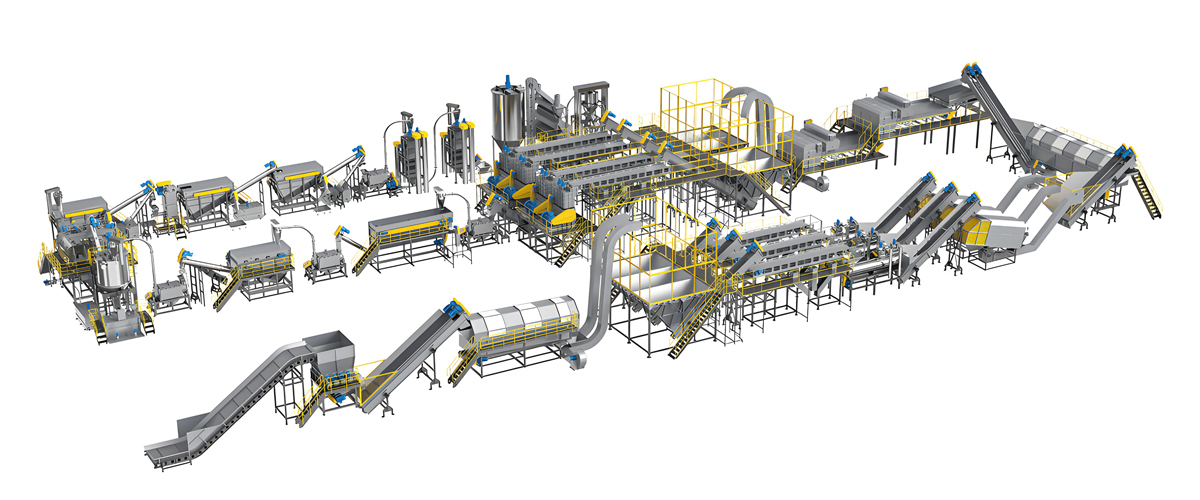
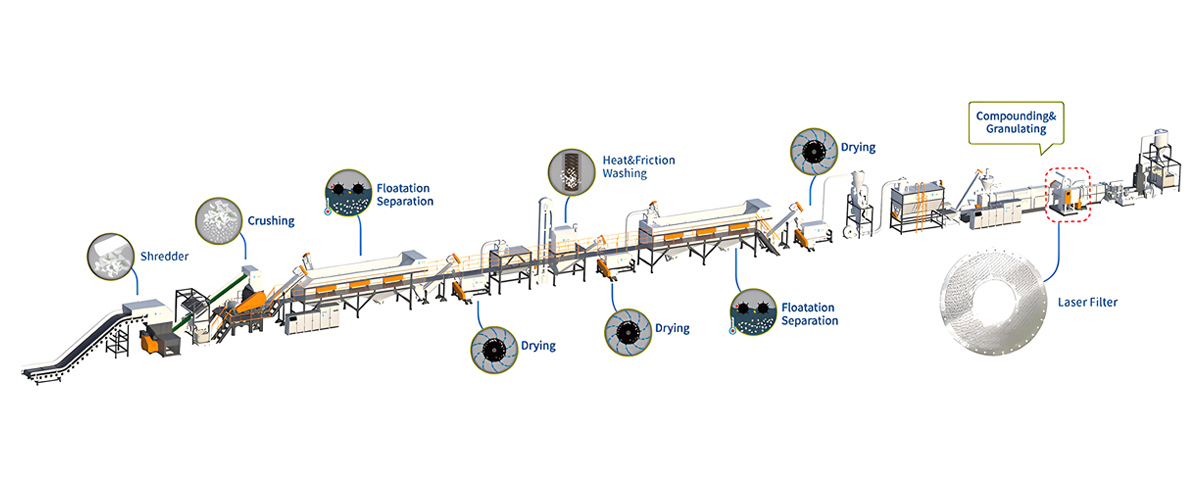
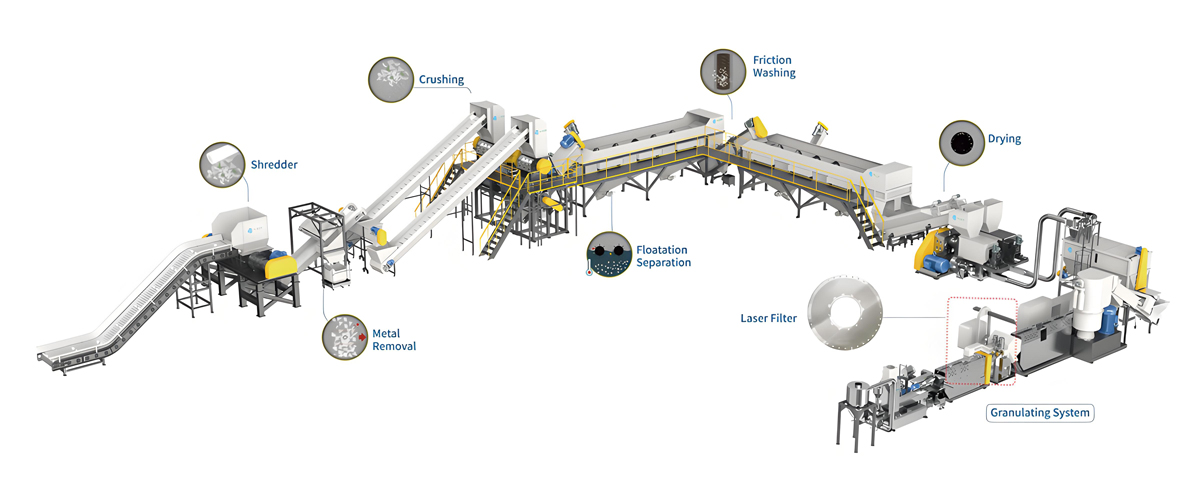
When facilities operate complete recycling production lines that integrate multiple pieces of equipment into coordinated systems, operational complexity increases due to the interactions between different subsystems. POLYRETEC addresses this challenge through centralized control systems that manage line-wide coordination while presenting integrated status information through unified operator interfaces. Line speed synchronization ensures that material flows smoothly between processing stages without accumulation or starvation that would reduce overall system efficiency. Automated start-up and shutdown sequences coordinate equipment across the entire line, eliminating the need for operators to manually sequence individual components. When issues occur at any point in the line, the integrated control system can identify the source and implications, presenting this information to operators in context rather than requiring them to diagnose cascading effects manually.
Material Handling and Feed System Integration
The interface between material handling systems and primary processing equipment represents a critical integration point that affects both throughput and operational simplicity. POLYRETEC designs its plastic recycling line components with compatible feed interfaces that enable smooth material transfer without manual intervention. Automatic feed rate adjustment based on processing equipment status prevents both overloading and starvation conditions that would require operator attention. Material detection sensors identify incoming material characteristics and communicate this information to control systems that adjust processing parameters automatically. Conveyor speed synchronization with processing equipment speed ensures consistent material presentation that enables uniform processing across varying feed conditions. These integrations transform what would otherwise be complex multi-system coordination into seamless automated operation.
Quality Control Integration Across Production Stages
End-to-end quality assurance in plastic recycling line operations requires monitoring and control capabilities that span multiple processing stages. POLYRETEC implements quality sensing at key points throughout the material flow, from initial input inspection through final output verification. Vision systems can identify contamination, color variations, and size inconsistencies that affect product marketability. Spectroscopic analysis enables material type verification that ensures proper sorting and processing for different polymer types. Integration between quality sensing and process control enables automatic parameter adjustment when quality deviations are detected, maintaining output specifications without operator intervention. Statistical process control capabilities track quality trends over time, identifying conditions that might lead to quality problems before they manifest in defective output.
Technical Implementation of Easy Operation Systems
The practical realization of easy operation features depends on underlying technical systems that provide the intelligence, responsiveness, and reliability necessary for modern recycling equipment. Understanding these technical foundations helps operators appreciate how their equipment functions and enables more informed troubleshooting and optimization activities.
PLC Programming and Logic Control Architecture
Programmable Logic Controllers serve as the computational backbone of modern plastic recycling equipment, executing the control logic that implements easy operation features. POLYRETEC equipment utilizes PLC platforms from established industrial automation suppliers, ensuring reliable hardware performance backed by extensive engineering support. The programming architecture organizes control logic into modular blocks that correspond to functional equipment areas, simplifying both initial development and ongoing maintenance. Structured programming techniques ensure that logic is documented clearly, making it accessible to maintenance technicians who may need to troubleshoot or modify control behavior. The modular approach also facilitates system upgrades and feature additions, allowing POLYRETEC to enhance equipment capabilities over time without requiring complete control system replacement.
Sensor Networks and Data Acquisition Systems
The awareness that easy operation systems have about equipment status and process conditions depends entirely on comprehensive sensor networks that continuously monitor relevant parameters. Temperature sensors track thermal conditions throughout processing zones, enabling precise temperature control and early detection of cooling or heating system issues. Current sensors monitor motor loads to identify abnormal conditions that might indicate mechanical problems or material feeding issues. Level sensors, flow meters, and position sensors provide additional process visibility that enables automated responses to changing conditions. POLYRETEC equipment specifications detail the sensor complement included with standard configurations and available options for specialized applications, allowing buyers to confirm that required monitoring capabilities are available for their specific operational requirements.
Variable Frequency Drive and Motor Control
Modern plastic recycling equipment relies heavily on variable frequency drives to achieve the precise motor control necessary for quality output and energy efficiency. These electronic devices convert fixed-frequency incoming power into adjustable frequency and voltage outputs that control motor speed and torque with high precision. Easy operation systems leverage variable frequency drive capabilities to implement automated speed regulation that maintains consistent production rates despite variations in material characteristics or upstream/downstream conditions. The communication interfaces built into modern drives also enable integration with PLC control systems, allowing operators to monitor and adjust motor parameters through centralized equipment interfaces rather than requiring separate attention to individual drive keypads.
Automatic Temperature and Pressure Regulation
Many plastic recycling processes require precise thermal management to achieve proper material processing without degradation or incomplete transformation. Heating systems, cooling systems, and temperature sensors work together through closed-loop control algorithms that maintain target temperatures automatically without requiring manual adjustment by operators. Pressure monitoring and regulation similarly protect equipment and ensure quality output by controlling forces within specified ranges throughout processing operations. The automation of these critical parameters represents one of the most significant contributions of easy operation systems to recycling equipment performance, as manual thermal management would require constant attention and specialized expertise that most operating personnel lack.
Safety Interlock and Protection Systems
Easy operation must never compromise safety, and POLYRETEC equipment incorporates comprehensive protection systems that guard personnel, equipment, and materials from harm while maintaining operational simplicity. Safety interlocks prevent dangerous equipment states by preventing operations that would create hazards and stopping equipment quickly when unsafe conditions develop. Visual and audible alarms alert operators to conditions requiring attention without requiring constant monitoring of indicators. Emergency stop functions provide operators with immediate shutdown capability when hazardous situations develop, with clear labeling and positioning that enables rapid response. The integration of safety functions into the overall control architecture ensures that protection measures enhance rather than complicate the operator experience, with clear indications of safety status and any conditions requiring attention.
Training Programs and Technical Support for Operators
The value of easy operation equipment extends beyond its inherent design qualities to encompass the support infrastructure that helps operators develop competence and confidence over time. POLYRETEC provides comprehensive training and support services that ensure operators can fully leverage equipment capabilities while building the knowledge necessary for independent operation and basic troubleshooting.
Equipment Delivery and On-Site Training Packages
When POLYRETEC equipment arrives at customer facilities, installation and initial training services help ensure smooth start-up and rapid achievement of production targets. Qualified technical personnel oversee equipment installation, verify proper mechanical and electrical connections, and conduct initial testing to confirm correct operation before releasing equipment to customer operators. The training curriculum delivered during this period covers essential topics including startup and shutdown procedures, routine operation practices, monitoring and adjustment techniques, and basic troubleshooting approaches. Training materials including operation manuals, reference cards, and video tutorials support ongoing learning and knowledge retention after initial training concludes. POLYRETEC training programs can be customized to address specific customer requirements, material types, or operational scenarios that might differ from standard configurations.
Comprehensive Operation Manuals and Video Documentation
Well-documented equipment supports operator learning and reference throughout the equipment lifecycle, serving as a knowledge resource that operators can consult whenever questions arise. POLYRETEC provides detailed operation manuals that explain equipment functions, control interface organization, and recommended practices in clear language accessible to operators with varying educational backgrounds. Photographs, diagrams, and flowcharts illustrate procedures and equipment features more effectively than text descriptions alone. Video training materials demonstrate procedures in step-by-step format that shows rather than tells operators how to perform essential tasks, accommodating different learning preferences and reducing the interpretation challenges that sometimes arise from written documentation alone. Digital formats for these materials enable easy distribution and search functionality that helps operators find specific information quickly without reading entire documents.
Online Remote Support and Troubleshooting Assistance
Between scheduled service visits, POLYRETEC remote support capabilities enable operators to access technical assistance whenever questions or issues arise. Telephone and electronic communication channels connect operators with technical support personnel who can provide guidance for troubleshooting activities or answer questions about equipment operation. Screen sharing and remote access capabilities, when authorized by customers, enable support personnel to view equipment interfaces in real-time and provide specific guidance for current conditions rather than general recommendations that might not apply to particular situations. The responsiveness of remote support services reflects POLYRETEC commitment to minimizing customer downtime and helping operators develop the skills necessary for increasingly independent operation over time.
Periodic Follow-Up Visits and System Upgrades
The relationship between equipment suppliers and customers extends beyond initial delivery and commissioning to encompass ongoing support that maintains and enhances equipment capabilities over extended operational periods. POLYRETEC periodic follow-up visits provide opportunities to assess equipment performance, address developing concerns, and provide refresher training that reinforces proper operating practices. These visits also enable introduction of software updates and operational enhancements that POLYRETEC develops based on ongoing engineering investment and customer feedback. System upgrades delivered through these visits keep equipment current with evolving technology while extending functional capabilities that support changing customer requirements. The cumulative effect of ongoing support relationships ensures that equipment continues delivering value throughout its operational life rather than becoming outdated shortly after initial installation.
Training Investment Analysis and Cost Justification
Organizations evaluating easy operation equipment investments benefit from understanding the training cost implications and potential savings compared to traditional equipment alternatives. The total cost of training encompasses direct costs including instructor time, training materials, and dedicated production time during learning periods, as well as indirect costs from quality issues, equipment wear, and supervisor attention during operator development. Easy operation equipment reduces both direct and indirect training costs by compressing the time necessary to achieve basic proficiency and reducing the frequency and severity of operational errors during the learning phase. Organizations should calculate expected training cost savings as part of their equipment investment analysis, recognizing that these savings contribute to overall return on investment alongside production efficiency and quality improvements.
Developing Operator Competency Frameworks
Systematic competency development ensures that operators continuously improve their skills and knowledge throughout their tenure with the organization. POLYRETEC training programs establish clear competency milestones that operators should achieve at defined time intervals following equipment introduction. Competency assessments verify that operators have internalized essential knowledge and can apply it correctly in operational scenarios. Progressive skill building enables operators to advance from basic operation through advanced troubleshooting and optimization activities. Documentation of operator competencies supports workforce planning, succession development, and compliance with industry certification requirements. Organizations that invest in structured competency development programs typically experience improved retention as operators see genuine career advancement opportunities.
Economic Benefits Analysis of Easy Operation Plastic Recycling Equipment
The business case for easy operation equipment rests on quantifiable economic benefits that extend across multiple operational dimensions. Understanding these benefits in concrete financial terms helps organizations make informed investment decisions and establish realistic expectations for equipment performance and return on investment.
Direct Labor Cost Savings from Operational Efficiency
Easy operation equipment reduces the labor required per unit of production through several mechanisms that collectively decrease labor costs significantly. Faster learning curves enable operators to reach productive output sooner after hire or reassignment, reducing the period of below-standard productivity that typically accompanies personnel transitions. Reduced manual adjustment requirements decrease the active attention necessary during production runs, enabling operators to manage multiple pieces of equipment simultaneously or attend to other productive activities during operation. Fewer errors and interruptions reduce the indirect labor necessary for rework, cleanup, and restart activities that consume operator time without contributing to output. Organizations can calculate specific labor cost savings by comparing production rates, operator assignments, and total labor hours against baseline measurements from previous equipment or industry benchmarks.
Reduced Training Investment and Faster Time to Productivity
Training costs represent a significant operational expense that easy operation equipment reduces through multiple pathways. Initial training programs require fewer instructor hours when equipment interfaces are intuitive and self-explanatory rather than requiring extensive explanation of complex procedures. Reduced training duration accelerates the timeline for achieving full productivity from new operators, minimizing the period during which newly hired personnel consume resources while making limited production contributions. The frequency of retraining decreases when equipment interfaces are memorable and forgiving, as operators retain learned procedures better when initial training is less overwhelming. These training-related savings accrue continuously as organizations experience personnel changes, expand operations, or introduce new equipment generations.
Decreased Scrap Rates and Quality-Related Costs
Operational errors that occur when using complex equipment often manifest as quality defects that require material reprocessing or disposal as scrap. Easy operation equipment reduces error frequency by guiding operators toward correct procedures and preventing configurations that would produce defective output. Automated process controls further reduce quality variation by maintaining consistent conditions within specified tolerances throughout production runs. The economic value of reduced scrap includes not only the material value that would otherwise be lost but also the processing costs, labor, and energy that would be consumed by defective production. Quality improvements also generate customer relationship value through enhanced satisfaction, reduced complaints, and improved reputation that supports business development activities.
Improved Equipment Utilization and Production Throughput
Equipment utilization measures the percentage of available production time that equipment actively produces acceptable output. Complex equipment typically suffers from lower utilization due to longer changeover times, more frequent interruptions for adjustments or corrections, and reduced effective throughput when operators proceed cautiously due to uncertainty about correct settings. Easy operation equipment addresses these utilization constraints through streamlined changeover procedures, reduced interruption frequency, and confidence that enables operators to maintain appropriate production rates. The revenue value of improved utilization can be calculated by multiplying increased output quantities by per-unit contribution margins, recognizing that equipment capable of producing more saleable output per time period generates proportionally greater returns.
Return on Investment Calculation Framework
Comprehensive return on investment analysis for easy operation equipment should account for all relevant costs and benefits over the equipment service life. Initial equipment costs for easy operation features may exceed baseline alternatives, but these incremental investments typically generate returns through multiple benefit categories that accumulate over time. Organizations should develop detailed projections that quantify expected savings in labor, training, scrap, and utilization for the specific operational context and production volumes anticipated. Sensitivity analysis exploring how returns vary with different assumptions about benefit realization provides additional insight into investment risk and value potential. The calculation framework should also consider intangible benefits such as improved safety, enhanced employee satisfaction, and strengthened competitive positioning, recognizing that these factors contribute to business success even when not easily quantified in monetary terms.
Sample ROI Calculation for Easy Operation Equipment
Consider a medium-sized recycling facility processing 2,000 tons of plastic material annually with baseline equipment requiring four operators per shift and complex operation requirements. Switching to easy operation equipment with automated control features might enable reduction to three operators per shift while maintaining or increasing throughput. At an average fully-loaded labor cost of $60,000 annually per operator, the labor savings alone would exceed $60,000 per year. Training costs might decrease from an average of three weeks per operator to one week, saving approximately $7,500 in the first year and ongoing reduction in turnover-related retraining expenses. Quality improvements reducing scrap by just two percent on 2,000 tons of annual throughput at $1,500 per ton material cost would recover $60,000 annually. Utilization improvements of five percent at current production levels would generate additional revenue valued at $150,000 annually. Combined annual benefits of $277,500 against an estimated $150,000 incremental equipment investment would deliver attractive first-year returns with continued benefits throughout equipment service life.
Life Cycle Cost Analysis Considerations
True equipment economics extend beyond initial purchase and operational costs to encompass the full life cycle from acquisition through disposal. Energy consumption patterns vary significantly between equipment generations, with modern easy operation systems incorporating variable frequency drives and optimized control algorithms that reduce power consumption substantially. Maintenance requirements evolve over equipment life, with well-designed systems typically experiencing lower wear rates and extended component life. Technology obsolescence affects equipment viability, making forward-looking assessments of upgrade paths and modernization options important for long-term planning. Disposal and recycling value at equipment end-of-life represents a final economic consideration that should inform total ownership cost calculations.
Key Considerations When Selecting Easy Operation Plastic Recycling Equipment
Evaluating equipment options for operational ease requires systematic assessment of multiple factors that contribute to the actual user experience rather than relying on superficial feature lists or marketing claims. Thorough evaluation ensures that selected equipment genuinely delivers the easy operation benefits that justify investment and meet operational requirements.
Evaluating Control System Capabilities and Interface Design
The control system represents the primary determinant of actual operational experience, making thorough evaluation essential during equipment selection. Prospective buyers should examine control interfaces directly through demonstrations or evaluation periods rather than relying solely on documentation or descriptions. Key evaluation criteria include clarity of status displays, logical organization of controls, responsiveness of touch interfaces, and intuitiveness of menu navigation. Information density should match operational requirements without overwhelming operators with unnecessary detail or frustrating them with excessive navigation steps to access commonly used functions. Multilingual capabilities, customization options, and integration with facility-wide control systems should be verified against specific requirements.
Assessing Human-Machine Interface Usability
Beyond basic functionality, the usability of human-machine interfaces significantly affects operator satisfaction and efficiency over extended operational periods. Interface design should accommodate the viewing angles, lighting conditions, and environmental factors present in actual installation locations. Color schemes should maintain sufficient contrast for readability while avoiding visual fatigue during extended monitoring. Touch targets should be sized appropriately for the gloves and conditions present in recycling environments, avoiding frustration from missed touches or accidental selections. Opportunities for hands-on evaluation with realistic scenarios provide the most accurate usability assessment, revealing issues that might not be apparent from casual inspection of specifications or demonstrations.
Verifying After-Sales Support Capabilities and Responsiveness
The value of easy operation equipment depends partly on support infrastructure that helps operators maximize equipment capabilities and resolve issues when they arise. Prospective buyers should investigate supplier support capabilities including support staff qualifications, communication channel availability, and typical response times. Remote diagnostic capabilities, when offered, can significantly reduce troubleshooting time and enable resolution of issues that would otherwise require site visits. Training program comprehensiveness, documentation quality, and ongoing support offerings should be evaluated as part of the total support package rather than considered separately from equipment pricing. References from existing customers can provide valuable insight into actual support experience beyond supplier representations.
Researching Equipment Brand Reputation and Market Position
Equipment brand reputation reflects accumulated experience across multiple installations and customers, providing insight into likely future experience that specifications alone cannot convey. Organizations with established track records typically have demonstrated commitment to product quality, customer service, and ongoing development that continues improving equipment over time. Market presence indicates the scale of engineering and support resources available to serve customers, while customer diversity suggests broad applicability across different applications and requirements. POLYRETEC reputation in plastic recycling equipment reflects years of engineering investment, customer collaboration, and operational experience that informs current product capabilities and support services.
Comparing Price Performance and Total Cost of Ownership
Price comparison across equipment options should account for total cost of ownership rather than focusing solely on initial purchase price. Easy operation features that increase initial equipment cost may generate substantial savings through reduced labor requirements, lower training costs, improved quality, and enhanced utilization that together exceed upfront price differences. Maintenance requirements and expected service life affect ongoing costs that influence total ownership economics. Spare parts availability and pricing impact maintenance costs and equipment availability during repair periods. Financing terms, warranty coverage, and vendor relationship factors also contribute to overall value that price comparisons should consider.
Industry Trends: The Future of Intelligent and Automated Operations
The plastic recycling equipment industry continues evolving with new technologies that promise further improvements in operational ease, efficiency, and capabilities. Understanding emerging trends helps organizations plan equipment strategies that accommodate ongoing development while making investments that remain current over intended service periods.
Artificial Intelligence Integration in Recycling Equipment
Artificial intelligence applications are beginning to transform plastic recycling equipment capabilities, enabling automated optimization that would be impractical or impossible through traditional control approaches. Machine learning algorithms can analyze operating data to identify optimal parameter settings for specific material characteristics, automatically adjusting equipment operation to maximize quality and efficiency without operator intervention. Visual recognition systems can identify material types and contamination, enabling automated sorting and processing adjustments that improve output quality. AI-powered predictive capabilities can anticipate equipment maintenance needs, processing issues, and quality variations before they occur, enabling proactive management that prevents problems rather than reacting to consequences.
Industrial Internet of Things Connectivity and Integration
Network connectivity increasingly enables integration between equipment and broader operational systems, expanding the possibilities for operational management and optimization. Internet of Things connectivity enables centralized monitoring of geographically distributed equipment, providing operational visibility that supports fleet management and resource allocation decisions. Cloud-based data storage and analytics enable insights that draw on aggregate experience across multiple installations, identifying patterns and best practices that improve performance across the equipment fleet. Integration with enterprise resource planning systems enables automated production scheduling, inventory management, and order fulfillment that streamline overall business operations. Edge computing capabilities enable real-time local processing of operational data while cloud integration provides long-term storage and advanced analytics that would overwhelm local computing resources.
Digital Twin Technology and Simulation Capabilities
Advanced facilities are beginning to implement digital twin technology that creates virtual replicas of physical equipment for simulation, optimization, and training purposes. These digital representations enable operators to practice procedures and explore parameter adjustments without risking actual production equipment or material. Process optimization can be performed virtually, identifying optimal operating conditions before implementing changes on physical systems. Digital twins also support predictive maintenance by simulating equipment behavior under various conditions to identify potential failure modes before they occur in actual operation. Training applications benefit from the ability to expose operators to rare scenarios and emergency conditions that might not occur frequently enough in actual operation to build adequate experience.
Blockchain and Traceability Systems
Growing emphasis on supply chain transparency and product provenance is driving interest in traceability systems that document material origin and processing history. Blockchain and distributed ledger technologies offer tamper-evident record-keeping that can verify recycling content claims and processing conditions throughout the value chain. Easy operation systems that automatically capture processing parameters and quality measurements provide the data foundation necessary for comprehensive traceability documentation. Integration with material tracking systems enables end-to-end visibility from waste source through final product, supporting circular economy objectives and regulatory compliance requirements. Verified traceability documentation can command premium pricing in markets where provenance verification provides competitive advantage.
Advanced Analytics and Predictive Maintenance Capabilities
The data generated by modern plastic recycling equipment enables analytics capabilities that transform maintenance from reactive responses to proactive management. Historical performance data analysis identifies patterns that predict impending failures, enabling maintenance scheduling that minimizes disruption while preventing unexpected equipment shutdowns. Quality trend analysis reveals gradual shifts that might indicate developing issues or opportunities for process optimization. Energy consumption analytics identify opportunities for efficiency improvements that reduce operating costs and environmental impact. These analytics capabilities, combined with remote monitoring, enable support organizations to provide increasingly valuable guidance that helps customers optimize equipment performance and extend service life.
Emerging Operation Models and Technology Trajectories
Future operation models may differ substantially from current approaches as technology continues advancing and operational requirements evolve. Voice control interfaces could supplement or replace touchscreen interaction, enabling hands-free operation during activities that currently require manual control manipulation. Augmented reality could overlay operational guidance directly onto equipment views, providing contextual information exactly when and where operators need it. Autonomous operation capabilities could reduce operator involvement to monitoring and exception handling, with equipment managing routine operations independently. These emerging possibilities represent directions of development rather than established capabilities, but organizations should consider technology trajectories when planning long-term equipment investments.
Sustainability and Circular Economy Integration
The role of plastic recycling equipment continues expanding as circular economy principles reshape manufacturing and waste management paradigms. Easy operation systems contribute to sustainability objectives by enabling broader participation in recycling activities through simplified operational requirements. Facilities that previously could not operate complex equipment can successfully implement recycling programs when user-friendly systems reduce skill barriers. Energy efficiency improvements in modern equipment reduce the environmental footprint of recycling operations themselves, ensuring that recycling activities deliver net positive environmental outcomes. Material recovery rates improve when equipment operation is sufficiently intuitive that operators can focus on optimization rather than basic functionality, maximizing the value extracted from waste materials.
Global Market Dynamics and Regional Considerations
The plastic recycling equipment market exhibits regional variations that influence both equipment requirements and operational practices. North American and European markets typically emphasize automation and easy operation features that address labor cost constraints and stringent quality requirements. Asian markets often prioritize throughput and flexibility that enable rapid response to changing material availability and product specifications. Latin American and African markets may emphasize durability and serviceability that ensure continued operation despite limited technical support infrastructure. POLYRETEC global experience enables adaptation of easy operation implementations to address regional requirements while maintaining consistent core functionality that delivers user-friendly operation worldwide.
Conclusion: Taking Action Toward Easier, More Efficient Plastic Recycling Operations
The evidence supporting easy operation equipment investment continues strengthening as technology advances and operational experience accumulates across the industry. Benefits span multiple dimensions including direct labor savings, training cost reductions, quality improvements, and enhanced equipment utilization that together generate attractive returns on investment. POLYRETEC commitment to operational simplicity reflects understanding that equipment value depends not only on mechanical performance but also on the human experience of operating and maintaining equipment over extended periods. Organizations that prioritize easy operation in their equipment selection criteria position themselves for sustained operational success that supports broader business objectives.
Selecting the right plastic recycling equipment requires balancing multiple factors including performance specifications, operational requirements, support capabilities, and total cost of ownership. The systematic evaluation approach outlined in this guide provides a framework for making informed decisions that align equipment capabilities with operational needs. POLYRETEC representatives welcome inquiries from organizations exploring equipment options and are prepared to provide detailed information, demonstrations, and references that support evaluation activities. Take the next step toward easier, more efficient plastic recycling operations by contacting POLYRETEC to discuss specific requirements and discover how easy operation features can transform your recycling capabilities.