
Understanding the Importance of CE Certification for Plastic Recycling Equipment
CE certification is a crucial requirement for any equipment to be sold within the European Economic Area (EEA). It signifies that the product complies with the essential health, safety, and environmental protection standards set by the European Union (EU). For plastic recycling equipment, CE certification is not only a legal mandate but also a mark of quality, reliability, and safety. It ensures that the equipment meets rigorous safety standards, reduces the risk of accidents and injuries, and protects the environment from potential pollution.
When exporting plastic recycling equipment to the EU or other countries that recognize CE certification, having a CE mark is essential. It demonstrates to customers that the equipment has been tested and approved to meet the relevant EU directives, making it easier to access European markets. Additionally, CE certification can enhance the reputation of the manufacturer and instill confidence in buyers, as it is a globally recognized symbol of product quality and safety.
Key EU Directives and Standards for Plastic Recycling Equipment
Plastic recycling equipment must comply with several EU directives and standards to obtain CE certification. These directives and standards cover various aspects of equipment design, construction, performance, and safety. Some of the most important ones include:
1. Machinery Directive (2006/42/EC)
The Machinery Directive is the primary directive governing the safety of machinery within the EU. It sets out essential health and safety requirements for machinery, including plastic recycling equipment. The directive covers aspects such as the design and construction of machinery, the protection of operators from hazards, and the provision of information and instructions for safe use. To comply with the Machinery Directive, plastic recycling equipment must undergo a conformity assessment procedure to ensure it meets the required safety standards.
2. Low Voltage Directive (2014/35/EU)
The Low Voltage Directive applies to electrical equipment with a voltage rating between 50V and 1000V AC, or 75V and 1500V DC. This directive ensures that electrical components and systems within plastic recycling equipment are safe for use and do not pose a risk of electric shock. Equipment must meet specific requirements for insulation, protection against overcurrent, and electromagnetic compatibility.
3. EMC Directive (2014/30/EU)
The Electromagnetic Compatibility (EMC) Directive ensures that plastic recycling equipment does not interfere with other electrical equipment and is not affected by electromagnetic disturbances. It requires that the equipment meets specific standards for electromagnetic emissions and immunity, ensuring that it can operate safely in its intended environment without causing or being affected by electromagnetic interference.
4. Noise Directive (2000/14/EC)
The Noise Directive applies to machinery that emits a significant amount of noise, including plastic recycling equipment. It sets out requirements for measuring and reducing noise emissions, as well as providing information on noise levels to operators and buyers. Equipment must meet specific noise emission limits, and manufacturers must provide noise emission labels and technical documentation.
5. Other Relevant Standards
In addition to the above directives, plastic recycling equipment may also need to comply with other relevant standards, depending on its specific design and application. These may include standards for mechanical safety, ergonomics, environmental protection, and product performance. For example, equipment used for processing food-grade plastic may need to comply with hygiene and food safety standards.
Top Plastic Recycling Equipment Manufacturers with CE Certification
There are several manufacturers of plastic recycling equipment that have obtained CE certification, ensuring that their products meet the highest standards of quality, safety, and performance. Some of the leading manufacturers include:
1. POLYRETEC
POLYRETEC is a renowned manufacturer of plastic recycling equipment, specializing in the design and production of high-quality machinery for various types of plastic waste. The company offers a wide range of CE-certified products, including PET bottle recycling lines, HDPE/LDPE recycling lines, PP woven bag recycling lines, and plastic pelletizing lines. POLYRETEC equipment is known for its advanced technology, energy efficiency, and reliability, making it a popular choice for recycling businesses around the world.
POLYRETEC’s CE-certified equipment complies with all relevant EU directives and standards, ensuring that it meets the highest safety and quality requirements. The company’s products are designed to be easy to operate, maintain, and upgrade, with a focus on minimizing downtime and maximizing productivity. POLYRETEC also provides comprehensive after-sales support, including installation, training, and technical assistance, to ensure that customers can use their equipment effectively.
2. SML
SML is a global supplier of extrusion lines and solutions for the plastic processing industry. The company offers a range of CE-certified plastic recycling equipment, including extrusion lines for processing plastic waste into pellets. SML’s equipment is designed to be efficient, flexible, and easy to use, with a focus on meeting the specific needs of customers. The company’s extrusion lines feature advanced technologies such as single and twin-screw extruders, which ensure efficient melting and homogenization of plastic waste, resulting in high-quality pellets.
SML is committed to providing innovative and sustainable solutions for the plastic recycling industry. The company’s equipment is designed to minimize energy consumption and reduce environmental impact, helping to promote sustainable plastic recycling practices. SML also offers comprehensive after-sales support, including technical assistance, spare parts, and maintenance services, to ensure that customers can get the most out of their equipment.
3. Erema
Erema is a leading manufacturer of plastic recycling machinery, with over 40 years of experience in the industry. The company offers a wide range of CE-certified equipment, including single-stage recycling systems, two-stage recycling systems, and pelletizing lines. Erema’s equipment is designed to process various types of plastic waste, including PET bottles, HDPE/LDPE films, and PP woven bags, producing high-quality recycled pellets.
Erema is known for its innovative technologies and high-quality products. The company’s recycling systems feature advanced processes such as melt filtration, degassing, and homogenization, which ensure that the recycled pellets meet strict quality standards. Erema also provides customized solutions for customers, designing equipment to meet their specific requirements and applications. The company’s comprehensive after-sales support includes installation, training, and maintenance services, ensuring that customers can operate their equipment safely and efficiently.
4. Starlinger
Starlinger is an Austrian manufacturer of plastic recycling and extrusion equipment, offering a range of CE-certified products for the plastic processing industry. The company’s product portfolio includes recycling lines for PET bottles, HDPE/LDPE films, and PP woven bags, as well as extrusion lines for producing plastic products. Starlinger’s equipment is designed to be efficient, reliable, and easy to use, with a focus on meeting the needs of both small and large-scale recycling operations.
Starlinger is committed to sustainability and environmental protection, and its equipment is designed to minimize energy consumption and reduce environmental impact. The company’s recycling lines feature advanced technologies such as mechanical sorting, washing, and drying, which ensure that the plastic waste is processed efficiently and the recycled pellets are of high quality. Starlinger also provides comprehensive after-sales support, including technical assistance, spare parts, and maintenance services, to ensure that customers can use their equipment effectively.
Benefits of Choosing CE-Certified Plastic Recycling Equipment
1. Compliance with EU Regulations
Choosing CE-certified plastic recycling equipment ensures that your equipment complies with all relevant EU regulations, making it legal to sell and use within the EEA. This eliminates the risk of non-compliance penalties and ensures that you can access European markets without any legal barriers.
2. Enhanced Safety and Quality
CE certification is a mark of quality and safety, as it indicates that the equipment has been tested and approved to meet rigorous safety standards. This reduces the risk of accidents, injuries, and equipment damage, protecting your operators and your investment. Additionally, CE-certified equipment is built to last, with high-quality components and reliable performance, ensuring that it can withstand the demands of heavy-duty recycling operations.
3. Global Recognition and Market Access
CE certification is a globally recognized symbol of product quality and safety. Having a CE mark on your plastic recycling equipment can enhance its reputation and make it more attractive to customers around the world. It can also open up new markets, as many countries outside the EU recognize CE certification as a sign of quality and compliance.
4. Customer Confidence and Trust
When customers see that your plastic recycling equipment is CE-certified, they can be confident that it has been tested and approved to meet the highest standards of safety and quality. This can enhance customer trust and loyalty, as they know they are investing in a reliable and safe product. Additionally, CE certification can give you a competitive edge over other manufacturers that do not have CE-certified equipment.
5. Easier Installation and Maintenance
CE-certified plastic recycling equipment is designed to be easy to install, operate, and maintain. The manufacturer provides comprehensive documentation, including user manuals, installation instructions, and technical specifications, which make it easier to set up and operate the equipment. Additionally, CE-certified equipment is built with standard components and interfaces, making it easier to find spare parts and perform maintenance and repairs.
How to Choose the Right CE-Certified Plastic Recycling Equipment for Your Needs
Choosing the right CE-certified plastic recycling equipment can be a challenging task, as there are many options available in the market. To make the best choice, you need to consider several factors, including your recycling goals, the type and volume of plastic waste you will be processing, your budget, and your facility requirements. Here are some key steps to help you choose the right equipment:
1. Assess Your Recycling Goals and Requirements
The first step in choosing the right plastic recycling equipment is to assess your recycling goals and requirements. Determine the type and volume of plastic waste you will be processing, as well as the quality standards you need to meet for the recycled pellets. For example, if you will be processing PET bottles for food packaging applications, you may need equipment that can produce high-quality, food-grade pellets. If you will be processing large volumes of plastic waste, you may need a high-capacity recycling line that can handle the workload.
2. Research Different Manufacturers and Products
Once you have a clear understanding of your recycling goals and requirements, research different manufacturers and their CE-certified plastic recycling equipment. Look for manufacturers with a proven track record of producing high-quality, reliable equipment, and read customer reviews and testimonials to get an idea of their reputation and the performance of their products. Compare the features, specifications, and prices of different equipment models to find the one that best meets your needs.
3. Consider the Cost and Return on Investment
Cost is an important consideration when choosing plastic recycling equipment, but it should not be the only factor. You need to consider the initial cost of the equipment, as well as the long-term operating costs, including energy, labor, and maintenance. Additionally, you should calculate the return on investment (ROI) of the equipment, considering the potential revenue from selling the recycled pellets and the cost savings from reducing plastic waste disposal fees. Choose equipment that offers a good balance between cost and performance, ensuring that it provides a positive ROI over time.
4. Evaluate the Quality and Reliability of the Equipment
The quality and reliability of the plastic recycling equipment are crucial, as they will affect the performance and lifespan of the equipment. Look for equipment that is made with high-quality materials and components, and has a robust construction that can withstand the demands of heavy-duty recycling operations. Check if the manufacturer offers a warranty on the equipment, and inquire about their after-sales support services, including installation, training, and maintenance. A reliable manufacturer will provide comprehensive support to ensure that your equipment operates efficiently and minimizes downtime.
5. Visit the Manufacturer’s Facility or Attend Trade Shows
If possible, visit the manufacturer’s facility to see their equipment in action and meet their team. This will give you a better understanding of the quality and performance of the equipment, and allow you to ask questions directly to the manufacturer. You can also attend trade shows and exhibitions to see different types of plastic recycling equipment and compare them in person. This can help you make a more informed decision and choose the right equipment for your needs.
Case Study: Exporting CE-Certified Plastic Recycling Equipment with POLYRETEC
POLYRETEC is a leading manufacturer of CE-certified plastic recycling equipment, with a strong focus on exporting its products to international markets. The company has successfully exported its equipment to over 30 countries worldwide, including many European countries, North America, South America, Asia, and Africa. Here is a case study on how POLYRETEC helps customers export CE-certified plastic recycling equipment:
1. Customer Requirements
A recycling company in Germany wanted to expand its operations and was looking for a high-capacity PET bottle recycling line to process up to 6000 kg/h of PET bottles. The company required the equipment to be CE-certified to ensure compliance with EU regulations, and it needed the line to produce high-quality PET pellets suitable for use in food packaging applications.
2. POLYRETEC Solution
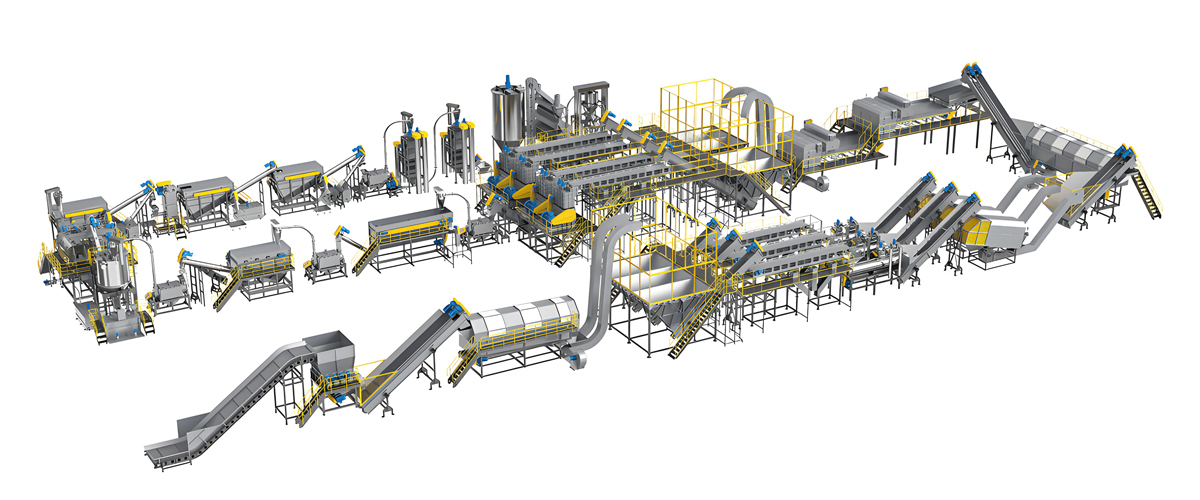
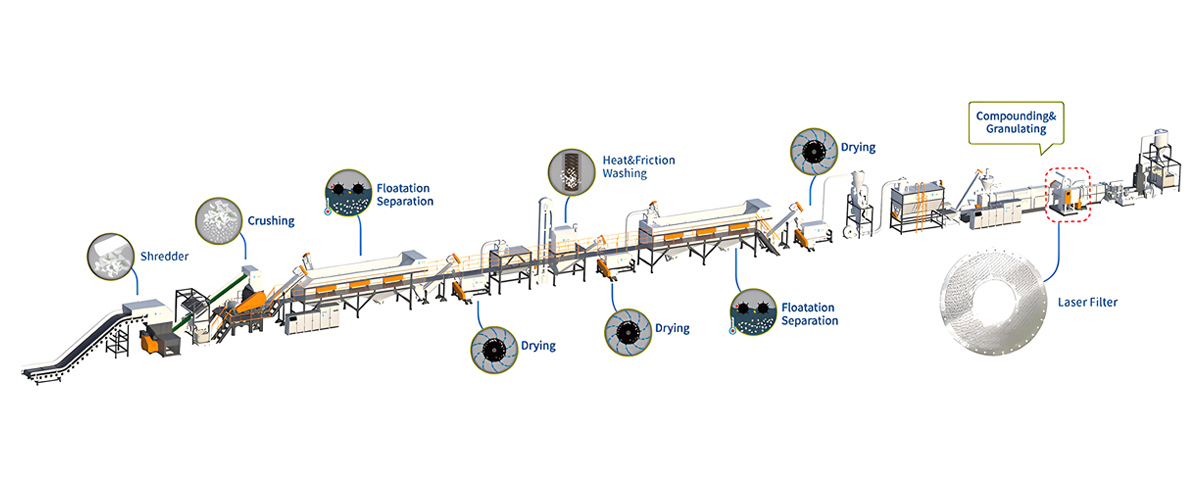
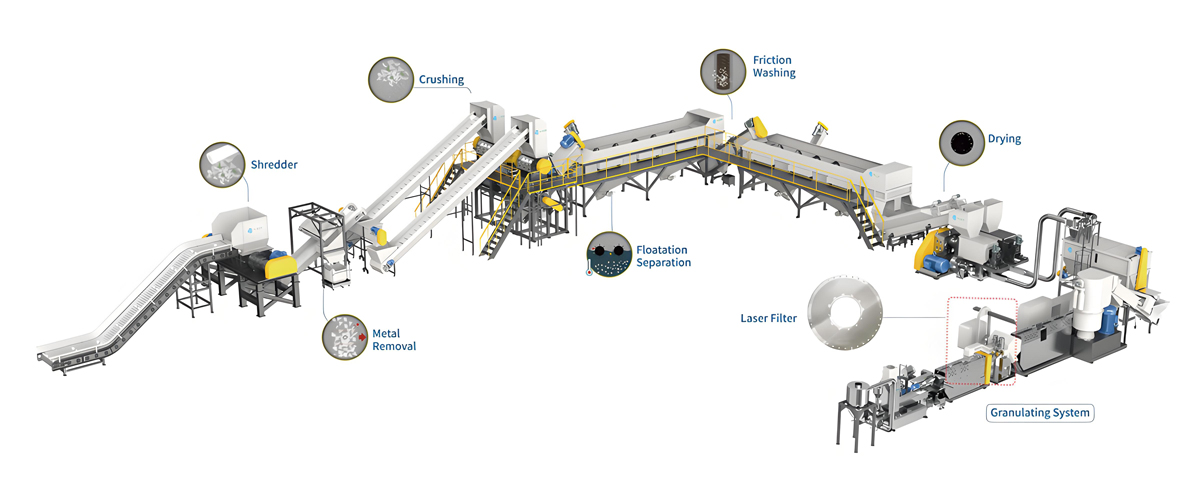
POLYRETEC provided the company with a CE-certified PET bottle recycling line that was designed to meet their specific requirements. The line included a sorting system to separate PET bottles from other types of plastic waste, a shredder to reduce the bottles into flakes, a washing system to remove contaminants, a drying system to remove moisture, an extrusion system to melt and homogenize the PET flakes, and a pelletizing system to cut the extruded strand into pellets. The line was equipped with advanced technologies to ensure high efficiency, reliability, and product quality.
POLYRETEC also provided comprehensive support to the customer, including installation, training, and maintenance services. The company’s team of experts worked closely with the customer to ensure that the line was installed and operated correctly, and they provided ongoing support to resolve any issues and optimize the performance of the equipment.
3. Results
With POLYRETEC’s CE-certified PET bottle recycling line, the German recycling company was able to expand its operations and process large volumes of PET bottles efficiently. The line produced high-quality PET pellets that met the strict standards for food packaging applications, allowing the company to sell the pellets to major food manufacturers. The company also benefited from the energy efficiency of the equipment, which reduced its operational costs and improved its profitability.
The CE certification of the equipment ensured that the line was compliant with EU regulations, making it easy for the company to import and use the equipment in Germany. Additionally, the reliability and performance of the POLYRETEC equipment helped the company enhance its reputation and win new customers, as it was able to provide high-quality recycled plastic products consistently.
Conclusion
Choosing CE-certified plastic recycling equipment is essential for any business that wants to export its products to the EU or other countries that recognize CE certification. CE certification ensures that the equipment meets the highest standards of safety, quality, and performance, and it provides many benefits, including compliance with regulations, enhanced safety, global market access, and customer confidence. When choosing CE-certified equipment, it is important to consider your recycling goals, the type and volume of plastic waste you will be processing, your budget, and your facility requirements. By choosing the right equipment from a reputable manufacturer, you can ensure that your recycling operations are efficient, reliable, and profitable.
POLYRETEC is a leading manufacturer of CE-certified plastic recycling equipment, offering a wide range of products for different types of plastic waste and recycling applications. With its advanced technology, high-quality products, and comprehensive after-sales support, POLYRETEC is a trusted partner for businesses looking to export plastic recycling equipment around the world.