
LDPE film waste is one of the most abundant and problematic plastic waste streams across Mexico, generated massively from agricultural mulch films, industrial packaging films, supermarket plastic bags, construction protective films, and daily consumer plastic packaging. Due to its thin thickness, low rigidity, high impurity adhesion, and easy winding characteristics, traditional simple recycling equipment cannot effectively clean, melt, and reprocess waste LDPE films, resulting in low recycled pellet quality, high waste rate, and poor economic benefits. With the continuous improvement of Mexico’s local plastic environmental protection policies and recycled plastic market standards, high-standard and high-purity LDPE film recycling production lines have become rigid demand for local plastic recycling enterprises.
POLYRETEC Austrian technology plastic recycling line is a professional targeted waste LDPE film recycling and pelletizing system optimized for Mexico’s local waste characteristics, climate environment, and industrial processing conditions. Inheriting rigorous Austrian industrial plastic recycling technology, the equipment solves multiple industry pain points such as difficult cleaning of dirty LDPE films, unstable melt filtration, easy carbonization, and low pellet uniformity. As a professional manufacturer focusing on high-end plastic recycling equipment, POLYRETEC provides complete LDPE film washing, crushing, melting, pelletizing and waste water recycling integrated production lines for Mexican customers. This article comprehensively analyzes Mexico LDPE film waste recycling status, equipment technical advantages, complete production technology, project investment cost, operating profit, application adaptability and equipment selection guidelines, providing detailed and practical reference for local Mexican recycling enterprises and global investors investing in Mexican plastic recycling projects.
1. Current Status and Recycling Difficulties of LDPE Film Waste in Mexico
1.1 Main Sources and Waste Characteristics of Mexican LDPE Film
Mexico has a developed agricultural industry and active light industrial manufacturing and commodity circulation industries, forming a huge output of LDPE film waste every year. Agricultural LDPE mulch films are widely used in northern Mexico’s crop planting areas. After seasonal use, a large number of waste films are mixed with soil, crop residues, and fertilizer impurities, with extremely high dirt content. Industrial packaging LDPE films come from factory product packaging, logistics winding films, and warehouse protective films, mostly mixed with oil stains, dust, and adhesive residues. Civilian waste LDPE films are mainly shopping bags, food packaging films, and daily protective films, featuring complex material mixing and uneven thickness.
Different from European and American high-purity centralized waste materials, Mexican local LDPE film waste has obvious characteristics of high impurity, high moisture, high dirt and mixed materials. Most waste films are randomly recycled without classification, containing a small amount of HDPE impurities, paper scraps, and fiber sundries, which puts forward higher requirements for the impurity removal, cleaning and precise screening capabilities of recycling equipment.
1.2 Local Climate and Operational Challenges for LDPE Recycling
Most regions of Mexico have tropical and subtropical climates with high temperature and high humidity all year round. Waste LDPE films stacked in open air are prone to mildew, moisture absorption and microbial adhesion, further increasing the difficulty of cleaning and processing. In addition, the temperature difference between day and night in some northern regions is large, and the waste film will age and become brittle after long-term sun exposure, which is easy to produce fine debris during recycling and affects the yield of finished pellets. Traditional recycling lines lack targeted dehumidification, high-temperature cleaning and fine impurity removal functions for high-humidity and high-dirt materials, resulting in unqualified purity of recycled LDPE pellets, which cannot enter the high-quality downstream plastic product manufacturing market.
1.3 Industry Pain Points of Traditional LDPE Film Recycling in Mexico
At present, most small and medium-sized recycling enterprises in Mexico adopt traditional simple crushing and granulating equipment, which has many technical bottlenecks in actual production. First, the cleaning capacity is insufficient, unable to remove stubborn oil stains, soil and mildew impurities on the surface of waste films, resulting in dark color and many impurities of recycled pellets. Second, the melting and plasticization system is rough, prone to local overheating and material carbonization, producing a large number of black spots and defective materials. Third, the filtration precision is low, unable to filter tiny particle impurities, resulting in unstable tensile strength and poor uniformity of recycled pellets.
In addition, traditional equipment has low automation, requires a lot of manual sorting and auxiliary operation, high labor cost, low production efficiency, and no supporting wastewater recycling system. The production process produces a large amount of polluted wastewater, which does not meet Mexico’s local environmental protection emission standards, and enterprises face the risk of rectification and shutdown. The comprehensive profit margin of the project is low, restricting the standardized and large-scale development of local LDPE film recycling industry.
2. Core Advantages of POLYRETEC Austrian Technology Recycling Line
2.1 Inherited Austrian Industrial Precision Recycling Technology
POLYRETEC plastic recycling line adopts core Austrian plastic recycling process and mechanical design technology, focusing on high-purity recycling of soft film materials. Different from ordinary domestic simplified equipment, the whole line is designed according to European industrial recycling standards, with optimized structural parameters for LDPE soft film low-density, easy winding and high-impurity characteristics. The screw plasticization system, high-precision filtration system and multi-stage circulating cleaning system all adopt Austrian mature process formulas, which can perfectly adapt to the complex waste LDPE film raw material conditions in Mexico, and stably produce high-transparency, high-purity recycled LDPE pellets.
The equipment abandons the rough processing mode of traditional equipment, and realizes low-temperature uniform plasticization, multi-layer precise filtration and low-loss granulation throughout the whole process, effectively avoiding material degradation and carbonization problems, and the quality of finished recycled pellets reaches the European standard grade, which can be directly used for high-grade film blowing, pipe extrusion and plastic product reproduction.
2.2 Targeted Adaptation to Mexican LDPE Waste Characteristics
Aiming at the characteristics of high dirt, high humidity, mixed impurities and aging brittleness of Mexican local LDPE film waste, POLYRETEC has carried out targeted customized optimization of the production line. The multi-stage high-pressure spraying and friction cleaning system is strengthened to completely remove surface soil, oil stains and mildew residues. The special anti-winding crushing cutter structure solves the problem of easy winding and blockage of soft LDPE films during crushing. The high-efficiency dehumidification and drying module is matched to adapt to the high-humidity climate, ensuring that the moisture content of materials before melting is controlled below 0.03%.
At the same time, the equipment is equipped with a precise material screening and sorting system, which can automatically separate mixed HDPE hard plastic, paper scraps and fiber impurities in waste films, greatly improving the purity of recycled materials, making the finished pellet quality far higher than the processing level of traditional local equipment, and meeting the purchasing standards of high-end downstream manufacturers in Mexico.
2.3 High Automation and Low Labor Operating Advantage
POLYRETEC Austrian technology LDPE film recycling line realizes full-process automated operation from raw material feeding, crushing, cleaning, dewatering, drying, melting extrusion, filtration, granulation to finished product collection. The whole line is equipped with intelligent PLC centralized control system and HMI human-machine operation interface, with simple operation and real-time display of production parameters and equipment operating status. Compared with traditional equipment that requires 4 to 6 people for auxiliary operation, the production line only needs 2 operators for daily patrol and simple management, which greatly reduces the long-term labor cost of Mexican enterprises.
The equipment has automatic fault alarm and overload protection functions, which can effectively avoid equipment damage and production shutdown caused by material blockage and overload operation, ensuring long-term stable continuous production and improving enterprise production efficiency and output capacity.
2.4 Energy-Saving Design and Environmental Protection Compliance
Austrian industrial energy-saving technology is adopted in the whole line, with frequency conversion speed regulation and zoning precise heating system, which can automatically adjust power output according to production load, effectively reducing unit power consumption. Compared with traditional recycling equipment in Mexico, the comprehensive energy consumption per kilogram of finished pellets is reduced by 25% to 30%. The supporting circulating water recycling and wastewater purification system realizes closed-loop recycling of cleaning water, no random discharge of production wastewater, fully complying with Mexico’s local industrial environmental protection emission standards, helping enterprises achieve standardized environmental protection production and avoid policy risks.
2.5 High Yield and Low Material Loss Rate
Through optimized low-temperature plasticization and precise filtration process, the equipment avoids material carbonization and defective products, and the finished product qualification rate is as high as 99%. The intelligent edge material recycling and fine material recovery system recycles fine debris generated by aging and brittle waste films in the production process, and the comprehensive material utilization rate reaches more than 97%. Compared with the traditional equipment material loss rate of 10% to 15%, it greatly reduces the waste of raw materials and significantly improves the economic benefits of enterprise recycling projects.
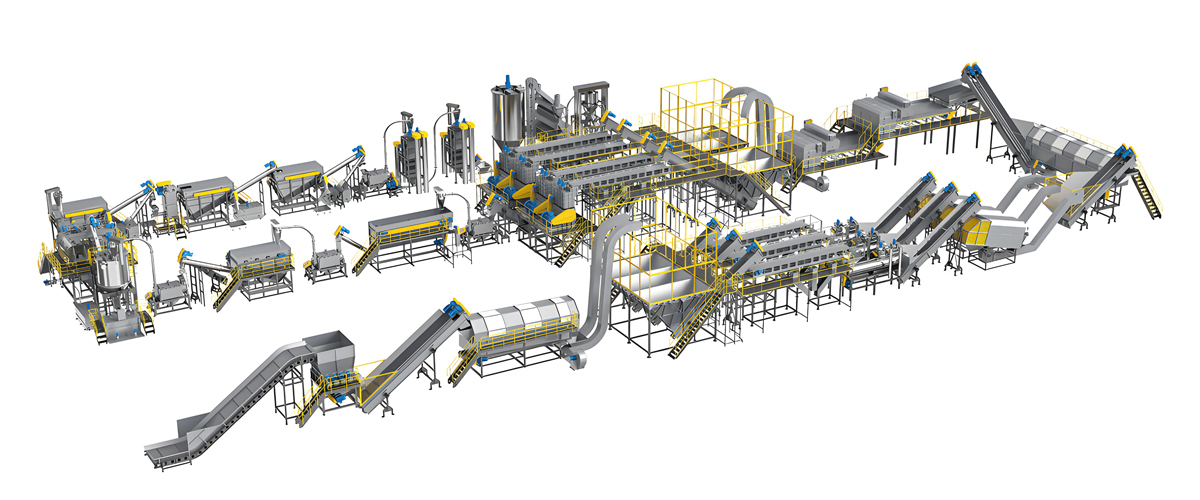
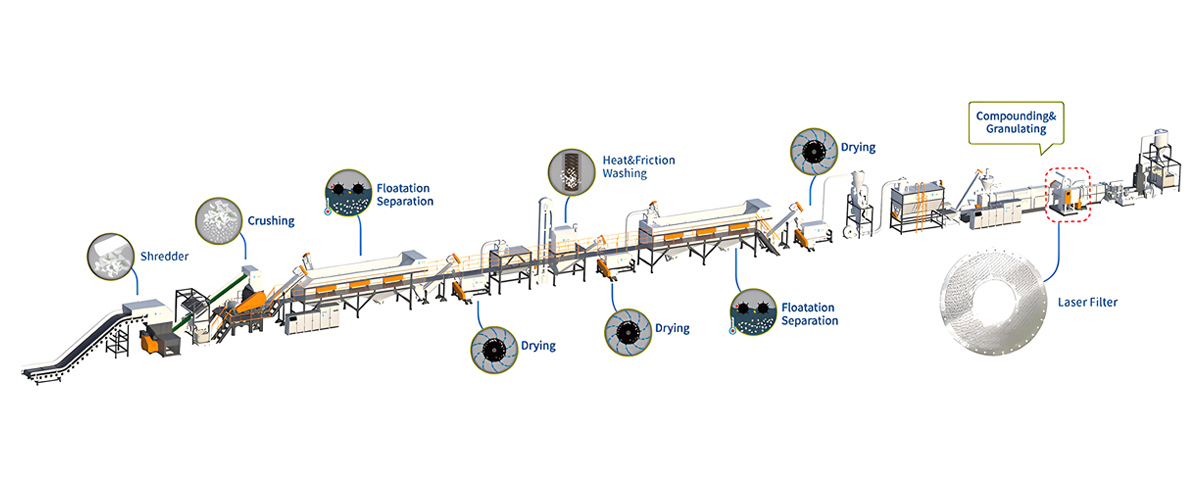
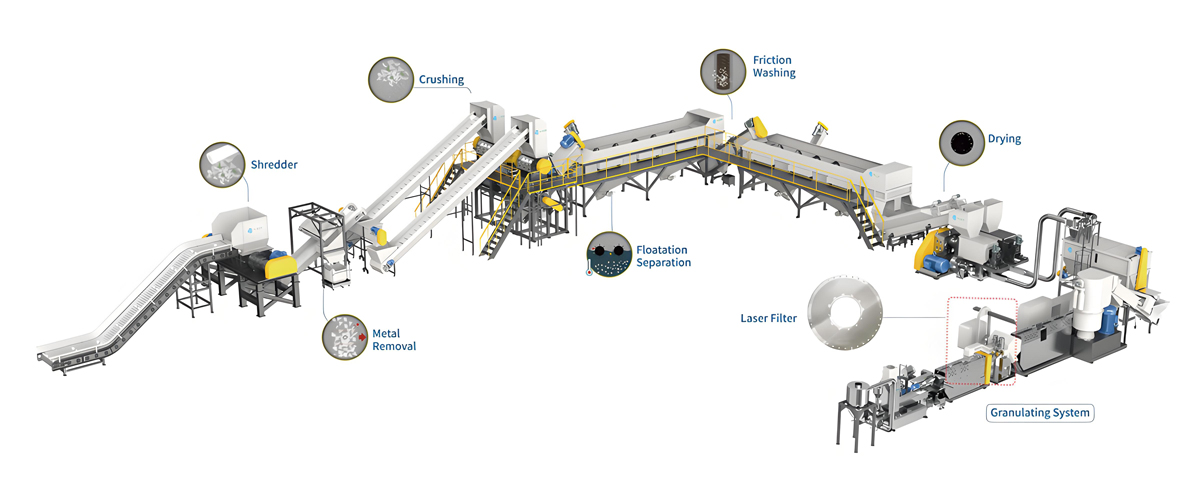
3. Complete Process Flow of POLYRETEC LDPE Film Recycling Line
3.1 Raw Material Sorting and Automatic Feeding
Waste LDPE film raw materials collected from Mexico’s agricultural, industrial and civilian fields are firstly subjected to simple manual coarse sorting to remove large-size hard sundries and non-plastic impurities. Then the materials are sent to the automatic feeding machine, and the uniform and quantitative feeding system avoids material accumulation and blockage, ensuring stable and continuous feeding for subsequent processing. The closed feeding structure avoids dust overflow and keeps the production environment clean.
3.2 Anti-Winding High-Speed Crushing
The waste LDPE films enter the special LDPE soft film crusher. The optimized asymmetric cutter structure and anti-winding baffle design effectively solve the problem of winding and agglomeration of soft films during crushing. The equipment crushes the whole roll and whole piece of waste films into uniform flake materials of fixed size, which is convenient for subsequent full cleaning and impurity removal. The crushing particle size is uniform and adjustable, adapting to different film thickness and impurity conditions of Mexican waste materials.
3.3 Multi-Stage Circulating Friction Cleaning
This is the core process to solve the high dirt problem of Mexican LDPE waste films. The crushed film flakes enter the multi-stage circulating friction cleaning tank in sequence. Through high-speed water flow impact and material friction, the surface soil, dust, mildew and soluble impurities are fully removed. The high-pressure spraying device strengthens the cleaning effect on stubborn oil stains and adhesive residues. The multi-stage circulating water filtration system filters and precipitates impurities in the cleaning water in real time, realizing water recycling and reducing water resource consumption.
3.4 Fine Impurity Removal and Floating Washing
After preliminary cleaning, the film flakes enter the floating washing sorting tank. According to the different density characteristics of LDPE plastic and sundries, heavy impurities such as sand, stone and metal sink to the bottom and are automatically discharged, while light impurities such as paper scraps and fibers float on the water surface and are separated by the slag scraping device. This process effectively removes mixed heterogeneous impurities in Mexican mixed waste films and improves the purity of recycled raw materials.
3.5 High-Speed Dewatering and Constant Temperature Drying
The cleaned film flakes contain a lot of water, especially suitable for high-humidity materials in Mexico. The high-speed centrifugal dewatering machine firstly removes most of the surface moisture, and then the constant-temperature hot air drying system performs deep dehumidification treatment to ensure that the moisture content of the film flakes is controlled below 0.03%. Thoroughly solving the problem of bubble and hollow defects in recycled pellets caused by excessive moisture of raw materials, laying a foundation for high-quality pelletizing.
3.6 Low-Temperature Uniform Melting and Plasticization
The dried high-purity LDPE film flakes enter the high-torque single-screw extruder. Adopting Austrian graded low-temperature plasticization technology, the materials are fully melted and homogenized at a stable temperature, avoiding local overheating and material carbonization. The screw structure is optimized for LDPE low-density materials, ensuring uniform melt viscosity and stable internal molecular structure of the melt, and improving the toughness and gloss of finished pellets.
3.7 Multi-Layer High-Precision Melt Filtration
The molten LDPE melt passes through a multi-stage high-precision filter screen and automatic mesh changing system, which can intercept tiny particle impurities, carbonized points and residual sundries in the melt. The automatic mesh changing device realizes non-stop mesh replacement, avoiding production interruption and improving production continuity. The filtered melt is pure and uniform, without any impurity defects, ensuring the high purity and stable performance of recycled pellets.
3.8 Water Ring Cutting and Cooling Pelletizing
The purified LDPE melt is extruded through the die head and pelletized by high-speed water ring cutting. The circulating water cooling system rapidly cools the pellets to shape, ensuring uniform particle size, smooth surface and consistent density of finished pellets. The finished pellets are automatically screened and collected to remove fine powder and defective particles, and finally obtain high-quality LDPE recycled pellets that meet European and Mexican industrial standards.
4. Complete Equipment Configuration and Unit Price Analysis
POLYRETEC provides two sets of standard Austrian technology LDPE film recycling line configurations for Mexican market demand, including standard conventional type and high-efficiency enhanced type, covering small, medium and large-scale recycling project demands, with transparent and reasonable pricing and complete configuration.
4.1 Standard Configuration LDPE Film Recycling Line (300kg/h)
This configuration is suitable for small and medium-sized recycling enterprises and startup projects in Mexico, with stable hourly output of 280 to 320kg/h, fully meeting the daily recycling processing demand of conventional waste LDPE films. The complete equipment unit composition and price are as follows: automatic feeding system priced at 4,200 to 5,500 US dollars, special soft film crusher priced at 6,800 to 8,200 US dollars, multi-stage circulating friction cleaning system priced at 12,500 to 15,800 US dollars, floating impurity removal sorting system priced at 5,200 to 6,500 US dollars, centrifugal dewatering and constant temperature drying system priced at 7,800 to 9,200 US dollars, core single-screw extrusion plasticization host priced at 26,000 to 32,000 US dollars, automatic melt filtration system priced at 8,500 to 10,800 US dollars, water ring pelletizing and finished product sorting system priced at 9,200 to 11,500 US dollars, and environmental protection circulating water auxiliary system priced at 4,500 to 5,800 US dollars.
The total ex-factory price of the standard configuration production line is 84,700 to 105,300 US dollars. The equipment is compact in structure, low in one-time investment, simple in operation and maintenance, and is the most cost-effective choice for small-scale LDPE film recycling projects in Mexico.
4.2 High-Efficiency Enhanced LDPE Film Recycling Line (500kg/h)
This enhanced configuration is upgraded based on Austrian industrial standard technology, suitable for large-scale standardized recycling factories in Mexico, with hourly output of 480 to 520kg/h, suitable for large-batch and continuous processing of agricultural and industrial waste LDPE films. On the basis of standard configuration, it upgrades high-power crushing system, enhanced multi-stage deep cleaning system, higher-precision automatic mesh changing filtration system and full intelligent unattended control system. The total ex-factory price of the complete enhanced production line is 128,000 to 148,000 US dollars. The equipment has higher production efficiency, better impurity removal effect and more stable product quality, and is suitable for large-scale projects pursuing high output and high pellet quality.
5. Full Project One-Time Investment Cost Analysis
5.1 Main Equipment Fixed Investment
The one-time fixed investment of the project is mainly the complete recycling line equipment cost. The total equipment investment of the standard 300kg/h production line is 84,700 to 105,300 US dollars, and the total equipment investment of the high-efficiency 500kg/h production line is 128,000 to 148,000 US dollars. All equipment prices include factory assembly, full-load debugging and process parameter optimization, without hidden charges, and support standardized complete machine delivery.
5.2 Auxiliary Facility Investment
Mexican recycling projects need to be equipped with factory workshop, raw material storage yard, finished product warehouse, power distribution facilities and water circulation system. The auxiliary facility investment of standard production line is 7,500 to 10,000 US dollars, and the auxiliary investment of high-efficiency enhanced production line is 10,000 to 13,500 US dollars. For enterprises with existing factory buildings and basic supporting facilities, this part of the investment can be reduced by about 30% to 40%.
5.3 Installation, Commissioning and Training Costs
POLYRETEC provides free overseas on-site installation, full-line commissioning, process debugging and professional operator training for Mexican customers. Professional technical engineers complete equipment docking, trial production and parameter optimization on site to ensure that the equipment reaches the standard output and finished pellet quality. Customers do not need to pay additional service fees, effectively saving project launch costs and technical training costs.
5.4 Total Project Investment Summary
The total one-time investment of the standard LDPE film recycling project is 92,200 to 115,300 US dollars. The total one-time investment of the high-efficiency enhanced project is 138,000 to 161,500 US dollars. The investment covers all costs required for formal production launch, realizing one-stop project delivery and rapid put into production.
6. Long-Term Operating Cost and Profit Benefit Analysis
6.1 Annual Power Consumption Cost
The standard 300kg/h production line has an hourly power consumption of 90 to 105kWh. Calculated based on 16-hour daily production and 300-day annual working hours, the annual total power consumption is 432,000 to 504,000kWh. Based on the average industrial electricity price in Mexico of 0.11 US dollars/kWh, the annual electricity cost is 47,520 to 55,440 US dollars. The high-efficiency 500kg/h production line has an hourly power consumption of 140 to 160kWh, with an annual electricity cost of 73,920 to 86,400 US dollars. Thanks to Austrian energy-saving frequency conversion technology, the unit power consumption is significantly lower than that of local traditional equipment.
6.2 Raw Material and Auxiliary Material Cost
The recycling and purchase cost of waste LDPE film raw materials in Mexico is 0.25 to 0.35 US dollars per kilogram. The auxiliary materials such as filter screens and cleaning additives consumed in the production process have a comprehensive cost of about 0.02 US dollars per kilogram of finished products. With the equipment’s 97% ultra-high material utilization rate, the raw material waste is extremely low, and the comprehensive unit raw material cost is far lower than the traditional recycling process.
6.3 Labor and Maintenance Cost
The highly automated production line only needs 2 workers for daily operation and patrol management. Calculated based on the average local monthly salary of 1,600 US dollars, the annual labor cost is 76,800 US dollars. The equipment has stable mechanical performance and low failure rate. The annual replacement cost of vulnerable parts and daily maintenance cost is 3,200 to 4,500 US dollars. The long-term operating cost is controllable and stable, with no excessive hidden expenditure.
6.4 Annual Production Capacity and Gross Profit Analysis
The standard production line has an annual output of 840 to 960 tons of high-quality LDPE recycled pellets, and the high-efficiency enhanced line has an annual output of 1,440 to 1,560 tons. The market sales price of high-purity LDPE recycled pellets in Mexico is 0.85 to 1.1 US dollars per kilogram. After deducting raw materials, electricity, labor and maintenance costs, the unit gross profit is 0.48 to 0.65 US dollars per kilogram. The annual gross profit of the standard production line is 403,200 to 624,000 US dollars, and the annual gross profit of the high-efficiency production line is 691,200 to 1,014,000 US dollars.
6.5 Investment Payback Period Evaluation
After deducting equipment depreciation and other comprehensive costs, the annual net profit of the standard LDPE film recycling project is 120,000 to 180,000 US dollars, with an investment payback period of 7 to 10 months. The annual net profit of the high-efficiency enhanced project is 260,000 to 330,000 US dollars, with a payback period of only 6 to 8 months. The equipment has a service life of more than 15 years, with long-term stable profit output and extremely high project investment value, which is very suitable for plastic recycling investment in Mexico.
7. Adaptability of POLYRETEC Line to Mexican LDPE Recycling Projects
7.1 Adaptation to Local Raw Material Conditions
Aiming at the high dirt, high humidity and mixed impurity characteristics of Mexican agricultural and industrial waste LDPE films, POLYRETEC Austrian technology recycling line adopts multi-stage deep cleaning and precise impurity removal design, which can completely process unclassified mixed waste films. The finished pellet quality is stable and up to standard, solving the industry problem that traditional equipment can only process high-purity materials and cannot adapt to local complex waste raw materials.
7.2 Adaptation to Local Climate and Environment
The equipment is equipped with high-efficiency dehumidification and drying system and closed production structure, which can effectively resist the interference of high temperature and high humidity climate in Mexico, avoid material moisture regain and mildew in the production process, and ensure stable product quality in all seasons. The equipment shell and key components are made of anti-corrosion and rust-proof materials, adapting to the humid coastal climate of Mexico, with long service life and low failure rate.
7.3 Compliance with Local Environmental Protection Policies
The supporting circulating water closed-loop recycling system and dust removal and purification device of the production line realize zero discharge of production wastewater and low dust emission, fully meeting Mexico’s local environmental protection supervision standards. The low-carbon energy-saving design reduces enterprise energy consumption and carbon emission, conforms to the local sustainable development policy of plastic recycling and resource regeneration, and helps enterprises obtain standardized production qualifications and policy support.
7.4 Downstream Market Matching Advantage
The high-purity LDPE recycled pellets produced by POLYRETEC recycling line can be widely used in local Mexican film blowing, plastic molding, packaging product manufacturing and other industries, with wide downstream market demand and stable sales channels. High-quality recycled pellets have higher market premium than ordinary low-purity pellets, helping enterprises obtain higher profit margins and market competitiveness.
8. Equipment Selection Guidelines for Mexican LDPE Film Recycling Projects
8.1 Prioritize Professional LDPE Soft Film Targeted Equipment
Many general-purpose plastic recycling equipment on the market are suitable for hard materials such as plastic bottles and pipes, and cannot adapt to the soft, easy-winding and high-impurity characteristics of LDPE films. Mexican recycling enterprises must prioritize professional soft film special recycling lines with Austrian mature technology, which have targeted optimization in crushing anti-winding, deep cleaning and low-temperature plasticization to ensure production efficiency and product quality.
8.2 Focus on Full-Line Environmental Protection Configuration
With the increasingly strict environmental protection supervision in Mexico, incomplete environmental protection configuration of equipment will lead to production suspension and rectification. When selecting equipment, it is necessary to confirm whether it is equipped with complete circulating water recycling system, sewage purification device and dust removal equipment to ensure that the production process meets local environmental protection standards and avoid policy risks.
8.3 Reasonably Match Production Capacity According to Project Scale
Small and medium-sized startup projects are suitable for 300kg/h standard configuration lines with low initial investment and low operating risk. Large-scale standardized factories with stable raw material supply and customer resources can choose 500kg/h high-efficiency enhanced lines to maximize output profit. Avoid blind pursuit of high output leading to idle equipment or insufficient capacity affecting order delivery.
8.4 Pay Attention to Manufacturer’s Technical Support and After-Sales Service
LDPE film recycling process has high requirements for parameter debugging and process matching. Local after-sales service and technical support capabilities of manufacturers directly determine the long-term stable operation of equipment. It is necessary to select professional manufacturers with overseas project service experience, complete technical guidance and long-term after-sales guarantee to solve equipment operation and process optimization problems in a timely manner.
9. POLYRETEC Brand Service Guarantee for Mexican Projects
As a professional plastic recycling equipment manufacturer with rich overseas project experience, POLYRETEC has been committed to providing high-standard Austrian technology recycling equipment and one-stop overall solutions for global plastic recycling enterprises. For Mexican LDPE film recycling projects, POLYRETEC provides full-cycle professional services from pre-sales project evaluation, personalized scheme design, equipment production and debugging, on-site installation and commissioning, technical training to after-sales long-term maintenance.
In the pre-sales stage, professional technical teams formulate targeted equipment configuration and process schemes according to customers’ raw material conditions, production site, output demand and budget, and provide accurate project investment and profit analysis reports to help customers make scientific investment decisions. Before delivery, all equipment undergoes strict factory full-load trial production and quality inspection to ensure that all performance indicators meet Austrian industrial standards and Mexican project application requirements.
After the equipment arrives at the site, POLYRETEC overseas engineers provide on-site installation, line docking, process parameter debugging and operator professional training to help customers quickly master equipment operation, material processing and quality control skills and realize rapid mass production. The company provides 24-hour remote technical support, regular equipment maintenance reminders and lifelong technical upgrade services. The whole machine enjoys a 2-year free warranty and lifelong maintenance services, effectively reducing the operating risk and maintenance cost of Mexican customer projects.
Conclusion
LDPE film waste recycling is a high-demand and high-profit environmental protection industry in Mexico. Restricted by raw material characteristics, climate environment and technical conditions, traditional low-end recycling equipment cannot meet the local standardized and high-quality recycling production needs. POLYRETEC Austrian technology plastic recycling line breaks through the technical bottlenecks of traditional equipment, with targeted adaptation to Mexican high-dirt and high-humidity LDPE waste materials, full-process automated production, high material utilization rate, low energy consumption and environmental compliance advantages.
The equipment has transparent project investment cost, short payback period and stable long-term profit, which can stably produce high-purity high-quality LDPE recycled pellets that meet local market standards. For Mexican plastic recycling enterprises and overseas investors investing in Mexican recycling projects, POLYRETEC professional LDPE film recycling production line is a reliable and cost-effective equipment solution, which can effectively improve project production efficiency and product competitiveness, help enterprises seize the development dividend of Mexico’s plastic resource recycling industry, and realize sustainable and profitable green production.