
Rigid HDPE oil bottles are one of the most common post-consumer plastic waste materials globally, widely used for edible oil, engine oil, lubricating oil, and industrial grease packaging. Due to long-term adhesion of viscous oil stains, residual grease, colloidal impurities and stubborn dirt, waste HDPE oil bottles are far more difficult to recycle than ordinary water bottles and daily chemical plastic containers. Unprocessed HDPE oil bottle waste cannot be directly pelletized or reused, as residual oil contaminants will seriously affect the purity, tensile strength and surface quality of recycled plastic pellets, resulting in low-value recycled products or even completely unusable waste materials.
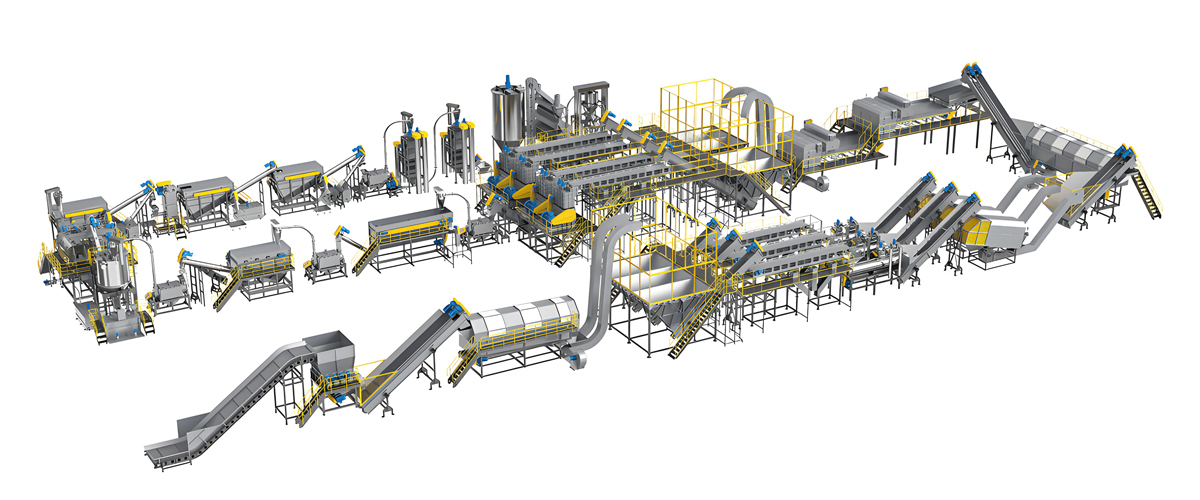
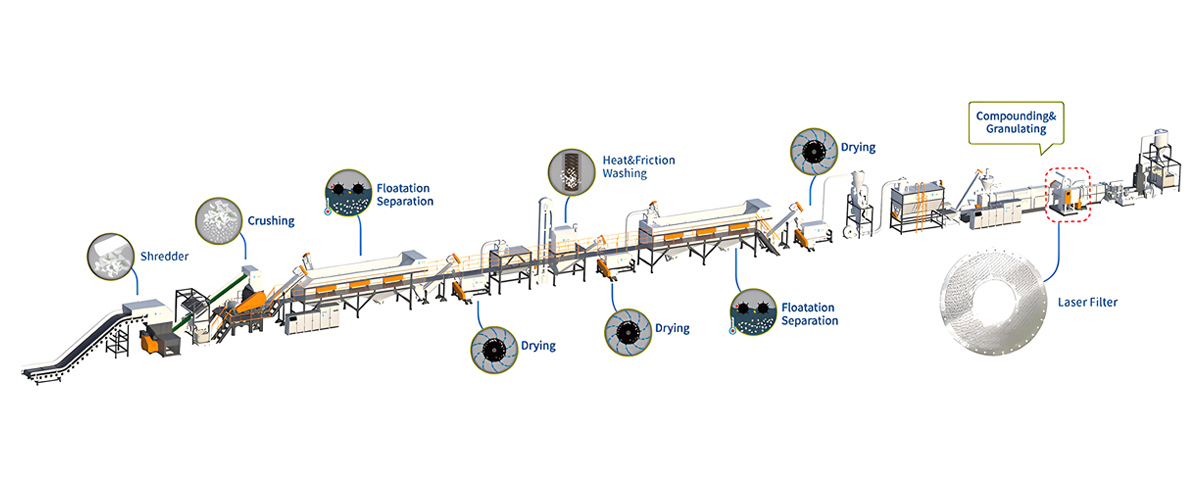
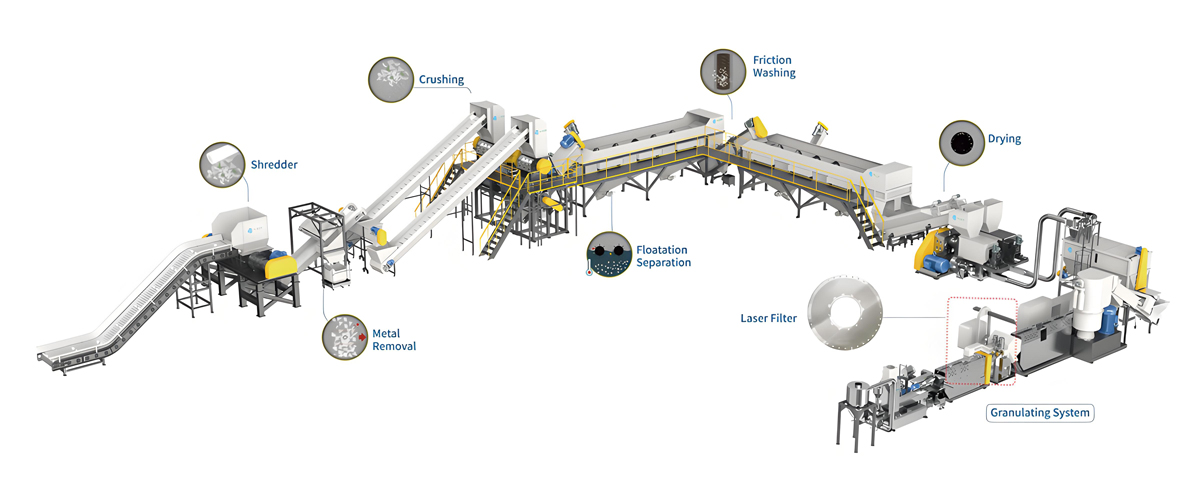
A professional high-efficiency oil bottle washing line is the core equipment to realize clean recycling and high-value reuse of rigid HDPE oil bottle waste. As a professional manufacturer dedicated to plastic waste recycling and washing equipment, POLYRETEC provides customized standard and high-end HDPE oil bottle washing lines, which are specially optimized for viscous oil pollution, stubborn residual grease and complex impurity cleaning scenarios. This article comprehensively introduces the working principle, core equipment composition, process flow, performance advantages, market price, project investment cost, operation benefit and selection standards of the best POLYRETEC HDPE oil bottle washing line, providing systematic and detailed reference for plastic recycling enterprises to invest in HDPE rigid waste recycling projects.
1. Industry Pain Points of Traditional HDPE Oil Bottle Waste Recycling
1.1 Unique Pollution Characteristics of Waste HDPE Oil Bottles
Different from clean HDPE plastic waste such as daily chemical bottles and drinking water bottles, waste HDPE oil bottles have typical viscous pollution characteristics. The inner wall of the bottle adheres to residual lubricating oil, edible grease and oxidized colloids, which have strong adhesion and are insoluble in conventional cold water washing. Long-term stacked waste oil bottles will also produce oil dirt oxidation, mold stains and dust mixed pollution, forming composite dirt that is difficult to remove. In addition, most waste oil bottles are mixed with labels, glue residues, iron caps, sediment and other impurities in the recycling process, further increasing the difficulty of cleaning and sorting.
Rigid HDPE material has dense molecular structure and strong oil adsorption capacity. If the residual oil rate after washing is too high, the recycled HDPE flakes will have yellowing, odor and poor compatibility problems, which cannot be used for high-end product production such as blow molding and injection molding, and can only be sold at low prices for low-grade plastic products, greatly reducing the economic benefits of recycling projects.
1.2 Defects of Ordinary Traditional Washing Equipment
Most ordinary plastic washing lines on the market are designed for ordinary clean plastic waste, lacking targeted cleaning procedures for oil pollution. Traditional single-stage flushing and friction washing equipment can only remove surface floating dust and loose dirt, but cannot completely strip stubborn residual oil and colloidal impurities on the inner wall of oil bottles. The recycled flakes processed by ordinary equipment have high residual oil rate, unstable purity and high odor residue, with a product qualification rate of less than 70% for high-end recycling standards.
In addition, traditional washing lines have unreasonable process layout, serious water waste, no centralized sewage treatment and recycling system, high daily operation cost and non-compliant environmental protection indicators. The equipment has low automation degree, requiring a large number of manual sorting and auxiliary operations, with high labor cost and low production efficiency, which is no longer suitable for large-scale, standardized and high-value HDPE oil bottle recycling projects.
1.3 Market Demand for Professional HDPE Oil Bottle Washing Lines
With the continuous improvement of global plastic recycling environmental protection policies and the upgrading of recycled plastic product standards, the market has higher and higher requirements for the cleanliness and purity of recycled HDPE flakes. High-purity oil-free HDPE recycled flakes can be widely used in new plastic bottle production, plastic pipe manufacturing, auto parts and high-grade plastic products, with a profit margin more than twice that of low-purity recycled materials. Therefore, professional, high-efficiency and energy-saving targeted oil bottle washing lines have become the essential core equipment for HDPE rigid plastic waste high-value recycling projects.
2. Overview of POLYRETEC HDPE Oil Bottle Washing Line Core Advantages
2.1 Targeted Process Optimization for Oil Pollution Cleaning
The POLYRETEC HDPE oil bottle washing line is independently developed and optimized for the cleaning pain points of rigid oil-contaminated plastic waste. It adopts a professional composite cleaning process of pre-degreasing, high-temperature soaking, strong friction washing, fine rinsing and oil-water separation, which completely solves the problem of difficult removal of stubborn residual oil and colloidal dirt. Compared with ordinary washing lines, the residual oil removal rate is increased by more than 95%, and the final recycled HDPE flakes have no visible oil stains, no peculiar smell and stable purity, fully meeting global high-end recycled plastic raw material standards.
2.2 High Automation and Integrated Production Design
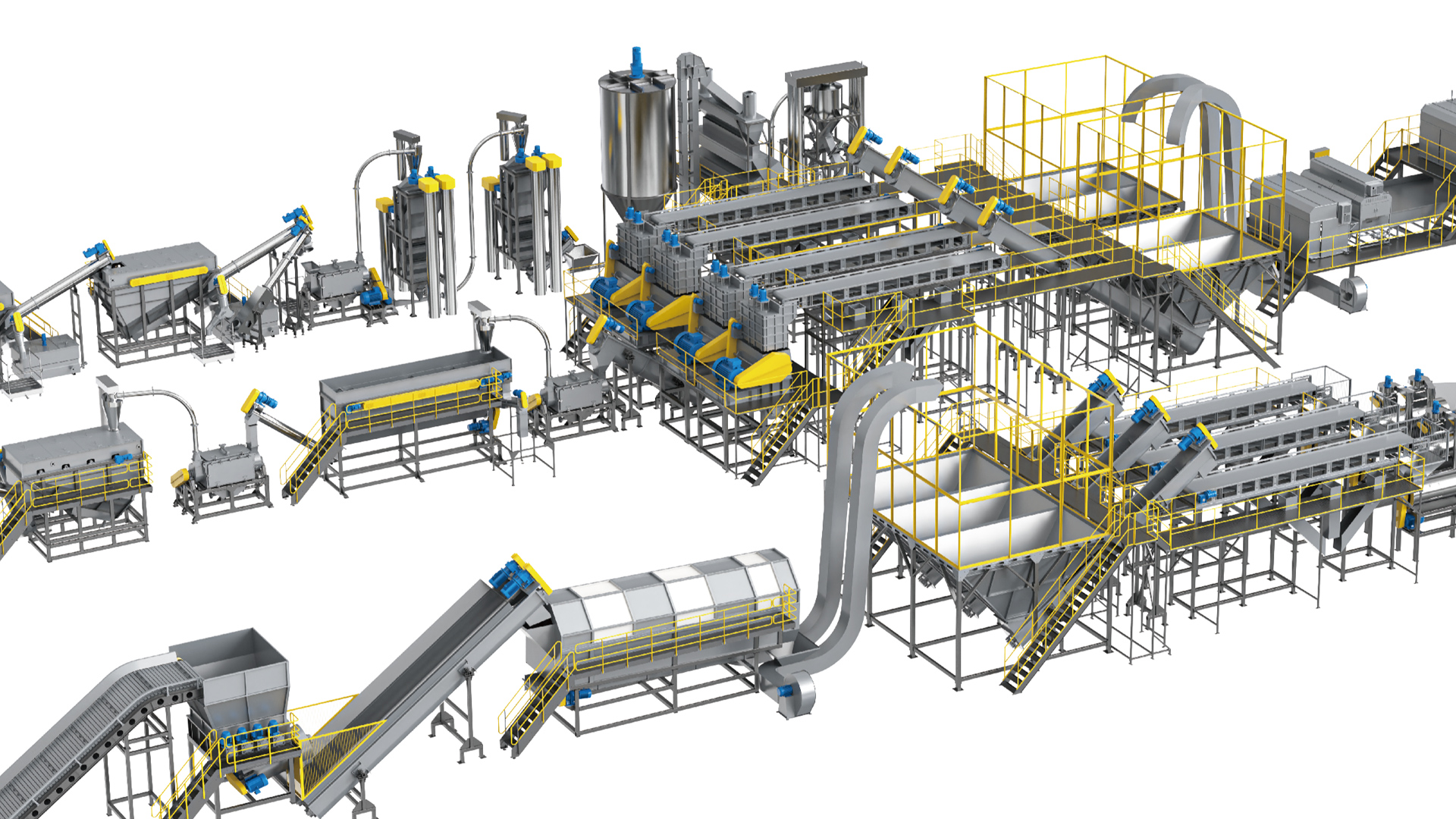
The whole POLYRETEC washing line realizes fully automated continuous operation from raw material feeding, crushing, degreasing, washing, sorting, rinsing, dewatering to finished product collection. It is equipped with intelligent automatic label removal system, iron impurity sorting device and precise floating and sinking separation module, which greatly reduces manual intervention. The integrated compact process layout saves factory space, improves production continuity, and effectively solves the problems of low efficiency and high labor cost of traditional decentralized washing equipment.
2.3 Energy-Saving, Water-Saving and Environmental Protection Performance
Equipped with a professional circulating water filtration and recycling system, the POLYRETEC HDPE oil bottle washing line realizes repeated recycling of cleaning water, reducing water consumption by more than 70% compared with traditional equipment. The independent oil-water separation device can effectively separate and recover waste oil in cleaning sewage, realizing resource secondary utilization and avoiding environmental pollution caused by random discharge of oily sewage. The whole line meets international environmental protection emission standards, with low noise and low energy consumption during operation, which is suitable for standardized factory production.
2.4 Stable Operation and Low Maintenance Cost
All core components of the washing line adopt thickened wear-resistant stainless steel materials and high-quality brand power parts, with strong corrosion resistance and wear resistance, adapting to long-term high-load oily sewage washing working conditions. The equipment has a simple and reasonable structural design, low failure rate and convenient daily maintenance, which can maintain stable continuous operation for a long time and reduce the long-term operation and maintenance cost of the project.
3. Complete Process Flow of POLYRETEC HDPE Oil Bottle Washing Line
3.1 Raw Material Pre-Sorting and Feeding Stage
Waste rigid HDPE oil bottles are firstly manually and mechanically pre-sorted to remove non-plastic impurities such as stones, metal blocks and garbage, as well as non-HDPE mixed plastic materials, ensuring the purity of subsequent processing raw materials. The sorted waste oil bottles are evenly and quantitatively fed into the production line through an automatic conveyor belt, avoiding material accumulation and equipment overload operation, and laying a foundation for stable and continuous cleaning work.
3.2 Bottle Crushing and Primary Dust Removal Stage
The raw materials enter the special plastic crusher for oil bottle waste. The optimized blade structure realizes uniform crushing of rigid HDPE oil bottles into 12-18mm uniform plastic flakes, which fully disperses the oil stains and dirt on the bottle body and inner wall, increasing the contact area between materials and cleaning agents. The crushing unit is equipped with a high-pressure dust removal device, which removes surface floating dust, sediment and loose impurities generated during crushing, completing preliminary cleaning of materials.
3.3 High-Temperature Chemical Degreasing and Soaking Stage
This is the core procedure to remove stubborn residual oil. The crushed HDPE flakes are sent to a high-temperature soaking tank with professional environmental protection degreasing agent. The constant temperature heating system maintains the water temperature at 65-75 degrees Celsius, which rapidly decomposes and peels off viscous grease, oxidized colloids and residual engine oil on the surface of the flakes. The long-time circulating soaking and stirring mode ensures that every piece of material fully contacts with the degreasing liquid, thoroughly solving the problem of internal residual oil that cannot be cleaned by conventional washing methods.
3.4 Strong Friction Washing and Label Removal Stage
After high-temperature degreasing and soaking, the materials enter the high-speed friction washing machine. Through high-speed material friction and water flow scouring, the residual degreasing dirt, label paper and glue residues on the surface of HDPE flakes are completely stripped. The matching automatic label separation and blowing device efficiently removes floating label fragments and light impurities, avoiding label residue mixed in finished flakes and affecting product purity. This procedure further improves the cleaning cleanliness of HDPE materials.
3.5 Floating and Sinking Separation and Fine Sorting Stage
HDPE material has a density lower than water and belongs to floating plastic, while impurities such as sediment, metal fragments and heavy dirt sink to the bottom. The professional floating and sinking separation tank of POLYRETEC accurately separates HDPE flakes from heavy impurities. At the same time, the equipped magnetic iron remover thoroughly adsorbs iron impurities mixed in the materials, ensuring that the finished HDPE flakes do not contain metal particles, avoiding equipment wear in subsequent pelletizing processing and improving the purity of recycled materials.
3.6 Multi-Stage Fresh Water Rinsing Stage
To avoid degreasing agent residue affecting the quality of recycled materials, the materials after rough washing and separation enter the multi-stage circulating fresh water rinsing system. The multi-group counter-current rinsing mode completely washes away residual cleaning agent and tiny dirt particles on the surface of HDPE flakes, ensuring the surface cleanliness of the materials. The circulating water system realizes water recycling after filtration, which greatly saves water resources and reduces production costs.
3.7 High-Speed Dewatering and Drying Stage
The cleaned HDPE wet flakes are sent to the high-speed centrifugal dewatering machine, which removes more than 98% of surface moisture through high-speed rotation. The materials after dewatering enter the hot air drying system for secondary drying, completely removing residual moisture, ensuring that the moisture content of finished HDPE flakes is controlled below 0.5%, meeting the standard of direct pelletizing and reprocessing, and avoiding material mildew and yellowing caused by excessive moisture.
3.8 Finished Product Collection and Packaging Stage
The final high-purity oil-free HDPE dry flakes are automatically conveyed to the finished product silo for centralized collection and packaging. The whole process is closed and automated, avoiding secondary pollution of materials. The finished HDPE flakes have uniform texture, no oil stain, no peculiar smell and high purity, which can be directly used for high-value recycling processing such as plastic pelletizing and product remolding.
4. Core Equipment Composition of POLYRETEC HDPE Oil Bottle Washing Line
4.1 Automatic Feeding Conveyor
The customized anti-slip and anti-corrosion conveyor belt is specially designed for heavy and dirty waste oil bottle raw materials. It realizes uniform and stable automatic feeding, with adjustable feeding speed to match the subsequent processing rhythm of the washing line. The equipment is equipped with a protective baffle to prevent material falling, reducing manual feeding labor and improving feeding efficiency. The market matching price of a single set of feeding conveyor is 1,800-2,500 US dollars.
4.2 Special HDPE Oil Bottle Crusher
Adopting high-hardness alloy steel blades, the crusher has strong cutting force and wear resistance, which can stably crush rigid thick-walled HDPE oil bottles without blade jamming and material sticking. The optimized crushing cavity structure ensures uniform flake size, which is convenient for subsequent full cleaning. The equipment is equipped with a closed dust removal structure to reduce dust pollution. The price of the special crusher supporting the standard washing line is 6,500-7,800 US dollars.
4.3 High-Temperature Degreasing Soaking Tank
Made of thickened 304 stainless steel, the soaking tank is corrosion-resistant to acidic and alkaline degreasing agents and high-temperature water. The intelligent constant temperature heating system realizes precise temperature control, with uniform internal heating and stable degreasing effect. The built-in circulating stirring device avoids material accumulation and improves degreasing efficiency. The price of the standard high-temperature degreasing tank is 5,200-6,000 US dollars.
4.4 High-Speed Friction Washing Machine
The core cleaning equipment of the production line adopts a multi-blade high-speed rotating friction structure, with strong dirt stripping capacity, which can efficiently remove oil dirt, glue residue and label residues on the surface of HDPE flakes. The fully sealed structure prevents water splashing, and the internal wear-resistant lining prolongs the service life of the equipment. The price of a single high-efficiency friction washing machine is 7,000-8,500 US dollars.
4.5 Floating and Sinking Separation Tank and Magnetic Separator
The integrated floating and sinking separation tank realizes automatic separation of plastic flakes and heavy impurities, with large processing capacity and stable separation effect. The matching high-strength magnetic separator can completely adsorb tiny iron impurities, ensuring high material purity. The combined price of the separation tank and magnetic separation equipment is 4,800-5,500 US dollars.
4.6 Multi-Stage Circulating Rinsing Equipment
The counter-current circulating rinsing system saves water consumption while ensuring thorough cleaning. The multi-stage filtering device inside the equipment realizes repeated recycling of cleaning water, with high water purification degree and low operation cost. The price of the complete multi-stage rinsing unit is 5,500-6,200 US dollars.
4.7 Centrifugal Dewatering and Hot Air Drying Machine
The high-speed centrifugal dewatering machine has fast dewatering speed and high dewatering rate, matching with the intelligent hot air circulating drying system to realize low-temperature uniform drying of materials, avoiding material deformation and yellowing caused by high-temperature drying. The combined price of dewatering and drying equipment is 8,200-9,500 US dollars.
4.8 Sewage Circulation and Oil-Water Separation System
As a supporting environmental protection core equipment, the system filters, purifies and recycles cleaning sewage, and separates and recycles waste oil in sewage, which not only meets environmental protection discharge standards, but also realizes secondary resource utilization. The price of the complete sewage treatment and oil-water separation unit is 9,000-11,000 US dollars.
5. Complete Price and One-Time Investment Cost Analysis
5.1 Standard Complete Line Market Price Quotation
POLYRETEC provides two mainstream configuration specifications of HDPE oil bottle washing lines to meet different production scale demands. The small standard washing line with an hourly output of 300-500kg is suitable for small and medium-sized recycling factories, with a complete set of equipment ex-factory price of 48,000-52,000 US dollars. The medium-sized high-efficiency washing line with an hourly output of 800-1000kg is suitable for large-scale standardized recycling projects, with a complete set of equipment price of 68,000-75,000 US dollars. All prices include complete core equipment, assembly debugging and basic technical guidance, with no hidden charges.
5.2 Auxiliary Supporting Facility Investment
In addition to the main washing line equipment, the project also needs supporting auxiliary facilities, including factory foundation transformation, power distribution system, water supply and drainage pipeline layout, finished product packaging equipment and material storage silo, with a total auxiliary investment of 5,000-8,000 US dollars. For projects requiring fully automatic feeding and intelligent sorting upgrades, the additional customized upgrade cost is 3,000-5,000 US dollars.
5.3 Installation, Commissioning and Training Cost
POLYRETEC provides free professional on-site installation, commissioning and operator technical training services for all complete line orders. Customers do not need to pay additional labor fees, only need to bear the on-site infrastructure construction cost, which belongs to one-time fixed investment and has no subsequent repeated expenditure.
5.4 Total One-Time Project Investment Summary
The total one-time investment of a small 300-500kg/h HDPE oil bottle washing production line is 53,000-60,000 US dollars. The total investment of a medium-sized 800-1000kg/h high-efficiency production line is 76,000-88,000 US dollars. The total investment covers all equipment, auxiliary facilities and project preparation costs required for formal production, realizing one-stop project launch.
6. Daily Operation, Maintenance and Recurring Cost Analysis
6.1 Power Consumption Cost
The small washing line has a total installed power of about 85kW, with an actual hourly power consumption of 55-60kWh. Calculated based on 20-hour daily production and 300-day annual working hours, the annual power consumption is 330,000-360,000kWh. According to the average global industrial electricity price of 0.12 US dollars per kWh, the annual electricity cost is 39,600-43,200 US dollars. The medium-sized high-efficiency line has an actual hourly power consumption of 90-100kWh, with an annual electricity cost of 64,800-72,000 US dollars. The energy-saving circulating design of POLYRETEC equipment reduces power consumption by more than 20% compared with traditional washing lines.
6.2 Water and Chemical Consumable Cost
Thanks to the circulating water recycling system, the daily water consumption of the small washing line is only 3-5 tons, and the annual water cost is about 1,800-2,500 US dollars. The main consumable is environmental protection degreasing agent, with a daily consumption cost of 15-20 US dollars and an annual consumable cost of 4,500-6,000 US dollars. The medium-sized production line has an annual water and chemical consumable cost of 8,000-10,000 US dollars, which is far lower than the operation cost of traditional water-wasting equipment.
6.3 Labor Operation Cost
The highly automated POLYRETEC washing line requires only 2 operators per shift to complete raw material auxiliary sorting, equipment patrol inspection and finished product collection work. Calculated based on double-shift production and an average monthly salary of 1,800 US dollars per worker, the annual labor cost of a single production line is 86,400 US dollars. Compared with traditional equipment requiring 4-6 workers, it saves more than 50% of labor cost every year.
6.4 Annual Equipment Maintenance Cost
The equipment has stable operation and low failure rate. The daily maintenance only includes blade cleaning, pipeline dredging and fastener inspection. The annual maintenance cost mainly includes vulnerable parts replacement such as crusher blades, filter screens and sealing rings, with a total annual maintenance investment of 2,200-3,000 US dollars for small lines and 3,500-4,500 US dollars for medium-sized lines. The maintenance cost is far lower than that of ordinary washing equipment on the market.
7. Production Capacity and Investment Return Benefit Analysis
7.1 Annual Stable Production Capacity
The small 300-500kg/h HDPE oil bottle washing line has an annual processing capacity of 1,800-3,000 tons of waste HDPE oil bottle materials. The medium-sized 800-1000kg/h high-efficiency line can process 4,800-6,000 tons of waste materials annually. The qualified rate of finished high-purity HDPE flakes processed by POLYRETEC equipment is as high as 99%, with almost no waste material loss.
7.2 Unit Product Profit Margin
The comprehensive processing cost of one ton of HDPE oil bottle recycled flakes (including electricity, water, labor and equipment depreciation) is 180-220 US dollars. The market wholesale price of high-purity oil-free HDPE recycled flakes is 380-450 US dollars per ton, with a gross profit of 160-270 US dollars per ton. Compared with low-purity washed flakes processed by traditional equipment, the unit profit is increased by more than 80 US dollars, with extremely prominent profit advantages.
7.3 Investment Payback Period Evaluation
The small HDPE oil bottle washing line can achieve an annual net profit of 280,000-350,000 US dollars after deducting all operating costs, and the total one-time investment can be fully recovered within 10-12 months. The medium-sized high-efficiency production line has an annual net profit of 750,000-850,000 US dollars, with an investment payback period of only 11-13 months. The equipment has a service life of more than 15 years, which can bring stable and long-term high profit returns for recycling enterprises.
8. Key Selection Standards for HDPE Oil Bottle Washing Lines
8.1 Targeted Oil Pollution Cleaning Capacity
When selecting an oil bottle washing line, the core indicator is the removal capacity of stubborn residual oil and colloidal dirt. Ordinary universal washing lines cannot meet the cleaning standards of oily plastic waste. It is necessary to select professional equipment with high-temperature degreasing, strong friction washing and oil-water separation functions to ensure that the finished flakes have no oil residue and peculiar smell and meet high-end recycling standards.
8.2 Automation and Production Stability
High automation can effectively reduce labor costs and improve production efficiency and product consistency. Excellent washing line equipment should have stable continuous operation capacity, low failure rate and uniform material cleaning effect, avoiding batch quality deviation caused by unstable equipment operation.
8.3 Environmental Protection and Energy-Saving Performance
Qualified oil bottle washing equipment must be equipped with complete sewage circulation and oil-water separation systems to meet environmental protection discharge standards and avoid policy risks. At the same time, water-saving and power-saving design can greatly reduce long-term operation costs and improve project comprehensive profit margins.
8.4 Manufacturer Strength and After-Sales Service
Professional manufacturers with independent R & D and production capabilities can provide customized equipment solutions according to customer raw material characteristics and production scale. Perfect after-sales service system including installation, commissioning, technical training and long-term maintenance support is the key guarantee for stable operation of the production line.
9. POLYRETEC Full-Cycle Project Service Guarantee
POLYRETEC provides one-stop full-cycle professional services for all HDPE oil bottle washing line projects. In the pre-sales stage, professional engineers formulate personalized equipment configuration and process schemes according to customers’ raw material pollution degree, production scale, factory conditions and budget, and provide accurate project investment budget and profit analysis reports to help customers avoid blind investment.
Before equipment delivery, all production lines undergo strict factory assembly, 72-hour full-load trial operation and performance testing to ensure that all cleaning indicators, production capacity and operation stability meet customer project requirements. After the equipment arrives at the site, professional after-sales engineers complete on-site installation, debugging and operator technical training, helping customers quickly complete production line commissioning and formal mass production.
In the after-sales stage, POLYRETEC provides 24-hour remote technical support, regular equipment maintenance reminders and long-term stable supply of original vulnerable parts. The whole machine enjoys a 2-year free warranty and lifelong paid maintenance services, effectively reducing customer equipment failure risks and later operation costs, and ensuring long-term stable and efficient operation of HDPE oil bottle recycling production lines.
Conclusion
HDPE rigid oil bottle waste recycling is a high-value and stable-demand plastic recycling project, and the performance of the washing line directly determines the product quality and project profit level. Ordinary traditional washing equipment has obvious defects in oil stain removal, cleaning precision and operation cost, which can no longer meet the current high-standard recycled material market demand and environmental protection requirements.
As the best professional equipment for rigid HDPE oil bottle waste recycling, the POLYRETEC HDPE oil bottle washing line has prominent advantages in targeted degreasing and cleaning, high automation efficiency, energy-saving and environmental protection performance, stable operation and low comprehensive cost. With transparent and reasonable equipment pricing, short investment payback cycle and perfect full-cycle service system, it helps global plastic recycling enterprises solve the difficult problem of oily plastic waste cleaning and recycling, improve the added value of recycled products, and obtain stable and high economic benefits. It is the most reliable and cost-effective equipment choice for HDPE oil bottle high-value recycling projects.