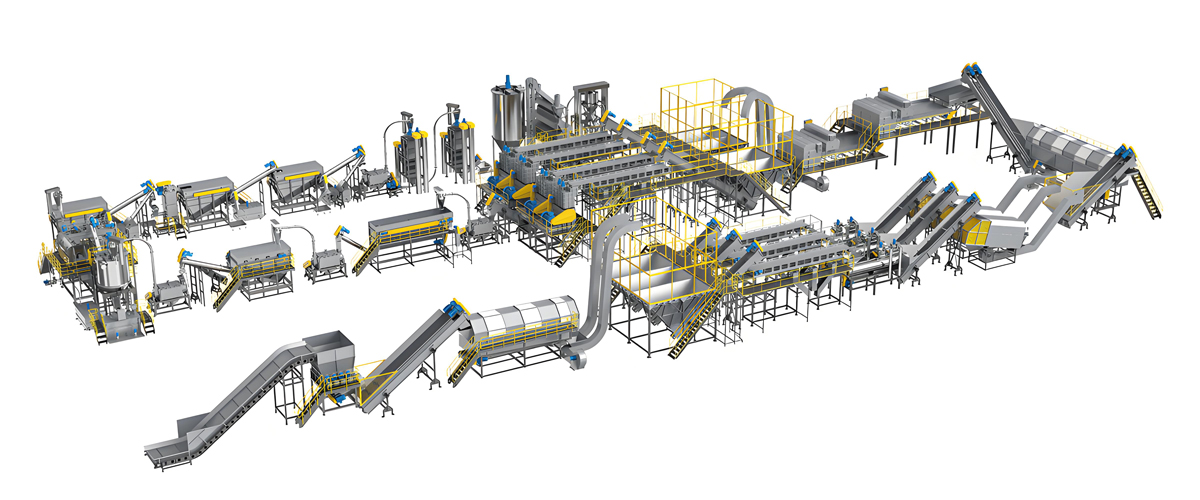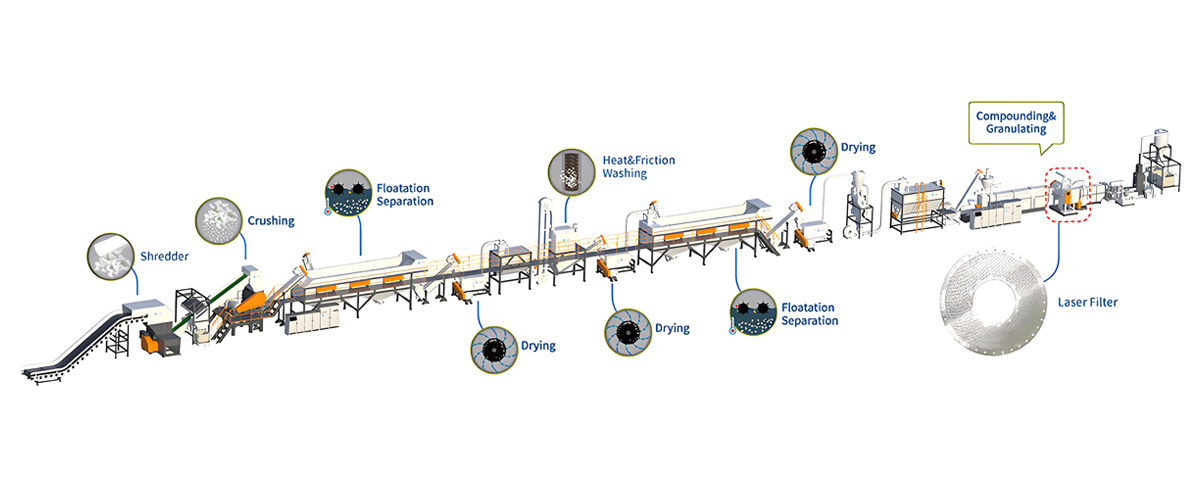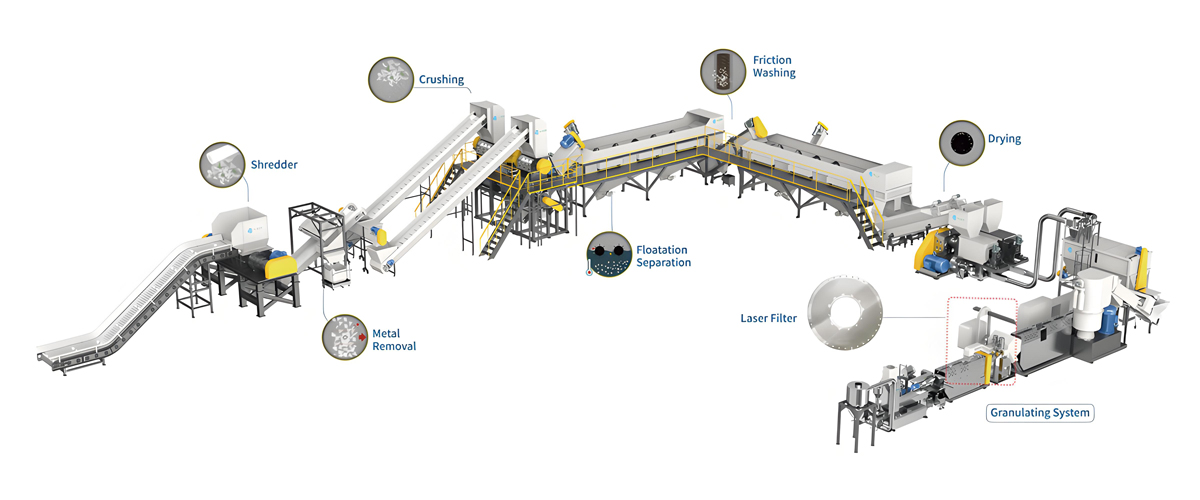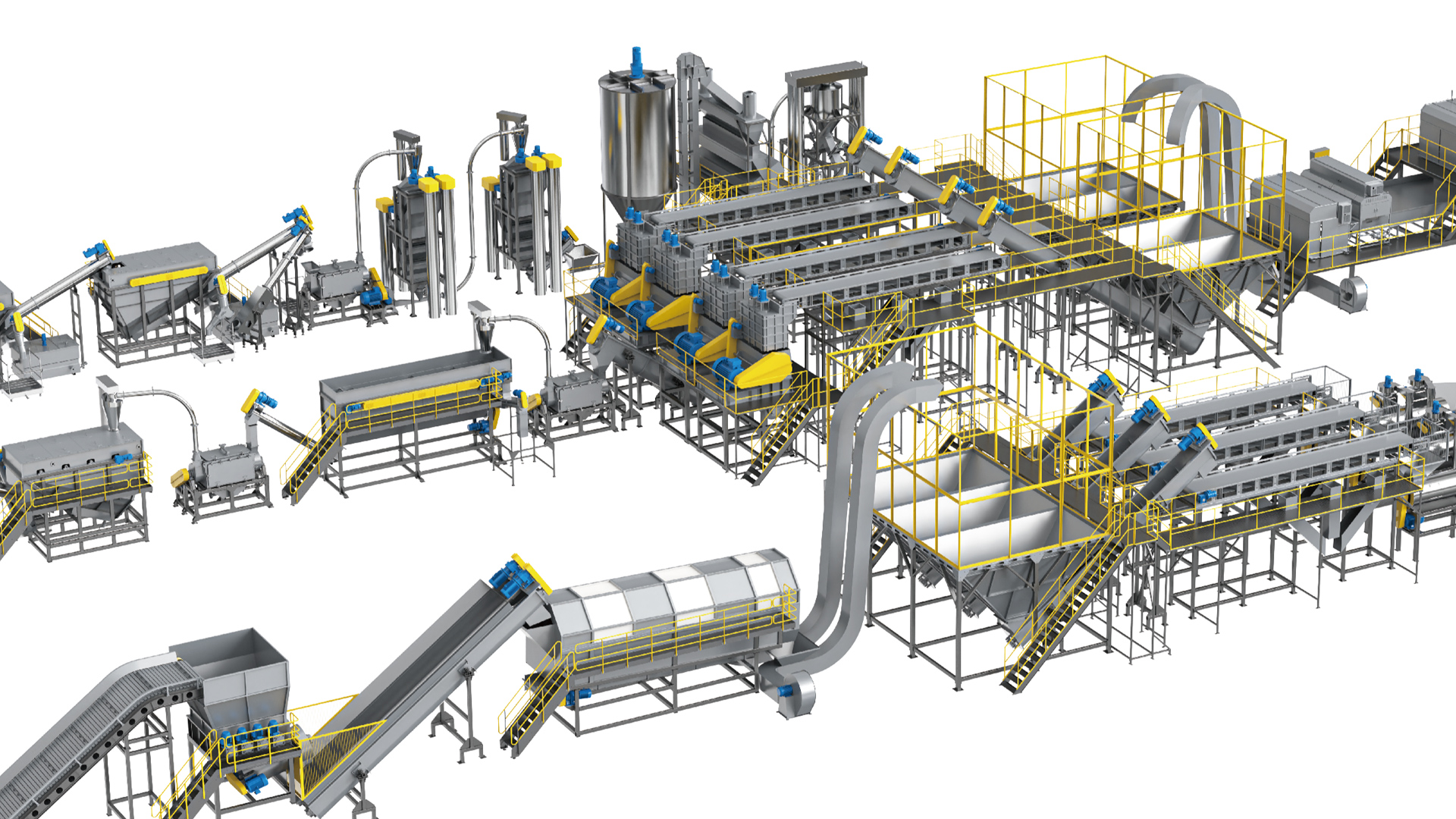

Agricultural plastic waste is one of the fastest-growing recovery streams in the circular economy, and the PP woven bag washing line has become the workhorse that turns contaminated farm sacks, fertilizer bags, grain wrappers and UV-aged raffia back into reusable PP flakes and pellets. Polyretec, a Wanplas factory, has built plastic recycling systems since 2010 and today supplies complete washing and pelletizing lines to more than 50 countries. This guide explains what makes agricultural PP woven bag waste uniquely difficult, walks through the full process flow segment by segment, compares the key equipment choices, and lays out the capacity, power, water and investment figures a plant owner or investor needs before committing capital.
A PP woven bag washing line is not a generic plastic washing line. Feed stock from farms carries sand, clay, harvest residue, fertilizer crystals, pesticide films and years of sunlight exposure that embrittle the tape. Generic film lines choke on the grit; a purpose-built agricultural PP line tolerates the dirt load, removes soluble chemicals, and still delivers flakes dry enough for extrusion. The difference between a line that runs profitably and one that clogs every shift is almost always in how the pre-treatment, friction washing and drying stages are specified.
Why Agricultural PP Woven Bag Waste Is Difficult to Recycle
Agricultural PP woven bags sit outdoors for entire seasons, so the contamination profile is dominated by inorganic grit and chemical residue rather than by printing ink or food soil. Understanding this profile is the first step in specifying a washing line that will not fail in month two.
High sand, soil and mineral load
Field-collected sacks typically carry 8 percent to 25 percent by weight of sand, soil and crop residue. A single ton of feed can contain 200 kilograms of loose grit that must leave the process as reject, not as wear on the crusher or as sludge in the water loop. Designers therefore place aggressive de-stoning and de-earth stages ahead of any wet washing, because sending grit through a friction washer accelerates blade wear and contaminates the rinse circuit.
High moisture and trapped water
Rain-soaked or dew-laden bags arrive at 15 percent to 40 percent moisture. Free water dilutes detergents and overloads the dewatering screens. Pre-draining and a low-speed squeeze before crushing keeps the chemical dose predictable and protects the centrifuge balance later in the line.
Fertilizer and pesticide residue
Residual ammonium nitrate, urea, phosphate and trace agrochemicals are water-soluble but also slightly oily, so they need both hot alkaline washing and fresh-water rinsing. Left in the flake, these residues outgas during pelletizing, cause yellowing, and can breach food-contact or odour specifications. A hot-wash at 80 to 95 degrees Celsius with caustic soda dosing at 1.5 to 3.0 grams per liter is the standard removal step.
UV aging and embrittlement
Polypropylene tape loses molecular weight under sunlight. Six to eighteen months of field exposure can drop the melt flow index sharply and make the tape brittle. Brittle material generates fine fibrils during crushing that escape through screens and re-contaminate water. A controlled pre-crush with a coarser first screen, plus a fibre trap in the water loop, manages this fraction.
Complete Process Flow of a PP Woven Bag Washing Line
A complete PP woven bag washing line moves material through eight logically sequenced stages, each one solving a specific contamination problem. Skipping or under-sizing any single stage pushes the burden onto the next, which is the most common cause of poor output quality and high downtime.
Stage 1: Pre-crushing and pre-cutting
Loose or baled sacks first pass a metal detector and then a single-shaft shredder or rotary crusher that reduces them to 20 to 60 millimeter pieces. The shredder protects later equipment from tramp metal and oversized clumps. For baled raffia, a rotary crusher at 20 to 30 millimeter screen gives the best throughput per kilowatt, while a shredder at 40 to 60 millimeter is safer for mixed, bulky feed that may wrap on shafts.
Stage 2: De-stoning and de-earth
Crushed flakes drop into a vibratory or滚筒 de-stoner where heavy sand and stones sink and are purged, while light PP floats forward. This dry or semi-wet step removes the bulk mineral load before it can reach the wash tank. Well-tuned de-stoning removes 80 to 95 percent of inbound grit and is the single biggest factor in extending friction-washer blade life.
Stage 3: Friction washing
A high-speed friction washer spins the flakes against a perforated cage at 600 to 1000 rpm, scrubbing surface dirt, soil crust and sticker residue off the tape. Friction washing is mechanical, not chemical; it sets up the hot-wash by exposing clean polymer surfaces. Typical dwell time is 30 to 90 seconds with a water-to-flake ratio of 3 to 5 to 1.
Stage 4: Hot washing
The heart of agricultural recovery is the hot washer, a heated paddle or steam-injected tank held at 80 to 95 degrees Celsius with caustic dosing. At this temperature soluble fertilizer and pesticide films dissolve and detach. Residence time of 8 to 15 minutes ensures full extraction. After hot wash the material must be rinsed, because residual alkali will corrode metal and discolour pellets.
Stage 5: Flotation and separation
In the float-sink tank, clean PP (density about 0.91) rises while heavier contaminants such as residual labels, dirt agglomerates and foreign plastics sink. A skimmer conveyor lifts the floating PP to the next stage. Adjusting water surface tension with a small amount of defoamer or by controlling turbulence improves recovery of thin tape that would otherwise stay submerged.
Stage 6: Dewatering
A centrifugal dewatering machine at 1200 to 1800 rpm squeezes free water out, bringing flakes from 40 to 55 percent moisture down to 3 to 8 percent. Screen holes of 0.5 to 1.0 millimeter retain the flake while letting water escape. Proper dewatering here is what makes the final dryer short, cheap and energy-efficient.
Stage 7: Drying
A hot-air pipeline or horizontal dryer at 100 to 160 degrees Celsius drives residual moisture below 1.5 percent, typically to 0.5 to 1.2 percent. Hot air volume of 2000 to 6000 cubic meters per hour per 1000 kg/h line, with a residence time of 10 to 20 minutes, is representative. Over-drying wastes energy; under-drying causes steam voids in the extruder.
Stage 8: Pelletizing
Dry flakes feed a compactor or agglomerator and then an extruder to make pellets. For integrated plants, Wanplas’s Kerke factory supplies co-rotating twin-screw extruders that pair with Polyretec washing output, so the line can deliver washed flakes or finished PP pellets in one train. Pelletizing MFI and colour depend on how clean the wash was upstream.
Key Equipment Selection and Comparison
Choosing between configuration options decides both capital cost and the quality ceiling of the final flake. The table below compares the most consequential equipment forks a buyer faces when specifying an agricultural PP woven bag washing line.
Equipment selection comparison
| Equipment Decision | Option A | Option B | Best Fit for Agri PP |
|---|---|---|---|
| Feed preparation | Single-shaft shredder, 40-60 mm screen | Rotary crusher, 20-30 mm screen | Shredder for mixed bulky feed; crusher for baled raffia |
| Grit removal | Vibratory de-stoner | Wet drum de-stoner | Wet drum for high sand load above 15 percent |
| Friction washer | Paddle type, 600-800 rpm | Disc type, 900-1000 rpm | Disc for heavy soil crust; paddle for moderate dirt |
| Hot wash vessel | Steam-injected tank, 80-90 C | Electric-heated paddle, 85-95 C | Steam where boiler exists; electric where not |
| Dewatering | Vertical centrifuge, 1500 rpm | Squeezer press | Centrifuge for tape; squeezer for film-rich mix |
| Final dryer | Hot-air pipeline, 100-140 C | Horizontal hot-air dryer, 120-160 C | Pipeline for compact layout; horizontal for stable quality |
Competitors such as EREMA, Starlinger and Herbold offer comparable single-machine quality, but a full agricultural PP line lives or dies on how these machines are sequenced and on the water loop that ties them together. Polyretec, as a Wanplas factory, positions the value in the integrated train plus the Austrian-informed process design rather than in any single hero machine.
Capacity, Power and Water Consumption Benchmarks
Buyers need realistic operating figures, not catalogue best cases. The table below gives representative reference ranges for three common line sizes processing agricultural PP woven bag waste with 10 to 20 percent inbound grit. Actual numbers shift with feed cleanliness, ambient temperature and whether pelletizing is included.
Reference operating benchmarks
| Line Size | Capacity (kg/h) | Main Power (kW) | Energy (kWh/t) | Fresh Water (m3/t) | Residual Moisture |
|---|---|---|---|---|---|
| Small | 300-500 | 110-150 | 90-130 | 0.6-1.2 | 0.8-1.5 percent |
| Medium | 800-1000 | 220-300 | 80-110 | 0.5-1.0 | 0.6-1.2 percent |
| Large | 1200-1500 | 340-450 | 70-100 | 0.5-0.9 | 0.5-1.0 percent |
Energy per ton falls as line size rises because fixed loads such as control panels, hot-wash heating and conveyors are spread over more output. Water figures assume a closed loop with sedimentation and filtration; an open once-through system would consume 3 to 5 cubic meters per ton and is not recommended where discharge rules are strict. A hot-wash heater is the dominant thermal load, so recovering heat from the dryer exhaust or using waste steam from a nearby plant is the fastest payback upgrade.
Water Treatment and Closed-Loop Recycling
Water is the medium that carries grit and chemicals out of the polymer, so the water loop is where agricultural lines succeed or fail environmentally. A closed-loop design keeps fresh intake below 1 cubic meter per ton and prevents contaminated discharge.
Sedimentation and sludge handling
Wash water first enters a lamella or cone-bottom sedimentation tank where heavy grit settles. The sludge, rich in fertilizer salts and soil, is drawn off to a sludge thickener and either landfilled under permit or, where local rules allow, returned to non-food agriculture as a mineral amendment. Removing grit early protects pumps and plate filters downstream.
Chemical dosing and froth control
Caustic soda maintains wash pH around 10 to 11 for oil and pesticide removal; a flocculant such as polyacrylamide then binds fine suspended solids so they settle. Defoamer controls froth from surfactant residues. Dosing is metered against inline turbidity so chemical use stays minimal and rinse water stays clear.
Filtration and return
A multi-plate filter or vibrating screen at 100 to 200 micron polishes the return water before it re-enters the friction and rinse stages. A typical loop recirculates 15 to 25 cubic meters per hour on a 1000 kg/h line, bleeding only 0.5 to 1.0 cubic meters per hour of fresh make-up to replace drag-out. This balance keeps total dissolved solids bounded and stops salt build-up that would redeposit on flakes.
A closed-loop water system is not optional for agricultural PP recovery: the soluble fertilizer load alone makes open discharge non-compliant in most markets, while recirculation typically cuts the water bill by 70 to 85 percent.
Common Faults and Countermeasures
Even a well-specified line drifts when feed variation is high. The table below maps the faults most often seen on agricultural PP woven bag washing lines to their practical fixes, so a plant supervisor can act before quality slips.
Fault and countermeasure table
| Fault | Likely Cause | Countermeasure |
|---|---|---|
| High residual grit in flakes | De-stoner bypassed or worn screen | Restore de-stone stage; replace 0.5 mm screen; raise purge rate |
| Yellow or smelly pellets | Incomplete hot wash or weak rinse | Raise hot-wash temp to 90 C; increase caustic to 2.5 g/L; add second rinse |
| Centrifuge vibration alarm | Screen clog or imbalance from grit | Stop and clean 0.8 mm screen; check wear ring; rebalance basket |
| Dryer cannot reach target moisture | Wet feed from poor dewatering | Service centrifuge; confirm 1500 rpm; pre-squeeze before dryer |
| Turbid rinse water | Filter fouled or floc under-dosed | Backwash plate filter; raise flocculant to 3 ppm; check turbidity setpoint |
| Shredder wrapping | Wet baled raffia, oversized feed | Pre-cut bales; use 50 mm screen; add anti-wrap rotor |
Routine condition monitoring pays for itself quickly. Tracking centrifuge current draw, hot-wash temperature and return-water turbidity as trend lines catches most of these faults days before they become stoppages. Polyretec commissioning teams train operators on exactly these signals during installation.
Investment Tiers for Different Plant Sizes
Capital outlay scales with capacity, automation and whether pelletizing is included. The relative cost labels below let an investor compare scope without currency exposure; absolute quotes depend on destination, voltage and options. All tiers assume CE- and ISO-built machines with the Wanplas brand’s shared policy of 500 USD in free spare parts per year and on-site engineer support.
Investment tier comparison
| Tier | Capacity | Scope | Relative Cost | Best For |
|---|---|---|---|---|
| Entry | 300 kg/h | Wash plus dewater, manual feed | Low | Cooperatives, pilots |
| Standard | 500-800 kg/h | Full wash, drying, basic water loop | Medium | Regional recyclers |
| Professional | 1000 kg/h | Full line, closed water, automation | High | Commercial plants |
| Integrated | 1200-1500 kg/h | Wash plus pelletizing, full controls | Very High | Large operators |
| Turnkey Premium | 1500 kg/h plus | Full plant, silos, lab, remote monitoring | Premium | Industrial groups |
Choosing the right tier is less about budget than about offtake. A plant with a locked pellet contract should size toward the Professional or Integrated tier to capture scale economies, while a cooperative testing local collection should start Entry and expand. Wanplas, as the parent brand coordinating its specialized factories, can add pelletizing through Kerke and film lines through YuanSu as the business grows, so the wash line is never a dead-end investment.
Frequently Asked Questions
What residual moisture can a PP woven bag washing line achieve before pelletizing?
A well-tuned line delivers flakes at 0.5 percent to 1.5 percent residual moisture after centrifugal dewatering and hot-air drying, which is adequate for non-food PP pelletizing. Lower figures below 0.5 percent require a crystallizing or extended drying stage.
How much water does an agricultural PP woven bag washing line consume per ton?
Gross water demand runs 3 to 5 cubic meters per ton of feed, but a closed-loop system with sedimentation, chemical dosing and a plate filter typically cuts fresh make-up water to 0.5 to 1.2 cubic meters per ton.
Can fertilizer and pesticide residue be removed to a safe level?
Yes. A hot-wash stage at 80 to 95 degrees Celsius with caustic dosing, followed by friction washing and two fresh-water rinses, reduces soluble contaminants to trace levels. A final sniff and laboratory extractable test confirms food-grade or non-food-grade suitability.
Is a shredder or a crusher better for feed preparation?
For loose, bulky agricultural sacks a single-shaft shredder with a 40 to 60 millimeter screen is safer and avoids wrapping. For pre-cut or baled raffia a rotary crusher at 20 to 30 millimeter gives higher throughput and lower power per ton.
Which standards should the line meet for export projects?
Machines should carry CE marking and be built to ISO quality management. Electrical design referencing EN 60204 and local GB standards for the destination market keeps commissioning smooth and insurance valid.
What is the typical payback period for a 1000 kg/h line?
With sorted agricultural feed stock valued at modest pellet premiums, a 1000 kg/h line in the Medium to High investment tier commonly reaches payback in 18 to 36 months, depending on local collection cost and pellet offtake price.
Conclusion
A PP woven bag washing line for agricultural plastic waste succeeds when it is specified around the reality of the feed: heavy grit, high moisture, chemical residue and UV-embrittled tape. The eight-stage flow from pre-crush through de-stone, friction wash, hot wash, flotation, dewatering, drying and pelletizing, tied together by a closed water loop, is the proven route to flakes at 0.5 to 1.5 percent residual moisture and above 98 percent grit rejection. Polyretec, a Wanplas factory, brings Austrian-informed process design and more than 100 global projects to that challenge, and the Wanplas network lets a wash line grow into full pelletizing and film production without changing suppliers. For any investor evaluating agricultural PP recovery in 2026, start from the contamination profile, size the de-stone and hot-wash stages honestly, and choose an investment tier that matches your offtake rather than your ambition.