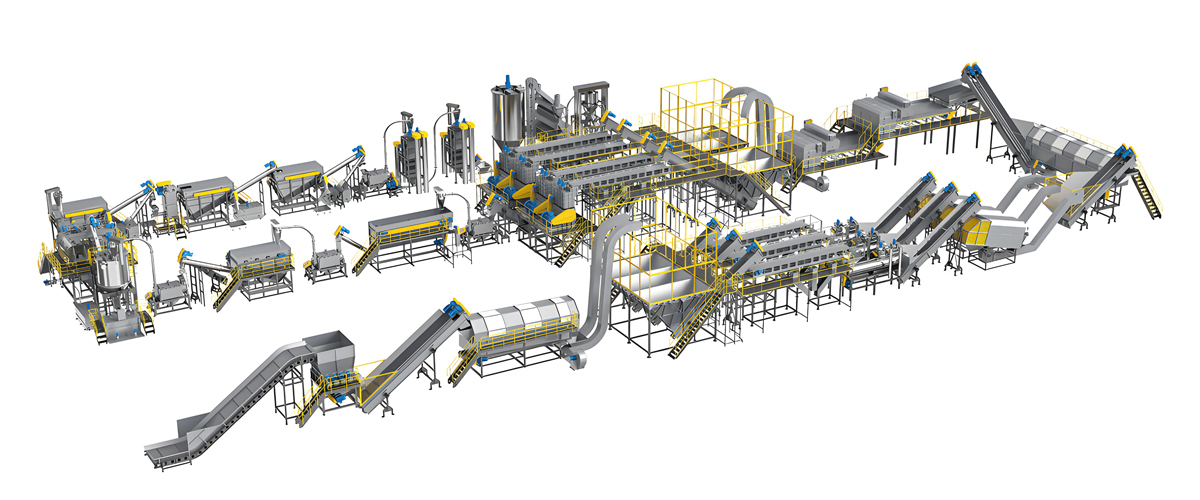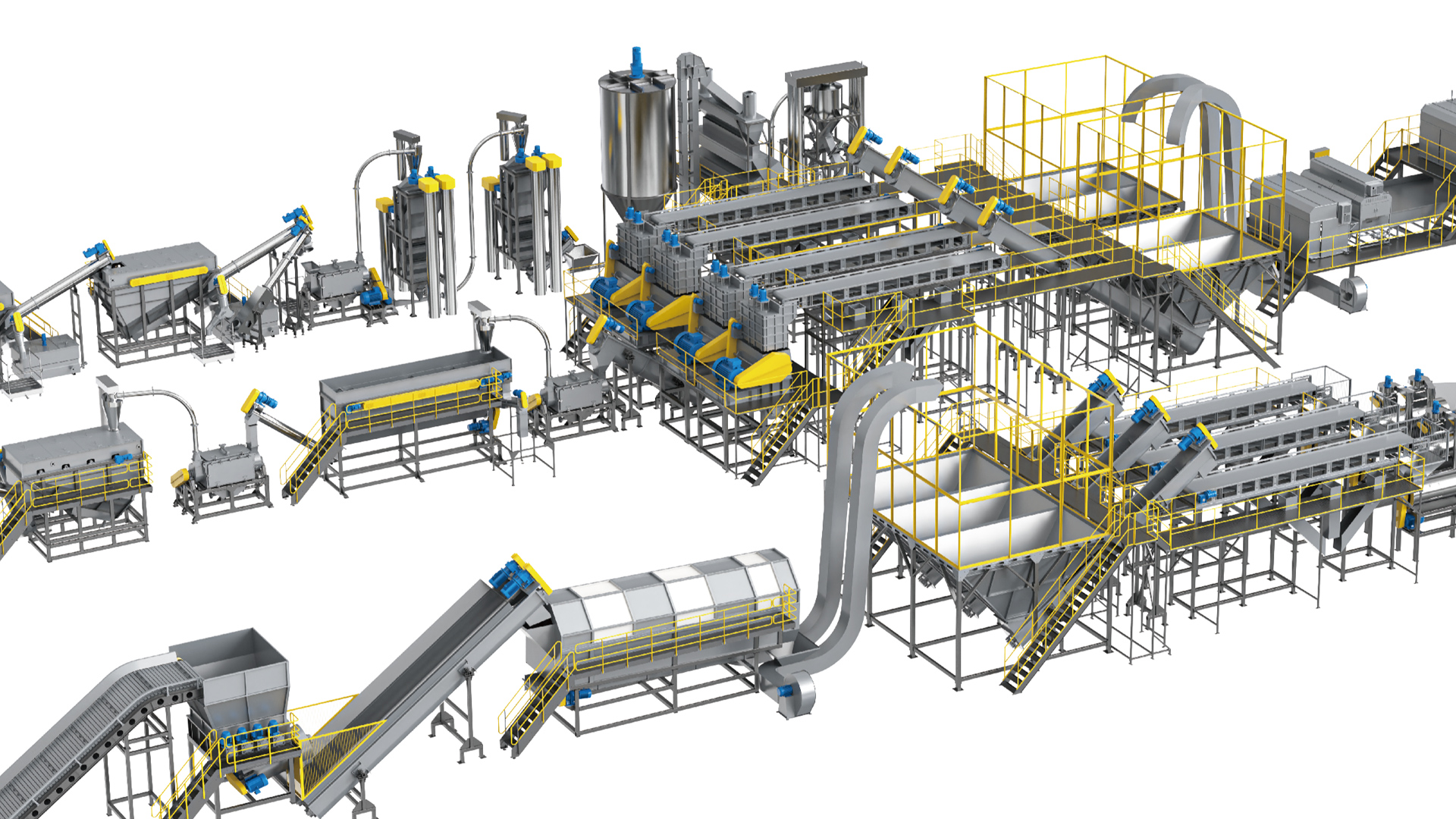

Vietnam has emerged as one of the fastest-growing PP non-woven fabric manufacturing hubs in Southeast Asia, driven by the global manufacturing shift, booming healthcare and hygiene industries, and rising demand for sustainable packaging solutions. Valued at USD 2.8 billion in 2026 and projected to reach USD 4.7 billion by 2032, growing at a compound annual growth rate (CAGR) of 9.1%, the Vietnamese PP non-woven industry generates over 1.2 million tons of industrial waste annually, including production offcuts, defective products, and post-consumer waste such as used masks, shopping bags, and agricultural covers. As a leading global manufacturer of plastic recycling machines and washing lines, Polyretec has developed tailored PP non-woven fabric recycling solutions specifically designed to address the unique challenges and requirements of the Vietnam market. This comprehensive guide explores the critical factors to consider when selecting a PP non-woven recycling line for Vietnam, provides detailed technical specifications and cost analysis of Polyretec’s industry-leading solutions, and demonstrates how these systems help manufacturers achieve both environmental compliance and exceptional profitability.
The urgent need for effective PP non-woven recycling in Vietnam is driven by two powerful forces: stringent environmental regulations and significant economic opportunities. The Vietnamese government has implemented a series of progressive environmental policies, including the 2024 Environmental Protection Law, which mandates that industrial enterprises recycle at least 30% of their production waste by 2027 and 50% by 2032. Failure to comply results in heavy fines, production suspension, and loss of export licenses. At the same time, recycling PP non-woven waste delivers exceptional economic returns, with recycled PP pellets commanding prices 3-5 times higher than raw waste material. Polyretec’s PP non-woven recycling lines enable Vietnamese manufacturers to convert their waste into high-value raw material, reducing reliance on virgin plastic imports and significantly improving their bottom line.
Polyretec has over 18 years of specialized experience in plastic recycling technology, with more than 3,200 recycling machines installed in over 85 countries worldwide. Our state-of-the-art manufacturing facilities cover over 150,000 square meters and are equipped with advanced CNC machining centers, precision testing equipment, and a dedicated research and development center focused on plastic recycling innovation. We have established a local service center in Ho Chi Minh City to provide comprehensive support to our Vietnamese customers, including installation, training, and after-sales service. This guide will walk you through everything you need to know to select the best PP non-woven fabric recycling line for your specific needs in the Vietnam market.
1. Unique Requirements of the Vietnam PP Non-woven Recycling Market
The Vietnam PP non-woven recycling market has distinct characteristics that set it apart from other global markets. Understanding these unique requirements is essential for selecting a recycling line that will deliver optimal performance, reliability, and return on investment.
1.1 Diverse and Highly Contaminated Feedstock
Vietnamese PP non-woven manufacturers produce a wide range of products, resulting in highly diverse feedstock for recycling. The most common feedstock types include production offcuts from mask manufacturing, hygiene products, packaging materials, agricultural covers, and geotextiles. Each of these feedstocks has different physical characteristics and contamination levels, requiring specialized processing solutions.
The biggest challenge in Vietnam’s PP non-woven recycling market is the high level of contamination in the feedstock. Used masks contain elastic ear loops, metal nose wires, and adhesive residues. Hygiene product waste may contain residual lotions, oils, and other organic contaminants. Agricultural non-woven waste is often contaminated with soil, pesticides, and other agricultural chemicals. Traditional recycling lines are unable to effectively remove these contaminants, resulting in low-quality recycled pellets that cannot be reused in high-value applications. Polyretec’s PP non-woven recycling lines feature advanced multi-stage impurity removal systems specifically designed to address these contamination challenges.
1.2 Cost Sensitivity and Budget Constraints
The majority of PP non-woven manufacturers in Vietnam are small and medium-sized enterprises (SMEs) with limited capital budgets. These businesses prioritize cost-effectiveness and quick return on investment when purchasing recycling equipment. They are also highly sensitive to operating costs, including energy consumption, water usage, and maintenance expenses.
While European recycling lines offer high performance, they are prohibitively expensive for most Vietnamese SMEs, with prices often 3-4 times higher than comparable Chinese equipment. Many low-cost Chinese recycling lines, however, suffer from poor build quality, low efficiency, and unreliable after-sales service, resulting in higher long-term operating costs and frequent downtime. Polyretec strikes the perfect balance between performance and affordability, offering European-level quality at a price point that is accessible to Vietnamese businesses.
1.3 Operational and Infrastructure Limitations
Vietnam’s industrial infrastructure presents several challenges for recycling operations. Electrical power supply can be unstable in many regions, with frequent voltage fluctuations and power outages that can damage sensitive equipment. Water supply may also be limited in some areas, making water efficiency a critical consideration.
In addition, the technical skill level of workers in Vietnam’s manufacturing sector is generally lower than in more developed economies. Recycling lines must therefore be designed for simplicity and ease of operation, with intuitive controls and minimal maintenance requirements. Polyretec’s PP non-woven recycling lines are specifically engineered to operate reliably under Vietnam’s infrastructure conditions, with built-in voltage protection, water recycling systems, and user-friendly controls.
1.4 Evolving Regulatory and Compliance Requirements
Vietnam’s environmental regulations are evolving rapidly, with increasingly strict requirements for waste management and pollution control. The 2024 Environmental Protection Law introduced a plastic tax of VND 2,000-10,000 per kilogram on single-use plastic products, as well as mandatory waste recycling targets for industrial enterprises. Enterprises that fail to meet these requirements face heavy fines, production suspension, and loss of their business license.
In addition, many international buyers are now requiring their Vietnamese suppliers to demonstrate strong environmental performance and meet ESG (Environmental, Social, and Governance) standards. This includes implementing effective waste management and recycling programs. Polyretec’s recycling lines help Vietnamese manufacturers comply with both local regulatory requirements and international ESG standards, enabling them to maintain access to global markets.
2. Core Technologies of Polyretec PP Non-woven Fabric Recycling Lines
Polyretec’s PP non-woven fabric recycling lines incorporate a range of advanced technologies specifically designed to address the unique challenges of the Vietnam market. These technologies ensure efficient processing of highly contaminated feedstock, low operating costs, and reliable performance under demanding industrial conditions.
2.1 Anti-winding Shredding and Crushing System
PP non-woven fabric is highly flexible and prone to wrapping around rotating shafts, which is a common cause of downtime and equipment damage in traditional recycling lines. Polyretec has developed an advanced anti-winding shredding and crushing system specifically for processing PP non-woven materials.
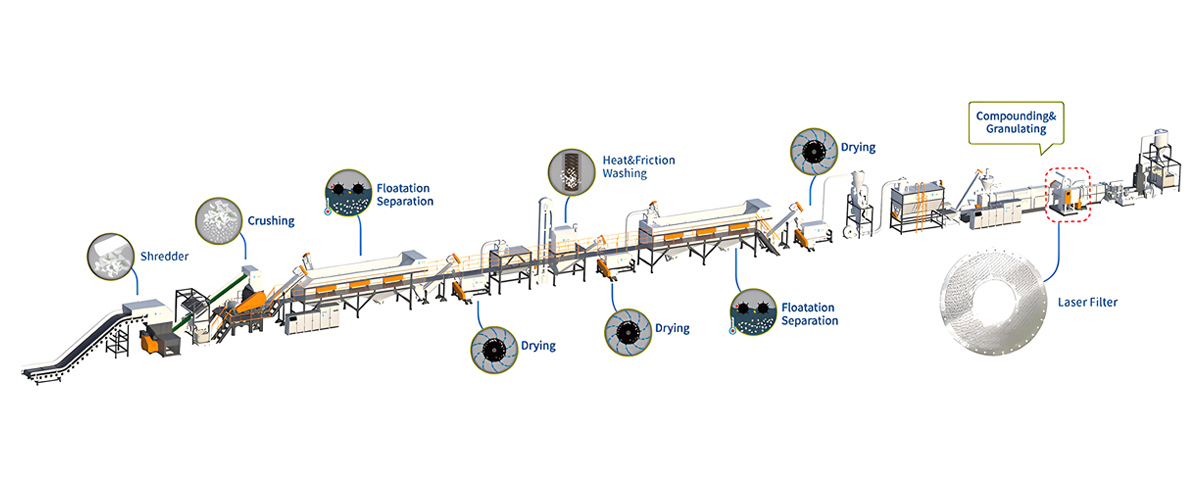
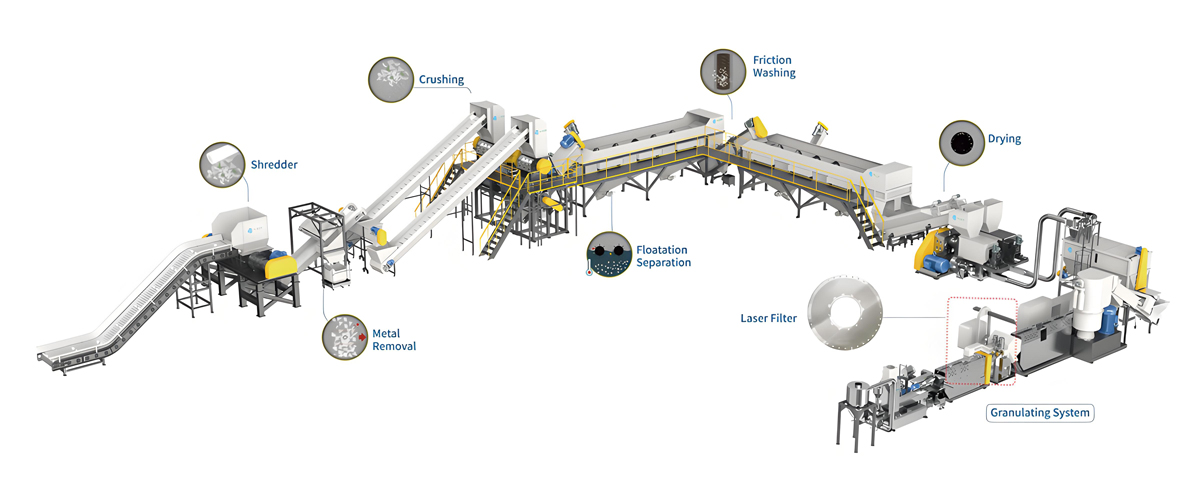
The system features a double-shaft shredder with specially designed blades that cut the non-woven fabric into uniform pieces without wrapping. The shredder is equipped with an automatic reverse function that detects and clears jams without manual intervention. The subsequent crusher features a high-speed rotor with precision-ground blades that further reduce the material to the optimal size for washing and pelletizing. This system ensures continuous, trouble-free operation even when processing highly entangled materials such as used masks and fabric rolls.
2.2 Multi-stage Impurity Removal System
Effective impurity removal is critical for producing high-quality recycled PP pellets from contaminated non-woven waste. Polyretec’s PP non-woven recycling lines feature a comprehensive multi-stage impurity removal system that removes virtually all types of contaminants from the feedstock.
The system begins with a magnetic separator that removes ferrous metals such as nose wires from used masks. This is followed by a wind separator that removes light impurities such as dust, paper, and plastic films. The material then passes through a friction washer that uses high-speed mechanical agitation to remove adhesive residues, oils, and organic contaminants. Finally, a flotation tank separates PP from other plastics with different densities, ensuring that the final product is 99.5% pure PP. This multi-stage system ensures that even the most heavily contaminated feedstock is processed into high-quality recycled pellets.
2.3 High-efficiency Water Recycling System
Water efficiency is a critical consideration for recycling operations in Vietnam, where water supply may be limited and wastewater discharge regulations are becoming increasingly strict. Polyretec’s PP non-woven recycling lines feature an advanced closed-loop water recycling system that reduces water consumption by up to 90% compared to traditional washing lines.
The system includes a series of sedimentation tanks, filtration units, and water treatment systems that clean and recirculate the process water. Only a small amount of fresh water is added to compensate for evaporation and carryover. The system also includes a wastewater treatment unit that ensures any discharged water meets Vietnam’s national environmental standards. This not only reduces water costs but also helps manufacturers comply with environmental regulations.
2.4 Energy-efficient Drying and Pelletizing System
Energy consumption is one of the largest operating costs for recycling operations. Polyretec’s PP non-woven recycling lines feature energy-efficient drying and pelletizing systems that significantly reduce power consumption compared to traditional equipment.
The drying system uses a combination of centrifugal dewatering and hot air drying to achieve a moisture content of less than 0.5% in the processed material. The centrifugal dewaterer removes 98% of the surface water, reducing the load on the hot air dryer and saving energy. The pelletizing system features a high-performance single-screw extruder specifically designed for processing PP non-woven material. The extruder incorporates an optimized screw design that ensures uniform melting and mixing while minimizing energy consumption. The system also features a water ring pelletizer that produces uniform, spherical pellets with excellent flow properties.
2.5 Intelligent PLC Control System
Polyretec’s PP non-woven recycling lines are equipped with an advanced PLC control system with an intuitive touch screen interface. The system provides real-time monitoring and control of all process parameters, including temperature, speed, and water level. It also features automatic fault diagnosis and alarm functions that alert operators to potential issues before they cause downtime.
The control system stores multiple production recipes for different types of feedstock, allowing operators to quickly switch between products with the touch of a button. It also includes data logging capabilities that record all production data for quality control and regulatory compliance purposes. The user-friendly interface requires minimal training, making it ideal for Vietnamese workers with limited technical experience.
3. Polyretec Recommended Models for the Vietnam Market
Polyretec offers a comprehensive range of PP non-woven fabric recycling lines to meet the diverse needs of the Vietnam market. Each model is available in different configurations to suit specific feedstock types, production capacities, and budget requirements.
3.1 PR-NW300 Small-scale PP Non-woven Recycling Line
The PR-NW300 is a compact, cost-effective recycling line designed for small PP non-woven manufacturers and workshops that generate up to 300 kg of waste per hour. It is ideal for businesses that want to process their own production offcuts and reduce waste disposal costs.
Technical Specifications:
- Production capacity: 200-300 kg/h
- Total installed power: 75 kW
- Water consumption: 0.5 m³/h (with recycling system)
- Floor space requirement: 12m × 4m × 3.5m
- Number of operators required: 2
Price and Cost Analysis: The FOB Shanghai price of the Polyretec PR-NW300 small-scale PP non-woven recycling line ranges from $45,000 to $60,000, depending on configuration and optional features. The standard configuration includes the double-shaft shredder, crusher, magnetic separator, friction washer, centrifugal dewaterer, single-screw extruder, and water ring pelletizer. Optional features include the wind separator, flotation tank, and water recycling system. The typical payback period for the PR-NW300 is 2-3 months for manufacturers processing their own production offcuts.
3.2 PR-NW500 Medium-scale PP Non-woven Recycling Line
The PR-NW500 is our most popular model for the Vietnam market, designed for medium-sized PP non-woven manufacturers and professional recycling companies. It balances production capacity, performance, and cost-effectiveness, making it ideal for businesses that process both their own waste and purchased waste material.
Technical Specifications:
- Production capacity: 400-500 kg/h
- Total installed power: 110 kW
- Water consumption: 0.8 m³/h (with recycling system)
- Floor space requirement: 18m × 5m × 3.5m
- Number of operators required: 3
Price and Cost Analysis: The FOB Shanghai price of the Polyretec PR-NW500 medium-scale PP non-woven recycling line ranges from $75,000 to $95,000, depending on configuration and optional features. The standard configuration includes all the features of the PR-NW300 plus the wind separator and flotation tank. Optional features include the hot air drying system, automatic bale opener, and advanced PLC control system with data logging. The typical payback period for the PR-NW500 is 1.5-2.5 months for manufacturers processing their own production offcuts, and 3-4 months for professional recycling companies purchasing waste material.
3.3 PR-NW1000 Large-scale PP Non-woven Recycling Line
The PR-NW1000 is a high-capacity recycling line designed for large PP non-woven manufacturers and industrial recycling companies that process large volumes of waste material. It is ideal for businesses that supply recycled PP pellets to the domestic and export markets.
Technical Specifications:
- Production capacity: 800-1000 kg/h
- Total installed power: 190 kW
- Water consumption: 1.5 m³/h (with recycling system)
- Floor space requirement: 25m × 6m × 4m
- Number of operators required: 4
Price and Cost Analysis: The FOB Shanghai price of the Polyretec PR-NW1000 large-scale PP non-woven recycling line ranges from $130,000 to $160,000, depending on configuration and optional features. The standard configuration includes all the features of the PR-NW500 plus the hot air drying system and automatic bale opener. Optional features include multiple extruders for higher capacity, automatic packaging system, and remote monitoring capabilities. The typical payback period for the PR-NW1000 is 2-3 months for manufacturers processing their own production offcuts, and 3.5-5 months for professional recycling companies.
4. Comprehensive Cost Analysis and Return on Investment
Investing in a Polyretec PP non-woven fabric recycling line delivers exceptional financial returns, with payback periods typically measured in months rather than years. The following is a detailed cost analysis and return on investment calculation based on the PR-NW500, our most popular model for the Vietnam market.
4.1 Initial Investment Breakdown
The initial investment for a Polyretec PR-NW500 PP non-woven recycling line includes the cost of the equipment, transportation, installation, training, and site preparation. The following is a detailed breakdown of the initial investment for a standard configuration delivered to Ho Chi Minh City:
Polyretec PR-NW500 recycling line: $85,000 Sea freight from Shanghai to Ho Chi Minh City: $8,000 Import duties and taxes: $12,750 (15% of equipment value) Local transportation and unloading: $1,500 Installation and commissioning: $5,000 Operator training: $2,000 Initial spare parts package: $3,000 Site preparation and utility connections: $10,000 Total Initial Investment: $127,250
While this initial investment may seem significant, it is important to note that the recycling line will generate substantial revenue and cost savings from day one. The following analysis will demonstrate that the investment typically pays for itself in less than 3 months.
4.2 Annual Operating Costs
The annual operating costs for a Polyretec PR-NW500 recycling line include energy costs, water costs, labor costs, and maintenance costs. The following is a detailed breakdown of the annual operating costs based on 16 hours of production per day, 250 days per year:
Electricity costs: $27,500 per year ($0.08 per kWh) Water costs: $3,200 per year ($0.3 per m³) Labor costs: $18,000 per year (3 operators at $6,000 per year each) Maintenance and spare parts costs: $4,500 per year Waste disposal costs for non-recyclable materials: $2,800 per year Total Annual Operating Costs: $56,000
It is important to note that these operating costs are significantly lower than those of competing recycling lines due to Polyretec’s energy-efficient design and low maintenance requirements. Our water recycling system also reduces water costs by up to 90% compared to traditional washing lines.
4.3 Revenue and Profit Calculation
The revenue from a PP non-woven recycling line comes from the sale of recycled PP pellets. The price of recycled PP pellets in Vietnam currently ranges from $520 to $580 per ton, depending on quality. High-quality pellets produced on Polyretec recycling lines command a premium price due to their consistent quality and purity.
Based on a production capacity of 400 kg/h, 16 hours per day, 250 days per year, the annual production volume is 1,600 tons of recycled PP pellets. At an average selling price of $550 per ton, the annual revenue is $880,000.
For manufacturers processing their own production offcuts, there is no raw material cost. Previously, these offcuts would have been sold as waste for approximately $100 per ton. The additional revenue from converting waste into pellets is therefore $450 per ton, resulting in an annual profit of $720,000 before operating costs.
After deducting the annual operating costs of $56,000, the net annual profit is $664,000. Based on the initial investment of $127,250, the payback period is calculated as follows:
Payback Period = Initial Investment ÷ Monthly Net Profit Payback Period = $127,250 ÷ ($664,000 ÷ 12) = 2.3 months
This exceptionally short payback period demonstrates that investing in a Polyretec PP non-woven recycling line is one of the most profitable investments a Vietnamese manufacturer can make. Over the 15-year service life of the equipment, the total net profit would exceed $9 million, providing a return on investment of more than 70 times the initial investment.
4.4 Sensitivity Analysis
To account for potential variations in market conditions and production volumes, we have conducted a sensitivity analysis to show how these factors affect the payback period:
If the selling price of recycled pellets is only $500 per ton: Payback period = 2.6 months If production volume is only 70% of capacity: Payback period = 3.3 months If both the selling price is $500 per ton and production volume is 70%: Payback period = 3.7 months
This sensitivity analysis shows that the investment remains highly profitable even under the most adverse market conditions. The strong demand for recycled PP pellets in Vietnam ensures that manufacturers can always find a market for their product at competitive prices.
5. Real-World Success Stories in Vietnam
Polyretec has installed over 120 PP non-woven fabric recycling lines in Vietnam, helping manufacturers across the country reduce waste, improve profitability, and comply with environmental regulations. The following are two real-world success stories that demonstrate the benefits of our recycling solutions.
5.1 Case Study 1: Medium-sized Mask Manufacturer in Ho Chi Minh City
A leading mask manufacturer in Ho Chi Minh City was generating approximately 220 tons of PP non-woven offcuts per month as a byproduct of their mask production. Prior to investing in a recycling line, the company was selling these offcuts as waste for $110 per ton, resulting in lost revenue of approximately $1.2 million per year. The company was also facing increasing pressure from the government to reduce their waste generation and improve their environmental performance.
After extensive research and evaluation, the company selected Polyretec to provide a complete recycling solution. Polyretec installed a PR-NW500 PP non-woven recycling line with advanced impurity removal capabilities to process the mask offcuts, which contained elastic ear loops and metal nose wires.
The recycling line was installed and commissioned in just 22 days, and the company immediately began producing high-quality recycled PP pellets. The pellets are now reused in the production of non-woven fabric for lower-grade mask layers, reducing the company’s virgin plastic consumption by 30%. The company also sells excess pellets to other manufacturers, generating additional revenue.
Results after implementation:
- Annual waste disposal cost savings: $290,000
- Annual revenue from recycled pellets: $1.45 million
- Annual net profit: $1.39 million
- Payback period: 1.1 months
- Reduced virgin plastic consumption by 30%
- Achieved compliance with Vietnam’s environmental regulations
The company was extremely satisfied with the performance of the Polyretec recycling line and has since purchased two additional lines to process waste from their expanded production facilities.
5.2 Case Study 2: Professional Recycling Company in Hanoi
A professional recycling company in Hanoi specialized in collecting and processing post-consumer plastic waste saw a significant opportunity in the growing market for PP non-woven recycling. The company was collecting large quantities of used masks, shopping bags, and agricultural non-woven waste from across northern Vietnam, but they lacked the equipment to process this material into high-quality recycled pellets.
The company contacted Polyretec for a solution to their processing needs. After evaluating the characteristics of their feedstock, Polyretec recommended a PR-NW1000 large-scale PP non-woven recycling line with enhanced impurity removal capabilities to process the highly contaminated post-consumer waste.
The PR-NW1000 was installed and commissioned in 35 days, and the company immediately began processing 800-1000 kg of PP non-woven waste per hour. The advanced multi-stage impurity removal system effectively removed all contaminants from the feedstock, producing high-quality recycled pellets that meet the strict requirements of the packaging and construction industries.
Results after implementation:
- Annual production of recycled PP pellets: 3,200 tons
- Annual revenue: $1.92 million
- Annual net profit: $1.56 million
- Payback period: 2.9 months
- Created 15 new jobs in the local community
- Diverted over 3,000 tons of plastic waste from landfills annually
The company has become one of the leading suppliers of recycled PP pellets in northern Vietnam, thanks to the consistent quality and reliability of their Polyretec recycling line. They are currently planning to install a second PR-NW1000 line to meet the growing demand for their products.
6. Why Polyretec is the Best Choice for the Vietnam Market
There are many manufacturers of plastic recycling equipment in the market, but Polyretec stands out as the best choice for the Vietnam PP non-woven recycling market for several key reasons.
6.1 Tailored Solutions for Vietnam Feedstock
Unlike generic recycling lines that are designed for a wide range of plastic materials, Polyretec’s PP non-woven recycling lines are specifically engineered to process the unique feedstock found in the Vietnam market. Our advanced impurity removal systems effectively remove the contaminants commonly found in Vietnamese PP non-woven waste, including elastic ear loops, metal nose wires, adhesive residues, and agricultural chemicals.
We also offer customized configurations to meet the specific needs of each customer. Whether you are processing production offcuts, used masks, agricultural non-woven waste, or a combination of materials, we can design a recycling line that will deliver optimal performance and maximum profitability.
6.2 Unbeatable Cost-effectiveness
Polyretec offers the best value for money in the industry, providing European-level quality at a price point that is accessible to Vietnamese businesses. Our recycling lines are 60-70% cheaper than comparable European equipment, while delivering equal or better performance. They are also 20-30% more energy-efficient and have lower maintenance costs than competing Chinese equipment, resulting in significantly lower total cost of ownership over the life of the equipment.
Our recycling lines also deliver the fastest return on investment in the industry, with payback periods typically less than 3 months. This means that your investment will pay for itself in a matter of months, and you will continue to generate substantial profits for many years to come.
6.3 Localized After-sales Support
One of the biggest challenges with purchasing recycling equipment from overseas is the lack of reliable after-sales support. Many manufacturers provide little or no support after the equipment is delivered, leaving customers to deal with technical issues on their own. This can result in costly downtime and lost production.
Polyretec has established a dedicated local service center in Ho Chi Minh City staffed by experienced Vietnamese-speaking technicians. Our service team provides 24/7 technical support, on-site repair services, and spare parts delivery throughout Vietnam. We also offer comprehensive training programs for operators and maintenance personnel to ensure that your recycling line operates at peak efficiency at all times.
6.4 Proven Quality and Reliability
Polyretec has over 18 years of experience in the plastic recycling industry, and our equipment is renowned for its exceptional quality and reliability. All our recycling lines are built to the highest international standards using premium components from reputable suppliers. We conduct rigorous testing and quality control procedures on every machine before it leaves our factory to ensure that it meets our strict performance standards.
Our recycling lines have been proven to operate reliably in the demanding industrial conditions found in Vietnam, with minimal downtime and long service life. We offer a comprehensive warranty on all our equipment, giving you peace of mind that your investment is protected.
7. Conclusion
The Vietnam PP non-woven fabric industry is experiencing rapid growth, presenting both significant environmental challenges and unprecedented economic opportunities. Investing in a high-quality PP non-woven fabric recycling line is no longer just an environmental responsibility but also a strategic business decision that can deliver exceptional financial returns and help manufacturers comply with increasingly strict environmental regulations.
Polyretec’s PP non-woven fabric recycling lines are specifically designed to address the unique challenges and requirements of the Vietnam market. Our advanced technologies ensure efficient processing of highly contaminated feedstock, low operating costs, and reliable performance under demanding industrial conditions. With payback periods typically less than 3 months, investing in a Polyretec recycling line is one of the most profitable investments a Vietnamese manufacturer can make.
Whether you are a small workshop processing your own production offcuts or a large industrial recycling company processing thousands of tons of waste per year, Polyretec has the expertise, technology, and local support to help you achieve your recycling goals. With over 120 successful installations in Vietnam and a dedicated local service center, we are the trusted partner of choice for PP non-woven recycling in the country.
As Vietnam continues to develop its circular economy and strengthen its environmental regulations, the demand for effective plastic recycling solutions will only continue to grow. By investing in a Polyretec PP non-woven fabric recycling line today, you can position your business for long-term success, reduce your environmental impact, and contribute to a more sustainable future for Vietnam.