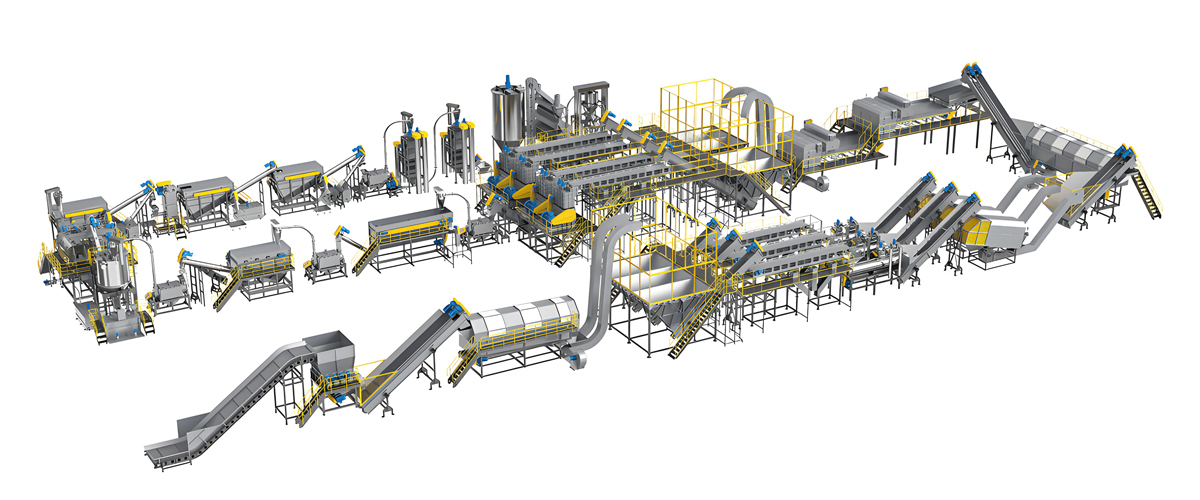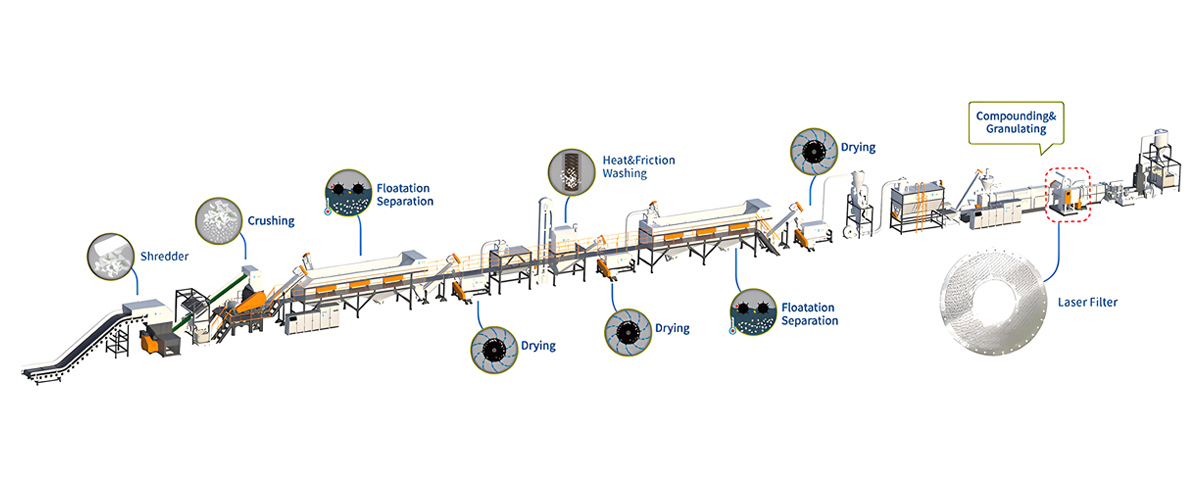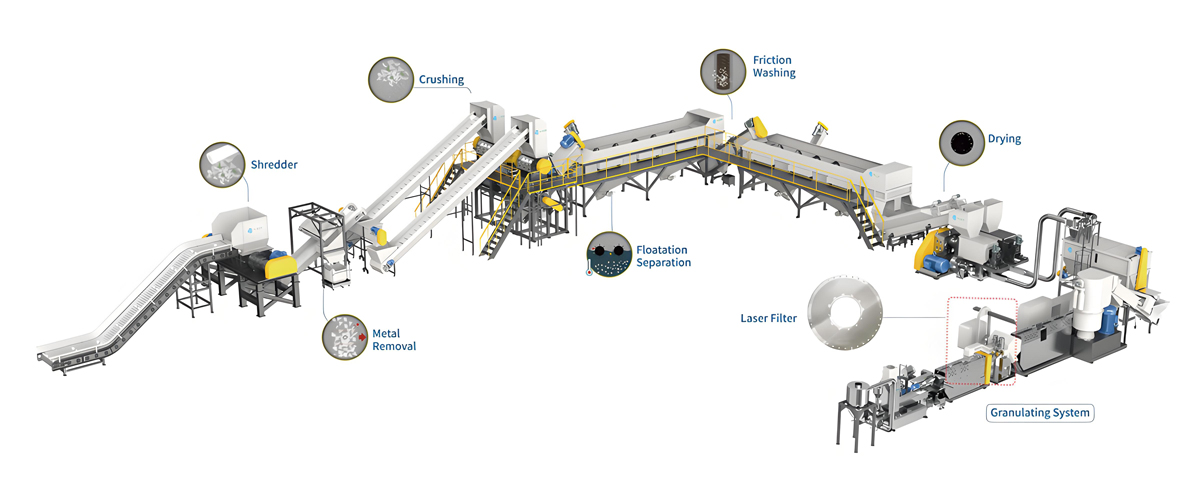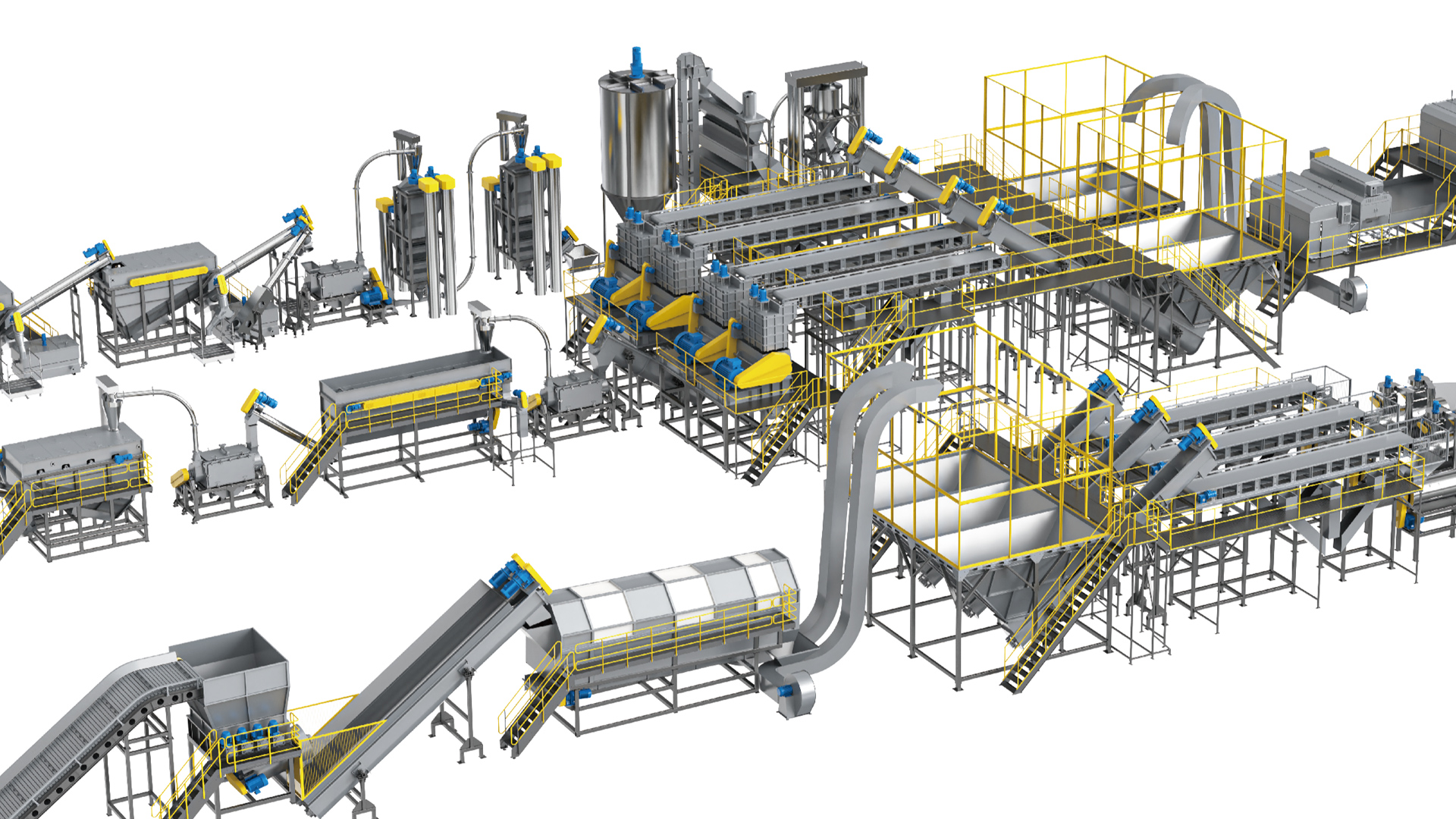

Printed low-density polyethylene (LDPE) films represent one of the largest and most challenging segments of the global plastic waste stream. Valued at USD 156 billion in 2026, the global LDPE packaging market generates over 28 million tons of printed film waste annually, including food packaging bags, industrial stretch films, agricultural mulch films, and shopping bags. Unfortunately, less than 12% of this printed LDPE waste is currently recycled globally, with most being sent to landfills or incinerated due to technical challenges in removing inks, adhesives, and contaminants. As a leading global manufacturer of plastic recycling machines and washing lines, Polyretec has developed advanced all-in-one pelletizing systems specifically designed to address these challenges, enabling efficient and profitable recycling of printed LDPE films into high-quality recycled pellets. This comprehensive guide explores everything you need to know about printed LDPE film recycling, including the unique technical challenges, limitations of traditional processes, core technologies of modern all-in-one systems, and detailed financial analysis of investing in Polyretec recycling solutions.
The growing demand for printed LDPE recycling is driven by three powerful global trends: stringent environmental regulations, rising virgin plastic prices, and increasing corporate sustainability commitments. The European Union’s Circular Economy Action Plan mandates that 55% of plastic packaging waste be recycled by 2030, while China’s Plastic Pollution Control Action Plan has banned the import of most plastic waste and imposed strict domestic recycling targets. At the same time, virgin LDPE prices have increased by 45% since 2020, making recycled LDPE pellets a cost-effective alternative for manufacturers. Polyretec’s all-in-one pelletizing systems allow recyclers to convert low-value printed LDPE waste into high-quality recycled pellets that can be used in a wide range of applications, delivering exceptional financial returns while contributing to a more sustainable circular economy.
Polyretec has over 18 years of specialized experience in plastic recycling technology, with more than 3,200 recycling machines installed in over 85 countries worldwide. Our state-of-the-art manufacturing facilities cover over 150,000 square meters and are equipped with advanced CNC machining centers, precision testing equipment, and a dedicated research and development center focused on plastic recycling innovation. We have established local service centers in Europe, Southeast Asia, North America, and Africa to provide comprehensive support to our global customers. This guide will walk you through the entire process of printed LDPE film recycling, from understanding the technical challenges to selecting the right Polyretec all-in-one pelletizing system for your specific needs.
1. Unique Technical Challenges of Printed LDPE Film Recycling
Printed LDPE films present unique technical challenges that make them significantly more difficult to recycle than unprinted films or other plastic materials. Understanding these challenges is essential for selecting the right recycling equipment and achieving consistent, high-quality results.
1.1 Ink and Adhesive Contamination
The most significant challenge in recycling printed LDPE films is the presence of inks, adhesives, and coatings. Most printed LDPE films use solvent-based or water-based inks that contain pigments, binders, and additives. When these films are melted during the recycling process, the inks and adhesives can degrade, causing discoloration, odor, and reduced mechanical properties in the final recycled pellets. High levels of ink contamination can result in dark, brittle pellets that can only be used in low-value applications, significantly reducing their market value.
Adhesives used in laminated films and label applications present additional challenges. These adhesives can cause the molten plastic to stick to processing equipment, leading to frequent downtime and maintenance. They can also form gels and fish eyes in the final pellets, making them unsuitable for many applications. Traditional recycling processes are unable to effectively remove these contaminants, resulting in low-quality recycled products that command significantly lower prices than virgin or clean recycled LDPE.
1.2 Low Density and High Bulkiness
LDPE films have an extremely low density and high bulkiness, making them difficult and expensive to transport, store, and process. Loose printed LDPE films can have a bulk density as low as 30-50 kg/m³, meaning that a large volume of material is required to produce a relatively small amount of recycled pellets. This low density also causes feeding problems in traditional extruders, as the material tends to bridge and slip in the feed hopper, resulting in inconsistent throughput and poor product quality.
Traditional recycling processes require multiple handling steps, including baling, crushing, washing, drying, and extrusion. Each of these steps adds to the cost and complexity of processing low-density LDPE films. The high bulkiness also means that traditional recycling lines require large amounts of floor space and significant material handling equipment, increasing the initial investment and operating costs.
1.3 High Moisture and Contaminant Levels
Printed LDPE films often contain high levels of moisture and other contaminants, including food residues, dirt, sand, and other foreign materials. Post-consumer printed LDPE waste, such as used food packaging bags and agricultural mulch films, is particularly heavily contaminated. These contaminants can cause significant problems during the recycling process, including corrosion of equipment, reduced product quality, and increased energy consumption.
Moisture is especially problematic for LDPE recycling, as it can cause hydrolysis of the polymer during extrusion, leading to reduced molecular weight and poor mechanical properties. High levels of inorganic contaminants such as sand and dirt can cause excessive wear and tear on processing equipment, increasing maintenance costs and reducing the service life of the machinery. Traditional washing processes are often unable to effectively remove these contaminants, resulting in recycled pellets with high ash content and poor performance.
1.4 Regulatory and Market Requirements
Regulatory requirements for recycled plastic products are becoming increasingly strict around the world. Many countries have implemented standards for recycled plastic content in packaging and other products, as well as limits on contaminants and heavy metals. In addition, many brand owners and manufacturers are now requiring their suppliers to provide recycled materials with consistent quality and traceability to meet their ESG (Environmental, Social, and Governance) commitments.
These regulatory and market requirements mean that recycled LDPE pellets must meet strict quality standards to be marketable. Pellets produced using outdated or inadequate recycling processes often fail to meet these standards, making them difficult to sell or requiring them to be sold at a significant discount. Investing in a high-quality all-in-one pelletizing system is essential for producing recycled pellets that meet these strict requirements and command premium prices in the market.
2. Limitations of Traditional Printed LDPE Recycling Processes
Traditional printed LDPE recycling processes typically involve multiple separate steps, including collection, sorting, baling, crushing, washing, drying, extrusion, and pelletizing. While these processes can produce recycled pellets, they have several significant limitations that make them inefficient, costly, and unable to produce high-quality pellets from heavily printed films.
2.1 High Energy and Water Consumption
Traditional recycling processes are extremely energy and water intensive. The multiple heating and drying steps required in traditional processes result in high energy consumption, typically ranging from 600-800 kWh per ton of recycled pellets. Traditional washing lines also consume large amounts of water, with typical water usage ranging from 5-10 cubic meters per ton of processed material. This high energy and water consumption significantly increases operating costs and reduces the environmental benefits of recycling.
In addition, traditional processes often require long heating and cooling cycles, resulting in low production efficiency and high idle time. The multiple material handling steps between different processing units also add to the energy consumption and labor costs, further reducing the profitability of the recycling operation.
2.2 Poor Contaminant Removal Efficiency
Traditional recycling processes are generally unable to effectively remove inks, adhesives, and other organic contaminants from printed LDPE films. Most traditional washing lines use only cold water washing and basic friction washing, which can remove surface dirt but are ineffective at removing embedded inks and adhesives. The remaining contaminants are then carried through to the extrusion process, resulting in low-quality recycled pellets with poor color and mechanical properties.
Traditional extruders also typically have only one or two venting ports, which are insufficient to remove the volatile compounds released from inks and adhesives during melting. These volatile compounds can cause bubbles and voids in the final pellets and contribute to unpleasant odors, further reducing their market value. Pellets produced using traditional processes often contain high levels of contaminants, making them suitable only for low-value applications such as garbage bags and outdoor furniture.
2.3 Large Footprint and High Labor Requirements
Traditional recycling lines consist of multiple separate units that require large amounts of floor space. A typical traditional LDPE recycling line with a capacity of 500 kg/h requires approximately 300-400 square meters of floor space, not including storage areas for raw materials and finished products. This large footprint significantly increases the initial investment in land and buildings, particularly in areas where real estate prices are high.
Traditional processes also require a large number of operators to handle material transfer between different processing units, monitor equipment, and perform manual quality control. A typical traditional 500 kg/h LDPE recycling line requires 6-8 operators, resulting in high labor costs. The manual material handling also increases the risk of workplace accidents and injuries, further adding to the operational costs.
2.4 Inconsistent Product Quality
One of the biggest limitations of traditional recycling processes is the inconsistent quality of the final recycled pellets. The multiple manual handling steps and lack of integrated process control result in significant variations in product quality between batches. Factors such as variations in raw material composition, washing efficiency, and extrusion conditions can all affect the quality of the final pellets.
This inconsistent quality makes it difficult for recyclers to establish long-term relationships with customers and command premium prices for their products. Many manufacturers are reluctant to use recycled pellets produced using traditional processes due to concerns about quality consistency, forcing recyclers to sell their products at a significant discount to virgin plastic.
3. Core Technologies of Polyretec All-in-One Pelletizing System
Polyretec’s all-in-one pelletizing system integrates all the steps required for printed LDPE film recycling into a single, compact unit, addressing all the limitations of traditional recycling processes. Our system incorporates several advanced technologies specifically designed to handle the unique challenges of printed LDPE film recycling, delivering superior performance, lower operating costs, and consistent high-quality recycled pellets.
3.1 Integrated Compact Design
The most significant advantage of Polyretec’s all-in-one pelletizing system is its integrated compact design. The system combines shredding, crushing, washing, drying, extrusion, and pelletizing into a single continuous process, eliminating the need for multiple separate units and manual material handling between steps. This integrated design reduces the required floor space by 60-70% compared to traditional recycling lines of the same capacity.
The compact design also significantly reduces material loss during processing, as there is no material spillage or contamination between processing steps. The entire system is controlled from a single central control panel, allowing one operator to monitor and control the entire recycling process. This reduces labor requirements by 60-70% compared to traditional processes, resulting in substantial labor cost savings.
3.2 Advanced Multi-stage Ink Removal System
Polyretec’s all-in-one pelletizing system features an advanced multi-stage ink removal system specifically designed to effectively remove inks, adhesives, and coatings from printed LDPE films. The system begins with a high-speed friction washer that uses mechanical agitation to remove surface inks and contaminants. This is followed by a hot washing tank that uses a controlled temperature and detergent solution to break down and remove embedded inks and adhesives.
The material then passes through a series of rinsing tanks to remove residual detergent and loosened ink particles. Finally, the extruder features a multi-stage degassing system that removes any remaining volatile compounds from the molten plastic during extrusion. This comprehensive ink removal system can remove up to 95% of the ink from printed LDPE films, producing light-colored recycled pellets that are suitable for a wide range of high-value applications.
3.3 Energy-efficient Drying and Extrusion Technology
Polyretec’s all-in-one pelletizing system incorporates several energy-efficient technologies that significantly reduce energy consumption compared to traditional processes. The system uses a combination of mechanical dewatering and low-temperature drying to remove moisture from the washed material. The mechanical dewaterer removes 98% of the surface water, reducing the load on the drying system and saving energy.
The extruder features a specially designed screw geometry optimized for processing LDPE films. The screw design ensures efficient melting and mixing while minimizing shear heating and energy consumption. The extruder also features an advanced heating and cooling system that maintains precise temperature control throughout the extrusion process, further reducing energy consumption. Overall, Polyretec’s all-in-one system reduces energy consumption by 30-40% compared to traditional recycling processes.
3.4 Closed-loop Water Recycling System
Water consumption is a major concern for plastic recycling operations, particularly in regions with limited water resources or strict wastewater discharge regulations. Polyretec’s all-in-one pelletizing system features an advanced closed-loop water recycling system that reduces water consumption by up to 95% compared to traditional washing lines.
The system includes a series of sedimentation tanks, filtration units, and water treatment systems that clean and recirculate the process water. Only a small amount of fresh water is added to compensate for evaporation and carryover. The system also includes a wastewater treatment unit that ensures any discharged water meets the strictest international environmental standards. This not only reduces water costs but also helps recyclers comply with environmental regulations and reduce their environmental footprint.
3.5 Intelligent PLC Control System
Polyretec’s all-in-one pelletizing system is equipped with an advanced PLC control system with an intuitive touch screen interface. The system provides real-time monitoring and control of all process parameters, including temperature, pressure, speed, and water level. It also features automatic fault diagnosis and alarm functions that alert operators to potential issues before they cause downtime.
The control system stores multiple production recipes for different types of printed LDPE films, allowing operators to quickly switch between products with the touch of a button. It also includes comprehensive data logging capabilities that record all production data for quality control and regulatory compliance purposes. The user-friendly interface requires minimal training, making it easy for operators to learn and operate the system effectively.
4. Polyretec All-in-One Pelletizing System Models and Specifications
Polyretec offers a comprehensive range of all-in-one pelletizing systems for printed LDPE film recycling, with capacities ranging from 200 kg/h to 1200 kg/h. Each model is available in different configurations to suit specific feedstock types, production requirements, and budget constraints.
4.1 PR-LD300 Small-scale All-in-One Pelletizing System
The PR-LD300 is a compact, cost-effective all-in-one pelletizing system designed for small recycling businesses and plastic manufacturers that generate up to 300 kg of printed LDPE waste per hour. It is ideal for businesses that want to process their own production offcuts and reduce waste disposal costs.
The PR-LD300 has a production capacity of 200-300 kg per hour, with a total installed power of 85 kW. Its water consumption is 0.6 cubic meters per hour when equipped with the water recycling system, and it requires a floor space of 14 meters by 5 meters by 3.5 meters. Only 2 operators are needed to run the entire line.
The FOB Shanghai price of the Polyretec PR-LD300 small-scale all-in-one pelletizing system ranges from $55,000 to $70,000, depending on configuration and optional features. The standard configuration includes the integrated shredder-crusher unit, friction washer, hot washing tank, centrifugal dewaterer, single-screw extruder with dual degassing system, and water ring pelletizer. Optional features include the automatic bale opener, closed-loop water treatment system, and advanced PLC control system with remote monitoring capabilities. The typical payback period for the PR-LD300 is 2.5-3.5 months for businesses processing their own production offcuts.
4.2 PR-LD500 Medium-scale All-in-One Pelletizing System
The PR-LD500 is our most popular model for printed LDPE film recycling, designed for medium-sized recycling companies and plastic manufacturers with moderate waste volumes. It balances production capacity, performance, and cost-effectiveness, making it ideal for businesses that process both their own waste and purchased waste material.
The PR-LD500 has a production capacity of 400-500 kg per hour, with a total installed power of 130 kW. Its water consumption is 0.9 cubic meters per hour when equipped with the water recycling system, and it requires a floor space of 19 meters by 6 meters by 3.8 meters. Only 3 operators are needed to run the entire line.
The FOB Shanghai price of the Polyretec PR-LD500 medium-scale all-in-one pelletizing system ranges from $90,000 to $120,000, depending on configuration and optional features. The standard configuration includes all the features of the PR-LD300 plus an additional rinsing tank and enhanced degassing system for improved ink removal. Optional features include the automatic feeding system, multiple filtration stages, and automatic packaging system. The typical payback period for the PR-LD500 is 2-3 months for businesses processing their own production offcuts, and 3-4 months for professional recycling companies purchasing waste material.
4.3 PR-LD1000 Large-scale All-in-One Pelletizing System
The PR-LD1000 is a high-capacity all-in-one pelletizing system designed for large recycling companies and industrial manufacturers that process large volumes of printed LDPE waste. It is ideal for businesses that supply recycled LDPE pellets to the domestic and export markets.
The PR-LD1000 has a production capacity of 800-1000 kg per hour, with a total installed power of 220 kW. Its water consumption is 1.6 cubic meters per hour when equipped with the water recycling system, and it requires a floor space of 27 meters by 7 meters by 4.2 meters. Only 4 operators are needed to run the entire line.
The FOB Shanghai price of the Polyretec PR-LD1000 large-scale all-in-one pelletizing system ranges from $150,000 to $190,000, depending on configuration and optional features. The standard configuration includes all the features of the PR-LD500 plus a high-capacity hot washing system, triple degassing extruder, and heavy-duty pelletizer. Optional features include multiple extruders for higher capacity, advanced quality control systems, and full ERP integration. The typical payback period for the PR-LD1000 is 2.5-3.5 months for businesses processing their own production offcuts, and 3.5-5 months for professional recycling companies.
5. Comprehensive Cost Analysis and Return on Investment
Investing in a Polyretec all-in-one pelletizing system for printed LDPE film recycling delivers exceptional financial returns, with payback periods typically measured in months rather than years. The following is a detailed cost analysis and return on investment calculation based on the PR-LD500, our most popular model for printed LDPE recycling.
5.1 Initial Investment Breakdown
The initial investment for a Polyretec PR-LD500 all-in-one pelletizing system includes the cost of the equipment, transportation, installation, training, and site preparation. The following is a detailed breakdown of the initial investment for a standard configuration delivered to Southeast Asia.
The main equipment costs $105,000. Sea freight from Shanghai to Bangkok is approximately $9,500, and import duties and taxes amount to $15,750, which is 15% of the equipment value. Local transportation and unloading cost $1,800, while installation and commissioning by Polyretec technicians cost $6,000. Comprehensive operator training costs $2,500, and an initial spare parts package is $3,500. Site preparation and utility connections require an additional $12,000. Adding these together, the total initial investment is approximately $156,050.
While this initial investment may seem significant, it is important to note that the recycling line will generate substantial revenue and cost savings from day one. The following analysis will demonstrate that the investment typically pays for itself in less than 3 months.
5.2 Annual Operating Costs
The annual operating costs for a Polyretec PR-LD500 all-in-one pelletizing system include energy costs, water costs, labor costs, and maintenance costs. The following is a detailed breakdown of the annual operating costs based on 16 hours of production per day, 250 days per year.
Electricity costs are $32,500 per year, based on an electricity price of $0.08 per kWh. Water costs are $3,600 per year, based on a water price of $0.3 per cubic meter. Labor costs are $21,000 per year, for 3 operators at $7,000 per year each. Maintenance and spare parts costs are $5,200 per year, and waste disposal costs for non-recyclable materials are $3,200 per year. The total annual operating costs are approximately $65,500.
It is important to note that these operating costs are significantly lower than those of competing recycling lines due to Polyretec’s energy-efficient design and low maintenance requirements. Our closed-loop water recycling system also reduces water costs by up to 95% compared to traditional washing lines.
5.3 Revenue and Profit Calculation
The revenue from a printed LDPE film recycling operation comes from the sale of recycled LDPE pellets. The price of recycled LDPE pellets varies depending on quality, with high-quality pellets produced on Polyretec all-in-one systems commanding premium prices in the market. Currently, high-quality clear recycled LDPE pellets sell for $480-$550 per ton, while light gray pellets from printed films sell for $420-$480 per ton.
Based on a production capacity of 400 kg per hour, 16 hours per day, 250 days per year, the annual production volume is 1,600 tons of recycled LDPE pellets. At an average selling price of $450 per ton, the annual revenue is $720,000.
For manufacturers processing their own production offcuts, there is no raw material cost. Previously, these offcuts would have been sold as waste for approximately $120 per ton. The additional revenue from converting waste into pellets is therefore $330 per ton, resulting in an annual profit of $528,000 before operating costs.
After deducting the annual operating costs of $65,500, the net annual profit is $462,500. Based on the initial investment of $156,050, the payback period is calculated as follows. The payback period equals the initial investment divided by the monthly net profit. This results in a payback period of approximately 2.5 months.
This exceptionally short payback period demonstrates that investing in a Polyretec all-in-one pelletizing system is one of the most profitable investments a plastic manufacturer or recycling company can make. Over the 15-year service life of the equipment, the total net profit would exceed $6.7 million, providing a return on investment of more than 43 times the initial investment.
5.4 Sensitivity Analysis
To account for potential variations in market conditions and production volumes, we have conducted a sensitivity analysis to show how these factors affect the payback period.
If the selling price of recycled pellets is only $400 per ton, the payback period becomes 2.9 months. If production volume is only 70% of capacity, the payback period becomes 3.6 months. If both the selling price is $400 per ton and production volume is 70%, the payback period becomes 4.1 months.
This sensitivity analysis shows that the investment remains highly profitable even under the most adverse market conditions. The strong global demand for recycled LDPE pellets ensures that manufacturers can always find a market for their product at competitive prices.
6. Best Practices for Printed LDPE Film Recycling
While investing in a high-quality all-in-one pelletizing system is essential for successful printed LDPE recycling, implementing best practices in operation and management can further improve efficiency, product quality, and profitability.
6.1 Proper Raw Material Sorting and Preparation
Proper raw material sorting and preparation are critical for achieving consistent product quality and maximizing the efficiency of the recycling process. Printed LDPE films should be sorted by color, ink type, and contamination level before processing. Different types of plastics, such as PP and HDPE, should be removed, as they can contaminate the final recycled LDPE pellets.
Heavily contaminated materials, such as agricultural mulch films with large amounts of dirt and debris, should be pre-cleaned before being fed into the recycling system. This will reduce the load on the washing system and improve the overall efficiency of the process. It is also important to remove any large foreign objects, such as metal pieces and stones, which can damage the equipment.
6.2 Optimal Process Parameter Settings
Optimal process parameter settings are essential for achieving the best possible product quality and energy efficiency. The optimal parameters will vary depending on the type of feedstock, ink content, and desired pellet quality. Polyretec’s PLC control system stores multiple production recipes for different types of printed LDPE films, allowing operators to quickly select the appropriate parameters for each batch.
Key parameters that need to be optimized include washing temperature, detergent concentration, extruder temperature profile, screw speed, and degassing vacuum level. Regular monitoring and adjustment of these parameters will help ensure consistent product quality and maximum production efficiency. Polyretec’s technical support team can provide guidance on optimizing process parameters for specific feedstock types and applications.
6.3 Regular Preventive Maintenance
Implementing a regular preventive maintenance program is essential for ensuring that your all-in-one pelletizing system continues to operate at peak efficiency and reliability. Regular maintenance helps prevent unplanned downtime, which can result in lost production and revenue. It also extends the service life of the equipment and reduces long-term maintenance costs.
Polyretec provides detailed maintenance schedules for all our recycling systems, outlining daily, weekly, monthly, and annual maintenance tasks. Daily maintenance tasks include inspecting the equipment for any signs of wear or damage, checking lubrication levels, and cleaning the machine. Weekly maintenance tasks include inspecting and cleaning the filters, checking the belt tension, and inspecting the electrical connections. Monthly maintenance tasks include lubricating bearings and other moving parts, inspecting the screw and barrel for wear, and calibrating the temperature control system.
6.4 Quality Control and Testing
Implementing a regular quality control and testing program is essential for ensuring that your recycled pellets meet the required quality standards and customer specifications. Quality control should be performed at every stage of the recycling process, from raw material inspection to final pellet testing.
Key quality parameters that should be tested include melt flow index, density, ash content, tensile strength, elongation at break, and color. Regular testing of these parameters will help identify any process issues early and ensure that the final product meets customer requirements. Polyretec can provide guidance on setting up a quality control laboratory and selecting appropriate testing equipment.
7. Real-World Success Story: Plastic Packaging Manufacturer in Mexico
A leading plastic packaging manufacturer in Mexico was generating approximately 280 tons of printed LDPE offcuts per month as a byproduct of their packaging production. Prior to investing in a recycling system, the company was paying $140 per ton to have these offcuts disposed of in landfills, resulting in an annual waste disposal cost of $470,400. The company was also purchasing virgin LDPE resin at $720 per ton for their production process.
After extensive research and evaluation, the company selected Polyretec to provide a complete recycling solution for their printed LDPE waste. Polyretec installed a PR-LD500 all-in-one pelletizing system with advanced ink removal capabilities to process the printed offcuts.
The recycling line was installed and commissioned in just 24 days, and the company immediately began producing high-quality recycled LDPE pellets. The pellets are now reused in the production of non-food contact packaging products, reducing the company’s virgin plastic consumption by 35%. The company also sells excess pellets to other manufacturers, generating additional revenue.
The results after implementation were exceptional. The company achieved annual waste disposal cost savings of $470,400. They also reduced their annual virgin plastic purchase cost by $1.21 million. The additional revenue from selling excess pellets is $384,000 per year. After deducting the annual operating costs of $65,500, the annual net profit is $2.0 million. The payback period for the entire investment was only 0.9 months.
In addition to the significant financial benefits, the company also improved its environmental performance and sustainability credentials. They reduced their annual plastic waste sent to landfills by 3,360 tons and reduced their carbon footprint by approximately 4,200 tons per year. This has helped the company meet the sustainability requirements of their customers and improve their brand image.
8. Conclusion
Printed LDPE film recycling presents a significant economic and environmental opportunity for businesses around the world. While traditional recycling processes have struggled to effectively process printed LDPE films due to technical challenges, modern all-in-one pelletizing systems have revolutionized the industry, enabling efficient and profitable recycling of this valuable waste stream.
Polyretec’s all-in-one pelletizing systems incorporate advanced technologies that address all the unique challenges of printed LDPE film recycling. Our integrated compact design reduces floor space and labor requirements, while our advanced multi-stage ink removal system produces high-quality recycled pellets that command premium prices in the market. The energy-efficient design and closed-loop water recycling system significantly reduce operating costs and environmental impact.
The financial benefits of investing in a Polyretec all-in-one pelletizing system are exceptional, with payback periods typically less than 3 months. Over the service life of the equipment, the return on investment can exceed 40 times the initial investment. In addition to the financial benefits, recycling printed LDPE films also helps businesses comply with environmental regulations, reduce their carbon footprint, and meet the sustainability requirements of their customers.
Whether you are a plastic manufacturer looking to process your own production waste or a professional recycling company looking to expand your operations, Polyretec has the expertise, technology, and global support to help you achieve your recycling goals. With over 18 years of industry experience, more than 3,200 successful installations worldwide, and a network of local service centers, Polyretec is the trusted partner of choice for printed LDPE film recycling solutions.
As the global transition to a circular economy continues to accelerate, the demand for effective plastic recycling solutions will only continue to grow. By investing in a Polyretec all-in-one pelletizing system today, you can position your business for long-term success, reduce your environmental impact, and contribute to a more sustainable future for our planet.