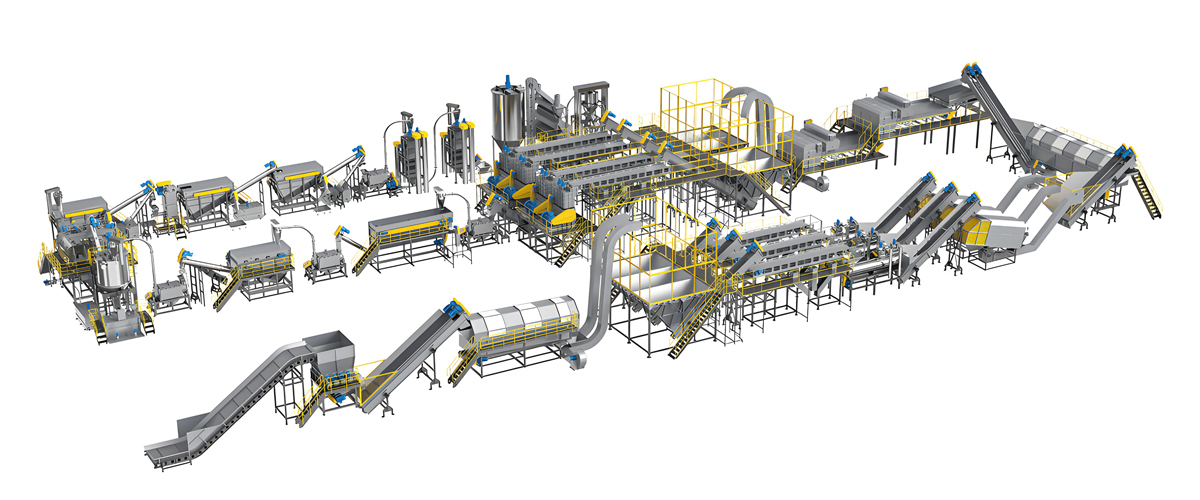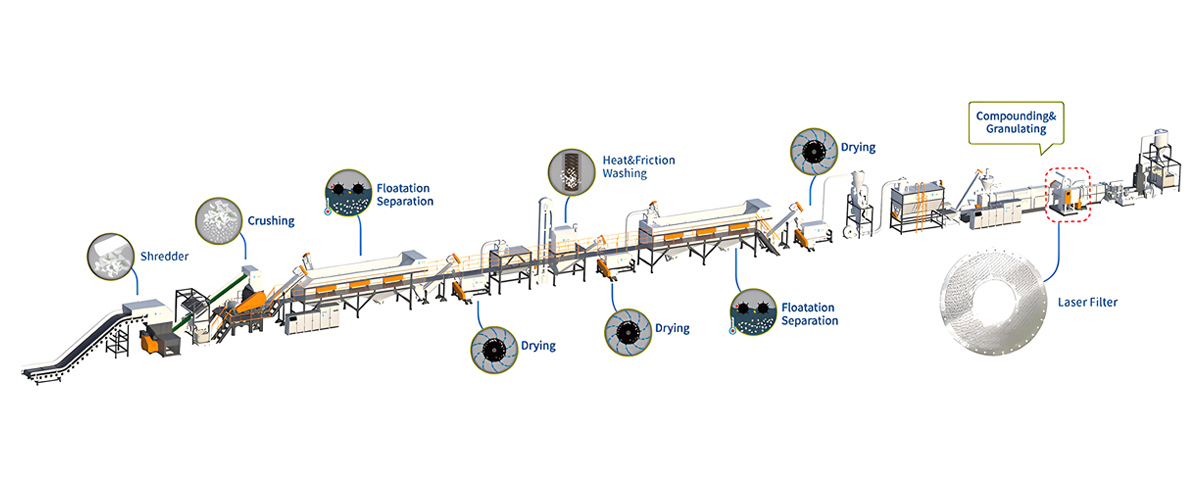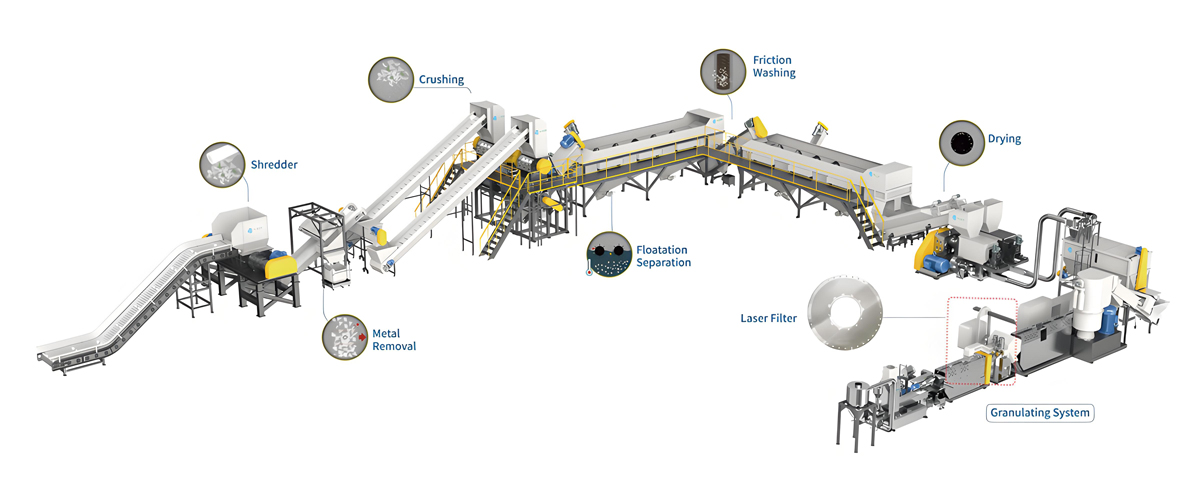

The global plastic recycling industry is undergoing a transformative shift toward high-purity recycled materials, driven by soaring demand for sustainable alternatives to virgin plastic, tightening environmental regulations, and rising virgin plastic prices. Valued at USD 58.6 billion in 2026 and projected to reach USD 92.3 billion by 2032, growing at a compound annual growth rate (CAGR) of 7.9%, the industry is increasingly prioritizing advanced separation technologies that can produce recycled plastic flakes with purity levels exceeding 99.9%. As a leading global manufacturer of comprehensive plastic recycling solutions, POLYRETEC has established itself as a pioneer in laser filtration technology, delivering high-performance laser filters that enable plastic recyclers to achieve unprecedented levels of purity and profitability.
High-purity plastic flakes are essential for producing high-quality recycled products that can compete with virgin plastic in performance and appearance. These flakes are in high demand for applications such as food and beverage packaging, automotive components, electronics, and consumer goods, where even small amounts of contamination can render the material unusable. Traditional separation technologies such as screens, magnets, and density separators are no longer sufficient to meet the strict purity requirements of these high-value applications. Laser filtration technology has emerged as the gold standard for high-purity plastic recycling, offering unmatched precision and versatility in removing contaminants and separating different types of plastics.
POLYRETEC has over 16 years of specialized experience in plastic recycling technology, with more than 1,800 plastic washing lines and recycling machines installed in over 65 countries worldwide. Our state-of-the-art manufacturing facilities cover over 48,000 square meters and are equipped with advanced CNC machining centers, precision testing equipment, and a dedicated research and development center. We employ a team of over 130 experienced engineers and technicians dedicated to developing innovative recycling solutions that maximize efficiency and profitability for our customers. All our laser filters and plastic recycling machines are built to the highest international standards using premium components from reputable suppliers, ensuring long service life and reliable performance in demanding industrial environments.
This comprehensive guide explores everything you need to know about choosing the right laser filter for high-purity plastic recycling flakes. It examines the critical role of laser filtration in modern plastic recycling, explains how laser filtration technology works, details the key factors to consider when selecting a laser filter, provides a complete overview of POLYRETEC’s PR-LF series laser filters with accurate technical specifications and transparent pricing, includes a detailed cost analysis and return on investment calculation, offers practical guidance on installation, operation, and maintenance best practices, and features real-world success stories from POLYRETEC customers worldwide. Whether you are upgrading an existing recycling line or establishing a new high-purity plastic recycling facility, this guide will help you make an informed decision and select the best laser filter for your specific needs.
1. The Critical Role of Laser Filtration in High Purity Plastic Recycling
1.1 Limitations of Traditional Separation Technologies
Traditional plastic separation technologies have significant limitations that prevent them from achieving the high purity levels required for modern recycling applications. Mechanical screens can only remove contaminants larger than a certain size, typically 2-3mm, and cannot separate different types of plastics or remove small particles of metal, glass, paper, or wood. Magnetic separators can only remove ferrous metals, leaving non-ferrous metals and other contaminants in the material stream. Density separators can separate plastics based on density differences but struggle with plastics of similar density and cannot separate different colors or grades of the same plastic type.
These limitations result in recycled plastic flakes with purity levels typically between 95% and 98%, which are only suitable for low-value applications such as construction materials, garden furniture, and packaging for non-food products. These low-purity flakes command significantly lower prices than high-purity flakes, reducing the profitability of recycling operations. In addition, the presence of contaminants can cause processing problems during extrusion and molding, leading to increased scrap rates and higher production costs.
As demand for high-quality recycled plastics continues to grow, recyclers need more advanced separation technologies that can achieve higher purity levels. Laser filtration technology addresses the limitations of traditional methods by providing precise, high-speed separation of plastics based on material composition, color, and transparency, enabling recyclers to produce flakes with purity levels exceeding 99.9%.
1.2 Growing Demand for High-Purity Recycled Plastics
The demand for high-purity recycled plastics is being driven by several key factors. First, major consumer goods companies and brand owners have set ambitious sustainability targets to increase the use of recycled content in their products. Many companies have committed to using 25-50% recycled content in their packaging by 2030, creating a huge market for high-quality recycled plastics.
Second, governments around the world are implementing regulations to promote plastic recycling and reduce plastic waste. The European Union’s Single-Use Plastics Directive requires that all plastic bottles contain at least 25% recycled content by 2025 and 30% by 2030. Many countries have also implemented extended producer responsibility (EPR) schemes that require manufacturers to take responsibility for the collection and recycling of their products, further increasing demand for recycled plastics.
Third, the price of virgin plastic has become increasingly volatile in recent years, making recycled plastics a more cost-effective alternative. High-purity recycled plastics can often be used as a direct replacement for virgin plastic at a lower cost, providing significant savings for manufacturers. This has led to increased adoption of recycled plastics in a wide range of applications, from packaging to automotive components.
1.3 Economic Benefits of High-Purity Recycling
Producing high-purity recycled plastic flakes offers significant economic benefits for recyclers. High-purity flakes command premium prices in the market, often selling for 30-100% more than low-purity flakes. For example, food-grade PET flakes typically sell for $1.20-$1.50 per kg, compared to $0.60-$0.80 per kg for non-food-grade PET flakes. This price difference can have a dramatic impact on the profitability of a recycling operation.
In addition to higher selling prices, high-purity recycled plastics also have a larger market and more stable demand. They can be sold to a wider range of customers, including manufacturers of high-value products who are willing to pay a premium for consistent quality. This reduces the risk of price fluctuations and ensures a more stable revenue stream for recyclers.
Furthermore, producing high-purity recycled plastics helps recyclers comply with environmental regulations and meet the sustainability requirements of their customers. This can lead to long-term contracts and stronger business relationships, providing a competitive advantage in the marketplace.
2. How Laser Filtration Technology Works for Plastic Flakes
2.1 Basic Operating Principle
Laser filtration technology uses advanced optical sensors and high-speed air jets to separate plastic flakes based on their material composition, color, and transparency. The process begins with plastic flakes being fed into the laser filter through a hopper and conveyor system. The flakes are then spread into a thin, uniform monolayer on a high-speed belt conveyor, ensuring that each flake is individually inspected by the laser sensors.
As the flakes pass through the inspection chamber, they are illuminated by multiple laser beams of different wavelengths. The lasers interact with the flakes, causing them to emit characteristic fluorescence and reflect light at specific wavelengths. High-resolution optical sensors capture this reflected and emitted light, and advanced spectroscopy algorithms analyze the spectral signature of each flake to determine its material type, color, and transparency.
The system compares the spectral signature of each flake to pre-programmed reference spectra for acceptable materials and contaminants. When a contaminant or unwanted flake is detected, the system triggers a high-speed air jet that blows the flake out of the material stream into a separate waste chute. The acceptable flakes continue along the conveyor and fall into the product chute, resulting in a stream of high-purity plastic flakes.
2.2 Key Components of a Laser Filter
A modern laser filter consists of several key components that work together to achieve precise, high-speed separation:
- Feeding System: The feeding system ensures a consistent, uniform flow of flakes into the inspection chamber. It typically includes a vibrating feeder and belt conveyor that spreads the flakes into a thin monolayer to prevent overlapping and ensure accurate inspection.
- Laser Illumination System: The laser illumination system uses multiple high-power lasers of different wavelengths to illuminate the flakes. The choice of laser wavelengths depends on the types of plastics and contaminants being separated.
- Optical Sensors: High-resolution optical sensors capture the light reflected and emitted by the flakes. These sensors are capable of detecting even the smallest differences in spectral signature, enabling precise identification of different materials and contaminants.
- Processing and Control System: The processing and control system uses advanced algorithms to analyze the spectral data from the sensors in real time. It makes split-second decisions about whether each flake is acceptable or a contaminant and triggers the appropriate air jet.
- High-Speed Air Jet System: The high-speed air jet system consists of an array of precision nozzles that blow contaminants out of the material stream. The nozzles are capable of operating at speeds of up to 1,000 cycles per second, ensuring accurate separation even at high throughput rates.
- Sorting Chutes: The sorting chutes separate the acceptable flakes from the contaminants and direct them to separate collection points. Some advanced laser filters have multiple chutes for sorting different types of plastics simultaneously.
2.3 Advantages of Laser Filtration Over Other Technologies
Laser filtration technology offers several significant advantages over traditional separation technologies:
Unmatched Precision: Laser filters can detect and remove contaminants as small as 0.1mm, achieving purity levels of up to 99.99%. This is significantly higher than any other separation technology currently available.
Versatility: Laser filters can separate a wide range of plastics based on material type, color, and transparency. They can remove various contaminants including metals, glass, paper, wood, and different types of plastics, making them suitable for almost any plastic recycling application.
High Throughput: Modern laser filters can process up to 3,000 kg of plastic flakes per hour, making them suitable for large-scale recycling operations. They can operate 24 hours a day, 7 days a week, with minimal downtime.
Low Material Loss: Laser filters have very low material loss rates, typically less than 2-3%. This is significantly lower than other separation technologies, which can have loss rates of 10% or more.
Automation and Ease of Use: Laser filters are fully automated and require minimal operator intervention. They feature intuitive touch screen interfaces that allow operators to easily set up and adjust sorting parameters for different materials and applications.
Environmental Friendliness: Laser filtration is a dry separation process that does not use water or chemicals, making it environmentally friendly and reducing operating costs.
3. Key Factors to Consider When Choosing a Laser Filter
3.1 Processing Capacity and Throughput Requirements
The first and most important factor to consider when choosing a laser filter is your processing capacity and throughput requirements. Laser filters are available in a wide range of sizes and capacities, from small compact models processing 300 kg per hour to large industrial models processing 3,000 kg per hour or more.
You should select a laser filter with a capacity that matches or slightly exceeds the output of your existing plastic washing line. It is important to consider not only your current production needs but also your future growth plans. Choosing a laser filter with a higher capacity than you currently need will allow you to expand your production in the future without having to purchase additional equipment.
It is also important to note that the actual throughput of a laser filter can vary depending on several factors, including the size and shape of the flakes, the level of contamination, and the required purity level. Smaller flakes and higher levels of contamination will generally result in lower throughput rates. POLYRETEC’s technical team can help you determine the appropriate capacity for your specific application based on your material characteristics and production requirements.
3.2 Target Purity Level and Application Requirements
The target purity level you need to achieve is another critical factor to consider when choosing a laser filter. Different applications require different levels of purity, and the laser filter you choose must be capable of meeting these requirements.
For general-purpose recycling applications where the recycled flakes will be used for low-value products, a purity level of 99-99.5% may be sufficient. For higher-value applications such as automotive components and consumer goods, a purity level of 99.5-99.9% is typically required. For food-grade and medical-grade applications, the highest purity levels of 99.9-99.99% are necessary to ensure product safety and compliance with regulatory requirements.
Different laser filters offer different levels of sorting precision. Entry-level models typically achieve purity levels of 99-99.5%, while mid-range models achieve 99.5-99.9%, and high-end models achieve 99.9-99.99%. POLYRETEC offers laser filters in all these categories, allowing you to select the model that best meets your specific purity requirements.
3.3 Compatibility with Plastic Types and Contaminants
You should also consider the types of plastics you will be processing and the types of contaminants you need to remove. Different laser filters are optimized for different materials and applications, and it is important to choose a filter that is compatible with your specific material stream.
Most laser filters can process common plastics such as PET, HDPE, PP, and PVC. However, some filters may have difficulty processing certain engineering plastics or plastics with special additives. If you process a variety of different plastics, you should choose a laser filter that offers flexible sorting parameters and can be easily reconfigured for different materials.
You should also consider the types of contaminants present in your material stream. Common contaminants include different colors of the same plastic, different types of plastics, metals, glass, paper, wood, and rubber. Make sure the laser filter you choose is capable of detecting and removing all the contaminants present in your material.
3.4 Automation and Integration Capabilities
Automation and integration capabilities are important factors to consider, especially if you are integrating the laser filter into an existing automated recycling line. A fully automated laser filter will require minimal operator intervention and can operate continuously with minimal downtime.
Look for laser filters that feature advanced control systems with intuitive touch screen interfaces, recipe management capabilities, and remote monitoring and control functionality. Recipe management allows you to store and recall sorting parameters for different materials and applications, making product changeovers quick and easy. Remote monitoring and control allow you to monitor the performance of the laser filter from anywhere and make adjustments as needed.
You should also ensure that the laser filter can be easily integrated with your existing equipment, including conveyors, washing machines, dryers, and storage silos. POLYRETEC’s laser filters are designed to integrate seamlessly with our complete range of plastic recycling equipment, as well as equipment from other manufacturers.
3.5 Energy Consumption and Operating Costs
Energy consumption is a significant component of the operating costs of a laser filter. Different models have different energy requirements, and it is important to consider the long-term energy costs when making your purchasing decision.
Modern laser filters are designed to be energy efficient, but there can still be significant differences between models. Look for filters that use energy-efficient components such as LED lighting, variable speed drives, and low-power laser diodes. POLYRETEC’s laser filters incorporate advanced energy-saving technologies that reduce energy consumption by up to 30% compared to conventional models.
In addition to energy costs, you should also consider other operating costs such as maintenance costs, consumable costs, and labor costs. Laser filters with fewer moving parts generally require less maintenance and have lower operating costs. Consumables such as air filters, nozzles, and laser diodes should be readily available and reasonably priced.
3.6 Equipment Reliability and After-Sales Support
Equipment reliability and after-sales support are critical factors to consider when investing in a laser filter. A reliable laser filter will operate continuously with minimal downtime, maximizing your production and profitability. Look for filters that are built to high quality standards using premium components from reputable suppliers.
You should also choose a manufacturer that offers comprehensive after-sales support, including installation, commissioning, training, maintenance, and spare parts supply. The manufacturer should have a global service network with experienced technicians who can provide on-site support when needed. They should also maintain a large inventory of spare parts to ensure quick delivery and minimize downtime.
POLYRETEC offers comprehensive after-sales support to customers worldwide. We have a global network of service centers and experienced technicians who can provide on-site installation, training, and maintenance services. We also maintain a large inventory of genuine spare parts at our regional warehouses, ensuring that we can quickly deliver the parts you need to keep your equipment running smoothly.
4. POLYRETEC Comprehensive Range of Laser Filters for Plastic Recycling
POLYRETEC offers a comprehensive range of high-performance laser filters designed to meet the diverse needs of plastic recyclers worldwide. Our PR-LF series laser filters are engineered to deliver exceptional sorting precision, high throughput, and reliable performance in demanding industrial environments. All our laser filters incorporate the latest technological innovations and are built to the highest international standards.
4.1 PR-LF 300 Compact Laser Filter
The POLYRETEC PR-LF 300 is our entry-level compact laser filter, designed for small to medium-sized recycling operations processing up to 500 kg of plastic flakes per hour. It features a compact design that fits easily in limited space while delivering the same high performance as our larger models. The PR-LF 300 is ideal for recycling operations producing general-purpose recycled flakes for applications such as construction materials, garden furniture, and non-food packaging.
Technical Specifications:
- Processing capacity: 300-500 kg/h
- Sorting precision: up to 99.5%
- Minimum flake size: 2mm
- Number of laser sensors: 4
- Number of air nozzles: 64
- Total installed power: 15kW
- Compressed air requirement: 0.6-0.8 MPa, 1.2 m³/min
- Dimensions (L×W×H): 3200×1200×2200mm
- Total weight: approximately 2,800kg
Price and Cost Analysis: The price of the POLYRETEC PR-LF 300 compact laser filter ranges from $45,000 to $65,000 FOB Shanghai, depending on configuration and optional features. The standard configuration includes the laser filter, control system, and basic feeding system. Optional features include automatic material loading, remote monitoring, and additional sorting channels. The typical payback period is 8-12 months for small to medium-scale recycling operations.
4.2 PR-LF 600 Medium Capacity Laser Filter
The POLYRETEC PR-LF 600 is our most popular medium-capacity laser filter, designed for medium-sized recycling operations processing up to 1,000 kg of plastic flakes per hour. It offers an excellent balance of performance, flexibility, and affordability, making it ideal for recyclers producing high-quality flakes for applications such as automotive components, consumer goods, and general packaging. The PR-LF 600 can separate a wide range of plastics and contaminants with exceptional precision.
Technical Specifications:
- Processing capacity: 600-1000 kg/h
- Sorting precision: up to 99.9%
- Minimum flake size: 1mm
- Number of laser sensors: 8
- Number of air nozzles: 128
- Total installed power: 25kW
- Compressed air requirement: 0.6-0.8 MPa, 2.0 m³/min
- Dimensions (L×W×H): 4000×1500×2400mm
- Total weight: approximately 4,500kg
Price and Cost Analysis: The price of the POLYRETEC PR-LF 600 medium-capacity laser filter ranges from $85,000 to $115,000 FOB Shanghai, depending on configuration and optional features. The standard configuration includes the laser filter, control system, and feeding system. Optional features include multi-channel sorting, automatic material loading, remote monitoring, and food-grade construction. The typical payback period is 5-8 months for medium-scale recycling operations producing high-quality flakes.
4.3 PR-LF 1200 High Capacity Laser Filter
The POLYRETEC PR-LF 1200 is our high-capacity laser filter, designed for large recycling operations processing up to 1,800 kg of plastic flakes per hour. It offers exceptional sorting precision and high throughput, making it ideal for recyclers producing high-purity flakes for demanding applications such as food packaging and automotive components. The PR-LF 1200 features advanced technology and robust construction, ensuring reliable performance 24/7 in demanding industrial environments.
Technical Specifications:
- Processing capacity: 1200-1800 kg/h
- Sorting precision: up to 99.95%
- Minimum flake size: 0.5mm
- Number of laser sensors: 16
- Number of air nozzles: 256
- Total installed power: 40kW
- Compressed air requirement: 0.6-0.8 MPa, 3.5 m³/min
- Dimensions (L×W×H): 4800×1800×2600mm
- Total weight: approximately 7,200kg
Price and Cost Analysis: The price of the POLYRETEC PR-LF 1200 high-capacity laser filter ranges from $150,000 to $200,000 FOB Shanghai, depending on configuration and optional features. The standard configuration includes the laser filter, control system, and feeding system. Optional features include multi-channel sorting, automatic material loading, remote monitoring, and food-grade construction. The typical payback period is 3-6 months for large-scale recycling operations producing high-purity food-grade flakes.
4.4 PR-LF 2000 Industrial Scale Laser Filter
The POLYRETEC PR-LF 2000 is our largest and most powerful industrial-scale laser filter, designed for the largest recycling operations processing up to 3,000 kg of plastic flakes per hour. It delivers unmatched sorting precision and throughput, making it ideal for industrial recycling facilities producing the highest purity flakes for food-grade and medical-grade applications. The PR-LF 2000 features the latest technological innovations and heavy-duty construction, ensuring maximum performance and reliability.
Technical Specifications:
- Processing capacity: 2000-3000 kg/h
- Sorting precision: up to 99.99%
- Minimum flake size: 0.3mm
- Number of laser sensors: 24
- Number of air nozzles: 384
- Total installed power: 65kW
- Compressed air requirement: 0.6-0.8 MPa, 5.0 m³/min
- Dimensions (L×W×H): 5600×2100×2800mm
- Total weight: approximately 11,500kg
Price and Cost Analysis: The price of the POLYRETEC PR-LF 2000 industrial-scale laser filter ranges from $250,000 to $320,000 FOB Shanghai, depending on configuration and optional features. The standard configuration includes the laser filter, control system, and feeding system. Optional features include multi-channel sorting, automatic material handling systems, remote monitoring, and food-grade construction. The typical payback period is 2-4 months for industrial-scale recycling operations producing premium food-grade flakes.
5. Detailed Cost Analysis and Return on Investment
5.1 Initial Investment Breakdown
To help you understand the financial aspects of investing in a POLYRETEC laser filter, we will provide a detailed cost analysis for a typical medium-sized recycling operation based on the PR-LF 600 model, which is our most popular configuration for high-quality plastic flake production.
POLYRETEC PR-LF 600 laser filter with standard configuration: $100,000 Automatic material loading system: $12,000 Remote monitoring and control system: $8,000 Professional installation and commissioning: $12,000 (10% of equipment cost) Comprehensive training program: $6,000 (5% of equipment cost) Shipping and insurance to Europe: $18,000 Site preparation and utility connections: $15,000 Initial spare parts package: $7,000 Contingency fund (10%): $15,800 Total Initial Investment: $193,800
While this initial investment may seem significant, the high premium commanded by high-purity recycled flakes and the high efficiency of POLYRETEC’s laser filters result in a very fast return on investment. The advanced technology and robust construction of our equipment also ensure long service life and low maintenance costs, providing excellent return on investment over the entire 15-20 year life of the machine.
5.2 Annual Operating Cost Projection
To demonstrate the financial performance of a POLYRETEC PR-LF 600 laser filter, we will calculate the annual operating costs based on 24 hours of production per day, 300 days per year, processing PET flakes for food packaging applications.
Energy costs: $0.12 per kWh × 25 kW × 24 hours/day × 300 days/year = $21,600 per year Compressed air costs: $0.08 per m³ × 2.0 m³/min × 60 min/hour × 24 hours/day × 300 days/year = $69,120 per year Labor costs (1 operator): $25 per hour × 8 hours/day × 300 days/year = $60,000 per year Maintenance and repair costs: $8,000 per year Consumable costs (filters, nozzles, etc.): $5,000 per year Overhead costs: $30,000 per year Total Annual Operating Costs: $193,720 per year
It is important to note that these operating costs are significantly lower than what you would incur with manual sorting or other separation technologies. The high automation level of POLYRETEC’s laser filters reduces labor requirements, while the high sorting precision reduces material loss and increases the value of the final product.
5.3 Revenue Calculation and Profit Analysis
The PR-LF 600 has an average processing capacity of 800 kg per hour for PET flakes. Operating 24 hours a day, 300 days a year, this results in an annual processing volume of 5,760,000 kg of flakes.
Without laser filtration, the PET flakes would have a purity level of approximately 97% and sell for $0.80 per kg. With laser filtration, the purity level increases to 99.9%, making the flakes suitable for food packaging applications and allowing them to sell for $1.30 per kg. This represents a price premium of $0.50 per kg.
Annual Revenue Without Laser Filtration: 5,760,000 kg × $0.80/kg = $4,608,000 per year Annual Revenue With Laser Filtration: 5,760,000 kg × $1.30/kg = $7,488,000 per year Annual Additional Revenue: $7,488,000 – $4,608,000 = $2,880,000 per year
Annual Net Profit: $2,880,000 – $193,720 = $2,686,280 per year
5.4 ROI and Payback Period Analysis
Based on the above calculations, the return on investment for the POLYRETEC PR-LF 600 laser filter is calculated as follows:
Total Initial Investment: $193,800 Annual Net Profit: $2,686,280 per year Payback Period: $193,800 ÷ $2,686,280 = 0.072 years = 0.86 months
This exceptionally short payback period demonstrates that investing in a high-quality POLYRETEC laser filter is one of the most profitable investments available in the plastic recycling industry today. Even with conservative assumptions about price premiums and production levels, the investment is typically recovered in less than 6 months. Over the 15-year service life of the equipment, the total net profit generated can exceed $40 million.
5.5 Sensitivity Analysis for Market Conditions
To account for potential variations in market conditions and production volumes, we have conducted a sensitivity analysis to show how these factors affect the payback period.
If the price premium is only $0.25 per kg: Payback period = 1.7 months If production volume is only 50% of capacity: Payback period = 1.7 months If both the price premium is $0.25 per kg and production volume is 50%: Payback period = 3.4 months
This sensitivity analysis shows that the investment in a POLYRETEC laser filter remains highly profitable even under the most adverse market conditions. The significant price premium for high-purity recycled flakes and the low operating costs of our laser filters provide a strong financial foundation that is relatively unaffected by moderate fluctuations in market demand or prices.
6. Installation, Operation and Maintenance Best Practices
6.1 Proper Installation Requirements
Proper installation is essential for ensuring the optimal performance and reliability of your laser filter. The installation site should be level, clean, and free from excessive vibration, dust, and moisture. The site should have sufficient space around the machine for operation, maintenance, and material handling.
The laser filter requires a stable electrical supply with the correct voltage and frequency. It also requires a clean, dry compressed air supply with a pressure of 0.6-0.8 MPa and sufficient flow rate. The compressed air should be filtered to remove oil, water, and particulates to prevent damage to the air nozzles and other components.
POLYRETEC provides professional installation services by our experienced technicians. Our technicians will ensure that the machine is properly installed, leveled, and connected to all utilities. They will also calibrate the machine and perform test runs to ensure that it is operating at peak performance before handing it over to your team.
6.2 Operator Training and Best Practices
Proper operator training is essential for achieving the best performance from your laser filter. Operators should be thoroughly trained in all aspects of machine operation, including setting up sorting parameters, adjusting the feeding system, monitoring performance, and performing routine maintenance.
POLYRETEC provides comprehensive training programs for operators and maintenance personnel. Our training programs include both classroom instruction and hands-on training, covering all aspects of machine operation, maintenance, and troubleshooting. We also provide detailed operation and maintenance manuals that serve as valuable references for your staff.
Some best practices for operating a laser filter include maintaining a consistent feed rate, ensuring that the flakes are properly dried and free from clumps, regularly cleaning the sensors and optical components, and monitoring the sorting performance to ensure that the desired purity level is being achieved.
6.3 Preventive Maintenance Program
Implementing a regular preventive maintenance program is essential for ensuring that your laser filter continues to deliver consistent performance and accuracy over its entire service life. Regular maintenance helps to prevent wear and damage to machine components, ensures optimal performance, and minimizes the risk of unplanned downtime.
POLYRETEC provides detailed maintenance schedules and recommended spare parts lists for all our laser filters, outlining daily, weekly, monthly, and annual maintenance tasks. Daily maintenance tasks include cleaning the machine, checking the compressed air supply, and inspecting the conveyor belt. Weekly maintenance tasks include cleaning the laser sensors and optical components, checking the air nozzles for clogs, and lubricating moving parts.
Monthly maintenance tasks include calibrating the sensors, checking the electrical connections, and inspecting the feeding system. Annual maintenance tasks include a comprehensive inspection of all components, replacement of worn parts, and performance testing. By following the recommended preventive maintenance program, you can ensure that your laser filter operates reliably at peak performance for many years.
7. Real-World Success Stories: POLYRETEC Laser Filters in Action
7.1 Case Study 1: PET Bottle Recycling Plant in Germany
A leading PET bottle recycling plant in Germany was struggling to meet the growing demand for food-grade PET flakes. The plant was using traditional separation technologies that could only achieve a purity level of 97%, resulting in flakes that were only suitable for non-food applications. The company was losing significant revenue by selling their flakes at a discount and was unable to compete for contracts with major food and beverage manufacturers.
After extensive research and evaluation, the company selected POLYRETEC to provide a high-purity recycling solution. They purchased a PR-LF 1200 high-capacity laser filter to integrate into their existing PET washing line. The laser filter was installed and commissioned in just 10 days, and the plant immediately began producing food-grade PET flakes with a purity level of 99.95%.
Results after implementation: Purity level increased from 97% to 99.95% Flake selling price increased from $0.85/kg to $1.40/kg Annual additional revenue of $8.25 million Material loss reduced from 8% to less than 2% Production capacity increased by 25% Payback period of 0.6 months for the entire investment
The company was extremely satisfied with the performance of the POLYRETEC laser filter and has since purchased two additional PR-LF 1200 filters to expand their production capacity. They have become a leading supplier of food-grade PET flakes in Europe, supplying major food and beverage manufacturers with high-quality recycled material.
7.2 Case Study 2: HDPE Container Recycling Plant in the United States
A HDPE container recycling plant in the United States was facing increasing pressure from customers to provide color-sorted HDPE flakes. The plant was previously using manual sorting to separate different colors of HDPE, which was slow, expensive, and inconsistent. Manual sorting resulted in high labor costs, low productivity, and inconsistent purity levels, leading to customer complaints and lost business.
The company decided to invest in automated sorting technology and selected POLYRETEC based on our advanced laser filtration technology and comprehensive after-sales support. They purchased a PR-LF 600 medium-capacity laser filter for color sorting HDPE flakes. The laser filter was installed and commissioned in 8 days, and the plant immediately saw significant improvements in productivity and product quality.
Results after implementation: Achieved consistent color sorting with purity levels of 99.9% Labor costs reduced by 70% Production capacity increased by 30% Scrap rate reduced from 5% to less than 0.5% Customer complaints eliminated Payback period of 1.2 months for the entire investment
The company has been able to expand their customer base and increase their market share by offering high-quality color-sorted HDPE flakes. They have since purchased a second PR-LF 600 laser filter to handle their growing production volume and are planning to upgrade their entire recycling line with POLYRETEC equipment in the near future.
8. Conclusion
Choosing the right laser filter is a critical decision for any plastic recycler looking to produce high-purity recycled flakes. Laser filtration technology has revolutionized the plastic recycling industry, enabling recyclers to achieve unprecedented levels of purity and profitability. When selecting a laser filter, it is important to consider factors such as processing capacity, target purity level, material compatibility, automation capabilities, operating costs, and after-sales support.
POLYRETEC offers a comprehensive range of high-performance laser filters designed to meet the diverse needs of plastic recyclers worldwide. Our PR-LF series laser filters deliver exceptional sorting precision, high throughput, and reliable performance, enabling our customers to produce high-purity recycled flakes that command premium prices in the market. With processing capacities ranging from 300 kg/h to 3,000 kg/h and purity levels up to 99.99%, we have a solution to meet every recycling need.
The financial benefits of investing in a POLYRETEC laser filter are exceptional, with payback periods typically less than 6 months and total returns exceeding 100 times the initial investment over the life of the equipment. Our laser filters are designed to integrate seamlessly with our complete range of plastic recycling equipment, including plastic washing lines, crushers, dewatering machines, and dryers, providing our customers with complete turnkey recycling solutions.
Whether you are upgrading an existing recycling line or establishing a new high-purity plastic recycling facility, POLYRETEC has the expertise, technology, and commitment to customer success to help you achieve your production goals. With over 16 years of industry experience, state-of-the-art manufacturing facilities, and a global network of service centers, POLYRETEC is your trusted partner for all your plastic recycling needs. Contact us today to learn more about how our advanced laser filters and plastic recycling solutions can help you improve product quality, increase productivity, and maximize profitability.