
The global post-consumer PET bottle recycling market is projected to reach $48.7 billion in 2026, growing at a compound annual growth rate (CAGR) of 7.2% through 2032. This exponential growth is driven by strict extended producer responsibility (EPR) regulations, corporate sustainability mandates requiring 25-100% recycled content in packaging, and increasing consumer demand for eco-friendly products. Among all recycling technologies, Austrian-engineered PET washing lines have emerged as the global gold standard, renowned for their unmatched cleaning efficiency, food-grade decontamination capabilities, and exceptional operational reliability.
Austria has long been a global leader in plastic recycling innovation, home to industry pioneers like Starlinger and Erema that have defined modern PET recycling standards. Austrian technology is particularly celebrated for its ability to produce food-grade recycled PET (rPET) flakes that meet the strictest EFSA and FDA requirements, enabling true bottle-to-bottle recycling loops. This capability is critical as the global demand for food-grade rPET is expected to outpace supply by 40% in 2026, creating significant price premiums for high-quality recycled material.
As a leading global manufacturer of advanced plastic recycling equipment, POLYRETEC has integrated cutting-edge Austrian technology into its PET bottle washing lines while leveraging cost-effective manufacturing capabilities to deliver exceptional value. POLYRETEC’s Austrian-technology washing lines combine precision engineering, innovative cleaning processes, and intelligent automation to produce rPET flakes with purity levels exceeding 99.5%. With over 1,200 machines installed in more than 60 countries, POLYRETEC has helped recycling operations worldwide achieve industry-leading profit margins and rapid return on investment.
This comprehensive guide explores the superiority of Austrian technology in PET bottle recycling and details POLYRETEC’s integrated washing line solutions. It examines the critical challenges in PET waste processing, explains the core components and technological advantages of Austrian-engineered washing lines, provides customized configurations for different production capacities, includes a detailed cost analysis and return on investment calculation, and features real-world case studies of successful recycling operations. Whether you are establishing a new recycling plant or upgrading existing equipment, this guide will help you understand why Austrian technology is the optimal choice for PET bottle waste recycling.
1. Why Austrian Technology Dominates Global PET Recycling
Austria’s leadership in plastic recycling technology is the result of decades of innovation, rigorous engineering standards, and a strong national commitment to environmental sustainability. Austrian recycling technology sets the global benchmark for performance, reliability, and product quality, making it the preferred choice for leading recycling operations worldwide.
1.1 A Legacy of Recycling Innovation and Excellence
Austria has been at the forefront of plastic recycling development since the 1970s, when the first commercial PET recycling processes were developed. Today, Austrian companies hold over 60% of global patents related to PET recycling technology, and Austrian-engineered equipment processes more than 40% of the world’s recycled PET. This legacy of innovation has created a deep pool of engineering expertise and a robust supply chain of high-quality components that ensure the reliability and performance of Austrian recycling equipment.
The Austrian recycling industry is also supported by a strong regulatory framework that promotes circular economy principles. Austria has one of the highest PET bottle recycling rates in the world, reaching 75% in 2025, thanks to its well-established deposit return system. This high recycling rate has created a large domestic market for recycling equipment, driving continuous innovation and improvement in Austrian technology.
1.2 Unmatched Food-Grade Decontamination Capabilities
The most significant advantage of Austrian PET recycling technology is its proven ability to produce food-grade rPET that meets the strictest global safety standards. Austrian processes have received over 50 positive opinions from the European Food Safety Authority (EFSA) and multiple Letters of Non-Objection from the U.S. Food and Drug Administration (FDA), confirming their effectiveness in removing contaminants from post-consumer PET bottles.
For example, the Starlinger recoSTAR process used in many Austrian washing lines has been validated to achieve decontamination efficiencies exceeding 99.9% for a wide range of potential contaminants. This allows recycled PET produced using Austrian technology to be used in 100% food contact applications, including beverage bottles, food containers, and packaging. The ability to produce food-grade rPET commands a price premium of 30-50% over standard industrial-grade rPET, significantly improving the profitability of recycling operations.
1.3 Superior Engineering and Operational Reliability
Austrian recycling equipment is renowned for its robust construction, precision engineering, and exceptional operational reliability. Austrian manufacturers use only the highest quality materials and components, and every piece of equipment undergoes rigorous testing before delivery. This attention to quality results in equipment that has a service life of 15-20 years, significantly longer than equipment from other regions.
Austrian washing lines also feature modular designs that allow for easy customization, expansion, and maintenance. This modularity enables recycling operations to adapt to changing feedstock characteristics, market demands, and regulatory requirements without requiring complete equipment replacement. Additionally, Austrian equipment is designed for minimal downtime, with quick-change components and easy access for maintenance, ensuring high overall equipment effectiveness (OEE) rates of 90% or higher.
1.4 Industry-Leading Energy and Water Efficiency
Sustainability is at the core of Austrian recycling technology, and Austrian washing lines are designed to minimize environmental impact while maximizing operational efficiency. Austrian engineers have developed innovative processes that significantly reduce energy and water consumption compared to traditional washing lines.
For example, advanced heat recovery systems capture and reuse thermal energy from the washing process to preheat incoming water and raw materials, reducing energy consumption by 30-40%. Closed-loop water recycling systems recover and reuse over 95% of process water, minimizing freshwater consumption and wastewater discharge. These efficiency improvements not only reduce environmental impact but also significantly lower operational costs, improving the profitability of recycling operations.
2. Critical Challenges in PET Bottle Waste Washing
PET bottle waste washing is a complex process that requires precise control over multiple variables to produce high-quality recycled flakes. Post-consumer PET bottles contain a variety of contaminants, including labels, adhesives, food residues, dirt, and other foreign materials, that must be effectively removed to meet the purity requirements for different applications. The following are the most significant challenges facing PET recycling operations today.
2.1 Label and Adhesive Residue Removal
Labels and adhesives are among the most difficult contaminants to remove from PET bottles. Most PET bottles have paper or plastic labels attached with pressure-sensitive adhesives that can leave sticky residues on the bottle surface. These residues can attract dirt and other contaminants, discolor the PET flakes, and cause processing problems in downstream applications.
Traditional washing methods often struggle to completely remove labels and adhesives, resulting in flakes with high contamination levels that are unsuitable for high-value applications. Incomplete label removal can also cause problems in extrusion processes, leading to defects in the final product and reduced equipment lifespan.
2.2 Achieving Food-Grade Purity Standards
Producing food-grade rPET is the most challenging and profitable application for recycled PET. Food-grade rPET must meet extremely strict purity requirements, with virtually no residual contaminants, to ensure it is safe for direct contact with food and beverages. This requires advanced decontamination processes that can remove not only visible contaminants but also invisible chemical residues that may be present in post-consumer PET bottles.
Traditional washing lines are generally not capable of achieving the level of decontamination required for food-grade applications. Even small amounts of residual contaminants can cause the final product to fail food safety tests, resulting in significant financial losses for recycling operations.
2.3 Processing Highly Contaminated Feedstock
The quality of post-consumer PET bottle feedstock can vary significantly depending on the collection system, geographic location, and time of year. Many recycling operations receive highly contaminated feedstock containing high levels of dirt, sand, food residues, and non-PET materials such as glass, metal, and other plastics.
Processing highly contaminated feedstock requires robust equipment and advanced cleaning processes that can handle variable input quality while maintaining consistent output quality. Traditional washing lines often struggle with variable feedstock, resulting in inconsistent product quality, increased downtime, and higher operational costs.
2.4 Minimizing Water and Energy Consumption
Water and energy are significant operational costs for PET recycling operations. Traditional washing lines consume large amounts of freshwater and energy, with water consumption ranging from 5-15 cubic meters per ton of processed PET and energy consumption ranging from 200-400 kWh per ton. These high consumption levels not only increase operational costs but also have a significant environmental impact.
As water and energy prices continue to rise and environmental regulations become stricter, recycling operations are under increasing pressure to reduce their resource consumption. This requires innovative technologies and process improvements that can maintain high cleaning efficiency while minimizing water and energy use.
3. POLYRETEC Austrian-Technology PET Washing Line Core Components
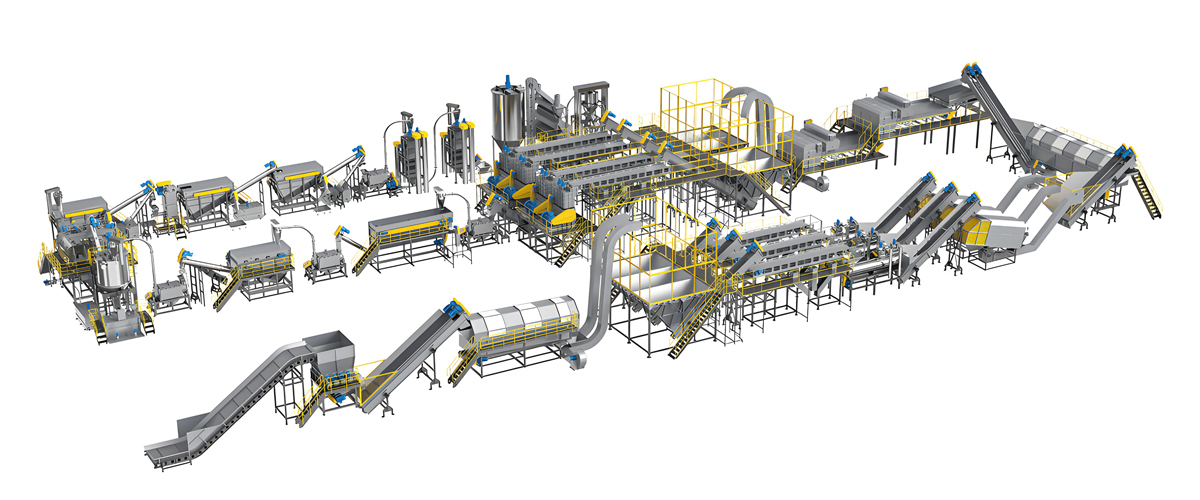
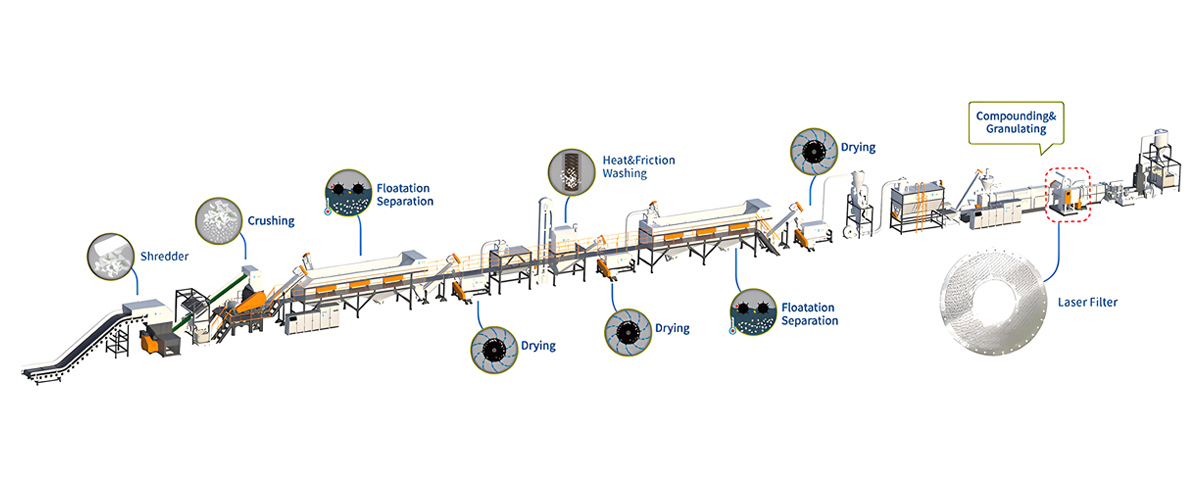
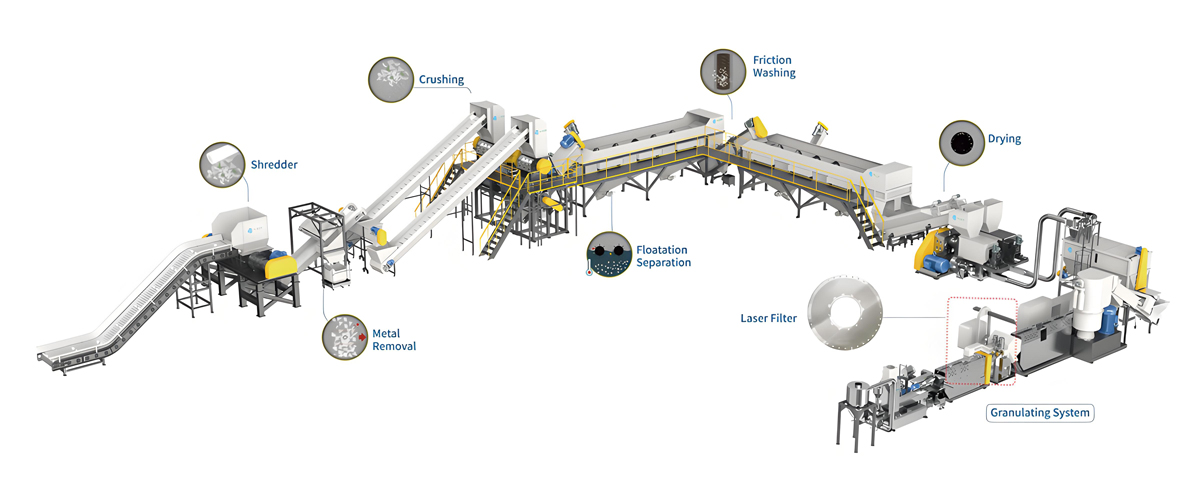
POLYRETEC’s Austrian-technology PET bottle washing lines integrate the latest innovations from Austrian recycling engineering to deliver superior cleaning performance, exceptional efficiency, and reliable operation. Each component of the line is designed and manufactured to the highest Austrian quality standards, ensuring optimal performance and long service life. The following are the core components of a POLYRETEC PET washing line.
3.1 Automatic De-Baling and Pre-Sorting System
The first stage of the PET recycling process is automatic de-baling and pre-sorting. POLYRETEC’s automatic de-baler uses a robust chain conveyor and hydraulic bale breaker to efficiently separate compressed PET bottle bales into individual bottles. The system features a strong bale-breaking ability that can handle even the highest density bales, ensuring continuous and uniform feeding of the line.
After de-baling, the bottles pass through a pre-sorting conveyor where large non-PET contaminants such as cardboard, plastic film, and large metal objects are removed. The system can be equipped with optional metal detectors and magnetic separators to automatically remove ferrous and non-ferrous metals, protecting downstream equipment from damage.
3.2 Patented PVC Label Removal System
Label removal is one of the most critical stages in PET bottle washing, and POLYRETEC’s patented label removal system sets the industry standard for performance. The system uses a combination of mechanical friction and water to separate labels from PET bottles, achieving label removal rates exceeding 99%.
The label remover features a rotating drum with specially designed paddles that create a turbulent water flow, causing the bottles to rub against each other and remove labels and adhesives. The separated labels are then removed from the process water using a rotary screen and screw conveyor, ensuring they do not recontaminate the PET bottles. POLYRETEC’s label removal system is particularly effective at removing PVC labels, which are a major source of contamination in PET recycling.
3.3 Whole Bottle Pre-Washing and Metal Separation
After label removal, the PET bottles enter the whole bottle pre-washing system, which uses high-pressure water jets to remove loose dirt, sand, and food residues from the exterior of the bottles. The pre-washing system helps reduce the load on downstream washing stages and improves overall cleaning efficiency.
The pre-washed bottles then pass through a second metal separation stage to remove any remaining metal contaminants. POLYRETEC uses high-sensitivity metal detectors and magnetic separators that can detect and remove even small metal fragments, ensuring the purity of the PET material and protecting downstream equipment from damage.
3.4 Advanced Optical Sorting System
POLYRETEC’s PET washing lines can be equipped with advanced optical sorting systems that use near-infrared (NIR) spectroscopy to automatically sort PET bottles by color and material type. The optical sorters can accurately separate clear, blue, green, and other colored PET bottles, as well as remove non-PET plastics such as HDPE, PP, and PVC.
The optical sorting system features high-speed cameras and intelligent algorithms that can process up to 10 tons of material per hour with sorting accuracy exceeding 99%. This ensures that only the desired type and color of PET bottles proceed to the next stage of the process, improving the quality and value of the final product.
3.5 Wet Crushing and Dust Removal
After sorting, the PET bottles are crushed into small flakes using a wet crusher. POLYRETEC’s wet crusher features a robust design with high-quality alloy steel blades that provide efficient and uniform crushing of PET bottles. The wet crushing process helps reduce dust generation and prevents the loss of small PET flakes, improving material recovery rates.
The crushed PET flakes then pass through a dust removal system that uses air classification to remove fine dust particles and lightweight contaminants such as paper and plastic film. The dust removal system helps improve the cleanliness of the PET flakes and reduces the load on downstream washing stages.
3.6 Multi-Stage Hot Washing and Friction Cleaning
The hot washing and friction cleaning stage is the heart of the PET washing process, where most of the remaining contaminants are removed. POLYRETEC’s multi-stage hot washing system uses a combination of heated water, food-grade detergents, and mechanical friction to remove stubborn contaminants such as adhesives, food residues, and oils.
The system features a series of hot washing tanks with precise temperature control, maintaining water temperatures between 80-95°C for optimal cleaning performance. The PET flakes are agitated in the hot washing solution using high-speed impellers, creating intense friction that scrubs contaminants from the flake surfaces. The hot washing process is followed by a series of friction washers that provide additional mechanical cleaning to remove any remaining contaminants.
3.7 Density Separation and Multi-Stage Rinsing
After hot washing, the PET flakes pass through a density separation system that separates PET from lighter contaminants such as HDPE, PP, and remaining labels. The density separation tank uses water to separate materials based on their density, with PET flakes sinking to the bottom and lighter contaminants floating to the surface where they are removed.
The separated PET flakes then undergo a series of rinsing stages to remove any remaining detergent and contaminants. POLYRETEC’s multi-stage rinsing system uses clean, fresh water in the final rinse stage to ensure the highest level of cleanliness. The rinsing water from the later stages is reused in the earlier stages, minimizing water consumption.
3.8 High-Efficiency Drying and Flake Sorting
After rinsing, the PET flakes are dried to a residual moisture content of less than 0.1% using a combination of centrifugal drying and hot air drying. POLYRETEC’s high-efficiency drying system uses advanced airflow design to ensure uniform drying of all flakes, preventing clumping and ensuring consistent moisture content.
The dried PET flakes then pass through a final flake sorting stage to remove any remaining contaminants and separate flakes by color if required. The flake sorting system uses advanced optical sorting technology to detect and remove any remaining non-PET materials, colored flakes, or contaminated flakes, ensuring the final product meets the highest purity standards.
3.9 Closed-Loop Water Recycling System
POLYRETEC’s PET washing lines feature an advanced closed-loop water recycling system that recovers and reuses over 95% of the process water. The system includes multiple stages of filtration and treatment to remove contaminants from the process water, ensuring it can be reused indefinitely with minimal makeup water required.
The water recycling system includes sedimentation tanks, filtration units, and chemical treatment systems to remove solid particles, oils, and other contaminants from the process water. The system also includes sludge dewatering equipment to remove solid waste from the wastewater, reducing waste disposal costs and environmental impact.
4. Key Technological Advantages Over Traditional Lines
POLYRETEC’s Austrian-technology PET washing lines offer numerous significant advantages over traditional washing lines, resulting in higher product quality, lower operational costs, and improved profitability. The following are the key technological advantages that set POLYRETEC washing lines apart from the competition.
4.1 Industry-Leading Cleaning Efficiency and Purity
POLYRETEC’s Austrian-technology washing lines achieve industry-leading cleaning efficiency, producing rPET flakes with purity levels exceeding 99.5%. The advanced multi-stage cleaning process effectively removes all types of contaminants, including labels, adhesives, food residues, dirt, and non-PET materials, ensuring the final product meets the strictest quality requirements.
The high purity of POLYRETEC’s rPET flakes makes them suitable for a wide range of high-value applications, including food and beverage packaging, fiber spinning, and injection molding. Food-grade rPET produced using POLYRETEC’s technology meets EFSA and FDA requirements, commanding a significant price premium in the market.
4.2 Exceptional Water and Energy Efficiency
POLYRETEC’s washing lines are designed for maximum resource efficiency, consuming significantly less water and energy than traditional washing lines. The closed-loop water recycling system reduces freshwater consumption to less than 0.5 cubic meters per ton of processed PET, a 95% reduction compared to traditional lines that consume 10-15 cubic meters per ton.
The lines also feature advanced energy-saving technologies, including heat recovery systems that capture and reuse thermal energy from the washing process, variable-speed drives that adjust motor speed based on load, and efficient heating elements. These technologies reduce energy consumption by 30-40% compared to traditional lines, resulting in significant annual cost savings.
4.3 Superior Label and Adhesive Removal
POLYRETEC’s patented label removal system achieves label removal rates exceeding 99%, significantly higher than the 70-80% removal rate of traditional systems. The system is particularly effective at removing PVC labels and pressure-sensitive adhesives, which are major sources of contamination in PET recycling.
The superior label and adhesive removal capability of POLYRETEC’s washing lines results in cleaner flakes with less discoloration and contamination, improving the quality and value of the final product. It also reduces the frequency of equipment maintenance and cleaning, increasing operational uptime.
4.4 Modular Design and Maximum Flexibility
POLYRETEC’s PET washing lines feature a modular design that allows for easy customization, expansion, and reconfiguration. Each component of the line is designed as a standalone module that can be added, removed, or upgraded without requiring major modifications to the rest of the system.
This modular design provides maximum flexibility, allowing recycling operations to adapt to changing feedstock characteristics, market demands, and regulatory requirements. For example, operations can start with a basic line and add advanced features such as optical sorting or food-grade decontamination as their business grows. The modular design also simplifies maintenance and reduces downtime, as individual modules can be serviced without shutting down the entire line.
4.5 Intelligent Automation and Control
POLYRETEC’s washing lines are equipped with an advanced intelligent control system that provides complete monitoring and control of the entire production process. The system features a user-friendly touchscreen interface that displays real-time production data, including throughput, temperature, pressure, and water quality parameters.
The control system automatically adjusts process parameters to maintain optimal performance and product quality, reducing the need for manual intervention. It also includes advanced alarm and fault diagnosis capabilities that alert operators to any issues and provide detailed diagnostic information to help resolve problems quickly. Additionally, the system can be equipped with remote monitoring capabilities, allowing POLYRETEC’s technical support team to monitor and troubleshoot the line from anywhere in the world.
5. Customized Configurations for Different Capacities
POLYRETEC offers customized PET bottle washing line configurations to meet the specific needs of recycling operations of all sizes, from small startup facilities to large industrial plants. Our lines are available in capacities ranging from 500 kg/h to 6000 kg/h, with optional upgrades for food-grade production and advanced automation.
5.1 Small-Scale Lines (500-1000 kg/h)
Small-scale PET washing lines are ideal for startup operations, regional recycling facilities, and businesses looking to process their own internal plastic waste. These lines feature a compact design that requires minimal floor space and investment, while still delivering high-quality cleaning performance.
A complete 500 kg/h small-scale PET washing line includes automatic de-baling, label removal, pre-washing, wet crushing, hot washing, friction cleaning, rinsing, drying, and basic sorting. The line is designed for easy operation and maintenance, with a user-friendly control system and minimal automation requirements.
The total initial investment for a complete 500 kg/h small-scale PET washing line ranges from $80,000 to $150,000. These lines typically require 2-3 operators per shift and can process up to 3,600 tons of PET bottles per year operating 24 hours per day, 300 days per year.
5.2 Medium-Scale Lines (1000-3000 kg/h)
Medium-scale PET washing lines are suitable for growing recycling operations and facilities serving regional or national markets. These lines offer a good balance between production capacity, investment cost, and operational efficiency, making them the most popular choice for many recycling businesses.
A complete 1500 kg/h medium-scale PET washing line includes all the components of the small-scale line, plus advanced features such as optical sorting for color and material separation, enhanced metal detection, and a more efficient water recycling system. The line can be upgraded with additional features such as food-grade decontamination and intelligent automation as needed.
The total initial investment for a complete 1500 kg/h medium-scale PET washing line ranges from $180,000 to $350,000. These lines typically require 3-4 operators per shift and can process up to 10,800 tons of PET bottles per year operating 24 hours per day, 300 days per year.
5.3 Large-Scale Lines (3000-6000 kg/h)
Large-scale PET washing lines are designed for major recycling operations and industrial facilities serving national or international markets. These lines offer the highest levels of production capacity, automation, and efficiency, making them ideal for high-volume processing of post-consumer PET bottles.
A complete 3000 kg/h large-scale PET washing line includes all the components of the medium-scale line, plus advanced features such as multiple optical sorting stages, high-capacity de-baling and pre-sorting systems, and a fully integrated intelligent control system. The line can be configured for food-grade production with additional decontamination stages to meet EFSA and FDA requirements.
The total initial investment for a complete 3000 kg/h large-scale PET washing line ranges from $400,000 to $800,000. These lines typically require 4-5 operators per shift and can process up to 21,600 tons of PET bottles per year operating 24 hours per day, 300 days per year.
5.4 Food-Grade Upgrade Options
All POLYRETEC PET washing lines can be upgraded with food-grade processing capabilities to produce rPET flakes suitable for food and beverage contact applications. The food-grade upgrade includes additional decontamination stages, enhanced cleaning processes, and stricter quality control measures to ensure the final product meets EFSA and FDA requirements.
The food-grade upgrade typically adds 20-30% to the initial investment cost of the line, but it allows recycling operations to command a significant price premium for their product. Food-grade rPET flakes typically sell for $800-$1500 per ton, compared to $400-$800 per ton for standard industrial-grade flakes, resulting in substantially higher revenue and profit margins.
6. Detailed Cost Analysis and Return on Investment
Investing in a POLYRETEC Austrian-technology PET washing line is a significant capital expenditure, but it can provide substantial returns through high-quality product output, low operational costs, and strong market demand for recycled PET. The following analysis provides a detailed breakdown of the costs and returns associated with a typical 1500 kg/h medium-scale PET washing line.
6.1 Initial Investment Cost Breakdown
The initial investment for a complete 1500 kg/h POLYRETEC PET washing line includes the following components:
Automatic de-baling and pre-sorting system: $25,000 – $40,000
Patented label removal system: $30,000 – $50,000
Whole bottle pre-washing and metal separation: $15,000 – $25,000
Optical sorting system: $60,000 – $100,000
Wet crushing and dust removal: $20,000 – $35,000
Multi-stage hot washing and friction cleaning: $40,000 – $70,000
Density separation and rinsing system: $25,000 – $40,000
High-efficiency drying and flake sorting: $30,000 – $50,000
Closed-loop water recycling system: $35,000 – $60,000
Intelligent control system: $15,000 – $25,000
Installation and commissioning: $40,000 – $70,000
Training and documentation: $10,000 – $20,000
Total initial investment: $350,000 – $635,000
Additional costs to consider include facility construction or renovation, utility connections, initial raw material inventory, and working capital. These costs can vary significantly depending on location and specific requirements.
6.2 Annual Operating Cost Comparison
The following table compares the annual operating costs for a traditional 1500 kg/h PET washing line versus a POLYRETEC Austrian-technology washing line, based on 24 hours per day, 300 days per year operation:
Traditional washing line: Raw material cost: $3,240,000 per year ($300/ton × 10,800 tons) Energy costs: $324,000 per year Water costs: $108,000 per year Labor costs: $360,000 per year (6 operators per shift) Maintenance costs: $108,000 per year Chemical costs: $54,000 per year Waste disposal costs: $54,000 per year Total annual operating costs: $4,248,000
POLYRETEC Austrian-technology washing line: Raw material cost: $3,240,000 per year ($300/ton × 10,800 tons) Energy costs: $194,400 per year (40% reduction) Water costs: $5,400 per year (95% reduction) Labor costs: $180,000 per year (3 operators per shift) Maintenance costs: $54,000 per year (50% reduction) Chemical costs: $32,400 per year (40% reduction) Waste disposal costs: $16,200 per year (70% reduction) Total annual operating costs: $3,722,400
Annual cost savings with POLYRETEC Austrian-technology washing line: $4,248,000 – $3,722,400 = $525,600
6.3 Revenue and Profitability Analysis
The revenue and profitability of a PET washing line depend on the quality of the final product and market conditions. The following analysis is based on producing industrial-grade PET flakes with a selling price of $600 per ton and a material recovery rate of 90%:
Annual processing capacity: 1,500 kg/hour × 24 hours/day × 300 days/year = 10,800 tons per year Product yield: 90% (10,800 tons × 0.9 = 9,720 tons of PET flakes per year) Annual revenue: 9,720 tons × $600/ton = $5,832,000 per year Annual operating costs: $3,722,400 per year Annual gross profit: $5,832,000 – $3,722,400 = $2,109,600 per year
By upgrading to produce food-grade PET flakes with a selling price of $1,100 per ton, the annual revenue increases to $10,692,000, and the annual gross profit increases to $6,969,600.
6.4 Return on Investment Calculation
Using the figures from the previous sections, we can calculate the return on investment (ROI) for the POLYRETEC 1500 kg/h PET washing line. The total initial investment is approximately $492,500 (midpoint of the range), and the annual cost savings are $525,600.
Payback period = Total initial investment ÷ Annual cost savings = $492,500 ÷ $525,600 = 0.94 years (approximately 11 months)
This means that the initial investment in the POLYRETEC washing line is fully recovered in less than one year through cost savings alone. When considering the additional revenue from high-quality product output, the actual payback period is often even shorter.
Over the 15-year service life of the equipment, the total savings would be: Total savings over 15 years = ($525,600 × 15) – $492,500 = $7,391,500
This represents a return on investment of over 1,500% over the life of the equipment.
7. Real-World Case Studies
The following case studies demonstrate how POLYRETEC’s Austrian-technology PET washing lines have helped recycling operations around the world achieve significant improvements in product quality, operational efficiency, and profitability.
7.1 Case Study 1: Food-Grade PET Recycling Plant in Germany
A leading recycling company in Germany was looking to expand its production capacity and upgrade its equipment to produce food-grade rPET flakes. The company was operating an older traditional washing line that could only produce industrial-grade flakes, limiting their market opportunities and profit margins.
The company decided to replace their old line with a POLYRETEC 1500 kg/h PET washing line with food-grade upgrade. The new line included advanced optical sorting, multi-stage hot washing, and enhanced decontamination capabilities to meet EFSA food safety requirements.
Results after implementation: The line achieved a stable production capacity of 1,500 kg/hour The final PET flakes had purity exceeding 99.7% The product received EFSA approval for food contact applications Energy consumption reduced by 42% compared to the old line Water consumption reduced by 96% compared to the old line Labor requirements reduced by 50% from 6 operators to 3 operators per shift The selling price of the flakes increased by 65% from industrial-grade to food-grade Total annual revenue increased by $4.5 million Payback period: 1.2 years
The successful implementation of the POLYRETEC washing line allowed the company to become a leading supplier of food-grade rPET in the German market, significantly increasing their market share and profitability.
7.2 Case Study 2: Large-Scale Recycling Facility in Austria
A major recycling facility in Austria was processing approximately 20,000 tons of PET bottles per year using two traditional washing lines. The facility was experiencing high operational costs, inconsistent product quality, and frequent downtime, which were impacting their profitability.
The company decided to replace their two old lines with a single POLYRETEC 3000 kg/h PET washing line. The new line featured advanced automation, intelligent control, and a highly efficient water recycling system to minimize operational costs.
Results after implementation: Total production capacity increased from 20,000 tons to 21,600 tons per year Overall equipment effectiveness (OEE) increased from 65% to 92% Product quality consistency improved significantly, with defect rates reduced from 5% to 0.5% Energy consumption reduced by 38% Water consumption reduced by 94% Labor requirements reduced by 60% from 12 operators to 5 operators per shift Total annual cost savings: $1.8 million Payback period: 1.4 years
The new POLYRETEC washing line not only increased the facility’s production capacity but also significantly reduced operational costs, improving their profit margins by 40%.
7.3 Case Study 3: Fiber-Grade PET Recycling Plant in Thailand
A recycling company in Thailand was processing post-consumer PET bottles into flakes for fiber spinning applications. The company was using a low-cost washing line that produced inconsistent quality flakes, resulting in frequent customer complaints and lost business.
The company contacted POLYRETEC for a solution, and we recommended a customized 2000 kg/h PET washing line optimized for fiber-grade production. The line featured enhanced label removal, advanced friction cleaning, and precise process control to ensure consistent flake quality.
Results after implementation: The line achieved a stable production capacity of 2,000 kg/hour The quality of the PET flakes improved significantly, meeting the strict requirements of leading fiber manufacturers Customer complaints were eliminated, and the company was able to secure long-term contracts with major textile companies Energy consumption reduced by 35% Water consumption reduced by 92% Product yield increased from 85% to 92% Total annual revenue increased by $2.2 million Payback period: 1.3 years
The POLYRETEC washing line transformed the company’s operations, allowing them to establish themselves as a reliable supplier of high-quality PET flakes for the fiber industry.
8. Installation, Commissioning and Global Support
POLYRETEC provides complete turnkey solutions for PET bottle washing lines, managing every aspect of the project from initial design to final commissioning and ongoing support. Our experienced team ensures that your washing line is installed correctly, operates at peak performance, and delivers maximum return on investment.
8.1 Turnkey Project Implementation
POLYRETEC’s turnkey project implementation process begins with a detailed consultation to understand your specific requirements, including feedstock characteristics, production capacity, product specifications, and budget. Our engineering team will then develop a customized plant design and process flow diagram optimized for your operation.
Once the design is approved, we manufacture all equipment in our state-of-the-art production facilities using the highest quality materials and components. Each piece of equipment undergoes rigorous testing before shipment to ensure it meets our strict quality standards.
Our team of experienced technicians will then install and commission the washing line at your facility. We manage all aspects of the installation process, including equipment positioning, utility connections, electrical wiring, and system integration. We also conduct extensive testing and optimization to ensure the line operates at maximum efficiency and produces the desired product quality.
8.2 Comprehensive Training and Certification
POLYRETEC provides comprehensive training for your operators and maintenance personnel to ensure they have the knowledge and skills to operate and maintain the washing line effectively. Our training programs include both classroom instruction and hands-on training with the actual equipment, covering all aspects of plant operation, maintenance, safety, and quality control.
We also offer certification programs for operators and maintenance technicians, ensuring they meet the highest standards of competence and professionalism. Our training programs are designed to minimize downtime, improve operational efficiency, and extend the service life of your equipment.
8.3 Global After-Sales Support Network
POLYRETEC is committed to providing ongoing support for your washing line throughout its entire service life. Our global service network includes service centers in key regions around the world, staffed by experienced technicians who can provide on-site support when needed.
We offer a range of support services, including 24/7 technical support via phone and email, remote monitoring and diagnostic services, preventive maintenance programs, emergency repair services, and spare parts supply. We maintain a global inventory of spare parts to ensure fast delivery to customers anywhere in the world, with most parts shipped within 24 hours.
Additionally, we offer equipment upgrades and retrofits to improve the performance and extend the service life of your washing line as your needs change. Our engineering team can evaluate your existing equipment and recommend the most cost-effective upgrades to increase capacity, improve product quality, or reduce operational costs.
9. Conclusion
Austrian technology has established itself as the global gold standard for PET bottle recycling, offering unmatched cleaning efficiency, food-grade decontamination capabilities, and exceptional operational reliability. POLYRETEC has successfully integrated this advanced Austrian technology into its PET washing lines, delivering superior performance and value to recycling operations worldwide.
POLYRETEC’s Austrian-technology PET washing lines offer numerous significant advantages over traditional lines, including industry-leading cleaning efficiency, exceptional water and energy efficiency, superior label and adhesive removal, modular design for maximum flexibility, and intelligent automation for easy operation. These advantages result in higher product quality, lower operational costs, and improved profitability for recycling operations.
With customized configurations available for capacities ranging from 500 kg/h to 6000 kg/h, and optional upgrades for food-grade production, POLYRETEC has a solution to meet the specific needs of any recycling operation. The detailed cost analysis and case studies presented in this guide demonstrate that investing in a POLYRETEC PET washing line provides a rapid return on investment, typically within 1-2 years, and substantial long-term profitability.
As the global demand for recycled PET continues to grow, driven by regulatory requirements and corporate sustainability mandates, now is the perfect time to invest in a high-quality PET washing line. With POLYRETEC’s Austrian-technology solutions, you can turn post-consumer PET bottle waste into a valuable commodity while contributing to a more sustainable future.
If you are looking for a reliable, high-performance PET bottle washing line based on proven Austrian technology, contact POLYRETEC today to schedule a free consultation. Our experienced team will work with you to develop a customized solution that meets your specific requirements and helps you achieve your business goals.