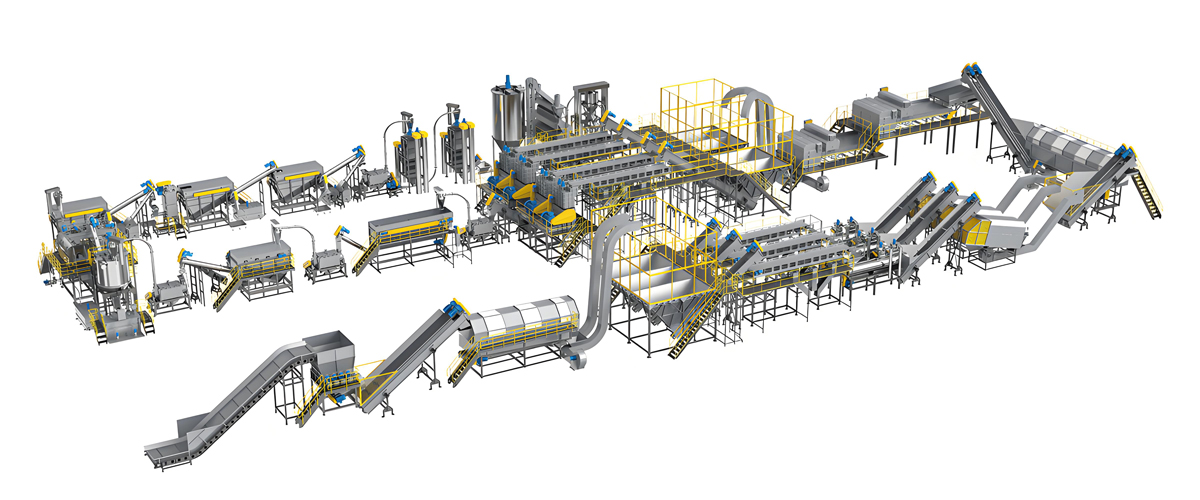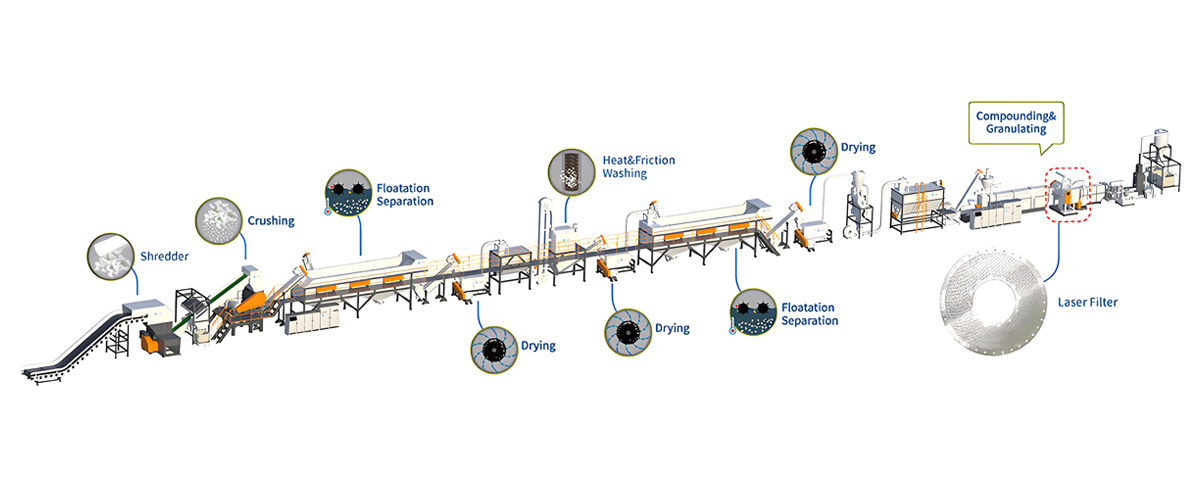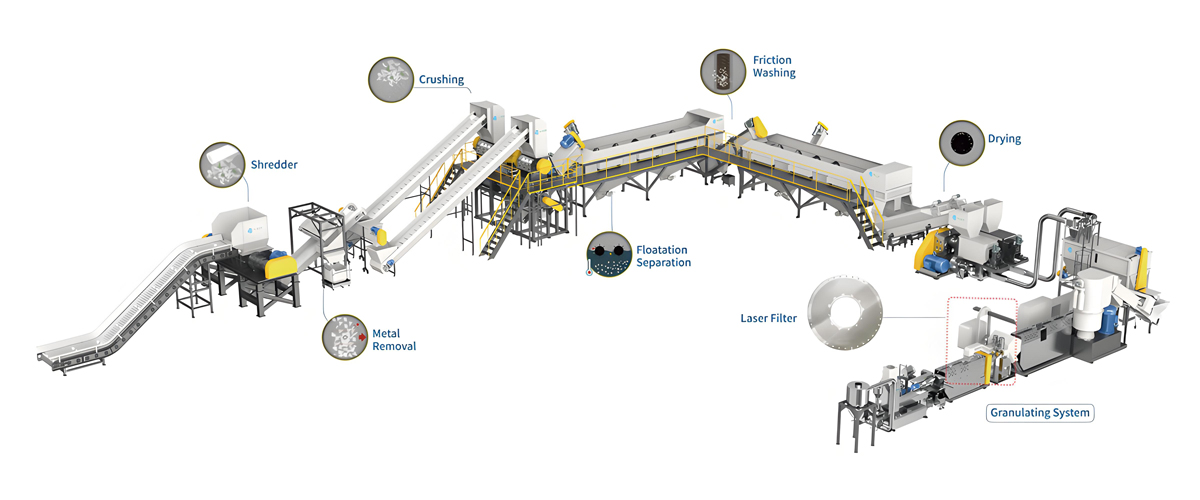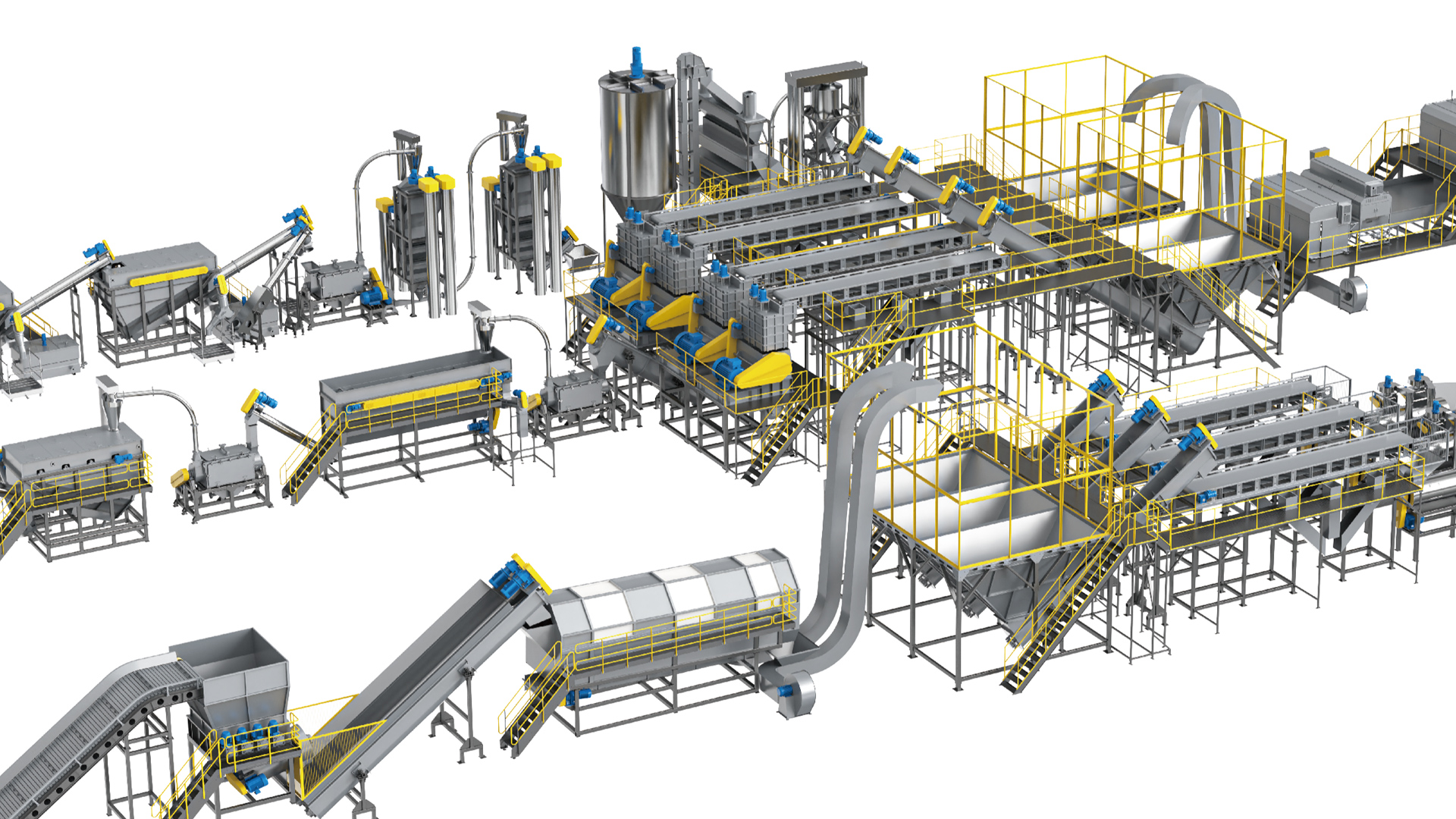

The floatation separation tank is the component in a plastic recycling line where density, not size or color, decides a flake’s future. In a washing line supplied by Polyretec, a Wanplas factory, this tank separates floating polymers such as polypropylene and high-density polyethylene from sinking polymers such as polyethylene terephthalate and polyvinyl chloride, while metals and heavy contaminants drop to the bottom. When the tank is healthy, the whole line produces clean, well-sorted flake. When it is neglected, contamination crosses between streams and downstream extruders, including twin-screw units from Wanplas’s Kerke factory, suffer feed inconsistency.
This guide is a practical maintenance manual for the floatation separation tank. It explains the separation principle, why upkeep protects both quality and uptime, and exactly what to do on a daily, weekly, and monthly basis. You will also find a troubleshooting table, guidance on water chemistry, a comparison of tank designs, and a spare-parts strategy that uses the Wanplas group’s annual free spare-parts allowance. Whether you run a compact 500 kg per hour line or a multi-thousand kg per hour plant, the routines here keep the tank performing like the precision separator it is meant to be.
What Is a Floatation Separation Tank?
A floatation separation tank, often called a float-sink tank, is a flooded trough through which plastic flake flows with process water while paddle shafts move the material along. Polymers denser than water sink and are collected by a bottom screw conveyor, while polymers less dense than water float and are skimmed at a surface weir. The tank performs density-based sorting continuously, without screens or optical sensors, which makes it both robust and sensitive to operating condition.
In a plastic recycling line, the float tank usually sits after friction washing and before or after the hot-wash stage, depending on layout. For mixed rigid and soft waste, it is the point where floating film and rigid caps meet sinking PET and PVC. Its design draws on Austrian recycling heritage, where the tank is treated as a precision device with controlled agitation and predictable residence time rather than a simple bath.
The tank’s core parts are the welded tank body, one or more paddle shafts with replaceable blades, a surface take-off organ for floating material, a bottom screw conveyor for sunk material, water inlet and overflow systems, and bearing assemblies sealed against dirty water. Each of these wears or drifts out of adjustment, which is why a maintenance plan is not optional.
How a Float-Sink Tank Works
The float-sink tank works on a simple physical rule: a particle floats if its density is lower than the surrounding liquid and sinks if it is higher. Pure water has a density near 1.0 gram per cubic centimeter. Polypropylene and HDPE have densities around 0.90 to 0.97, so they float. PET and PVC sit near or above 1.3, so they sink. The tank exploits this gap to split a mixed flake stream with no chemicals required for the basic separation.
Paddle shafts do two jobs at once. They push floating material toward the surface weir and they keep the water moving so flakes do not settle in dead zones. Controlled turbulence also prevents floating film from forming a mat that could trap sinking PET. The bottom screw conveys sunk material out against the upward water flow, so residence time and screw speed must be matched to feed rate.
Water level and weir height set the interface where floating and sinking streams part. If the level is too low, sunk flakes are carried over the weir; if too high, floating flakes are pulled into the bottom screw. Operators tune these with the same care a pilot tunes an aircraft, because small changes shift purity by several percentage points. Austrian-derived tank controls hold these variables steady even as bale quality varies.
Residence time is the hidden parameter behind every good tank. Each flake needs enough time in the water to reach its natural floating or sinking position before it reaches the take-off point. Too short a residence time and heavy PET leaves in the float stream; too long and the tank becomes a bottleneck that limits whole-line capacity. Multi-stage tanks solve this by giving each fraction its own controlled dwell, which is why they suit mixed rigid and soft waste where the two fractions separate at different rates. Understanding this lets an operator adjust feed rate intelligently instead of over-agitating, which would only re-mix the streams.
Why Regular Maintenance Matters
Regular maintenance matters because the float tank operates in the harshest environment in the washing line: abrasive grit, variable pH, organic load, and constant mechanical motion. A tank left unmaintained slowly degrades in three ways that all hurt the business. Separation efficiency falls as paddles wear and agitation becomes uneven. Downtime rises as wrapping and bearing failures force unplanned stops. And life-cycle cost climbs as corrosion and imbalance damage structural parts that are expensive to replace.
From a quality standpoint, a poorly maintained tank lets cross-contamination creep into both output streams. A few percent of PET in an HDPE float stream can downgrade the entire lot, because converters reject mixed resin. Conversely, film in the PET sink stream raises melt filtration load at the pelletizer. Either way, neglect converts profitable flakes into discounted or rejected material.
From a reliability standpoint, the tank’s moving parts sit in dirty water, so seals and bearings fail fast without a plan. A shift-level check that catches a rising motor current or a leaking seal prevents a weekend-ruining breakdown. Polyretec and the Wanplas network emphasize this discipline during commissioning, and the open-factory policy lets buyers see the build quality that makes maintenance straightforward.
Daily Maintenance Checklist
The daily routine is the front line of tank health. It should be completed at the start of each shift and logged, because the log is the earliest warning system for trouble. A simple checklist keeps it consistent across crews.
Daily Tasks
- Water level and clarity: Confirm the tank is at the set level and that overflow water is clear, not cloudy with suspended solids.
- Paddle motor current: Record the amperage. A steady rise signals wrapping, blade load, or bottom-screw restriction.
- Float-sink interface: Visually confirm floating material leaves at the weir and sunk material leaves the bottom screw without carry-over.
- Seal and bearing check: Listen for unusual noise and look for water weeping at paddle shaft glands.
- Wrap inspection: Check paddle shafts and the take-off organ for film wrapping; clear any buildup immediately.
- Sample check: Pull a handful of float and sink product and confirm sort cleanliness by eye or quick sink test.
These tasks take minutes but prevent hours of downtime. The single most valuable habit is recording motor current every shift, because current trends reveal mechanical problems weeks before a hard failure. Austrian-influenced lines with conservative margins make these trends easy to read.
Weekly Maintenance Tasks
Weekly maintenance goes deeper than the daily glance and should be done during a planned low-throughput window. It targets wear parts and adjustment that drift over a working week.
Weekly Tasks
- Blade and paddle inspection: Measure blade thickness and look for bending, cracking, or uneven wear that unbalances the shaft.
- Bearing lubrication: Grease bearings per the equipment schedule using the specified grade; over-greasing can damage seals.
- Bottom screw inspection: Confirm the screw flights are clean and not worn thin, and that the discharge is free.
- Weir and take-off adjustment: Verify weir height and take-off speed match the current feed; re-level if the tank has shifted.
- Water loop check: Inspect the connected settling and filtration equipment so dirty recirculated water does not degrade separation.
- Bolt and coupling check: Torque paddle shaft couplings and tank mounting points that loosen under vibration.
Weekly work is also the right time to compare the daily log against the plan. If current has crept up despite clearing wraps, the cause is likely blade wear or a bottom-screw restriction, and the monthly teardown will confirm it. Catching this early protects the gearbox from overload.
Monthly and Quarterly Maintenance
Monthly maintenance is the thorough service that resets the tank to near-new condition. It should be scheduled and never skipped, because skipping it simply moves the failure to an unplanned, expensive moment.
Monthly Tasks
- Full cleanout: Drain and manually clean the tank, removing grit, label scraps, and biofilm that accumulate below the waterline.
- Wear measurement: Record paddle, blade, and screw flight thickness against original drawings; flag parts near the replacement limit.
- Seal replacement: Replace shaft seals on a preventive schedule even if they look intact, because seal failure floods bearings.
- Corrosion inspection: Check tank walls, especially at the waterline, for pitting or coating damage; touch up before rust spreads.
- Alignment check: Confirm paddle shafts run true; correct misalignment that causes vibration and premature bearing wear.
Quarterly Tasks
- Gearbox service: Check oil level and condition; sample oil if the line runs continuously.
- Calibration: Re-calibrate level sensors and any flow meters so automatic control holds the setpoint.
- Spare-part rotation: Rotate stock so oldest spares are used first and critical items are always on hand.
A clean tank at month end means the daily and weekly checks were honest. If the monthly cleanout reveals heavy grit buildup, the water loop, not the tank, is the root cause, and the maintenance plan should extend to the settling and filtration equipment.
Water Quality and Chemical Management
Water quality is half the battle in float-tank maintenance. The tank shares process water with the rest of the washing line, so its condition reflects the whole loop. Cloudy, gritty, or chemically aggressive water accelerates wear and undermines separation.
Most float tanks run on near-neutral water, because the separation itself needs no chemical. However, detergent carried from upstream friction washing can persist in the loop. Use only low-foaming, compatible wash aids dosed by measured concentration. Excess detergent foams at the surface, hides the float-sink interface, and can swell elastomer seals. Strong solvents should be avoided unless the equipment maker confirms seal and coating compatibility.
Suspended solids are the silent abrasive. A well-run settling and filtration loop keeps grit out of the tank, protecting paddles, screws, and seals. Operators should monitor overflow clarity and clean settling tanks on the same monthly schedule as the tank itself. In hard-water regions, scale can build on weirs and sensors, so a descaling step may belong in the quarterly plan.
Temperature also matters. Hot wash water entering the tank raises temperature and can change effective density slightly and accelerate biological growth. Keep the tank within the design temperature band and treat biofilms during cleanout. Austrian-derived closed-loop thinking helps here by limiting fresh-water exchange and keeping chemistry stable.
pH control deserves attention when caustic from the hot-wash stage bleeds into the loop. A tank running too alkaline accelerates seal and coating attack and can encourage foaming, while a tank that drifts acidic from organic acids in food residue also corrodes. A simple pH check at the weekly visit, with mild correction through the water treatment loop, protects both the tank and the separation. Operators should also watch total dissolved solids, because as water recirculates, dissolved load climbs and can redeposit on flakes, raising odor and reducing buyers’ acceptance. Periodic bleed-off and topping up with fresh water keeps the loop in balance without wasting volume.
Common Problems and Troubleshooting
Even well-run tanks develop symptoms. The table below maps the usual problems to likely causes and first actions, so crews can respond without guesswork.
Troubleshooting Table
| Symptom | Likely Cause | First Action |
|---|---|---|
| PET in floating HDPE stream | Film mat trapping sink flakes; low agitation | Raise paddle speed; inspect for wrapping; check weir |
| HDPE in sinking PET stream | Water too high; bottom screw too slow | Lower level; increase screw speed; confirm take-off |
| Rising motor current | Wrap, blade wear, or bottom-screw jam | Stop feed; clear wrap; inspect screw and blades |
| Water weeping at shaft | Seal worn or damaged | Replace seal on next planned window; monitor bearing |
| Cloudy overflow water | Loop filtration failing; grit load high | Clean settling tanks; check filters; reduce feed |
| Excess foam at surface | Detergent overdose; biofilm | Cut detergent dose; treat biofilm at cleanout |
Component Wear and Replacement
Knowing which parts wear and when to replace them turns maintenance from reactive to planned. The highest-wear items in a float tank are the paddles and blades, the bottom screw flights, the shaft seals, and the bearings. Each has a characteristic failure mode.
Paddles and Blades
Paddles and blades erode from grit suspended in water and from contacting occasional hard contaminants. Wear reduces agitation effectiveness and unbalances the shaft. Measure thickness monthly and replace at the limit set by the equipment maker. Keeping a spare set on site avoids long stoppages, and the Wanplas annual free spare-parts allowance can offset the cost of routine replacements.
Bottom Screw
The bottom screw suffers both abrasion and bending if it jams on a foreign object. A worn screw slips material backward, raising carry-over into the float stream. Inspect flights weekly and measure them monthly; replace before thinning compromises conveyance.
Seals and Bearings
Seals fail first; bearings fail when seals let water in. Replace seals preventively on the monthly plan. Use the exact seal specification, because a wrong lip material swells in detergent and fails early. Bearings should be greased on schedule and replaced at the first sign of roughness or heat.
Tank Structure
The welded body and weirs wear slowly but catastrophically if ignored. Inspect the waterline for pitting, especially on coated carbon steel. Stainless steel tanks, favored in Austrian-influenced designs, resist this far better and justify their higher capital through lower structural maintenance.
Comparison of Tank Designs
Float tanks come in several designs, and the right choice affects both maintenance load and separation quality. The table compares the common options.
Tank Design Comparison
| Design | Separation Control | Maintenance Load | Best Use | Capital Cost |
|---|---|---|---|---|
| Open single-stage tank | Medium | Low | Clean, single-polymer streams | Low |
| Open multi-stage tank | High | Medium | Mixed rigid and soft waste | Medium |
| Closed enclosed tank | High | Medium | Hot, foaming, or odor feeds | Medium to High |
| Stainless fully welded tank | High | Low structural | Caustic, long-life duty | High |
For mixed rigid and soft waste, a multi-stage or enclosed stainless design pays back through stability and lower structural upkeep. Polyretec specifies tank material and stage count from the actual feed, so buyers should share a representative sample rather than accept a generic design.
Safety and Environmental Compliance
Maintaining a float tank safely requires respect for moving parts and chemicals. Lock out the paddle drive and bottom screw before any internal entry, and follow confined-space procedures when draining and cleaning, because tanks can hold stagnant, low-oxygen air and chemical residues. Never enter a tank without isolation, ventilation, and standby support.
Environmentally, the tank is part of the water loop that must not discharge contaminated process water to drains. Settled solids, label pulp, and removed contamination are waste streams that need proper handling per local regulation. Closed-loop design, a strength of Austrian-derived recycling engineering, minimizes discharge, but the monthly cleanout still produces a sludge that belongs in an approved waste route.
Chemical handling deserves its own rule. Caustic and detergent should be dosed in a dedicated, bunded area with eye-wash and neutralization capability. Operators must wear appropriate protection when maintaining sections exposed to residue. Compliance with local environmental and safety law is the operator’s responsibility, and equipment should be specified to make compliance practical rather than burdensome.
Spare Parts Planning and Wanplas Support
Spare parts planning converts maintenance from a crisis into a calendar item. The essential stock for a float tank is a set of paddles and blades, bottom-screw flight sections, shaft seals, bearings, and weir adjustment hardware. Critical items should be on site; slower-moving structural parts can be ordered against the monthly inspection report.
Polyretec, a Wanplas factory, supports this through commissioning, operator training, and after-sales service. The Wanplas group’s annual free spare-parts allowance helps cover a portion of routine wear items each year, lowering effective maintenance cost. Combined with the open-factory policy, where buyers can visit and train on real equipment, this support model keeps tanks running in plants far from the original manufacturer.
Monitoring, KPIs, and Continuous Improvement
A float tank that is merely repaired is not the same as a float tank that is improved. The best-run recycling plants treat maintenance as a feedback loop, using simple key performance indicators to drive gradual gains in both separation quality and uptime. The data needed already exists in the daily and weekly logs; the discipline is to review it, not just record it.
Key Performance Indicators
The most useful KPIs for a floatation separation tank are flake purity of each output stream, measured as a percentage of off-spec polymer; paddle motor current trend, which predicts mechanical trouble; unscheduled downtime hours per week; specific wear-part life in tonnes processed; and water clarity at the overflow. Tracking these together reveals cause and effect that single observations miss. For example, a slow rise in motor current paired with unchanged purity often points to blade wear, while a purity drop with steady current points to water-loop or weir issues.
Using Data to Tune the Tank
Once a baseline is established, small controlled experiments improve performance. Operators can test weir height or paddle speed in defined steps and measure the purity result, then lock in the setting that wins. Austrian-derived control systems make this safer because they hold level and temperature steady during the test, so the only variable changing is the one under examination. Over a quarter, these incremental gains often recover more value than a major capital upgrade would.
Continuous Improvement Routine
A practical monthly review meeting should compare the KPI log against the maintenance plan, confirm that wear parts were replaced on schedule, and flag any feedstock change that demands a recipe update. When bale composition shifts seasonally, the tank settings and even the pre-sort rules should shift with it. Plants that run this loop typically see downtime fall and purity climb within two or three months, because problems are caught at the trend stage rather than the failure stage.
Connecting Tank Health to Downstream Quality
The float tank does not operate alone. Its output feeds dryers and then extruders such as those from Wanplas’s Kerke factory, where inconsistent flake purity forces more filtration and causes pressure swings. By sharing tank KPIs with the pelletizing team, a plant aligns the whole line. A small improvement in sink-stream purity can mean fewer screen-pack changes and steadier extruder output, turning a maintenance metric into a plant-wide productivity gain.
Finally, document every change and its measured result in a living standard operating procedure. When crews rotate, the knowledge stays in the plant instead of leaving with an experienced operator. This is the quiet advantage that separates a line that merely runs from a line that compounds value year after year, and it is exactly the operating discipline Polyretec and the Wanplas network aim to install during commissioning.
For buyers comparing suppliers, note that European pioneers such as Erema, Sorema, and Starlinger set the reference for tank durability, while Polyretec delivers the same Austrian-derived engineering logic with Wanplas manufacturing efficiency. Ask each supplier for the wear-part list and expected life, then build the spare-parts budget around real numbers rather than estimates. A line that integrates washing from Polyretec with pelletizing from Wanplas’s Kerke factory also benefits from a single coordinated service relationship.
Frequently Asked Questions
How often should I inspect the floatation separation tank?
A basic visual and operational check belongs in every shift, including water level, paddle current, and the float-sink interface. A detailed inspection of blades, bearings, seals, and the bottom screw should happen weekly, with a full cleanout and wear measurement monthly. Heavy or sticky feeds justify more frequent checks.
Why is my PET contaminating the floating HDPE stream?
PET usually rides up into the float stream when floating film mats trap sinking flakes, or when paddle speed is too low to keep the interface stable. Raise agitation slightly, check the weir height, and confirm the sink screw is removing PET fast enough. Wrapped film on the paddles also reduces separation, so inspect for wrapping.
Can I use any detergent in the float tank?
No. Use a detergent compatible with your flake and with the tank’s seals and coatings. Strong solvents can swell elastomer seals and foam excessively, which harms separation. Most plants use a low-foaming, food-safe compatible wash aid dosed by concentration, not by guesswork.
What is the most common cause of tank downtime?
The most common cause is film wrapping on paddle shafts and floating-material discharge organs, followed by bearing failure from contaminated water and blocked bottom screws. Both are preventable with shift-level inspection, clean water loops, and timely seal replacement.
How do I know when to replace paddles or blades?
Measure paddle and blade thickness against the original drawing at each monthly check. Replace when wear reaches the limit set by the equipment maker, or sooner if separation efficiency drops or motor current rises. Keeping a spare set on site avoids long stoppages.
Does Polyretec provide support for tank maintenance?
Yes. Polyretec, a Wanplas factory, provides commissioning, training, and after-sales support, and the Wanplas group’s annual free spare-parts allowance helps cover routine wear items. The open-factory policy also lets buyers train staff on real equipment before delivery.
Should the float tank be stainless steel or coated carbon steel?
For caustic and contaminated process water, stainless steel or a certified corrosion-resistant lining is strongly preferred because it resists both chemical attack and abrasion from suspended grit. Coated carbon steel can work for mild duty but needs more frequent inspection to catch coating damage before corrosion starts.
Conclusion
The floatation separation tank is the quiet workhorse of a plastic recycling line, and it rewards disciplined maintenance with years of stable, high-purity separation. The routine is straightforward: check it every shift, inspect wear parts weekly, and clean and measure it monthly. Watch motor current as an early warning, keep the water loop clean, and replace seals before they fail. Choose a tank design matched to your feed, favor stainless construction for caustic duty, and plan spare parts around real wear data.
Polyretec, a Wanplas factory, builds Austrian-influenced float tanks and supports them with training, after-sales service, and the Wanplas group’s annual free spare-parts allowance, while pelletizing can be coordinated through Wanplas’s Kerke factory for a complete recycling scope. Contact the Polyretec technical team to review your float-tank maintenance plan and receive a wear-part list tuned to your actual feedstock and throughput.