
Plastic Pelletizing Line Selection: Strand, Ring Die and Water Ring Systems for Recycled Flakes
Selecting the right plastic pelletizing line for recycled flakes is a critical engineering decision that dictates final product quality and operational efficiency. The optimal system depends heavily on resin type, required throughput, incoming flake cleanliness, and desired pellet geometry. This guide examines essential line stages, comparing strand, ring die, and water ring cutting methods to match specific production needs. We also detail melt filtration systems, screw design parameters, cooling mechanisms, and energy consumption profiles. Furthermore, we address common defect diagnosis and provide a comprehensive cost analysis, noting that a complete New Generation Pelletizing Line typically ranges from 150,000 to 450,000 US dollars depending on capacity and automation level, though these figures are indicative budgets subject to market fluctuations. Polyretec combines Austrian engineering precision with robust Chinese manufacturing to deliver reliable recycling equipment. From a Linie recyklingu i granulacji struneków PP/PE to specialized extruders, our solutions ensure consistent output. By reading this technical overview, you will gain the knowledge to evaluate system specifications accurately, optimize melt processing conditions, and make informed capital investment decisions for your recycling facility.
Why Pelletizing Method Affects Profitability
Pelletizing represents the final value adding step in any recycling operation, directly determining the marketability of your output. The specific method chosen within a Plastic Pelletizing Line dictates operational yield, energy consumption, and labor requirements. A mismatch between the pelletizing technology and incoming flake quality triggers significant financial losses through unplanned downtime, excessive fines generation, and product downgrade. For instance, using a standard strand system on contaminated or inconsistent flakes often results in frequent screen changes and melt filtration failures, whereas a water ring or ring die approach might handle higher contamination levels more robustly but requires precise melt pressure control.
It is critical to size both the melt filtration unit and the pelletizing head for the actual physical characteristics of the recovered material rather than theoretical averages. When these components are undersized relative to flake quality, operators face constant interruptions that erode profit margins. Consider that a mid sized facility might experience annual downtime costs ranging from 50,000 to 150,000 US dollars due to frequent clogging and manual cleaning cycles. Additionally, scrap generated from poor pellet formation can add another 20,000 to 80,000 US dollars in lost revenue annually. These figures are indicative estimates that vary significantly based on local labor rates, energy prices, and the specific polymer mix processed. Therefore, selecting the correct configuration is not merely a technical decision but a fundamental economic strategy. By aligning the equipment capability with real world feedstock conditions, recyclers ensure stable production flows and maximize the return on investment for their entire processing chain.
Pelletizing serves as the critical final value adding step in any Plastic Pelletizing Line, directly dictating operational profitability through yield efficiency and energy consumption. Selecting an incompatible method for your specific flake stream triggers immediate financial leakage via unplanned downtime and excessive fines generation. When melt filtration capacity does not align with actual input quality, screen changeover frequency increases dramatically, potentially costing a mid sized facility upwards of fifteen thousand dollars monthly in lost production hours and discarded material. This mismatch often forces operators to downgrade high quality recycled resin into lower grade applications or scrap it entirely, eroding margins significantly.
Conversely, matching the pelletizing technique to flake characteristics ensures consistent output quality while minimizing labor intensity. A poorly matched system might require constant manual intervention to manage pressure fluctuations, adding hidden labor costs that accumulate rapidly over annual operations. Investing in a properly sized New Generation Pelletizing Line or Soft Plastic Pelletizing Extruder tailored to your specific contamination levels prevents these costly inefficiencies. By aligning equipment specifications with real world feedstock conditions, processors protect their revenue streams and maintain competitive pricing against virgin resin alternatives without sacrificing product integrity.
Stages of a Pelletizing Line
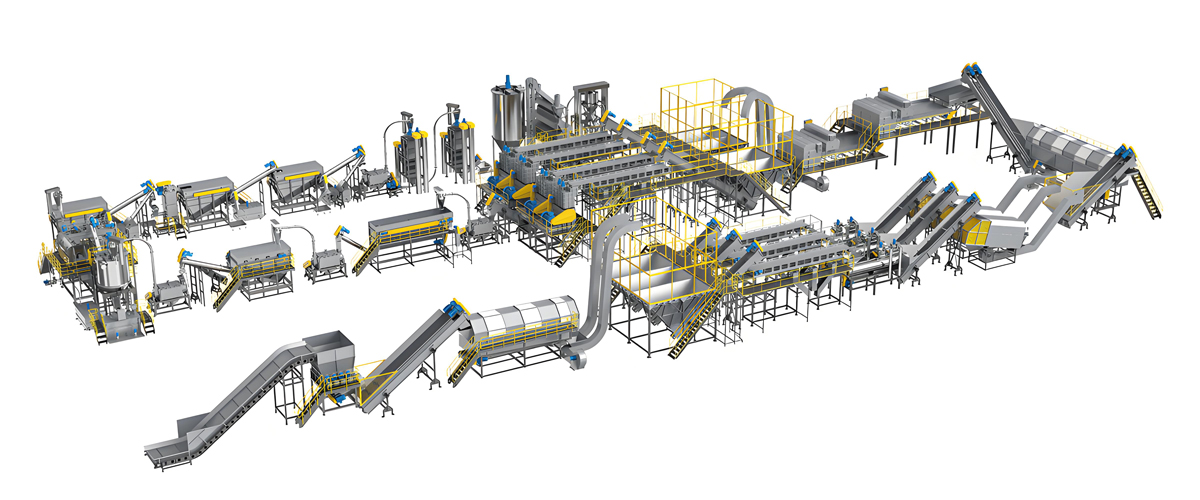
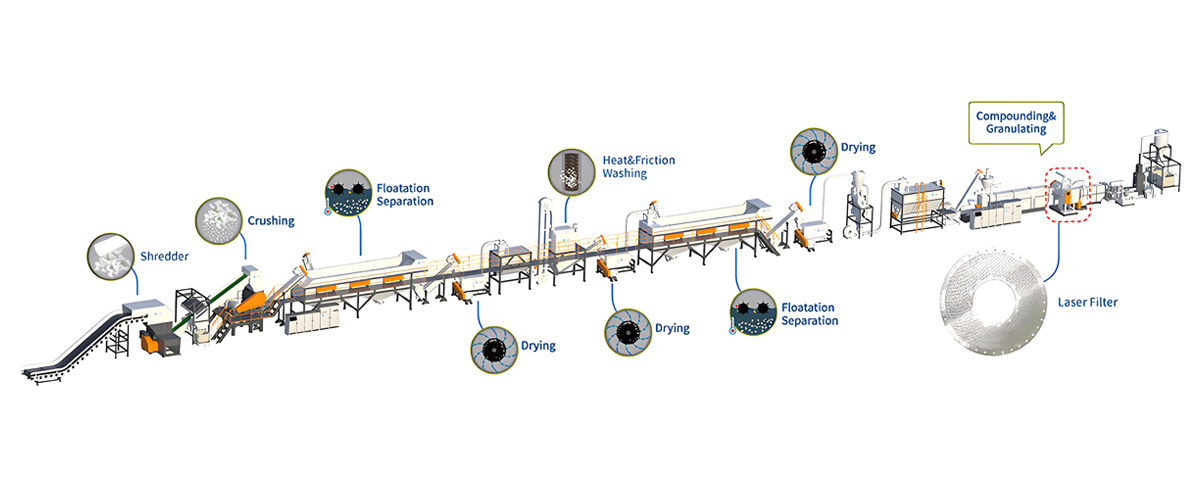
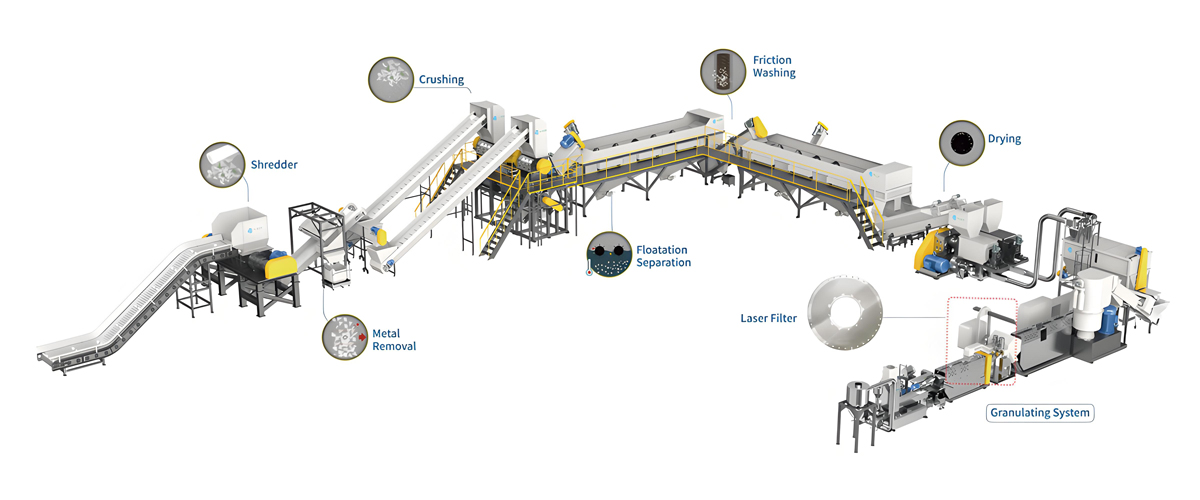
Recycled flakes enter the system via a volumetric feeder that ensures consistent mass flow into the barrel of the New Generation Pelletizing Line. This metering stage is critical because fluctuating feed rates cause pressure spikes and inconsistent melt quality. The flakes then move through heated zones where friction and external heating raise the temperature to the polymer’s melting point, typically between 180 and 240 degrees Celsius for polyolefins. Melt filtration follows immediately, removing contaminants like metal fragments or cross linked material that could clog the die plate. For heavily contaminated streams, a self cleaning screen changer maintains pressure stability while allowing continuous operation without stopping production.
Extrusion through the die head determines pellet geometry and throughput capacity. The Soft Plastic Pelletizing Extruder handles flexible films by using specialized screw designs to prevent bridging, whereas the Linie recyklingu i granulacji struneków PP/PE employs higher torque screws for denser materials. Once extruded, strands or rings are cut into uniform pellets. Water bath cooling solidifies these pellets rapidly, preventing deformation. A centrifugal dryer then removes surface moisture, reducing energy consumption during subsequent drying stages. Finally, automatic packing systems bag the finished product. Capacity matching across all units prevents bottlenecks; an undersized feeder starves the extruder, while an oversized one creates idle time. Indicative budget ranges for a complete Plastic Pelletizing Line vary from 150,000 to 400,000 US dollars depending on automation levels and output capacity, though local installation costs may add ten to twenty percent. Proper alignment of these stages ensures stable operation and high purity output suitable for downstream applications.
Feeding recycled flakes into the New Generation Pelletizing Line requires precise volumetric metering to ensure consistent melt pressure. This stage prevents bridging and maintains uniform throughput, which is critical for downstream stability. As material enters the extruder, it undergoes melting under controlled temperature profiles. Filtration then removes contaminants that could compromise pellet quality or clog die heads. For rigid materials, the Linie recyklingu i granulacji struneków PP/PE integrates robust filtration systems to handle higher viscosity melts effectively.
Extrusion forces the molten polymer through a specific die configuration, determining whether strand, ring die, or water ring cutting will follow. The choice here directly impacts pellet geometry and cooling efficiency. Cooling solidifies the strands or pellets immediately after cutting to prevent deformation. Centrifugation removes residual moisture from water cooled systems, ensuring dry final product. Proper capacity matching between upstream washing lines like the PP/PE Soft Plastic Crushing and Washing Line and the extruder avoids bottlenecks. Investing in matched components reduces energy waste and lowers operational costs by approximately fifteen percent annually compared to mismatched setups.
Strand, Ring Die and Water Ring Pelletizing Compared
Strand pelletizing remains the most versatile approach for operations handling diverse recycled streams. In this method, molten polymer exits through multiple small holes in a die head, forming long strands that travel through a water bath before being cut into uniform pellets. This setup offers exceptional clarity and ease of changeover because operators can quickly adjust strand count to match throughput requirements without major mechanical adjustments. It suits rigid PP/PE flakes recycling and pelletizing line applications where frequent resin changes occur. The cooling is indirect, relying on ambient air or water baths, which limits speed but ensures consistent quality for materials like polypropylene and polyethylene that tolerate slower solidification rates.
Ring die or die face systems provide higher throughput by cutting pellets directly at the die exit using rotating blades. Cooling occurs via a thin film of water sprayed onto the hot die face, allowing immediate solidification. This method supports high speed production, often exceeding five hundred kilograms per hour, making it ideal for dedicated lines processing single resin types like HDPE or LDPE from soft plastic crushing and washing line outputs. The New Generation Pelletizing Line often integrates such systems for efficiency. However, changeovers are more complex than strand methods.
Water ring pelletizing encloses the cutting chamber in a water jacket, offering superior cooling for sensitive resins that degrade quickly under heat. This approach is critical for certain engineering plastics or contaminated streams requiring rapid quenching to prevent thermal degradation. While robust, it demands careful maintenance of water circulation systems. Selecting between these three depends on resin type, volume, and budget. A basic strand system may cost fifteen thousand dollars, while advanced ring die configurations can reach fifty thousand dollars, depending on automation levels and capacity requirements.
Selecting the right pelletizing method depends heavily on resin behavior and production volume targets. Strand pelletizing remains ideal for operations requiring frequent material changes, as it offers visual clarity during startup and shutdown phases. This system cools extruded strands in water baths before cutting them into uniform granules. While capital costs typically range from 15,000 to 30,000 US dollars, throughput is generally lower than alternative methods. It suits mixed or contaminated streams where process visibility aids troubleshooting without expensive instrumentation.
Ring die and die face systems deliver significantly higher output rates by cutting pellets directly at the die exit using rotating blades. These configurations require precise temperature control to prevent resin sticking but achieve throughputs exceeding 500 kilograms per hour in many industrial setups. Initial investment often exceeds 40,000 US dollars for robust units integrated into our New Generation Pelletizing Line. Water ring systems excel with heat sensitive resins like certain polypropylene grades by immediately quenching pellets in a circulating water film. This rapid cooling minimizes thermal degradation and ensures consistent pellet shape for downstream Linie recyklingu i granulacji struneków PP/PE applications.
Melt Filtration and Screen Changers
Melt filtration is the critical barrier between contaminated recycled flakes and high quality polymer pellets. In any Plastic Pelletizing Line, residual dirt, gels, and cross linked particles can clog die holes, cause surface defects, or weaken final mechanical properties. For a New Generation Pelletizing Line processing post consumer waste, robust screen changers are non negotiable. Screen packs typically consist of stacked wire meshes with decreasing pore sizes, often starting at 100 microns and finishing at 40 to 60 microns for demanding applications. Contamination load directly dictates screen life. A heavily soiled stream from a Linie recyklingu i granulacji struneków PP/PE may require changing screens every few hours, whereas cleaner input allows longer run times. Continuous screen changers allow operators to swap packs without stopping the extruder, maintaining steady output. Backflush systems automatically reverse flow to clear debris, extending service intervals significantly. This automation reduces labor costs and minimizes material waste during transitions.
Filtration pressure creates a direct trade off between purity and productivity. Higher differential pressure restricts melt flow, forcing the drive motor to work harder and increasing energy consumption by up to fifteen percent in severe cases. Excessive pressure also risks damaging downstream components or causing inconsistent pellet sizing. Therefore, balancing mesh fineness with acceptable pressure drop is essential for cost effective operation. Operators must monitor pressure gauges closely to detect breakthroughs before quality suffers. Regarding investment, a basic hydraulic screen changer suitable for small scale operations costs between five thousand and eight thousand US dollars. However, advanced continuous units with backflush capabilities for larger lines often range from fifteen thousand to thirty thousand US dollars. These figures are indicative and vary based on throughput capacity, automation level, and specific vendor configurations. Always request detailed quotes tailored to your actual contamination profile and production targets to avoid underestimating capital requirements.
Melt filtration is the critical barrier between recycled flake impurities and final pellet integrity, directly influencing mechanical properties and downstream extrusion stability. In a New Generation Pelletizing Line or Soft Plastic Pelletizing Extruder, screen packs must be selected based on expected contamination levels from prior washing stages like the PP/PE Soft Plastic Crushing and Washing Line. High mesh counts capture finer particles but increase backpressure, forcing the screw to work harder and raising specific energy consumption while potentially reducing throughput. Continuous screen changers mitigate this by allowing screen replacement without stopping production, which is essential for maintaining consistent output in Linie recyklingu i granulacji struneków PP/PE applications where downtime costs exceed filter media expenses. Backflush systems further extend service life by reversing flow to dislodge trapped debris, significantly reducing the frequency of manual intervention. The initial investment for a robust continuous screen changer typically ranges from fifteen thousand to forty five thousand US dollars, depending on capacity and automation level, though this figure varies widely with supplier configurations and integration complexity within the overall recycling system.
Screw and Extruder Design for Recycled Flake
Recycled flake behaves fundamentally differently from virgin resin during extrusion, demanding specialized screw and barrel designs within any robust Plastic Pelletizing Line. Unlike uniform virgin pellets, post consumer flakes exhibit low bulk density, often ranging from 0.2 to 0.4 grams per cubic centimeter, which creates inconsistent feeding and bridging risks in the throat. To address this, our New Generation Pelletizing Line features deep channel feed zones with aggressive flight geometry to ensure positive material conveyance into the compression section. For polypropylene and polyethylene streams, high compression ratios between 3.0 and 4.5 are critical to densify the melt effectively. Residual moisture and volatile organic compounds trapped in flakes can cause splay defects and weak pellets if not removed prior to homogenization. Multi stage vacuum venting systems integrated into the barrel extract these gases efficiently, preventing void formation during downstream pelletizing. Contaminated feed also accelerates wear on screw flights and barrel liners due to abrasive particles like silica or metal fragments. Hardened alloy barrels with bimetallic liners extend service life significantly compared to standard nitrided steel. Operators should expect replacement liner costs between five thousand and fifteen thousand US dollars depending on diameter, though these figures vary by market conditions. Proper venting reduces energy consumption by lowering melt viscosity, while optimized screw design minimizes shear heat buildup that degrades polymer chains. Selecting the correct extruder configuration ensures consistent output quality for Linie recyklingu i granulacji struneków PP/PE applications.
Cooling, Cutting and Pellet Handling
In a modern Plastic Pelletizing Line, downstream processing determines final quality. After extrusion, strands or water ring pellets enter cooling baths where temperature control is critical. For strand systems, maintaining bath water at twenty to thirty degrees Celsius ensures proper solidification without brittleness. Too cold causes internal stress cracks, while too warm leads to deformation. The resulting pellet water slurry moves directly to centrifugal dryers that remove surface moisture efficiently. These units typically process one to five tons per hour depending on line capacity. Following drying, vibratory classifiers separate oversized pellets from fines and undersized particles. This step is vital because fines can clog downstream screens or degrade molded part integrity. The New Generation Pelletizing Line integrates these stages seamlessly to minimize material loss. Energy consumption for cooling and handling varies significantly with throughput and water recirculation efficiency. A typical system might require fifteen to twenty five kilowatt hours per ton of processed material, though this figure depends heavily on local climate conditions and heat recovery setups. Water usage generally ranges from two to four cubic meters per ton, assuming closed loop circulation. For operators integrating a Linie recyklingu i granulacji struneków PP/PE, budgeting for robust centrifugal dryers and precise temperature controllers is essential. Expect indicative equipment costs between thirty thousand and eighty thousand US dollars for these auxiliary components alone, excluding installation fees which vary by site complexity. Proper maintenance of screens and pumps prevents downtime and ensures consistent pellet geometry throughout long production runs.
Soft Plastic and Compounded Feed
Processing soft plastic film and compounded feed presents distinct engineering challenges that demand specialized equipment configurations within a Plastic Pelletizing Line. Unlike rigid flakes, flexible films tend to bridge in hoppers and slip during feeding due to their low bulk density and high surface friction. To mitigate these issues, effective densification is critical before material enters the extruder. The Soft Plastic Pelletizing Extruder addresses this by incorporating robust feed zones designed to handle low density inputs without air entrapment or inconsistent throughput. This system often integrates directly with upstream preparation stages to ensure uniform melt quality.
A key component in this chain is the Plastic Squeezing Machine, which mechanically compacts loose film into dense logs or pellets prior to extrusion. This step significantly improves feed stability and reduces energy consumption during melting. For operations requiring additive incorporation or color matching, the PP/PE Recycling and Compounding Line offers superior control over melt homogeneity. These systems typically require precise temperature management to prevent thermal degradation of thin films. Indicative budget ranges for a complete setup including squeezing and compounding capabilities generally fall between 150,000 and 400,000 US dollars, depending on capacity and automation levels. Operators should note that actual costs vary based on local installation requirements and specific throughput targets. Proper alignment of the Plastic Squeezing Machine with the extruder feed throat ensures consistent pressure and minimizes surging, which is essential for producing uniform pellets from challenging soft plastic streams.
Pellet Quality and Specification
Pellet quality defines market value and downstream performance. Operators must evaluate size uniformity, moisture content, contamination levels, melt flow index, and color consistency. A standard target is 3 to 5 millimeters diameter with less than 0.1 percent residual moisture for polyethylene or polypropylene. Contamination exceeding 200 parts per million often disqualifies material from injection molding applications. Melt flow rate stability indicates proper thermal history management during extrusion. Excessive shear heat degrades polymer chains, altering viscosity and mechanical strength. Filtration quality directly impacts these properties. Inadequate screen changes allow gel particles or unfiltered impurities to persist, causing blockages in customer machinery like injection molders. Consistent pellet geometry ensures reliable feeding rates in downstream equipment. Irregular shapes cause bridging in hoppers and uneven melting zones. Sampling protocols require systematic collection from different extruder die holes over a thirty minute window. Testing involves visual inspection under magnification, moisture analysis via Karl Fischer titration, and rheological measurements using capillary viscometers. Tracing defects to specific stages requires process logging. High melt temperature spikes correlate with degraded color or odor, pointing to screw design issues or residence time errors. Poor cut quality suggests worn knife assemblies in the New Generation Pelletizing Line or Soft Plastic Pelletizing Extruder. Contamination traces back to upstream washing efficiency in lines like the PP PE Soft Plastic Crushing and Washing Line. Budgeting for quality control tools adds approximately five thousand to fifteen thousand dollars, though this varies by region and supplier. Investing in precise diagnostics protects revenue streams from rejected batches.
Diagnosing Pelletizing Problems
Operators frequently encounter black specks on finished pellets produced by a New Generation Pelletizing Line. These dark contaminants usually originate from insufficient melt filtration or thermal degradation within the extruder barrel. If screen packs are not changed every four to six hours, polymer residue burns and breaks loose into the flow stream. Immediate replacement of filter screens resolves this issue. Additionally, excessive residence time in the heating zones causes material breakdown. Reducing temperature settings by ten degrees Celsius often eliminates charring without compromising melt quality.
Fines appearing in the final product signal inadequate cutting or poor cooling efficiency. In strand systems, dull blades produce ragged ends that fracture during downstream handling. Replacing worn cutters every three months maintains sharp edges and uniform pellet geometry. For water ring configurations, insufficient water pressure leads to incomplete solidification before severing. Increasing circulation pump output ensures rapid heat extraction. Irregular shapes typically stem from die face inconsistencies or cutter timing mismatches. A warped die plate prevents even extrusion across all holes. Inspecting the die for flatness deviations exceeding zero point five millimeters is critical. Re machining or replacing the die restores circular profiles. Moisture content above two hundred parts per million indicates drying failures. Pellets may appear translucent or emit steam during packaging. Verify that vacuum vents on the extruder are clear and functioning correctly. If moisture persists, upgrade to a dedicated dryer unit before feeding material into the Soft Plastic Pelletizing Extruder. Drying costs typically range from fifteen thousand to forty thousand US dollars depending on capacity, though these figures vary by region and configuration. Regular maintenance logs help correlate specific symptoms with root causes, ensuring consistent output quality across all recycling operations.
Cost and Price Analysis of a Pelletizing Line
Budgeting for a Plastic Pelletizing Line requires careful analysis of both capital expenditure and ongoing operational expenses to determine true value. A basic strand pelletizing system typically starts at approximately thirty thousand US dollars, while a more robust water ring line generally ranges between fifty thousand and eighty thousand dollars depending on capacity and automation levels. If you require a complete setup including advanced melt filtration and auxiliary handling, expect budgets climbing from one hundred thousand to over two hundred thousand dollars. These figures represent rough estimates for planning purposes only, as final pricing varies significantly based on specific throughput requirements, local installation costs, and regional labor rates.
Operational cost per ton of finished pellets is often more critical than the initial purchase price. Energy consumption dominates this metric, usually accounting for sixty to seventy percent of total operating expenses. A standard extruder might consume between one hundred fifty and two hundred kilowatt hours per ton, translating to roughly thirty to forty dollars in electricity costs depending on local utility rates. Screen changes add another five to ten dollars per ton due to material waste and downtime, while water usage for cooling systems contributes a minor but steady cost of two to three dollars per ton. Labor costs vary widely by region but typically add fifteen to twenty five dollars per ton when factoring in operator wages and maintenance support.
Payback periods for upgrading from manual sorting to an automated Linie recyklingu i granulacji struneków PP/PE often fall between twelve and eighteen months if feedstock quality is consistent. However, this calculation assumes high uptime and minimal downtime for screen changes. The primary caveat remains that low quality input material dramatically increases energy use and reduces output, extending payback timelines indefinitely. Always validate your feedstock stream before committing to a specific capacity to avoid costly over sizing or under performance issues in the final production phase.
Startup and Stable Operation
Begin by verifying flake quality and moisture content below one percent to prevent steam voids in the final pellets. For a Linie recyklingu i granulacji struneków PP/PE, preheat the barrel zones sequentially to target temperatures of 200 to 230 degrees Celsius for polyethylene or 210 to 240 degrees Celsius for polypropylene. Allow thermal stabilization for at least thirty minutes before introducing material. Once melt pressure stabilizes between fifteen and twenty bar, activate the strand cutter or ring die assembly. Inspect the first five hundred pellets visually for uniformity and absence of gels before releasing them into the cooling bath.
Feed variation significantly impacts melt viscosity and output consistency in any Plastic Pelletizing Line. Operators must maintain a steady hopper level to avoid surging, which causes diameter fluctuations in strand pellets or uneven thickness in ring die cuts. Adjust screw speed incrementally, typically by five revolutions per minute, to compensate for incoming flake density changes. In systems like the New Generation Pelletizing Line, automatic vacuum venting helps remove residual volatiles that otherwise degrade mechanical properties. Consistent operation requires monitoring filter pressure differentials; replace screens when differential exceeds fifty bar to protect downstream components.
Stable operation relies on rigorous logging of temperature, pressure, and current draw every fifteen minutes. Deviations signal blockages or wear. Budget indicative maintenance costs at two thousand to five thousand US dollars annually for consumables like screen packs and cutter blades, though actual figures vary by throughput volume and local labor rates.
Maintenance for Pelletizing Lines
Effective maintenance is critical for any Plastic Pelletizing Line to ensure consistent output and minimize downtime. For systems like the New Generation Pelletizing Line or the Soft Plastic Pelletizing Extruder, regular inspection of the screw and barrel is paramount. Wear on these components can reduce melt pressure by up to fifteen percent, leading to poor pellet quality. Operators should measure bore diameter quarterly and replace worn screws when clearance exceeds one millimeter. Screen changers require daily cleaning to prevent back pressure buildup, which stresses the motor and degrades resin purity. Die heads must be polished weekly to avoid flow marks on final pellets. Cutter blades need sharpening every two hundred hours of operation; dull cutters cause irregular shapes that reduce downstream value. Centrifuges in water systems demand bearing lubrication checks monthly to prevent vibration issues. Contaminated water clogs nozzles and causes uneven cooling, so filters should be replaced weekly. A structured schedule prevents catastrophic failures that cost thousands in lost production. For instance, replacing a worn screw assembly costs between three thousand and eight thousand US dollars, depending on size, while unplanned downtime can exceed ten thousand per day. Investing in preventive care for the Linie recyklingu i granulacji struneków PP/PE extends component life significantly. Always keep spare parts on site to reduce repair delays.
How Polyretec Supports Pelletizing Projects
Founded in 2017 with engineering roots tracing back to 2010, Polyretec merges Austrian process technology with Chinese manufacturing precision to deliver robust plastic recycling equipment. Our team guides buyers through critical decisions regarding strand, ring die, or water ring pelletizing methods based on material flow rates and melt viscosity. We assist in sizing filtration systems to handle specific contaminant loads, ensuring consistent output quality for recycled flakes. When planning a complete Plastic Pelletizing Line, we evaluate throughput requirements against available floor space and utility connections. For instance, a standard Linie recyklingu i granulacji struneków PP/PE typically requires an indicative budget of 150,000 to 300,000 US dollars, though this range varies significantly with automation levels and auxiliary equipment needs. This estimate serves only as a preliminary guideline for capital planning. We also integrate upstream units like the Plastic Crusher and Plastic Shredder to ensure smooth feed into the extruder. For softer materials, our Soft Plastic Pelletizing Extruder offers optimized screw designs that minimize degradation while maximizing throughput. By focusing on practical engineering solutions rather than generic templates, we help operators achieve stable production runs. Whether you need a New Generation Pelletizing Line for high volume output or a compact setup for niche applications, our technical support ensures your system matches your specific feedstock characteristics and end product specifications without unnecessary complexity or cost overruns.
Conclusion
Successful plastic pelletizing relies on precise alignment between strand, ring die, and water ring methods with specific feedstock characteristics. Matching screw geometry and filtration levels to material viscosity ensures consistent melt quality and minimizes defects. For mixed or contaminated streams, the Linie recyklingu i granulacji struneków PP/PE offers robust performance, while the Soft Plastic Pelletizing Extruder handles flexible films efficiently. Selecting the correct New Generation Pelletizing Line configuration directly impacts throughput stability and energy consumption.
Investing in appropriate equipment yields significant long term savings. A typical setup for medium capacity operations ranges from 80,000 to 150,000 US dollars, depending on automation levels and auxiliary requirements. This capital expenditure is often recovered within three years through reduced waste and higher resale value of clean pellets. Proper integration with upstream units like the Plastic Shredder or Food Grade PET Bottle Washing Line further enhances system efficiency. Polyretec supports customers in evaluating these technical parameters to achieve reliable production outcomes and operational excellence.