
Starting an export business with recycled plastic pellets presents a tremendous opportunity in today’s global marketplace, driven by increasing demand for sustainable materials, growing environmental regulations, and the rising cost of virgin plastics. The global recycled plastics market has witnessed substantial growth, with projections indicating continued expansion as manufacturers worldwide seek to incorporate recycled content into their products and meet corporate sustainability commitments. This comprehensive guide examines every critical aspect of establishing and operating a successful export business in recycled plastic pellets, from market analysis and regulatory compliance to logistics management and financial planning, providing entrepreneurs and business owners with actionable insights and practical strategies for entering this dynamic industry.
Understanding the Global Recycled Plastics Market
The foundation of a successful export business begins with deep understanding of the global recycled plastics marketplace, including current market dynamics, demand drivers, regional variations, and emerging trends. The recycled plastics industry has evolved from niche applications to mainstream manufacturing requirements, creating significant opportunities for well-positioned exporters who can meet quality specifications and delivery requirements.
Market Size and Growth Projections
The global recycled plastics market has experienced remarkable growth over the past decade, driven by environmental concerns, regulatory pressures, and economic factors. Current market estimates place the global recycled plastics market at approximately $45 to $55 billion annually, with expected compound annual growth rates of 8% to 12% through 2030. This growth trajectory represents substantial opportunities for new market entrants and established players alike, particularly those who can develop reliable supply chains and consistent quality standards.
The market segmentation reveals significant variations across different plastic types and applications. Recycled PET pellets dominate the market by volume, representing approximately 35% to 40% of total recycled plastics trade, driven by the established bottle recycling infrastructure and growing demand for textile applications. Recycled polyethylene (HDPE and LDPE) follows closely, accounting for 30% to 35% of the market, with strong demand from packaging and construction applications. Recycled polypropylene represents 15% to 20% of the market, finding applications in automotive, consumer goods, and packaging sectors.
Regional Demand Patterns and Opportunities
Understanding regional demand patterns enables exporters to target high-value markets and develop specialized product offerings. The European Union represents the largest and most demanding market for recycled plastics, with consumption exceeding 8 million tons annually. EU regulations, including the EU Circular Economy Package and the Plastic Strategy, mandate minimum recycled content percentages in plastic products, creating sustained demand for high-quality recycled materials. However, the European market also maintains the strictest quality and certification requirements, requiring substantial investment in quality assurance and documentation.
The North American market, particularly the United States, represents another significant opportunity, with annual consumption of 5 to 6 million tons of recycled plastics. The demand is driven increasingly by corporate sustainability commitments from major brands and retailers who have set aggressive recycled content targets for their packaging and products. The North American market values consistency and reliability in supply, often preferring long-term contracts over spot purchases. Quality requirements are substantial but generally more flexible than European standards.
Asian markets, particularly China, Southeast Asia, and India, represent the fastest-growing regions for recycled plastics consumption. China’s ban on imported plastic waste in 2018 has dramatically shifted the global trade patterns, creating opportunities for exporters who can supply the recycled pellets that Chinese manufacturers previously produced from imported waste. Southeast Asian countries are developing their recycling industries but still import significant quantities of processed materials to meet growing manufacturing demand.
Key Demand Drivers and Industry Trends
Multiple factors drive the growing demand for recycled plastic pellets, creating favorable market conditions for exporters. Regulatory pressures represent perhaps the most significant driver, with governments worldwide implementing policies that mandate recycled content, impose plastic taxes on virgin materials, or restrict landfill disposal of plastics. These regulations create artificial demand for recycled materials that would not exist based solely on economics.
Corporate sustainability commitments from major brands represent another crucial demand driver. Companies like Coca-Cola, Unilever, Nestle, and Procter and Gamble have publicly announced ambitious goals to increase recycled content in their packaging, some pledging to use 50% or more recycled materials by 2030. These commitments create substantial demand for reliable sources of high-quality recycled pellets, often at premium prices compared to virgin materials.
Economic factors also support the growth of recycled plastics markets. The price differential between virgin and recycled plastics varies significantly based on oil prices and market conditions, but recycled materials typically offer cost savings of 15% to 30% compared to virgin plastics. In times of high oil prices, this differential can increase to 40% or more, making recycled materials increasingly attractive to cost-conscious manufacturers.
Business Planning and Strategy Development
Success in the recycled plastics export business requires careful planning and strategic positioning. The business planning process should address market opportunities, competitive positioning, operational capabilities, and financial requirements. A well-developed business plan serves as a roadmap for implementation and provides essential documentation for financing and stakeholder communication.
Business Model Selection and Market Positioning
The recycled plastics export industry encompasses several distinct business models, each with different requirements and profit potentials. The trader model involves purchasing recycled pellets from various producers and reselling them to international buyers without direct processing capabilities. This model requires minimal capital investment in equipment but demands strong market knowledge, extensive supplier and customer networks, and sophisticated logistics coordination. Profit margins in the trader model typically range from 8% to 12% on gross sales, with volume driving overall profitability.
The processor-exporter model involves investing in recycling equipment to convert plastic waste into pellets for export. This model requires substantial capital investment in machinery, facilities, and quality control equipment but offers the potential for higher profit margins of 15% to 25%. The processor-exporter has greater control over product quality and consistency but also bears the operational risks of processing equipment performance and raw material availability.
The integrated value chain model represents the most comprehensive approach, involving collection, sorting, processing, and export of recycled plastics. This model offers the highest potential returns (20% to 35% gross margins) but also requires the greatest investment and operational complexity. POLYRETEC offers comprehensive recycling solutions that support all these business models, with equipment capabilities ranging from basic processing to complete integrated lines.
Target Market Selection and Customer Analysis
Effective market positioning requires careful analysis of potential target markets and customer segments. Exporters should evaluate markets based on demand volume, price levels, quality requirements, payment terms, and regulatory complexity. The European Union offers the highest prices for recycled plastics, with PET pellets typically selling for $900 to $1,300 per ton compared to $700 to $1,100 in other regions. However, the market demands exceptionally high quality and extensive documentation.
Customer segmentation reveals distinct opportunities across different industries. Packaging companies represent the largest customer segment for recycled plastics, accounting for 45% to 55% of total demand. These customers value consistency, color control, and reliable supply. Textile manufacturers represent another significant segment, particularly for recycled PET used in polyester fiber production. These customers prioritize price and volume over color consistency. Automotive and electronics manufacturers represent high-value niche segments with demanding technical specifications but premium pricing.
Competitive Analysis and Differentiation Strategy
The recycled plastics export market has become increasingly competitive as established players expand operations and new entrants join the market. Successful differentiation strategies include specialization in particular plastic types or applications, geographic market focus, or value-added services like material certification and technical support. POLYRETEC equipment enables production of consistently high-quality pellets that can compete effectively in quality-sensitive markets like Europe and North America.
Price competition remains intense in commodity recycled plastics markets, particularly for applications with less demanding specifications. However, opportunities exist to command premium prices through superior quality, consistency, or technical support. Exporters who can provide certified food-grade or medical-grade recycled materials can achieve price premiums of 30% to 50% over standard industrial-grade materials. The investment in certification and quality control equipment to produce these premium materials typically ranges from $75,000 to $250,000 but delivers substantial returns through higher pricing.
Financial Planning and Capital Requirements
The capital requirements for a recycled plastics export business vary significantly based on the selected business model and scale of operations. A small trading operation with minimal infrastructure can be started with as little as $50,000 to $100,000 in working capital for inventory purchases, logistics, and market development. A medium-sized processor-exporter operation with capacity of 500 to 1,000 tons per month requires capital investment of $500,000 to $1,500,000 in equipment, facilities, and quality control systems, plus additional working capital of $200,000 to $500,000 for raw material purchases and operations.
Large integrated operations with collection, processing, and export capabilities can require investments of $3 million to $10 million or more. These operations include material collection infrastructure, sorting facilities, multiple processing lines, quality control laboratories, and export logistics capabilities. Despite the substantial investment requirements, integrated operations offer the highest profit potentials and greatest control over the value chain.
Operating costs must be carefully analyzed to ensure profitability. Material costs represent the largest expense component, typically 60% to 70% of total costs. Energy costs account for 10% to 15% of operating costs, labor for 10% to 15%, and transportation and logistics for 8% to 12%. Quality control and certification represent additional costs of 2% to 5% but are essential for accessing premium markets. POLYRETEC equipment is designed for energy efficiency, helping to minimize energy costs which represent a significant portion of overall operating expenses.
Sourcing and Production Management
Reliable sourcing of plastic waste and efficient production processes form the foundation of a successful recycled plastics export business. The ability to secure consistent raw material supplies and convert them into high-quality pellets at competitive costs determines the sustainability and profitability of the operation.
Raw Material Sourcing Strategies
Developing reliable sources of plastic waste represents one of the most critical challenges for recycled plastics businesses. Raw material quality and availability directly affect production efficiency, product quality, and operating costs. The most successful businesses develop diversified sourcing strategies that include industrial scrap contracts, post-consumer collection partnerships, and spot market purchases to balance cost and availability.
Industrial scrap from manufacturing operations typically offers the highest quality and consistency but commands higher prices and often requires long-term supply agreements. Prices for clean industrial scrap typically range from $400 to $700 per ton depending on plastic type and contamination levels. Post-consumer materials generally cost $200 to $400 per ton but require more intensive cleaning and processing. The availability of post-consumer materials varies significantly by region and collection infrastructure.
Material collection infrastructure represents a significant investment for integrated operations. Collection systems may include drop-off centers, curbside collection partnerships, and commercial collection services. The investment in collection vehicles, sorting equipment, and storage facilities typically ranges from $200,000 to $800,000 depending on scale and geographic coverage. However, direct control over material collection provides security of supply and better control over material quality compared to purchasing from third-party collectors.
Recycling Equipment Selection and Production Optimization
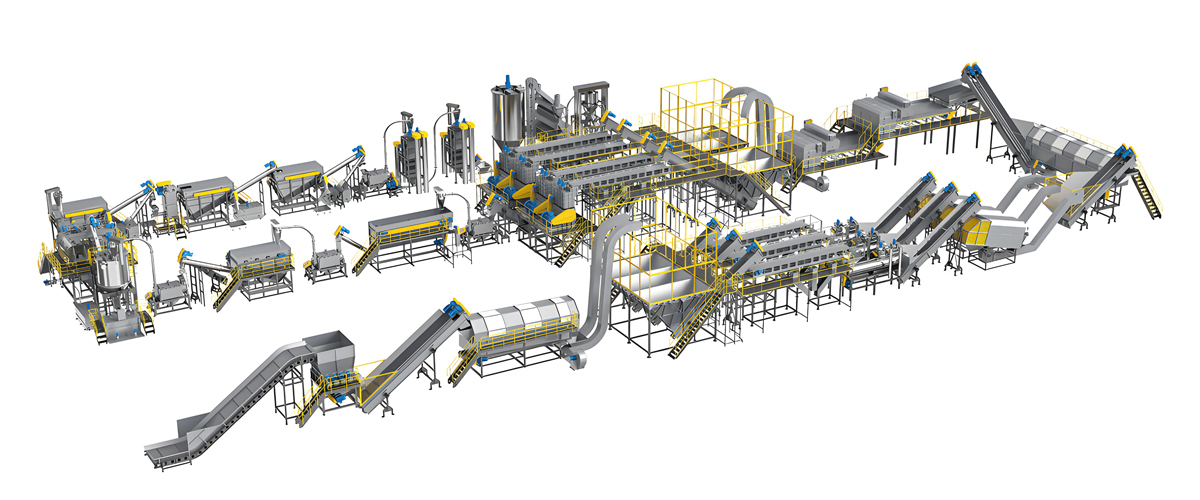
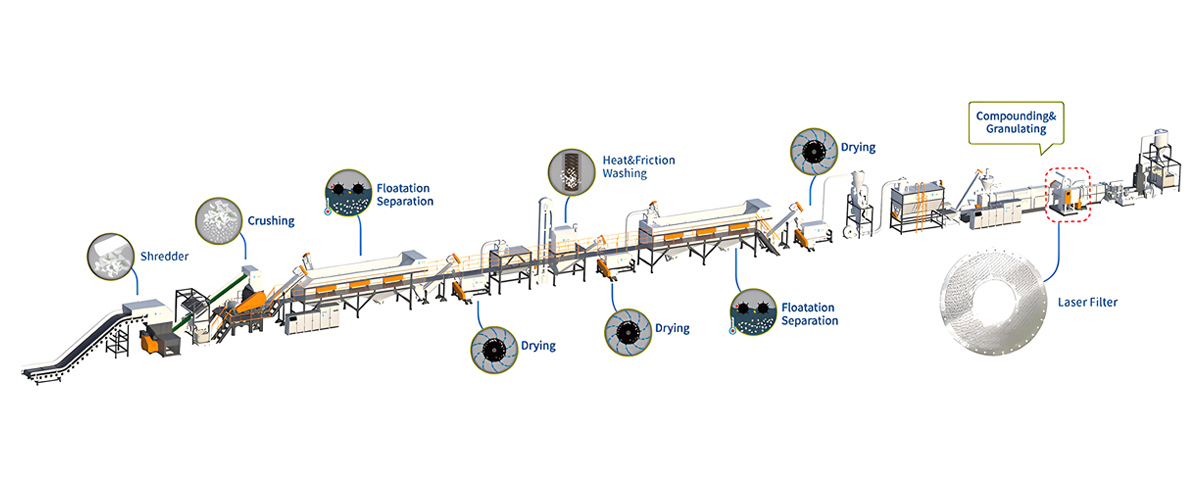
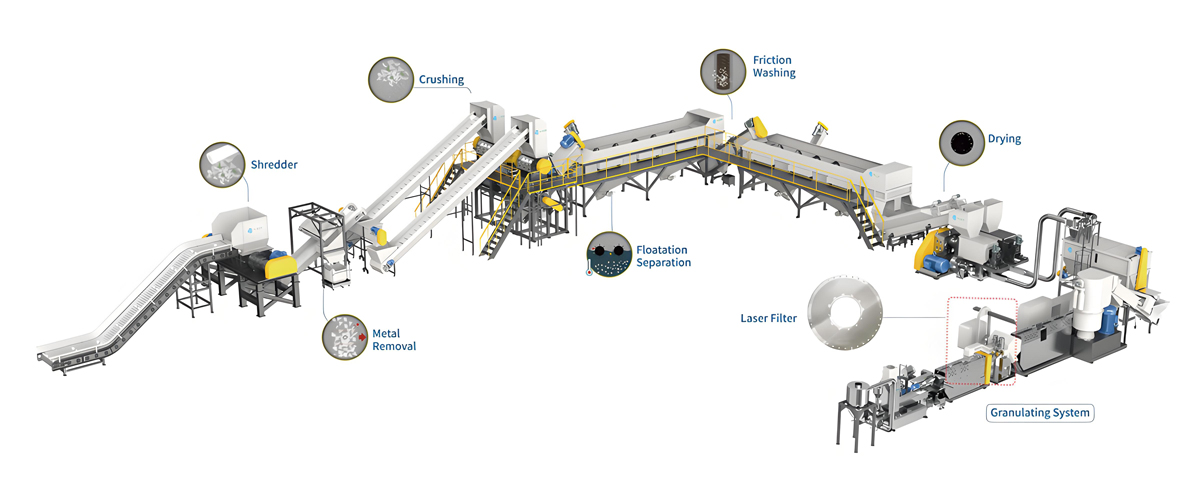
The selection of recycling equipment determines production capacity, product quality, energy efficiency, and operating costs. POLYRETEC offers a comprehensive range of recycling equipment designed for different materials and production requirements. The choice between single-stage and multi-stage processing depends on the material type and required product quality. Clean industrial scrap can often be processed through single-stage extrusion, while contaminated post-consumer materials typically require multi-stage processing with separate washing, drying, and extrusion steps.
Production capacity must balance market demand, capital efficiency, and operational flexibility. Equipment capacity is typically expressed in kilograms or tons per hour, with common production lines ranging from 200 kg/hour to 2,000 kg/hour. A medium-sized operation with 500 kg/hour capacity can produce approximately 3,000 to 3,500 tons annually assuming 70% to 80% operational efficiency. The investment cost for a complete recycling line from POLYRETEC with 500 kg/hour capacity typically ranges from $300,000 to $600,000 depending on the complexity of processing requirements.
Production optimization focuses on maximizing yield, minimizing energy consumption, and ensuring consistent quality. Modern recycling equipment like POLYRETEC’s systems incorporate advanced controls that enable precise temperature regulation, efficient material handling, and automated quality monitoring. The yield from recycling operations typically ranges from 85% to 95% depending on material quality and processing efficiency. The 5% to 15% material loss represents a significant cost factor that justifies investment in equipment and processes that maximize yield.
Quality Control and Product Standardization
Consistent product quality represents the single most important factor for success in export markets. International customers require predictable material properties including melt flow index, density, color consistency, and contamination levels. Quality control systems must include incoming material inspection, in-process monitoring, and final product testing. The investment in quality control equipment typically ranges from $30,000 to $150,000 depending on the sophistication of testing requirements.
Product standardization involves establishing and maintaining consistent specifications for different product grades. Most recycled plastics businesses offer multiple product grades to serve different market segments and applications. Standard grades typically include food-grade, textile-grade, injection molding-grade, and general-purpose specifications. The investment in product development and certification for specialized grades can range from $25,000 to $100,000 but enables access to premium market segments with higher pricing.
Production Cost Analysis and Profitability Optimization
Understanding production costs enables effective pricing strategies and profitability optimization. The cost structure of recycled pellets production includes raw material costs, energy costs, labor costs, maintenance costs, and overhead expenses. Raw material costs typically represent 60% to 70% of total production costs, making efficient material sourcing and high yield rates critical for profitability.
Energy costs represent 10% to 15% of production costs and can be optimized through equipment selection and operational practices. POLYRETEC equipment incorporates energy-efficient designs that can reduce energy consumption by 15% to 25% compared to older technologies. The energy cost savings of $20,000 to $80,000 annually for medium-sized operations provide substantial contribution to profitability.
Labor costs depend heavily on the level of automation and the complexity of processing requirements. Highly automated lines require fewer operators but higher capital investment. The trade-off between labor costs and capital investment should be evaluated based on local labor costs and availability. Maintenance costs typically range from 3% to 5% of equipment value annually and must be budgeted to ensure reliable operation and prevent costly downtime.
Regulatory Compliance and Certification
Exporting recycled plastics requires navigating a complex landscape of international regulations, quality standards, and certification requirements. Compliance with these requirements is mandatory for market access and represents a significant competitive advantage when done properly.
International Trade Regulations and Documentation
International trade in recycled plastics is subject to various regulations including the Basel Convention on the Control of Transboundary Movements of Hazardous Wastes and their Disposal. While recycled plastic pellets are generally not considered hazardous waste under the Basel Convention, proper classification and documentation remain essential. Exporters must provide detailed documentation including material origin, processing history, and technical specifications.
Import regulations vary significantly by country and sometimes by product type. The European Union requires REACH registration for chemicals including recycled plastics, which involves comprehensive testing and documentation. The United States FDA requires approval for food-contact applications of recycled plastics, which requires extensive documentation of the recycling process and product testing. Understanding these requirements in advance prevents costly delays and rejections at destination markets.
Quality Standards and Technical Specifications
Quality standards for recycled plastics vary by application and market but typically address properties including density, melt flow index, ash content, moisture content, and contamination levels. The European Union has developed the EN 15343 standard for recycled plastics, which establishes testing methods and specifications. Compliance with recognized standards facilitates market acceptance and can command premium pricing.
Technical specifications must be clearly documented and communicated to customers. Standard specifications typically include plastic type identification, density range, melt flow index range, color description, maximum contamination levels, moisture content limits, and any additives or processing aids. Providing comprehensive technical documentation builds customer confidence and reduces quality disputes.
Certification Requirements for Premium Markets
Access to premium markets often requires specific certifications that validate quality and safety aspects of recycled pellets. Food-grade certifications represent perhaps the most challenging and valuable certifications, enabling sales to packaging applications for food and beverages. The FDA approval process in the United States typically costs $50,000 to $150,000 and takes 12 to 18 months. European food-grade approval requires EFSA evaluation with similar costs and timelines.
Other valuable certifications include ISO 14001 environmental management system certification ($10,000 to $30,000), ISO 9001 quality management system certification ($8,000 to $25,000), and various industry-specific certifications. The investment in certification, while substantial, typically delivers returns through market access and premium pricing. Certified recycled pellets can command prices 30% to 50% higher than uncertified materials in premium applications.
Environmental and Sustainability Documentation
Increasingly, customers require environmental documentation that demonstrates the sustainability benefits of recycled materials. This may include life cycle assessment (LCA) data, carbon footprint calculations, and documentation of material traceability. The investment in environmental documentation and carbon footprint analysis typically ranges from $15,000 to $50,000 but enables participation in corporate sustainability programs and green procurement initiatives.
Material traceability is becoming increasingly important, particularly in markets with extended producer responsibility regulations. The ability to document the entire journey from post-consumer collection to final pellet provides confidence in material sustainability and compliance with regulations. Advanced tracking systems using RFID or blockchain technology represent emerging approaches for material traceability, though adoption is still limited in the industry.
Logistics and Supply Chain Management
Efficient logistics management represents a critical success factor for export businesses, directly affecting costs, customer satisfaction, and market competitiveness. The logistics chain from production facility to customer location involves multiple steps and stakeholders that must be carefully coordinated.
International Shipping Methods and Container Optimization
Marine shipping represents the most common and cost-effective method for international trade in recycled plastics. A 20-foot shipping container can typically hold 18 to 22 tons of bagged pellets, while a 40-foot container can hold 25 to 28 tons. Shipping costs vary significantly by route and market conditions but typically range from $800 to $2,500 per container for major international routes. Effective container loading optimization can reduce per-ton shipping costs by maximizing load density.
Alternative shipping methods may be appropriate for certain markets or situations. Air freight, while significantly more expensive at $3 to $8 per kilogram, may be justified for high-value materials or urgent deliveries. Regional truck or rail shipping can be cost-effective for land-border trade between neighboring countries. The choice of shipping method should balance cost considerations against delivery time requirements and product value.
Packaging Standards and Material Protection
Proper packaging protects recycled pellets during transportation and ensures material quality upon arrival. Standard packaging involves 25 kg bags on pallets, with typically 40 bags per pallet. Premium markets often require additional packaging protection including moisture barrier bags, shrink wrapping, and pallet strapping. The investment in high-quality packaging typically adds 2% to 4% to product costs but prevents material degradation and reduces customer claims.
Pallet quality and loading patterns affect shipping efficiency and material protection. Standard 48 by 40 inch pallets optimize container loading for international trade. Proper stacking patterns and weight distribution prevent damage during handling and transit. The investment in quality pallets ($15 to $25 each) represents a small portion of overall costs but prevents significant losses through damaged materials and customer dissatisfaction.
Customs Clearance and Documentation Management
Efficient customs clearance requires complete and accurate documentation. Required documents typically include commercial invoice, packing list, bill of lading, certificate of origin, material specifications, and any required certifications. Errors or omissions in documentation can cause costly delays, additional storage fees, and potential material rejection. Investing in customs brokerage services ($500 to $2,000 per shipment) often proves cost-effective through faster clearance and reduced problems.
Trade agreements and preferential tariff rates can significantly affect landed costs. Free trade agreements between countries can reduce or eliminate import duties, providing competitive advantages in those markets. Understanding and utilizing these agreements requires proper documentation and compliance with rules of origin requirements. The effort to document preferential origin can reduce import duties by 5% to 25% in some markets, substantially improving net pricing.
Supply Chain Risk Management
Global supply chains involve various risks that must be managed to ensure reliable customer service. Shipping delays due to port congestion, equipment shortages, or weather disruptions can disrupt deliveries and customer operations. Diversification of shipping routes and carriers can reduce exposure to specific disruptions. Maintaining safety stock or buffer inventory at destination markets can prevent stock-outs but adds carrying costs of 2% to 4% monthly.
Insurance coverage protects against various risks including loss, damage, and theft during transportation. Marine cargo insurance typically costs 0.3% to 0.8% of cargo value but provides essential protection. Political risk insurance may be appropriate for shipments to markets with instability or currency risks. The investment in comprehensive insurance protection represents a small cost relative to potential losses but provides security and customer confidence.
Marketing and Sales Strategy
Effective marketing and sales strategies enable exporters to develop sustainable customer relationships and maximize market penetration. The approach should balance customer acquisition, relationship building, and market expansion strategies.
Market Entry Strategies and Customer Development
Successful market entry requires strategic planning and staged investment. Initial market development often focuses on a few target customers to establish credibility and refine the value proposition. Building relationships with customers willing to provide feedback and specifications helps tailor products and services to market requirements. The investment in market development, including travel, trade show participation, and customer visits, typically ranges from $25,000 to $100,000 per target market during the first year.
Digital marketing increasingly plays a role in customer acquisition, with industry-specific platforms, social media, and search engine optimization helping raise awareness among potential customers. However, B2B relationships in the recycled plastics industry still rely heavily on personal relationships and direct engagement. The most successful exporters combine digital marketing with traditional relationship building approaches.
Contract Structuring and Pricing Strategies
Contract structures vary from spot transactions to long-term supply agreements with varying terms and conditions. Long-term contracts provide revenue stability and enable production planning but may limit flexibility to respond to market price changes. Typical contract terms include duration, volume commitments, quality specifications, pricing mechanisms, and delivery terms. Well-structured contracts include price adjustment mechanisms that account for raw material cost changes and currency fluctuations.
Pricing strategies must balance competitiveness with profitability. Cost-plus pricing ensures margin coverage but may miss market opportunities. Market-based pricing aligns with customer expectations but requires careful cost management. Value-based pricing, particularly for premium certified materials, captures the full value of differentiated products. The most successful exporters use portfolio pricing strategies that combine approaches for different market segments and customer relationships.
Customer Relationship Management
Long-term customer relationships represent valuable assets that justify investment in maintenance and development. Regular communication, including performance reports, market intelligence sharing, and proactive problem resolution, builds trust and loyalty. Understanding customer requirements and challenges enables tailored solutions that strengthen relationships and create switching costs for customers.
Technical support services represent valuable relationship-building tools. Helping customers optimize their use of recycled materials, troubleshoot processing issues, and develop new applications creates value beyond the basic material supply. The investment in technical support capabilities, either through internal expertise or partnerships, typically costs $50,000 to $200,000 annually but delivers returns through stronger relationships and differentiated market position.
Financial Management and Risk Control
Sound financial management and risk control practices ensure business sustainability and profitability. Export operations involve specific financial considerations including currency risk, payment terms, and working capital requirements that must be managed effectively.
Currency Risk Management
International trade exposes exporters to currency exchange rate risks that can significantly affect profitability. Fluctuations between production currency, pricing currency, and payment currency can either enhance or erode margins. Currency hedging strategies using forward contracts, options, or natural hedges can manage this risk but involve costs and complexity. The investment in currency management typically costs 0.5% to 1.5% of transaction values but provides protection against adverse movements.
Payment Terms and Credit Risk Management
Payment terms vary by market and customer relationship, ranging from advance payment to open account terms with extended payment periods. The balance between customer preferences and risk management requires careful consideration. Payment security instruments like letters of credit ($50 to $200 per transaction) provide security but add complexity and cost. Export credit insurance protects against customer default but typically costs 0.5% to 2% of insured amounts annually.
Working Capital Optimization
Export operations typically require substantial working capital due to extended payment terms, production cycles, and shipping times. Optimizing working capital involves managing inventory levels, production scheduling, and payment terms to minimize tied-up capital. The cost of working capital represents a significant expense, with financing costs of 6% to 12% annually in most markets. Efficient working capital management can substantially improve profitability and cash flow.
Performance Monitoring and Strategic Adjustment
Regular performance monitoring enables identification of problems and opportunities for improvement. Key performance indicators include sales volume, profit margins, customer acquisition costs, and customer satisfaction metrics. Monthly or quarterly business reviews enable strategic adjustments based on performance data and market changes. The investment in performance management systems typically ranges from $15,000 to $75,000 but enables data-driven decision making and strategic agility.
Case Studies and Success Factors
Learning from successful operations in the recycled plastics export industry provides valuable insights for new entrants and established businesses seeking growth.
Success Factor Analysis
Analysis of successful recycled plastics exporters reveals several common success factors. Consistent product quality represents the most frequently cited success factor, with successful businesses investing heavily in quality control and process consistency. Reliable supply and delivery performance ranks second, with successful businesses developing robust supply chains and logistics capabilities. Market specialization in particular materials or applications allows development of deep expertise and strong customer relationships.
Common Pitfalls and Challenges
Understanding common pitfalls helps avoid costly mistakes. Quality inconsistencies often result in customer loss and reputation damage. Inadequate understanding of regulatory requirements leads to shipment delays and rejections. Undercapitalization during startup phases creates cash flow problems that threaten business survival. Poor supply chain management causes delivery failures and customer dissatisfaction. Successful exporters anticipate these challenges and implement preventive measures before problems occur.
Future Outlook and Strategic Opportunities
The recycled plastics export industry will continue evolving in response to technological developments, regulatory changes, and market dynamics. Understanding future trends enables strategic positioning for long-term success.
Emerging Market Opportunities
New markets for recycled plastics continue to emerge as environmental awareness spreads globally. African markets present growing opportunities as infrastructure development and environmental regulations increase. Middle Eastern markets are developing recycling capabilities but still require imported materials for growing manufacturing sectors. These emerging markets often have different quality requirements and market structures that require tailored approaches.
Technology and Innovation Impacts
Technological advances are improving recycling capabilities and expanding the range of recyclable materials. Advanced sorting technologies enable more precise material separation, improving quality and yield. Chemical recycling technologies are emerging for traditionally difficult-to-recycle materials. These innovations may create new opportunities for specialized exporters who can adopt new technologies ahead of competitors.
Conclusion
Starting and operating a recycled plastics export business offers substantial opportunities in today’s growing global marketplace for sustainable materials. Success requires comprehensive understanding of market dynamics, investment in quality production capabilities, careful attention to regulatory compliance, and development of strong customer relationships. The businesses that succeed combine technical expertise in plastics recycling with sophisticated export capabilities and financial discipline.
POLYRETEC provides advanced recycling equipment and technical expertise that support businesses throughout the value chain, from basic processing to integrated operations. The combination of reliable equipment, technical support, and industry expertise enables new and existing exporters to compete effectively in demanding international markets. With proper planning, execution, and continuous improvement, a recycled plastics export business can generate substantial returns while contributing to environmental sustainability and the circular economy.
The future of the recycled plastics industry remains bright, with continuing growth driven by environmental concerns, regulatory pressures, and corporate sustainability commitments. Businesses that establish strong foundations today will be well-positioned to capitalize on emerging opportunities and adapt to evolving market conditions. The investment in a recycled plastics export business represents not just a financial opportunity but a contribution to global sustainability efforts and the development of more circular material flows.