
Selecting the optimal plastic recycling extruder for continuous pellet production represents one of the most critical decisions for recycling facility operators and investors. The right extruder choice directly impacts production capacity, product quality, energy efficiency, operating costs, and overall business profitability. Continuous pellet production demands equipment that can maintain consistent performance over extended operating periods while handling diverse and often contaminated feed materials. This comprehensive guide examines the technical considerations, equipment options, economic factors, and operational requirements for selecting and optimizing plastic recycling extruders for continuous production applications, providing decision-makers with actionable insights for maximizing investment returns.
Understanding Continuous Pellet Production Requirements
Continuous pellet production systems differ fundamentally from batch processing approaches in their operational requirements and equipment specifications. Continuous operation demands consistent material flow, stable processing conditions, reliable performance over extended periods, and minimal downtime. Understanding these requirements forms the foundation for proper equipment selection and system design.
Production Capacity and Throughput Requirements
Production capacity represents the primary specification for extruder selection, typically expressed in kilograms per hour or tons per day of finished pellet production. Small-scale operations targeting niche markets may require capacities of 100 to 300 kg per hour, while medium-sized commercial operations typically operate in the 500 to 1,500 kg per hour range. Large-scale industrial facilities may require capacities exceeding 2,000 kg per hour to achieve economies of scale. POLYRETEC offers extruder models across this entire capacity range, with the PTC series providing 200 to 1,000 kg per hour and specialized high-capacity models available for larger applications.
Throughput requirements must balance market demand with operational efficiency. Operating equipment significantly below rated capacity reduces energy efficiency and increases per-unit production costs. Conversely, attempting to operate at or above maximum rated capacity creates reliability problems and quality inconsistencies. The optimal operating point typically falls between 70% and 85% of rated capacity, allowing flexibility for demand variations while maintaining efficient operation. For facilities planning growth, equipment selection should provide capacity for current needs plus 20% to 30% expansion headroom.
Material Handling and Feed System Requirements
Continuous pellet production requires reliable and consistent material feeding to maintain stable extrusion conditions. Feed systems must accommodate various material forms including shredded flakes, films, and regrind materials while maintaining consistent bulk density and flow characteristics. Automated feeding systems with gravimetric or volumetric control provide the consistency needed for continuous operation. The investment in advanced feed control systems typically ranges from $15,000 to $45,000 but delivers substantial returns through improved product consistency and reduced operator intervention.
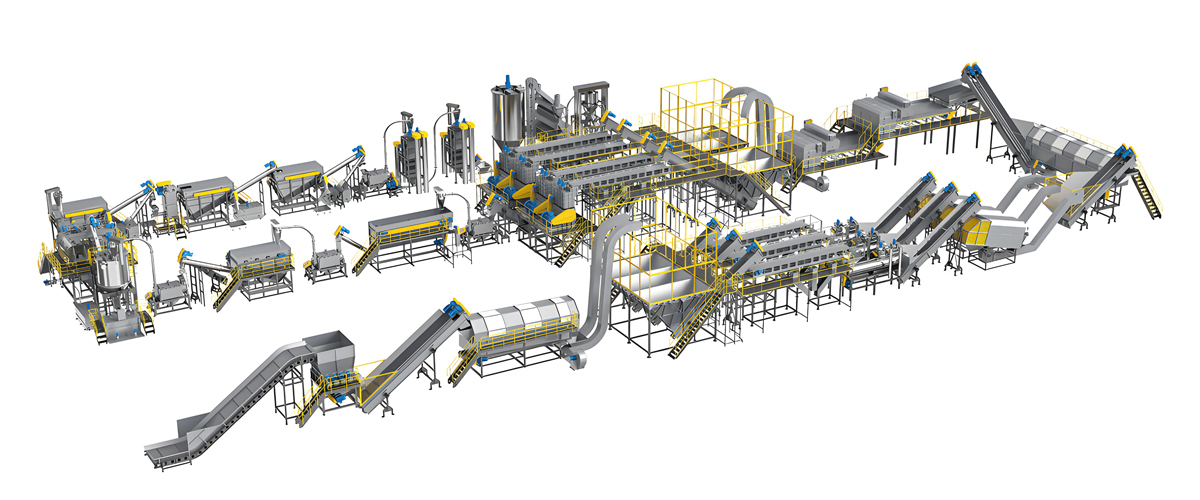
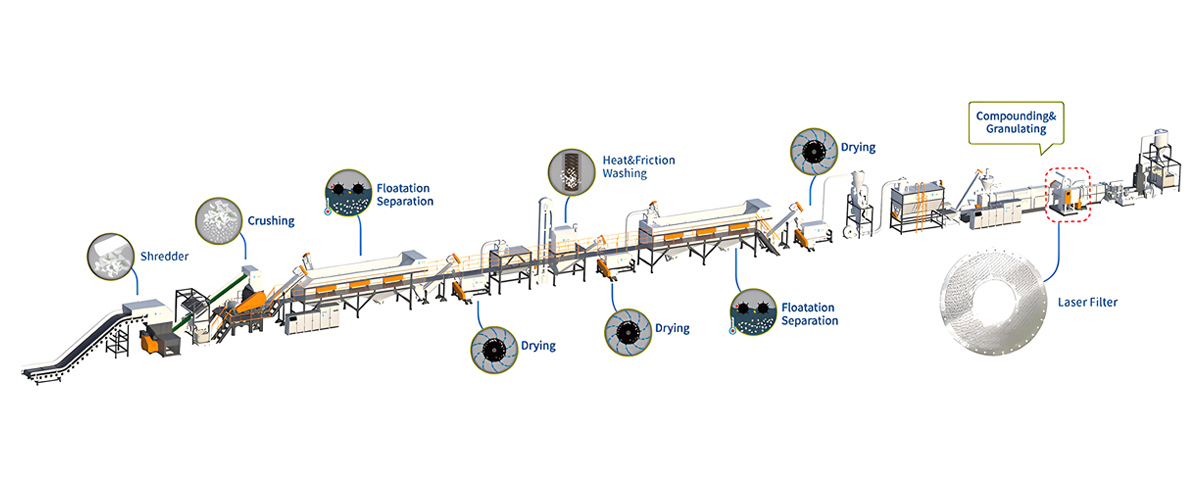
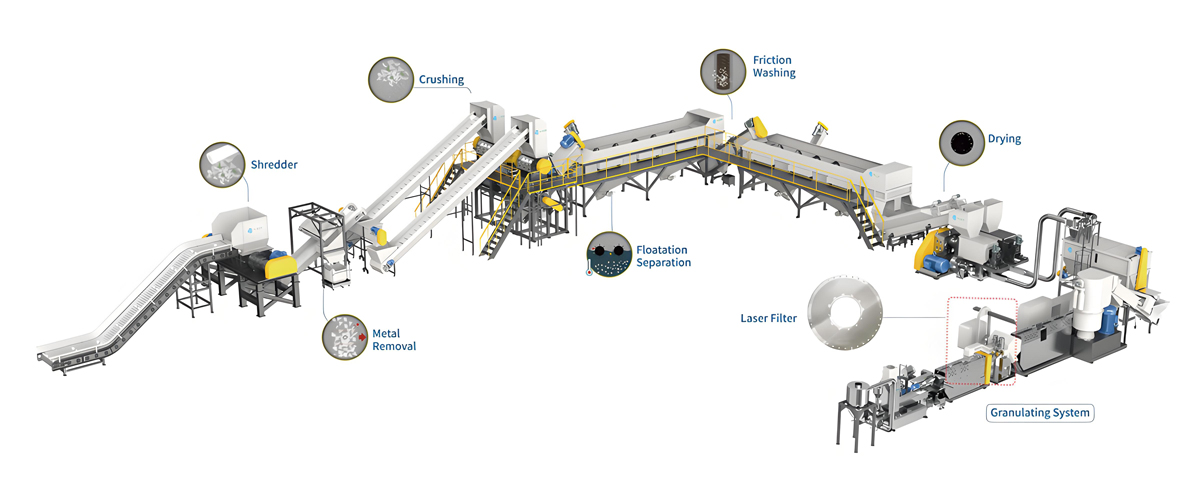
Material pretreatment represents another critical consideration for continuous operation. Contaminant removal, moisture control, and size reduction all affect extruder performance and product quality. POLYRETEC integrated systems combine material pretreatment with extrusion, creating streamlined continuous processing lines. These integrated systems typically cost 20% to 30% more than standalone extruders but reduce overall system complexity and labor requirements.
Quality Consistency and Process Stability
Consistent pellet quality depends on stable extrusion conditions maintained through sophisticated control systems. Temperature control must maintain extruder zones within plus or minus 2 degrees Celsius of target values to prevent material degradation and ensure consistent melt properties. Pressure monitoring and control prevent fluctuations that affect pellet size and shape. Modern extruders from POLYRETEC incorporate advanced PLC control systems with multiple zone temperature and pressure monitoring, ensuring the process stability required for continuous production.
Process stability requirements vary based on the sensitivity of the material being processed. Polyethylene terephthalate (PET) requires precise temperature control to prevent hydrolytic degradation, while polyethylene materials offer wider processing windows. The extruder selection must match the material requirements with appropriate temperature control systems, screw design, and processing capabilities. The investment in advanced control systems for demanding materials typically adds $25,000 to $75,000 to equipment costs but prevents quality problems and material waste.
Extruder Types and Technology Options
The plastic recycling extruder market encompasses various technology types and configurations, each suited to specific applications and operating requirements. Understanding the available options enables informed selection based on material characteristics, production requirements, and economic considerations.
Single Screw Extruders
Single screw extruders represent the most common and economical choice for plastic recycling applications, particularly for materials with lower contamination levels and more consistent characteristics. These machines offer simplicity, lower initial investment, and easier maintenance compared to twin screw alternatives. The investment cost for single screw extruders typically ranges from $45,000 to $180,000 depending on capacity and features. POLYRETEC’s PTC series single screw extruders provide excellent performance for clean post-industrial scrap and pre-processed post-consumer materials.
Single screw extruders excel in applications with consistent material characteristics and lower contamination levels. Their simpler design provides lower energy consumption and reduced maintenance requirements. However, they may struggle with heavily contaminated materials or applications requiring extensive mixing and devolatilization. For materials with contamination levels below 3% and consistent particle size, single screw extruders offer excellent performance and operating economy.
Twin Screw Extruders
Twin screw extruders provide superior mixing, degassing, and processing capabilities for challenging materials. The co-rotating twin screw configuration enables excellent distributive and dispersive mixing, making these machines ideal for heavily contaminated materials, color changes, and applications requiring additives incorporation. The investment cost for twin screw extruders typically ranges from $150,000 to $450,000, representing 2 to 3 times the cost of comparable single screw machines.
The enhanced mixing capabilities of twin screw extruders enable processing of materials with contamination levels up to 10% and inconsistent particle sizes. These machines provide excellent devolatilization, removing moisture and volatiles during processing. However, the enhanced capabilities come with higher energy consumption, typically 15% to 25% more than single screw machines, and increased maintenance complexity. For applications requiring maximum processing flexibility and material versatility, twin screw extruders justify their higher investment through broader operating capabilities.
Specialized Extruder Configurations
Beyond standard single and twin screw configurations, specialized extruder designs address specific processing challenges. Ventured extruders provide enhanced venting for moisture removal without sacrificing throughput. Co-rotating intermeshing designs offer different mixing characteristics for specific materials. Specialized screw geometries optimize processing for particular materials like PET or PVC. POLYRETEC offers application-specific extruder designs optimized for different recycling applications, ensuring optimal performance for specific material streams.
Specialized configurations often provide substantial benefits for particular applications but may sacrifice some flexibility. The investment decision should weigh the benefits of specialization against the potential need for material flexibility. For facilities processing consistent material streams, specialized designs often provide superior performance and operating economics. For facilities with diverse material types, more flexible configurations may provide better overall returns.
Key Technical Specifications and Selection Criteria
Selecting the optimal extruder requires evaluation of multiple technical specifications that affect performance, reliability, and operating economics. Understanding these specifications and their impact on production quality and costs enables informed decision-making.
L/D Ratio and Processing Capability
The length-to-diameter (L/D) ratio of the extruder screw directly affects processing capability and flexibility. Standard extruders typically offer L/D ratios between 24:1 and 30:1, suitable for most recycling applications. Extended L/D ratios of 30:1 to 40:1 provide enhanced mixing and devolatilization capabilities, beneficial for heavily contaminated materials or applications requiring extensive moisture removal. The investment in extended L/D extruders typically adds 15% to 25% to equipment costs but provides expanded processing capabilities.
The appropriate L/D ratio depends on material characteristics and processing requirements. Clean materials with consistent properties perform well with standard L/D ratios around 24:1. Contaminated materials or applications requiring extensive processing benefit from extended L/D ratios between 30:1 and 36:1. POLYRETEC offers configurable extruders that allow screw length and geometry selection based on specific application requirements.
Screw Design and Material
Screw design significantly impacts mixing efficiency, heat generation, and residence time distribution. Single-flighted screws provide efficient conveying and good mixing for most applications. Barrier screws improve melting efficiency and temperature homogeneity. Specialized mixing sections enhance dispersion of contaminants and additives. The investment in optimized screw designs typically ranges from $8,000 to $25,000 beyond standard configurations but delivers substantial performance improvements.
Screw material selection affects wear resistance and service life. Standard carbon steel screws provide economical performance but require more frequent replacement, particularly when processing abrasive materials. Hardened or bimetallic screws provide extended service life and reduced maintenance requirements. The investment in enhanced screw materials typically adds $12,000 to $30,000 to equipment costs but reduces annual maintenance costs by 30% to 50% and increases production uptime.
Drive System and Motor Technology
The extruder drive system determines energy efficiency and operating characteristics. Standard AC drives provide basic speed control with moderate energy efficiency. DC drives offer better speed regulation and response. Advanced AC variable frequency drives provide superior energy efficiency, typically reducing power consumption by 15% to 25% compared to standard systems. The investment in advanced drive systems typically adds $10,000 to $35,000 but delivers substantial energy savings and improved process control.
Motor sizing must match the processing requirements without excessive oversizing that wastes energy. Properly sized motors operate at optimal efficiency points, reducing energy consumption and operating costs. POLYRETEC extruders incorporate properly sized drive systems matched to processing requirements, ensuring efficient operation across the operating range.
Temperature Control Systems
Advanced temperature control systems maintain precise zone temperatures essential for consistent processing. Multiple zone heating with individual control enables precise temperature profiles along the extruder length. Ceramic heater elements provide rapid response and extended service life compared to standard band heaters. The investment in advanced temperature control systems typically ranges from $8,000 to $20,000 but ensures stable processing conditions and improved product quality.
Temperature sensor technology and placement affect control precision. Thermocouples positioned near the barrel wall provide standard monitoring. Infrared sensors through the barrel offer improved accuracy and faster response. Advanced systems incorporate both sensor types for comprehensive monitoring. The investment in enhanced temperature sensing typically adds $3,000 to $8,000 but enables tighter process control and reduced quality variations.
Pelletizing System Integration
The pelletizing system represents the final stage of the extrusion process and significantly impacts final product quality and characteristics. Proper integration of pelletizing equipment with the extruder ensures consistent operation and optimal product quality.
Strand Pelletizing Systems
Strand pelletizing represents the traditional approach, where extruded strands are cooled in a water bath then cut into pellets. This system offers simplicity, lower capital investment, and suitability for many applications. The investment for complete strand pelletizing systems typically ranges from $25,000 to $75,000 depending on capacity and features. The system produces uniform pellets with good shape characteristics but may have limitations for very high throughput applications or materials with specific requirements.
Strand pelletizing systems require careful control of strand diameter, water temperature, and cutting speed to ensure consistent pellet quality. Automated strand handling systems reduce labor requirements but add to system complexity and cost. For most standard recycling applications, strand pelletizing provides an excellent balance of performance, cost, and operational simplicity.
Underwater Pelletizing Systems
Underwater pelletizing offers superior cooling and cutting control, particularly beneficial for temperature-sensitive materials and high-throughput applications. The process cuts strands directly in the water bath, providing excellent cooling and preventing strand stretching or distortion. The investment for underwater pelletizing systems typically ranges from $80,000 to $200,000, representing 2 to 3 times the cost of strand systems.
The enhanced capabilities of underwater systems justify their higher investment for specific applications. The process produces exceptionally uniform pellets with minimal thermal stress to the material. The system handles very high throughputs while maintaining product quality. For applications requiring maximum pellet uniformity or processing heat-sensitive materials, underwater pelletizing delivers superior performance despite the higher investment.
Face Cutting Pelletizing Systems
Face cutting systems cut pellets directly at the die face, eliminating strand handling and simplifying the process. These systems offer compact footprint, reduced equipment complexity, and suitability for specific materials and applications. The investment for face cutting systems typically ranges from $60,000 to $150,000. The system eliminates water bath requirements for some materials, reducing water consumption and simplifying operation.
Face cutting systems excel for materials with specific rheological properties and applications where strand handling presents challenges. The cutting mechanism requires precise alignment and maintenance to ensure consistent pellet quality. For appropriate applications, face cutting provides simplified operation and reduced water consumption compared to traditional strand systems.
Operational Cost Analysis
Understanding the total cost of ownership for extruder systems enables informed investment decisions and optimization of operational economics. Analysis should encompass capital costs, energy consumption, maintenance requirements, and operating expenses.
Energy Consumption and Efficiency
Energy represents one of the largest operating cost components for extrusion operations. Energy consumption typically ranges from 0.15 to 0.35 kWh per kilogram of processed material, depending on material characteristics and extruder design. Advanced energy-efficient designs from POLYRETEC reduce energy consumption by 15% to 25% compared to conventional extruders. For a typical 500 kg/hour operation, annual energy costs might range from $40,000 to $80,000 depending on local electricity rates.
Energy optimization strategies include variable speed drives, optimized screw designs, advanced temperature control, and heat recovery systems. The investment in energy efficiency enhancements typically adds 10% to 20% to equipment costs but delivers energy savings that provide payback periods of 18 to 36 months. In regions with high energy costs, the payback periods can be even shorter, making energy efficiency investments highly attractive.
Maintenance and Repair Costs
Extruder maintenance costs typically range from 3% to 8% of equipment value annually, depending on operating conditions, material characteristics, and equipment design. Standard maintenance activities include screw and barrel wear monitoring, heater replacement, drive system servicing, and control system calibration. For a $200,000 extruder, annual maintenance costs typically range from $6,000 to $16,000 excluding major component replacement.
Major component replacement costs represent significant periodic expenses. Screw and barrel sets typically require replacement every 3 to 5 years depending on operating conditions, with costs ranging from $15,000 to $50,000. Drive motor replacement might be required every 8 to 12 years at costs of $8,000 to $25,000. Bearing and seal replacements occur more frequently at costs of $500 to $3,000 per instance. Proper maintenance practices and material selection can significantly extend component life and reduce these costs.
Consumables and Operating Expenses
Beyond energy and maintenance, various consumable and operating expenses contribute to total operating costs. Filter screens for melt filtration require regular replacement, with annual costs of $2,000 to $8,000 depending on contamination levels. Cutting knife replacement for pelletizing systems represents another significant expense, with annual costs of $3,000 to $10,000 based on throughput and material abrasiveness.
Other operating expenses include lubricants, water treatment chemicals for cooling systems, and calibration services. These miscellaneous expenses typically total $1,000 to $3,000 annually. The total operating cost per kilogram of processed material, excluding raw materials, typically ranges from $0.05 to $0.15 depending on equipment efficiency, local utility rates, and maintenance practices.
Labor Requirements and Automation
Labor requirements vary significantly based on automation level and system complexity. Manual operation of basic extruder systems requires 1 to 2 operators per shift for material loading, process monitoring, and pellet handling. Automated systems with integrated controls reduce labor requirements to 0.5 to 1 operator per shift, primarily for supervisory and exception-handling tasks.
The investment in automation and advanced controls typically adds 15% to 30% to equipment costs but reduces annual labor costs by $50,000 to $150,000 depending on local wage rates and operating patterns. For facilities facing high labor costs or labor shortages, automation investments often provide compelling returns while improving process consistency and reducing quality variations.
Material-Specific Considerations
Different plastic materials present distinct processing challenges and requirements that affect extruder selection and operation. Understanding material-specific characteristics enables optimal equipment configuration and operating strategies.
Polyethylene (HDPE, LDPE) Processing
Polyethylene materials represent the most common recycled plastics and offer relatively forgiving processing characteristics. These materials process well in standard single screw extruders with L/D ratios of 24:1 to 30:1. Processing temperatures typically range from 180°C to 220°C depending on specific material type and grade. The relatively wide processing window simplifies operation and reduces precision requirements.
Contamination considerations for polyethylene include labels, adhesives, and mixed polymer fractions. Efficient melt filtration and degassing systems address these contamination issues effectively. POLYRETEC’s standard extruder configurations provide excellent performance for polyethylene recycling, with minimal modifications required. Operating costs for polyethylene processing typically range from $0.08 to $0.15 per kilogram excluding raw materials.
Polypropylene Processing
Polypropylene processing requires slightly higher temperatures than polyethylene, typically 200°C to 240°C, and benefits from more precise temperature control to prevent degradation. The material’s lower viscosity requires attention to screw design to ensure proper mixing and conveying. Twin screw extruders or single screw machines with mixing sections provide enhanced processing for polypropylene.
Contamination challenges for polypropylene include mixed polyethylene fractions and various additives. Color changes between different material streams may require more extensive cleaning between production runs. The investment in polypropylene-optimized extruder configurations typically adds 5% to 15% over standard configurations but delivers improved performance and quality.
PET Processing Requirements
Polyethylene terephthalate presents the most challenging processing requirements among common recycled plastics. The material undergoes hydrolytic degradation at temperatures above 280°C in the presence of moisture, requiring strict moisture control and precise temperature management. Processing must occur below 280°C with moisture content below 0.5% to prevent degradation and maintain intrinsic viscosity.
PET processing typically requires vented or twin screw extruders with enhanced devolatilization capabilities. Vacuum venting removes moisture and volatiles during processing, preventing degradation. The investment in PET-capable extruder systems typically adds 25% to 50% over standard configurations but is essential for quality PET recycling. Operating costs for PET processing are also higher, typically $0.12 to $0.22 per kilogram excluding raw materials.
PVC and Engineering Plastics
Polyvinyl chloride and engineering plastics require specialized extruder designs due to their thermal sensitivity and unique processing characteristics. PVC requires temperature control below 200°C to prevent degradation and release of hydrochloric acid. Engineering plastics like polycarbonate and ABS require precise temperature profiles and may benefit from twin screw configurations for optimal mixing.
The investment in extruders specialized for PVC and engineering plastics typically ranges from $150,000 to $400,000 depending on capacity and capabilities. The specialized materials and corrosion-resistant construction required for these applications contribute to higher costs. However, the premium pricing for these materials often justifies the investment in specialized processing equipment.
Automation and Control Systems
Modern extruder systems incorporate sophisticated automation and control capabilities that enhance performance, reduce operator dependency, and improve product consistency. Understanding available automation options enables selection of appropriate control capabilities for specific applications.
Basic PLC Control Systems
Basic programmable logic controller systems provide automated control of essential extruder functions including temperature zones, screw speed, and pelletizing system synchronization. These systems reduce operator workload compared to manual control while maintaining basic process stability. The investment in basic PLC control typically ranges from $15,000 to $35,000 for complete system integration.
Basic control systems typically feature touchscreen interfaces with real-time parameter display and adjustment capabilities. Recipe storage enables rapid changeovers between different materials or product specifications. While basic systems improve process consistency compared to manual operation, they offer limited advanced features like adaptive control or predictive capabilities.
Advanced Process Control Systems
Advanced control systems incorporate additional sensors and algorithms that optimize process parameters automatically. Features may include melt pressure control, automatic temperature profile adjustment, adaptive speed control based on motor load, and predictive maintenance scheduling. The investment in advanced control systems typically ranges from $35,000 to $90,000 depending on capabilities and system complexity.
These advanced systems deliver substantial benefits through improved product consistency, reduced operator intervention, and early detection of developing problems. The return on investment for advanced controls typically ranges from 18 to 42 months based on labor savings, quality improvements, and reduced downtime. POLYRETEC offers various control system options matched to different application requirements and operating conditions.
Monitoring and Data Analytics
Comprehensive monitoring systems provide detailed process data for analysis and optimization. These systems may include data logging, trend analysis, quality correlation, and remote monitoring capabilities. The investment in comprehensive monitoring typically ranges from $20,000 to $60,000 depending on system capabilities and integration requirements.
Data analytics capabilities enable continuous improvement through identification of optimization opportunities and early detection of performance degradation. Historical data analysis can reveal subtle patterns that indicate problems before they cause quality issues or downtime. The value of these capabilities increases with system complexity and operating experience.
Remote Monitoring and Support
Remote monitoring capabilities enable equipment suppliers like POLYRETEC to provide enhanced support through real-time monitoring of equipment performance. These systems may include alarm notification, performance tracking, and remote diagnostic capabilities. The investment in remote monitoring typically adds $5,000 to $15,000 to equipment costs but provides substantial benefits through faster problem resolution and reduced downtime.
Remote monitoring capabilities prove particularly valuable for facilities without extensive in-house technical expertise or for operations in remote locations. The ability to access manufacturer support for troubleshooting and optimization provides significant operational advantages and can reduce the need for specialized on-site technical personnel.
Installation and Commissioning Considerations
Proper installation and commissioning of extruder systems are essential for achieving optimal performance and avoiding operational problems. The investment in professional installation and startup support provides substantial returns through reliable operation and reduced troubleshooting.
Site Preparation Requirements
Extruder installation requires proper site preparation including adequate floor space, structural support, utility connections, and environmental controls. Floor space requirements vary with equipment size but typically range from 200 to 800 square feet for complete pelletizing systems. Structural floors must support equipment weights ranging from 5 to 20 tons depending on capacity and configuration.
Utility requirements include electrical power ranging from 100 to 500 kVA depending on extruder size and features. Water supply for cooling systems typically requires flow rates of 10 to 100 gallons per minute. Compressed air systems for pneumatic controls require capacities of 5 to 50 cubic feet per minute. The investment in site preparation typically ranges from $20,000 to $80,000 depending on existing infrastructure and specific equipment requirements.
Installation and Setup Costs
Professional installation services typically cost 5% to 10% of equipment value and include equipment placement, alignment, utility connections, and initial testing. For a $250,000 extruder system, installation costs typically range from $12,500 to $25,000. This investment ensures proper installation that prevents operational problems and maximizes equipment performance.
Installation timelines typically range from 2 to 6 weeks depending on system complexity and site preparation completeness. Professional installation includes startup support, operator training, and initial process optimization. The value of professional installation extends beyond proper equipment setup to include knowledge transfer that facilitates optimal ongoing operation.
Operator Training Requirements
Comprehensive operator training ensures safe and efficient equipment operation. Basic operator training typically requires 2 to 3 days for personnel to learn startup, operation, shutdown, and basic troubleshooting procedures. Advanced training for supervisors and maintenance personnel requires an additional 1 to 2 days covering system capabilities, maintenance procedures, and optimization techniques.
The investment in professional training typically ranges from $3,000 to $8,000 for complete program delivery including materials and follow-up support. The value of proper training extends beyond safe operation to include optimization capabilities and reduced downtime through improved problem identification and resolution.
Return on Investment Analysis
Evaluating the return on investment for extruder systems requires comprehensive analysis of capital costs, operating costs, production capacity, and product value. Understanding the economic implications of different equipment options enables informed investment decisions.
Capital Investment Comparison
Complete extruder system costs vary significantly based on capacity, features, and automation level. Basic single screw extruders with standard controls and strand pelletizing typically range from $70,000 to $150,000 for capacities of 200 to 500 kg/hour. Twin screw extruders with advanced controls and underwater pelletizing systems range from $200,000 to $500,000 for similar capacities. The appropriate investment level depends on production requirements, material characteristics, and quality specifications.
Operating Cost Differences
Operating costs vary based on equipment efficiency and configuration. Energy-efficient extruders with advanced controls may reduce operating costs by 15% to 25% compared to standard equipment. For annual production of 2,000 tons, these savings amount to $20,000 to $50,000 annually based on typical energy costs. These savings provide substantial contribution to ROI calculations.
Maintenance costs also vary based on equipment design and construction quality. Durable components and corrosion-resistant materials reduce replacement frequency and downtime costs. The annual maintenance cost difference between premium and standard equipment may be $5,000 to $15,000 for medium-sized operations, contributing significantly to total cost of ownership.
Quality Value and Market Positioning
Superior equipment capabilities often produce higher quality products that command premium pricing in the market. Consistent pellet size, low contamination levels, and reliable properties enable sales to premium market segments. Premium recycled pellets may sell for 20% to 40% more than standard quality materials. For a facility producing 2,000 tons annually, this premium amounts to $80,000 to $200,000 of additional revenue, justifying substantial equipment investments.
Payback Period Analysis
Payback periods for extruder investments vary based on capacity utilization, product quality, and market conditions. Standard extruder systems typically achieve payback in 24 to 48 months based on production profits. Enhanced equipment with automation and advanced features may have payback periods of 18 to 36 months due to higher productivity and quality premiums. For facilities operating in premium markets or with high-cost operations, advanced equipment often achieves payback in 12 to 24 months.
Conclusion
Selecting the optimal plastic recycling extruder for continuous pellet production requires careful consideration of technical requirements, material characteristics, economic factors, and operational goals. The right choice balances performance capabilities against investment requirements to maximize returns over the equipment lifecycle. POLYRETEC offers comprehensive extruder solutions across the full range of requirements, from economical single screw systems for basic applications to advanced twin screw configurations for challenging materials.
Successful implementation requires attention beyond equipment selection to include proper installation, training, and ongoing optimization. The investment in quality equipment and professional support delivers substantial returns through improved product quality, reduced operating costs, and enhanced market competitiveness. As the recycled plastics market continues to grow and evolve, facilities that invest in optimal processing equipment position themselves to capitalize on emerging opportunities and achieve long-term success.
The future of plastic recycling extrusion technology continues to advance with improvements in energy efficiency, automation, and processing capabilities. Facilities that establish strong equipment foundations today will be well-positioned to adopt emerging technologies and adapt to evolving market requirements. The strategic investment in optimal extrusion equipment represents not just a capital expenditure but a foundation for sustainable business growth and competitive advantage in the dynamic recycled plastics marketplace.