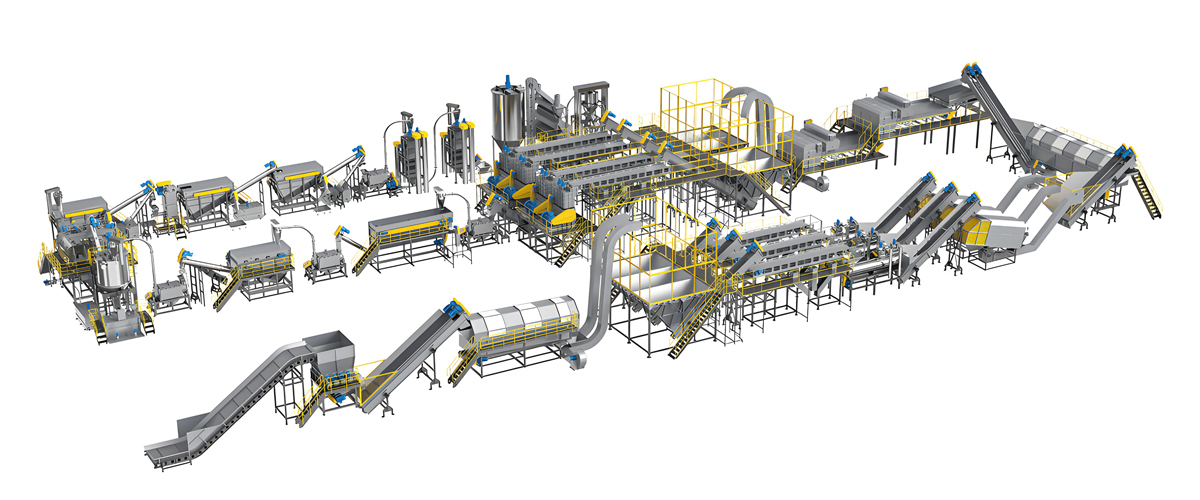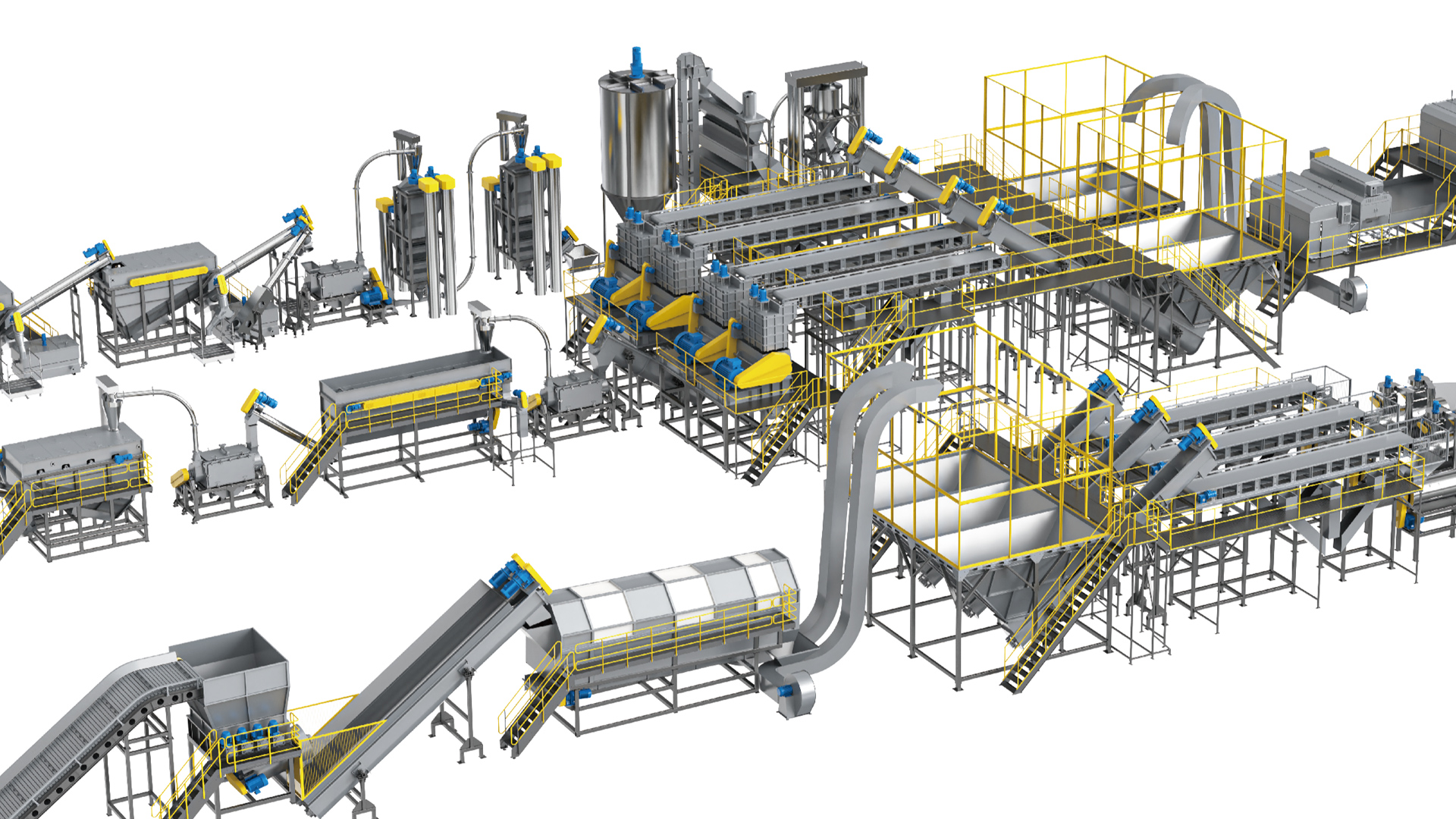

The global plastic recycling industry is undergoing a transformative shift towards high-quality recycled materials, driven by stringent environmental regulations, corporate sustainability commitments, and growing consumer demand for circular products. The global hard plastic recycling market is projected to reach USD 45.2 billion by 2031, growing at a compound annual growth rate (CAGR) of 8.2%. However, the single biggest challenge facing recyclers today is producing consistent, high-quality plastic flakes that meet the strict specifications of downstream manufacturers. Poor flake quality not only reduces the market value of recycled materials but also limits their application in high-value products, trapping recyclers in a low-margin commodity market. As a leading global manufacturer of advanced plastic recycling equipment, POLYRETEC has developed comprehensive hard plastic crushing and washing line solutions that enable recyclers to consistently produce premium-quality flakes with impurity levels as low as 0.1% and moisture content below 1%, significantly increasing profitability and market competitiveness.
Hard plastic recycling involves processing a wide range of materials including HDPE, PP, PET, ABS, and PVC from post-consumer and post-industrial sources. These materials often contain significant amounts of contaminants such as dirt, sand, oil, grease, labels, adhesives, metal, glass, and other foreign materials. Removing these contaminants effectively while maintaining the integrity of the plastic polymer is a complex technical challenge. Traditional crushing and washing lines often produce flakes with high impurity levels, inconsistent particle size, excessive fines, and high moisture content, making them unsuitable for high-value applications. POLYRETEC has addressed these challenges through decades of research and development, creating integrated systems that combine advanced mechanical design, intelligent process control, and innovative cleaning technologies to deliver superior flake quality.
POLYRETEC has been at the forefront of plastic recycling technology for over 15 years, with more than 500 recycling lines installed in over 60 countries worldwide. Our hard plastic crushing and washing lines are designed to process all types of hard plastics, from small containers and crates to large industrial parts and pallets. All our systems are built to the highest quality standards using premium materials and components, ensuring reliable performance and long service life even in the most demanding operating conditions. With state-of-the-art manufacturing facilities covering over 30,000 square meters and a team of over 150 experienced engineers and technicians, POLYRETEC has the expertise and resources to deliver customized recycling solutions tailored to each customer’s specific material characteristics and production requirements.
This comprehensive guide explores everything you need to know about improving flake quality in hard plastic crushing and washing lines. It examines the critical importance of high-quality plastic flakes, details the key factors that affect flake quality at every stage of the recycling process, explains POLYRETEC’s advanced technologies and system solutions for quality improvement, provides a detailed cost analysis and return on investment calculation, offers practical best practices for operation and maintenance, and features real-world success stories from POLYRETEC customers worldwide. Whether you are establishing a new recycling facility, upgrading your existing line, or looking to improve the quality of your current flake production, this guide will help you understand how to achieve consistent premium flake quality and maximize the profitability of your recycling business.
1. The Critical Importance of High-Quality Plastic Flakes
1.1 Impact on Downstream Processing and Product Quality
The quality of plastic flakes directly determines the performance and quality of the final products manufactured from recycled materials. Even small amounts of contaminants can have significant negative effects on downstream processing and product properties. For example, metal contaminants can damage extruders and injection molding machines, causing costly downtime and equipment repairs. Non-compatible plastic contaminants can result in product defects such as weak weld lines, brittleness, and surface imperfections, leading to high scrap rates and rejected batches. Oil and grease contaminants can cause processing issues such as slippage in extruders and poor mold release, while excessive moisture content can lead to bubbles and voids in the final product.
High-quality flakes with consistent particle size, low impurity levels, and uniform moisture content enable downstream manufacturers to run their equipment at maximum efficiency with minimal downtime. They produce products with consistent mechanical properties, excellent surface finish, and reliable performance, meeting the strict quality requirements of industries such as automotive, construction, packaging, and consumer goods. In contrast, low-quality flakes require additional processing steps, result in higher scrap rates, and produce products with inferior performance, limiting their use to low-value applications such as park benches and plastic lumber.
1.2 Market Value and Profitability Implications
The market value of recycled plastic flakes varies dramatically based on quality, with premium-quality flakes often commanding prices 50-100% higher than low-quality commodity flakes. For example, food-grade PET flakes can sell for $800-$1200 per ton, while low-quality PET flakes with high impurity levels may only sell for $300-$400 per ton. Similarly, high-quality HDPE flakes for injection molding applications can sell for $600-$900 per ton, compared to $250-$400 per ton for low-quality HDPE flakes suitable only for extrusion coating.
This significant price difference has a profound impact on the profitability of recycling operations. A typical 1-ton per hour hard plastic recycling line operating 24 hours a day, 300 days a year produces approximately 7200 tons of flakes annually. Improving flake quality to increase the selling price by just $200 per ton results in additional annual revenue of $1.44 million, which directly translates to increased profit. In addition, high-quality flakes have a larger market and more buyers, reducing inventory holding costs and improving cash flow. They also allow recyclers to enter high-value markets such as food contact and automotive applications, which offer higher profit margins and more stable demand.
1.3 Regulatory Compliance and Sustainability Credentials
Governments around the world are implementing increasingly stringent regulations regarding the quality and safety of recycled plastic materials, particularly for applications in food contact, medical devices, and children’s products. The European Union’s Food Contact Materials regulation and the United States Food and Drug Administration (FDA) have established strict limits on contaminants in recycled plastics used in food packaging. Producing high-quality flakes that meet these regulatory requirements is essential for accessing these lucrative markets and avoiding costly product recalls and legal penalties.
In addition to regulatory compliance, high-quality recycled materials also help brands and manufacturers meet their sustainability goals and enhance their environmental credentials. Many large corporations have committed to using significant percentages of recycled plastic in their products, and they require suppliers who can provide consistent, high-quality recycled materials that meet their specifications. By producing premium-quality flakes, recyclers can establish long-term partnerships with these brands and position themselves as trusted suppliers in the circular economy.
2. Key Factors Affecting Flake Quality in Crushing and Washing Lines
2.1 Raw Material Characteristics and Pre-Sorting
The quality of the input raw material is the foundation of final flake quality. Hard plastic waste varies widely in composition, contamination level, and physical characteristics depending on its source. Post-consumer plastic waste typically contains higher levels of contaminants and mixed materials than post-industrial waste. Poor pre-sorting is one of the most common causes of low flake quality, as it allows non-compatible plastics and foreign materials to enter the processing line.
Common contaminants in hard plastic waste include metal fasteners, glass, stones, wood, paper, labels, adhesives, oil, grease, and residual chemicals. Different types of plastics such as PVC and PET cannot be mixed, as even small amounts of PVC can contaminate PET flakes and render them unsuitable for most applications. Inadequate pre-sorting results in higher impurity levels in the final flakes, increased wear and tear on equipment, and higher processing costs. Implementing effective pre-sorting procedures is therefore essential for achieving high flake quality and maximizing the efficiency of the crushing and washing line.
2.2 Crushing Process Parameters and Equipment Design
The crushing process has a significant impact on flake quality, affecting particle size distribution, fines generation, and contamination levels. Poorly designed crushers or incorrect operating parameters can produce flakes with inconsistent size, excessive fines, and increased contamination from metal wear. The ideal flake size depends on the material and application, but generally ranges from 10mm to 30mm for most hard plastic recycling applications.
Excessive fines generation is a common problem in crushing operations, as fines are difficult to clean and often end up as waste, reducing overall yield. Fines also tend to absorb more contaminants and moisture, lowering the quality of the final product. Inconsistent particle size can lead to uneven cleaning in subsequent washing stages, as smaller flakes may be over-cleaned while larger flakes remain contaminated. In addition, poorly maintained crushers with dull or damaged blades can produce flakes with ragged edges and increased metal contamination from blade wear.
2.3 Washing Process Effectiveness and Contaminant Removal
The washing process is the most critical stage for removing contaminants and achieving high flake quality. Effective washing must remove all types of contaminants including dirt, sand, oil, grease, labels, adhesives, and residual chemicals. Traditional washing systems often rely on simple agitation and water rinsing, which are insufficient for removing stubborn contaminants such as dried-on dirt, oil, and adhesive residues.
The effectiveness of the washing process depends on several factors including water temperature, detergent concentration, contact time, mechanical agitation, and water flow rate. Inadequate washing results in residual contaminants on the flake surface, which can cause processing issues and reduce the quality of the final product. Over-washing, on the other hand, wastes water and energy and can cause excessive polymer degradation, reducing the mechanical properties of the plastic. Achieving the right balance between effective cleaning and minimal polymer degradation is essential for producing high-quality flakes.
2.4 Dewatering and Drying Performance
Moisture content is one of the most important quality parameters for plastic flakes, as excessive moisture can cause significant problems in downstream processing. Most downstream processes require flake moisture content below 1%, and some applications such as food contact require moisture levels below 0.5%. High moisture content increases transportation costs, reduces the efficiency of extrusion and injection molding processes, and can lead to product defects such as bubbles and voids.
Traditional dewatering systems such as centrifuges often leave residual moisture content of 3-5%, which is too high for most applications. Additional drying steps are required, which increase energy consumption and processing costs. Inadequate drying also creates ideal conditions for mold and bacterial growth, particularly for flakes stored for extended periods. Achieving low and consistent moisture content is therefore essential for producing high-quality flakes that meet the requirements of downstream manufacturers.
2.5 Final Sorting and Quality Control
Even with effective pre-sorting, crushing, and washing, some contaminants will inevitably remain in the flake stream. Final sorting processes are therefore essential for removing these remaining contaminants and ensuring consistent flake quality. Common final sorting technologies include metal detection, color sorting, density sorting, and electrostatic sorting.
Inadequate final sorting results in residual contaminants in the final flakes, which can damage downstream equipment and reduce product quality. Manual sorting is slow, expensive, and inconsistent, making it unsuitable for high-volume production. Advanced automated sorting systems are required to achieve the high levels of purity required for high-value applications. In addition, effective quality control procedures are essential for monitoring flake quality and ensuring that it consistently meets the required specifications.
3. POLYRETEC Advanced Solutions for Improving Flake Quality
3.1 Intelligent Pre-Processing and Material Preparation
POLYRETEC has developed intelligent pre-processing systems that effectively prepare raw materials for subsequent crushing and washing, significantly improving final flake quality. Our pre-processing lines include advanced metal detection and removal systems that automatically detect and separate ferrous and non-ferrous metals from the plastic stream before crushing. This prevents metal contaminants from entering the crusher, reducing equipment wear and tear and eliminating metal contamination in the final flakes.
Our systems also include primary shredders for reducing large plastic items such as pallets, crates, and industrial parts to a manageable size before crushing. The shredders feature heavy-duty construction and precision-engineered blades that produce consistent particle size with minimal fines generation. We also offer optional manual sorting stations and conveyor systems with metal detectors to ensure that all non-plastic contaminants are removed before the material enters the crushing stage. This comprehensive pre-processing approach ensures that only clean, properly sized plastic material enters the crushing and washing line, laying the foundation for high-quality flake production.
3.2 Precision Crushing Technology with Minimal Fines Generation
POLYRETEC’s PC series hard plastic crushers are specifically designed to produce uniform flake size with minimal fines generation, ensuring optimal cleaning efficiency and maximum yield. Our crushers feature a unique rotor design with precision-ground blades that provide clean, consistent cutting action, producing flakes with uniform size and shape. The rotor is dynamically balanced for smooth operation, reducing vibration and extending bearing life.
The crusher chamber is designed with a special screen configuration that allows only properly sized flakes to pass through, ensuring consistent particle size distribution. The screen holes are available in various sizes to produce flakes of different dimensions according to customer requirements. Our crushers also feature a hydraulic opening system for easy access to the crushing chamber for blade replacement and maintenance. The blades are made from high-quality alloy steel with special heat treatment, providing excellent wear resistance and long service life. This precision crushing technology ensures that the flakes are perfectly sized for effective cleaning in subsequent stages, with fines generation reduced to less than 3% compared to 10-15% for conventional crushers.
Price and Cost Analysis
The price of POLYRETEC PC series hard plastic crushers ranges from $15,000 for the PC-600 model with a capacity of 500-800 kg/h to $65,000 for the PC-1200 model with a capacity of 3000-5000 kg/h. The typical payback period for upgrading to a POLYRETEC crusher is 6-9 months, achieved through reduced fines generation, higher yield, and lower maintenance costs.
3.3 Multi-Stage Deep Cleaning System
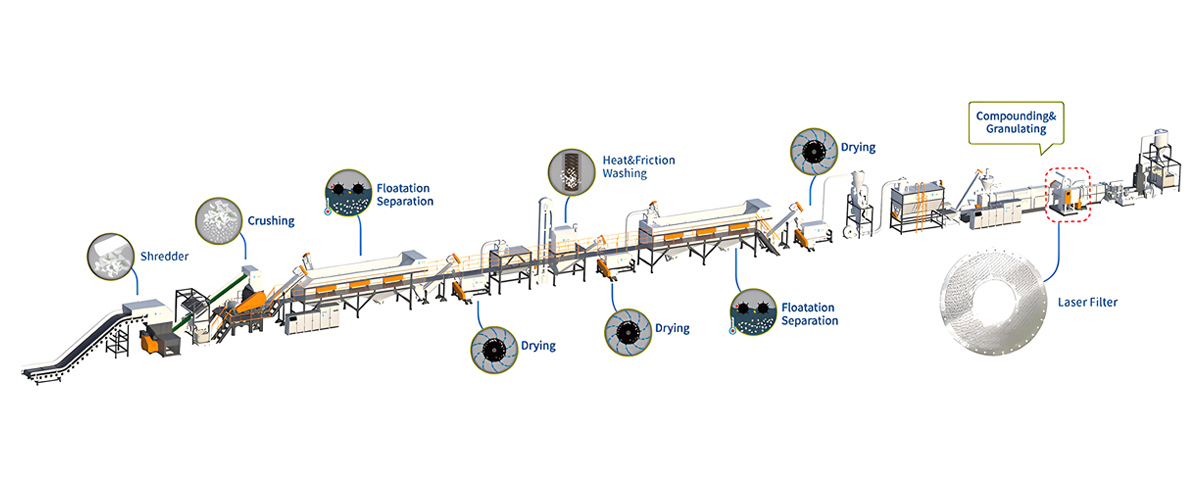
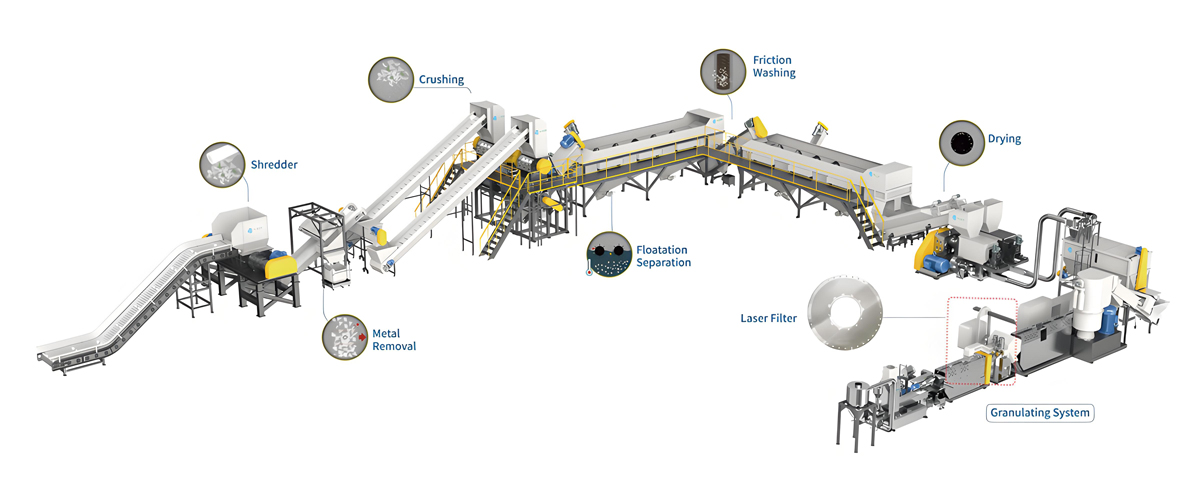
POLYRETEC’s multi-stage deep cleaning system is the heart of our hard plastic crushing and washing lines, designed to remove all types of contaminants effectively while preserving the integrity of the plastic polymer. Our cleaning process includes several sequential stages, each specifically designed to remove different types of contaminants.
The first stage is pre-washing, which removes loose dirt, sand, and other surface contaminants using high-pressure water sprays. This is followed by friction washing, which uses high-speed mechanical agitation to scrub the flake surface and remove stubborn contaminants such as dried-on dirt, labels, and adhesive residues. Our friction washers feature a unique rotor design that provides intense scrubbing action without causing excessive polymer degradation.
For materials with heavy oil and grease contamination, we offer hot washing systems that use heated water and specialized detergents to dissolve and remove oily residues. The hot washing process is carefully controlled to ensure effective cleaning without causing thermal degradation of the plastic. This is followed by flotation washing, which separates different types of plastics based on density, removing heavy contaminants such as glass and stones that sink to the bottom while allowing the plastic flakes to float. Our multi-stage cleaning system consistently achieves impurity levels below 0.3%, significantly exceeding the performance of conventional washing systems.
Price and Cost Analysis
A complete POLYRETEC multi-stage cleaning system for a 1-ton per hour line costs approximately $45,000-$75,000, including pre-washer, friction washer, hot washing tank, and flotation tank. The additional investment in advanced cleaning technology typically pays for itself within 8-12 months through higher flake prices and reduced downstream processing costs.
3.4 High-Efficiency Dewatering and Drying Technology
POLYRETEC has developed advanced dewatering and drying technologies that achieve consistently low moisture content below 1% without excessive energy consumption. Our vertical centrifugal dewaterers use high-speed rotation to remove surface water from the flakes, achieving initial moisture content of 2-3%. This is followed by our advanced horizontal drying system, which uses heated air to reduce moisture content to below 1%.
Our drying systems feature intelligent temperature control that ensures uniform drying without causing thermal degradation of the plastic. The air circulation system is designed for maximum energy efficiency, with heat recovery systems that reuse waste heat from the drying process to preheat incoming air, reducing energy consumption by up to 30% compared to conventional dryers. We also offer optional dehumidification systems for applications requiring extremely low moisture content below 0.5%, such as food-grade PET recycling. This high-efficiency dewatering and drying technology ensures that the final flakes have consistent moisture content that meets the strict requirements of downstream manufacturers.
Price and Cost Analysis
The POLYRETEC vertical centrifugal dewaterer costs approximately $12,000-$20,000, while the horizontal drying system costs $18,000-$35,000 for a 1-ton per hour line. The investment in advanced drying technology typically pays for itself within 10-14 months through reduced transportation costs, improved downstream processing efficiency, and higher flake prices.
3.5 Advanced Final Sorting and Quality Assurance
POLYRETEC integrates advanced automated sorting technologies into our crushing and washing lines to ensure that the final flakes meet the highest purity standards. Our final sorting systems include high-sensitivity metal detectors that can detect and remove even the smallest metal particles, ensuring that the final flakes are completely free of metal contamination.
We also offer high-performance color sorters that use advanced optical technology to separate flakes by color and remove discolored or contaminated flakes. Our color sorters can achieve sorting accuracy of over 99%, ensuring consistent color quality in the final product. For applications requiring separation of different types of plastics, we offer density sorting systems and electrostatic sorting systems that can separate plastics with similar densities such as PP and PE. These advanced sorting technologies ensure that the final flakes meet the strict purity requirements of high-value applications such as food contact and automotive components.
Price and Cost Analysis
A complete final sorting system including metal detector, color sorter, and density separator for a 1-ton per hour line costs approximately $50,000-$90,000. The investment in advanced sorting technology typically pays for itself within 7-11 months through higher flake prices, reduced downstream scrap rates, and access to high-value markets.
3.6 Intelligent Process Control System
All POLYRETEC hard plastic crushing and washing lines are equipped with an advanced intelligent PLC control system that ensures consistent process performance and flake quality. The control system features a user-friendly touch screen interface that allows operators to monitor and adjust all process parameters in real time, including temperature, water flow rate, detergent concentration, and machine speed.
The system includes comprehensive data logging and reporting capabilities that record all process parameters and production data, providing complete traceability of the recycling process. It also features automatic alarm functions that alert operators to any abnormal conditions, allowing for quick intervention and preventing quality issues. The intelligent control system ensures that all process parameters are maintained within optimal ranges, resulting in consistent flake quality batch after batch.
4. Complete Cost Analysis and Return on Investment
4.1 Initial Investment Breakdown for a Complete Line
To help you understand the financial aspects of investing in a POLYRETEC hard plastic crushing and washing line, we will provide a detailed cost analysis for a typical 1-ton per hour line processing HDPE post-consumer containers. The total initial investment includes the cost of all equipment, installation and training services, shipping and customs, site preparation, and a contingency fund for unexpected expenses.
POLYRETEC PC-800 hard plastic crusher: $28,000
Multi-stage deep cleaning system: $60,000
Vertical centrifugal dewaterer: $16,000
Horizontal drying system: $26,000
Final sorting system (metal detector + color sorter): $70,000
Conveyors and auxiliary equipment: $30,000
Professional installation and commissioning service: $23,000 (10% of equipment cost)
Comprehensive training program: $11,500 (5% of equipment cost)
Shipping and customs to Europe: $18,000
Site preparation and foundation construction: $12,000
Initial spare parts package: $6,000
Contingency fund (10%): $30,050
Total Initial Investment: $330,550
While this initial investment may seem significant, the high flake quality produced by the POLYRETEC line results in substantially higher revenue and profitability compared to conventional lines. The advanced technology and robust construction of our equipment also ensure long service life and low maintenance costs, providing excellent return on investment over the entire life of the line.
4.2 Annual Operating Cost Comparison
To demonstrate the financial advantage of investing in a POLYRETEC hard plastic crushing and washing line, we will compare the annual operating costs and revenue of a POLYRETEC line with a conventional line of similar capacity. The comparison is based on 24 hours of production per day, 300 days per year, processing HDPE post-consumer containers.
POLYRETEC Advanced Crushing and Washing Line:
Raw material cost: $2,160,000 per year ($300 per ton)
Energy costs: $129,600 per year ($0.12 per kWh)
Water costs: $36,000 per year ($2 per cubic meter)
Labor costs (4 workers): $120,000 per year
Maintenance and repair costs: $24,000 per year
Detergent and chemical costs: $18,000 per year
Overhead costs: $72,000 per year
Total Annual Operating Costs: $2,559,600 per year
Annual flake production: 6840 tons (95% yield)
Flake selling price: $700 per ton (premium quality)
Total Annual Revenue: $4,788,000 per year
Annual Gross Profit: $2,228,400 per year
Conventional Crushing and Washing Line:
Raw material cost: $2,160,000 per year ($300 per ton)
Energy costs: $194,400 per year (50% higher energy consumption)
Water costs: $54,000 per year (50% higher water consumption)
Labor costs (6 workers): $180,000 per year
Maintenance and repair costs: $60,000 per year
Detergent and chemical costs: $24,000 per year
Overhead costs: $72,000 per year
Total Annual Operating Costs: $2,744,400 per year
Annual flake production: 6120 tons (85% yield)
Flake selling price: $400 per ton (low quality)
Total Annual Revenue: $2,448,000 per year
Annual Gross Profit: ($296,400) per year
Annual Profit Difference: $2,524,800 per year in favor of POLYRETEC line
4.3 Return on Investment Calculation
Based on the detailed cost comparison above, the return on investment for the POLYRETEC hard plastic crushing and washing line compared to the conventional line is calculated as follows:
Additional Initial Investment for POLYRETEC Solution: $330,550 – $180,000 = $150,550
Additional Annual Profit with POLYRETEC Solution: $2,524,800 per year
Payback Period: $150,550 ÷ $2,524,800 = 0.060 years = 0.72 months
This exceptionally short payback period demonstrates that the additional initial investment in a high-quality POLYRETEC crushing and washing line is recovered in less than one month through increased profitability. Over the 15-year service life of the equipment, the total additional profit generated by the POLYRETEC line compared to the conventional line is over $37.8 million. This clearly illustrates the significant financial benefits of investing in advanced recycling technology that produces high-quality plastic flakes.
5. Best Practices for Maintaining Consistent Flake Quality
5.1 Raw Material Management and Pre-Sorting Procedures
Establishing strict raw material management and pre-sorting procedures is essential for maintaining consistent flake quality. You should implement a system for inspecting and grading incoming raw materials based on contamination level and material type. Separate storage areas should be provided for different types of plastics and different quality grades of raw material to prevent cross-contamination.
Pre-sorting should be performed by trained personnel who can identify and remove non-plastic contaminants and incompatible plastics. You should also implement a quality control process for incoming raw materials, rejecting loads that contain excessive contamination or mixed materials. Investing in automated pre-sorting equipment such as metal detectors and conveyor systems can significantly improve pre-sorting efficiency and consistency, reducing the burden on manual sorters and improving overall flake quality.
5.2 Regular Equipment Maintenance and Calibration
Regular equipment maintenance and calibration are essential for ensuring that the crushing and washing line operates at peak performance and produces consistent flake quality. You should develop a comprehensive preventive maintenance schedule based on the manufacturer’s recommendations, including daily, weekly, monthly, and annual maintenance tasks.
Key maintenance tasks include regularly inspecting and replacing crusher blades and screens to ensure consistent flake size, cleaning all washing tanks and nozzles to prevent clogging and ensure effective cleaning, inspecting and lubricating all bearings and moving parts to prevent wear and tear, and calibrating all sensors and control instruments to ensure accurate process control. You should also keep detailed maintenance records to track equipment performance and identify potential issues before they cause downtime or quality problems.
5.3 Process Optimization and Parameter Control
Continuously optimizing process parameters is essential for achieving the best possible flake quality while minimizing operating costs. You should regularly monitor and adjust process parameters such as water temperature, detergent concentration, washing time, crusher speed, and drying temperature based on the characteristics of the raw material and the required flake quality.
It is important to establish standard operating procedures for different types of materials and different quality requirements, ensuring that all operators follow the same procedures. You should also implement a statistical process control system to monitor process parameters and flake quality over time, identifying trends and making adjustments to maintain consistent quality. POLYRETEC’s intelligent control system provides powerful tools for process optimization and parameter control, allowing you to fine-tune the process for maximum efficiency and quality.
5.4 Comprehensive Quality Control Program
Implementing a comprehensive quality control program is essential for ensuring that the final flakes consistently meet the required specifications. You should establish clear quality standards for all flake parameters including particle size distribution, impurity level, moisture content, color, and polymer purity.
Quality control testing should be performed at regular intervals throughout the production process, not just at the end. This allows you to identify and correct quality issues early before they affect a large batch of product. Key quality control tests include sieve analysis for particle size distribution, moisture content testing, impurity analysis, and melt flow index testing for polymer purity. You should also keep detailed quality control records to track flake quality over time and demonstrate compliance with customer specifications and regulatory requirements.
6. Real-World Success Stories
6.1 Case Study 1: HDPE Recycling Plant in Germany
A leading plastic recycling company in Germany was operating a conventional hard plastic crushing and washing line that produced low-quality HDPE flakes with impurity levels of 3-5% and moisture content of 4-5%. The company was only able to sell their flakes for $380 per ton, and they were struggling to remain profitable due to high operating costs and low product value. They were looking to upgrade their line to improve flake quality and increase profitability.
After researching several equipment suppliers, the company selected POLYRETEC as their partner based on our advanced technology, reputation for quality, and comprehensive after-sales support. POLYRETEC provided a complete turnkey solution including a PC-800 crusher, multi-stage deep cleaning system, advanced dewatering and drying system, and final sorting system. The line was designed to process 1 ton per hour of post-consumer HDPE containers and produce premium-quality flakes suitable for injection molding applications.
POLYRETEC’s technical team completed the installation and commissioning process in just 21 days, ahead of schedule. The team provided comprehensive training for the company’s operators and maintenance personnel, covering all aspects of equipment operation, maintenance, and process optimization. They also provided ongoing support for the first 6 months of production to ensure a smooth transition to full operation.
Results after implementation:
Flake impurity level reduced from 4% to 0.2%
Flake moisture content reduced from 4.5% to 0.8%
Production yield increased from 84% to 96%
Flake selling price increased from $380 to $720 per ton
Annual revenue increased by $2.3 million
Annual operating costs reduced by $185,000
Payback period of 0.6 months for the entire project
The company was extremely satisfied with the performance of the POLYRETEC line and the quality of our support services. They have since purchased two additional POLYRETEC recycling lines to expand their production capacity and have standardized on POLYRETEC equipment for all their future recycling needs.
6.2 Case Study 2: PET Bottle Recycling Plant in Thailand
A PET bottle recycling plant in Thailand was producing PET flakes with high levels of label and adhesive contamination, making them unsuitable for food contact applications. The company was selling their flakes for $420 per ton, while food-grade PET flakes were selling for $950 per ton. They were looking to upgrade their washing line to remove label and adhesive residues effectively and produce food-grade quality flakes.
The company selected POLYRETEC based on our advanced hot washing technology and extensive experience in PET recycling. POLYRETEC provided a customized PET bottle crushing and washing line featuring our advanced hot washing system with precise temperature control and specialized detergent injection system. The line also included a high-efficiency dewatering and drying system and advanced color sorting system to ensure consistent flake quality.
POLYRETEC’s technical team worked closely with the customer to optimize the washing process parameters for maximum label and adhesive removal. The team conducted extensive testing with the customer’s raw material to determine the optimal temperature, detergent concentration, and washing time. They also provided comprehensive training for the customer’s team on process optimization and quality control.
Results after implementation:
Label and adhesive removal efficiency increased from 75% to 99.5%
Flake impurity level reduced from 2.5% to 0.15%
Flake moisture content reduced from 3% to 0.5%
The company achieved food-grade PET flake quality
Flake selling price increased from $420 to $920 per ton
Annual revenue increased by $3.6 million
Payback period of 0.8 months for the entire project
The company has become one of the leading suppliers of food-grade PET flakes in Southeast Asia, supplying major beverage brands and packaging manufacturers. They have praised POLYRETEC for the exceptional performance of the washing line and the quality of our technical support, and they have recommended POLYRETEC to other recyclers in the region.
7. Conclusion
Improving flake quality is the single most effective way to increase the profitability and competitiveness of your hard plastic recycling business. High-quality flakes command significantly higher prices, access high-value markets, and reduce downstream processing costs, resulting in substantially higher profit margins. Achieving consistent premium flake quality requires a systematic approach that addresses all stages of the recycling process from raw material pre-sorting to final quality control, using advanced technology and equipment designed specifically for effective contaminant removal and polymer preservation.
POLYRETEC has established itself as the global leader in advanced plastic recycling technology, offering comprehensive hard plastic crushing and washing line solutions that consistently produce premium-quality flakes with impurity levels as low as 0.1% and moisture content below 1%. Our integrated systems combine intelligent pre-processing, precision crushing, multi-stage deep cleaning, high-efficiency dewatering and drying, advanced final sorting, and intelligent process control to deliver superior flake quality that meets the strictest requirements of downstream manufacturers and regulatory standards.
The financial benefits of investing in a POLYRETEC hard plastic crushing and washing line are clear, with exceptionally fast return on investment periods typically less than one month and total additional profits over the equipment life exceeding tens of millions of dollars. Our customers have experienced dramatic improvements in flake quality, production yield, and profitability, allowing them to grow their businesses and establish themselves as leaders in the circular economy.
Whether you are establishing a new recycling facility, upgrading your existing line, or looking to enter high-value markets such as food contact and automotive recycling, POLYRETEC has the expertise, technology, and commitment to customer success to help you achieve your business goals. With over 15 years of industry experience, state-of-the-art manufacturing facilities, and a global network of service and support centers, POLYRETEC is your trusted partner for all your plastic recycling needs. Contact us today to learn more about how our advanced crushing and washing lines can help you improve flake quality and maximize the profitability of your recycling business.