
The global plastic waste recycling equipment market is projected to reach $12.7 billion in 2026, growing at a compound annual growth rate (CAGR) of 8.9% through 2032. This exponential growth is driven by the global plastic pollution crisis, increasingly strict environmental regulations, and the urgent transition to a circular economy. Each year, over 400 million tons of plastic waste are generated worldwide, with only 9% being recycled, 12% incinerated, and 79% accumulating in landfills or the natural environment. This unsustainable situation has made advanced plastic recycling equipment a critical technology for achieving global sustainable development goals.
Traditional plastic recycling methods are inefficient, labor-intensive, and produce low-quality recycled materials that cannot compete with virgin plastics. These limitations have prevented widespread adoption of recycling and perpetuated the linear “take-make-dispose” economic model. Modern plastic recycling equipment addresses these challenges by delivering high processing efficiency, superior material quality, and lower operational costs, enabling the production of high-value recycled plastics that can replace virgin materials in a wide range of applications.
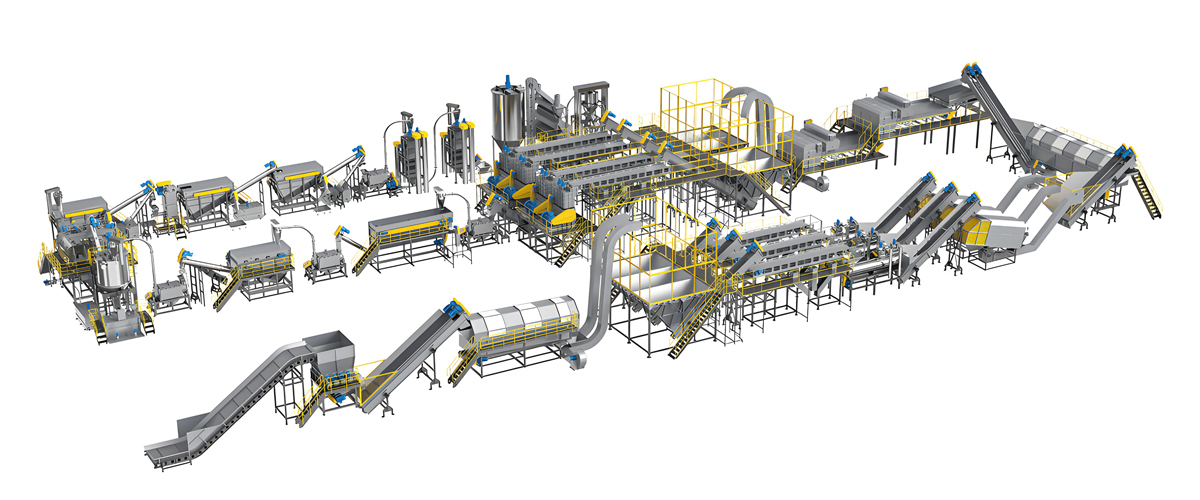
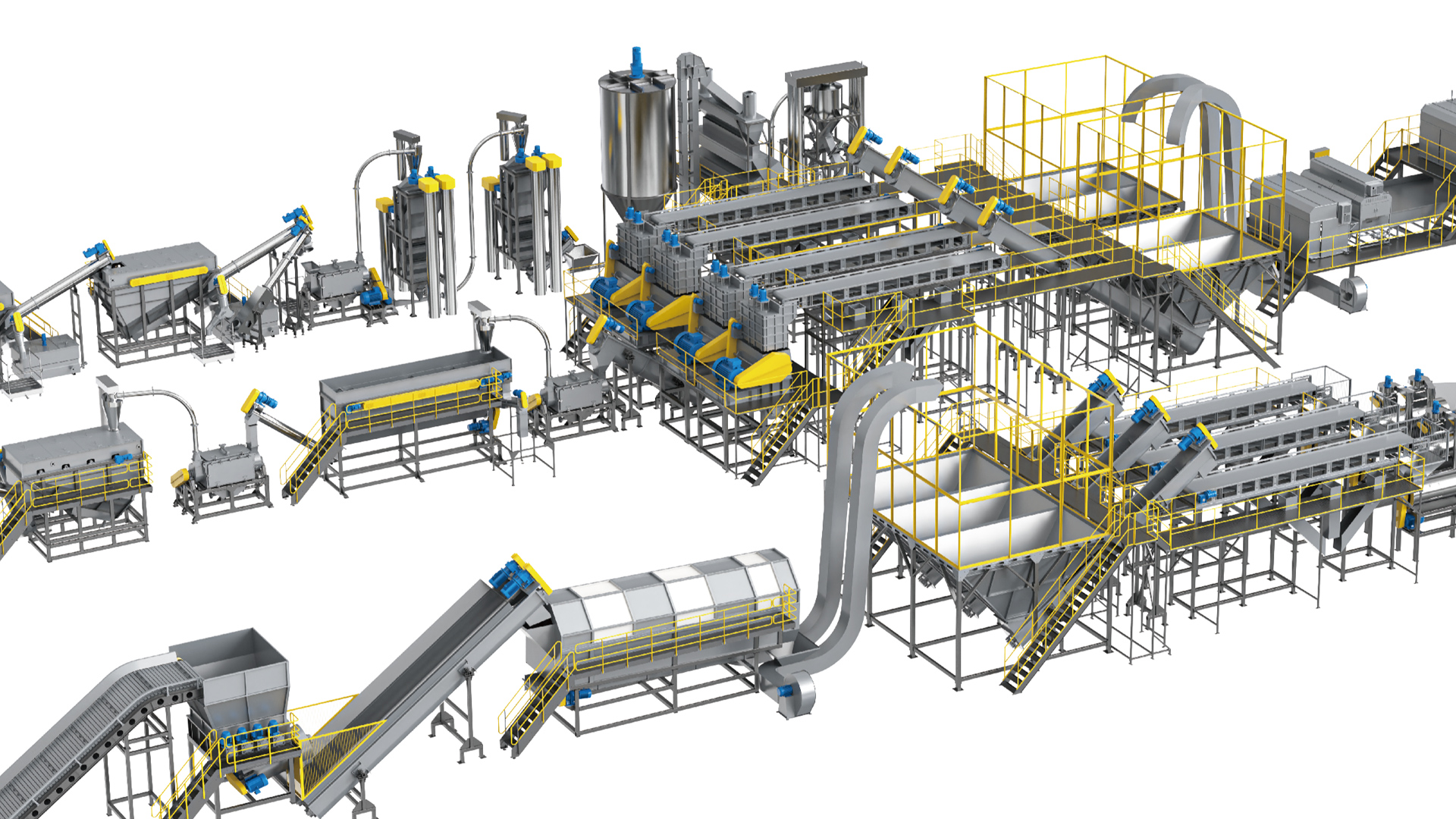
As a leading global manufacturer of advanced plastic recycling equipment with over 15 years of experience, POLYRETEC has established itself as the trusted partner for sustainable plastic waste management solutions. POLYRETEC offers a complete range of plastic recycling machinery, including plastic shredders, crushers, washing lines, pelletizing systems, and sorting equipment, as well as turnkey recycling plants for all types of plastic waste. With over 1,200 machines installed in more than 60 countries, POLYRETEC has helped businesses and communities around the world convert plastic waste into valuable resources while reducing their environmental footprint.
This comprehensive guide explains how advanced plastic waste recycling equipment supports sustainable development. It examines the critical role of recycling in the circular economy, details POLYRETEC’s complete product portfolio and technological advantages, provides customized solutions for different plastic waste types, includes a detailed cost analysis and return on investment calculation, and features real-world case studies of successful recycling projects. Whether you are a waste management company, plastic processor, manufacturer, or entrepreneur looking to enter the recycling industry, this guide will help you choose the best equipment for your sustainable development goals.
1. The Critical Role of Plastic Recycling in Sustainable Development
Plastic recycling is a cornerstone of sustainable development, delivering significant environmental, economic, and social benefits. As the world strives to achieve the United Nations Sustainable Development Goals (SDGs), advanced plastic recycling equipment has become an essential tool for addressing some of the most pressing global challenges.
1.1 Environmental Benefits of Plastic Recycling
Plastic recycling provides substantial environmental benefits by reducing resource consumption, greenhouse gas emissions, and pollution. Producing recycled plastics requires significantly less energy and raw materials compared to virgin plastic production. For example, recycling one ton of PET plastic saves approximately 7.4 cubic yards of landfill space, 16.3 barrels of oil, and 5,774 kilowatt-hours of energy. This energy savings translates to a reduction of approximately 3.8 tons of carbon dioxide emissions per ton of recycled PET.
Recycling also prevents plastic waste from entering oceans and natural ecosystems, where it causes severe harm to wildlife and human health. Over 8 million tons of plastic enter the oceans each year, creating massive garbage patches and threatening marine life. By diverting plastic waste from landfills and waterways, advanced recycling equipment helps protect fragile ecosystems and preserve biodiversity.
Additionally, modern recycling systems are designed to minimize environmental impact through energy-efficient operation, water recycling, and emissions control. POLYRETEC recycling equipment, for example, incorporates advanced energy recovery systems and closed-loop water recycling that reduces water consumption by up to 80% compared to traditional systems.
1.2 Economic Benefits of Plastic Recycling
Plastic recycling creates significant economic value by converting waste into valuable raw materials. The global market for recycled plastics is projected to reach $72.6 billion by 2027, driven by increasing demand from packaging, automotive, construction, and consumer goods industries. Many major corporations, including Coca-Cola, PepsiCo, and Unilever, have committed to using 25-100% recycled plastic in their products by 2030, creating a massive market for high-quality recycled materials.
Recycling also creates jobs and stimulates local economic development. The recycling industry employs over 1.6 million people worldwide, with the potential to create millions more jobs as the industry grows. Unlike waste disposal, which is a cost center, recycling generates revenue through the sale of recycled materials, creating a self-sustaining economic model.
For manufacturers, using recycled plastics can reduce raw material costs by 20-50% compared to virgin plastics, while also improving their environmental credentials and brand image. Advanced recycling equipment enables the production of high-quality recycled plastics that meet the strict performance requirements of these industries, making them a viable and cost-effective alternative to virgin materials.
1.3 Social Benefits of Plastic Recycling
Plastic recycling delivers important social benefits by improving public health, creating employment opportunities, and building more resilient communities. Improper plastic waste management poses significant health risks, particularly in developing countries where open burning of plastic waste releases toxic chemicals into the air and water. Advanced recycling systems provide a safe and environmentally responsible way to manage plastic waste, reducing these health risks and improving quality of life.
Recycling also creates jobs at all skill levels, from collection and sorting to equipment operation and maintenance. These jobs are often local and cannot be outsourced, providing stable employment opportunities for communities. Additionally, recycling education programs help raise environmental awareness and promote sustainable behaviors among the public.
By reducing dependence on imported virgin materials, recycling also enhances energy security and economic resilience. Countries with limited natural resources can develop domestic recycling industries to meet their raw material needs, reducing their vulnerability to global commodity price fluctuations and supply chain disruptions.
2. Limitations of Traditional Plastic Recycling Methods
Traditional plastic recycling methods have significant limitations that have prevented the industry from reaching its full potential. These methods are often inefficient, labor-intensive, and produce low-quality recycled materials that have limited applications.
2.1 Low Efficiency and High Labor Requirements
Traditional recycling operations rely heavily on manual labor for sorting, cleaning, and processing plastic waste. Manual sorting is slow, inconsistent, and exposes workers to hazardous materials. A typical manual sorting line can process approximately 1-2 tons of plastic waste per hour with a sorting accuracy of 70-80%, compared to automated sorting systems that can process 10-20 tons per hour with accuracy rates exceeding 99%.
Traditional processing equipment is also inefficient, with high energy consumption and low throughput rates. Many older recycling plants operate at overall equipment effectiveness (OEE) rates of 50-60%, resulting in high production costs and low profitability. These inefficiencies make it difficult for traditional recyclers to compete with virgin plastic producers on price.
2.2 Poor Material Quality and Limited Applications
Traditional recycling methods produce recycled plastics with inconsistent quality and reduced mechanical properties compared to virgin plastics. Contamination, degradation during processing, and mixing of different plastic types all contribute to lower material quality. As a result, recycled plastics from traditional operations are often limited to low-value applications such as park benches, plastic lumber, and trash bags, where performance requirements are less stringent.
This low material quality creates a “downcycling” effect, where each recycling cycle reduces the value and potential applications of the plastic. Eventually, the material becomes too degraded to be recycled further and ends up in landfills or incinerators. This limits the circularity of plastic materials and perpetuates the need for virgin plastic production.
2.3 Inability to Handle Complex Plastic Waste Streams
Traditional recycling methods are only capable of processing clean, single-type plastic waste such as PET bottles and HDPE containers. They cannot effectively handle more complex plastic waste streams such as flexible packaging, multi-layer films, composite materials, and contaminated plastics. These complex waste streams account for approximately 60% of all plastic waste generated, yet only 5% are currently recycled.
Additionally, traditional recycling equipment is often not designed to handle the wide range of plastic sizes, shapes, and contamination levels found in real-world waste streams. This results in high rejection rates and low overall recovery rates, typically ranging from 30-50% for traditional operations.
2.4 Environmental and Safety Concerns
Traditional recycling operations often have significant environmental and safety impacts. Many older facilities use open washing systems that discharge contaminated water into the environment, and lack proper emissions control systems to capture volatile organic compounds (VOCs) and other pollutants released during processing.
Manual sorting and processing also expose workers to hazardous materials such as sharp objects, chemicals, and pathogens. Without proper safety equipment and training, workers in traditional recycling facilities face significant health and safety risks.
3. POLYRETEC Core Plastic Recycling Equipment and Technological Advantages
POLYRETEC has developed a complete range of advanced plastic recycling equipment that addresses the limitations of traditional recycling methods. Our equipment is designed for high efficiency, superior material quality, and minimal environmental impact, enabling the production of high-value recycled plastics that can replace virgin materials in demanding applications.
3.1 Plastic Shredding and Crushing Equipment
Shredding and crushing are the first stages of the plastic recycling process, reducing large plastic items into smaller, manageable pieces for further processing. POLYRETEC offers a complete range of shredders and crushers designed to handle all types of plastic waste, from thin films to large industrial parts.
Our single-shaft shredders are ideal for processing a wide range of plastic waste, including bottles, containers, films, and purgings. These machines feature a robust design with high-torque gearboxes and precision-machined rotors with replaceable wear-resistant blades. POLYRETEC single-shaft shredders are available in sizes ranging from 500mm to 2000mm rotor diameter, with processing capacities from 100 kg/hour to 10,000 kg/hour. Base prices range from $15,000 for small laboratory models to $150,000 for large industrial models.
For more challenging applications such as thick-walled plastics, pipes, and large industrial parts, POLYRETEC offers double-shaft shredders with interlocking blades that provide powerful shearing action. These machines can process even the toughest plastic waste with ease, producing uniform particle sizes for further processing. POLYRETEC double-shaft shredders have processing capacities from 500 kg/hour to 15,000 kg/hour, with base prices ranging from $30,000 to $200,000.
POLYRETEC also offers granulators and crushers for secondary size reduction, producing uniform particles of 10-30mm in size. These machines feature open-rotor designs for easy cleaning and maintenance, and are available with various screen sizes to produce the desired particle size. Base prices for POLYRETEC granulators range from $8,000 to $60,000, depending on size and capacity.
3.2 Advanced Plastic Washing Lines
The washing process is critical for removing contaminants such as dirt, labels, adhesives, oils, and food residues from plastic waste. POLYRETEC offers specialized washing lines for different types of plastic waste, including PET bottle washing lines, HDPE/PP hard plastic washing lines, and LDPE/LLDPE film washing lines.
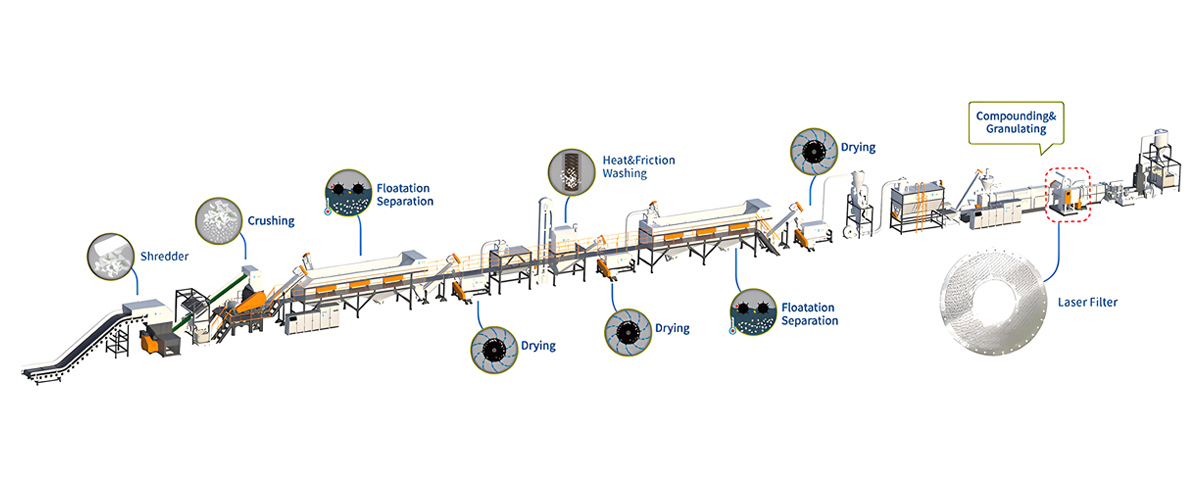
Our PET bottle washing line is our most popular product, designed to process post-consumer PET bottles into high-quality PET flakes suitable for bottle-to-bottle recycling. The complete washing process includes pre-washing, label removal, crushing, hot washing, friction washing, rinsing, dewatering, and drying. POLYRETEC PET washing lines are available in capacities ranging from 500 kg/hour to 5,000 kg/hour, with base prices ranging from $80,000 to $600,000.
For HDPE and PP hard plastics such as milk bottles, detergent containers, and crates, POLYRETEC offers specialized hard plastic washing lines. These lines feature robust equipment designed to handle heavier and more abrasive materials, with advanced washing technologies to remove stubborn contaminants. POLYRETEC hard plastic washing lines have capacities from 300 kg/hour to 3,000 kg/hour, with base prices ranging from $60,000 to $450,000.
POLYRETEC film washing lines are designed to process flexible plastic films such as shopping bags, agricultural films, and industrial packaging. These lines feature specialized equipment for removing high levels of contamination and drying the thin film material effectively. POLYRETEC film washing lines are available in capacities from 200 kg/hour to 2,000 kg/hour, with base prices ranging from $50,000 to $350,000.
All POLYRETEC washing lines feature closed-loop water recycling systems that recover and reuse up to 95% of the process water, significantly reducing water consumption and environmental impact. Our advanced washing technologies ensure that the final product meets the strictest purity requirements for high-value applications.
3.3 High-Quality Plastic Pelletizing Systems
Pelletizing is the final stage of the recycling process, converting clean plastic flakes into uniform pellets that can be used as raw material in plastic manufacturing processes. POLYRETEC offers a complete range of pelletizing systems designed to produce high-quality recycled pellets with consistent properties.
Our single-screw extruder pelletizing lines are ideal for processing most types of thermoplastics, including PET, HDPE, PP, LDPE, and PS. These machines feature precision temperature control, advanced venting systems to remove moisture and volatiles, and various cutting options including strand cutting, water ring cutting, and underwater cutting. POLYRETEC single-screw pelletizing lines are available in capacities from 100 kg/hour to 3,000 kg/hour, with base prices ranging from $30,000 to $300,000.
For more demanding applications such as engineering plastics and highly contaminated materials, POLYRETEC offers twin-screw extruder pelletizing lines. These machines provide superior mixing and compounding capabilities, allowing for the addition of additives and fillers to enhance the properties of the recycled material. POLYRETEC twin-screw pelletizing lines have capacities from 200 kg/hour to 5,000 kg/hour, with base prices ranging from $80,000 to $500,000.
POLYRETEC pelletizing systems produce uniform, high-quality pellets with consistent size, shape, and properties. These pellets meet the strict requirements of leading plastic manufacturers and can be used in a wide range of applications, including packaging, automotive parts, construction materials, and consumer goods.
3.4 Advanced Sorting and Separation Equipment
Accurate sorting and separation are essential for producing high-quality recycled plastics. POLYRETEC offers a complete range of advanced sorting and separation equipment to remove contaminants and separate different types of plastics.
Our metal separators use powerful magnets and metal detection technology to remove ferrous and non-ferrous metals from plastic waste streams. These machines protect downstream equipment from damage and ensure that the final product is free of metal contamination. POLYRETEC metal separators are available in various sizes and configurations, with base prices ranging from $5,000 to $30,000.
For separating different types of plastics, POLYRETEC offers density separation systems such as sink-float tanks and hydrocyclones. These systems separate plastics based on their density, effectively separating PET from HDPE and PP, and removing heavy contaminants such as glass and stones. Base prices for density separation systems range from $10,000 to $50,000.
POLYRETEC also offers advanced optical sorting systems that use near-infrared (NIR) spectroscopy to identify and separate different types of plastics and colors. These systems can process up to 10 tons of material per hour with sorting accuracy exceeding 99%. Optical sorting systems are essential for producing high-purity recycled plastics suitable for demanding applications. Base prices for POLYRETEC optical sorting systems range from $80,000 to $300,000.
3.5 POLYRETEC Technological Advantages
POLYRETEC plastic recycling equipment incorporates several advanced technologies that deliver superior performance compared to traditional equipment:
Modular design: All POLYRETEC equipment features a modular design that allows for easy customization and future expansion. This flexibility enables us to design recycling systems that meet the specific needs of each customer, from small-scale operations to large industrial plants.
Intelligent automation: POLYRETEC recycling systems are equipped with advanced PLC control systems with touchscreen interfaces, providing complete monitoring and control of the entire recycling process. The systems feature automatic fault detection, data logging, and remote monitoring capabilities, reducing downtime and improving operational efficiency.
Energy efficiency: POLYRETEC equipment incorporates energy-saving technologies such as variable-speed drives, energy recovery systems, and optimized process design, reducing energy consumption by 30-40% compared to traditional equipment.
High material quality: Our advanced processing technologies ensure that the final recycled product has consistent properties and minimal contamination, making it suitable for high-value applications that were previously only possible with virgin plastics.
Environmental protection: POLYRETEC recycling systems feature closed-loop water recycling, emissions control, and waste management systems that minimize environmental impact and ensure compliance with the strictest global environmental regulations.
4. Customized Recycling Solutions for Different Plastic Waste Types
Different types of plastic waste have unique characteristics and require specialized processing solutions. POLYRETEC offers customized recycling systems designed to handle the specific challenges of each plastic waste type, maximizing recovery rates and product quality.
4.1 PET Plastic Recycling Solutions
PET (Polyethylene Terephthalate) is the most widely recycled plastic in the world, primarily used in beverage bottles and food packaging. PET recycling presents unique challenges due to the presence of labels, adhesives, caps, and residual liquids.
POLYRETEC offers complete PET bottle recycling lines that convert post-consumer PET bottles into high-quality PET flakes suitable for bottle-to-bottle recycling, fiber production, and sheet extrusion. Our PET recycling process includes label removal, crushing, hot washing with caustic soda, friction washing, rinsing, dewatering, drying, and optional color sorting. The final product is clean, dry PET flakes with purity exceeding 99.5%.
A complete 1,000 kg/hour PET bottle recycling line from POLYRETEC has a total investment of approximately $250,000 to $350,000. This line can process approximately 7,200 tons of PET bottles per year, producing approximately 6,500 tons of high-quality PET flakes. With PET flakes selling for approximately $0.60 to $0.80 per kg, this line can generate annual revenue of $3.9 million to $5.2 million.
4.2 HDPE and PP Hard Plastic Recycling Solutions
HDPE (High-Density Polyethylene) and PP (Polypropylene) are widely used in milk bottles, detergent containers, crates, buckets, and industrial packaging. These plastics are durable and have excellent mechanical properties, making them ideal for recycling into a wide range of products.
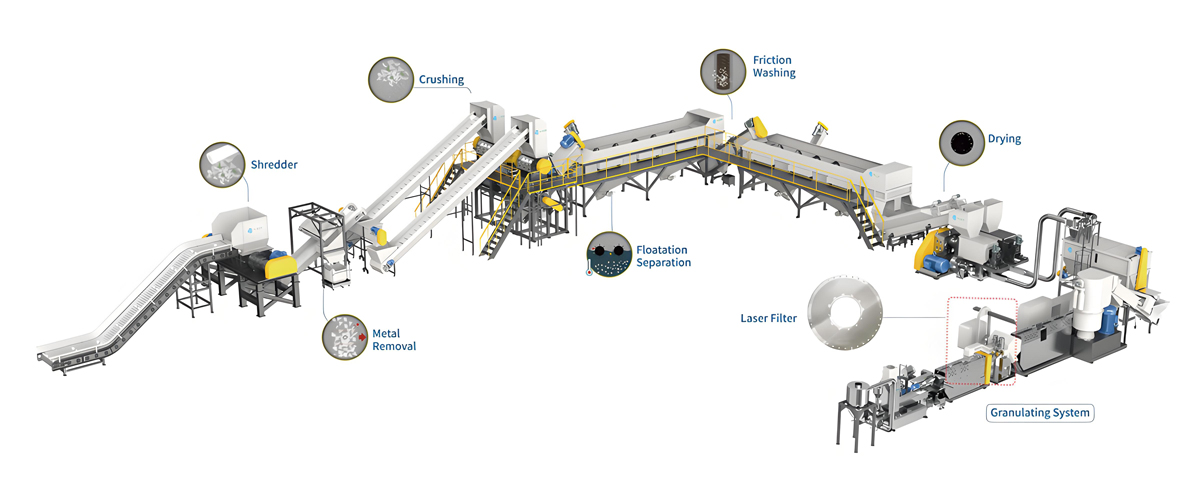
POLYRETEC HDPE/PP recycling lines are designed to process these hard plastics efficiently, removing contaminants such as labels, adhesives, and residual products. The process includes shredding, crushing, washing, friction cleaning, rinsing, dewatering, drying, and pelletizing. The final product is high-quality HDPE or PP pellets that can be used in the production of new containers, pipes, furniture, and construction materials.
A complete 800 kg/hour HDPE/PP recycling line from POLYRETEC has a total investment of approximately $200,000 to $300,000. This line can process approximately 5,760 tons of plastic waste per year, producing approximately 5,200 tons of recycled pellets. With HDPE/PP pellets selling for approximately $0.50 to $0.70 per kg, this line can generate annual revenue of $2.6 million to $3.6 million.
4.3 LDPE and LLDPE Film Recycling Solutions
LDPE (Low-Density Polyethylene) and LLDPE (Linear Low-Density Polyethylene) are used in flexible packaging such as shopping bags, agricultural films, stretch wrap, and industrial packaging. These films are lightweight and have high contamination levels, making them challenging to recycle.
POLYRETEC film recycling lines are specifically designed to handle these challenges, with specialized equipment for removing high levels of dirt, sand, and other contaminants. The process includes shredding, pre-washing, friction washing, rinsing, squeezing, drying, and pelletizing. Our advanced film drying technology ensures that the final product has low moisture content, essential for producing high-quality pellets.
A complete 500 kg/hour film recycling line from POLYRETEC has a total investment of approximately $150,000 to $250,000. This line can process approximately 3,600 tons of film waste per year, producing approximately 3,100 tons of recycled pellets. With LDPE/LLDPE pellets selling for approximately $0.45 to $0.65 per kg, this line can generate annual revenue of $1.4 million to $2.0 million.
4.4 ABS, PS and Engineering Plastic Recycling Solutions
Engineering plastics such as ABS (Acrylonitrile Butadiene Styrene), PS (Polystyrene), PC (Polycarbonate), and PA (Nylon) are used in electronic products, automotive parts, appliances, and construction materials. These plastics have high value and excellent mechanical properties, making them ideal candidates for recycling.
POLYRETEC offers specialized recycling solutions for engineering plastics, including shredding, crushing, washing, drying, and pelletizing. Our systems are designed to handle the unique characteristics of these materials, including their higher melting temperatures and sensitivity to degradation. We also offer compounding capabilities to enhance the properties of recycled engineering plastics, making them suitable for demanding applications.
A complete 600 kg/hour engineering plastic recycling line from POLYRETEC has a total investment of approximately $220,000 to $350,000. This line can process approximately 4,320 tons of plastic waste per year, producing approximately 3,900 tons of recycled pellets. With engineering plastic pellets selling for approximately $0.80 to $1.50 per kg, this line can generate annual revenue of $3.1 million to $5.9 million.
4.5 Mixed Plastic Waste Recycling Solutions
Mixed plastic waste is one of the most challenging waste streams to recycle, consisting of multiple plastic types and high levels of contamination. Traditional recycling methods cannot effectively process mixed plastics, resulting in most of this waste being sent to landfills or incinerators.
POLYRETEC offers advanced mixed plastic recycling solutions that combine advanced sorting technologies with specialized processing equipment to recover valuable materials from mixed plastic waste. Our systems use a combination of density separation, magnetic separation, and optical sorting to separate different plastic types and remove contaminants. The recovered plastics can then be processed into high-quality pellets for various applications.
For mixed plastics that cannot be separated into individual types, POLYRETEC offers compounding solutions that produce composite materials suitable for construction applications such as plastic lumber, decking, and fencing. These composite materials have excellent durability and weather resistance, providing a valuable end-use for mixed plastic waste.
5. Complete Turnkey Recycling Project Implementation
POLYRETEC provides complete turnkey recycling project services, managing every aspect of your recycling plant from initial concept to final commissioning and ongoing support. Our experienced team will work with you to design and implement a customized recycling solution that meets your specific needs and goals.
5.1 Initial Consultation and Feasibility Study
Every turnkey project begins with a detailed consultation to understand your specific requirements, including the type and volume of plastic waste you will be processing, your desired end products, your budget, and your timeline. Our team will conduct a comprehensive feasibility study that includes market analysis, technical evaluation, financial projections, and regulatory compliance assessment.
The feasibility study will provide you with a clear understanding of the project’s viability, expected costs, potential revenue, and return on investment. We will also provide recommendations on the optimal equipment configuration and plant layout to maximize efficiency and profitability.
5.2 Customized Plant Design and Engineering
Once the feasibility study is approved, our engineering team will develop detailed designs for your recycling plant. We will create comprehensive layout drawings that optimize material flow, maximize space utilization, and ensure compliance with safety and environmental regulations.
Our design process includes detailed engineering of all equipment, utility requirements, electrical systems, and control systems. We will also provide detailed specifications for all components and materials, ensuring that the plant meets the highest quality standards. We will work closely with you to refine the design until it meets all your requirements and expectations.
5.3 Equipment Manufacturing and Quality Control
All POLYRETEC equipment is manufactured in our state-of-the-art production facilities using the latest manufacturing technologies and highest quality materials. We maintain strict quality control standards throughout the manufacturing process, with inspections at every stage to ensure that all equipment meets our exacting specifications.
Each piece of equipment undergoes comprehensive testing before shipment, including performance testing, safety testing, and endurance testing. We also conduct factory acceptance testing (FAT) with our customers, allowing them to verify the performance of the equipment before it leaves our factory.
5.4 Installation and Commissioning
Our team of experienced technicians will install and commission your recycling plant at your facility. We will manage all aspects of the installation process, including equipment positioning, utility connections, electrical wiring, and system integration.
Once the installation is complete, we will conduct extensive commissioning and testing to ensure that all equipment is operating correctly and efficiently. We will optimize process parameters to achieve the desired throughput and product quality, and conduct trial runs with your actual plastic waste to verify performance.
5.5 Training and Handover
We provide comprehensive training for your operators and maintenance personnel to ensure that they have the knowledge and skills to operate and maintain the recycling plant safely and efficiently. Our training programs include classroom instruction, hands-on training with the actual equipment, and training materials for future reference.
The training covers all aspects of plant operation, including equipment operation, process parameter adjustment, routine maintenance, troubleshooting, and safety procedures. We will also provide detailed operation and maintenance manuals for all equipment.
Once training is complete and the plant has passed all acceptance tests, we will officially hand over the project to you. We will provide all necessary documentation, including operation manuals, maintenance manuals, spare parts lists, and quality certificates.
5.6 Ongoing Support and Maintenance
POLYRETEC is committed to providing ongoing support and maintenance for your recycling plant throughout its entire life cycle. Our global service network ensures that you receive fast, professional assistance whenever you need it.
We offer a range of support services, including 24/7 technical support, remote monitoring, preventive maintenance programs, emergency repair services, and spare parts supply. We also offer equipment upgrades and retrofits to improve the performance and extend the service life of your recycling plant as your needs change.
6. Detailed Cost Analysis and Return on Investment
Investing in advanced plastic recycling equipment is a significant capital expenditure, but it can provide substantial returns through the sale of recycled materials and the environmental and social benefits it delivers. The following analysis provides a detailed breakdown of the costs and returns associated with POLYRETEC recycling equipment.
6.1 Initial Investment Cost Breakdown
The initial investment for a plastic recycling plant depends on several factors, including the type and volume of plastic waste being processed, the desired end product, and the level of automation. The following table provides approximate investment costs for complete turnkey recycling plants of different capacities:
Small-scale recycling plant (300-500 kg/hour): Shredder/crusher: $15,000 – $30,000 Washing line: $40,000 – $80,000 Pelletizing system: $30,000 – $60,000 Sorting equipment: $10,000 – $30,000 Control system: $5,000 – $15,000 Installation and commissioning: $15,000 – $30,000 Training and documentation: $5,000 – $10,000 Total initial investment: $120,000 – $255,000
Medium-scale recycling plant (1,000-1,500 kg/hour): Shredder/crusher: $30,000 – $60,000 Washing line: $150,000 – $300,000 Pelletizing system: $80,000 – $150,000 Sorting equipment: $50,000 – $120,000 Control system: $15,000 – $30,000 Installation and commissioning: $40,000 – $80,000 Training and documentation: $10,000 – $20,000 Total initial investment: $375,000 – $760,000
Large-scale recycling plant (2,000-3,000 kg/hour): Shredder/crusher: $60,000 – $120,000 Washing line: $300,000 – $600,000 Pelletizing system: $150,000 – $300,000 Sorting equipment: $120,000 – $250,000 Control system: $30,000 – $60,000 Installation and commissioning: $80,000 – $150,000 Training and documentation: $20,000 – $40,000 Total initial investment: $760,000 – $1,520,000
These are approximate prices and may vary depending on specific customer requirements and customization options. Additional costs to consider include facility construction or renovation, utility connections, initial raw material inventory, and working capital.
6.2 Annual Operating Cost Analysis
In addition to the initial investment, it is important to consider the ongoing operating costs of the recycling plant. The following table compares the annual operating costs for a medium-scale 1,000 kg/hour PET recycling plant using POLYRETEC equipment versus traditional equipment, based on 24 hours per day, 300 days per year operation:
Traditional recycling plant: Energy costs: $240,000 per year Water costs: $60,000 per year Labor costs: $360,000 per year (6 operators per shift) Maintenance costs: $80,000 per year Chemical costs: $30,000 per year Waste disposal costs: $40,000 per year Total annual operating costs: $810,000
POLYRETEC advanced recycling plant: Energy costs: $144,000 per year (40% reduction) Water costs: $12,000 per year (80% reduction) Labor costs: $180,000 per year (3 operators per shift) Maintenance costs: $40,000 per year (50% reduction) Chemical costs: $18,000 per year (40% reduction) Waste disposal costs: $12,000 per year (70% reduction) Total annual operating costs: $406,000
Annual cost savings with POLYRETEC equipment: $810,000 – $406,000 = $404,000
6.3 Revenue and Profitability Analysis
The revenue and profitability of a plastic recycling plant depend on several factors, including the type of plastic being processed, the quality of the recycled product, and market conditions. The following analysis is based on a medium-scale 1,000 kg/hour PET recycling plant operating 24 hours per day, 300 days per year:
Annual processing capacity: 1,000 kg/hour × 24 hours/day × 300 days/year = 7,200 tons per year Product yield: 90% (7,200 tons × 0.9 = 6,480 tons of PET flakes per year) Average selling price of PET flakes: $0.70 per kg Annual revenue: 6,480,000 kg × $0.70/kg = $4,536,000 per year Annual operating costs: $406,000 per year Annual gross profit: $4,536,000 – $406,000 = $4,130,000 per year
6.4 Return on Investment Calculation
Using the figures from the previous sections, we can calculate the return on investment (ROI) for a POLYRETEC medium-scale 1,000 kg/hour PET recycling plant. The total initial investment for the plant is approximately $567,500 (midpoint of the range), and the annual cost savings are $404,000.
Payback period = Total initial investment ÷ Annual cost savings = $567,500 ÷ $404,000 = 1.4 years (approximately 17 months)
This means that the initial investment in the POLYRETEC recycling plant is fully recovered in less than 1.5 years through cost savings alone. When considering the additional revenue from the sale of recycled materials, the actual payback period is often even shorter.
Over the 15-year service life of the equipment, the total savings would be: Total savings over 15 years = ($404,000 × 15) – $567,500 = $5,492,500
This represents a return on investment of over 960% over the life of the equipment.
7. Real-World Case Studies
The following case studies demonstrate how POLYRETEC plastic recycling equipment has helped businesses and communities around the world achieve their sustainable development goals while generating significant economic returns.
7.1 Case Study 1: PET Bottle Recycling Plant in Germany
A leading waste management company in Germany was looking to expand its recycling capacity to meet the growing demand for recycled PET flakes for bottle-to-bottle applications. The company required a high-capacity recycling plant that could produce food-grade PET flakes meeting the strictest European quality standards.
POLYRETEC provided a complete turnkey solution including a 3,000 kg/hour PET bottle washing line, advanced optical sorting system, and quality control equipment. The plant was designed to process post-consumer PET bottles into food-grade PET flakes suitable for direct contact with food products.
Results after implementation: The plant achieved a stable production capacity of 3,000 kg/hour The final PET flakes had purity exceeding 99.8% The plant produced food-grade PET flakes that met EFSA and FDA requirements Energy consumption was 35% lower than the industry average Water consumption was 85% lower than traditional systems The plant achieved an overall equipment effectiveness (OEE) rate of 92% Total annual revenue: $18.9 million Payback period: 1.2 years
The plant has become one of the most advanced PET recycling facilities in Europe, producing high-quality recycled PET flakes that are used by major beverage manufacturers in their bottle production.
7.2 Case Study 2: Agricultural Film Recycling Plant in the United States
An agricultural cooperative in the United States was facing significant challenges with the disposal of used agricultural plastic film. The film was being burned or buried on farms, causing environmental pollution and health risks. The cooperative wanted to establish a recycling program to convert the waste film into valuable products while providing an environmental benefit to the community.
POLYRETEC provided a customized 1,000 kg/hour agricultural film recycling line including shredding, washing, drying, and pelletizing equipment. The line was designed to handle heavily soiled agricultural film with high levels of dirt and sand contamination.
Results after implementation: The plant processed approximately 6,000 tons of agricultural film per year The final recycled pellets had consistent quality and properties The pellets were sold to manufacturers for use in plastic lumber, decking, and agricultural products The plant eliminated the burning and burial of plastic film on local farms Energy consumption was 38% lower than traditional systems Water consumption was 75% lower than traditional systems Total annual revenue: $2.8 million Payback period: 1.6 years
The recycling program has been a great success, providing a sustainable solution for agricultural plastic waste while creating jobs and generating revenue for the cooperative.
7.3 Case Study 3: Mixed Plastic Recycling Plant in Thailand
A waste management company in Thailand was struggling to manage the growing volume of mixed plastic waste in the country. Most mixed plastic waste was being sent to landfills or incinerated, causing significant environmental problems. The company wanted to establish a recycling plant that could process mixed plastic waste and convert it into valuable composite materials.
POLYRETEC provided a complete mixed plastic recycling solution including shredding, sorting, washing, and compounding equipment. The plant used a combination of density separation and optical sorting to recover valuable plastics from the mixed waste stream, and compounded the remaining mixed plastics into composite materials for construction applications.
Results after implementation: The plant processed approximately 8,000 tons of mixed plastic waste per year The plant recovered approximately 60% of the mixed plastic waste as high-quality recycled pellets The remaining 40% was compounded into composite materials for construction The plant diverted over 95% of the mixed plastic waste from landfills Energy consumption was 32% lower than traditional systems Water consumption was 70% lower than traditional systems Total annual revenue: $3.5 million Payback period: 1.8 years
The plant has significantly reduced the amount of plastic waste going to landfills in Thailand, while creating a sustainable source of raw materials for the construction industry.
8. POLYRETEC Global Service and Sustainable Commitment
POLYRETEC is committed to providing comprehensive global service and support to our customers, while also advancing sustainable development through innovative recycling technologies.
8.1 Global Service Network
POLYRETEC has established a global service network to ensure that our customers receive fast, professional assistance wherever they are in the world. We have service centers in key regions including North America, Europe, Asia-Pacific, Latin America, and Africa, staffed by experienced technicians who provide local support and service.
Our service capabilities include 24/7 technical support via phone and email, remote monitoring and diagnostic services, on-site installation and commissioning, preventive maintenance programs, emergency repair services, and spare parts supply. We maintain a global inventory of spare parts to ensure fast delivery to customers anywhere in the world, with most parts shipped within 24 hours.
We also offer comprehensive training programs for our customers’ operators and maintenance personnel, both at our training facilities and at the customer’s site. Our training programs are designed to ensure that customers’ staff have the knowledge and skills to operate and maintain their POLYRETEC equipment safely and efficiently.
8.2 POLYRETEC Sustainable Development Commitment
At POLYRETEC, sustainable development is at the core of everything we do. We are committed to developing innovative recycling technologies that help reduce plastic pollution, conserve natural resources, and promote the transition to a circular economy.
Our commitment to sustainability is reflected in our products and operations. All POLYRETEC recycling equipment is designed to minimize environmental impact through energy-efficient operation, water recycling, and emissions control. We also implement sustainable manufacturing practices in our own facilities, reducing our energy consumption, water usage, and waste generation.
We actively collaborate with governments, non-governmental organizations, and industry partners to advance plastic recycling and sustainable development worldwide. We participate in industry associations and initiatives aimed at improving plastic waste management and promoting the use of recycled materials.
Our goal is to make plastic recycling a viable and sustainable solution for plastic waste management worldwide, creating a cleaner, healthier, and more prosperous future for generations to come.
9. Conclusion
Plastic pollution is one of the most pressing environmental challenges of our time, but advanced plastic recycling equipment provides a powerful solution. By converting plastic waste into valuable raw materials, recycling helps conserve natural resources, reduce greenhouse gas emissions, prevent pollution, and create economic opportunities. As the world transitions to a circular economy, plastic recycling equipment has become an essential technology for achieving sustainable development goals.
POLYRETEC is at the forefront of this transition, offering advanced plastic recycling equipment that addresses the limitations of traditional recycling methods. Our complete range of shredders, crushers, washing lines, pelletizing systems, and sorting equipment delivers high processing efficiency, superior material quality, and minimal environmental impact. With our turnkey project services and global support network, we help customers around the world establish successful recycling operations that deliver both economic and environmental benefits.
The real-world case studies presented in this guide demonstrate that investing in POLYRETEC plastic recycling equipment provides a rapid return on investment, typically within 1-2 years. Over the life of the equipment, the economic returns and environmental benefits are substantial, making recycling a smart and sustainable business decision.
Whether you are a waste management company looking to expand your recycling capacity, a manufacturer seeking a sustainable source of raw materials, or an entrepreneur looking to enter the recycling industry, POLYRETEC has the expertise and technology to help you achieve your goals. Our customized recycling solutions are designed to meet your specific needs and deliver maximum value.
As the demand for recycled plastics continues to grow and environmental regulations become stricter, now is the perfect time to invest in advanced plastic recycling equipment. With POLYRETEC as your partner, you can turn plastic waste into a valuable resource while contributing to a more sustainable future for our planet.
If you are looking for the best plastic waste recycling equipment for sustainable development, contact POLYRETEC today to schedule a free consultation. Our experienced team will work with you to develop a customized recycling solution that meets your specific requirements and helps you achieve your sustainable development goals.