
Against the backdrop of global circular economy development and increasingly strict plastic pollution control policies, the waste plastic recycling industry is entering a stage of large-scale and high-quality development. Recycling enterprises around the world are facing dual demands of expanding processing capacity and improving recycled pellet quality. Traditional single-stage plastic pelletizing machines have obvious limitations when dealing with large volumes of waste plastics, such as insufficient devolatilization ability, poor melt homogenization, frequent shutdown for screen changing and low finished product quality, which can no longer meet the needs of modern industrial recycling production. Double stage pelletizing technology, with its unique two-stage extrusion structure, achieves efficient plasticization, deep degassing and uniform homogenization respectively, and has become the mainstream technical solution for high-yield and high-quality recycled pellet production.
Austria is recognized as one of the birthplaces of global advanced plastic recycling technology. Its extrusion and pelletizing equipment is world-famous for its precise mechanical design, stable process control and excellent energy efficiency, and has long been the first choice for high-end recycling enterprises. However, purely imported Austrian equipment has high procurement cost, long delivery cycle and high later maintenance cost, which sets a high threshold for most growing recycling enterprises. By introducing mature Austrian double-stage pelletizing technology and combining localized precision manufacturing and supply chain advantages, POLYRETEC has launched a series of high-output double-stage plastic pelletizing lines, which not only retain the advanced nature of core technology, but also greatly reduce equipment investment and operation cost, making high-end pelletizing technology accessible to more recycling enterprises.
As a professional manufacturer focusing on plastic recycling equipment, POLYRETEC has rich experience in R&D and project implementation of plastic washing lines and pelletizing systems. Its Austrian technology double stage pelletizing line covers a variety of capacity specifications from small to large, and can be perfectly connected with various plastic washing lines to realize integrated production from waste plastic cleaning to pelletizing. This guide will systematically explain the working principle, core structure, performance indicators, configuration options and investment return of double stage pelletizing technology, introduce the technical characteristics and application value of POLYRETEC equipment in detail, and provide comprehensive decision-making reference for recycling enterprises to upgrade production capacity and improve product quality.
1. Industry Background and Technical Value of Double Stage Pelletizing Technology
1.1 Growing Demand for High-Capacity Plastic Recycling Solutions
In recent years, countries around the world have successively introduced plastic ban policies and extended producer responsibility systems, which strongly promote the improvement of plastic recycling rate. The global waste plastic recycling volume maintains a steady growth of more than 8% every year, and large-scale recycling centers and industrial recycling parks are emerging in large numbers. For recycling enterprises, simply expanding the number of equipment has been unable to meet the demand of efficiency improvement. They urgently need high-capacity, high-reliability and low-unit-cost pelletizing equipment to realize large-scale and intensive production.
At the same time, the downstream product market is putting forward higher requirements for the quality of recycled pellets. Ordinary recycled pellets produced by single-stage machines have problems such as high volatile content, internal bubbles, uneven melt index and many impurities, which can only be used in low-end products with low added value. High-quality recycled pellets with stable performance and clean appearance can be used in mid-to-high-end products and even partially replace virgin materials, with significantly higher selling prices. Under the dual pressure of capacity expansion and quality upgrading, double-stage pelletizing technology with both high output and high quality has become the inevitable choice for the upgrading of the recycling industry.
1.2 Core Advantages of Double Stage over Single Stage Design
The double stage pelletizing line is composed of two independent extrusion units connected in series. The first stage extruder is mainly responsible for melting, plasticizing and primary filtration of waste plastics, and the second stage extruder is responsible for deep devolatilization, vacuum degassing and melt homogenization, and finally completes pelletizing. Compared with the single-stage structure, this split design brings multiple core performance improvements.
First, it has stronger degassing and devolatilization capacity. The second stage is equipped with one or two vacuum exhaust ports, which can fully extract moisture, volatile components and low molecular substances in the melt under high vacuum environment, greatly reducing the bubble rate of finished pellets and improving the compactness and gloss of products. It can directly process washed materials with certain moisture content, reducing the requirement for pre-drying process and saving pre-treatment costs. Second, the plasticization and homogenization effect is better. Two-stage melting and mixing makes the melt more uniform, the melt index fluctuation is smaller, and the performance of finished pellets is more stable. Third, it can adapt to materials with higher impurity content. Multi-stage filtration can be configured to filter impurities step by step, and the continuous screen changer avoids production interruption caused by screen replacement. Fourth, the production continuity is stronger, the annual uptime rate is higher, and the actual annual output far exceeds that of single-stage equipment of the same specification.
1.3 Austrian Engineering Heritage in Recycling Technology
Austria has a decades-long technical accumulation in the field of plastic recycling equipment, and is in a leading position in the world in screw design, flow channel optimization, process control and equipment reliability. Austrian pelletizing equipment is famous for its high precision, low energy consumption and long service life, and can maintain stable operation under long-term high-load conditions, which is widely recognized by high-end recycling enterprises worldwide.
The core advantages of Austrian technology lie in the detailed optimization of fluid dynamics and structural mechanics. The screw geometry is precisely designed according to the characteristics of recycled materials, which can achieve sufficient plasticization at lower temperature and reduce material degradation. The runner design has no dead angle, which avoids material retention and carbonization, and ensures the stability of product quality. The high reliability design reduces the failure rate and prolongs the service life of the equipment. POLYRETEC has carried out in-depth technical cooperation with Austrian technical teams, fully absorbed these advanced design concepts, and carried out localized adaptive optimization for the raw material characteristics of the global recycling market, so that the equipment can adapt to more complex feeding conditions while maintaining excellent performance.
2. Core Structure and Working Process of Double Stage Pelletizing Line
2.1 First Stage Extrusion and Primary Filtration System
The first stage extrusion unit is the core of plasticization of the whole line, which undertakes the functions of conveying, melting, shearing and primary filtration of waste plastics. The screw adopts barrier mixing configuration designed by Austrian technology, and optimizes the flight structure and shear distribution according to different waste plastic types, which can realize full plasticization at relatively low temperature and avoid thermal degradation of materials caused by excessive shear. The screw base material is made of high-quality alloy steel, and the surface is treated with wear-resistant and corrosion-resistant alloy, which has high hardness and long service life, and is suitable for long-term processing of recycled materials with impurities.
The barrel adopts multi-zone independent temperature control, and each zone is equipped with independent heating and cooling circuits with high temperature control accuracy, which can accurately adjust the temperature curve according to material characteristics. The end of the first stage is equipped with a continuous automatic screen changer with double-station or multi-station design, which can replace the filter screen without stopping the machine, avoiding production interruption and material waste caused by screen changing. The filter screen can be matched with different mesh combinations according to the impurity content of feed materials to achieve step-by-step filtration, which not only ensures the filtration effect, but also prolongs the service life of the filter screen and reduces the cost of consumables. For materials with high impurity content, multi-stage filtration system can also be configured to filter out impurities of different particle sizes step by step.
2.2 Second Stage Devolatilization and Homogenization System
The second stage extrusion unit is the core difference between the double stage line and the single stage machine, and its main function is to carry out deep devolatilization, vacuum degassing and homogenization of the melt after primary plasticization and filtration. The barrel of the second stage is equipped with 1 to 2 vacuum exhaust ports connected with a high vacuum system, which can fully extract moisture, residual volatile components, low molecular polymers and odor substances in the melt, significantly improving the compactness and purity of finished pellets.
Pellets after vacuum exhaust have no internal bubbles, good surface gloss and stable melt performance, which can be directly used in the production of high-end products and have a much higher market price than ordinary single-stage pellets. The second stage screw adopts low-shear homogenization design, which ensures full mixing and homogenization of the melt while avoiding material degradation caused by excessive shear, and maintains the original performance of the material to the greatest extent. The melt temperature and viscosity after the second stage treatment are more uniform, and the molding is more stable after entering the pelletizing system, with regular particle shape and uniform size. For compounding pelletizing scenarios that need to add additives, color masterbatch or fillers, the second stage can also be used as a mixing section to realize uniform mixing of additives and matrix resin.
2.3 Feeding and Pelletizing Auxiliary Systems
The feeding system can be configured with different schemes according to material morphology. For light materials such as films and fibers, a forced feeder with a pressing device can be configured to stably send fluffy materials into the extruder, avoid bridging, ensure the continuity and stability of feeding, and improve the actual output. For hard plastic scraps, vibrating feeder or screw feeder can be configured to realize uniform and quantitative feeding. The whole feeding system is linked with the speed of the main engine, which can automatically adjust the feeding amount according to the load of the main engine to ensure that the equipment always operates under the best load condition.
The pelletizing system can be equipped with water ring pelletizing, strand pelletizing or underwater pelletizing according to material characteristics and customer needs. Water ring pelletizing is suitable for most polyolefin materials, with high production efficiency and beautiful particle shape, which is the current mainstream configuration. Strand pelletizing has simple structure and convenient maintenance, and is suitable for small batch and multi variety production scenarios. Underwater pelletizing is suitable for high viscosity and easy adhesion materials with the best particle quality but relatively high cost. After pelletizing, the pellets go through centrifugal dewatering, vibration screening and air conveying cooling, and finally enter the finished product silo. The whole process runs automatically and continuously without manual intervention.
2.4 Intelligent Control and Production Monitoring System
The whole line adopts PLC and touch screen intelligent control system, and all process parameters can be set and monitored on the touch screen with intuitive and simple operation. The system has built-in process formulas for a variety of common materials. When changing materials, you only need to call the corresponding formula without re-debugging, which greatly shortens the material change time. The system has complete fault self-diagnosis and alarm functions, which can monitor key parameters such as temperature, pressure, current and speed in real time, give an alarm automatically and take protective measures in case of abnormality, so as to avoid equipment damage.
High-end configuration can add production data collection and statistics function, automatically record output, energy consumption, running time and other data, generate production reports, which is convenient for enterprises to carry out production management and cost accounting. It supports remote diagnosis function, and technicians can view the equipment operation status remotely through the network, quickly troubleshoot and solve faults, greatly shortening the fault response time and reducing downtime loss. The intelligent control system not only reduces the dependence on operator experience, but also improves the operation stability and management efficiency of the whole line.
3. Performance Indicators and High Output Capability
3.1 Output Capacity for Different Waste Plastic Materials
The actual output of the double stage pelletizing line depends on the type of feed material, purity, moisture content and finished product quality requirements. For clean PE/PP film materials with moisture content lower than 5% and impurity content lower than 1% after washing line treatment, the medium-sized double stage line can reach a stable output of 500 to 800 kilograms per hour, and the daily output can reach 12 to 19 tons under 24-hour continuous operation. For agricultural films and mulching films with slightly higher impurities and moisture content, the output decreases slightly, about 400 to 600 kilograms per hour, but it is still much higher than single-stage equipment of the same specification.
For hard plastic scraps such as HDPE bottle flakes and PP turnover box scraps, the output of medium-sized line can reach 450 to 700 kilograms per hour. For engineering plastic scraps such as ABS and PS, the output is about 350 to 550 kilograms per hour. Large-scale double stage lines can achieve a maximum output of more than 1500 kilograms per hour when processing clean PE/PP films, which can match the discharge rhythm of large plastic washing lines, realize continuous integrated production of washing and pelletizing, and is suitable for large recycling industrial parks and leading recycling enterprises.
3.2 Final Pellet Quality and Market Premium
Finished pellets produced by Austrian technology double stage pelletizing line are superior to ordinary single-stage pelletizing products in multiple dimensions. In terms of appearance, the pellets have uniform color, smooth surface, no bubbles, no obvious impurities, regular shape and uniform size. In terms of performance, the melt flow rate is stable with small fluctuation range, the mechanical property retention rate is high, and it can partially replace virgin materials. The volatile content and moisture content are low without obvious odor, which can meet the production requirements of medium and high-grade plastic products.
In the recycled material market, the price of high-quality double-stage pellets is usually 10% to 20% higher than that of ordinary single-stage pellets, and they have wider market channels and are more easily accepted by downstream product enterprises. For high-end recycled material applications such as food contact grade and medical grade, double-stage pellets with deep exhaust and multi-stage filtration are the basic premise, which can bring higher product premium. For recycling enterprises, improving pellet quality brings higher selling price, which is a more important profit growth point than simply increasing production capacity.
3.3 Energy Efficiency and Consumption Performance
The Austrian technology double stage pelletizing line attaches great importance to energy efficiency optimization in design. Through reasonable screw configuration, efficient drive system and accurate temperature control design, the energy consumption per unit output is controlled at a low level. When processing PE film materials, the comprehensive power consumption per ton of finished pellets is about 350 to 450 kWh, which is far lower than the average level of 500 to 600 kWh per ton of ordinary double stage lines in the industry.
The drive system adopts high-efficiency servo motor or variable frequency motor, which can automatically adjust the power output according to the load and avoid energy waste during no-load and low-load operation. The heating system adopts high-efficiency ceramic heater with insulation layer design to reduce heat loss and heating energy consumption. The cooling system adopts closed-loop temperature control to provide cooling water on demand and reduce cooling water consumption. On the whole, although it has a two-stage structure, thanks to the optimized design, the energy consumption of the whole line does not increase exponentially, and the unit product energy consumption is even better than many low-efficiency single-stage equipment.
3.4 Continuous Operation Stability and Uptime Rate
High output is not only reflected in the theoretical hourly output, but also in the actual annual operation time and effective capacity. The Austrian technology double stage pelletizing line adopts high reliability design, and the core components have passed strict life calculation and testing, which can support 7 times 24 hours continuous industrial production. The application of continuous automatic screen changer eliminates the shutdown caused by screen changing. Each screen change only takes a few seconds and hardly affects normal production.
Under normal maintenance and reasonable feeding conditions, the annual uptime rate of the whole line can reach more than 90%, much higher than about 70% of ordinary single-stage machines. Calculated by 330 working days per year, the medium-sized line can actually process 3000 to 5000 tons per year, and the large-sized line can process more than 10000 tons per year. The stable continuous operation ability enables the capacity advantage of the equipment to be truly transformed into actual output and economic benefits.
4. POLYRETEC Double Stage Pelletizing Line Solutions
4.1 Integration of Austrian Technology and Local Manufacturing
POLYRETEC focuses on the R&D and manufacturing of plastic recycling equipment, and has rich project experience in plastic washing lines and pelletizing systems. The company introduces mature Austrian double-stage pelletizing technology design, and combines its own accumulation in recycling technology to carry out localized optimization of equipment for the feeding characteristics of domestic and global recycling markets.
Compared with purely imported Austrian equipment, POLYRETEC’s solution retains the advancement of core technology, and at the same time greatly reduces the manufacturing cost through localized manufacturing. The equipment price is only 50% to 60% of imported equipment with the same capacity, and the delivery cycle is also shortened by more than half. All POLYRETEC pelletizing lines are produced in strict accordance with quality standards, core parts adopt international famous brands, and the whole machine undergoes long-term load test before delivery to ensure stable performance and quick commissioning after delivery to customer site. The company can also provide customized configuration adjustment according to customer’s material characteristics and capacity demand.
4.2 Model Specifications and Configuration Options
POLYRETEC Austrian technology double stage pelletizing line covers multiple capacity gears from small to large, which can meet the needs of enterprises of different scales.
Small specification is mainly for small and medium-sized recycling enterprises and supporting small washing lines, with designed output of 300 to 500 kilograms per hour. It is suitable for processing PE/PP films and soft scraps. The equipment has compact structure, small floor area, low investment threshold and easy quick production.
Medium specification is the mainstream model in the market, with designed output of 500 to 800 kilograms per hour, which can match the output of most medium-sized plastic washing lines. It has flexible configuration and can choose different screen changers, pelletizing methods and automation degrees according to demand, balancing performance and cost.
Large specification is for large recycling enterprises and industrial park level projects, with designed output of 800 to 1500 kilograms per hour. It is equipped with double-stage double exhaust system, multi-stage continuous filtration and high automation control system, which can realize long-term stable operation under high load.
4.3 Wide Adaptability to Various Plastic Types
POLYRETEC double stage pelletizing line has strong material adaptability and can process most common thermoplastic waste plastics. Soft plastics including PE films, PP woven bags, agricultural mulch films, packaging films and stretch films are the most suitable materials for this equipment with high output and good pellet quality.
Hard plastics including HDPE bottle flakes, PP scraps, ABS/PS home appliance scraps and PC/PA engineering plastic scraps can all achieve stable pelletizing by replacing corresponding screw configurations and adjusting process parameters. For washed materials with certain moisture and impurities, the exhaust capacity of the two-stage structure can effectively remove moisture and volatile components, has lower requirements for pre-drying, and can directly connect with the discharge of the washing line, eliminating additional drying process.
4.4 Full Line Integration with Plastic Washing Lines
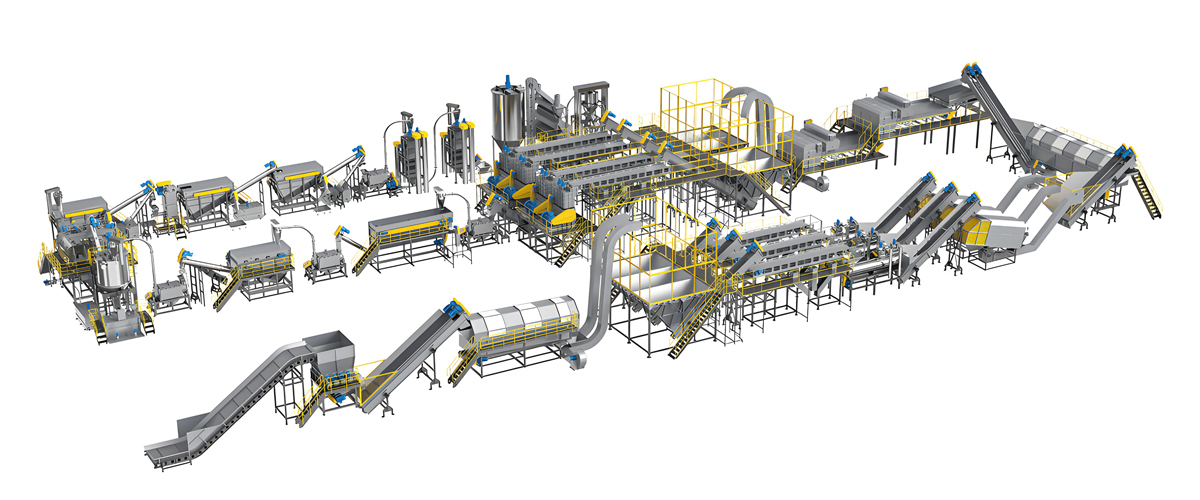
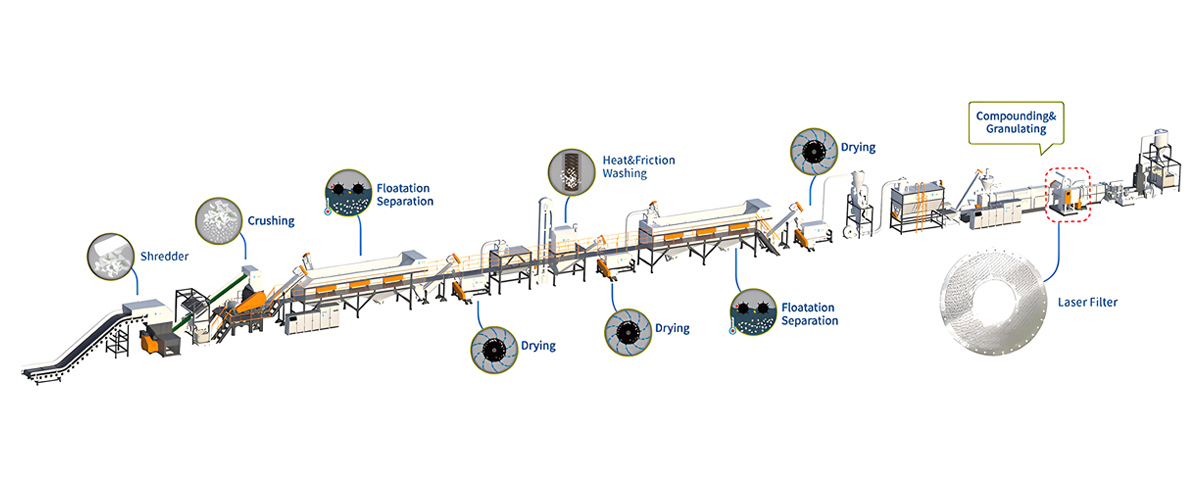
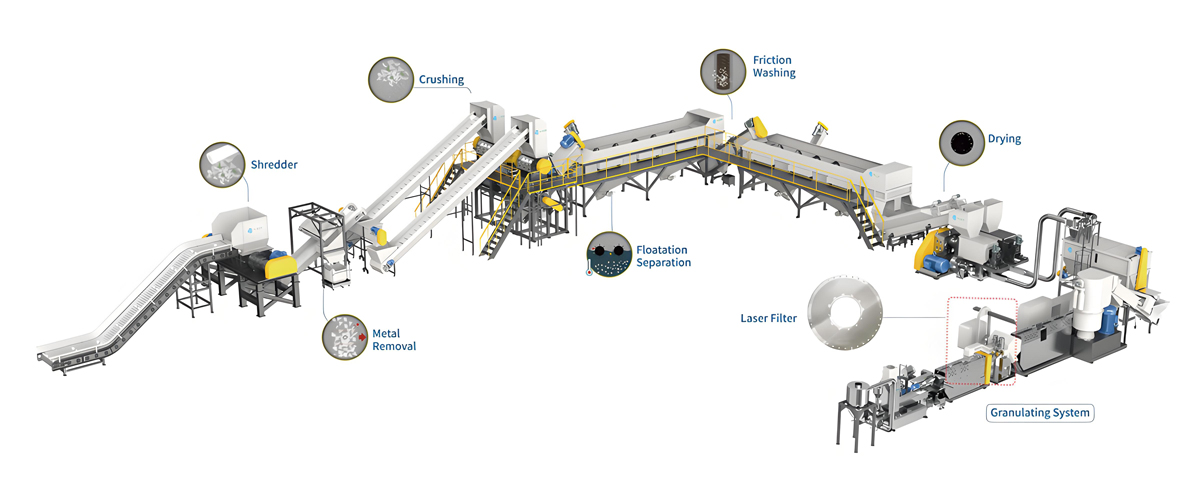
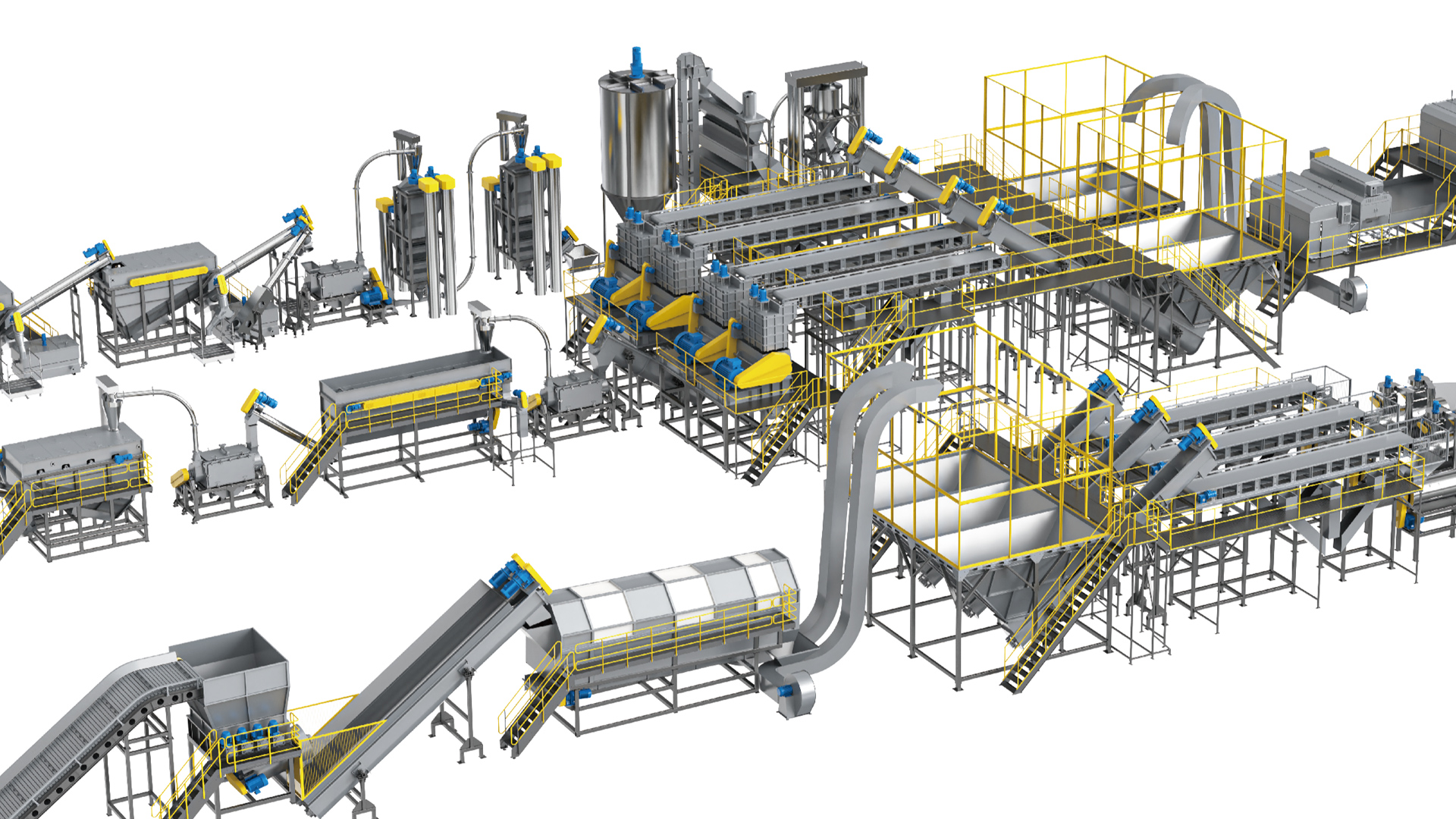
POLYRETEC has a complete product line of plastic washing lines, which can provide customers with one-stop overall solutions from crushing, washing, sorting to pelletizing. The double stage pelletizing line can be perfectly connected with the company’s PET bottle flake washing line, PE/PP film washing line and hard plastic washing line to realize automatic linkage operation of the whole line.
The turnkey delivery mode not only avoids the compatibility problems caused by customers matching equipment from different manufacturers, but also enables customers to connect with only one supplier, making project communication and later maintenance more convenient. POLYRETEC can customize the complete process scheme from washing to pelletizing according to customer’s raw material type, capacity demand and site conditions to ensure the matching of the whole line capacity and reasonable process.
5. Investment Cost and Return on Investment Analysis
5.1 Equipment Price Estimation for Different Capacities
The specific price of the equipment depends on capacity specification, configuration level, optional functions and number of auxiliary machines. The following is the price reference range for standard configurations of different specifications.
Small double stage pelletizing line with capacity of 300 to 500 kilograms per hour, standard configuration includes forced feeder, first stage extruder, continuous screen changer, second stage vacuum exhaust extruder, water ring pelletizing system, centrifugal dewatering screen, finished product air conveying system and PLC control system. The price of the complete set of equipment is about 120,000 to 180,000 US dollars.
Medium double stage pelletizing line with capacity of 500 to 800 kilograms per hour, standard configuration price is about 220,000 to 320,000 US dollars. If double vacuum exhaust, multi-stage filtration and higher level automation system are selected, the price will increase accordingly.
Large double stage pelletizing line with capacity of 800 to 1500 kilograms per hour, standard configuration price is about 380,000 to 550,000 US dollars. It is suitable for large recycling projects and usually matched with complete washing line and automatic storage system.
5.2 Annual Operating Cost Breakdown
Taking the medium-sized 500 to 800 kilograms per hour double stage pelletizing line as an example, it is calculated based on 300 working days per year, 20 hours per day, 6000 hours of annual effective production time, average output of 600 kilograms per hour and annual output of 3600 tons.
Electricity cost is the main component of operating cost. Calculated by comprehensive unit power consumption of 400 kWh per ton and industrial electricity price of 0.1 US dollar per kWh, the annual electricity cost is about 144,000 US dollars.
In terms of labor cost, the whole line has a high degree of automation, requiring only 2 operators per shift and 4 people for two shifts. Calculated by annual salary of 6,000 US dollars per person, the annual labor cost is about 24,000 US dollars.
Consumable cost including filter screen, wearing parts and lubricating oil is about 12,000 to 18,000 US dollars per year under normal production. Maintenance cost is about 5,000 to 6,000 US dollars per year. Other miscellaneous expenses including cooling water, site rent and management cost are about 10,000 US dollars per year.
Comprehensively calculated, the total annual operating cost excluding raw material procurement is about 195,000 to 208,000 US dollars, and the unit operating cost of finished products is about 54 to 58 US dollars per ton, which is at a low level in the industry.
5.3 Revenue and Profit Projection
Calculated by the average price of recycled PE pellets of 800 US dollars per ton, the annual sales revenue is about 2,880,000 US dollars. Calculated by the purchase cost of waste plastic raw materials of 500 US dollars per ton, considering production loss, the total raw material cost is about 1,890,000 US dollars.
After deducting raw material cost and annual operating cost of about 200,000 US dollars, the annual gross profit is about 790,000 US dollars. If the quality advantage of double-stage pellets is used to increase the selling price by 10% to 880 US dollars per ton, the annual sales revenue can increase to 3,168,000 US dollars, and the gross profit can be increased to about 1,078,000 US dollars.
For scenarios dealing with high-value engineering plastics, the price difference between raw materials and finished products is larger, and the profit space will be more considerable. Even considering market fluctuations and other factors, the profitability of the project is very strong.
5.4 Static Payback Period Calculation
Calculated on the basis of total investment of about 270,000 US dollars for medium-sized standard configuration equipment and annual net profit of about 790,000 US dollars under the benchmark profit scenario, the static investment payback period is less than 5 months. Even considering factors such as capacity climbing and market fluctuation in the initial stage of production, calculated by 50% discount of annual net profit, the investment payback period is only about 10 months.
For integrated projects with their own washing lines, the raw material cost is lower and the finished product premium is higher, so the investment return speed will be faster. Even for large-scale equipment, due to higher profit per unit capacity, the investment payback period can usually be controlled within 12 to 18 months, which is far lower than the average 2 to 3 years investment return cycle of the plastic recycling industry.
6. Installation, Operation and Maintenance Guidelines
6.1 Site Preparation and Installation Commissioning
Before equipment arrival, site preparation shall be completed according to the installation drawings provided by POLYRETEC. Reserve enough installation space and operation and maintenance space according to the equipment size. The ground shall be flat and solid enough to bear the equipment weight and vibration during operation. Reserve three-phase power interface, cooling water pipeline interface and compressed air interface with capacity meeting the rated demand of equipment.
POLYRETEC will arrange professional engineers to guide installation and commissioning on site. The installation and commissioning cycle of standard models is about 10 to 15 days. After completion, trial production with materials will be carried out to ensure that the capacity and pellet quality meet the agreed standards. During commissioning, engineers will provide systematic training for customer’s operation and maintenance personnel, explaining equipment operation, daily maintenance and common fault handling.
6.2 Daily Operation and Preventive Maintenance
Standardized daily operation and maintenance are the key to ensure long-term stable operation and extend service life of the equipment. Before startup, check whether all parts are normal, preheat step by step according to the set temperature curve, and keep warm for a period of time after reaching the temperature before starting production. During production, monitor the purity and moisture content of feed materials, avoid hard objects such as metal and sand entering the extruder. Regularly check temperature, pressure and current parameters, and stop to check in time if any abnormality is found.
Daily maintenance includes cleaning the equipment surface every shift, checking the oil level of each lubrication point and tightening loose connectors. Check the filter status weekly and clean or replace the filter element in time. Check the working status of hydraulic system and vacuum system monthly, and check whether the seals have leakage. Check the wear of screw and barrel quarterly, and conduct dust removal and fastening of electrical system. Conduct a comprehensive overhaul every year, replace aging seals and wearing parts, and calibrate temperature and pressure sensors.
6.3 Common Production Issues and Solutions
Bubbles in pellets are usually caused by high moisture content of materials or insufficient vacuum degree. It can be solved by improving the pre-drying effect, checking the sealing of vacuum system and cleaning the accumulated material at the exhaust port.
Low output may be caused by feeding bridging, screw wear or unreasonable temperature setting. It is necessary to check the feeding system, check the screw wear and optimize temperature parameters accordingly.
Material leakage during screen changing is usually caused by improper filter screen installation or wear of the sealing surface of the screen changer. It is necessary to standardize the screen changing operation, check the wear of the sealing surface and grind and repair it in time.
Uneven particle shape may be caused by cutter wear, uneven die discharge or unstable melt pressure. It is necessary to replace the cutter, clean the die head and adjust process parameters.
Most common problems can be solved by adjusting process and daily maintenance. POLYRETEC also provides complete fault handling manual and remote technical support to help customers quickly solve problems in production.
7. Why Choose POLYRETEC as Your Recycling Equipment Partner
7.1 Full Process Technical Support and Turnkey Service
POLYRETEC not only provides equipment itself, but also provides one-stop turnkey service from process design, site planning, equipment manufacturing, installation and commissioning to personnel training. Customers only need to provide raw material information and capacity goals, and the company will customize a complete recycling and pelletizing scheme to ensure smooth production and meet the standards after project implementation.
The company has a professional process R&D team, which can optimize process parameters according to different material characteristics and help customers obtain the best finished product quality and production efficiency. For customers new to the recycling industry, the company can also provide value-added services such as market consultation and raw material and product channel suggestions to help customers avoid detours and quickly achieve profitability.
7.2 Global After-Sales Service and Spare Parts Supply
POLYRETEC products are exported to many countries and regions around the world, and a perfect global after-sales service system has been established. Conventional wearing parts are in sufficient stock and can be quickly shipped to all parts of the world. In case of equipment failure, remote diagnosis is first carried out to quickly locate the problem and guide customers to solve it by themselves. For problems requiring on-site treatment, engineers will be arranged to serve on site as soon as possible to minimize customer downtime loss.
All equipment comes with a 12-month free warranty. During the warranty period, non-human damaged parts are replaced free of charge. After the warranty period, lifetime supply of spare parts at cost price and lifetime technical support are provided.
Conclusion
High-output Austrian technology double stage plastic pelletizing line is the core equipment for recycling enterprises to expand production capacity, optimize pellet quality and enhance profitability. It not only solves the capacity bottleneck of traditional single-stage equipment, but also significantly improves the quality grade of recycled pellets, bringing dual benefits of output increase and quality premium.
POLYRETEC’s series of double stage pelletizing lines inherit the precision and reliability of Austrian technology and combine the cost advantage of localized manufacturing, which has significant comprehensive advantages in performance, price and service. Whether it is capacity expansion and upgrading of small and medium-sized recycling enterprises or whole line construction of large recycling projects, POLYRETEC can provide cost-effective solutions to help customers gain advantages in the competitive recycled plastic market and achieve both economic and environmental benefits.