
The global plastic recycling industry is facing a long-standing challenge: mixed plastic waste with multiple polymer types is difficult to sort and purify efficiently, leading to low recycling value and high treatment costs. Among various mixed plastic streams, PP/PE/PS/ABS mixed waste from household appliance dismantling, industrial scrap, packaging waste and daily use plastics accounts for a large proportion, but traditional recycling equipment can only achieve low-purity primary treatment, and the recycled materials can only be used in low-end products with very limited economic value. Austrian plastic recycling technology is recognized as a global benchmark for its high sorting accuracy, excellent cleaning effect and stable operation performance. POLYRETEC, with deep cooperation with Austrian technical teams, introduces core Austrian sorting and cleaning processes, combined with its own years of manufacturing experience in plastic recycling equipment, launches a special recycling and washing line for mixed PP/PE/PS/ABS waste, which achieves high-purity sorting and deep cleaning of mixed plastics with a highly cost-effective solution, helping global customers unlock the economic value of mixed plastic waste and achieve circular production.
This article will systematically analyze the pain points of mixed plastic recycling, explain the core advantages of Austrian technology recycling lines, detail the process flow and equipment configuration of POLYRETEC mixed plastic recycling lines, provide detailed investment cost and return on investment analysis, and summarize applicable scenarios and supporting services, providing a comprehensive reference for enterprises engaged in plastic recycling and resource regeneration.
1. Core Pain Points in Mixed PP/PE/PS/ABS Waste Recycling
Mixed PP/PE/PS/ABS waste is one of the most common and most difficult to treat plastic waste streams in the recycling industry. Unlike single-type plastic waste, mixed polymer waste faces multiple technical and economic challenges in the recycling process, which have restricted the large-scale application of high-value recycling for a long time.
1.1 Low Efficiency and Accuracy of Traditional Sorting Methods
For a long time, the sorting of mixed plastic waste mainly relies on manual identification and picking, which has extremely low efficiency. A skilled worker can only sort 300 to 500 kilograms of mixed plastic per day, and the sorting accuracy is only about 70% to 80%. It is difficult to accurately distinguish plastics with similar appearance such as PP and PE, PS and ABS by naked eyes, and long-term manual sorting also brings high labor cost and management cost. Some large recycling plants use traditional density separation methods, which can only separate polyolefins (PP/PE) with density less than water from styrene plastics (PS/ABS) with density greater than water, but cannot achieve further separation between PP and PE, or between PS and ABS, because their density differences are too small. The mixed material after primary sorting has low purity and can only be sold at a low price, which cannot reflect the due value of high-quality plastics such as ABS.
In recent years, some enterprises have tried to use near-infrared sorting equipment, but imported equipment is expensive, and the sorting effect on mixed plastics with similar spectra is not ideal, especially for dark or polluted materials, the misjudgment rate is high, and the later maintenance cost is also very high, which is difficult for most small and medium-sized recycling enterprises to afford.
1.2 Difficult Removal of Complex Contaminants and Poor Cleaning Effect
Mixed PP/PE/PS/ABS waste usually carries a variety of pollutants, including sediment, dust, oil, ink, glue, label paper, metal debris, and even residual chemical raw materials and flame retardants. Traditional simple water washing can only remove surface floating dust and sediment, but cannot effectively remove stubborn oil, ink and adhesive residues. The cleaned recycled materials have many impurities, dark color and poor appearance, and can only be used to produce low value-added products such as plastic pallets and construction templates, with very limited profit space.
At the same time, the traditional open cleaning process has large water consumption and low water recycling rate, which not only increases the production cost, but also produces a large amount of sewage containing pollutants. If it is discharged without treatment, it will cause environmental pollution, and enterprises also face huge environmental compliance pressure. Especially in regions with strict environmental regulations such as Europe, unqualified sewage discharge will lead to high fines and even production suspension, which has become a major threshold restricting the development of recycling enterprises.
1.3 Unstable Output Quality and Low Product Added Value
Due to the backward technology and extensive management of traditional recycling lines, the quality of recycled materials fluctuates greatly between different batches, and even the purity and cleanliness of products in the same batch are uneven. This unstable quality makes it difficult for recycled materials to be used in high-end processing links such as injection molding and extrusion, and can only be sold to low-end application scenarios with low prices. For example, mixed PP/PE materials without precise sorting can only be sold at 300 to 350 US dollars per ton, while pure PP and PE materials after high-precision sorting and cleaning can be sold at 450 to 500 US dollars per ton, and pure ABS materials can even reach 600 to 700 US dollars per ton, with a price difference of nearly double.
In addition, traditional recycling equipment has high failure rate and short service life of wearing parts. The crusher blade needs to be replaced frequently, and the cleaning tank is easy to corrode and wear, which not only increases the maintenance cost, but also leads to frequent production interruption and low overall equipment operating efficiency, further reducing the profitability of the project.
1.4 Low Level of Automation and High Labor Cost
Most traditional small and medium-sized recycling lines rely on a large number of manual operations from feeding, sorting to discharging and packaging. The production efficiency is low, and the labor cost accounts for a high proportion of the total operating cost. In recent years, global labor costs have continued to rise, especially in developed regions such as Europe, where labor costs are higher, and the profit space of traditional extensive recycling models is being further compressed. At the same time, the working environment of the recycling workshop is poor, with high dust and noise, which makes it difficult to recruit and retain workers, and the labor management cost is also increasing. Improving the automation level of the production line and reducing manual dependence has become an inevitable demand for the development of the plastic recycling industry.
2. Core Technical Advantages of Austrian Technology Plastic Recycling Lines
Austria has long been in a leading position in the global environmental protection technology and plastic recycling equipment industry, with a solid technical foundation and rich industrial application experience. The Austrian technology plastic recycling line represented by POLYRETEC has formed obvious technical advantages in sorting accuracy, cleaning efficiency, energy consumption control and operation stability, and has been widely recognized by the global market.
2.1 High-Precision Electrostatic Sorting Technology
The most core technical advantage of Austrian recycling technology lies in high-precision electrostatic sorting technology, which perfectly solves the problem that mixed plastics with similar density such as PS and ABS, PP and PE cannot be efficiently separated. The working principle of electrostatic sorting is to use different polymer materials to produce different charges after friction. After the materials enter the high-voltage electrostatic field, different plastics are deflected in different directions under the action of electric field force, so as to achieve accurate separation of different polymer types.
POLYRETEC’s electrostatic sorting system adopts Austrian imported high-voltage power supply module and optimized electrode structure design, with stable electric field intensity and uniform distribution, and the sorting purity for mixed PS/ABS materials can reach more than 99%, and the sorting purity for PP/PE mixed materials can reach more than 98%, which is far higher than the level of traditional sorting equipment. The sorting system can be adjusted according to different material types and particle sizes, with strong adaptability, and can handle mixed plastic particles of 3 to 30 mm, covering the particle size range of most conventional crushing processes. Compared with imported sorting equipment of the same grade, POLYRETEC’s electrostatic sorting system with Austrian technology has equivalent performance, but the price is only 60% to 70% of imported equipment, with extremely high cost performance.
2.2 Multi-Stage Closed-Loop Cleaning Process
Austrian technology recycling lines adopt a multi-stage progressive closed-loop cleaning process, from pre-washing, friction washing to hot washing, which can remove different types of pollutants layer by layer, achieving deep cleaning effect while maximizing water resource utilization and reducing sewage discharge.
The first stage of pre-washing mainly removes sediment, dust and part of floating impurities through water flow immersion and stirring, and at the same time realizes preliminary separation of materials with different densities. The second stage of high-speed friction washing uses the strong friction between materials and between materials and equipment liners under high-speed rotation to remove stubborn oil, ink, label glue and other attachments on the surface of materials. The cleaning efficiency is more than 3 times that of ordinary soaking cleaning. The third stage of hot washing is aimed at materials with heavy oil pollution and difficult to remove stains. The cleaning tank is heated to 80 to 95 degrees Celsius, and environmentally friendly special cleaning agent is added to fully decompose oil and organic pollutants through the combined action of temperature and chemistry, achieving deep cleaning effect.
The whole cleaning system adopts a closed-loop design. The cleaning water is filtered and precipitated step by step and then recycled. The water recycling rate reaches more than 95%, which greatly reduces fresh water consumption and sewage discharge. With the supporting sewage treatment system, the discharged wastewater can fully meet the local environmental protection standards, and even achieve zero discharge of sewage in some configurations, which fully meets the strict environmental protection requirements of the European market.
2.3 Energy-Saving and Durable Equipment Design
Austrian industrial technology has always been known for its rigor and durability, and this feature is also fully reflected in the design of plastic recycling equipment. POLYRETEC recycling line absorbs the design concept of Austrian equipment, pays attention to the structural strength and wear resistance of the equipment, and selects high-quality materials for core wearing parts to ensure long-term stable operation of the equipment under heavy load conditions.
For example, the moving and fixed blades of the crusher are made of high-quality alloy tool steel, which has been subject to special heat treatment, with high hardness and good toughness, and the service life under conventional working conditions is more than 2 to 3 times that of ordinary blades. The inner wall of the cleaning tank and the friction washing liner are made of high-quality stainless steel, which is corrosion-resistant and wear-resistant, and the service life of the main body of the equipment can reach more than 15 years. In terms of energy saving, the whole line adopts optimized power configuration and frequency conversion control system, which can automatically adjust the motor power according to the actual load, reducing energy consumption by 25% to 30% compared with traditional recycling equipment of the same output. According to customer feedback statistics, the energy cost saved every year can offset a considerable part of the equipment investment.
2.4 Intelligent Automatic Control System
The Austrian technology recycling line is equipped with a highly intelligent PLC control system, which realizes fully automatic operation of the whole production process from feeding, crushing, sorting, cleaning to discharging and packaging. The control interface adopts a large-size touch screen, which can display the operating parameters and operating status of each equipment in real time. The operator only needs to set the corresponding process parameters on the interface, and the system can automatically run according to the set parameters, without manual adjustment of each equipment one by one.
The control system has perfect fault self-diagnosis and alarm functions. When the equipment is abnormal, such as overload, over-temperature, material blockage, etc., the system will automatically send out sound and light alarms, and display the cause of the fault and treatment suggestions on the screen, helping operators quickly troubleshoot and reduce downtime. For large production lines, it can also support networking functions, connect with the enterprise MES system, realize remote monitoring and data statistics, and facilitate production management and quality traceability. The highly automated control greatly reduces the number of operators required. A production line with a capacity of 1000 kg per hour only needs 2 to 3 operators to manage, which greatly saves labor costs.
3. POLYRETEC Mixed Plastic Recycling Line: Process Flow and Equipment Configuration
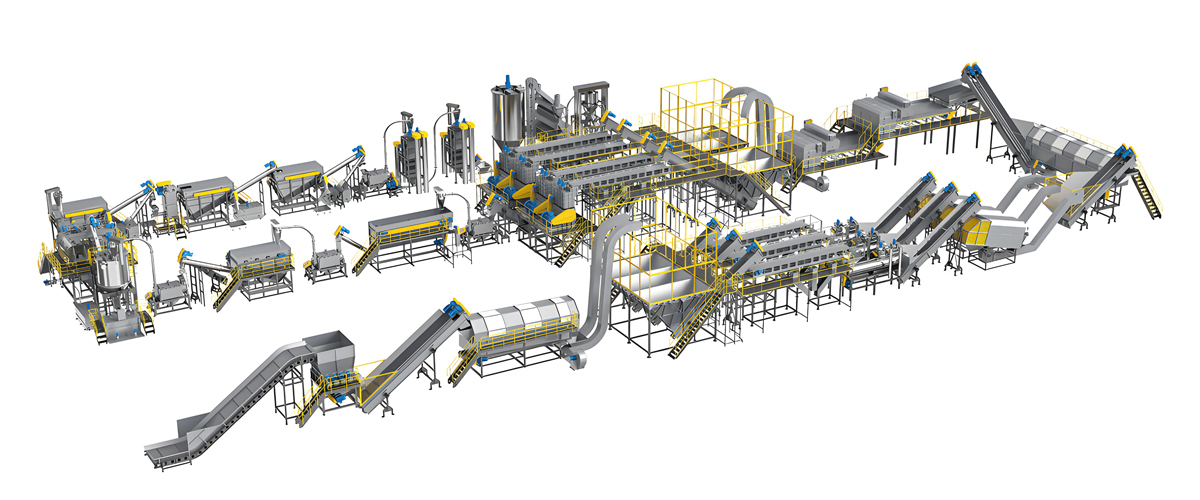
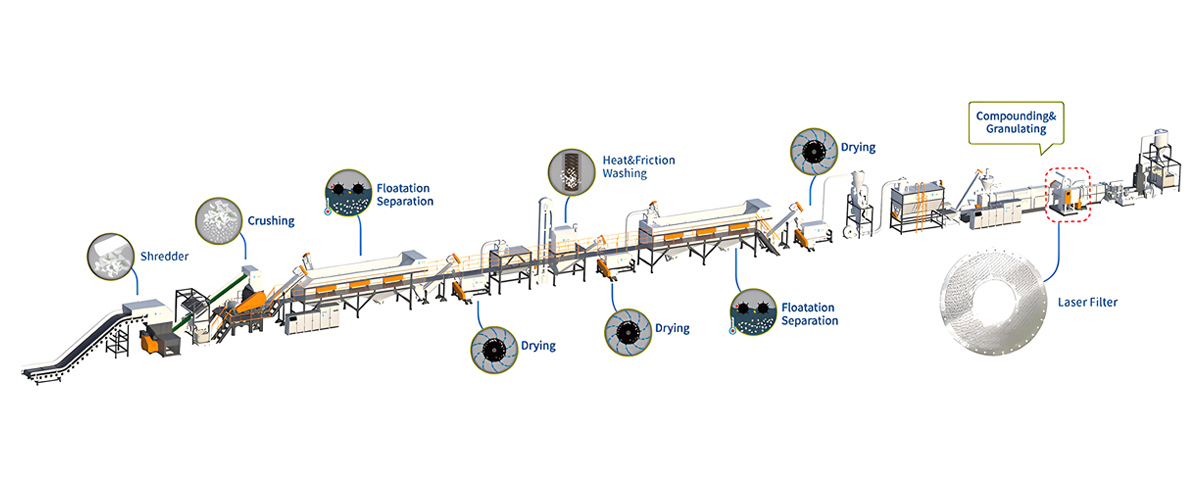
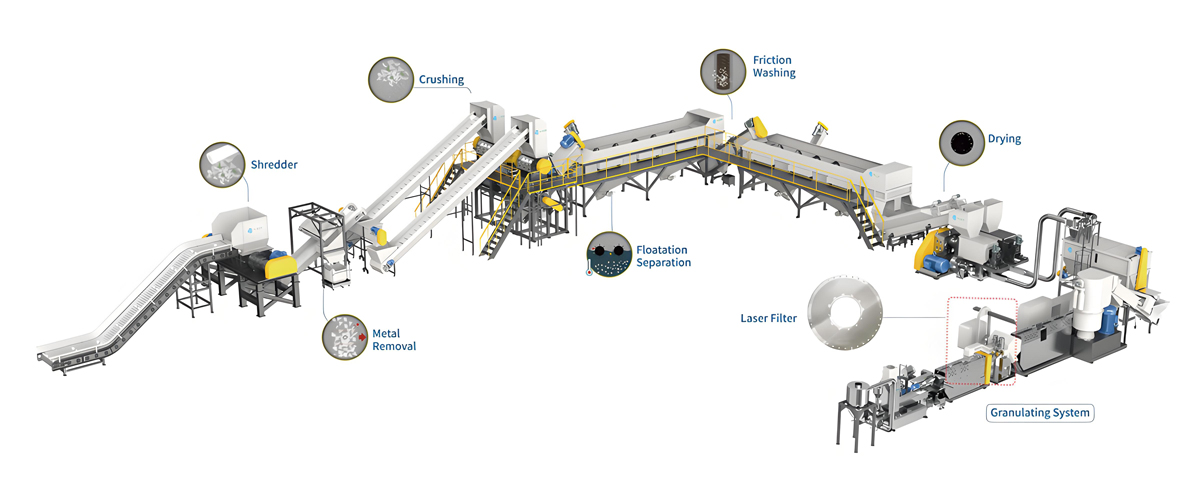
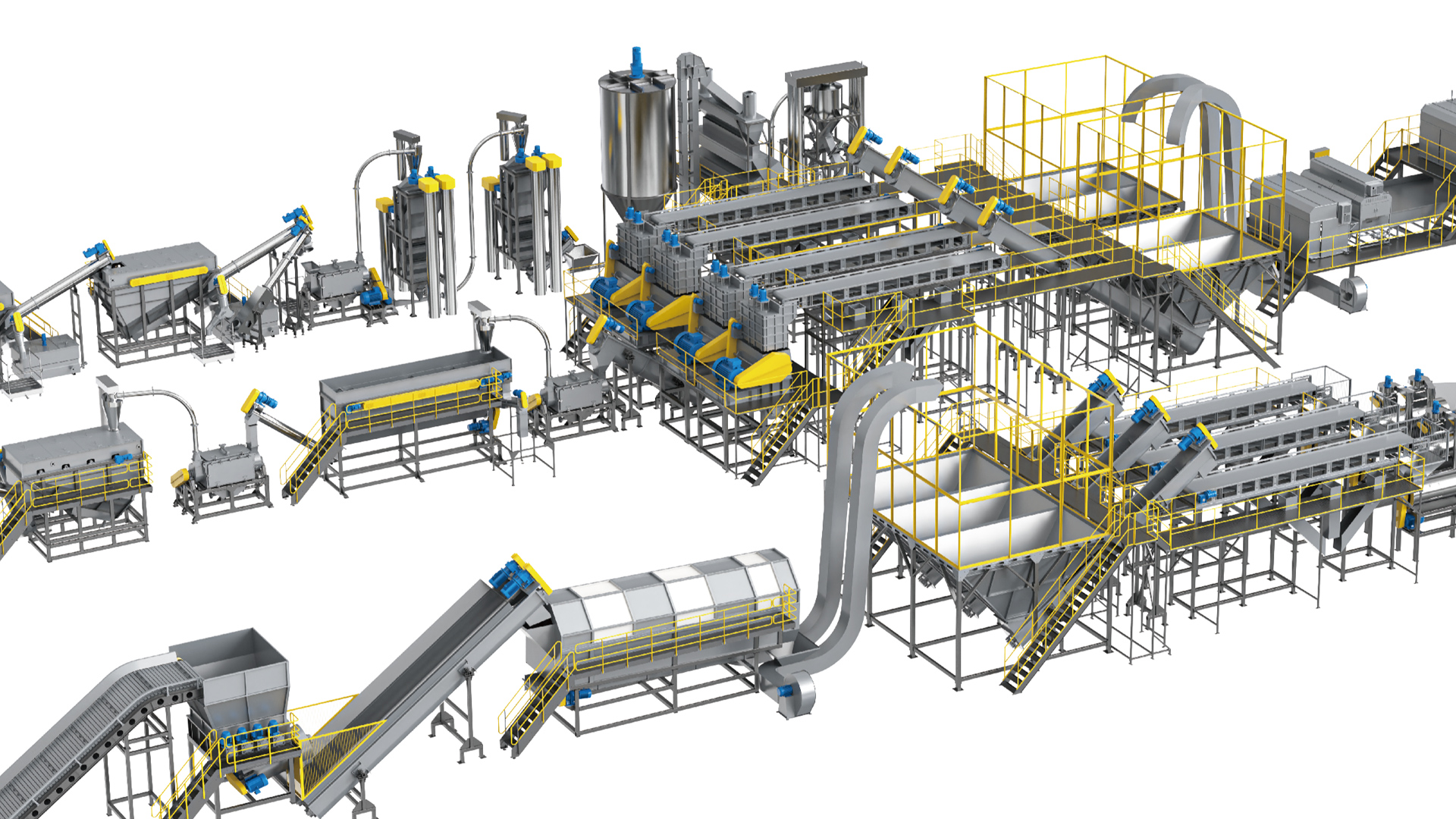
POLYRETEC mixed PP/PE/PS/ABS recycling line is tailor-made for the characteristics of mixed plastic waste, integrating crushing, sorting, cleaning, drying and other functions. The whole line has reasonable process design, high degree of automation and stable operation effect. It can efficiently treat various mixed plastic wastes and produce high-purity and high-cleanliness recycled plastic materials.
3.1 Pre-Treatment and Primary Sorting Unit
The first section of the recycling line is the pre-treatment and primary sorting unit, which is mainly used for preliminary sorting and impurity removal of raw materials to remove large pieces of non-plastic impurities and prepare for subsequent crushing and treatment. The unit includes a feeding conveyor belt, a manual sorting platform and a metal separation device.
The raw materials are evenly fed to the manual sorting platform through the feeding conveyor belt. Workers pick out large pieces of impurities such as wood, glass, rubber and large pieces of metal mixed in the materials, and at the same time simply sort out plastic types with obvious differences in appearance. The manual sorting platform is equipped with lighting devices and operating tables with reasonable height, which conforms to ergonomic design and reduces the labor intensity of workers. After manual sorting, the materials enter the magnetic separator to remove ferromagnetic metal impurities such as iron nails and iron sheets mixed in the plastics, so as to prevent metal hard objects from entering the crusher and damaging the blades and the machine body. For materials containing more non-ferrous metals such as aluminum and copper, an eddy current separator can also be configured to efficiently remove non-ferrous metal impurities and further improve the purity of materials.
3.2 Heavy-Duty Crushing Unit
The crushing unit is the core equipment for volume reduction and granulation of plastic waste, and its performance directly affects the efficiency of the whole production line and the quality of finished particles. POLYRETEC PR-C series heavy-duty crusher adopts Austrian optimized rotor structure design, with strong impact force and high crushing efficiency. It can easily crush various hard and soft mixed plastics, including hard ABS home appliance shells, PS sheet materials, PP turnover boxes, PE films and barrels, etc.
The crusher rotor is processed as a whole with high-quality steel, with good dynamic balance performance and low noise during operation. The moving blade and fixed blade are made of high chromium alloy tool steel, with high hardness and wear resistance. The blade can be sharpened repeatedly after wear, which reduces the use cost. The crushing chamber is designed with a special structure, and the material is crushed by multiple impacts and shears in the cavity, with uniform discharging particle size. The discharging size can be adjusted by replacing screens with different apertures, usually 10 to 20 mm, which can be customized according to customer needs. The crusher is also equipped with hydraulic opening device, which is convenient for blade replacement and internal maintenance. The overload protection function can automatically reverse and discharge materials when the crusher is blocked by hard objects, which effectively protects the motor and blade from damage.
3.3 Density Separation and Pre-Washing Unit
The crushed plastic particles enter the density separation tank, also known as the float-sink separation tank, which uses the density difference of different plastics to realize primary separation under the action of water buoyancy. PP and PE materials with density less than 1 g/cm3 float on the water surface, while PS and ABS materials with density greater than 1 g/cm3 sink to the bottom of the tank, so as to realize the separation of polyolefin plastics and styrene plastics. At the same time of separation, the materials are fully washed in water to remove sediment, dust and part of floating impurities attached to the surface.
POLYRETEC’s density separation tank is made of high-quality stainless steel as a whole, with strong corrosion resistance and long service life. The tank is equipped with a spiral stirring device to make the materials fully dispersed in water, improving the separation effect. The floating materials on the water surface are automatically scraped out by the scraper conveyor and sent to the next process. The sinking materials are discharged through the screw conveyor at the bottom of the tank. The water in the tank is filtered by the circulating filtration system and can be recycled for a long time, reducing water consumption. The separation efficiency of the density separation unit can reach more than 95%, which lays a good foundation for the subsequent fine electrostatic sorting.
3.4 Friction Washing and Hot Washing Unit
After primary separation and pre-washing, the materials enter the friction washing machine for deep cleaning. PR-W series high-speed friction washing machine uses high-speed rotating blades to drive materials to move at high speed, so that materials rub against each other and between materials and the inner wall of the machine, so as to remove stubborn oil, ink, residual glue and other attachments on the surface of materials. The inner wall of the friction washing machine is lined with wear-resistant stainless steel plate, which has high strength and good wear resistance. The screen design can discharge sewage and fine impurities in time to avoid secondary pollution of materials.
For materials with heavy oil pollution and difficult to remove stains, such as waste oil barrels, chemical packaging and home appliance shells with oil, a hot washing unit is required. The hot washing tank is equipped with a steam heating system or an electric heating system, which can accurately control the water temperature within the set range. Adding an appropriate amount of environmentally friendly cleaning agent into the hot water can quickly decompose oil and organic pollutants under the action of temperature and stirring. The hot washing time can be adjusted according to the pollution degree of materials to ensure the cleaning effect. After hot washing, the materials enter the rinsing machine to clean the residual cleaning agent on the surface, ensuring the cleanliness of the finished materials.
3.5 Electrostatic Fine Sorting Unit
After cleaning and dehydration, PP/PE mixed materials and PS/ABS mixed materials respectively enter the electrostatic sorting unit for fine sorting, which is the core process to realize high-purity separation of mixed plastics. POLYRETEC PR-ES series electrostatic separator adopts Austrian core technology, with high sorting accuracy and stable operation effect.
Before entering the electrostatic separator, the materials need to be fully dried to ensure that the surface of the particles is dry, so as to avoid affecting the charging effect. The materials enter the friction charging device, and through the friction between particles and between particles and the friction plate, different types of plastics carry different charges. Then the charged materials enter the high-voltage electrostatic field. Under the action of electric field force, gravity and centrifugal force, different types of plastics fall into different receiving hoppers respectively, so as to realize accurate separation. The sorting purity can reach more than 99%, and the processing capacity can be adjusted according to the model, which can meet the needs of different production scales.
The electrostatic separator is equipped with a variety of adjustable parameters, including voltage, rotating speed and feeding speed, which can be adjusted according to different material types, particle sizes and pollution degrees to achieve the best sorting effect. The equipment has stable performance and low failure rate, and can work continuously for a long time. Compared with similar imported equipment, it has obvious price advantage and lower later maintenance cost.
3.6 Dewatering Drying and Finished Product Processing Unit
After cleaning and sorting, the plastic materials need to be dewatered and dried to reduce the moisture content to meet the requirements of subsequent processing or granulation. POLYRETEC centrifugal dewatering machine uses high-speed rotation to generate centrifugal force to throw off the moisture on the surface of materials. The dewatering efficiency is high, and the moisture content of materials after dewatering can be reduced to about 3% to 5%, which can meet the requirements of general storage and transportation. If lower moisture content is required, a hot air drying system can be configured to further reduce the moisture content to below 0.5% through hot air circulation drying, meeting the requirements of direct injection molding and granulation.
The dried finished materials are screened by a vibrating screen to remove oversized particles and fine powder, so as to ensure uniform particle size of finished products. Then the materials are sent to the finished product silo through the closed wind conveying system for storage, and can be automatically packaged by the automatic packaging machine. The whole conveying and processing process is closed, which reduces dust overflow and keeps the workshop environment clean. For customers who need to make finished granules, POLYRETEC can also provide a matching granulation unit, which adopts single-screw or twin-screw granulation technology to make cleaned and sorted plastic flakes into uniform granules, which is convenient for storage, transportation and subsequent processing.
4. Investment Cost and Return on Investment Analysis
For investors, it is very important to clarify the investment cost and expected return of the project. POLYRETEC provides recycling lines of different specifications to meet the needs of customers with different production scales. The following takes three common capacity configurations as examples to carry out detailed cost and benefit analysis for reference.
4.1 Initial Investment Breakdown by Capacity
The first is the small production line with a processing capacity of 500 kg per hour, which is suitable for small and medium-sized recycling enterprises, start-up projects or supporting use of small home appliance dismantling plants. The main configuration includes pre-treatment sorting platform, heavy-duty crusher, density separation tank, friction washing machine, centrifugal dewatering machine, electrostatic separator, conveying system and control system. The total initial investment of the standard configuration is about 160,000 US dollars. Specifically, the crushing unit accounts for about 17.5% of the total investment, the sorting unit accounts for about 28.1%, the cleaning unit accounts for about 35.6%, and the rest is conveying, control, installation and commissioning costs. This type of production line covers a small area, requires low plant conditions, has less investment and quick effect, and is very suitable for initial entrepreneurs.
The second is the medium-sized production line with a processing capacity of 1000 kg per hour, which is the most widely used model and suitable for medium-sized recycling enterprises, regional waste treatment centers and large home appliance dismantling enterprises. On the basis of the small line, this configuration increases the scale of each unit, adds a hot washing unit and a more perfect water circulation treatment system, and has better cleaning effect and higher degree of automation. The total initial investment of the standard configuration is about 290,000 US dollars. If you need to configure a granulation unit, you need to increase the investment by about 80,000 to 120,000 US dollars according to different configurations. Medium-sized production lines have both output efficiency and investment cost, with strong profitability and wide application range, which is the first choice for most customers.
The third is the large-scale production line with a processing capacity of 2000 kg per hour, which is suitable for large recycling groups, industrial park waste treatment centers and regional renewable resource bases. This configuration adopts double-stage sorting process, which has higher sorting accuracy and larger processing capacity. It is equipped with a complete sewage treatment system and waste gas treatment system, which fully meets the highest environmental protection standards. The degree of automation is higher, and functions such as automatic batching and automatic packaging are added. The total initial investment of the standard configuration is about 520,000 US dollars. Although the investment amount of large-scale production lines is relatively high, the unit processing cost is lower, the scale benefit is more obvious, and the profitability is stronger.
4.2 Annual Operating Cost Calculation
Taking the most common medium-sized 1000 kg per hour production line as an example, the annual operating cost is calculated based on 300 working days per year and 20 hours of effective operation per day, with an annual processing capacity of about 6000 tons of mixed plastic waste.
Electricity cost is an important part of operating costs. The total installed power of the whole production line is about 280 kW. Due to the adoption of frequency conversion energy-saving design, the actual average operating power is about 190 kW. Calculated at an industrial electricity price of 0.1 US dollars per kWh, the annual electricity cost is about 114,000 US dollars. Compared with traditional recycling equipment of the same capacity, it can save about 30,000 to 40,000 US dollars in electricity bills every year.
Labor cost: The whole production line has a high degree of automation. It only needs 3 operators to be responsible for feeding, equipment patrol and finished product packaging. Calculated at an average annual salary of 6,000 US dollars per person, the annual labor cost is about 18,000 US dollars. If it is in regions with high labor costs such as Europe, the labor cost savings brought by automated production lines will be more obvious.
Water cost and cleaning agent cost: The production line adopts closed-loop water circulation system, with water recycling rate of more than 95%, and only a small amount of fresh water needs to be supplemented. Including the cost of cleaning agent, the annual cost is about 8,000 US dollars. Equipment maintenance and wearing parts cost: Under normal use and standardized maintenance, the annual maintenance cost is about 3% of the total equipment price, that is, about 8,700 US dollars, mainly for the replacement of vulnerable parts such as blades, seals and screens. In addition, there are plant rent, management fees and other expenses, about 15,000 US dollars per year.
Overall, excluding the raw material procurement cost, the total annual operating cost is about 163,700 US dollars.
4.3 Revenue Estimation and Investment Payback Period
In terms of income, after sorting and cleaning, 6000 tons of mixed plastic waste can produce about 5520 tons of qualified recycled materials, with a comprehensive recovery rate of about 92%. The recycled materials are divided into four categories: PP, PE, PS and ABS, with different selling prices. According to the average market price in recent years, PP recycled material is about 450 US dollars per ton, PE is about 480 US dollars per ton, PS is about 550 US dollars per ton, and ABS is about 650 US dollars per ton. The comprehensive average selling price is about 520 US dollars per ton.
The annual sales revenue of finished products is about 2,870,400 US dollars. The average purchase cost of mixed PP/PE/PS/ABS waste raw materials is about 280 US dollars per ton, and the annual raw material procurement cost is about 1,680,000 US dollars. The annual gross profit is about 1,190,400 US dollars. After deducting the annual operating cost of 163,700 US dollars excluding raw materials, the annual net profit is about 1,026,700 US dollars.
Calculated according to the total initial investment of 290,000 US dollars for the medium-sized production line, the static investment payback period is about 0.28 years, that is, about 3.4 months. Even considering factors such as insufficient capacity utilization and raw material price fluctuations, calculated on the basis of 70% capacity utilization, the annual net profit is about 718,700 US dollars, and the investment payback period is only about 4.8 months. The investment return rate is very high. For small production lines, although the total profit is slightly lower, the investment is less, and the payback period is also about 4 to 5 months, which also has very good economic benefits.
It should be emphasized that the above calculation is based on the conventional configuration and general market conditions. The actual return will vary according to the local raw material price, finished product selling price, labor cost and other factors, but overall, the mixed plastic recycling project using POLYRETEC Austrian technology line has the characteristics of low investment, quick effect and high return, and is a high-quality project with both environmental benefits and economic benefits.
5. Applicable Scenarios and Supporting Services of POLYRETEC Recycling Lines
5.1 Wide Range of Applicable Materials and Industries
POLYRETEC mixed PP/PE/PS/ABS recycling line has strong adaptability and can handle various forms and sources of mixed plastic waste. The main applicable materials include: household appliance dismantling waste, including refrigerator shells, washing machine shells, TV shells, etc., which are typical mixed PP/PS/ABS waste; industrial plastic scrap, including waste products, nozzle materials and leftover materials from injection molding plants, extrusion plants and household appliance factories; urban domestic plastic waste sorted from garbage, including various plastic packaging bottles, boxes, containers, etc.; waste plastic packaging from the logistics and packaging industry, including turnover boxes, packaging trays, buffer materials, etc.; electronic and electrical plastic waste, including equipment shells, plastic accessories, etc.
Correspondingly, the target customers of the production line are also very extensive, including plastic recycling enterprises, renewable resource companies, home appliance dismantling enterprises, industrial waste treatment companies, environmental protection engineering companies, large plastic product factories that need to treat their own waste, and industrial parks and waste treatment centers that build regional recycling systems. The recycled finished materials can be widely used in injection molding products, extrusion profiles, blow molding containers, modified plastic base materials, plastic building materials, stationery and toys and other fields, with broad market demand and smooth sales channels.
5.2 Comprehensive Pre-Sales and After-Sales Services
POLYRETEC always adheres to the customer-oriented service concept and provides customers with full-cycle services from pre-sales scheme design to after-sales operation support. In the pre-sales stage, the professional technical team will fully communicate with customers to understand their waste type, treatment volume, discharge quality requirements, site conditions, budget range and other information, and tailor the most suitable recycling process scheme for customers. Customers can bring their own raw materials to the factory for on-site testing, and intuitively understand the treatment effect and equipment performance. The engineering team can also carry out on-site survey and design according to the customer’s plant situation to ensure that the production line can be perfectly connected with the customer’s existing facilities.
In the sales stage, the company strictly organizes production and delivery in accordance with the contract and delivery time. During the production process, it regularly feeds back the production progress to customers. Before delivery, it carries out comprehensive no-load and load tests on the whole set of equipment to ensure that the equipment performance meets the design indicators before leaving the factory. After the equipment arrives at the site, professional after-sales engineers will be sent to guide the installation and commissioning, be responsible for the whole process of equipment positioning, pipeline connection, equipment debugging, trial production, etc., until the production line runs stably and produces qualified finished products.
At the same time, the engineer will conduct systematic operation and maintenance training for the customer’s operators and maintenance personnel, including equipment working principle, standard operation process, daily maintenance methods, common fault judgment and treatment, etc., to ensure that the personnel can master the operation and maintenance skills of the equipment. The whole machine of the equipment is guaranteed for one year, and the core components are guaranteed for two years. During the warranty period, any quality problems are repaired free of charge. After the warranty period, lifetime technical support and preferential supply of spare parts are provided. The equipment is equipped with a remote diagnosis system. After the customer authorizes, the technical engineer can remotely check the equipment operation status, troubleshoot and solve most program and parameter problems online, greatly reducing the downtime loss caused by faults.
6. Conclusion
With the continuous improvement of global environmental protection requirements and the rapid development of circular economy, the plastic recycling industry is facing huge development opportunities, but also facing the transformation and upgrading from extensive recycling to high-value refined recycling. The mixed PP/PE/PS/ABS waste, as a large quantity of plastic waste stream, has great recycling value, but traditional equipment and processes cannot achieve efficient and high-quality recycling. The Austrian technology plastic recycling line launched by POLYRETEC perfectly solves this industry pain point with its high-precision electrostatic sorting technology, efficient multi-stage cleaning process, stable and reliable equipment quality and excellent cost performance.
Investing in POLYRETEC mixed plastic recycling line can not only obtain considerable economic returns, with an investment payback period of only a few months, but also help enterprises improve their technical level and market competitiveness, and meet increasingly strict environmental protection requirements. Whether it is a start-up enterprise entering the recycling industry or an existing enterprise carrying out technological transformation and upgrading, POLYRETEC can provide targeted solutions and perfect supporting services. With professional technology, high-quality products and sincere service, POLYRETEC is committed to working with global customers to promote the development of plastic recycling industry and realize the win-win situation of environmental benefits and economic benefits.