
1. Introduction to Post-Washing Plastic Flake Purity Testing
1.1 Importance of Purity Inspection for Recycled Plastic Flakes
Recycled plastic flakes produced by professional plastic washing line equipment are the core semi-finished products of the plastic recycling industry. The purity of washed plastic flakes directly determines the quality grade, market value and reprocessing performance of final recycled plastic pellets. Impurities remaining on or inside plastic flakes after washing, including organic dirt, inorganic sediment, residual oil stains, heterologous plastic fragments, metal particles and moisture residues, will seriously affect the tensile strength, toughness, surface finish and stability of recycled plastic products. Strict purity testing after washing is an essential quality control link for standardized plastic recycling production.
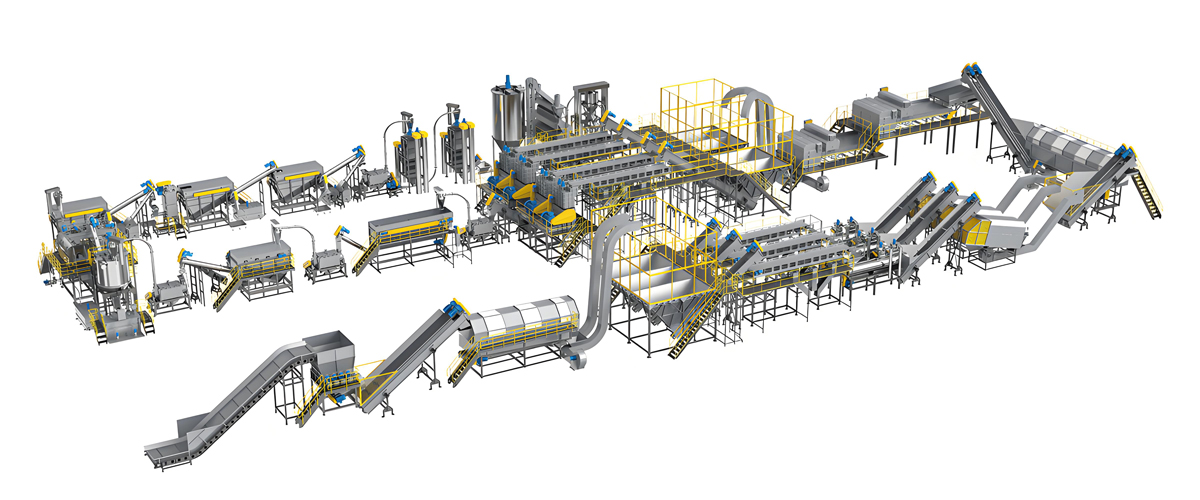
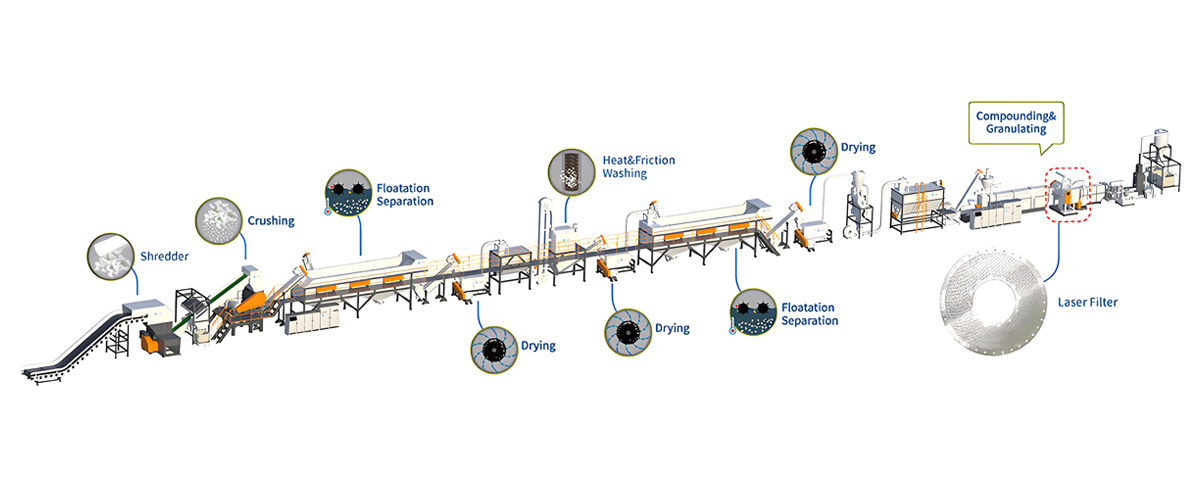
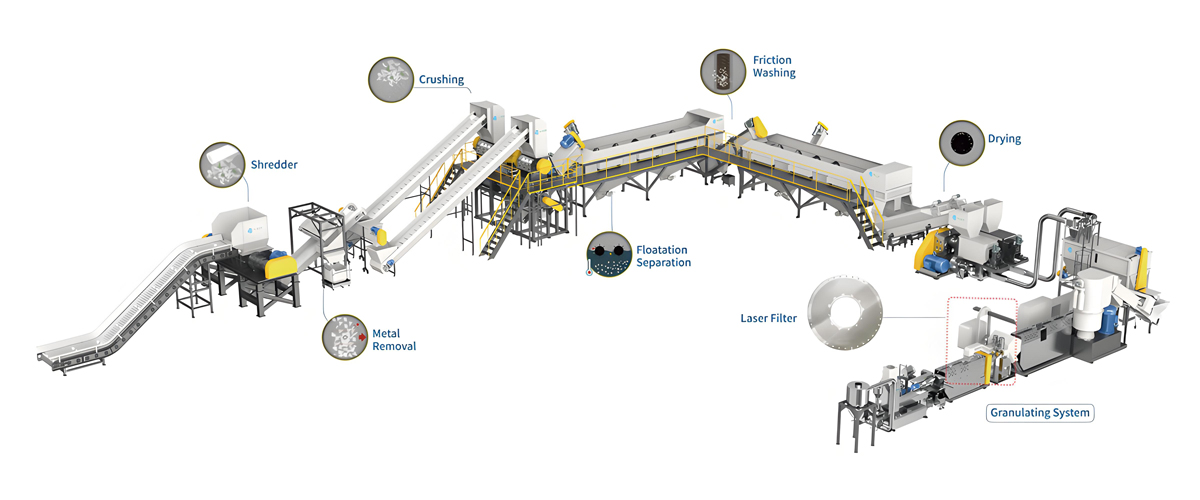
For recycling enterprises using POLYRETEC plastic washing line and plastic recycling line equipment, post-washing purity testing is not only a standard production procedure but also a key means to verify the operating efficiency of the washing equipment. Scientific and comprehensive purity detection can accurately judge the cleaning effect of the production line, identify equipment operation abnormalities and process parameter deviations in a timely manner, ensure that the produced plastic flakes meet international recycling material standards, and help enterprises obtain high-end recycled material market qualifications and stable profit margins.
1.2 Common Impurities in Post-Washing Plastic Flakes
Even after professional circulating water cleaning and friction washing by plastic washing lines, recycled plastic flakes still retain trace impurities due to raw material pollution degree, process parameter setting and equipment operation status. The main impurity types are divided into four categories. The first category is inorganic impurities, including sediment, dust, sand particles and tiny stone fragments mixed in waste plastic raw materials. The second category is organic impurities, including residual food residues, oil stains, glue stains and coating attachments on the surface of waste plastics. The third category is heterologous plastic impurities, mixed fragments of different types of plastics that cannot be completely separated in the washing process. The fourth category is metal and mechanical impurities, including tiny iron filings, aluminum scraps and equipment abrasion particles.
Different impurities cause different quality hazards. Inorganic dust and sediment will increase the ash content of recycled materials and reduce the transparency and surface smoothness of finished pellets. Residual oil and organic stains will lead to yellowing, bubble generation and performance degradation during secondary granulation. Heterologous plastic mixing will cause unstable melting performance and poor product consistency. Metal impurities will wear subsequent granulation equipment and produce defective particles with black spots. All these impurities need to be accurately detected and quantified through professional purity testing methods.
1.3 Industry Testing Standards and Quality Grading Basis
Global recycled plastic flake purity testing follows unified international and industrial standard systems, including ISO 3451-1:2019 plastic ash content detection standard, ASTM D7486-22 plastic particle surface dirt detection standard and GB/T9345.1-2025 recycled plastic impurity detection specification. These standards clearly define impurity detection methods, impurity limit values and flake quality grading rules. High-grade food-grade and medical-grade recycled plastic flakes require total impurity content below 0.5%, industrial high-quality flakes require impurity content below 1%, and ordinary civil recycled flakes allow impurity content within 2%.
POLYRETEC plastic washing line is designed and manufactured in accordance with international high-standard cleaning requirements. The supporting post-washing purity testing process is fully compatible with global mainstream industry standards, helping enterprises complete standardized quality inspection, realize precise grading of finished flakes, and meet the quality requirements of different downstream application scenarios such as food packaging, building materials, automotive plastics and daily plastic products.
2. Pre-Test Preparation and Standard Sampling Specifications
2.1 Sampling Principle and Representative Sampling Method
Accurate sampling is the premise of reliable purity test results. Random and non-standard sampling will lead to large test data deviation, which cannot reflect the real purity level of batch products. The post-washing plastic flake sampling of POLYRETEC supporting testing system adopts multi-point layered sampling principle. In the finished flake discharging link of the plastic washing line, sampling is carried out at regular intervals and multiple positions to avoid single-point sampling error caused by uneven impurity distribution of materials.
For batch products with a daily output of 3 to 20 tons, the standard sampling specification is to collect 5 to 8 sample points evenly in the whole discharging process, with a single sampling volume of not less than 100g, and the total composite sample volume is controlled at 500g to 1000g. After mixing all sampled flakes evenly, the quartering method is used for sample reduction to obtain the standard test sample, which ensures that the sample can fully represent the impurity status of the whole batch of washed plastic flakes.
2.2 Sample Pretreatment Process Before Testing
After sampling, the plastic flake samples need standardized pretreatment to eliminate interference factors affecting test accuracy. First, remove visible large foreign impurities such as large plastic fragments, paper scraps and metal blocks manually. Then place the sample in a constant-temperature drying oven with a temperature set at 105℃±5℃ for 30 to 60 minutes to remove surface free moisture, avoiding moisture weight affecting the weighing accuracy of subsequent impurity detection. After drying, place the sample in a dry dish and cool it to room temperature in a dust-free and dry environment to prevent secondary dust pollution.
For samples with serious residual oil stains and sticky attachments, surface micro-cleaning pretreatment can be carried out with professional neutral detection solvent to remove floating stains that interfere with data detection, ensuring that the test results only reflect fixed residual impurities inside and on the surface of the flakes after washing, and truly evaluate the cleaning quality of the plastic washing line.
2.3 Test Environment and Equipment Preparation Requirements
Plastic flake purity testing needs to be carried out in a dust-free, constant-temperature and constant-humidity professional detection laboratory. The laboratory temperature is controlled at 23℃±2℃ and the humidity is controlled at 50%±5% to avoid environmental temperature and humidity changes affecting sample weight and detection data. All detection tools and equipment need to be calibrated regularly, including analytical balance, drying oven, muffle furnace, filter device and impurity screening instrument, to ensure the accuracy and stability of test data.
Before each batch of testing, clean all detection containers and tools to avoid residual impurities from previous tests interfering with current test results. Check the operating status of all testing equipment, confirm that the temperature control, weighing precision and filtering performance meet the standard requirements, and start formal testing after eliminating potential equipment failures.
3. Core Purity Testing Methods for Washed Plastic Flakes
3.1 Visual Inspection and Macro Impurity Detection
Visual inspection is the most basic and intuitive preliminary detection method, mainly used to screen macroscopic visible impurities in washed plastic flakes. Take 200g of standard dried flake samples and spread them evenly on a dust-free white detection plate with a single-layer flat state without overlapping. Under standard uniform light source, manually observe and count visible impurities including colored heterologous flakes, black spots, obvious sediment agglomerates and metal particles.
Record the number and proportion of defective flakes, calculate the macroscopic impurity rate of the sample, and preliminarily judge the cleaning effect of the washing line. This method is suitable for rapid online detection in the production process, can quickly find abnormal cleaning conditions such as incomplete material separation and failed impurity removal of the equipment, and provides preliminary judgment basis for subsequent precise instrumental detection.
3.2 Wet Washing Filtration Method for Surface Dust and Fine Impurities
In accordance with ASTM D7486-22 standard wet analysis method, wet washing filtration detection is used to test tiny dust and adsorbed fine impurities on the surface of plastic flakes that cannot be identified by visual inspection. Weigh 300g of dried standard flake samples accurately and place them in a clean sealed container filled with pure water. After full shaking and soaking for 15 to 20 minutes, the surface fine impurities are completely eluted into the pure water.
Pour the mixed water liquid through a professional microporous filter membrane with a pore size of 0.45μm to intercept all fine impurities. Dry the filter membrane with intercepted impurities to constant weight, weigh the residual impurity mass accurately, and calculate the surface fine impurity content per unit mass of plastic flakes. This method can accurately quantify trace dust and fine dirt residues, which is the core detection method to evaluate the fine cleaning performance of high-precision plastic washing lines.
3.3 Ash Content Detection for Inorganic Impurity Quantification
Ash content detection is the standard method for quantitative analysis of inorganic impurities in recycled plastic flakes, implemented in accordance with ISO 3451-1:2019 and GB/T9345.1-2025 standards. Accurately weigh 5g to 10g of dried flake samples and place them in a constant-weight crucible. Conduct low-temperature carbonization in a fume hood to avoid sample splashing and combustion, then transfer the crucible to a muffle furnace, set the temperature at 600℃±25℃ for high-temperature burning for 3 to 4 hours until the sample is completely ashed without residual organic components.
Take out the crucible and cool it to room temperature in a dryer, accurately weigh the ash residue mass, and calculate the flake ash content through the standard formula: Ash Content = (Residual Ash Mass / Original Sample Mass) × 100%. The ash content value directly reflects the content of inorganic impurities such as sediment, metal oxide and mineral filler residues in the flakes, which is an important core index to judge the purity of recycled plastic flakes.
3.4 Organic Residual and Oil Stain Detection
Residual organic matter and oil stains are key impurities affecting the secondary processing performance of plastic flakes. The standard detection method adopts solvent extraction gravimetric method. Use professional organic detection solvent to extract residual oil and organic attachments on the surface and inside of washed flakes. After standing and filtering, the extracted solvent is dried and concentrated, and the residual organic mass is weighed accurately to calculate the residual oil rate of the flakes.
High-quality washed plastic flakes produced by POLYRETEC plastic washing line have a residual oil rate controlled below 0.1%, which will not affect subsequent granulation and product molding. Excessive organic residues will cause problems such as bubble generation, material aging and unstable melt flow in the reprocessing process, so this detection item is indispensable for high-standard recycled flake quality control.
3.5 Heterologous Plastic Impurity Identification and Detection
Heterologous plastic mixing is a common quality problem in the washing and recycling process of mixed waste plastics. Different types of plastics have different melting points and physical properties, and mixed impurities will lead to unstable quality of recycled products. The detection adopts melting point comparison method and density separation method. According to the melting point difference of different plastics, heat the flakes at fixed temperature to screen out unmelted heterologous plastic fragments.
At the same time, combined with liquid density floating separation, separate and count heterologous plastic fragments with different density characteristics from the base material, calculate the mixing proportion of heterologous plastics, and evaluate the material sorting and separation accuracy of the plastic washing line. This detection method effectively verifies the multi-stage sorting and cleaning performance of POLYRETEC full-automatic washing production line.
4. Full-Step Purity Testing Process for POLYRETEC Washing Line Products
4.1 Online Rapid Sampling and Preliminary Screening
In the formal production process of POLYRETEC plastic washing line, arrange special quality inspectors to conduct hourly online sampling and preliminary visual screening. Collect flake samples from the finished product discharging port, complete macroscopic impurity observation and defective product counting, record the real-time cleaning status of the equipment, and find abnormal cleaning conditions such as incomplete impurity removal and material mixing in the first time. The rapid screening process takes only 5 to 10 minutes each time, which does not affect continuous production and realizes real-time quality monitoring of the production line.
4.2 Laboratory Precision Instrument Detection
Take the sampled qualified samples to the professional laboratory for full-index precision detection every 4 hours of continuous production. Complete wet filtration fine impurity detection, high-temperature ash content detection, residual oil detection and heterologous plastic impurity detection in sequence in accordance with standard detection procedures. Record all detection data in detail, establish batch quality detection files, and ensure that each batch of washed flakes has complete and traceable quality data.
4.3 Data Calculation and Purity Grade Classification
After completing all detection items, calculate the total impurity content of the flakes through comprehensive data analysis, including macroscopic visible impurities, surface fine dust, inorganic ash content and residual organic matter. According to the total impurity content, divide the washed flakes into high-purity grade (total impurity ≤0.5%), medium-purity grade (0.5%<total impurity ≤1%) and standard grade (1%<total impurity ≤2%). Carry out classified storage and packaging according to different purity grades to match different downstream customer order standards.
4.4 Detection Result Feedback and Equipment Parameter Adjustment
Feed the final purity detection results back to the production operation team in a timely manner. If the flake purity is lower than the standard value, adjust the process parameters of the POLYRETEC plastic washing line in a targeted manner, including increasing friction washing time, adjusting circulating water flow, optimizing floating separation density and improving dehydration and drying efficiency. Realize closed-loop control of production and detection, and continuously stabilize and improve the cleaning purity of recycled flakes.
5. Detection Equipment Configuration and 2026 Procurement Cost Analysis
5.1 Standard Configuration of Flake Purity Detection Equipment
A complete set of recycled plastic flake purity detection system supporting POLYRETEC plastic washing line includes high-precision analytical balance, constant-temperature drying oven, high-temperature muffle furnace, microporous filtration device, constant-temperature water bath oscillator, dust-free detection workbench and standard detection tools. All equipment meets international industrial detection standards and can complete all impurity index detection of post-washing plastic flakes.
5.2 Hierarchical Procurement Price Quotation of Detection Equipment
The basic conventional detection equipment set suitable for small and medium-sized recycling enterprises, supporting daily conventional purity detection and meeting basic industrial delivery standards, has a total procurement cost of $3,200-$3,900. This configuration covers visual inspection, drying weighing and conventional ash content detection, with low investment threshold and meeting daily production quality control needs.
The upgraded standard detection equipment set, supporting full-index detection including fine dust, residual oil and heterologous impurities, and fully compliant with ISO and ASTM international standards, is priced at $4,000-$4,800. It is suitable for medium-sized enterprises exporting recycled flakes and supplying high-standard industrial customers, with comprehensive and accurate detection data.
The high-end full-automatic intelligent detection system, equipped with automatic sampling, intelligent analysis and data recording functions, suitable for large-scale standardized recycling factories and high-end recycled material production bases, has a total investment of $4,900-$5,800. It realizes unmanned intelligent detection and automatic quality grading, greatly improving detection efficiency and data accuracy.
5.3 Daily Detection Operation and Labor Cost
The daily detection work of plastic flake purity can be completed by 1 professional quality inspector, who is responsible for sampling, pretreatment, instrumental detection, data recording and result feedback. The daily labor cost of detection is low, and one inspector can complete the quality detection work of 24-hour continuous production of one or multiple washing lines. The detection equipment has stable performance and low failure rate, with annual maintenance and calibration cost of only $300-$500, and low long-term operation cost.
5.4 Cost-Benefit Analysis of Purity Detection System
Investing in a professional flake purity detection system can effectively avoid quality unqualified products flowing into the market, reduce customer return and loss risks, and improve product qualification rate and market reputation. High-purity graded recycled flakes have a 5% to 12% market premium compared with ungraded ordinary flakes. For recycling enterprises with annual output of thousands of tons of recycled flakes, the economic benefits brought by quality grading and stable purity far exceed the detection equipment investment and daily operation costs. The overall investment return cycle of the detection system is 6 to 8 months, with high cost performance and stable long-term value.
6. Common Detection Errors and Standardized Correction Schemes
6.1 Sampling Error and Correction Method
Unreasonable sampling position and insufficient sampling quantity are the main causes of detection data deviation. Local material accumulation and uneven impurity distribution in the washing line discharging process will lead to unrepresentative single-point sampling. The correction scheme is to strictly implement multi-point uniform sampling and quartering sample reduction standards, increase sampling density appropriately for materials with high raw material pollution, and ensure that the test sample is completely consistent with the overall batch material status.
6.2 Sample Pretreatment Error Optimization
Incomplete drying, secondary dust pollution and improper solvent treatment in sample pretreatment will affect the accuracy of impurity weighing data. The optimization method is to strictly control drying temperature and time, place the dried samples in a closed dust-free dryer for cooling, use standard detection-grade solvent for cleaning pretreatment, avoid excessive solvent residue, and eliminate pretreatment interference factors.
6.3 Instrument Detection Precision Deviation Correction
Uncalibrated detection instruments, unstable furnace temperature and unstandardized filtration operation will lead to systematic detection errors. It is necessary to calibrate analytical balances and temperature control equipment regularly every month, check the muffle furnace temperature uniformity before each ash detection, replace the filter membrane regularly, and standardize the filtration and drying operation process to ensure that each detection index is within the error allowable range of industrial standards.
6.4 Environmental Interference and Avoidance Measures
Changes in laboratory temperature and humidity, floating dust in the air and unstable air flow will interfere with sample weighing and impurity detection. Keep the detection laboratory closed and dust-free, maintain constant temperature and humidity environment, avoid air convection during detection operation, and place detection equipment in a stable horizontal position to eliminate environmental interference and ensure the repeatability and accuracy of test data.
7. Relationship Between Washing Line Operation Parameters and Flake Purity
7.1 Cleaning Time and Friction Intensity Influence
The friction washing time and operating speed of POLYRETEC plastic washing line directly determine the removal effect of surface impurities and oil stains. Too short friction time and low operation speed will lead to incomplete removal of stubborn stains and fine dust, resulting in low flake purity. Excessively high friction intensity will cause excessive wear of flakes and produce tiny plastic powder impurities. According to different raw material pollution degrees, matching optimal friction parameters can maximize flake purity while ensuring material integrity.
7.2 Circulating Water Quality and Cleaning Efficiency Correlation
The closed circulating water filtration and purification system of POLYRETEC washing line ensures low water consumption and high cleaning efficiency. Timely replacement and filtration of circulating water can avoid secondary adhesion of impurities in turbid water to flakes. Regular cleaning of circulating water filter elements and sewage discharge in strict accordance with the operating specifications can effectively reduce residual impurities on the surface of washed flakes and stabilize flake purity.
7.3 Dehydration and Drying Process Impact on Purity
Incomplete dehydration and drying will lead to residual moisture on the surface of flakes, causing dust adhesion and secondary pollution in the later storage process, reducing the actual purity of finished products. The high-speed centrifugal dehydration and waste heat drying system of POLYRETEC equipment can realize 98%+ dehydration rate and thorough drying, avoiding moisture-induced secondary pollution and ensuring long-term stable purity of washed flakes.
8. Purity Standard Matching for Different Recycled Plastic Flake Types
8.1 PET Bottle Flakes Purity Detection Standard
PET recycled flakes are mainly used in food packaging, fiber spinning and high-grade plastic products, with the highest purity requirements. The standard requires total impurity content ≤0.5%, ash content ≤0.05%, no visible heterologous impurities and no residual oil stains. POLYRETEC professional PET washing line can stably produce high-purity PET flakes meeting food-grade standards after standardized washing and matching precision detection.
8.2 PE/PP Film Flakes Purity Detection Standard
PE and PP waste film flakes are mostly used in industrial plastic products, building materials and packaging materials, with moderate purity requirements. The qualified standard is total impurity content ≤1%, ash content ≤0.1%, and trace residual oil is allowed. The flexible parameter adjustment function of POLYRETEC washing line can adapt to the cleaning characteristics of film materials, and the supporting detection system can accurately evaluate the cleaning effect of thin and soft flakes.
8.3 PVC/HDPE Hard Material Flakes Standard
PVC pipes, HDPE hard plastic fragments and other hard material recycled flakes are used in engineering plastic products, with relatively loose purity requirements. The qualified standard is total impurity content ≤2%, with allowable trace inorganic ash impurities. The detection focus is on metal impurities and heterologous plastic mixing to ensure the processing safety and performance stability of engineering materials.
9. Production Quality Optimization Scheme Based on Purity Test Data
9.1 Real-Time Parameter Adjustment According to Detection Data
Establish a linkage mechanism between purity test data and washing line operation parameters. When the detection shows excessive surface dust, appropriately increase the friction washing time and circulating water flow. When the ash content exceeds the standard, strengthen the pre-sorting and impurity removal links of raw materials. When heterologous plastic mixing is excessive, adjust the floating separation density and sorting speed of the equipment, and realize precise optimization of production process through data feedback.
9.2 Regular Equipment Maintenance to Stabilize Cleaning Quality
Summarize long-term purity test data, find the law of equipment cleaning performance attenuation, and formulate regular equipment maintenance plans. Regularly clean the washing tank, replace worn friction blades, calibrate floating separation parameters and maintain circulating water system to avoid equipment performance degradation leading to declining flake purity, and ensure long-term stable high-precision cleaning effect of the washing line.
9.3 Raw Material Preprocessing Optimization Matching
For raw materials with high pollution and complex impurity components, strengthen the pre-sorting, preliminary cleaning and impurity removal pretreatment before entering the washing line. Classify and clean different types of waste plastics separately to avoid mixed cleaning leading to mutual pollution of materials, reduce the detection unqualified rate of finished flakes, and improve the overall qualified rate of recycled products.
10. Conclusion
Purity testing of recycled plastic flakes after washing line is a core link in the standardized production of plastic recycling industry, which runs through the whole process of recycled product quality control. Scientific and standardized detection methods can accurately quantify various residual impurities in washed flakes, effectively evaluate the cleaning performance of plastic washing line equipment, and provide reliable data support for production process optimization and product quality grading.
POLYRETEC professional plastic washing line and supporting complete purity detection system can help recycling enterprises realize full-process quality control from raw material processing, equipment cleaning production to finished product detection and grading. By matching international standard detection specifications and targeted production optimization schemes, enterprises can stably produce high-purity recycled plastic flakes, improve product market competitiveness and economic benefits, and realize standardized, high-efficiency and low-cost sustainable plastic recycling production.