
Optimizing production efficiency is a critical goal for plastic recycling plants looking to maximize output, reduce costs, and enhance sustainability. In an industry where competition is fierce and profit margins can be slim, small improvements in efficiency can have a significant impact on bottom-line results. This guide explores proven strategies and technologies for boosting productivity in plastic recycling operations.
Common Efficiency Challenges in Plastic Recycling Plants
Plastic recycling facilities face unique operational challenges that can limit productivity:
1. Feedstock Variability
Post-consumer plastic waste often consists of mixed materials with varying contamination levels, creating inconsistent processing conditions and reducing overall throughput.
2. Equipment Downtime
Recycling machinery is prone to wear and tear due to the abrasive nature of plastic materials. Unscheduled downtime for repairs can disrupt production schedules and increase costs.
3. Energy Inefficiency
Traditional recycling processes consume significant amounts of energy, particularly during melting and pelletizing stages. High energy costs can erode profit margins and reduce overall plant efficiency.
4. Labor Intensity
Many recycling operations rely heavily on manual labor for sorting and material handling, which can be slow and prone to errors. High labor costs also contribute to operational expenses.
5. Quality Control Issues
Inconsistent output quality can lead to rejected batches and lost revenue. Maintaining strict quality control standards is essential for meeting customer requirements and maximizing product value.
Key Strategies for Optimizing Recycling Plant Efficiency
1. Advanced Sorting Technologies
Investing in automated sorting systems can significantly improve feedstock quality and processing efficiency:
- AI-powered optical sorters: Identify and separate plastic types with up to 99% accuracy, reducing contamination and improving material purity.
- Magnetic separation: Removes metal components from mixed waste, protecting downstream equipment from damage.
- Air classification: Separates lightweight materials like paper and foam from heavier plastic flakes.
2. Process Automation and Integration
Automating key production stages can increase throughput and reduce labor costs:
- Automated material handling systems: Use conveyor belts and robotic arms to move materials between processing stations, minimizing manual intervention.
- PLC-controlled processes: Implement programmable logic controllers to manage temperature, pressure, and speed settings, ensuring consistent production parameters.
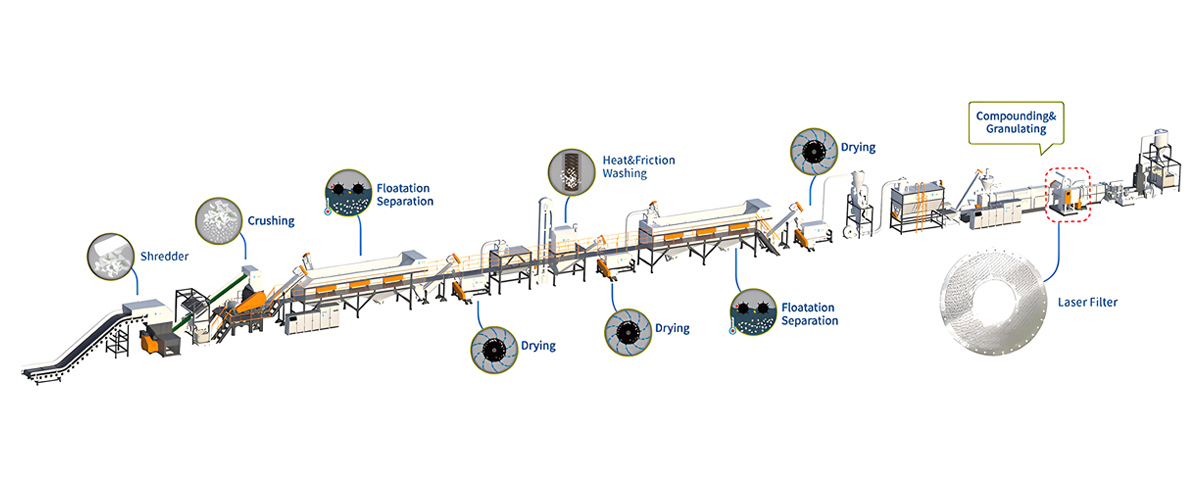
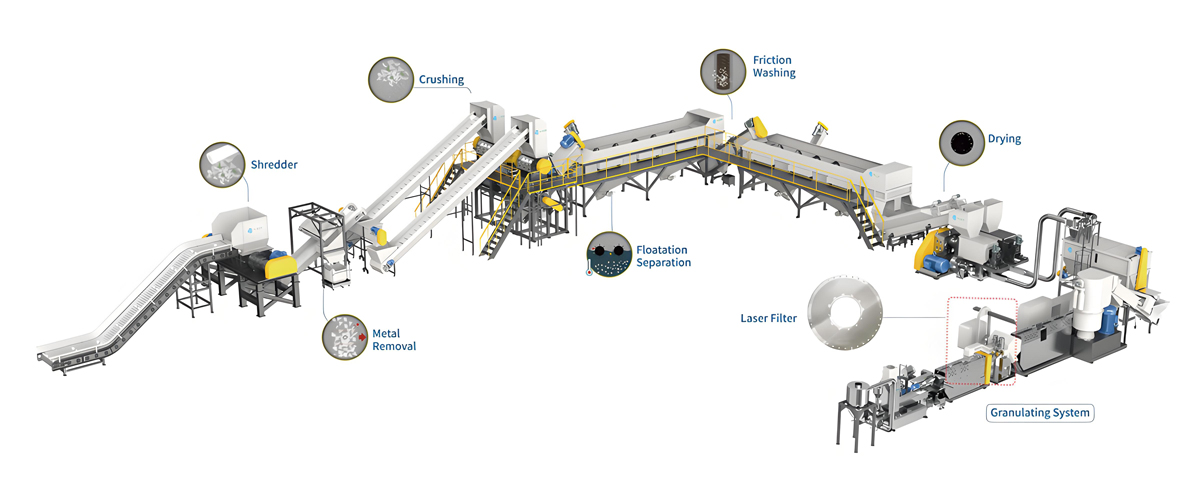
- Integration of washing and drying stages: Design continuous flow systems to eliminate bottlenecks between processing steps.
3. Energy Efficiency Optimization
Reducing energy consumption is a key component of operational efficiency:
- IE4-rated motors: Use high-efficiency motors to reduce energy consumption by up to 50% compared to standard systems.
- Heat recovery systems: Capture and reuse thermal energy from extrusion processes to preheat raw materials, reducing overall energy demand.
- Electromagnetic heating: Replace traditional resistance heating with energy-efficient electromagnetic systems for faster and more uniform heating.
4. Preventive Maintenance Programs
Implementing proactive maintenance strategies can minimize equipment downtime:
- Regular inspection schedules: Conduct routine checks on critical components (e.g., blades, screws, bearings) to identify potential issues before they cause failures.
- Predictive maintenance tools: Use sensor data and AI algorithms to monitor equipment health and predict maintenance needs in advance.
- Spare parts inventory management: Maintain an inventory of critical components to minimize repair time during unscheduled downtime.
5. Process Flow Optimization
Redesigning production layouts can reduce material handling time and improve overall efficiency:
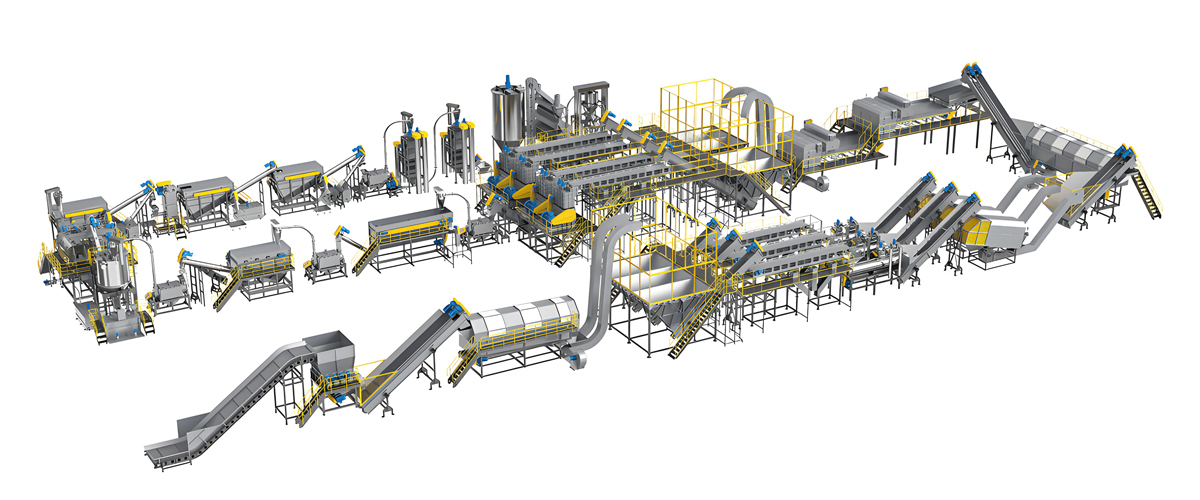
- U-shape or L-shape configurations: Arrange processing stations in compact, logical layouts to minimize material travel distance.
- Buffer zones: Implement temporary storage areas between processing stages to manage variable feedstock flow and prevent production interruptions.
- Material tracking systems: Use RFID tags or barcode systems to monitor material movement and identify bottlenecks in real time.
6. Workforce Training and Development
Investing in employee skills can improve operational efficiency and reduce errors:
- Technical training programs: Train workers on equipment operation, maintenance, and quality control procedures.
- Safety training: Ensure compliance with OSHA regulations and reduce workplace accidents through comprehensive safety training.
- Continuous improvement initiatives: Encourage employee participation in process optimization through suggestion programs and performance incentives.
7. Data-Driven Decision Making
Leveraging data analytics can provide insights for continuous improvement:
- Key performance indicators (KPIs): Monitor metrics such as throughput, energy consumption, and material yield to identify areas for optimization.
- Real-time monitoring systems: Use SCADA (Supervisory Control and Data Acquisition) systems to track equipment performance and production rates.
- AI-driven optimization: Implement machine learning algorithms to analyze production data and identify patterns that improve efficiency.
Case Studies: Successful Efficiency Improvements
Case 1: AI-Integrated Recycling Plant
Location: United States
Challenge: High contamination rates and inconsistent material quality were limiting production throughput.
Solution: Installed AI-powered optical sorters and integrated process automation systems.
Results:
- Reduced contamination rates by 85% through improved sorting accuracy.
- Increased overall throughput by 40% with automated material handling systems.
- Lowered energy costs by 35% through the implementation of energy-efficient motors and heat recovery technologies.
Case 2: Lean Manufacturing Implementation
Location: Germany
Challenge: Inefficient process flows and excessive material handling were increasing operational costs.
Solution: Adopted lean manufacturing principles and redesigned production layouts.
Results:
- Reduced material handling time by 60% through U-shape production line configuration.
- Eliminated unnecessary work-in-progress inventory, reducing storage costs by 40%.
- Improved overall equipment effectiveness (OEE) from 65% to 85% through preventive maintenance programs.
Future Trends in Recycling Plant Efficiency
1. Digital Twin Technology
Digital twin models are being used to simulate recycling plant operations and optimize process parameters virtually before implementing changes in physical facilities.
2. Blockchain for Supply Chain Transparency
Blockchain technology is being explored to track recycled materials from collection to final use, improving traceability and ensuring compliance with sustainability standards.
3. Green Energy Integration
Recycling plants are increasingly integrating renewable energy sources (e.g., solar panels, wind turbines) to reduce reliance on fossil fuels and lower carbon emissions.
4. Advanced Material Recovery Technologies
New chemical recycling processes are being developed to break down mixed plastics into their original monomers, enabling high-purity recycling of hard-to-recycle materials.
Implementing Efficiency Improvement Initiatives
1. Conduct a Process Audit
Start by analyzing current production operations to identify bottlenecks and inefficiencies. Use data analysis and on-site observations to map material flow and resource usage.
2. Set Clear Goals and Metrics
Define specific, measurable objectives for efficiency improvement (e.g., 20% reduction in energy consumption within 12 months). Establish KPIs to track progress and evaluate success.
3. Prioritize High-Impact Changes
Focus on implementing changes that deliver the greatest return on investment first. For example, upgrading to energy-efficient motors or installing automated sorting systems may provide quick wins in reducing operational costs.
4. Involve Employees in the Process
Engage workers in the optimization process by soliciting their feedback and involving them in training programs. Employee buy-in is critical for the successful implementation of new technologies and processes.
5. Monitor and Adjust
Regularly review performance data and adjust strategies as needed. Use continuous improvement methodologies (e.g., Kaizen) to identify additional opportunities for optimization.
Conclusion: Building a High-Efficiency Recycling Plant
Optimizing production efficiency is an ongoing process that requires strategic investment, technological innovation, and employee engagement. By implementing advanced sorting systems, process automation, energy efficiency measures, and proactive maintenance programs, plastic recycling plants can significantly improve their operational performance and profitability. As the recycling industry continues to evolve, adopting new technologies and best practices will be essential for maintaining a competitive edge and contributing to a more sustainable future.