
Agricultural plastic films, including greenhouse films, mulch films, irrigation films and crop protection films, are essential auxiliary materials for modern intensive agriculture. Most of these agricultural films are made of PP and PE soft plastic materials, featuring low cost, good ductility and strong weather resistance, which can effectively improve crop yield and reduce planting management costs. However, waste agricultural film has become one of the largest sources of soft plastic waste in the agricultural industry due to large usage, wide coverage and difficult natural degradation.
Waste PP/PE agricultural films are often mixed with a large amount of soil, crop residues, pesticide residues, dust and other impurities after field use. Direct landfill or incineration will cause serious soil pollution, air pollution and ecological damage, and also lead to a huge waste of recyclable plastic resources. Professional agricultural film washing and recycling production lines can effectively clean, separate and purify waste PP/PE soft plastic films, turn messy waste films into high-purity recycled plastic flakes and pellets, and realize resource regeneration and cyclic utilization.
As a professional manufacturer focusing on plastic recycling and cleaning equipment, Polyretec independently develops and manufactures high-efficiency agricultural film washing lines specially customized for PP/PE soft plastic waste. The equipment is aimed at the characteristics of heavy dirt, high impurity content and easy winding of waste agricultural films, and solves the common pain points of low cleaning rate, easy material loss and low finished product purity of traditional film cleaning equipment. This article comprehensively analyzes the industry demand, equipment principle, core configuration, performance advantages, cost benefit and selection standards of Polyretec agricultural film washing line, providing systematic reference for agricultural plastic recycling enterprises to purchase high-quality soft plastic washing and recycling equipment.
1. Industry Status and Recycling Difficulties of Waste PP/PE Agricultural Film
1.1 Large-Scale Waste Generation and Recycling Value of Agricultural Film
With the continuous expansion of modern standardized planting bases, the annual usage of agricultural PP/PE films maintains a stable growth trend. A large number of mulch films and greenhouse films are abandoned every year after seasonal use, forming tens of thousands of tons of soft plastic waste. Unlike hard plastic waste such as plastic bottles and pipe materials, agricultural soft films have thin thickness, light weight and large stacking volume, which are difficult to store and dispose of, and are extremely easy to cause white pollution in farmland and surrounding ecological environment.
PP and PE materials have stable chemical properties and can be recycled and processed many times. The cleaned and purified agricultural film recycled materials can be reprocessed into new plastic films, plastic pipes, plastic profiles, packaging materials and other products, with high market recycling value. Standardized agricultural film recycling and cleaning projects can not only solve the problem of agricultural environmental pollution, but also create stable economic benefits for recycling enterprises, conforming to the global environmental protection policy of plastic resource recycling and low-carbon development.
1.2 Unique Cleaning Difficulties of PP/PE Soft Agricultural Film Waste
Waste PP/PE agricultural films have completely different cleaning characteristics from rigid plastic waste, bringing higher technical challenges to washing line equipment. The first difficulty is heavy surface contamination. Waste films are attached with a large amount of dry soil, wet mud, crop straw residues, pesticide residues and organic dirt. Ordinary water washing equipment cannot completely remove stubborn impurities, resulting in low purity of recycled finished products and affecting secondary processing quality.
The second difficulty is easy winding and material damage. Soft PP/PE films are flexible and easy to wind on the rotating shaft and roller of the equipment during crushing and washing processes, which is easy to cause equipment blockage, material winding and shutdown failure. Traditional rigid plastic crushing and washing equipment is easy to tear and damage the film materials, resulting in a large amount of material loss and reducing recycling yield.
The third difficulty is difficult separation of light and heavy impurities. Waste agricultural films are mixed with light impurities such as broken straws and dead leaves, as well as heavy impurities such as sediment and gravel. Ordinary single-stage washing equipment cannot realize precise separation of light and heavy impurities, resulting in mixed impurities in finished flakes and unqualified product quality.
The fourth difficulty is high moisture content of finished materials. Soft film flakes have strong water absorption and adhesion. Ordinary drying equipment has poor drying effect, and the residual moisture affects the granulation and reprocessing of recycled materials, resulting in low market value of finished products.
1.3 Defects of Traditional Agricultural Film Washing Equipment
Most traditional agricultural film washing lines on the market adopt simple single-stage crushing and single-water-tank washing structure, with single functional configuration and low automation degree. Such equipment can only remove simple surface dust and cannot clean stubborn organic dirt and pesticide residues thoroughly. The finished product purity is low, which can only be used for low-end plastic product processing, with low economic benefit.
In addition, traditional equipment has serious material winding and blockage problems, low operation stability, frequent failure and shutdown, low effective production efficiency and high manual intervention cost. The waste water recycling rate of traditional washing lines is low, resulting in large water resource consumption and high operating costs, which cannot meet the requirements of large-scale, high-efficiency and environmentally friendly agricultural film recycling production.
2. Working Principle and Complete Process of Polyretec Agricultural Film Washing Line
2.1 Overall Working Principle of Soft Plastic Washing Line
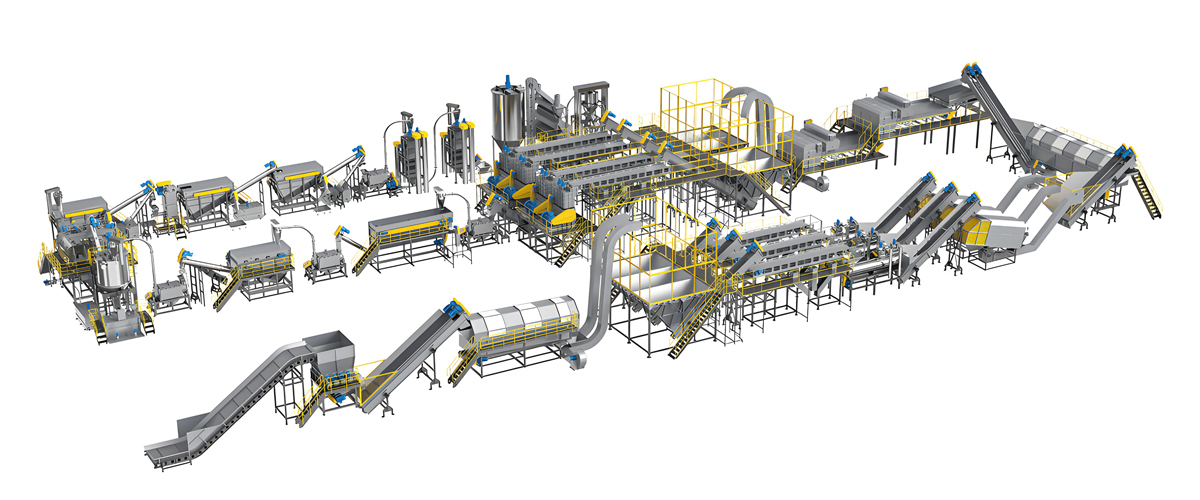
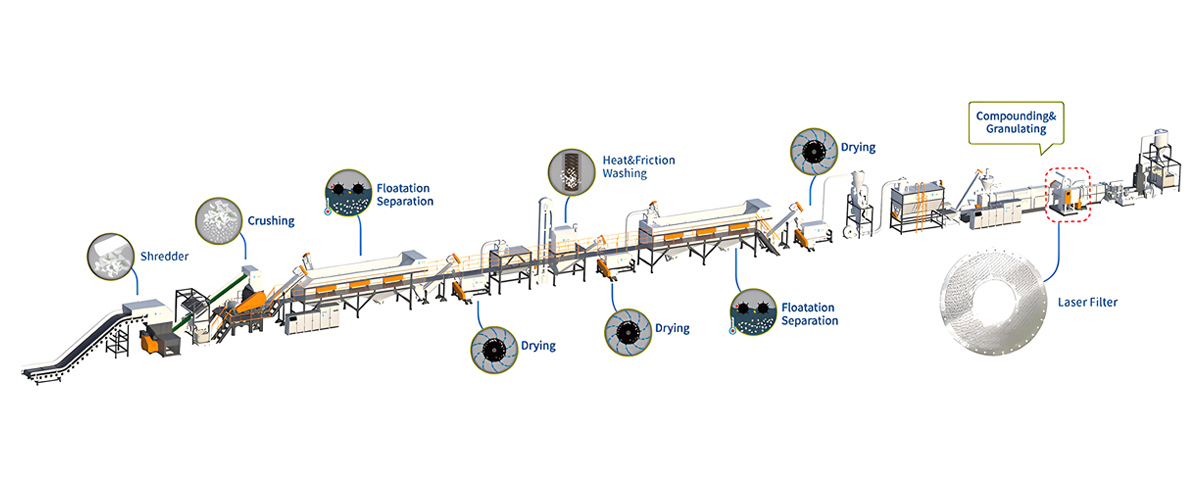
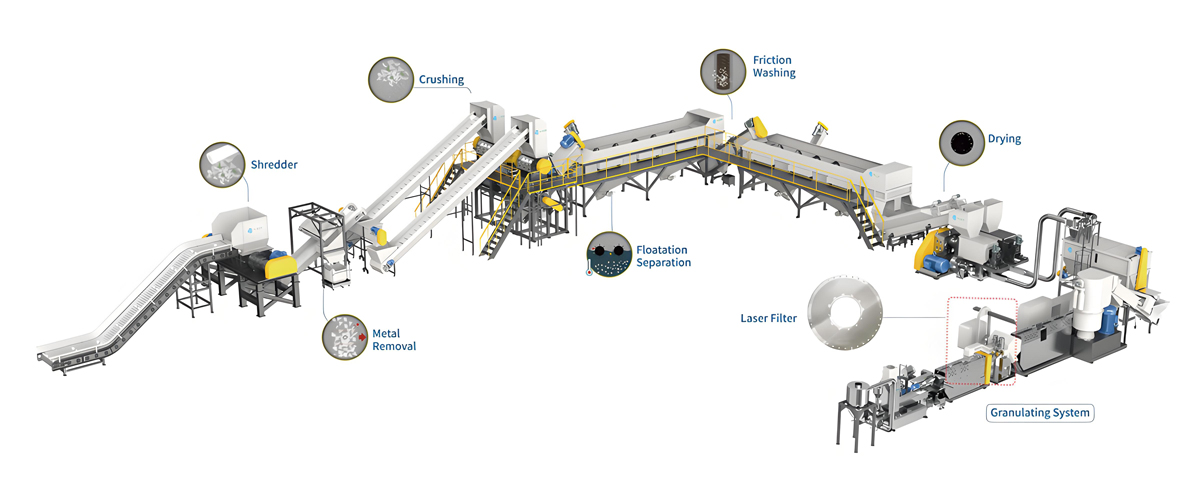
Polyretec professional agricultural film washing line is a full-automatic integrated soft plastic recycling and cleaning system specially developed for PP/PE agricultural film waste. The equipment takes messy waste agricultural films as raw materials, and through systematic processes of impurity removal, crushing, multi-stage washing, friction cleaning, floating separation, dehydration and drying, it finally produces high-purity dry PP/PE plastic flakes. The whole production line realizes continuous automatic operation, solves various cleaning pain points of soft film materials, and efficiently improves the purity and yield of recycled materials.
Different from traditional washing equipment, Polyretec agricultural film washing line adopts targeted soft material processing technology in every link. It optimizes the crushing blade structure to avoid film tearing and loss, adopts multi-stage gradient washing process to remove stubborn dirt layer by layer, and is equipped with professional light and heavy impurity separation system and high-efficiency drying system, realizing high-standard cleaning and purification of waste PP/PE agricultural films.
2.2 Complete Production Process Flow
The first step is raw material pre-treatment and preliminary impurity removal. Manually or mechanically feed the collected waste agricultural films into the production line, and the pre-treatment equipment removes large-volume impurities such as bulk soil, stones and crop straws to avoid large impurities entering the crushing link and causing equipment damage.
The second step is low-loss targeted crushing. The special soft plastic crusher cuts the whole piece of agricultural film into uniform small flakes of fixed size. The optimized blade gap and rotating speed design avoid excessive tearing and winding of soft films, ensure uniform flake size, and lay a foundation for subsequent efficient cleaning.
The third step is multi-stage circulating water washing. The crushed film flakes enter the first-stage sediment washing tank to remove heavy impurities such as residual sediment and gravel. Then they enter the high-strength friction washing machine to remove stubborn organic dirt, pesticide residues and aged surface attachments through high-speed friction and water flow scouring.
The fourth step is light and heavy impurity floating separation. The professional floating separation tank uses the density difference between plastic materials and impurities to thoroughly separate light impurities such as broken straws, dead leaves and foam residues mixed in film flakes, ensuring the high purity of plastic raw materials.
The fifth step is high-efficiency dehydration and drying. After multiple cleaning and separation, the film flakes are sent to the centrifugal dehydration machine and hot air drying system to remove surface and gap moisture, reduce the material moisture content to the standard range required for granulation, and finally complete the output of high-purity dry PP/PE recycled flakes.
3. Core Configuration and Technical Parameters of Polyretec Agricultural Film Washing Line
3.1 Complete Machine Core Equipment Configuration
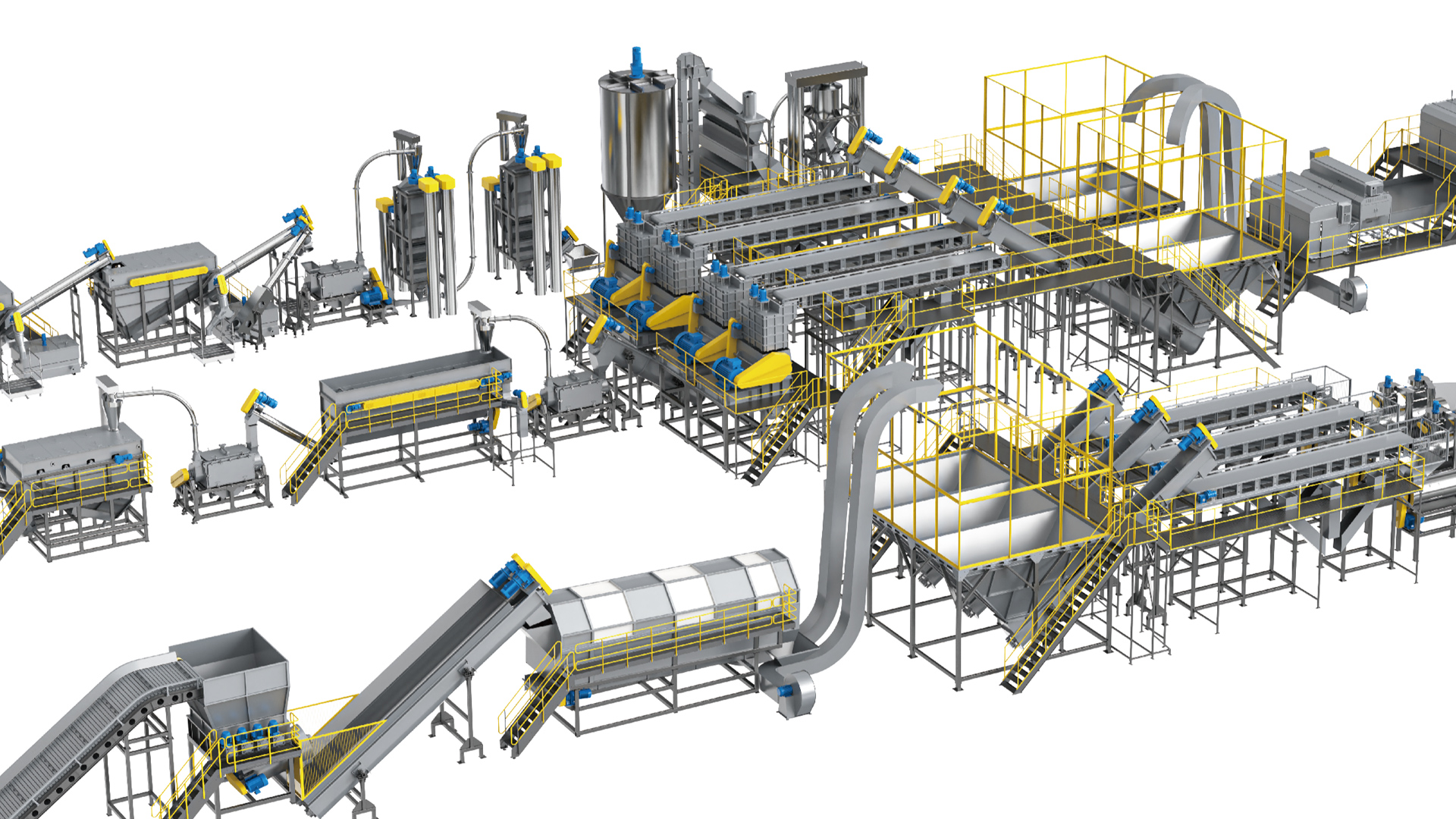
Polyretec agricultural film washing line is composed of fully matched professional equipment units, including automatic feeding conveyor, pre-impurity removal machine, special soft plastic crusher, high-efficiency friction washing machine, multi-stage circulating water washing tank, light-heavy impurity floating separator, high-speed centrifugal dehydrator, hot air drying system and automatic discharging and stacking device. All equipment units are designed in a targeted manner for PP/PE soft film characteristics, with reasonable process matching and no redundant configuration.
The whole production line adopts full-automatic PLC intelligent control system, realizing one-key start-stop, automatic parameter adjustment and real-time equipment operation monitoring. The linkage operation of each unit avoids manual repeated debugging and parameter mismatch, ensuring stable and consistent production efficiency and product quality.
3.2 Key Technical Parameters
Polyretec agricultural film washing line has multiple configurable production specifications to meet the production needs of different-scale recycling projects. The conventional standard model has a processing capacity of 300kg/h to 2000kg/h, covering small, medium and large agricultural film recycling production scenarios. The equipment can process all types of PP and PE soft agricultural films, including ordinary mulch films, thick greenhouse films, anti-drop films and weather-resistant agricultural films.
The optimized soft plastic crushing system ensures uniform flake size after crushing, with adjustable flake size range of 8mm to 16mm. The multi-stage friction washing system has a dirt removal rate of over 99%, and the finished recycled flake purity can reach more than 98.5%, meeting the high-standard reprocessing requirements of plastic granulation and finished product manufacturing. The supporting high-efficiency drying system controls the final material moisture content below 2%, which is the optimal standard for downstream plastic recycling processing.
The production line is equipped with an independent circulating water treatment system, with a water recycling rate of over 90%, which greatly reduces water resource consumption and production water cost. The whole line operates stably with low noise and low failure rate, supporting 24-hour continuous industrial production.
4. Unique Advantages of Polyretec PP/PE Agricultural Film Washing Line
4.1 Targeted Anti-Winding and Low-Loss Cleaning Technology
Aiming at the easy winding and tearing loss of soft PP/PE agricultural films, Polyretec adopts exclusive optimized structural design. The crusher uses anti-winding blade combination and variable-speed rotating structure to avoid film material winding and clamping stagnation, and ensures uniform crushing without excessive tearing. The internal structure of the washing tank is optimized with anti-winding baffle and water flow guiding design, so that the film flakes flow smoothly in the washing process without adhesion and winding, fundamentally solving the frequent shutdown and blockage problems of traditional equipment.
This targeted soft material processing technology improves the material recycling yield by 8% to 12% compared with ordinary washing lines, greatly reducing raw material loss and improving the economic benefits of recycling projects.
4.2 Ultra-High Cleaning Purity for Stubborn Dirt Removal
Different from the single cleaning mode of traditional equipment, Polyretec agricultural film washing line adopts multi-stage gradient composite cleaning technology, combining sediment washing, high-strength friction washing and floating separation. It can thoroughly remove heavy soil, residual pesticides, organic attachments, crop residues and mixed light and heavy impurities on the surface of waste agricultural films.
The high-speed friction washing unit relies on mechanical friction and water flow scouring to strip aged dirt layers that cannot be removed by ordinary water washing. The finished PP/PE flakes have high purity, clean surface and no residual impurities, which can be directly used for the production of high-quality recycled plastic particles, blown films and plastic profiles, with high market recognition and selling price.
4.3 Energy-Saving and Water-Saving Environmental Protection Design
Polyretec washing line is equipped with an independent closed circulating water purification and recycling system. The production wastewater is filtered, precipitated and purified internally, and then reused in the washing link, with a water recycling rate of more than 90%. Compared with traditional open water washing equipment, it saves more than 80% of daily water consumption, greatly reducing production water cost and meeting environmental protection discharge standards.
The whole equipment adopts energy-saving servo motor and variable-frequency speed regulation technology. The power output is adjusted intelligently according to production load, avoiding invalid energy consumption. The comprehensive energy consumption per ton of materials is reduced by 15% to 20% compared with ordinary equipment, realizing low-energy and environmentally friendly recycling production.
4.4 High Automation and Low Labor Operation Cost
The whole agricultural film washing line realizes full-process automatic operation from feeding, crushing, washing, separation to dehydration and discharging. The intelligent linkage control system reduces manual intervention links. A complete set of production line only needs 1 to 2 operators to complete daily production management, which greatly saves enterprise labor costs compared with semi-automatic traditional equipment that requires multiple personnel to assist in operation.
The equipment has a low failure rate and stable continuous operation performance, reducing frequent shutdown maintenance and debugging time, improving the effective operation rate of the production line, and realizing high-efficiency and low-cost standardized production.
4.5 Wide Compatibility and Flexible Production Adaptability
Polyretec agricultural film washing line has strong material compatibility, which can adapt to the cleaning and recycling of all types of PP and PE soft agricultural films, including thin mulch films, thick greenhouse films, flexible irrigation films and various modified agricultural anti-aging films. The equipment can flexibly adjust production parameters according to different dirt degrees and film thicknesses, realizing targeted cleaning of different waste materials.
The production line supports customized configuration of single and multi-line parallel production according to customer output demand, which can meet the production needs of small-scale workshop recycling and large-scale standardized recycling factories, with strong project adaptability.
5. Equipment Price and Comprehensive Project Cost-Benefit Analysis
5.1 Polyretec Agricultural Film Washing Line Price Estimation
The market price of Polyretec complete agricultural film washing line varies according to different production capacity configurations. The price of small-scale 300kg/h to 500kg/h standard washing line ranges from 32,000 to 42,000 US dollars, which is suitable for small recycling workshops and startup projects. The price of medium-scale 800kg/h to 1200kg/h high-efficiency washing line ranges from 55,000 to 68,000 US dollars, which is the mainstream configuration of standardized recycling enterprises.
The price of large-scale 1500kg/h to 2000kg/h high-capacity fully automatic washing line ranges from 78,000 to 95,000 US dollars, suitable for large-scale environmental protection recycling factories and large-volume agricultural film centralized recycling projects. All equipment is equipped with standard complete configurations without additional hidden charging, and the overall cost performance is far higher than ordinary traditional washing equipment of the same type in the market.
5.2 Daily Operation and Maintenance Cost Analysis
In terms of water cost, the circulating water system of Polyretec washing line saves a lot of water resources. The daily water consumption cost of a medium-sized production line is only 30 to 50 US dollars, which saves more than 70% of water cost compared with traditional equipment. In terms of power consumption, the energy-saving variable-frequency system reduces unit energy consumption, and the daily power consumption cost of medium-sized equipment is about 80 to 110 US dollars, with low long-term energy consumption cost.
In terms of maintenance cost, the equipment adopts high-quality wear-resistant accessories and optimized mechanical structure, with low failure rate. The annual replacement cost of wearing parts and daily maintenance cost are controlled within 1,800 US dollars, far lower than the maintenance cost of traditional easy-to-wear and easy-to-block equipment.
In terms of labor cost, the full-automatic production line reduces manual demand. A single production line saves more than 10,000 US dollars in annual labor cost compared with traditional semi-automatic equipment, with prominent labor cost saving effect.
5.3 Project Investment Return Benefit Calculation
Waste PP/PE agricultural film recycling has stable market profit space. After being cleaned and processed by Polyretec high-efficiency washing line, the high-purity recycled flakes have high market value and are widely favored by downstream plastic granulation and product processing enterprises. Taking a medium-sized 1000kg/h washing line as an example, the daily processing capacity can reach 18 tons based on 18-hour industrial operation.
After deducting raw material cost, water and electricity cost, labor cost and maintenance cost, the daily net profit of the production line is stable at 450 to 600 US dollars, and the annual net profit can reach 130,000 to 180,000 US dollars based on 300 working days a year. The overall investment return cycle of the equipment is 6 to 9 months, and the equipment service life can reach more than 12 years, with extremely long-term stable economic benefits.
At the same time, the standardized and environmentally friendly recycling production mode can help enterprises obtain environmental protection project subsidies and policy support in many regions, further improving project comprehensive income and reducing investment risks.
6. Equipment Operation Specifications and Common Fault Solutions
6.1 Standard Pre-Production Debugging and Operation Process
Before the formal operation of the agricultural film washing line, start the equipment self-inspection program to check the operating status of the conveyor, crusher, washing system, water circulation system and drying system to ensure no abnormal noise, blockage and water leakage. Check the water level and water quality of the circulating water tank to ensure that the cleaning water meets the production standards.
Adjust the crusher blade gap and rotating speed according to the thickness and dirt degree of waste agricultural films, set the optimal friction washing time and floating separation parameters, and carry out trial production. After confirming that the flake cleanliness, particle size uniformity and moisture content meet the standards, formal batch production can be carried out. During the production process, regularly check the material cleaning status and equipment operation parameters to ensure stable production quality.
6.2 Common Production Faults and Troubleshooting Methods
Material winding and equipment blockage are the most common faults in soft film washing production. Once winding occurs, stop the machine in time to clean the wound materials, check whether the blade gap and water flow parameters are abnormal, and adjust the operating speed to avoid repeated winding. Regularly clean the residual materials in the equipment to prevent material accumulation and blockage.
Low finished product cleanliness is mostly caused by insufficient friction washing time or failed circulating water purification. The solution is to appropriately extend the friction washing time, check and clean the circulating water filter device, replace the circulating water regularly, and ensure the cleaning effect of the water body.
Excessive moisture content of finished materials is caused by abnormal operation of dehydration and drying system. It is necessary to check the operating power of the dehydrator and the heating temperature of the hot air drying system, eliminate equipment faults, and ensure that the material moisture content meets the standard.
6.3 Daily Maintenance and Upgrading Management Specifications
Clean the residual materials and dirt inside the equipment thoroughly after daily production to avoid material aging and dirt accumulation affecting subsequent cleaning effect. Check the tightness of transmission parts, the wear degree of crusher blades and the smoothness of water circulation pipeline every day, and replace aging wearing parts in time.
Regularly clean the circulating water purification filter and sediment tank every week to ensure the recycling water quality. Conduct regular parameter calibration and equipment precision maintenance every month to ensure long-term stable operation of the washing line and maintain high-efficiency and high-quality production status.
7. Polyretec Brand Strength and After-Sales Service Guarantee
Polyretec is a professional brand focusing on the R&D, design and manufacturing of plastic recycling and cleaning equipment, with rich technical accumulation and project experience in the field of agricultural soft film recycling. The brand has always focused on the technical research and development of soft plastic waste cleaning and recycling, aiming at the pain points of agricultural film recycling equipment, and has formed a complete set of mature and efficient washing line solutions.
All Polyretec agricultural film washing lines are manufactured in strict accordance with international industrial standards, with rigorous factory testing, parameter calibration and quality inspection procedures. The equipment has stable performance, high cleaning efficiency and strong durability, and has been widely recognized by recycling enterprises at home and abroad.
In terms of pre-sales service, Polyretec provides personalized equipment configuration and process scheme design according to customers’ raw material types, dirt degree, production capacity demand and plant conditions, matching the most cost-effective agricultural film washing line scheme for customers. In terms of after-sales service, the brand provides full-life cycle technical support and service guarantee, including free equipment installation, commissioning and professional operator training.
The global after-sales service system provides 24-hour remote technical guidance and rapid on-site maintenance services, timely solving equipment operation faults and production debugging problems, ensuring the stable and efficient operation of customer production lines and helping customers create maximum economic benefits.
Conclusion
With the increasing attention to agricultural environmental protection and plastic resource recycling, the standardized recycling and cleaning of waste PP/PE agricultural films has become a high-potential environmental protection industry project. Ordinary traditional washing equipment cannot meet the high-efficiency and high-purity production requirements of soft agricultural film recycling due to many defects such as easy winding, low cleaning rate and high energy consumption.
As the best professional equipment for PP/PE soft plastic agricultural film waste recycling, Polyretec agricultural film washing line solves various industry pain points through targeted soft material processing technology, multi-stage high-efficiency cleaning system and energy-saving and environmentally friendly design. It has the advantages of high cleaning purity, low material loss, stable operation, low comprehensive operating cost and high automation degree.
Investing in Polyretec agricultural film washing line can not only solve the problem of agricultural plastic pollution and meet environmental protection policy requirements, but also obtain stable and considerable economic benefits through high-value recycled plastic products. It is the ideal equipment choice for agricultural plastic waste recycling enterprises to achieve cost reduction, efficiency increase and sustainable development.