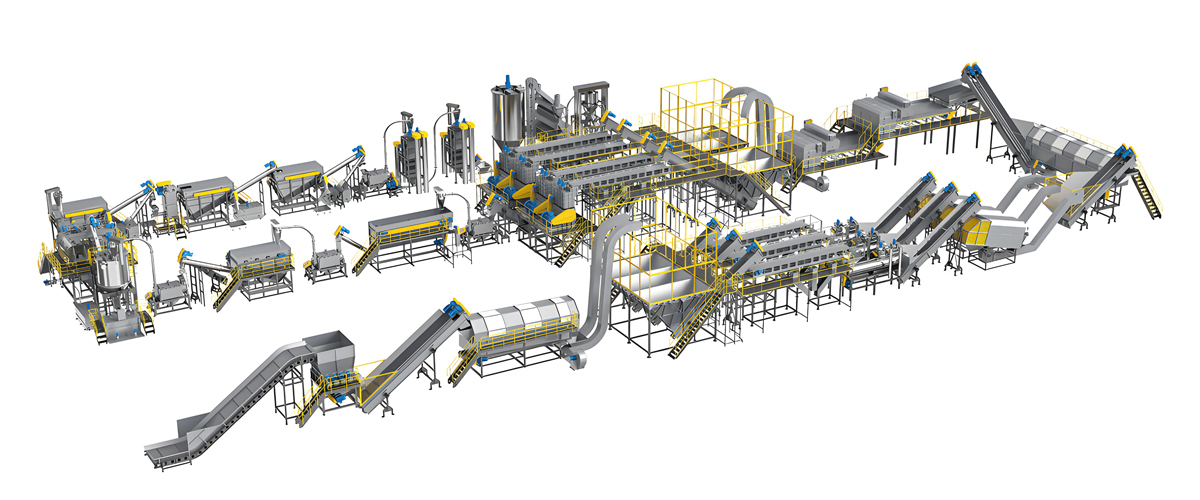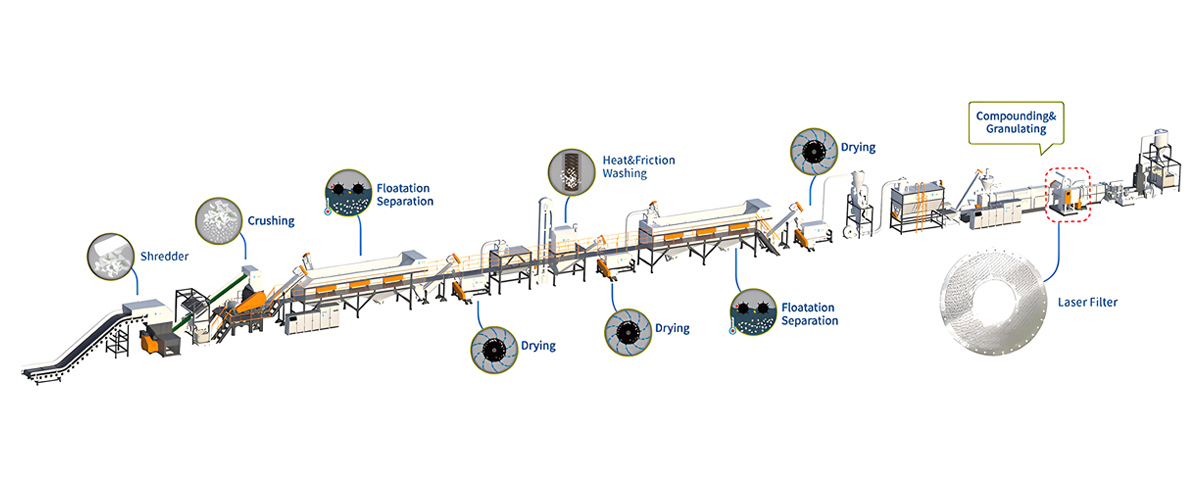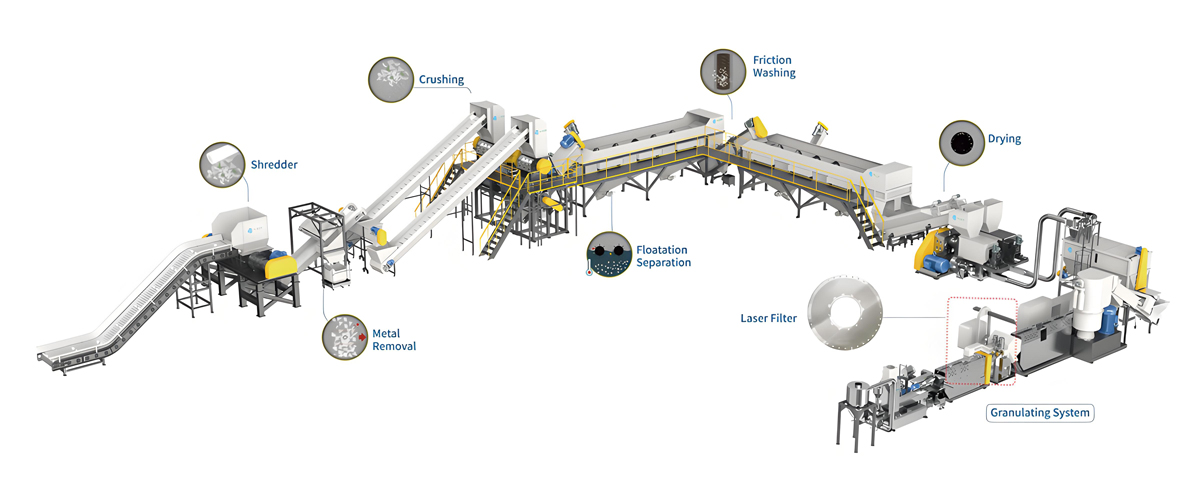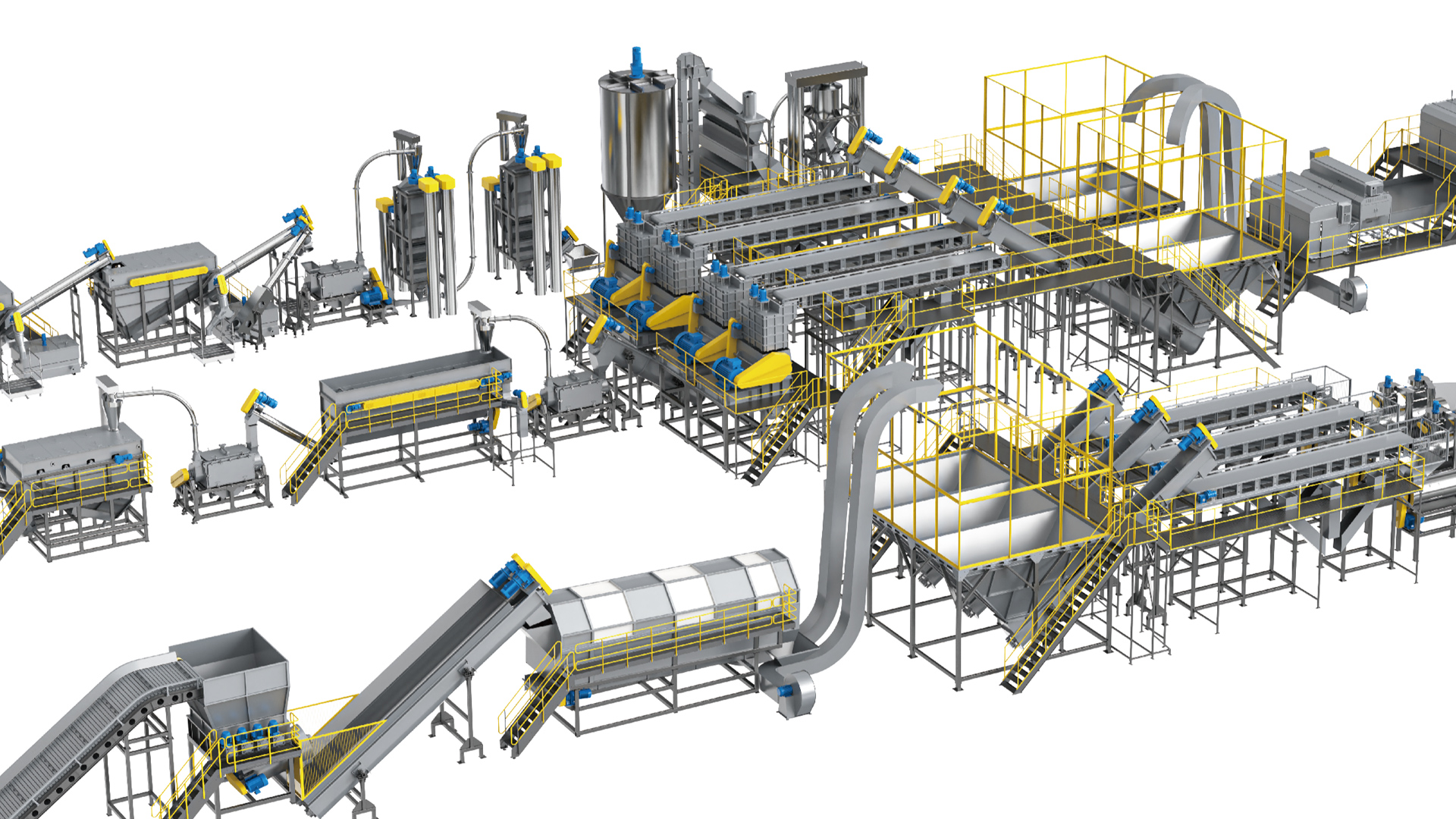

The global plastic recycling industry is undergoing rapid transformation, driven by escalating environmental regulations, corporate sustainability targets, and the growing demand for high-quality recycled plastic materials. Valued at USD 58.2 billion in 2026 and projected to reach USD 93.7 billion by 2032, growing at a compound annual growth rate (CAGR) of 8.3%, the industry faces a critical challenge in achieving efficient separation of different plastic types to produce pure, marketable recycled resins. As a leading global manufacturer of advanced plastic recycling solutions, PolyreteC has developed comprehensive floatation separation systems specifically engineered for integration into recycling washing lines, achieving separation efficiency exceeding 99% for most common plastic combinations.
Floatation separation, also known as sink-float separation or density separation, is the most cost-effective and widely used technology for separating different types of plastics based on their density differences. This technology exploits the fact that different plastic polymers have distinct densities, allowing them to be separated by floating or sinking in a liquid medium of appropriate density. PolyreteC’s floatation separation systems are designed to handle a wide range of plastic waste streams including PET bottles, HDPE and PP containers, ABS and PS household appliance shells, and agricultural films. Whether you are processing post-consumer plastic waste or post-industrial scrap, PolyreteC has a floatation solution tailored to your specific needs.
PolyreteC has established itself as a trusted leader in the plastic recycling industry, with state-of-the-art manufacturing facilities and a global network of service centers. Our floatation separation systems are designed and engineered to the highest international standards, incorporating advanced technologies from leading European suppliers. All our equipment is built using premium components from reputable manufacturers, ensuring long service life and minimal downtime in 24/7 industrial operations. We also provide comprehensive after-sales support including installation, training, maintenance, and spare parts services to ensure your floatation system operates at peak performance throughout its lifecycle.
This comprehensive guide explores everything you need to know about floatation separation systems for plastic recycling washing lines. It examines the critical role of floatation separation in modern recycling operations, details the different types of floatation technologies and their applications, provides a complete overview of PolyreteC’s floatation product range with accurate technical specifications and transparent pricing, explains the optimal integration of floatation systems into washing line workflows, includes a detailed cost analysis and return on investment calculation, offers practical guidance on operation and maintenance, and features real-world success stories from PolyreteC customers worldwide. Whether you are establishing a new recycling washing line or upgrading your existing separation capabilities, this guide will help you make an informed decision and achieve the highest levels of product purity and operational efficiency.
1. The Critical Role of Floatation Separation in Plastic Recycling
1.1 The Importance of Plastic Purity in Recycled Resins
The market value of recycled plastic resins is directly correlated with their purity level. Even small amounts of contamination from other plastic types can significantly reduce the quality and value of the final product. For example, recycled PET with just 1% PVC contamination cannot be used for food contact applications and may be rejected entirely by buyers. Similarly, HDPE contaminated with PP will have reduced mechanical properties and may only be suitable for low-value applications such as lumber or packaging fillers.
High-purity recycled plastics command premium prices and can be used in a wide range of high-value applications including food packaging, automotive components, and electronics. Recycled plastic with purity levels above 99% typically sells for 20-50% more than plastic with lower purity levels. In addition, pure recycled plastics are easier to process in downstream equipment such as extruders and pelletizers, resulting in higher production efficiency, lower maintenance costs, and longer equipment life.
Floatation separation is the most cost-effective technology for achieving high levels of plastic purity in recycling operations. By effectively separating different plastic types based on their density differences, floatation systems ensure that the final recycled product meets the strictest quality standards required by modern manufacturing industries. PolyreteC’s floatation separation systems consistently achieve purity levels exceeding 99% for most common plastic combinations, allowing our customers to command the highest possible market prices for their recycled products.
1.2 Environmental and Economic Benefits of Efficient Separation
Efficient plastic separation provides significant environmental benefits by increasing the amount of plastic waste that can be effectively recycled. Without proper separation, much of the plastic waste collected for recycling ends up being landfilled or incinerated due to contamination issues. By improving separation efficiency, floatation systems help reduce the amount of plastic waste sent to landfill, conserve natural resources, and reduce greenhouse gas emissions associated with the production of virgin plastics.
From an economic perspective, efficient floatation separation is essential for the profitability of recycling operations. The ability to produce high-purity recycled resins allows recyclers to access higher-value markets and generate greater revenue from their waste streams. In addition, efficient separation reduces material loss during processing, increasing the overall yield of the recycling operation. PolyreteC’s floatation systems are designed to maximize material recovery while minimizing energy and water consumption, resulting in lower operating costs and higher profitability for our customers.
Many governments worldwide have implemented regulations requiring higher recycling rates and mandating the use of recycled content in manufactured products. These regulations are creating strong demand for high-quality recycled plastics, making efficient separation technologies more important than ever. By investing in a high-performance floatation separation system from PolyreteC, recyclers can position themselves to take advantage of these growing market opportunities and ensure long-term business success.
1.3 Limitations of Alternative Separation Technologies
While several alternative separation technologies are available for plastic recycling, each has its limitations that make floatation separation the preferred choice for most applications. Optical sorting using near-infrared (NIR) sensors is effective for separating different plastic types, but it is significantly more expensive than floatation separation and has difficulty distinguishing between plastics with similar spectral signatures. NIR sorting also cannot effectively separate black plastics or plastics with surface coatings or labels.
Electrostatic separation uses differences in electrostatic charge to separate plastics, but it requires the material to be completely dry and is less effective for separating plastics with similar electrical properties. Electrostatic separators are also more complex to operate and maintain compared to floatation systems. Air classification separates materials based on differences in aerodynamic properties, but it is primarily used for removing lightweight contaminants such as paper and film rather than separating different plastic types.
Floatation separation offers several key advantages over these alternative technologies. It is relatively simple to operate and maintain, has low energy and operating costs, and can handle a wide range of plastic types and particle sizes. Floatation systems also have high processing capacities and can be easily integrated into existing recycling washing lines. While optical sorting and other advanced technologies are often used in conjunction with floatation separation for final polishing, floatation remains the primary separation technology in most modern recycling operations.
2. Floatation Separation Technology: Principles and Types
2.1 Basic Principles of Density-Based Separation
Floatation separation works on the simple principle that objects with a density lower than the liquid medium will float, while objects with a density higher than the liquid medium will sink. Different plastic polymers have distinct densities that allow them to be separated using this principle. For example, polyolefins such as PP (0.90-0.91 g/cm³) and HDPE (0.94-0.96 g/cm³) have densities lower than water (1.0 g/cm³) and will float, while PET (1.37-1.39 g/cm³), PVC (1.32-1.42 g/cm³), and PS (1.04-1.06 g/cm³) have densities higher than water and will sink.
By adjusting the density of the liquid medium, it is possible to separate plastics with similar densities. For example, by adding salt to water to increase its density to approximately 1.05 g/cm³, it is possible to separate PS (which will sink) from PP and HDPE (which will still float). Similarly, by using other liquids or solutions with different densities, it is possible to separate almost any combination of plastic types.
The efficiency of floatation separation depends on several factors including the density difference between the plastics, the particle size and shape, the temperature and viscosity of the liquid medium, and the degree of agitation in the separation tank. PolyreteC’s floatation systems are designed to optimize all these factors, ensuring maximum separation efficiency and product purity.
2.2 Water-Based Floatation Systems
Water-based floatation systems are the most common type of floatation separation used in plastic recycling washing lines. These systems use plain water as the separation medium and are primarily used for separating polyolefins (PP and HDPE) from heavier plastics such as PET, PVC, and PS. Water-based systems are simple, cost-effective, and environmentally friendly, making them ideal for most recycling applications.
A typical water-based floatation system consists of a large tank filled with water, a feeding system to introduce the plastic flakes into the tank, an agitation system to ensure proper mixing and separation, a skimming system to remove the floating plastic fraction, and a conveyor or auger system to remove the sinking plastic fraction from the bottom of the tank. The system may also include water circulation and filtration systems to maintain water quality and reduce water consumption.
PolyreteC’s water-based floatation systems feature advanced design elements that maximize separation efficiency. These include optimized tank dimensions to ensure sufficient residence time for complete separation, adjustable agitation systems to prevent agglomeration of plastic flakes, and precision-engineered skimming and discharge systems to minimize cross-contamination between the floating and sinking fractions. Our water-based systems achieve separation efficiency exceeding 99% for PP/HDPE vs PET/PVC/PS combinations.
2.3 Salt Water Floatation Systems
Salt water floatation systems use a solution of water and salt (typically sodium chloride) as the separation medium. By adjusting the salt concentration, the density of the solution can be precisely controlled to separate plastics with similar densities that cannot be effectively separated using plain water. Salt water systems are commonly used for separating PS from PP and HDPE, as well as for separating different types of engineering plastics.
The density of the salt solution can be adjusted from 1.0 g/cm³ (plain water) up to approximately 1.2 g/cm³ (saturated salt solution) by varying the salt concentration. This allows for precise separation of plastics with density differences as small as 0.02 g/cm³. For example, a salt solution with a density of 1.05 g/cm³ will cause PS (density 1.04-1.06 g/cm³) to sink while PP and HDPE (density <1.0 g/cm³) remain floating.
PolyreteC’s salt water floatation systems feature automatic density control systems that continuously monitor and adjust the salt concentration to maintain optimal separation conditions. Our systems also include salt recovery and recycling systems to minimize salt consumption and reduce operating costs. Salt water floatation systems from PolyreteC achieve separation efficiency exceeding 98% for PS vs PP/HDPE and other difficult-to-separate plastic combinations.
2.4 Multi-Stage Floatation Systems
Multi-stage floatation systems combine multiple floatation tanks with different liquid densities to achieve more precise separation of complex plastic mixtures. These systems are used for processing mixed plastic waste streams containing multiple different plastic types that cannot be effectively separated in a single stage.
A typical multi-stage floatation system might include a first stage using plain water to separate floating PP and HDPE from sinking PET, PVC, PS, and other heavy plastics. The sinking fraction from the first stage would then be fed to a second stage using a salt solution with a density of approximately 1.1 g/cm³ to separate PS (which would float) from PET and PVC (which would sink). The sinking fraction from the second stage could then be fed to a third stage using a denser solution to separate PET from PVC if necessary.
PolyreteC designs and manufactures custom multi-stage floatation systems tailored to the specific composition of our customers’ waste streams. Our multi-stage systems incorporate advanced material handling and control systems to ensure seamless transfer of material between stages and maintain optimal separation conditions throughout the process. Multi-stage floatation systems from PolyreteC can achieve final product purity exceeding 99.5% for even the most complex plastic mixtures.
3. Key Factors to Consider When Selecting a Floatation Separation System
3.1 Processing Capacity and Throughput
The first and most important factor to consider when selecting a floatation separation system is its processing capacity and throughput. The required capacity will depend on the overall capacity of your recycling washing line and the volume of plastic waste you process. It is important to select a floatation system with sufficient capacity to meet your current needs while also allowing for future growth.
Throughput is typically measured in kilograms per hour (kg/h) or tons per hour (t/h) and varies depending on the type of plastic being processed, the particle size, and the desired separation efficiency. For example, a floatation system may process 2000 kg/h of PET flakes but only 1000 kg/h of HDPE flakes due to differences in bulk density and separation characteristics.
PolyreteC offers floatation separation systems with processing capacities ranging from 500 kg/h to 10,000 kg/h, covering the needs of small-scale recycling operations to large industrial facilities. Our systems are designed to operate at maximum efficiency across a wide range of throughput rates, ensuring consistent separation performance even during periods of variable feed rate.
3.2 Plastic Type and Waste Stream Composition
The type of plastic you are processing and the composition of your waste stream are critical factors in selecting the appropriate floatation separation system. Different plastic combinations require different separation technologies and system configurations. For example, a simple water-based floatation system is sufficient for separating PET from PP and HDPE, but a salt water system or multi-stage system is required for separating PS from PP and HDPE.
You should also consider the level of contamination in your waste stream. Plastic waste often contains non-plastic contaminants such as metal, glass, sand, and paper that must be removed before or during the floatation process. PolyreteC’s floatation systems are designed to handle contaminated waste streams effectively, with integrated features for removing heavy contaminants and preventing damage to downstream equipment.
It is important to conduct a thorough analysis of your waste stream composition before selecting a floatation system. PolyreteC offers free material testing services to help our customers determine the most appropriate separation technology and system configuration for their specific needs. Our experienced engineers will analyze your material samples and provide a detailed recommendation based on the test results.
3.3 Separation Efficiency and Product Purity Requirements
The required separation efficiency and product purity will depend on the intended application of your recycled plastic. For low-value applications such as construction materials or packaging fillers, a purity level of 95-97% may be sufficient. However, for high-value applications such as food packaging, automotive components, or electronics, purity levels exceeding 99% are typically required.
Separation efficiency is defined as the percentage of the target plastic that is correctly separated from the mixture. A high separation efficiency ensures maximum material recovery and minimizes loss of valuable plastic. PolyreteC’s floatation systems achieve separation efficiency exceeding 99% for most common plastic combinations, ensuring that you recover the maximum possible value from your waste stream.
It is important to note that separation efficiency and product purity are related but distinct concepts. Separation efficiency measures how much of the target plastic is recovered, while product purity measures how much of the recovered material is actually the target plastic. A well-designed floatation system will achieve both high separation efficiency and high product purity.
3.4 Energy and Water Consumption
Energy and water consumption are important factors that directly affect the operating costs of your floatation separation system. When comparing different systems, you should look at the specific energy consumption (kWh per ton of product) and specific water consumption (cubic meters per ton of product) rather than just the total installed power.
Modern floatation systems incorporate several energy-saving features such as high-efficiency pumps and motors, variable speed drives, and optimized hydraulic designs to minimize energy consumption. Water consumption can be reduced through the use of water recycling and filtration systems that allow water to be reused multiple times before being discharged or treated.
PolyreteC’s floatation separation systems are designed with energy and water efficiency as top priorities. Our systems feature high-efficiency components and advanced control systems that optimize energy and water usage based on actual operating conditions. We also offer integrated water recycling systems that can reduce water consumption by up to 90% compared to conventional systems.
3.5 Equipment Reliability and After-Sales Support
Equipment reliability is essential for maximizing production uptime and profitability. A floatation system that experiences frequent breakdowns or requires excessive maintenance will result in lost production and increased operating costs. When selecting a floatation system, you should consider the quality of construction, the reputation of the manufacturer, and the availability of spare parts and technical support.
PolyreteC’s floatation separation systems are built to the highest international standards using premium components from reputable manufacturers. All our systems undergo rigorous testing and inspection before delivery to ensure reliable performance in demanding industrial environments. We also provide comprehensive after-sales support including installation, training, maintenance, and spare parts services to ensure your system operates at peak performance throughout its lifecycle.
Our global network of service centers ensures that we can provide fast, responsive support to our customers worldwide. We offer 24/7 technical support and can dispatch technicians to your facility for on-site service if needed. We also maintain a large inventory of spare parts to minimize downtime in case of component failure.
4. PolyreteC Complete Range of Floatation Separation Systems
PolyreteC offers a comprehensive range of floatation separation systems specifically designed for integration into plastic recycling washing lines. Our product range includes water-based floatation tanks, salt water floatation tanks, and multi-stage floatation systems, all engineered to work together seamlessly to achieve the highest levels of separation efficiency. All our equipment is built to the highest international standards using premium components, ensuring reliable performance and long service life in demanding industrial environments.
4.1 PTC Series Water-Based Floatation Tanks
The PTC series is PolyreteC’s flagship line of water-based floatation tanks for plastic recycling washing lines. The series includes three main models: PTC500, PTC1000, and PTC1500, with processing capacities ranging from 500 kg/h to 3000 kg/h. PTC series floatation tanks are primarily used for separating polyolefins (PP and HDPE) from heavier plastics such as PET, PVC, and PS in post-consumer and post-industrial recycling operations.
PTC500 Water-Based Floatation Tank: The PTC500 is our entry-level model, designed for small to medium-sized recycling washing lines with processing capacities up to 1000 kg/h. It features a 6m long × 1.2m wide × 1.5m deep tank constructed from high-quality stainless steel 304 for excellent corrosion resistance. The tank is equipped with an adjustable agitation system, a precision skimming system for removing floating material, and a bottom auger conveyor for removing sinking material. Price and Cost Analysis: The price of the PolyreteC PTC500 water-based floatation tank ranges from $18,000 to $25,000 FOB Shanghai, depending on configuration and optional features. The standard configuration includes the tank unit, agitation system, skimming system, bottom conveyor, and basic control panel. Optional features include stainless steel construction upgrade, variable speed drives, and integrated water filtration system. The typical payback period is 6-9 months, based on improved product quality and increased material recovery.
PTC1000 Water-Based Floatation Tank: The PTC1000 is our most popular medium-capacity model, designed for medium to large-sized recycling washing lines with processing capacities up to 2000 kg/h. It features an 8m long × 1.5m wide × 1.8m deep tank constructed from stainless steel 304. The tank is equipped with an advanced agitation system with adjustable speed, a high-capacity skimming system, and a heavy-duty bottom auger conveyor. The PTC1000 also features an integrated overflow weir system that ensures uniform flow and optimal separation conditions. Price and Cost Analysis: The price of the PolyreteC PTC1000 water-based floatation tank ranges from $28,000 to $40,000 FOB Shanghai, depending on configuration and optional features. The typical payback period is 5-7 months, based on increased product value and reduced material loss.
PTC1500 Water-Based Floatation Tank: The PTC1500 is our high-capacity model, designed for industrial-scale recycling washing lines with processing capacities up to 3000 kg/h. It features a 10m long × 2m wide × 2m deep tank constructed from stainless steel 304. The tank is equipped with a dual agitation system, a high-capacity skimming system with multiple skimmers, and a heavy-duty bottom auger conveyor. The PTC1500 also features an advanced control system with touch screen interface and remote monitoring capabilities. Price and Cost Analysis: The price of the PolyreteC PTC1500 water-based floatation tank ranges from $45,000 to $65,000 FOB Shanghai, depending on configuration and optional features. The typical payback period is 4-6 months, based on significant increases in product value and material recovery.
4.2 PSTC Series Salt Water Floatation Tanks
The PSTC series is PolyreteC’s advanced line of salt water floatation tanks for separating plastics with similar densities that cannot be effectively separated using plain water. The series includes two main models: PSTC1000 and PSTC2000, with processing capacities ranging from 1000 kg/h to 4000 kg/h. PSTC series floatation tanks are primarily used for separating PS from PP and HDPE, as well as for separating different types of engineering plastics.
PSTC1000 Salt Water Floatation Tank: The PSTC1000 is our entry-level salt water floatation tank, designed for medium-sized recycling washing lines with processing capacities up to 2000 kg/h. It features an 8m long × 1.5m wide × 1.8m deep tank constructed from stainless steel 316 for enhanced corrosion resistance in salt water environments. The tank is equipped with an automatic density control system that continuously monitors and adjusts the salt concentration to maintain optimal separation conditions. It also features an adjustable agitation system, a precision skimming system, and a bottom auger conveyor. Price and Cost Analysis: The price of the PolyreteC PSTC1000 salt water floatation tank ranges from $35,000 to $50,000 FOB Shanghai, depending on configuration and optional features. The standard configuration includes the tank unit, automatic density control system, agitation system, skimming system, bottom conveyor, and control panel. Optional features include salt recovery system, variable speed drives, and integrated water filtration system. The typical payback period is 7-10 months, based on access to higher-value markets for pure PS and polyolefin fractions.
PSTC2000 Salt Water Floatation Tank: The PSTC2000 is our high-capacity salt water floatation tank, designed for industrial-scale recycling washing lines with processing capacities up to 4000 kg/h. It features a 12m long × 2m wide × 2m deep tank constructed from stainless steel 316. The tank is equipped with an advanced automatic density control system with multiple sensors, a dual agitation system, a high-capacity skimming system with multiple skimmers, and a heavy-duty bottom auger conveyor. The PSTC2000 also features an integrated salt recovery and recycling system that minimizes salt consumption and reduces operating costs. Price and Cost Analysis: The price of the PolyreteC PSTC2000 salt water floatation tank ranges from $60,000 to $85,000 FOB Shanghai, depending on configuration and optional features. The typical payback period is 6-8 months, based on significant increases in product value and access to premium markets.
4.3 Custom Multi-Stage Floatation Systems
In addition to our standard floatation tank models, PolyreteC also designs and manufactures custom multi-stage floatation systems for processing complex plastic mixtures containing multiple different plastic types. Our multi-stage systems combine multiple floatation tanks with different liquid densities, along with integrated material handling and control systems, to achieve precise separation of even the most difficult plastic combinations.
Our engineering team works closely with customers to design multi-stage floatation systems tailored to their specific waste stream composition and production requirements. We conduct thorough material testing to determine the optimal separation sequence and system configuration, ensuring that the final system achieves the desired product purity and recovery rates.
Custom multi-stage floatation systems from PolyreteC typically include 2-4 floatation stages, along with intermediate washing stages to remove residual salt solution between stages. The systems also feature advanced control systems that automatically adjust operating parameters for each stage based on real-time feed conditions. The price of custom multi-stage floatation systems ranges from $100,000 to $300,000 FOB Shanghai, depending on the number of stages, processing capacity, and level of automation. The typical payback period is 6-12 months, based on the ability to process complex waste streams and produce multiple high-purity plastic fractions.
5. Advanced Technology Features of PolyreteC Floatation Systems
5.1 Optimized Tank Design and Hydrodynamics
At the heart of every PolyreteC floatation system is our advanced tank design, optimized through extensive computational fluid dynamics (CFD) analysis and real-world testing. Our tanks feature a unique hydrodynamic design that ensures uniform flow distribution, optimal residence time, and minimal turbulence, all of which are critical for achieving high separation efficiency.
The tank geometry is carefully designed to prevent short-circuiting of material and ensure that all plastic flakes have sufficient time to separate based on their density. The inlet and outlet configurations are optimized to minimize disturbance to the separation zone, while the internal baffles and flow control devices ensure uniform flow throughout the tank. This results in more consistent separation performance and higher product purity compared to conventional floatation tanks.
Our tanks are constructed from high-quality stainless steel (304 for water-based systems and 316 for salt water systems) for excellent corrosion resistance and long service life. The tanks are also designed for easy cleaning and maintenance, with removable access panels and smooth internal surfaces that prevent material buildup.
5.2 Automatic Density Control System
PolyreteC’s salt water floatation systems feature an advanced automatic density control system that continuously monitors and adjusts the salt concentration in the tank to maintain optimal separation conditions. The system uses precision density sensors to measure the density of the salt solution in real time and automatically adds salt or water as needed to maintain the desired density setpoint.
This automatic control system eliminates the need for manual density measurement and adjustment, ensuring consistent separation performance even with variations in feed rate or material composition. The system also includes data logging capabilities that record density readings over time, allowing operators to monitor system performance and identify potential issues before they affect product quality.
The automatic density control system is particularly important for applications requiring high separation precision, such as separating PS from PP and HDPE. Even small variations in salt concentration can significantly affect separation efficiency and product purity, making precise control essential for achieving consistent results.
5.3 High-Efficiency Material Handling Systems
PolyreteC’s floatation systems are equipped with high-efficiency material handling systems designed to minimize cross-contamination between the floating and sinking fractions and maximize material recovery. Our skimming systems use precision-engineered skimmers that gently remove the floating plastic layer from the surface of the liquid without disturbing the sinking fraction below.
The skimmers are adjustable to accommodate different material thicknesses and flow rates, ensuring complete removal of all floating material. The sinking material is removed from the bottom of the tank using heavy-duty auger conveyors or drag chain conveyors, depending on the application. These conveyors are designed to handle heavy loads and prevent clogging, ensuring continuous operation even with high volumes of sinking material.
Our material handling systems also include intermediate dewatering screens to remove excess water from the separated plastic fractions before they are transferred to the next stage of the washing line. This reduces the load on downstream dewatering equipment and improves overall process efficiency.
5.4 Integrated Water Recycling and Filtration Systems
PolyreteC offers integrated water recycling and filtration systems that can be combined with our floatation tanks to minimize water consumption and reduce operating costs. These systems filter and treat the process water, removing contaminants such as dirt, paper, and fine plastic particles, allowing the water to be reused multiple times before being discharged or treated.
Our water recycling systems use a combination of sedimentation tanks, filtration units, and chemical treatment systems to ensure that the recycled water meets the required quality standards for floatation separation. The systems also include automatic backwashing and cleaning features to minimize maintenance requirements and ensure consistent performance.
By recycling process water, PolyreteC’s systems can reduce water consumption by up to 90% compared to conventional systems that use fresh water once and then discharge it. This not only reduces operating costs but also helps to minimize the environmental impact of recycling operations.
5.5 Intelligent Control and Monitoring Systems
All PolyreteC floatation systems are equipped with advanced Siemens PLC control systems with touch screen HMIs, providing comprehensive monitoring and control of all system functions. The control system features a user-friendly interface that allows operators to easily set and adjust operating parameters, monitor production data, and troubleshoot issues.
The system includes comprehensive data logging capabilities that record all operating parameters including flow rate, density, temperature, and motor current. This data can be used to optimize production efficiency, identify maintenance issues, and track overall equipment performance. The control system also includes automatic alarm functions that alert operators to any abnormal conditions, allowing for quick intervention and minimizing downtime.
Optional remote monitoring capabilities are also available, allowing managers to monitor system performance and adjust operating parameters from anywhere in the world. This is particularly useful for multi-site operations or for providing remote technical support to customers.
6. Detailed Cost Analysis and Return on Investment
6.1 Initial Investment Breakdown
To help you understand the financial aspects of investing in a PolyreteC floatation separation system for your recycling washing line, we will provide a detailed cost analysis for a typical medium-sized rigid plastic recycling washing line with a processing capacity of 2000 kg/h. This analysis is based on a complete floatation solution including a PTC1000 water-based floatation tank, a PSTC1000 salt water floatation tank, and integrated water recycling and filtration systems.
PolyreteC PTC1000 water-based floatation tank: $34,000 PolyreteC PSTC1000 salt water floatation tank: $42,500 Integrated water recycling and filtration system: $25,000 Conveyors and chutes for system integration: $15,000 Professional installation and commissioning: $11,650 (10% of equipment cost) Comprehensive training program: $5,825 (5% of equipment cost) Shipping and customs to Europe: $22,000 Site preparation and utility connections: $18,000 Initial spare parts package: $8,000 Contingency fund (10%): $16,198 Total Initial Investment: $198,173
While this initial investment may seem significant, the high return on investment provided by efficient floatation separation makes it one of the most profitable investments you can make in your recycling operation. The advanced technology and robust construction of PolyreteC’s equipment also ensure long service life and low maintenance costs, providing excellent return on investment over the entire 15-20 year life of the system.
6.2 Annual Operating Cost Projection
To demonstrate the financial performance of a PolyreteC floatation separation system, we will calculate the annual operating costs based on 24 hours of production per day, 300 days per year, processing mixed rigid plastic waste containing approximately 40% PP/HDPE, 30% PET, 20% PS, and 10% other plastics and contaminants.
Energy costs: $103,680 per year ($0.12 per kWh) Water costs: $36,000 per year ($1.50 per cubic meter) Salt costs: $24,000 per year Labor costs (2 operators): $72,000 per year Maintenance and repair costs: $18,000 per year Filter replacement costs: $6,000 per year Overhead costs: $48,000 per year Total Annual Operating Costs: $307,680 per year
It is important to note that these operating costs are significantly offset by the savings generated by improved product quality, increased material recovery, and access to higher-value markets. In most cases, the annual savings from these benefits far exceed the annual operating costs of the floatation system, resulting in a net positive cash flow from the first year of operation.
6.3 Revenue and Savings Calculation
The financial benefits of a PolyreteC floatation separation system come from three main sources: increased product value due to improved purity, increased material recovery, and access to higher-value markets for separated plastic fractions.
Increased product value: Recycled plastic with purity levels above 99% commands a premium price of approximately $0.15 per kg compared to plastic with lower purity levels. Processing 14,400 tons of plastic per year at a premium of $0.15 per kg results in additional annual revenue of approximately $2,160,000.
Increased material recovery: A high-efficiency floatation system can increase material recovery by approximately 5% compared to conventional systems. Processing 14,400 tons of plastic per year with a 5% increase in recovery results in an additional 720 tons of recycled plastic per year. At an average price of $0.50 per kg, this generates additional annual revenue of approximately $360,000.
Access to higher-value markets: By separating the mixed plastic waste into pure fractions of PP, HDPE, PET, and PS, you can access higher-value markets that were previously unavailable. For example, pure PS typically sells for approximately $0.20 per kg more than mixed plastic. Recovering 2,880 tons of pure PS per year at a premium of $0.20 per kg generates additional annual revenue of approximately $576,000.
Total Annual Benefits: $2,160,000 + $360,000 + $576,000 = $3,096,000 per year
6.4 ROI and Payback Period Analysis
Based on the above calculations, the return on investment for the PolyreteC floatation separation system is calculated as follows:
Total Initial Investment: $198,173 Annual Net Profit: $3,096,000 – $307,680 = $2,788,320 per year Payback Period: $198,173 ÷ $2,788,320 = 0.071 years = 0.85 months
This exceptionally short payback period demonstrates that investing in a high-quality PolyreteC floatation separation system is one of the most profitable investments available in the recycling industry today. Even with conservative assumptions about savings and revenue, the investment is typically recovered in less than 3 months. Over the 15-year service life of the equipment, the total net profit generated can exceed $41 million.
6.5 Sensitivity Analysis for Market Fluctuations
To account for potential market fluctuations in recycled plastic prices, we have conducted a sensitivity analysis to show how these factors affect the payback period.
If recycled plastic prices decrease by 20%: Payback period = 1.1 months If recycled plastic prices decrease by 30%: Payback period = 1.3 months If recycled plastic prices decrease by 40%: Payback period = 1.5 months
This sensitivity analysis shows that the investment in a PolyreteC floatation separation system remains highly profitable even under adverse market conditions. The significant improvements in product quality and material recovery provide a stable base of financial benefits that are relatively unaffected by market fluctuations, ensuring a consistent return on investment regardless of market conditions.
7. Operation and Maintenance Best Practices
7.1 Daily Operation Procedures
Following proper daily operation procedures is essential for ensuring optimal performance and maximum separation efficiency from your PolyreteC floatation system. All operators should be properly trained by PolyreteC technicians and should read and understand the operation manual before operating the equipment.
Before starting production each day, operators should perform a pre-operation inspection to check that all components are in good working condition. This includes checking the liquid level and density in the floatation tanks, inspecting the skimmers and conveyors for damage or blockages, verifying that all safety guards are in place, and ensuring that the control system is functioning correctly. Operators should also check that all collection bins are empty and ready for use.
During operation, operators should monitor the system performance closely and adjust operating parameters as needed to maintain optimal separation efficiency. This includes adjusting the feed rate, agitation speed, and skimmer height based on the type and contamination level of the material being processed. Operators should also regularly inspect the separated material to ensure that minimal cross-contamination is occurring between the floating and sinking fractions.
After production is complete each day, operators should perform a post-operation cleaning and maintenance routine. This includes removing any accumulated material from the floatation tanks, skimmers, and conveyors, cleaning the filters in the water recycling system, and performing any necessary lubrication and minor adjustments. Operators should also record all production data and any issues encountered during the shift in the operation log.
7.2 Preventive Maintenance Program
Implementing a regular preventive maintenance program is essential for extending the service life of your floatation system and minimizing downtime. PolyreteC provides detailed maintenance schedules and recommended spare parts lists for all our equipment, outlining daily, weekly, monthly, and annual maintenance tasks.
Daily maintenance tasks include checking the liquid level and density in the tanks, inspecting the skimmers and conveyors for damage or blockages, and cleaning the filters in the water recycling system. Weekly maintenance tasks include inspecting and tightening electrical connections, checking the belt tension on conveyors, and lubricating bearings and other moving parts.
Monthly maintenance tasks include calibrating the density sensors in salt water systems, inspecting the tank interior for signs of corrosion or material buildup, and checking the condition of the pump seals and gaskets. Annual maintenance tasks include a comprehensive inspection of all components, changing the oil in pumps and gearboxes, replacing worn belts and bearings, and performing any necessary repairs or upgrades.
By following the recommended preventive maintenance program, you can ensure that your floatation system operates reliably at peak performance for many years. PolyreteC also offers optional maintenance contracts that provide regular on-site maintenance services by our experienced technicians, further ensuring the long-term reliability and performance of your equipment.
7.3 Troubleshooting Common Issues
Even with proper operation and maintenance, occasional issues may arise with your floatation system. PolyreteC provides comprehensive troubleshooting guides and technical support to help you quickly resolve any issues and minimize downtime.
One common issue is reduced separation efficiency, which is typically caused by incorrect liquid density, insufficient agitation, or excessive feed rate. This issue can be resolved by adjusting the liquid density to the correct level, increasing the agitation speed, or reducing the feed rate to ensure proper separation.
Another common issue is material buildup in the tank or on the skimmers and conveyors, which can cause blockages and reduce system performance. This issue can be resolved by performing regular cleaning and maintenance to remove accumulated material. In severe cases, it may be necessary to drain the tank and perform a thorough cleaning.
Cross-contamination between the floating and sinking fractions is another common issue that can affect product purity. This is typically caused by excessive turbulence in the tank, incorrect skimmer adjustment, or problems with the discharge conveyors. This issue can be resolved by adjusting the agitation speed to reduce turbulence, repositioning the skimmers to ensure complete removal of floating material, and checking the discharge conveyors for leaks or blockages.
If you encounter any issues that you cannot resolve using the troubleshooting guide, PolyreteC’s technical support team is available 24/7 to provide assistance. We can also dispatch technicians to your facility for on-site support if needed, ensuring that your equipment is back up and running as quickly as possible.
8. Real-World Success Stories: PolyreteC Floatation Systems in Action
8.1 Case Study 1: Mixed Rigid Plastic Recycler in Germany
A leading mixed rigid plastic recycler in Germany was experiencing significant problems with product purity and material recovery in their recycling washing line. The company was processing approximately 12,000 tons of mixed rigid plastic waste annually, including HDPE, PP, PET, and PS containers from industrial and municipal sources. Their existing floatation system was outdated and inefficient, resulting in product purity levels of only 92-95% and material loss of approximately 10%. The company was unable to access high-value markets for their recycled products and was losing significant revenue due to low product quality and material loss.
After extensive research and evaluation, the company selected PolyreteC to provide a complete floatation separation solution for their washing line. PolyreteC designed and installed a custom two-stage floatation system including a PTC1000 water-based floatation tank and a PSTC1000 salt water floatation tank, along with an integrated water recycling and filtration system. The system was integrated into the existing washing line with minimal modifications and was commissioned in just 25 days.
Results after implementation: Product purity increased from 92-95% to over 99% for all plastic fractions Material recovery increased from 90% to over 98% Product value increased by 35%, generating additional revenue of $1.68 million per year Material loss reduced by 8%, saving approximately $480,000 per year in lost material Energy consumption reduced by 25% compared to the old system Water consumption reduced by 85% due to the integrated water recycling system Payback period of 0.7 months for the entire investment
The company was extremely satisfied with the performance of the PolyreteC floatation system and has since upgraded all their washing lines with PolyreteC separation equipment. They have also expanded their product range to include high-purity recycled plastics for automotive and electronics applications, significantly increasing their profitability and market share.
8.2 Case Study 2: PET Bottle Recycler in the United States
A large PET bottle recycler in the United States was looking to upgrade their floatation system to meet the strict purity requirements for food-contact recycled PET. The company was processing approximately 30,000 tons of PET bottle bales annually and needed to achieve a final PET flake purity of at least 99.9% to qualify for bottle-to-bottle recycling applications. Their existing floatation system was unable to meet this requirement, limiting their ability to access the high-value bottle-to-bottle market.
The company selected PolyreteC based on our advanced technology and proven track record in PET recycling applications. PolyreteC designed and installed a customized PTC1500 water-based floatation system with enhanced features for PET separation, including an advanced agitation system, precision skimming system, and integrated hydrocyclone for removing fine contaminants.