
Small batch plastic recycling represents a growing opportunity for businesses and entrepreneurs seeking to process limited quantities of plastic waste efficiently without the capital requirements of large-scale operations. Finding the right plastic recycling line for small batch production requires balancing equipment capabilities against budget constraints while ensuring the equipment can meet quality and throughput requirements. This comprehensive guide examines the considerations, options, and configurations that make plastic recycling equipment suitable for small batch operations.
Understanding Small Batch Plastic Recycling Requirements
Small batch plastic recycling operations serve distinct market segments that differ significantly from high-volume municipal or industrial recycling facilities. These operations typically process between 100 and 2000 kilograms of plastic per day, handling materials from specific sources such as commercial customers, agricultural operations, or specialized industrial applications. The equipment requirements for small batch production differ from large-scale operations in several important ways that potential operators must understand.
Defining Small Batch Production Parameters
Small batch production in plastic recycling generally refers to operations processing less than one ton of plastic per day on a regular basis. These operations often serve niche markets requiring specialized plastic types or specific material qualities that large recyclers cannot economically provide. Small batch recyclers may focus on particular resin types such as polyethylene, polypropylene, or polystyrene rather than processing mixed streams.
The batch nature of small production operations means that equipment must handle frequent material changes and varying feed stocks effectively. Equipment designed for small batch operation typically features simpler material handling, easier cleaning between runs, and more flexible operating parameters than high-volume equipment optimized for consistent feed streams. Understanding these operational differences helps buyers select appropriately sized and configured equipment.
Market Opportunities for Small Batch Recyclers
Small batch plastic recycling serves market opportunities that large-scale operations cannot address economically. Agricultural plastic recycling represents a significant opportunity, as farms generate substantial quantities of greenhouse films, irrigation tubing, and pesticide containers that require specialized processing. These materials are often contaminated with soil, chemicals, and plant matter that must be thoroughly cleaned before recycling.
Commercial and industrial operations generate consistent quantities of relatively clean plastic waste that small batch recyclers can process economically. Manufacturers, retailers, and healthcare facilities produce plastic materials that can be recycled but in quantities too small for large recyclers to handle efficiently. Small batch operations can establish direct relationships with these generators, providing collection services and processing materials into reusable granules for local markets.
Key Equipment Components for Small Batch Recycling Lines
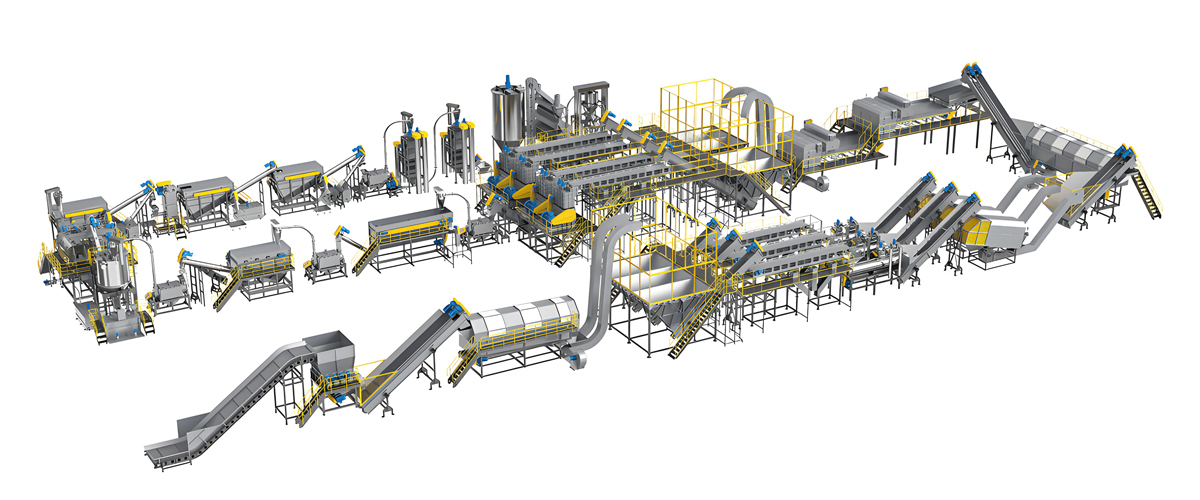
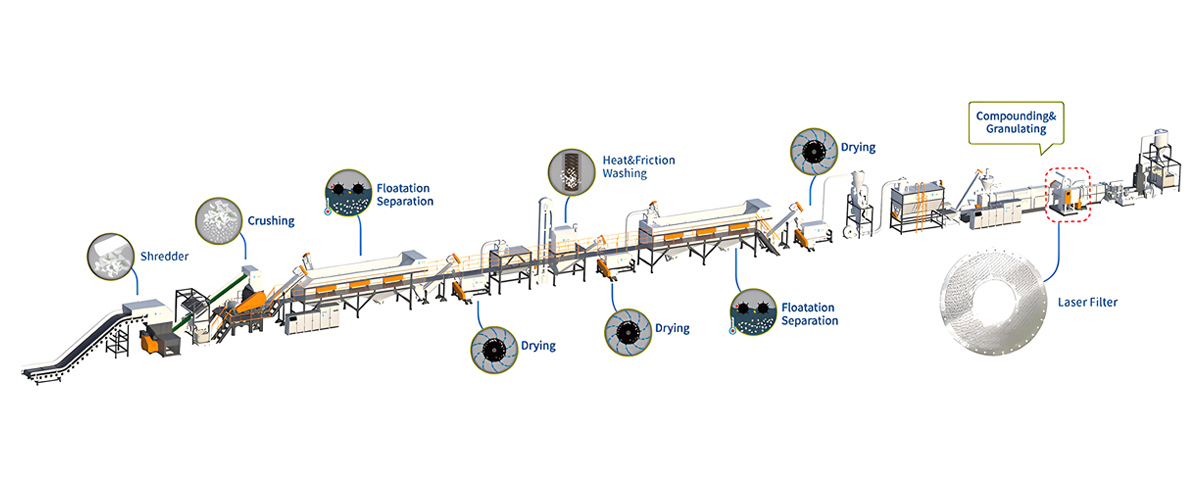
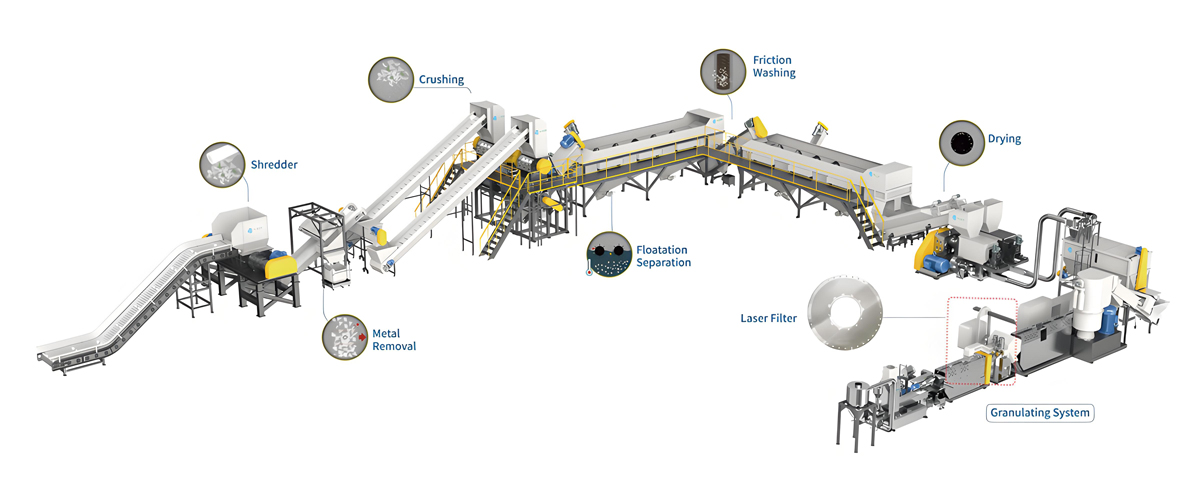
Small batch plastic recycling lines consist of the same basic equipment categories as large-scale operations, but with configurations optimized for lower throughput and greater flexibility. Understanding how each component functions and how component specifications affect performance helps buyers make informed equipment decisions. The four main stages of plastic recycling include size reduction, cleaning, separation, and pelletizing, each requiring appropriate equipment selection.
Size Reduction Equipment Selection
Size reduction equipment for small batch recycling ranges from simple tabletop shredders to compact industrial machines capable of processing hundreds of kilograms per hour. The appropriate size reduction equipment depends primarily on the types and quantities of plastic to be processed. Thin-walled containers and films require different shredding approaches than thick industrial parts or pipe materials.
Single shaft shredders offer excellent versatility for small batch operations, providing good reduction ratios while maintaining flexibility to handle varying material types. These machines typically cost between 5000 and 25000 dollars depending on throughput capacity and build quality. Compact shredders designed specifically for small batch operation can process 50 to 300 kilograms per hour and often feature quick-change cutting systems that reduce setup time when switching between materials.
Granulators complement primary shredders by providing secondary size reduction to produce uniform material particles suitable for washing and pelletizing. Small batch operations may use combination machines that perform both shredding and granulating in a single unit, reducing equipment costs and floor space requirements. Granulator blade maintenance and screen replacement should be considered when evaluating equipment options, as these consumables affect ongoing operating costs.
Cleaning and Washing System Configurations
Cleaning systems for small batch plastic recycling must effectively remove contaminants while remaining economically viable for lower throughput operations. Friction washers provide effective cleaning through mechanical scrubbing action and are well-suited for removing loosely attached contaminants from plastic materials. These machines typically use friction between plastic pieces and drum surfaces or between plastic pieces themselves to dislodge contamination.
Sink-float separation tanks provide essential cleaning for materials requiring density-based separation. These systems use water tanks where heavy contaminants sink while plastic materials float, allowing separation based on material density. Configuration options include single-tank systems for basic separation and multi-tank systems for more precise material sorting. Small batch operations can often achieve adequate results with simpler cleaning configurations than large operations require.
Complete small batch washing lines typically cost between 15000 and 60000 dollars depending on configuration complexity and automation level. Budget systems rely more heavily on manual monitoring and adjustment, while higher-end configurations include automated water temperature control, chemical dosing systems, and continuous monitoring sensors. Most small batch operations find that intermediate configurations provide the best balance of capability and cost.
Pelletizing Equipment for Small Scale Operations
Pelletizing represents the most capital-intensive stage of plastic recycling, and small batch operations have several equipment options ranging from compact laboratory-scale machines to small production pelletizers. The choice between extrusion pelletizers and strand pelletizers involves tradeoffs between throughput, pellet quality, and equipment cost that small batch operators must evaluate carefully.
Small extrusion pelletizers cost between 20000 and 80000 dollars depending on capacity and features. These machines melt plastic and extrude it through a die, with cutting systems producing pellets of consistent size. For small batch operations, compact extrusion pelletizers with capacities of 50 to 200 kilograms per hour provide economical solutions without the capital requirements of larger machines. Water-ring pelletizers offer good pellet quality with relatively simple equipment configurations.
Strand pelletizers represent another option for small batch operations, typically costing between 15000 and 50000 dollars for small-scale units. These systems extrude plastic into strands that are cooled in water baths and then cut into pellets by rotating knives. Strand systems offer good pellet quality and are well-suited for operations processing a limited number of material types, as they require more setup time when switching between materials compared to underwater pelletizers.
Evaluating Small Batch Plastic Recycling Line Options
Multiple approaches exist for obtaining plastic recycling equipment suitable for small batch production. Each sourcing option presents advantages and disadvantages that potential operators should carefully consider. The choice between new equipment, used equipment, complete systems, or individual components depends on budget constraints, technical capabilities, and operational requirements.
Complete Small Batch Recycling Systems
Complete small batch plastic recycling systems from manufacturers like POLYRETEC provide integrated equipment packages designed to work together effectively. These turnkey solutions typically include all necessary components from size reduction through pelletizing, along with supporting equipment such as conveyors, storage bins, and control systems. Complete systems cost between 80000 and 250000 dollars depending on capacity and configuration.
The primary advantage of complete systems is reduced integration risk, as all components are designed to work together and are tested before shipment. Manufacturer support and warranty coverage provide additional peace of mind for operators new to plastic recycling. However, complete systems represent significant capital investment that may be difficult to justify for smaller operations or those just starting in plastic recycling.
Complete systems also offer the advantage of predictable performance specifications. Rather than estimating how individual components will interact, buyers receive equipment with documented throughput, power consumption, and output specifications. This predictability simplifies business planning and helps ensure that equipment will meet production requirements once installed and operational.
Custom Configuration Approaches
Custom-configured small batch recycling lines assembled from individual components offer flexibility that complete systems cannot provide. Operators can select specific components based on their exact requirements, potentially achieving better fit between equipment capabilities and operational needs. Custom configurations also allow integration with existing equipment that operators may already own.
The primary challenge with custom configurations is ensuring that components work together effectively. Components must be matched for throughput capacity, and control systems must be integrated to allow coordinated operation. Custom configurations typically require more engineering work during specification and installation, which can increase overall project costs despite potentially lower equipment costs. Technical expertise in plastic recycling equipment is essential for successful custom configurations.
Custom configurations can cost between 50000 and 150000 dollars for small batch operations, depending on component quality and integration requirements. Budget-conscious operators may achieve lower costs by selecting less expensive components, but should carefully evaluate whether lower-cost options will deliver required reliability and performance over time.
Used Equipment Considerations
Used plastic recycling equipment can provide cost-effective access to processing capabilities for budget-constrained operators. Used equipment typically costs 30 to 60 percent less than equivalent new equipment, representing substantial savings for operators with limited capital. However, used equipment purchases require careful evaluation to avoid acquiring machines with hidden problems that will generate high repair costs.
Critical inspection points for used plastic recycling equipment include wear condition of blades and cutting elements, bearing condition and remaining service life, motor and electrical system condition, control system functionality, and overall structural condition including weld integrity and corrosion. Professional inspection services can provide valuable assessment for significant equipment purchases, potentially saving buyers from costly mistakes.
Used equipment sourcing options include manufacturer trade-in programs, equipment brokers specializing in plastic recycling machinery, and online marketplaces. Each source presents different risk profiles and support options. Manufacturer trade-in equipment often comes with some form of warranty or service support, while marketplace purchases typically carry no guarantees. Budget planning should include provisions for immediate repairs or replacements that may be needed when starting up used equipment.
Cost Analysis for Small Batch Recycling Operations
Understanding the complete cost structure for small batch plastic recycling operations helps prospective operators make informed business decisions. Capital equipment costs represent only one component of overall operational costs, and comprehensive analysis must include operating costs, maintenance requirements, and revenue potential. Realistic cost projections are essential for business planning and securing necessary financing.
Capital Investment Requirements
Capital requirements for small batch plastic recycling lines vary significantly based on equipment choices and operational scale. Entry-level configurations using compact equipment can be established for 40000 to 80000 dollars, including basic size reduction, cleaning, and small-scale pelletizing equipment. These configurations are suitable for operations processing up to 500 kilograms per day but may require more manual operation and have limited upgrade potential.
Mid-range small batch configurations suitable for processing 500 to 1500 kilograms per day typically require 100000 to 180000 dollars in capital investment. These configurations typically include better quality equipment with higher throughput capacity, more automation, and improved reliability. Mid-range operations can achieve production rates suitable for supporting modest commercial recycling businesses.
Upper-tier small batch configurations approaching 2000 kilograms per day may require 200000 to 350000 dollars in capital investment. These configurations approach the threshold where operations begin to realize economies of scale that improve profitability. Equipment quality and automation levels at this investment level typically support professional business operations with reliable production capacity.
Operating Cost Components
Operating costs for small batch plastic recycling include multiple categories that must be considered in business planning. Utility costs including electricity, water, and potentially natural gas for heating represent significant ongoing expenses. Small batch operations typically consume between 50 and 150 kilowatt-hours of electricity per ton of processed material depending on equipment efficiency and material types. Water consumption ranges from 2 to 5 cubic meters per ton for operations with water recycling systems.
Labor costs depend heavily on the degree of automation and the tasks required. Small batch operations with high automation may require only one operator per shift, while operations with more manual processes may require two or three workers. Labor costs typically range from 15 to 40 dollars per hour depending on location and worker qualifications. Training and supervision requirements add to effective labor costs beyond base wages.
Consumables and maintenance represent ongoing costs that must be budgeted throughout equipment life. Blade replacement for shredders and granulators represents the most significant consumable cost, with high-wear applications potentially requiring blade replacement every 200 to 500 operating hours. Screens, filters, and wear liners require periodic replacement, and maintenance supplies including lubricants, cleaning chemicals, and repair materials contribute to ongoing operating costs.
Revenue Potential and Profitability Analysis
Revenue potential for small batch plastic recycling depends on market prices for recycled plastic granules and the processing fees that can be charged for recycling services. Market prices for recycled plastics vary by resin type and quality, with clear materials commanding premium prices compared to colored or contaminated materials. Current market prices for recycled polyethylene and polypropylene typically range from 800 to 1500 dollars per ton depending on quality and market conditions.
Processing fees charged to plastic waste generators provide additional revenue that can improve operation profitability. Commercial and industrial customers often pay 200 to 500 dollars per ton for collection and recycling services, particularly for materials that would otherwise require disposal costs. Agricultural plastic recycling services may command even higher fees due to the specialized handling and cleaning requirements for farm plastics.
Profitability analysis for small batch operations should account for realistic production volumes, market prices, and operating costs. Operations achieving high-quality output with minimal contamination can command premium prices but require more sophisticated processing. Volume calculations should use realistic equipment availability factors, as maintenance, material changes, and other activities reduce effective production time below theoretical maximums.
Space and Infrastructure Requirements
Small batch plastic recycling operations require appropriate space and infrastructure to house equipment and support effective operations. Space requirements vary based on equipment configuration, but even compact systems require more floor space than many prospective operators anticipate. Understanding space requirements helps ensure that facilities can accommodate equipment needs before purchase commitments are made.
Facility Space Planning
Small batch recycling lines require between 100 and 300 square meters of floor space depending on equipment configuration and the degree of material staging required. Compact integrated systems can achieve smaller footprints, while configurations with more extensive material handling and staging areas require more space. Clear ceiling height of at least 4 meters accommodates most small batch equipment, with some larger machines requiring 5 meters or more.
Space allocation should include areas for incoming material storage, processing equipment, finished product storage, and support functions. Incoming material may require covered storage to protect materials from weather and contamination before processing. Finished product storage needs depend on production volumes and sales patterns, with storage for several days of production typically representing reasonable planning assumptions.
Facility planning should also address space for maintenance activities including component staging during repairs and storage for spare parts and consumables. Equipment access for maintenance and cleaning should be considered when arranging equipment layout, as inadequate access creates operational difficulties and increases maintenance time requirements.
Utility and Support Infrastructure
Plastic recycling equipment requires appropriate utility connections including electrical power, water supply, and drainage. Electrical power requirements vary based on equipment configuration, with small batch systems typically requiring 50 to 150 kilowatts of connected load. Three-phase electrical service is typically required for industrial recycling equipment, and facility electrical systems must meet relevant safety standards for industrial equipment installation.
Water supply and drainage systems must accommodate the cleaning stages in plastic recycling lines. Municipal water supply can support small batch operations, but water recycling systems significantly reduce consumption and discharge volumes. Water recycling systems collect, filter, and treat process water for reuse, reducing both water costs and discharge volumes. Small batch operations typically implement basic water recycling through settling tanks and filtration, with more sophisticated systems used for higher-volume operations.
Quality Control in Small Batch Operations
Quality control in small batch plastic recycling requires attention to both process parameters and output characteristics. Small batch operations may face higher per-unit quality costs than large operations due to less efficient scale, but effective quality control can achieve results that command premium prices. Understanding quality parameters and control approaches helps operators achieve consistent results that meet market requirements.
Material Identification and Sorting
Accurate material identification forms the foundation of quality plastic recycling. Small batch operations should implement material verification procedures that confirm plastic types before processing begins. Visual identification provides initial sorting guidance, but more sophisticated techniques including density testing and infrared spectroscopy may be needed for challenging materials or when market specifications require high confidence in material identification.
Contamination control begins with incoming material inspection and continues through each processing stage. Effective sorting removes obviously contaminated materials before processing, reducing cleaning requirements and improving output quality. Processing-stage separation removes contaminants that become apparent during washing and density separation, and final inspection catches any remaining quality issues before pellets are packaged for sale.
Process Monitoring and Adjustment
Small batch operations require active process monitoring to achieve consistent quality despite varying input materials. Key process parameters that should be monitored include washing water temperature and chemistry, separation tank densities, extrusion temperatures and pressures, and cooling water temperatures. Regular sampling and testing of output materials confirms that process parameters are achieving desired results.
Process adjustment skills develop through experience with specific materials and equipment configurations. Operators learn to recognize indicators that suggest parameter adjustments are needed, such as visual appearance changes, processing behavior differences, or output quality variations. Training should emphasize the relationship between process parameters and output quality so operators can make informed adjustments rather than reactive corrections after quality problems appear.
Pellet Quality Testing
Regular pellet quality testing provides objective assessment of recycling operation results and supports quality control improvement over time. Basic quality tests that small batch operations can perform include visual inspection for contamination and color consistency, particle size distribution analysis, and moisture content verification. More sophisticated testing including melt flow index measurement and mechanical property testing may require laboratory services.
Quality documentation supports continuous improvement by tracking quality results over time and identifying trends that suggest process or equipment issues. Records should include incoming material characteristics, process parameters used, and output quality results. This documentation enables analysis of the relationship between material inputs, processing approaches, and quality outcomes, supporting optimization of operation parameters.
Getting Started with Small Batch Plastic Recycling
Starting a small batch plastic recycling operation requires careful planning across multiple dimensions including market identification, equipment selection, facility preparation, and operational development. Thorough planning reduces startup risks and increases the likelihood of successful operation establishment. New operators should seek appropriate guidance and take time to develop understanding before committing significant resources.
Market Research and Business Planning
Successful small batch recycling operations begin with clear understanding of target markets and realistic business planning. Market research should identify potential customers for recycled plastic output, competing recycling operations in the region, and market prices for materials the planned operation will produce. Understanding market requirements for material quality, volume, and delivery schedules enables informed equipment and operational planning.
Business planning should include realistic financial projections based on expected market conditions and operational capabilities. Conservative projections that assume lower prices and higher costs than best-case scenarios provide margin for unexpected challenges. Capital requirements, operating costs, revenue projections, and cash flow forecasts should be developed in detail before significant commitments are made. Business plans should be reviewed with advisors experienced in recycling or manufacturing businesses.
Equipment Selection Process
Equipment selection for small batch recycling should begin with clear specification of operational requirements including throughput, material types, and output quality targets. Equipment vendors should be provided with detailed requirements and asked to propose configurations that meet stated needs. Proposals should be evaluated based on equipment quality, vendor support capabilities, price, and delivery timelines.
Reference customers of proposed equipment should be contacted when possible to learn from their operational experience. Vendor support capabilities including installation services, training, spare parts availability, and service response times significantly affect the ownership experience. Equipment representing significant capital investment deserves thorough evaluation that extends beyond initial purchase price to consider total cost of ownership over equipment life.
Operational Development Timeline
Realistic timelines for establishing small batch recycling operations typically span 6 to 12 months from initial planning through full production. This timeline includes market development, equipment procurement, facility preparation, installation and commissioning, operator training, and production startup. Compressed timelines increase risk and may compromise important preparation activities.
Commissioning periods should include adequate time for equipment optimization before production targets apply. New equipment often requires adjustment period during which parameters are refined and operators develop proficiency. Premature pressure for full production during commissioning can result in quality problems, equipment stress, and development of bad habits that persist into regular operation.
Conclusion
Small batch plastic recycling represents viable business opportunity for operators who carefully plan their ventures and select appropriate equipment. Understanding the distinct requirements of small batch operations, including flexibility needs, market opportunities, and realistic cost structures, provides foundation for successful venture development. Equipment selection should balance capability requirements against budget constraints while ensuring reliability sufficient for commercial operation.
The investment required for small batch plastic recycling operations ranges from approximately 40000 dollars for basic entry-level configurations to over 300000 dollars for high-capacity professional operations. Most aspiring operators find that mid-range configurations between 100000 and 180000 dollars provide the best balance of capability and capital requirements. Thorough planning, realistic business projections, and careful equipment selection contribute to successful establishment of small batch plastic recycling operations that can compete effectively in recycling markets.