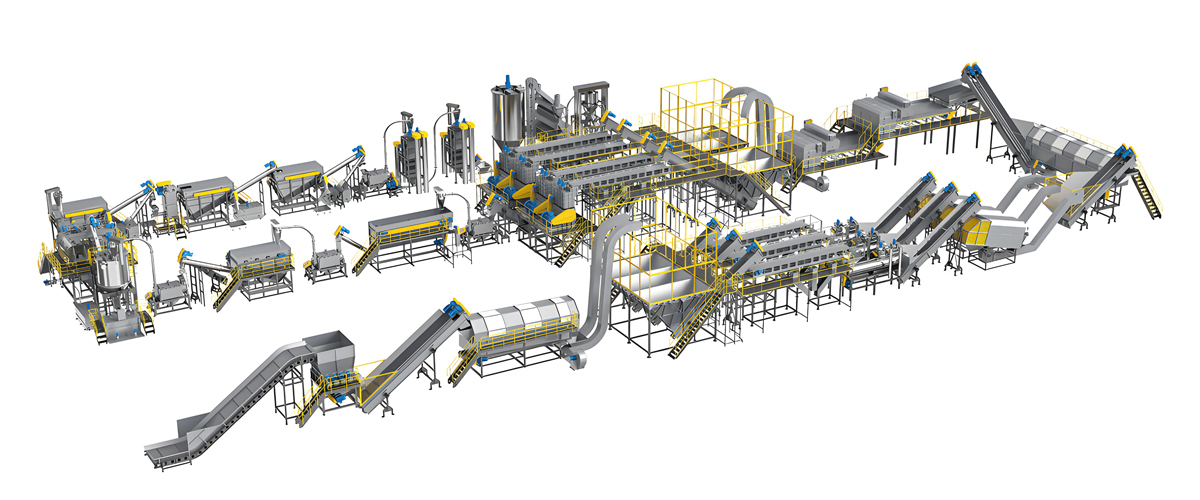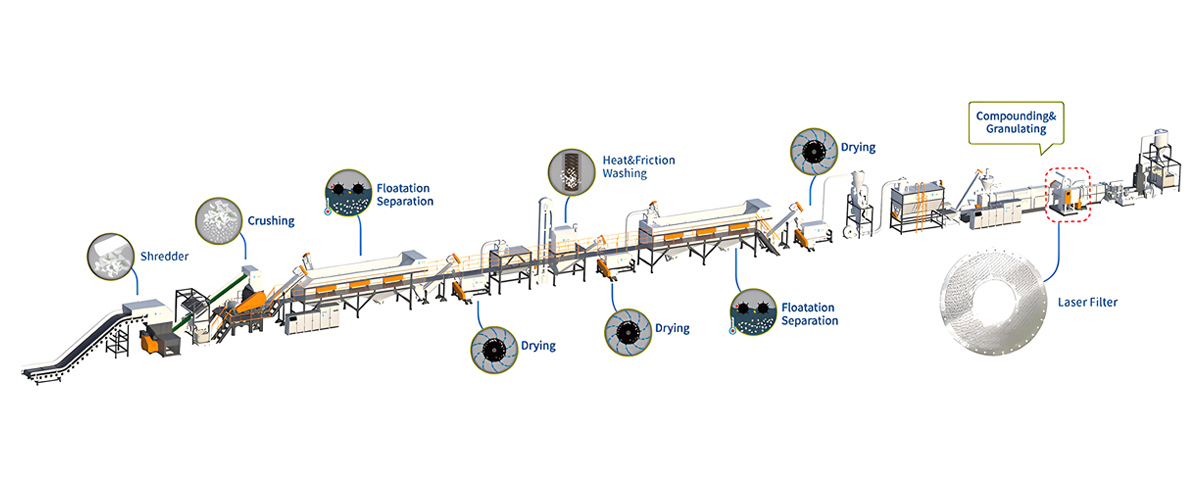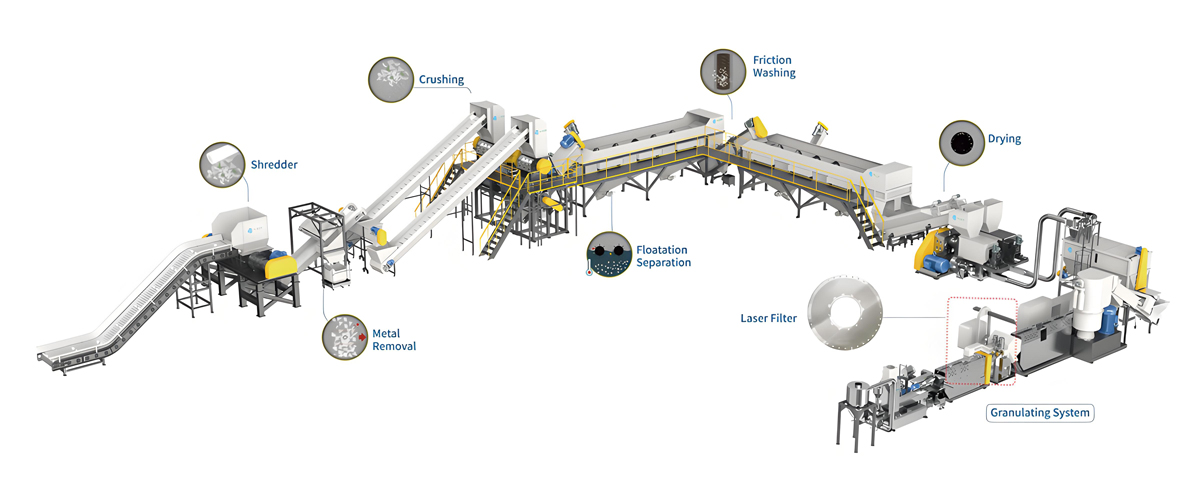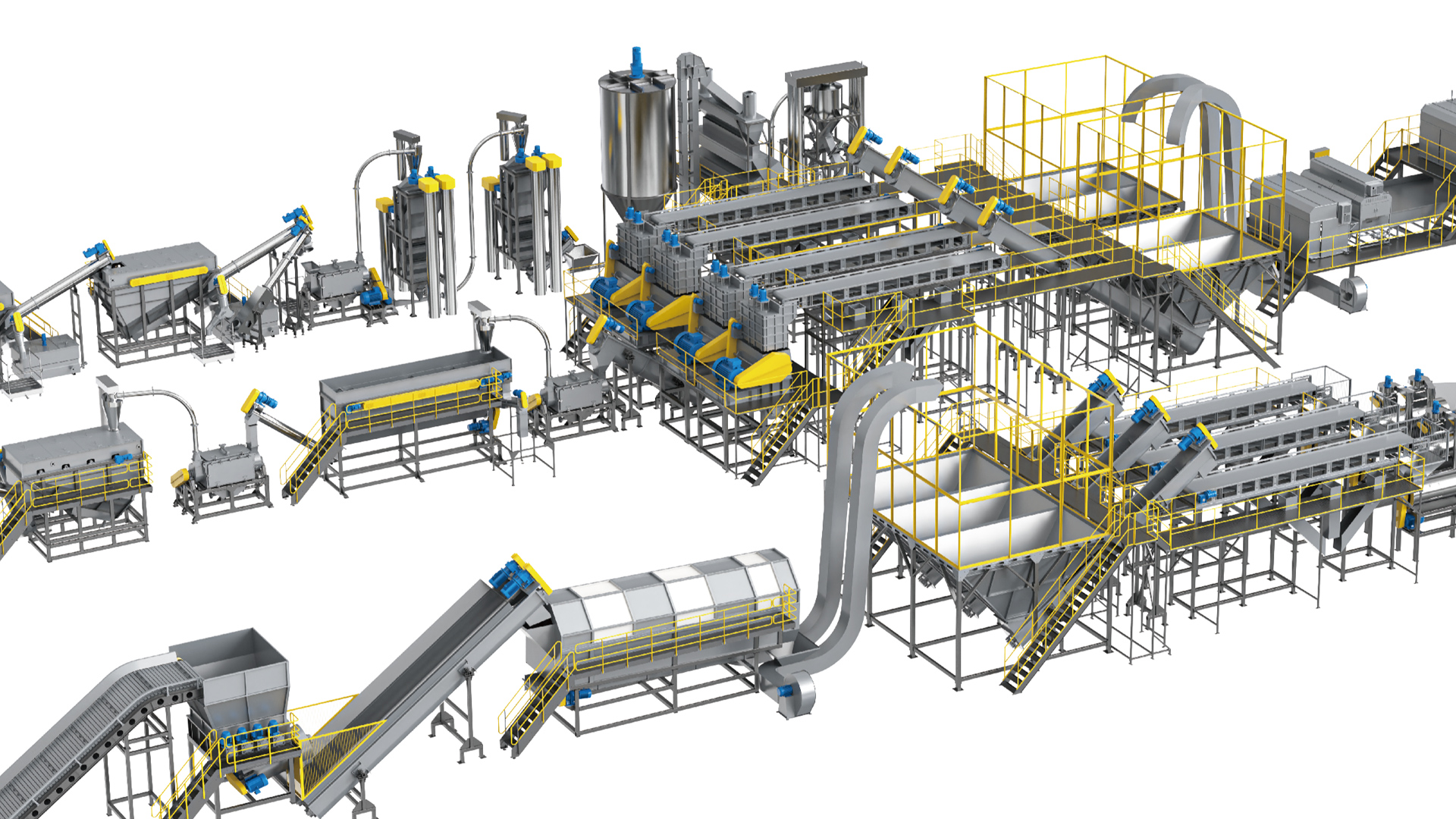

Achieving and maintaining stable performance of plastic recycling machines represents one of the most significant challenges facing recycling operations today. Equipment that performs inconsistently creates quality problems, reduces throughput, increases operational costs, and can damage customer relationships when output fails to meet specifications. Understanding the factors that influence plastic recycling equipment performance and implementing appropriate management practices helps operators achieve the reliable operation that successful recycling businesses require.
Understanding Performance Factors in Plastic Recycling Equipment
Plastic recycling machine performance depends on numerous interconnected factors ranging from equipment design and condition through operational practices and maintenance procedures. Performance variability often results from changes in these factors that operators may not immediately recognize as significant. Developing comprehensive understanding of performance drivers enables proactive management that prevents problems before they affect operation results.
Equipment Design and Configuration Impacts
Equipment design fundamentally determines the performance potential that can be achieved from plastic recycling machines. Design factors including motor power, cutting chamber dimensions, screen sizes, and temperature control capabilities establish performance boundaries that operational practices cannot exceed. Understanding design limitations helps operators set realistic performance expectations and avoid pushing equipment beyond capabilities that lead to problems.
Configuration choices during equipment purchase significantly affect achievable performance. Equipment selected for one application may perform poorly when applied to different material types or throughput requirements. For example, shredder configurations optimized for thick-walled containers may struggle with film materials, while high-throughput configurations may lack the flexibility needed for varied feed streams. Careful application of equipment to appropriate uses prevents performance problems that result from mismatch between equipment and application.
Material Characteristics and Their Effects
Input material characteristics significantly influence plastic recycling machine performance and must be understood by operators seeking consistent results. Material variables including plastic type, contamination level, moisture content, and particle size distribution all affect processing behavior and output quality. Material variation is often the primary cause of performance variability in operations where equipment and operational practices remain consistent.
Different plastic types process differently and may require equipment adjustments to achieve optimal results. Polyethylene and polypropylene have different melt characteristics that affect extrusion parameters in pelletizing equipment. Moisture content significantly affects both processing efficiency and output quality, with wet materials causing problems in extrusion systems and affecting pellet appearance. Contamination varies with material source and affects cleaning requirements, processing throughput, and equipment wear rates.
Environmental Factor Considerations
Environmental conditions in operating facilities affect plastic recycling equipment performance in ways that are often overlooked. Ambient temperature influences cooling system effectiveness and can affect equipment operating temperatures significantly in extreme conditions. Humidity affects material moisture content and electrical system performance. Dust and airborne contamination can affect sensor operation and contribute to equipment wear.
Facility infrastructure supporting equipment operation requires attention to ensure consistent performance. Electrical power quality including voltage stability and harmonic content affects motor performance and control system operation. Water supply temperature and pressure influence cooling system effectiveness. Compressed air quality and pressure affect pneumatic system operation in equipment that uses air systems. Infrastructure that fails to meet equipment requirements creates performance problems that may be attributed incorrectly to equipment issues.
Preventive Maintenance Strategies for Stable Performance
Preventive maintenance represents the foundation of stable plastic recycling equipment performance. Regular maintenance activities prevent the gradual degradation that leads to inconsistent operation and unexpected failures. Effective preventive maintenance programs address all equipment components and follow systematic schedules that ensure nothing is overlooked while avoiding unnecessary work that wastes resources.
Developing Comprehensive Maintenance Schedules
Comprehensive maintenance schedules for plastic recycling equipment should address all major components at appropriate intervals based on manufacturer recommendations and operational experience. Daily maintenance activities include visual inspections, lubrication checks, and cleaning that require minimal time but provide significant benefits through early problem detection. These daily activities should be documented to establish baseline conditions and identify trends.
Weekly maintenance expands on daily activities to include more detailed inspections and adjustments. Belt tension verification, conveyor alignment checks, and filter inspection represent typical weekly maintenance activities. Weekly tasks should be assigned specific time allocations and performed by personnel with appropriate training. Documentation should note any abnormalities observed and actions taken to address them.
Monthly and quarterly maintenance addresses components requiring less frequent attention but still critical to equipment performance. Gearbox oil analysis and replacement, bearing inspection and lubrication, and electrical system testing represent typical monthly activities. Quarterly reviews should assess overall equipment condition and adjust maintenance schedules based on observed performance and wear patterns.
Critical Component Monitoring and Replacement
Critical components in plastic recycling equipment require monitoring that goes beyond visual inspection to detect degradation before failures occur. Vibration analysis for rotating equipment including motors, gearboxes, and bearings provides early warning of developing problems. Temperature monitoring identifies abnormal heating that suggests inadequate lubrication, misalignment, or other issues. Oil analysis detects contamination and wear metal content that predict component failures.
Blade and cutting element condition significantly affects shredder and granulator performance. Regular inspection of blade sharpness, edge wear patterns, and mounting condition prevents performance degradation that results from dull or damaged cutting elements. Blade replacement should be planned based on operating hours and material characteristics rather than waiting for obvious performance decline. Maintaining adequate spare blade inventory prevents production delays when replacement is needed.
Bearing condition monitoring should include both temperature observation and vibration analysis. Bearing failures in plastic recycling equipment often produce warning signs through increased temperature and vibration before catastrophic failure occurs. Implementing bearing monitoring protocols that trigger detailed inspection or replacement when thresholds are exceeded prevents unexpected failures that halt production and may damage surrounding equipment.
Wear Component Management
Wear components in plastic recycling equipment require systematic management to ensure replacement occurs at appropriate times. Screens, liners, and wear plates in shredders and granulators gradually thin with use, eventually reaching conditions that affect equipment performance. Establishing replacement intervals based on material processed and operating hours provides predictability that supports both maintenance planning and production scheduling.
Extruder components including screws, barrels, and die plates experience wear that affects pellet quality and equipment performance. Screw wear measurement using specialized gauges enables tracking of wear progression and planning for rebuilding or replacement before performance suffers. Barrel liner wear creates clearance issues that affect melt quality and energy efficiency. Die plate condition directly affects pellet shape and size consistency.
Parts inventory management ensures that wear components are available when needed without excessive carrying costs. Historical data on component life under specific operating conditions enables accurate forecasting of replacement requirements. Coordination between maintenance and operations supports scheduling that minimizes production impact while ensuring components are replaced before failures occur.
Operating Parameter Optimization
Operating parameters for plastic recycling equipment significantly affect both performance and output quality. Optimization requires understanding parameter relationships and the effects of parameter adjustments on equipment behavior. Effective optimization programs establish baseline parameters and then refine settings based on observed results to achieve best possible performance for specific material conditions.
Understanding Parameter Relationships
Temperature parameters in plastic recycling equipment affect multiple aspects of processing including material flow, melt quality, and energy consumption. Extruder barrel temperature profiles must match material requirements to achieve proper melt conditions without degradation. Temperature too low results in incomplete melting and excessive motor load, while temperature too high causes material degradation and poor pellet quality. Optimal temperature settings vary by material type and must be adjusted when processing changes.
Speed parameters affect throughput, energy consumption, and product quality. Conveyor speeds, shredder rotor speeds, and extruder screw speeds all influence processing behavior. Higher speeds generally increase throughput but may reduce product quality or increase wear rates. Finding optimal speed settings requires balancing multiple factors and may differ for different material types or production requirements.
Pressure parameters in extrusion systems provide important diagnostic information about equipment condition and processing behavior. Die pressure affects melt consistency and pellet quality, while abnormal pressure readings can indicate screen blockage, screw wear, or other problems. Monitoring pressure parameters and understanding normal ranges helps identify problems before they cause quality issues or equipment damage.
Establishing Optimal Operating Ranges
Optimal operating ranges for each equipment parameter should be established through systematic testing and refined based on operational experience. Initial ranges based on manufacturer recommendations provide starting points that can be adjusted based on results achieved with actual materials being processed. Documentation of settings and results enables identification of optimal configurations for specific applications.
Parameter documentation should include not only settings but also material characteristics, environmental conditions, and quality results achieved. This comprehensive documentation enables analysis that identifies which parameter adjustments improve results and which have minimal effect. Statistical approaches can help identify significant factors affecting performance, guiding optimization efforts toward changes that produce meaningful improvements.
Operating ranges should include both target values and acceptable variation limits. When parameters drift beyond acceptable limits, investigation should identify causes and appropriate corrective actions. Parameter trending over time can reveal gradual changes that suggest developing problems requiring attention before they affect performance significantly.
Adapting Parameters for Material Variations
Material variations require parameter adjustments to maintain consistent performance and quality. Different plastic types have different processing requirements that may require significant parameter changes. Clean homogeneous materials process differently than contaminated or mixed materials, requiring adjusted parameters for each material stream processed.
Seasonal variations in material moisture content may require drying system adjustments or parameter modifications to compensate for moisture effects. Materials stored outdoors may have different characteristics than materials stored in controlled environments. Understanding how material variations affect processing enables proactive parameter adjustments that maintain consistent output despite input variability.
Feed rate adjustments often provide the most effective response to material variations affecting processing. Materials that are more difficult to process may require reduced feed rates that maintain quality despite lower throughput. Automatic feed rate control systems can respond to processing conditions, adjusting feed rates to maintain optimal operation within equipment capabilities.
Process Monitoring and Quality Control Systems
Effective process monitoring enables detection of performance variations that might otherwise go unnoticed until quality problems appear. Modern plastic recycling equipment often includes monitoring systems that track key parameters and alert operators to abnormal conditions. Understanding these systems and responding appropriately to alerts prevents many problems from developing into significant issues.
Implementing Comprehensive Monitoring
Comprehensive monitoring covers all aspects of equipment operation that affect performance and quality. Temperature monitoring throughout processing systems identifies hot spots, cold spots, and abnormal trends. Pressure monitoring at critical points provides early warning of blockages, wear, and other problems. Current monitoring on motors reveals abnormal loading that suggests mechanical issues.
Production monitoring tracks throughput, efficiency, and quality metrics that indicate overall operation performance. Weighing systems on input and output materials provide accurate production data that supports efficiency calculations. Quality monitoring at various process stages identifies where problems occur and enables corrective action before materials progress to finished product.
Environmental monitoring including temperature, humidity, and utility consumption provides context for interpreting equipment performance data. Apparent performance changes may result from environmental variations rather than equipment issues. Understanding environmental effects enables appropriate interpretation of performance data and prevents unnecessary investigation of normal variations.
Responding to Monitoring Alerts
Monitoring systems only provide value when operators respond appropriately to alerts they generate. Alert response procedures should specify appropriate actions for each alert type, ensuring consistent response regardless of which operator receives the alert. Response documentation supports analysis of alert patterns and effectiveness of response actions.
Alarm thresholds should be set to provide adequate warning without excessive false alarms that condition operators to ignore alerts. Initial threshold settings may need adjustment based on operational experience to achieve appropriate alert frequency. Thresholds too tight generate excessive alerts that waste operator attention, while thresholds too loose may miss important warning signs.
Trend analysis of monitoring data often reveals patterns that suggest developing problems before alarms are triggered. Regular review of monitoring trends enables proactive intervention that prevents problems from developing. Shift handover procedures should include review of monitoring data so incoming operators understand current conditions and any ongoing concerns.
Quality Control Integration
Quality control systems should integrate with process monitoring to enable rapid response to quality issues. Real-time quality monitoring including visual inspection systems, particle size analyzers, and moisture sensors can detect quality variations immediately rather than waiting for laboratory analysis. Immediate detection enables rapid correction before large quantities of material are processed to incorrect specifications.
Statistical process control approaches use monitoring data to identify when processes are drifting toward specification limits. Control charts tracking key quality parameters reveal trends that suggest corrective action is needed before specifications are violated. These approaches require careful specification of control limits and response protocols but can significantly reduce quality variability.
Quality feedback loops connect output quality results to operating parameter adjustments. When quality data indicates systematic issues, parameter adjustments should be implemented and results monitored to confirm improvement. Continuous improvement of quality through this feedback process gradually refines operating conditions to achieve best achievable quality within equipment capabilities.
Operator Training and Skill Development
Operator competence significantly affects plastic recycling equipment performance, making training and skill development essential investments for operations seeking stable performance. Well-trained operators recognize problems early, make appropriate parameter adjustments, and follow procedures that maintain equipment condition. Skill development should be ongoing throughout operator careers rather than concentrated at initial training.
Core Competency Requirements
Core competencies for plastic recycling equipment operators include technical knowledge, procedural knowledge, and problem-solving skills. Technical knowledge encompasses understanding of how equipment works, why procedures are specified as they are, and how different factors affect performance. Procedural knowledge ensures consistent execution of maintenance, operation, and quality control activities. Problem-solving skills enable effective response to situations not covered by standard procedures.
Equipment-specific knowledge should include understanding of all major systems, their functions, and their interrelationships. Operators should understand what normal operation looks, sounds, and feels like so they can recognize abnormal conditions. Understanding of warning signs that precede common problems enables early intervention that prevents escalation.
Quality knowledge enables operators to assess output quality and connect quality variations to their causes. Operators should understand how processing parameters affect quality characteristics and recognize when quality data indicates that parameter adjustments are needed. Quality-focused operators take ownership of quality outcomes rather than simply following procedures without understanding their purpose.
Ongoing Training and Skill Building
Initial operator training should cover all aspects of equipment operation, maintenance, and quality control. This training should combine classroom instruction on concepts and procedures with hands-on practice under supervision before operators work independently. Completion criteria should verify understanding and competency rather than simply requiring attendance.
Ongoing training maintains and develops operator skills throughout their careers. Refresher training on procedures ensures that operators remain current on any changes or updates. Advanced training develops additional skills that enable operators to handle more complex situations and contribute to continuous improvement. Cross-training develops backup capabilities that support operational flexibility.
Skill assessments should periodically verify that operators maintain required competencies. Assessment results identify training needs and opportunities for recognition of excellent performance. Documentation of training and assessment supports compliance with quality system requirements and regulatory obligations.
Knowledge Sharing and Best Practice Development
Individual operator experience represents valuable knowledge that should be shared across operations. Effective knowledge sharing captures lessons learned from both successes and failures, enabling all operators to benefit from experiences that any single operator might have. Formal knowledge sharing mechanisms including documentation, training, and team discussions ensure that valuable insights are not lost when operators change positions.
Best practice development identifies the most effective approaches discovered through operational experience and establishes them as standard procedures. Successful parameter settings, maintenance techniques, and problem-solving approaches should be documented and incorporated into training. Best practice adoption requires demonstration of benefits and buy-in from operators who will follow the practices.
Continuous improvement culture encourages operators at all levels to identify and implement improvements. Operators close to equipment often see improvement opportunities that management or engineering might miss. Encouraging and recognizing improvement contributions motivates ongoing engagement with improvement efforts.
Troubleshooting Performance Problems
Despite best preventive efforts, performance problems will occasionally occur that require systematic troubleshooting to resolve. Effective troubleshooting approaches maximize efficiency in problem diagnosis and solution implementation. Understanding common problem patterns and their causes enables faster resolution when problems occur.
Systematic Diagnostic Approaches
Systematic diagnostic approaches ensure thorough problem investigation that identifies root causes rather than just addressing symptoms. The five-why technique provides simple framework for exploring cause-and-effect relationships by repeatedly asking why questions until root causes are identified. More complex problems may require fishbone diagrams or fault tree analysis to systematically explore possible causes.
Diagnostic data collection should precede hypothesis formation to ensure that conclusions are based on evidence rather than assumptions. Relevant data includes current operating parameters, recent changes, material characteristics, environmental conditions, and quality results. Comparing current conditions to historical normal data reveals deviations that suggest causes.
Testing hypotheses through controlled experiments provides evidence for or against suspected causes. Changes should be implemented one at a time when possible to clearly identify which change produces which effect. Documentation of testing and results builds knowledge that supports future troubleshooting efforts.
Common Performance Issues and Solutions
Throughput reduction in plastic recycling equipment commonly results from material bridging in feed systems, blade dullness in shredders, screen blockage in granulators, or melt problems in extrusion systems. Each potential cause produces characteristic symptoms that help narrow diagnosis. Addressing throughput problems requires identifying the specific cause rather than implementing generic solutions.
Quality variations often result from parameter instability, material variation, or equipment wear. Stable operation producing consistent quality requires that all contributing factors remain stable. When quality varies, systematic investigation should compare current conditions to historical baseline conditions to identify what has changed. Changes in input materials are common causes of quality variations that operators may not immediately recognize.
Abnormal noise or vibration indicates mechanical problems that require immediate attention to prevent damage. Sources include bearing failures, misalignment, looseness, and contact between moving parts. Noise investigation should proceed carefully with appropriate safety precautions, including lockout-tagout when inspection requires close approach to moving equipment.
Preventing Problem Recurrence
Effective problem solving addresses root causes to prevent recurrence rather than just treating symptoms. Apparent solutions that do not address underlying causes often result in problems returning after temporary improvement. Verification that solutions have eliminated root causes should precede problem closure.
Problem analysis should identify whether the issue represents an isolated occurrence or reflects systemic problems requiring broader changes. Recurring problems often indicate underlying process or equipment design issues that should be addressed through improvement rather than repeatedly troubleshooting the same symptoms.
Documentation of problems and solutions supports organizational learning and prevents recurrence through improved procedures, training, or design. Knowledge bases capturing problem-solving experiences enable faster resolution when similar problems occur in the future. Sharing lessons learned across operations prevents the same problems from occurring multiple times at different facilities.
Performance Measurement and Continuous Improvement
Continuous improvement requires performance measurement that enables objective assessment of progress and identification of improvement opportunities. Key performance indicators should be established, tracked, and regularly reviewed to guide improvement efforts. Measurement systems must provide accurate data that supports confident decision-making.
Key Performance Indicators for Plastic Recycling
Equipment effectiveness metrics including overall equipment effectiveness provide comprehensive assessment of equipment performance. OEE combines availability, performance, and quality factors to provide single metric that reflects overall equipment contribution to production goals. Tracking OEE over time reveals trends and improvement progress.
Production metrics including throughput, efficiency, and yield provide operational performance data. These metrics should be tracked by equipment, shift, and time period to enable analysis of factors affecting performance. Comparison against targets and historical performance identifies where improvement is needed and where progress has been achieved.
Quality metrics including first-pass quality, rework rates, and customer complaints provide output quality assessment. Quality metrics should be tracked with sufficient granularity to enable identification of problem sources and improvement effects. Customer feedback integration ensures that quality improvements address actual customer requirements.
Analysis and Improvement Planning
Performance data analysis should identify patterns, trends, and relationships that suggest improvement opportunities. Statistical analysis techniques enable objective assessment of whether observed variations represent significant changes or normal variation. Trend analysis reveals whether improvement initiatives are producing desired effects over time.
Improvement priorities should be established based on impact and feasibility assessments. High-impact improvements that address significant performance gaps deserve priority attention, while quick wins that require minimal effort should be captured as they are identified. Improvement roadmaps that sequence initiatives based on dependencies and priorities guide systematic progress.
Improvement project management ensures that initiatives are properly planned, executed, and verified. Project tracking should include progress monitoring, issue identification, and adjustment as needed. Success criteria should be defined before initiatives begin to enable objective assessment of results achieved.
Cost Considerations for Performance Optimization
Performance optimization requires investment in training, monitoring systems, maintenance, and improvement activities. Balancing these investments against returns achieved enables efficient resource allocation that maximizes performance improvement per dollar invested. Understanding cost-benefit relationships for different optimization approaches guides prioritization decisions.
Investment Requirements
Monitoring system investments range from basic manual approaches to sophisticated automated systems with real-time data analysis. Basic systems require minimal capital investment but significant labor for data collection and analysis. Automated systems require larger capital investments but reduce ongoing labor costs and enable more comprehensive monitoring. Most operations benefit from intermediate approaches that balance capability against cost.
Training investments include initial development costs, delivery costs, and ongoing reinforcement and development. Return on training investment includes both direct performance benefits and indirect benefits from improved safety, reduced errors, and enhanced capability. Training investments should be allocated across competencies based on importance and current skill levels.
Maintenance investments include both planned maintenance activities and investments in diagnostic capabilities that enable predictive approaches. Investments in spare parts inventory ensure that components are available when needed while avoiding excessive carrying costs. Balance between maintenance investment and equipment reliability should be regularly assessed.
Return on Performance Optimization
Performance optimization returns include increased production, reduced waste, lower operating costs, and extended equipment life. Quantifying these returns enables objective assessment of optimization investments. Baseline measurements before optimization initiatives begin provide comparison points for assessing improvement achieved.
Reduced downtime from improved reliability directly increases production capacity and revenue. Energy efficiency improvements reduce operating costs for every unit of production. Quality improvements increase first-pass yield and reduce rework costs. Extended equipment life reduces capital replacement requirements and associated costs.
Non-quantifiable benefits including improved safety, enhanced reputation, and greater operational flexibility also result from performance optimization. These benefits, while difficult to measure directly, contribute to overall business value and should be considered in investment decisions.
Conclusion
Achieving stable performance of plastic recycling machines requires systematic attention to equipment condition, operating practices, monitoring systems, and continuous improvement. The interconnected nature of performance factors means that weakness in any area can undermine overall results. Comprehensive approaches that address all performance drivers deliver the reliable operation that successful recycling businesses require.
Investment in performance optimization including monitoring systems, training, and maintenance typically generates returns that justify costs many times over. Improved reliability, quality, and efficiency contribute directly to business profitability while also supporting safety and environmental objectives. Operations that make these investments gain competitive advantages that support long-term success in recycling markets.