
Urban plastic waste management represents one of the most pressing environmental challenges facing cities worldwide. The concentration of population, commercial activity, and consumer behavior in urban areas generates enormous quantities of plastic waste that overwhelm traditional disposal approaches. Implementing effective plastic recycling solutions for urban environments requires integrated systems that address collection, processing, and market development while balancing economic viability with environmental objectives.
Understanding Urban Plastic Waste Streams
Effective recycling solutions begin with thorough understanding of the waste streams they must address. Urban plastic waste differs significantly from industrial or agricultural plastic waste in composition, contamination levels, and collection logistics. Understanding these characteristics enables design of recycling systems appropriately matched to urban conditions.
Municipal Solid Waste Plastic Composition
Municipal plastic waste in urban areas typically includes packaging materials that represent the largest category by volume and weight. Polyethylene terephthalate bottles for beverages and food containers comprise a significant portion of recyclable plastic in municipal waste streams. High-density polyethylene containers for milk, juice, and household products represent another substantial recyclable category. Polypropylene and polystyrene containers add to the recyclable portion, though with varying market values.
Flexible packaging including plastic films, bags, and wrappers presents increasing challenges for urban recycling systems. While technically recyclable, flexible plastics collect contamination easily and are difficult to process through conventional recycling equipment. Mixed material packaging that combines plastics with other materials often cannot be recycled economically with current technologies. Understanding the proportions of recyclable versus challenging materials enables realistic planning for recycling system capacity.
Contamination in municipal plastic waste significantly affects recycling system design and economics. Materials co-mingled with food waste, organic matter, and non-recyclables require extensive cleaning before processing. Source contamination from improper sorting adds cleaning requirements that increase processing costs. Effective collection systems that minimize contamination improve recycling economics significantly.
Commercial and Institutional Plastic Waste
Commercial establishments including retail stores, restaurants, and hotels generate substantial quantities of relatively clean plastic waste. Commercial plastic waste often has lower contamination levels than residential waste due to centralized waste management practices. Film plastics from packaging, containers from food service, and other commercial plastics represent significant recycling opportunities.
Institutional sources including schools, hospitals, and government facilities generate consistent plastic waste streams with predictable compositions. Healthcare facilities produce specialized plastic waste including medical containers and packaging that requires handling according to regulatory requirements. Educational institutions often implement waste reduction and recycling programs that generate clean, well-sorted materials for recycling.
Industrial and manufacturing facilities in urban areas generate plastic waste including production scrap, off-specification products, and packaging materials. Industrial plastic waste typically has low contamination and consistent composition that enables efficient recycling. Direct relationships between industrial generators and recyclers often enable preferential pricing for quality industrial plastic waste.
Construction and Demolition Plastic
Urban construction and demolition activities generate plastic materials including piping, insulation, and packaging. These materials often have distinct compositions from consumer plastics and may require specialized processing approaches. PVC piping represents a significant recyclable material stream with established recycling markets, though separate collection is typically required to prevent contamination with other materials.
Demolition debris containing plastics requires sorting and separation before recycling can proceed efficiently. Plastics from construction applications often retain their structural properties and command premium prices in recycling markets. Recovery programs that capture construction plastic materials divert waste from landfills while generating revenue that offsets demolition costs.
Collection System Design for Urban Environments
Efficient collection systems form the foundation of successful urban plastic recycling programs. Collection system design must balance coverage, convenience, and cost while ensuring that collected materials reach processing facilities in suitable condition. Multiple collection approaches often combine to create comprehensive coverage of urban areas.
curbside Collection Programs
Curbside collection programs provide convenient recycling access for residential households and represent the primary collection mechanism for municipal plastic recycling in many urban areas. Drop-off programs supplement curbside collection for materials not accepted in curbside programs. Successful curbside programs require public education that achieves high participation rates and acceptable contamination levels.
Collection frequency for plastic recycling typically ranges from weekly to biweekly depending on local conditions and program resources. More frequent collection maintains cleaner collection containers and reduces odor complaints, particularly in warmer climates. Collection frequency affects truck routing, labor requirements, and operational costs that must be balanced against service quality objectives.
Single-stream collection that combines all recyclable materials in one container simplifies participation for householders but increases contamination levels and processing requirements. Dual-stream collection that separates paper from containers reduces contamination but requires larger collection containers and may reduce participation. Program choice affects both collection costs and processing requirements.
Drop-off Center Networks
Drop-off recycling centers provide collection access for residents who cannot participate in curbside programs and for materials not accepted through curbside collection. Strategic placement of drop-off centers in high-traffic locations maximizes accessibility and convenience. Shopping centers, municipal facilities, and transit stations provide convenient locations that attract users without requiring special trips.
Container formats for drop-off centers vary based on anticipated volumes and available space. Paladin containers with multiple openings enable separation of different material types at the collection point. Single-container designs with guide frames encourage proper sorting through visual prompts. Container capacity and collection frequency must be matched to ensure that containers are adequate for demand without overflow.
Mobile collection events supplement permanent drop-off centers by bringing collection services to neighborhoods on scheduled days. Mobile collections accept a broader range of materials than typical drop-off centers, including flexible plastics and bulky items. Event scheduling should align with community patterns to maximize participation and capture materials that residents have accumulated.
Commercial Collection Services
Dedicated commercial collection services address the substantial plastic waste generated by businesses, institutions, and other non-residential sources. Commercial collection typically uses larger containers and more frequent service than residential collection to accommodate larger volumes. Commercial generators often require collection services that include containers, regular pickup, and documentation for environmental compliance purposes.
Waste audits for commercial generators identify plastic recycling opportunities and establish baseline waste composition. Audit results guide container sizing, collection frequency, and pricing structures that meet generator needs while maintaining service profitability. Regular follow-up audits verify that recycling programs achieve anticipated results and identify improvement opportunities.
Zero-waste event services address temporary high-volume generation from festivals, construction sites, and special events. These services include container provision, frequent collection, and post-event cleanup that returns venues to normal condition. Event recycling captures materials that would otherwise enter waste streams during peak generation periods.
Processing Technology for Urban Plastic Streams
Processing technology for urban plastic waste must handle variable feed streams with higher contamination levels than industrial or agricultural materials. Processing systems range from simple manual sorting to sophisticated automated facilities with advanced separation technology. Equipment selection depends on material streams processed, quality objectives, and available capital.
Material Recovery Facility Design
Material recovery facilities process comingled recyclables collected from residential and commercial sources. MRF design must accommodate the variability inherent in source-separated materials while achieving separation efficiencies that enable profitable material marketing. Modern MRFs use combination of manual sorting and automated equipment to achieve high recovery rates for target materials.
Sorting equipment including screens, magnets, eddy current separators, and optical sorters removes contaminants and separates materials by type. Screens separate materials by size, removing small particles and oversized materials that could cause processing problems. Magnets extract ferrous metals, while eddy current separators recover non-ferrous metals. Optical sorters identify and separate different plastic types based on their spectroscopic properties.
Manual sorting stations provide quality control that automated systems cannot achieve, particularly for materials with visual characteristics that distinguish them from automated sorting capabilities. Sorters remove contaminants that escape automated separation and ensure that material streams meet buyer specifications. Training and supervision of sorting staff significantly affect quality results achieved.
Plastic Recycling Line Configuration
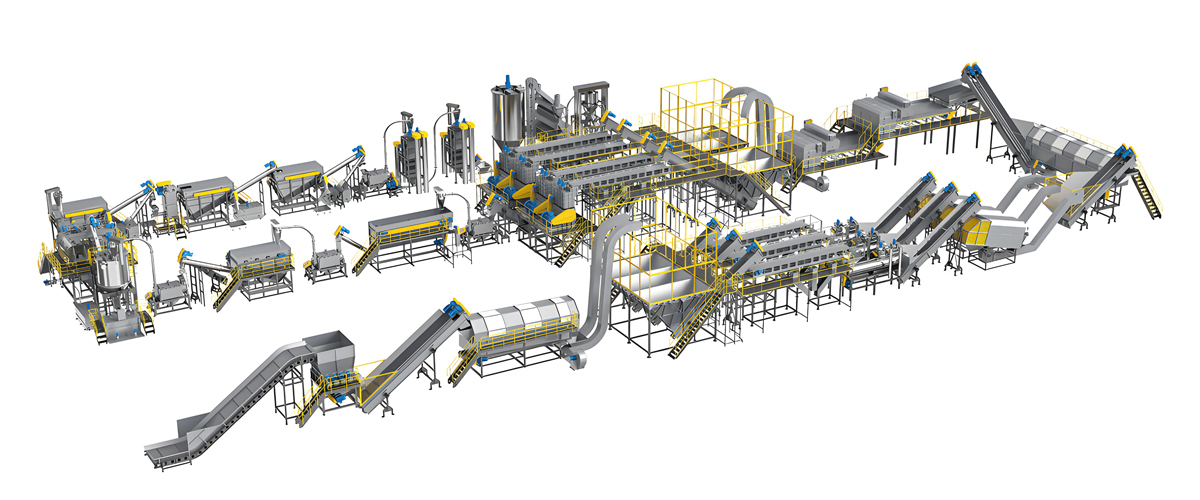
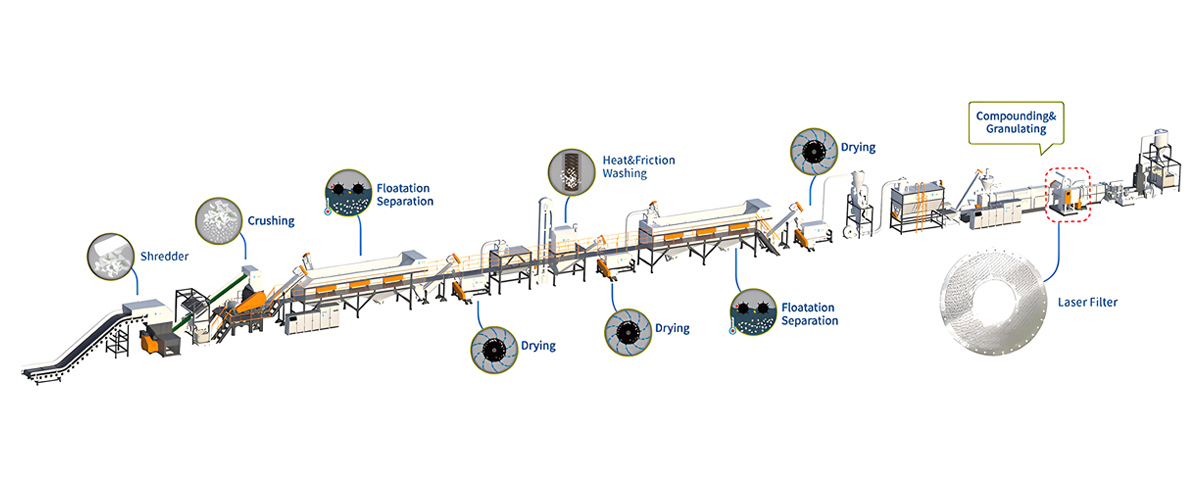
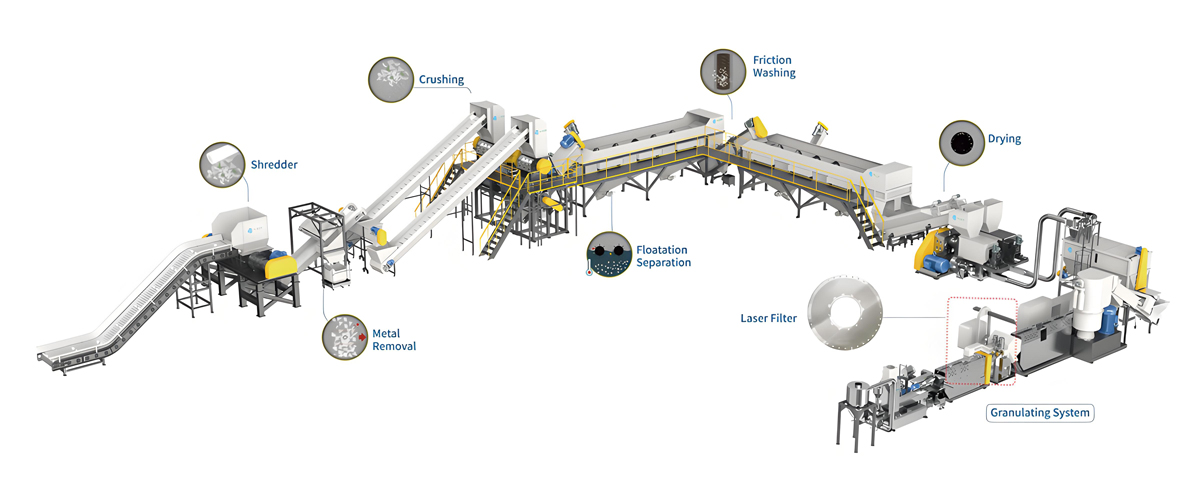
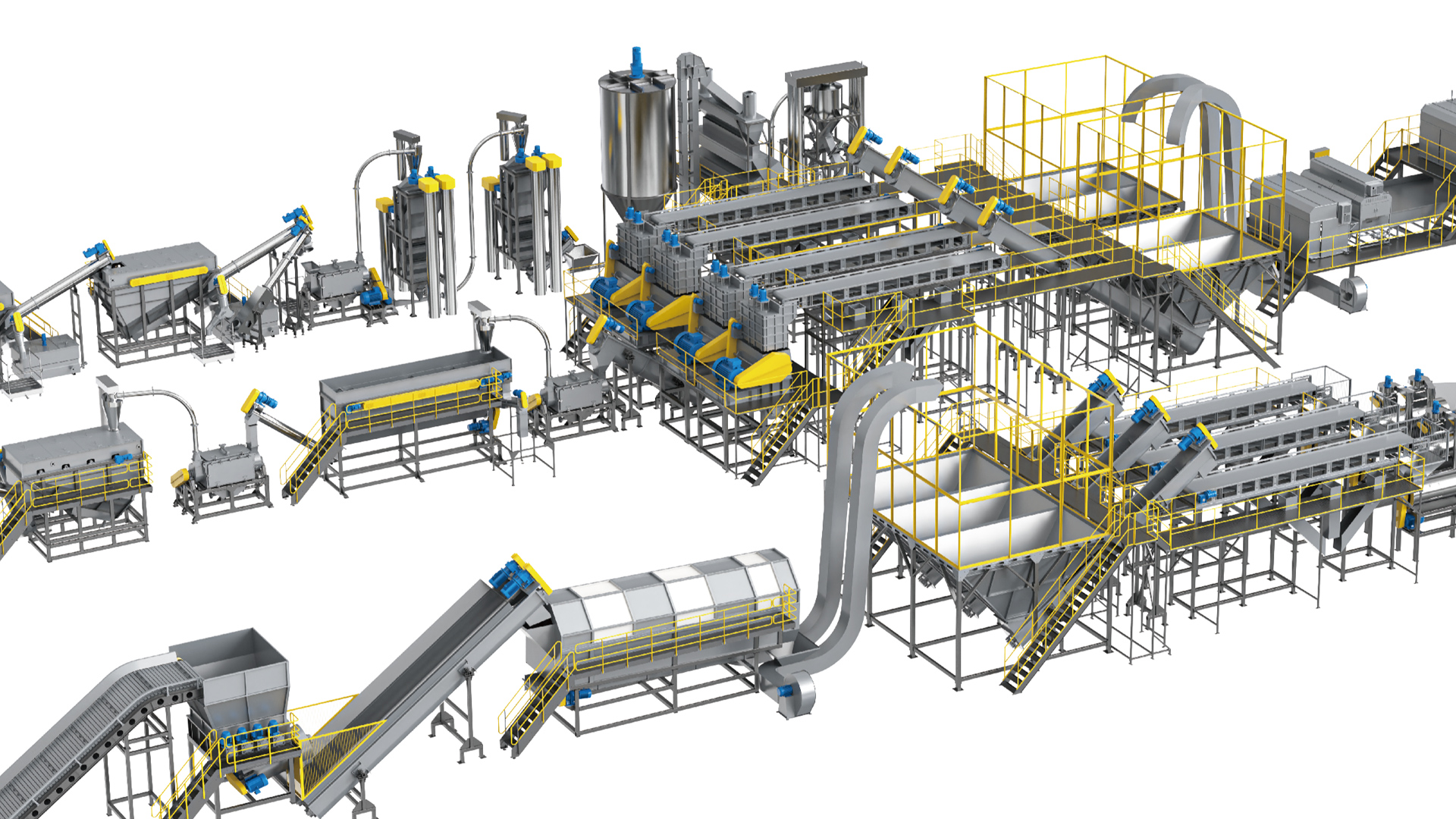
Complete plastic recycling lines for urban waste include preprocessing, cleaning, separation, and pelletizing stages that transform contaminated materials into usable recycled plastic. Configuration options range from simple systems processing limited material types to sophisticated facilities capable of handling diverse urban plastic streams. Equipment selection should match anticipated material streams and output quality objectives.
Preprocessing equipment including shredders, granulators, and air separation systems prepares materials for cleaning and further processing. Size reduction increases surface area that facilitates cleaning and enables processing through subsequent equipment. Air separation removes lightweight contaminants including labels, film fragments, and paper that float during washing operations.
Cleaning systems remove contamination through combinations of mechanical agitation, chemical treatment, and water management. Friction washers provide mechanical cleaning through scrubbing action between plastic pieces. Hot wash systems use heated water and detergents to dissolve adhesives, labels, and organic contamination. Rinse tanks remove cleaning agents and remaining loose contamination before drying.
Advanced Separation Technologies
Hydrocyclone systems separate plastics by density using centrifugal force in water-filled conical chambers. Heavier materials exit through the bottom while lighter materials overflow for collection. Hydrocyclone separation enables division of mixed plastics into groups that can be further sorted by more specialized equipment.
Electrostatic separation systems exploit differences in electrical properties between plastic types to achieve separation without liquid media. These systems can separate plastics with similar densities but different electrical characteristics. Electrostatic separation is particularly effective for film materials and mixed plastics that are difficult to separate using density methods.
Near-infrared spectroscopy combined with air jets enables automated sorting of plastics by resin type at high throughput rates. NIR sorters can distinguish between different polyethylene and polypropylene types, PET colors, and other polymer variations. These systems significantly improve separation efficiency compared to manual sorting for applications requiring material-specific streams.
Complete Processing Facility Costs
Capital costs for urban plastic recycling facilities vary based on capacity, automation level, and technology sophistication. Small-scale facilities processing up to 5000 tons annually can be established for 2 to 5 million dollars with semi-automated processing. Mid-scale facilities processing 10000 to 25000 tons annually typically require 5 to 15 million dollars in capital investment.
Large-scale facilities processing over 25000 tons annually may require 15 to 40 million dollars depending on technology selection and infrastructure requirements. Advanced automated facilities with comprehensive quality control systems represent the higher end of this range. Processing facilities with on-site pelletizing capability add 500000 to 3 million dollars to capital requirements depending on capacity and configuration.
Operating costs for urban plastic recycling include labor, utilities, maintenance, and marketing expenses. Labor represents the largest operating cost category, particularly for facilities with extensive manual sorting requirements. Automation reduces labor costs but increases capital requirements and maintenance complexity. Operating cost per ton typically ranges from 150 to 350 dollars depending on facility efficiency and local cost conditions.
Market Development for Recycled Plastics
Successful urban plastic recycling requires markets for collected and processed materials. Market development efforts that create consistent demand for recycled plastics ensure that collection and processing investments generate returns rather than accumulating as inventory. Market development addresses both traditional塑料 applications and innovative new uses that expand demand.
Traditional Market Applications
Packaging represents the largest market for recycled plastics, with both rigid and flexible packaging applications utilizing significant quantities of recycled content. Bottle-to-bottle recycling for beverage containers creates closed-loop systems that minimize virgin material use. Non-food packaging applications including containers for household products, personal care items, and industrial products provide additional market volume.
Construction applications utilize recycled plastics in products including composite lumber, piping, and insulation materials. These applications often accept mixed or lower-quality recycled materials that do not meet packaging specifications. Construction market demand tends to be stable and relatively price-insensitive compared to packaging markets.
Automotive applications increasingly incorporate recycled plastics in interior components, under-hood applications, and exterior trim. Automotive manufacturers use recycled content to meet sustainability commitments and regulatory requirements. Automotive grade materials require consistent quality and documentation that many recycling operations struggle to provide.
Innovative Market Opportunities
Additive manufacturing and 3D printing create growing demand for recycled plastic filaments and pellets. These applications value consistent material properties and often pay premium prices for materials meeting specific requirements. Recycled PET and PLA from urban waste streams serve this growing market segment.
Chemical recycling technologies convert mixed and contaminated plastics into chemical feedstocks that can replace virgin materials in petrochemical manufacturing. These technologies enable recycling of materials that are difficult to process mechanically. While chemical recycling facilities require significant capital investment, they expand the range of plastics that can be economically recycled.
Energy recovery from plastics that cannot be mechanically recycled provides last-resort utilization that recovers value through combustion with energy generation. Modern waste-to-energy facilities with emissions controls provide environmentally sound energy recovery. Energy recovery should supplement rather than replace recycling efforts, with materials recycled whenever economically viable.
Price Dynamics and Market Volatility
Virgin plastic prices significantly affect recycled plastic competitiveness and demand. When virgin resin prices are high, recycled materials become more competitive and demand increases. When virgin prices decline, recycled materials must compete with lower-cost alternatives, potentially reducing demand and prices. Managing through price cycles requires financial reserves and flexible customer relationships.
Contamination concerns following China sword import restrictions have restructured global recycling markets since 2018. Export markets that previously absorbed significant quantities of collected materials now require higher quality standards. Quality-focused processing that consistently produces clean, well-separated materials commands premium prices and stable demand compared to marginal materials requiring improvement.
Extended producer responsibility programs increasingly hold manufacturers responsible for end-of-life management of their packaging. These programs create new funding mechanisms for recycling and stable demand for recycled materials. EPR program participation by major brands creates demand commitments that support recycling industry investment.
Financial Planning for Urban Recycling Operations
Urban plastic recycling operations require comprehensive financial planning that accounts for collection costs, processing costs, and revenue from material sales. Economic viability depends on achieving operational efficiency while maintaining quality levels that command competitive prices. Financial projections should account for market volatility and operational uncertainties.
Collection System Economics
Collection system costs depend on service area characteristics including population density, geographic extent, and infrastructure availability. Dense urban areas with concentrated populations achieve lower collection costs per household than suburban or rural areas with dispersed populations. Collection cost per ton typically ranges from 100 to 300 dollars depending on service model and local cost conditions.
Tipping fees from waste disposal provide alternative revenue for municipalities that own collection systems. When tipping fees for landfill disposal are high, source reduction and recycling become more economically attractive. Tip fee structures that increase with disposal quantity provide incentives for waste reduction that support recycling programs.
Processing revenue from material sales typically covers 40 to 70 percent of total program costs, with the balance funded through program fees, municipal subsidies, or general fund allocations. Processing revenue depends on material quality, market prices, and marketing efficiency. Programs that achieve high-quality materials command premium prices that improve cost coverage.
Processing Facility Economics
Processing facility economics depend on throughput volume, efficiency, and market prices for output materials. Facilities achieving high recovery rates and consistent quality outperform marginal operations in both material revenue and operating efficiency. Processing margin typically ranges from 30 to 100 dollars per ton for well-managed facilities, though market conditions significantly affect actual margins.
Transportation costs for collection and delivery represent significant expense for processing facilities. Location selection should consider proximity to both material sources and transportation infrastructure. Facilities positioned to receive materials from multiple collection routes achieve better transportation economics than facilities with limited feedstock areas.
Marketing arrangements affect both revenue certainty and price achieved for processed materials. Long-term supply contracts with end users provide price stability and reduce marketing risk but may sacrifice upside if market prices increase. Spot market sales capture upside potential but expose facilities to price volatility. Balancing contract and spot sales provides some stability with participation in favorable market conditions.
Return on Investment Considerations
Return on investment for urban recycling infrastructure depends on capital efficiency, operating performance, and market conditions. Collection system investments typically generate lower direct returns than processing investments but provide essential foundation for material supply. Processing facilities generate returns that depend on volume throughput and market conditions.
Capital efficiency improves when facilities operate near capacity utilization. Underutilized capacity represents fixed cost burden that reduces returns. Careful capacity planning that matches facility size to realistic material volumes ensures good capacity utilization without excessive investment in unused capacity.
Subsidies and grants from government programs, foundations, and corporations affect financial returns for recycling operations. Environmental objectives that justify public funding enable recycling programs that might not be economically viable on purely commercial terms. Grant funding for equipment and facility development reduces capital requirements and improves project economics.
Environmental Impact Assessment
Environmental benefits represent fundamental justification for urban plastic recycling programs beyond economic returns. Comprehensive environmental assessment quantifies benefits including resource conservation, landfill diversion, and emissions reduction that support program continuation and expansion. Environmental metrics enable objective comparison of program alternatives and improvement initiatives.
Greenhouse Gas Emission Benefits
Plastic recycling generates significant greenhouse gas benefits compared to virgin plastic production and waste disposal. Manufacturing recycled plastics requires substantially less energy than producing virgin plastics from petrochemical feedstocks. Typical greenhouse gas savings from plastic recycling range from 1 to 3 tons of carbon dioxide equivalent per ton of plastic recycled compared to incineration with energy recovery.
Collection and processing emissions partially offset recycling benefits, particularly for operations with long transportation distances or energy-intensive processing. Life cycle assessment methodology should account for collection and processing emissions to accurately compare recycling against alternatives. Efficient operations that minimize transportation and processing energy maximize net environmental benefits.
End-of-life scenarios for recycled materials affect total greenhouse gas benefits. Recycled materials that replace virgin materials in durable applications generate long-term benefits compared to single-use applications. Material quality that enables closed-loop recycling maximizes benefits by displacing virgin material production repeatedly.
Resource Conservation Benefits
Plastic recycling conserves petroleum resources that would otherwise be used to produce virgin plastics. Approximately 4 barrels of oil are saved per ton of plastic recycled compared to virgin production. Resource conservation benefits increase as recycled materials replace virgin materials in more applications.
Water consumption for recycled plastic production is substantially lower than for virgin production. Typical water savings range from 5000 to 20000 gallons per ton of plastic recycled depending on material type and production processes. Water conservation benefits are particularly significant in water-scarce regions where supply constraints limit industrial activity.
Landfill space conservation represents tangible benefit from plastic recycling in areas with limited landfill capacity. Per-ton landfill space savings from plastic recycling ranges from 3 to 5 cubic yards depending on compaction rates. Landfill diversion benefits increase as landfill capacity constraints raise disposal costs.
Pollution Prevention Benefits
Air pollution prevention from plastic recycling includes reduced emissions from petrochemical manufacturing and reduced emissions from waste transportation and disposal. Particulate matter, volatile organic compounds, and other air pollutants are reduced through recycling compared to virgin production and waste disposal.
Water pollution prevention results from reduced industrial discharge associated with petrochemical manufacturing and reduced leachate from landfill disposal. Proper management of processing wastewater prevents discharge of contaminants to waterways. Processing facility design should include appropriate wastewater treatment to achieve net pollution prevention benefits.
Soil contamination prevention from plastic recycling includes reduced contamination from landfill leachate and reduced contamination from petrochemical manufacturing operations. Plastic materials that are properly collected and recycled do not contribute to soil contamination at disposal sites. Contamination prevention benefits extend to microplastic pollution reduction that results from preventing plastic disposal.
Regulatory Framework and Compliance
Urban plastic recycling operations must comply with numerous regulations addressing environmental protection, worker safety, and product quality. Understanding regulatory requirements enables compliant operation and prevents costly violations. Regulatory frameworks continue to evolve as policymakers respond to plastic pollution concerns.
Environmental Regulations
Air quality regulations affect plastic recycling operations through emission limits for processing equipment and vehicles. Dust control requirements apply to shredding and handling operations. Odor control may be required for operations processing organic-contaminated materials. Permit requirements vary based on processing capacity and local air quality conditions.
Water quality regulations address both process water discharge and stormwater runoff from recycling facilities. Pretreatment requirements for process wastewater may apply depending on discharge destination. Spill prevention and control requirements address potential releases of oils, chemicals, and plastic materials. Stormwater management prevents contamination of runoff from facility areas.
Solid waste regulations govern handling and storage of collected materials and residuals. Storage time limits prevent accumulation of materials that create odor or vermin problems. Facility design must accommodate storage requirements while maintaining acceptable operating conditions. Residual disposal must comply with applicable requirements for the specific waste types generated.
Worker Safety Regulations
Occupational safety regulations apply to all aspects of recycling operations including collection, processing, and maintenance activities. Machine guarding requirements protect workers from moving equipment hazards. Lockout-tagout procedures prevent unexpected startup during maintenance activities. Personal protective equipment requirements address specific hazards present in recycling operations.
Hazardous materials handling requirements apply to certain plastic types and contaminated materials. Lead, cadmium, and other additives in some plastic types require handling procedures that minimize worker exposure. Medical waste and other regulated materials that may be mixed with collected plastics require special handling procedures.
Traffic safety requirements apply to collection vehicle operations including driver qualification, vehicle maintenance, and operational procedures. Route planning should address traffic conditions and minimize exposure to hazardous situations. Driver training and supervision significantly affect safety performance in collection operations.
Product Quality Regulations
Food contact material regulations apply when recycled plastics are used in food packaging applications. Processing requirements for food-contact recycled materials include traceability, contamination controls, and quality verification. Facilities producing food-contact materials must implement quality systems that demonstrate regulatory compliance.
Product quality standards for recycled plastics provide specifications that buyers use to evaluate materials. ASTM standards for various recycled plastic types enable consistent communication between sellers and buyers. Quality verification through testing provides documentation that materials meet applicable standards.
Extended producer responsibility regulations increasingly impose recycling obligations on packaging manufacturers and brand owners. Compliance documentation requirements may affect recycling operations that serve EPR program participants. EPR program participation can provide stable demand and premium pricing for materials meeting documented quality standards.
Technology Trends and Future Development
Technology continues to evolve for urban plastic recycling, creating opportunities for improved efficiency and expanded material recovery. Staying current with technology developments enables operations to maintain competitive advantage and achieve environmental objectives. Understanding technology trends supports investment planning for equipment upgrades and facility expansions.
Automation and Artificial Intelligence
Robotic sorting systems increasingly supplement human sorters in material recovery facilities. Robotic systems use artificial intelligence to identify materials and pick them from conveyor streams with increasing speed and accuracy. Robot deployment reduces labor requirements and improves sorting consistency compared to manual sorting.
Machine learning algorithms improve sorting accuracy and system optimization as they accumulate operational data. Quality control systems using computer vision identify contamination and grade materials automatically. Predictive maintenance systems using machine learning optimize maintenance scheduling based on equipment condition data.
Autonomous collection vehicles represent emerging technology for urban recycling collection. Autonomous vehicles could reduce labor costs and improve collection efficiency, particularly for routine routes with predictable conditions. Regulatory frameworks for autonomous vehicles continue to develop and may enable broader deployment in coming years.
Chemical Recycling Advances
Pyrolysis technology converts plastic materials into syngas, fuels, and chemical feedstocks through thermal decomposition in oxygen-free environments. Pyrolysis facilities can process mixed and contaminated plastics that are difficult to recycle mechanically. Multiple pyrolysis projects are under development to address plastic waste that cannot be economically recycled through conventional methods.
Depolymerization technologies break plastic polymers into monomer components that can be purified and repolymerized into virgin-quality plastics. These technologies enable closed-loop recycling that produces materials equivalent to virgin production. Depolymerization is particularly applicable to PET and other condensation polymers with reversible polymerization reactions.
Solvolysis processes use chemical solvents to dissolve plastic polymers for separation and purification. These processes can achieve high-purity separation from mixed material streams. Solvolysis technology continues to advance toward commercial scale deployment for urban plastic waste streams.
System Integration and Optimization
Digital platforms increasingly connect recycling stakeholders including collectors, processors, and end users. Digital systems enable real-time visibility into material flows and market conditions. Platform-based matching between material availability and demand improves market efficiency and reduces transaction costs.
Life cycle assessment tools enable comprehensive environmental accounting for recycling systems. These tools support decision-making for system design and operational improvement. Environmental performance documentation supports marketing of recycled materials and compliance with sustainability reporting requirements.
Circular economy business models integrate recycling into broader product lifecycle management. Producer responsibility programs, take-back systems, and closed-loop design increasingly incorporate recycling as essential element. These trends create new opportunities for recycling operations that can provide reliable, high-quality material supply.
Conclusion
Effective urban plastic recycling solutions require integrated approaches that address collection, processing, and market development while maintaining economic viability. The complexity of urban plastic waste streams and the variability of recycling markets create challenges that require sophisticated solutions. Technology advances continue to improve recycling efficiency and expand the range of materials that can be economically recycled.
Investment in urban plastic recycling infrastructure generates returns through both material revenue and environmental benefits. Capital requirements range from millions for small processing facilities to tens of millions for large-scale operations with comprehensive capabilities. Processing costs typically range from 150 to 350 dollars per ton, with revenue from material sales covering 40 to 70 percent of total program costs depending on operational efficiency and market conditions.
Environmental benefits from urban plastic recycling including greenhouse gas reduction, resource conservation, and pollution prevention provide justification that extends beyond economic returns. These benefits support public funding for recycling programs and corporate sustainability investments. Urban areas that implement effective plastic recycling systems contribute to global efforts to address plastic pollution while building local economic activity in the green economy sector.