
Custom plastic recycling washing lines have become the mainstream choice for modern plastic recycling enterprises, as standardized universal equipment can no longer meet the personalized production demands of different waste plastic materials, production scales, regional environmental policies, and finished product quality standards. A customized plastic recycling washing line can be independently configured in terms of processing capacity, impurity removal functions, water circulation systems, automation levels, and material adaptation to match on-site production conditions, maximizing recycling efficiency and product profit margins. However, due to the flexible and non-fixed configuration of customized recycling equipment, most investors lack systematic cost calculation methods, easily leading to over-budget investment, redundant configuration waste, or insufficient functional configuration affecting production.
POLYRETEC, a professional manufacturer of customized plastic recycling and washing equipment, has rich project experience in global custom washing line design, configuration, and cost budgeting. Different from fixed-standard ordinary plastic recycling machines, POLYRETEC custom plastic recycling washing lines adopt modular combined design, supporting personalized customization for PET, HDPE, PP, PVC, and mixed plastic washing scenarios. This article systematically sorts out the full-dimensional cost composition of custom plastic recycling washing lines, summarizes scientific cost calculation formulas and step-by-step calculation processes, analyzes key cost influencing factors, and provides real budget cases and cost control strategies, helping global investors accurately evaluate project investment, avoid budget risks, and select the most cost-effective customized plastic recycling equipment solution.
1. Basic Overview of Custom Plastic Recycling Washing Line Customization
1.1 Definition and Core Customization Dimensions
A custom plastic recycling washing line refers to a personalized integrated plastic recycling system designed and assembled according to customers’ actual production demands, breaking the fixed functional and structural limitations of standard off-the-shelf plastic recycling machines. The core customization dimensions cover production capacity customization, material adaptation customization, functional configuration customization, environmental protection standard customization, and automation level customization. Investors can adjust equipment combinations, process parameters, and system structures according to local waste plastic types, impurity levels, finished product quality requirements, factory site conditions, and local environmental protection policies.
Common customized scenarios include high-purity food-grade PET flake washing lines, high-efficiency HDPE bottle washing and recycling lines, mixed plastic sorting and washing lines, energy-saving water-circulation washing lines for water-scarce areas, and fully automatic unmanned recycling production lines. Each customized module corresponds to different equipment configurations and cost differences, which constitute the core variables of the total project cost.
1.2 Differences Between Custom Lines and Standard Plastic Recycling Machines
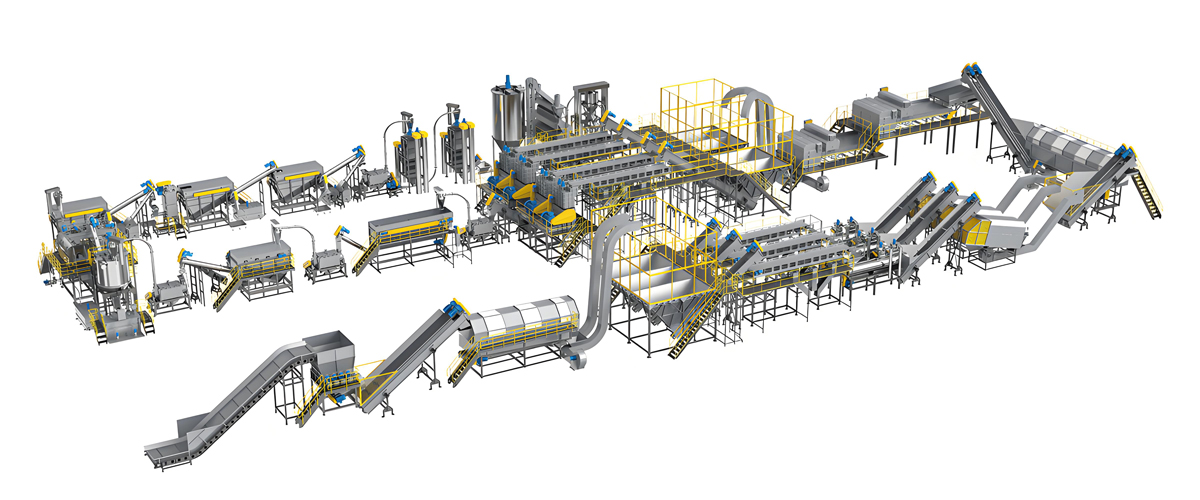
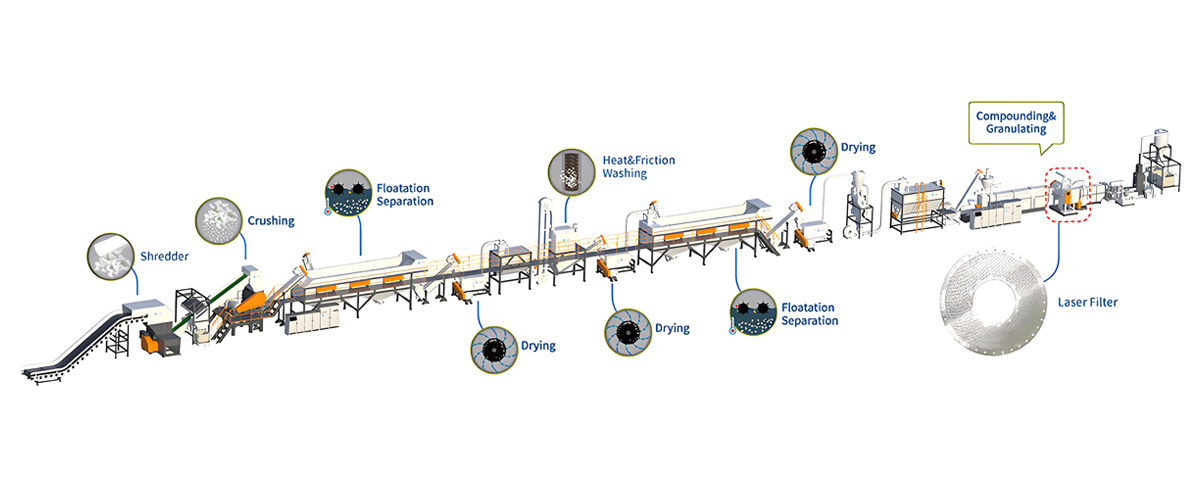
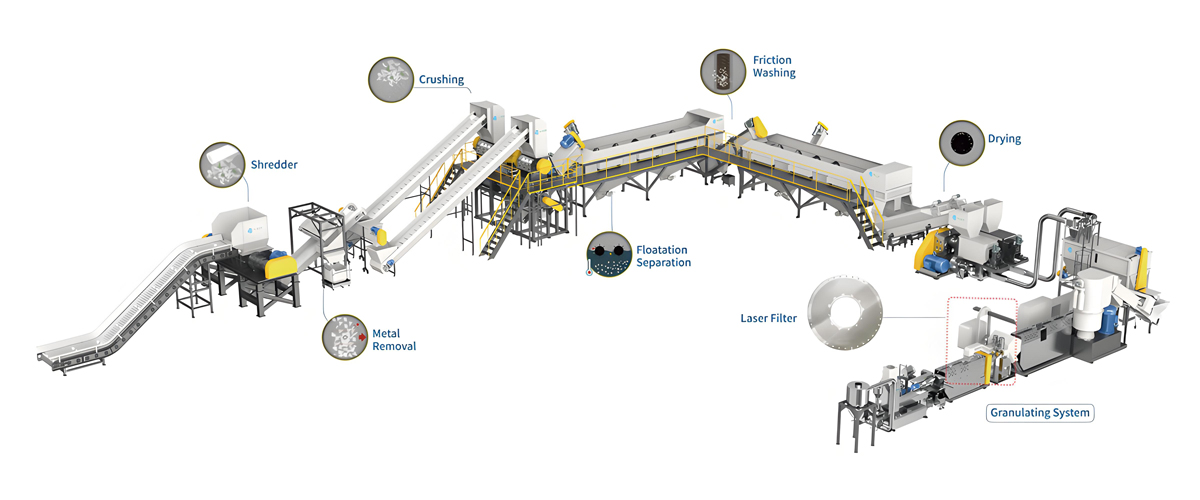
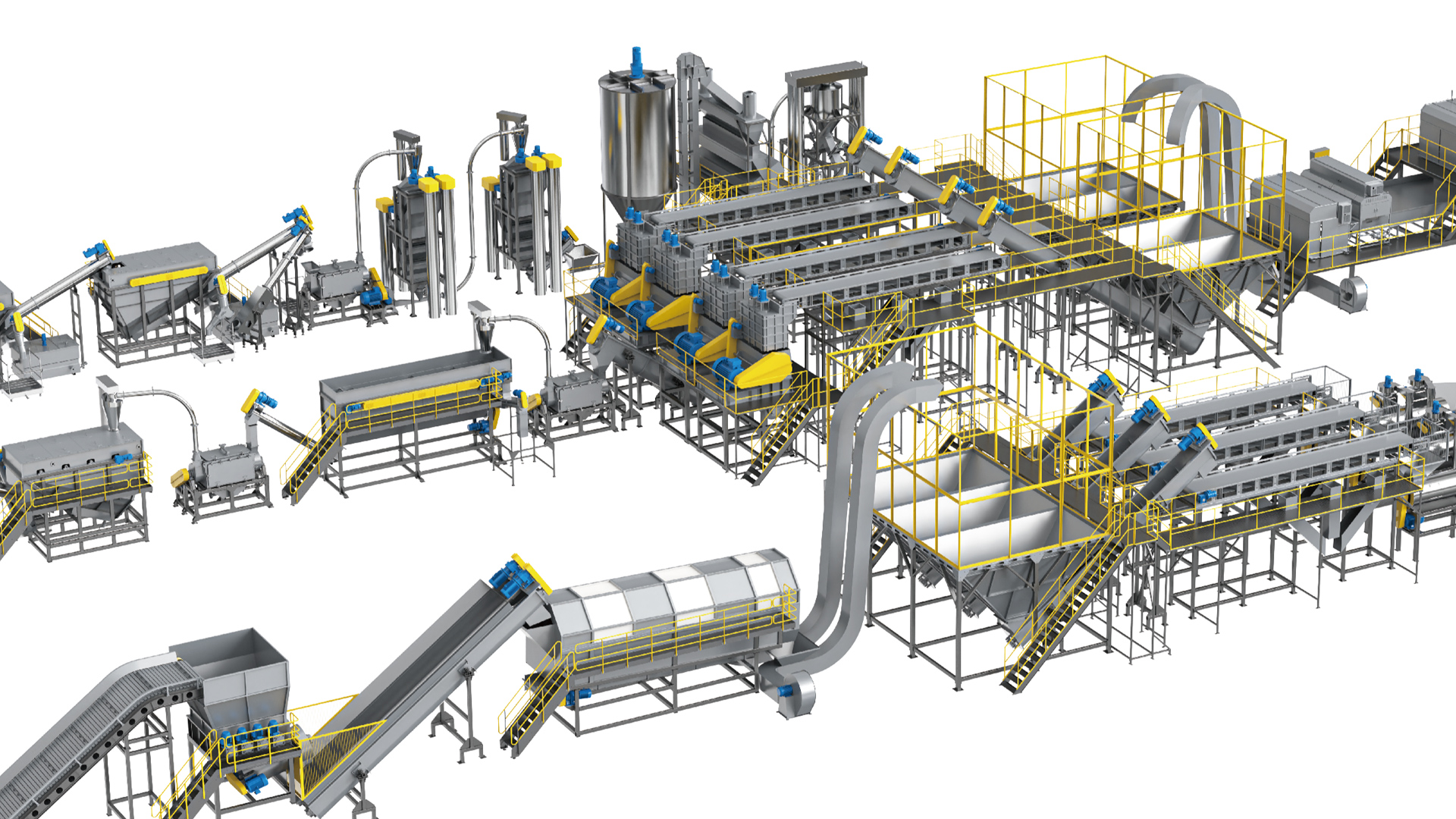
Standard plastic recycling washing lines adopt fixed modular configuration with unified production capacity, single process flow, and unchanged functional settings, featuring low unit price and short delivery cycle, but poor adaptability to complex production scenarios. They are only suitable for small-scale, single-material, and low-standard recycling production. In contrast, POLYRETEC custom plastic recycling washing lines are tailored for project scenarios, with flexible matching of crushing, sorting, washing, friction cleaning, dehydration, drying, and water circulation purification modules.
Although customized equipment has a certain premium in initial investment cost, it can effectively avoid functional redundancy and equipment insufficiency problems of standard machines, greatly reduce long-term operation energy consumption, failure rate, and quality loss costs, and bring higher long-term economic benefits. Accurate cost calculation is the key to balancing initial investment and long-term return of customized washing line projects.
1.3 Necessity of Accurate Cost Calculation for Custom Projects
In the investment process of custom plastic recycling washing lines, inaccurate cost estimation is easy to cause multiple project risks. Excessively conservative cost budget will lead to insufficient configuration, unable to meet production and environmental protection requirements, resulting in unqualified products and environmental assessment failure. Excessively loose budget will cause over-investment and redundant configuration, wasting project funds and prolonging investment return cycle.
Systematic and scientific cost calculation can help investors clarify the unit price of each functional module, reasonably match configuration according to demand, accurately control total project investment, and formulate precise later operation cost budgets. It is an essential link for the stable operation and profitable development of custom plastic recycling projects.
2. Full Cost Composition of Custom Plastic Recycling Washing Line
The total investment cost of a custom plastic recycling washing line is divided into four core parts: core equipment customized configuration cost, auxiliary supporting system cost, project installation and commissioning cost, and later operation and maintenance reserved cost. Each part contains multiple detailed sub-cost items, and all variables need to be included in the calculation system to ensure budget accuracy.
2.1 Core Main Equipment Customization Cost (Core Investment)
The core equipment cost accounts for 70% to 80% of the total custom project cost, which is the main body of investment. It refers to the cost of key functional equipment directly participating in plastic recycling and washing processes, including customized crushing systems, label removal systems, multi-stage washing systems, friction cleaning systems, floating-sinking separation systems, dehydration and drying systems, and intelligent control systems. Different customization demands correspond to different equipment grades and quantity configurations, forming obvious cost differences.
For example, ordinary single-stage crushing equipment is low in cost, while customized high-power wear-resistant crushing equipment for high-impurity and thick-wall plastic materials has a 20% to 30% higher unit price; conventional cold water washing modules are cheap, while customized high-temperature alkali washing deep cleaning modules for removing glue and oil stains will increase corresponding configuration costs. POLYRETEC adopts modular pricing for all core equipment, realizing transparent cost calculation for each customized module without hidden consumption.
2.2 Auxiliary Supporting System Cost
The auxiliary supporting system cost accounts for 10% to 15% of the total investment, including water circulation purification system, waste residue recovery system, noise reduction system, feeding and conveying system, finished product sorting and packaging system, and electrical safety protection system. These supporting systems determine the environmental compliance, operational stability, and automation level of the custom washing line.
In particular, the water circulation system is a necessary customized module for global export projects. Standard simple water treatment equipment has low cost but poor purification effect, unable to meet international environmental protection discharge standards; while POLYRETEC customized multi-stage filtration and oil-water separation water circulation system has a higher configuration cost but can achieve 95% water recycling rate, greatly reducing long-term water consumption costs. In addition, automatic feeding and sorting auxiliary equipment can reduce manual investment, bringing indirect cost-saving benefits.
2.3 Project Installation, Commissioning and Delivery Cost
This part of the cost accounts for 5% to 10% of the total project cost, including equipment packaging and transportation fees, international export freight fees, on-site installation and commissioning fees, professional operator training fees, and project acceptance service fees. Customized equipment has different module combinations and installation processes from standard equipment, requiring professional technical teams for targeted debugging, and the service cost is slightly higher than that of standard lines.
For cross-border export custom projects, it is also necessary to reserve a small amount of cost for international logistics insurance and port customs clearance auxiliary expenses to ensure the smooth delivery and put into operation of the equipment. POLYRETEC provides one-stop turnkey project services, with transparent and standardized charging for installation and commissioning, effectively avoiding hidden cost increases in the later stage of the project.
2.4 Operation, Maintenance and Spare Parts Reserved Cost
This is the long-term recurring cost of the project and also an indispensable part of the total life-cycle cost calculation, accounting for 3% to 5% of the initial total investment. It mainly includes daily equipment maintenance fees, vulnerable parts replacement fees, regular system debugging fees, and annual equipment inspection fees. Customized high-precision equipment has a lower failure rate and longer service life than standard equipment, with lower annual maintenance cost, but needs to reserve basic spare parts cost in the initial budget to avoid production shutdown losses caused by lack of accessories.
3. Key Factors Affecting Custom Washing Line Cost Changes
3.1 Customized Production Capacity Scale
Production capacity is the primary factor determining the total cost of a custom plastic recycling washing line. The larger the customized hourly processing capacity, the higher the configuration specifications of core equipment such as crushers, washing tanks, and drying systems, and the higher the total equipment cost. At the same time, large-capacity custom lines need to be equipped with larger water circulation systems and higher-power electrical systems, further increasing configuration costs.
However, the unit ton cost of large-capacity custom lines has obvious scale advantages. The unit equipment cost of 2000kg/h high-capacity custom lines is 15% to 20% lower than that of 500kg/h small-capacity lines, and the unit operation energy consumption and maintenance cost are also significantly reduced. Therefore, when calculating costs, it is necessary to comprehensively consider the matching degree of production capacity and actual demand, avoiding insufficient capacity affecting output or excessive capacity causing resource waste.
3.2 Raw Material Type and Impurity Degree Customization Demand
Different waste plastic raw materials have completely different impurity components and cleaning difficulties, directly determining the functional configuration of custom washing lines and cost differences. Clean single PET bottle raw materials only need basic crushing, label removal and conventional washing modules, with low customization difficulty and low cost. Mixed waste plastics, oil-stained bottles, glue-rich waste materials, and multi-layer composite plastics need customized deep cleaning, multi-stage sorting, and high-temperature treatment modules, which greatly increase equipment configuration costs.
For example, the custom cost of a washing line for heavily polluted waste plastics with oil stains and glue residues is 25% to 35% higher than that of a conventional clean PET bottle washing line, due to the need to add high-temperature alkali washing systems, enhanced friction cleaning devices, and multi-stage impurity removal equipment. Accurate judgment of raw material conditions is the premise of correct cost calculation.
3.3 Finished Product Quality Grade Requirements
The quality standard of finished recycled plastic flakes directly affects the customization level and cost of the washing line. Ordinary industrial-grade recycled flakes have low requirements for purity and moisture content, and the equipment only needs basic standard configuration with low cost. Textile-grade high-purity flakes need to optimize fine impurity removal and drying systems, increasing partial configuration costs. Food-grade high-standard recycled flakes need to be equipped with ultra-precision filtration, sterile cleaning, and low-residue treatment modules, with the highest customization cost.
The higher the finished product grade, the more refined the customized equipment configuration, the higher the equipment precision and manufacturing process requirements, and the higher the corresponding investment cost. Investors need to match the configuration level according to downstream order standards to avoid over-customization or under-customization.
3.4 Regional Environmental Protection and Safety Certification Requirements
Custom washing lines exported to different global regions need to meet local environmental protection emission standards and safety certification requirements, bringing different customized cost increments. European and North American markets require CE, UL certification configurations, ultra-low noise design, and high-standard wastewater zero-discharge systems, with high customized environmental protection costs. Emerging markets such as Southeast Asia and Africa have relatively loose environmental protection requirements, and the supporting environmental protection configuration cost is lower.
In addition, high-temperature and high-humidity tropical regions need customized anti-corrosion and moisture-proof electrical configurations, and cold regions need low-temperature resistant equipment designs, which will also produce small-range cost differences. These regional customized variables must be included in the cost calculation system to ensure that the equipment meets local access standards.
3.5 Automation and Intelligent Customization Level
The automation level of the custom line is an important variable affecting investment cost. Semi-automatic custom lines mainly rely on manual feeding and sorting, with low equipment configuration cost but high later labor cost. Fully automatic intelligent custom lines are equipped with automatic feeding, intelligent sorting, real-time parameter adjustment, and fault early warning systems, with higher initial equipment cost, but can save a lot of long-term labor and operation costs.
POLYRETEC’s intelligent customized system can realize 24-hour unmanned continuous production, greatly improving production efficiency. Although the initial customization cost increases by 10% to 15%, the comprehensive benefit of long-term operation is far higher than that of semi-automatic lines.
4. Standard Step-by-Step Cost Calculation Method for Custom Washing Lines
Combined with POLYRETEC’s global custom project budgeting experience, a set of standardized and accurate step-by-step cost calculation processes is summarized, covering demand confirmation, module pricing, variable superposition, and total cost accounting, which can help investors quickly complete accurate budget estimation.
4.1 Step 1: Confirm Core Project Customization Parameters
Before cost calculation, fully confirm all core customization parameters to avoid calculation deviation caused by unclear demand. The key confirmation parameters include hourly processing capacity of the washing line, types and impurity levels of processed waste plastics, quality standards of finished flakes, local environmental protection and safety certification requirements, factory site scale, and expected automation level. All parameters need to be quantified digitally to provide basic data support for subsequent module pricing.
4.2 Step 2: Split and Price Core Functional Modules
Split the custom washing line into independent functional modules, and calculate the unit price of each module one by one according to the quantified parameters. The split modules include raw material feeding module, crushing module, label removal module, multi-stage washing module, friction cleaning module, floating-sinking separation module, dehydration and drying module, and intelligent control module. Select the corresponding standard or enhanced configuration unit price according to production capacity and process difficulty, and sum up the total cost of core equipment.
4.3 Step 3: Superimpose Auxiliary System and Supporting Costs
On the basis of core equipment cost, superimpose the cost of customized auxiliary systems including water circulation purification system, waste residue recovery system, noise reduction system, and safety protection system. At the same time, calculate the supporting costs such as equipment transportation, installation, commissioning, and training according to the project region and equipment volume, forming the initial total project investment cost.
4.4 Step 4: Add Reserved Operation and Maintenance Costs
Reserve 3% to 5% of the initial total investment as the later operation, maintenance and vulnerable parts replacement cost, ensuring that the budget covers the full life-cycle investment of the project, avoiding later cost overrun caused by insufficient reserved funds.
4.5 Step 5: Calculate Unit Production Cost and Investment Return
After confirming the total initial investment, combine the daily output, annual working days, labor cost, water and electricity energy consumption cost, and maintenance cost to calculate the unit production cost of recycled plastic flakes. Match the unit market price of finished flakes to evaluate the daily and annual profit of the project, and finally judge the rationality of the customized configuration and investment budget.
5. 2026 POLYRETEC Custom Washing Line Cost & Price Quotation Case
5.1 Small-Capacity Custom Line Cost Case (300-500kg/h)
This customized solution is suitable for small-scale start-up recycling projects, mainly processing clean waste PET and HDPE bottles, producing ordinary industrial-grade recycled flakes, meeting conventional regional environmental protection standards. The core equipment customization cost ranges from 32,000 to 36,000 US dollars. The auxiliary supporting system cost including conventional water circulation and noise reduction configuration is 4,000 to 5,000 US dollars. The installation, commissioning and transportation cost is 2,500 to 3,500 US dollars. The reserved operation and maintenance cost is 1,200 to 1,800 US dollars.
The total comprehensive investment cost of the project is 39,700 to 46,300 US dollars. The unit production cost of recycled flakes is about 85 to 95 US dollars per ton, with low investment threshold and stable operation, suitable for small regional recycling enterprises.
5.2 Medium-Capacity Standard Custom Line Cost Case (800-1000kg/h)
This is the most popular customized solution for global commercial projects, suitable for processing conventional mixed waste plastics, supporting textile-grade high-purity flake production, and meeting EU and American basic environmental protection and safety standards. The core equipment customized cost is 42,000 to 48,000 US dollars, equipped with multi-stage deep washing and high-efficiency impurity removal modules. The high-standard water circulation purification and waste residue recovery auxiliary system cost is 6,000 to 7,500 US dollars. The cross-border installation, commissioning and logistics cost is 4,000 to 5,500 US dollars. The long-term operation and maintenance reserved cost is 2,000 to 2,800 US dollars.
The total project investment cost is 54,000 to 63,800 US dollars. The unit flake production cost is controlled at 72 to 80 US dollars per ton, with significant scale benefits. The annual comprehensive profit of the project is stable at 60,000 to 80,000 US dollars, and the investment return cycle is 8 to 10 months.
5.3 Large-Capacity High-End Custom Line Cost Case (1500-2000kg/h)
This high-end customized solution is oriented to large-scale industrial recycling enterprises, supporting food-grade high-purity recycled flake production, fully meeting global ultra-strict environmental protection and CE/UL safety certification standards, and adopting full intelligent unmanned configuration. The core equipment customization cost is 58,000 to 65,000 US dollars, equipped with high-temperature deep cleaning, ultra-precision impurity removal and intelligent parameter adjustment modules. The high-end environmental protection and intelligent auxiliary system cost is 9,000 to 11,000 US dollars. The large-scale equipment transportation, installation and commissioning cost is 6,000 to 8,000 US dollars. The reserved maintenance cost is 3,000 to 4,000 US dollars.
The total comprehensive investment is 76,000 to 88,000 US dollars. The unit production cost is as low as 65 to 70 US dollars per ton, with ultra-high product added value. The annual project profit exceeds 100,000 US dollars, and the investment return cycle is 10 to 12 months, with long-term stable investment value.
6. Common Cost Calculation Errors and Avoidance Strategies
6.1 Ignoring Regional Customization and Environmental Protection Configuration Costs
Many investors only calculate the cost of core main equipment and ignore the incremental cost of regional environmental protection, safety certification and climatic adaptation customization, resulting in insufficient later equipment configuration, failure to pass local environmental assessment and certification, and secondary transformation cost investment. The avoidance strategy is to take the local policy and environmental standards as the primary basis in the early stage of calculation, and fully include all customized supporting configuration costs in the budget.
6.2 Over-Customization Leading to Redundant Investment
Blindly pursuing high-end full configuration without combining actual raw material conditions and market demand leads to excessive functional redundancy of the equipment, increased initial investment, and wasted equipment performance. For example, clean raw material projects do not need to be equipped with high-temperature alkali washing modules, and ordinary industrial-grade product projects do not need ultra-precision food-grade filtration systems. It is necessary to match personalized configuration according to demand to maximize cost performance.
6.3 Neglecting Long-Term Operation Hidden Costs
Only focusing on initial equipment investment and ignoring long-term water and electricity energy consumption, labor, and maintenance hidden costs leads to low project profit margins and even losses in the later stage. When calculating the total cost, it is necessary to take the full life-cycle cost as the core, comprehensively evaluate the initial investment and later operation cost, and select energy-saving and high-automation customized schemes to reduce long-term comprehensive costs.
7. Scientific Cost Control Strategies for Custom Washing Line Projects
7.1 Precise Demand Matching to Avoid Configuration Waste
Before customization, conduct on-site investigation of raw material impurity degree, sort out finished product quality standards and production capacity demand, and cooperate with professional manufacturers such as POLYRETEC for targeted configuration design. Retain necessary functional modules, delete redundant configurations, and appropriately reserve scalable modules for subsequent capacity expansion, balancing current cost control and long-term development demand.
7.2 Prioritize Energy-Saving and High-Automation Customization
Appropriately increasing the investment of energy-saving servo systems and high-automation modules can greatly reduce later water, electricity and labor costs. POLYRETEC’s customized energy-saving water circulation system can save more than 90% of fresh water consumption, and the intelligent unmanned system can reduce 80% of manual labor input. The long-term cost-saving benefit far exceeds the initial incremental investment, which is the core measure to reduce the comprehensive cost of the project.
7.3 Adopt Modular Customization to Reduce Transformation Cost
Adopt standardized modular combined customization scheme, and all functional modules are independently assembled and detachable. When subsequent production demand changes, modules can be added or replaced independently without overall equipment transformation, avoiding large-scale secondary investment and transformation costs, and improving the flexibility and cost stability of the project.
7.4 Long-Term Cooperation to Reduce After-Sales Maintenance Costs
Cooperate with professional manufacturers with perfect global after-sales systems such as POLYRETEC. The standardized equipment quality and stable performance can reduce the failure rate and maintenance frequency. The perfect global spare parts supply system can reduce the procurement cost and cycle of vulnerable parts, effectively controlling the long-term operation and maintenance cost of the custom washing line.
8. Industry Development Trend of Custom Plastic Recycling Washing Line Cost
With the continuous upgrading of global plastic recycling industry standards and the increasing diversification of waste plastic recycling demands, personalized customized plastic recycling washing lines will gradually replace standard fixed equipment and become the mainstream of the industry. In the future, with the popularization of intelligent manufacturing technology and the scale of equipment production, the unit customization cost of high-efficiency and energy-saving recycling equipment will tend to be stable and reasonable.
POLYRETEC continues to optimize the modular design of customized equipment, reduce redundant manufacturing costs, and provide global customers with higher cost-effective customized plastic recycling washing line solutions. At the same time, through intelligent technology iteration, further reduce the long-term operation energy consumption and maintenance cost of the equipment, and continuously improve the comprehensive economic benefits of custom recycling projects.
9. Conclusion
The cost calculation of a custom plastic recycling washing line is a systematic project covering core equipment, auxiliary supporting facilities, installation and commissioning, and long-term operation and maintenance. The total project cost is affected by production capacity, raw material conditions, finished product standards, regional policies, and automation levels. Blind budget estimation and unreasonable configuration matching will easily lead to project cost overrun and low return on investment.
By adopting standardized step-by-step calculation methods, accurately matching customized configurations according to actual project demands, and avoiding common calculation errors and configuration waste, investors can effectively control the initial investment cost of the project. As a professional global customized plastic recycling equipment manufacturer, POLYRETEC provides transparent modular pricing, targeted personalized configuration design, and full life-cycle cost control solutions. It helps global recycling enterprises complete accurate project budget evaluation, select the most cost-effective custom plastic recycling washing line, reduce comprehensive project costs, and maximize long-term investment returns in the plastic circular economy industry.
|(注:部分内容可能由 AI 生成)