
Flexible plastic packaging is everywhere. Bags, shrink film, pallet wrap, agricultural film, and food packaging film are used in enormous volume every day across the world, and a very large share of it is made of polyethylene and polypropylene. For years, this film was hard to recycle profitably because it is light, flexible, dirty, and easy to mishandle. That is changing fast. In 2026, post-consumer PE and PP film is one of the fastest-growing feedstocks in the recycling industry, and brands that need recycled content are actively paying a premium for clean recycled film pellets. The reason is simple: flexible packaging makes up such a large part of total plastic packaging that no recycling or packaging strategy can ignore it. This article is a complete, practical guide to recycling post-consumer PE and PP film, from collection to clean flake to uniform pellets. It explains the challenges of film, every stage of the film washing and pelletizing process, how the equipment at each stage works, and how a complete soft plastic recycling line from Polyretec turns difficult dirty film into profitable, premium recycled pellets.
Why Film Recycling Is a Priority in 2026
Flexible packaging now makes up a dominant share of all plastic packaging placed on the market. Films and bags consume a very large amount of PE and PP resin every year, and most of it is single-use. Governments, brand owners, and industry associations are all pushing for flexible packaging to be collected and recycled rather than landfilled or burned.
At the same time, brand owners who sell to markets with recycled-content rules need recycled polymer they can actually use. Flexible packaging is such a large part of their input that they must find clean recycled PE and PP film. When they cannot find enough of it, they pay more. This mismatch between strong demand and difficult supply is exactly why flexible film recycling has become one of the most attractive opportunities in the industry.
The opportunities are real, but so are the challenges. Film is different from rigid plastic in ways that catch many recyclers by surprise. To succeed, you need to understand the material and build the right process around it.
The Special Challenges of Recycling Flexible Film
Film has three properties that make it fundamentally harder to recycle than bottles or hard plastic parts, and every one of them shapes the machinery you need.
Film Is Light and Can Wrap Around Equipment
Because film is light and flexible, it can wrap around rotating shafts, tangle in crushers, and jam downstream equipment. Special handling is required from the very first stage, otherwise a washing line for rigid plastic will keep stopping. A dedicated soft plastic line uses equipment designed specifically to keep film moving without wrapping.
Film Carries Heavy Contamination
Post-consumer film arrives with labels, glue, tape, food residue, oil, and, in the case of agricultural film, soil and grit. This contamination is often baked into the film by repeated handling and heat. Removing it thoroughly is essential, because any residue left in the flake shows up as specks, odor, gel, or weak spots in the recycled product.
Film Quality Depends on Careful Drying
Film holds a surprising amount of water, and water is the enemy of good pelletizing. If flake enters the extruder carrying too much moisture, the moisture becomes steam inside the barrel, producing bubbles, voids, and brittle pellets. Efficient washing and drying stages that remove water before melt processing are not optional; they are the difference between usable and unusable pellets.
The Film Recycling Process Stage by Stage
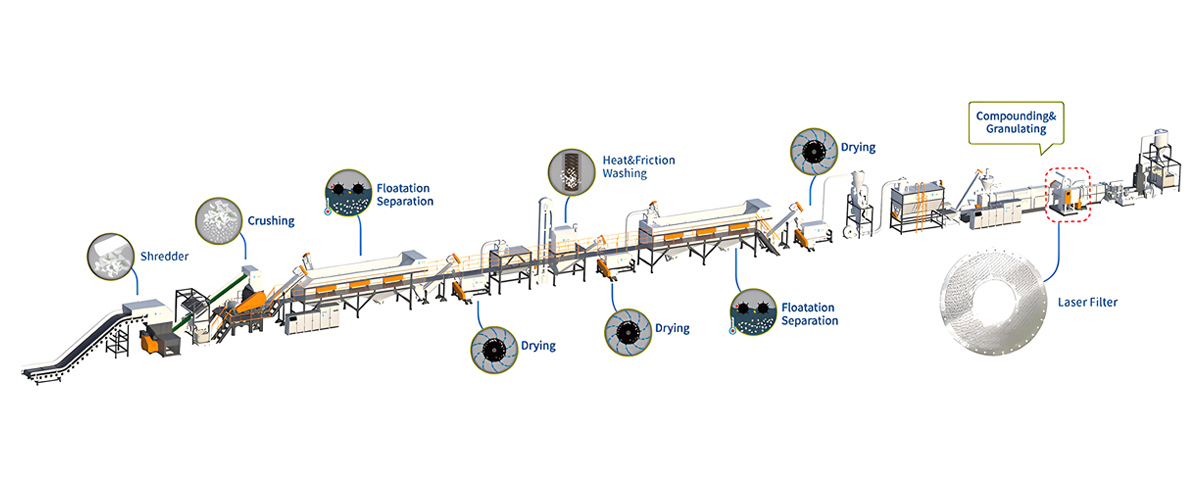
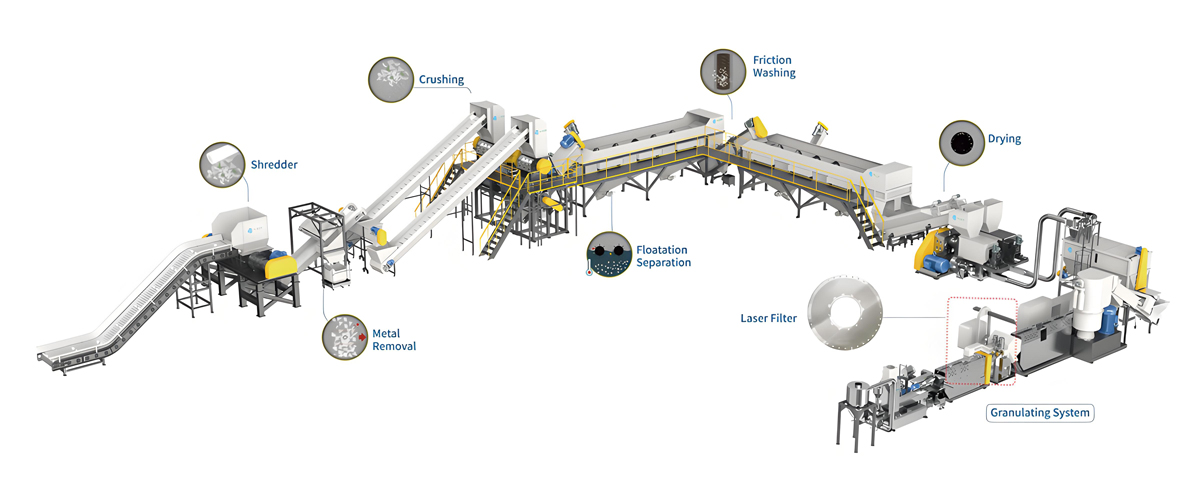
A complete film recycling line turns dirty post-consumer film into clean, uniform pellets through a sequence of well-defined stages. Here is how each step works and why it matters.
Stage 1: Shredding and Crushing
Film arrives as compressed bales that must first be broken apart. A shredder tears the bale open, and a crusher or granulator then reduces the loose film into small, uniform pieces. Smaller pieces expose more surface area for washing and make the next stages efficient. For film, the equipment must handle light, stretchy material without wrapping.
Stage 2: Friction Washing
The crushed film then enters a friction washer, one of the most important cleaning steps for film. Inside, the material is rubbed vigorously against itself and against the machine surfaces in water. This friction action is what strips loose labels, dirt, and simple contamination from the surface of the film. A properly engineered friction washer separates a large amount of contamination early in the process, protecting every stage that follows.
Stage 3: Hot Washing
For film that carries oil, ink, or sticky residue, a hot washer is added. Here the flake is soaked and washed in a heated bath, often with caustic or detergent. Heat and chemistry loosen oil, grease, ink, and glue that cold water cannot remove. This stage is essential if you want pellets that are clean enough for higher-value applications and free of odor.
Stage 4: Rinsing and Floating Separation
After washing, the flake is rinsed to remove the detergent and any loosened contamination. For film, a float-sink tank separates floating plastic, the PE and PP film, from heavier contaminants that sink, such as stones, metal, and dense plastic. Because PE and PP have a density under one, they float, while heavy impurities settle and are removed.
Stage 5: Dewatering and Drying
Washed film carries a great deal of water. A mechanical dewatering unit squeezes out most of it, and a centrifugal or hot-air dryer lowers the moisture further to a controlled level. Drying film to the right moisture content is what makes pelletizing stable and pellet quality high. This stage is often underestimated, and it is one of the biggest reasons some film pellets sell as premium and others sell cheaply or fail quality checks.
Stage 6: Pelletizing
Clean, dry film flake moves to the extruder, where it is melted, homogenized, filtered, and cut into uniform pellets. Twin-screw or single-screw compounding extruders handle the material, and an automatic screen changer removes remaining contaminants from the melt. The result is pellets that a film producer can feed directly into their own extrusion process. Recycled film pellets are sold for new bags, films, and packaging, completing the loop.
Before You Buy: Separation and Feeding Upstream
A complete line is more than the washing and pelletizing machines themselves. Two supporting steps determine whether the line runs smoothly at all. First, consider an upstream separation step for PVC, silicone, and other non-PE/PP materials, such as an optical sorter or sink-float pre-separation, because one PVC bottle in a film load can spoil a whole batch of recycled pellets. Second, design the feeding system so bales are delivered to the shredder at a steady rate. A constant, even feed is the foundation of consistent output.
Polyretec helps customers design the full process, including the intake and separation steps, so that the washing and pelletizing line is matched to the real condition of the incoming material. This is where a supplier that understands the whole process brings more value than one that only sells a single machine.
The Soft Plastic Film Washing Line from Polyretec
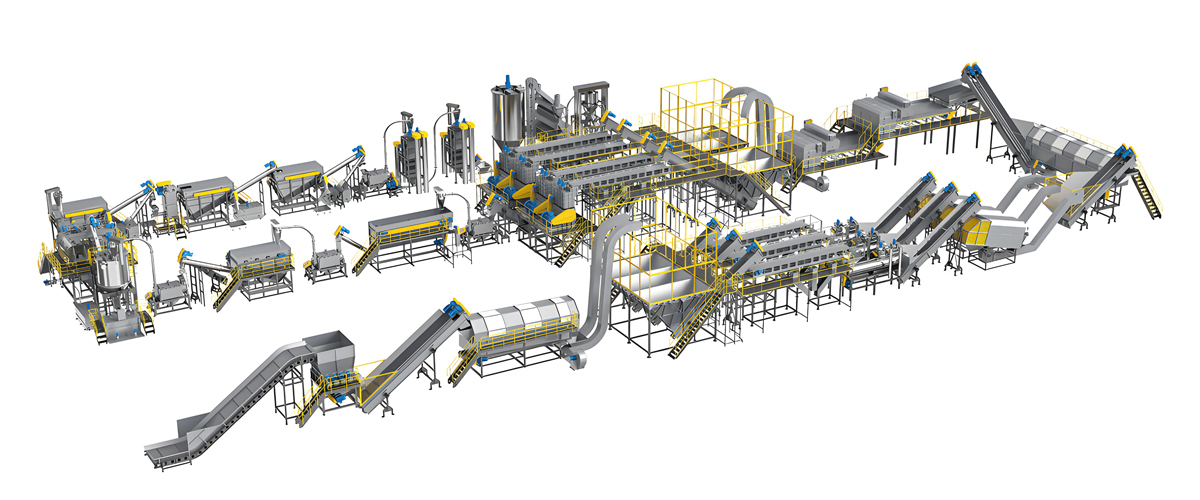
Polyretec specialises in complete film recycling lines built from washing and pelletizing stages that are engineered to work together. Instead of a recycling machine that struggles with film, the Soft Plastic Crushing and Washing Line is designed for exactly what post-consumer film demands.
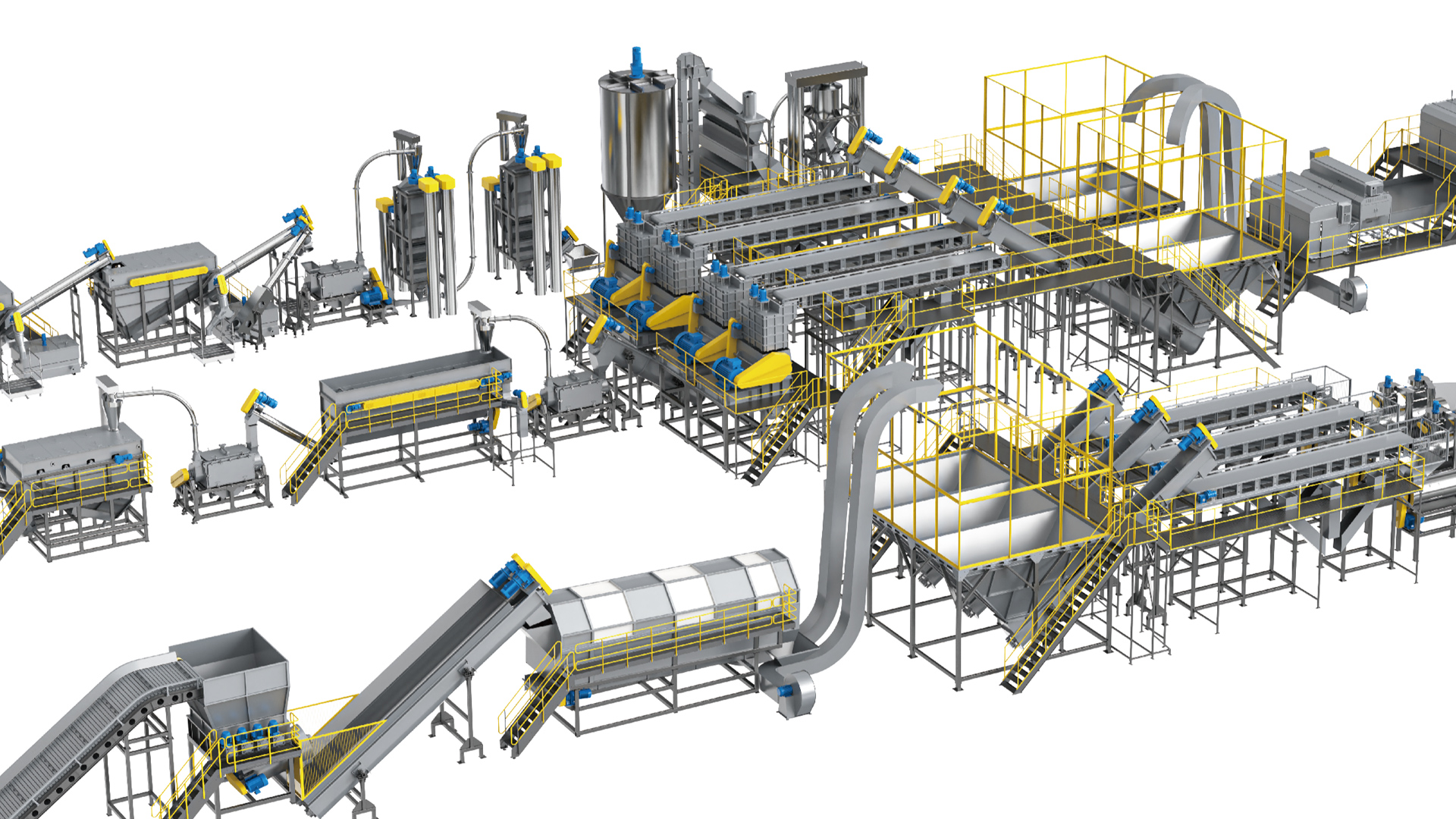
The Soft Plastic Crushing and Washing Line covers the entire upstream part of the process. It starts with the right crusher for film, moves into the friction washer to strip surface dirt and labels, adds hot washing when the feed is contaminated with oil or ink, separates the floating flake from heavy impurities, and finishes with dewatering and drying. Every stage is matched to the output of the previous one, so the line keeps moving without the wrapping, jamming, and blockages that defeat improvised setups.
Austrian-inspired engineering runs through the design. Robust, heavy-duty construction supports continuous, three-shift operation, which is what a business that wants real output from its line needs. Precise control of washing intensity and drying conditions means the flake leaves the line at a consistent level of quality you can build a product brand on.
The Pelletizing Stage: Turning Flake into Sellable Pellets
Clean flake has value, but pellets are easier to sell, transport, and price. The Soft Plastic Pelletizing Extruder from Polyretec completes the chain by melting the washed film and producing uniform recycled pellets.
Inside the extruder, the flake is heated, compressed, homogenized, and pushed through an automatic screen changer that captures remaining contaminants. This filtration step is important because it is the last line of defense for pellet purity. The melt is then forced through a die and cut into pellets that are cooled, dried, and bagged.
For blends and higher-value compounds, the PP/PE Recycling and Compounding Line combines recycled resin with additives and virgin polymer to produce a tailored compound with controlled melt flow and color. This expands the applications the recycled material can serve and increases its value.
Achieving the Pellet Quality That Film Producers Pay For
Film producers who buy recycled pellets test them on several properties, and holding these properties is what earns a premium price. The qualities that matter most are cleanliness, consistent pellet geometry, controlled moisture, and stable melt flow.
Cleanliness, shown by low specks, low gel, and no odor, comes from thorough friction and hot washing plus effective melt filtration. Consistent pellet size and shape come from a stable extrusion process and a properly cooled cutting system. Controlled moisture, low enough that the pellets do not foam or create bubbles, comes from the drying stage earlier in the line. Stable melt flow comes from good melt homogenization and, on a compounding line, from blending controlled input.
When all four properties are met, the pellets can be sold to film producers for demanding applications such as agricultural film, garbage bags, pallet wrap, and shopping bags. When they are missed, the pellets are grouped and discounted. The difference between premium and discounted pellets is decided inside the washing and pelletizing line.
Economics: What a Film Recycling Line Can Earn
The business case for film recycling is built on the gap between the cost of the input and the value of the output. Post-consumer film is widely available and often inexpensive, and in some regions it is a negative-cost waste stream that municipalities pay to have removed. Meanwhile, clean recycled film pellets regularly sell at multiples of the film input cost.
The practical profitability depends on three numbers: yield, uptime, and consistency. Yield, the share of input film that becomes usable pellets, is decided by losses in shredding, washing, and extrusion, and good equipment keeps them low. Uptime, the share of scheduled production time the line actually runs, is decided by reliability and simple service, and heavy-duty construction protects it. Consistency, the ability to sell every batch at premium rather than discount, is decided by the process control discussed above.
A complete film washing and pelletizing line maximizes all three. When yield, uptime, and consistency are all high, the payback period is the shortest, and the line becomes a reliable profit center rather than a constant source of troubleshooting.
Choosing Between Flake Sold, Pellets Sold, or Compounding
Recyclers take three routes to market, and the right one depends on your capital, your customers, and the applications you want to serve. Selling washed flake is the simplest and lowest-cost route, but flake is a commodity and sells at the lowest price per kilogram, and only a limited set of buyers accepts flake. Selling pellets is the common middle step. Pelletizing raises the value and widens the buyer base, because pellets are what most film producers actually feed. Compounding is the highest-value route, where you tailor the recycled material to a specific application and capture the premium for a made-to-order compound.
Most film recyclers start with a washing line and add pelletizing as the operation grows, typically with Polyretec's Soft Plastic Pelletizing Extruder. When the recycled material is destined for a demanding application, the compounding line adds the control needed to meet exact specifications. Planning this upgrade path from the start avoids replacing equipment later.
Regulatory Drivers That Keep Film Recycling Growing
A share of the demand for recycled film comes from regulation, which is a durable driver rather than a passing trend. Extended producer responsibility schemes in many markets require plastic packaging to contain a minimum share of recycled content, and flexible packaging is part of those schemes. Fee structures in some jurisdictions also lower the levies paid by converters who buy recycled polymer, creating a direct financial incentive to choose recycled pellets.
In addition, voluntary corporate commitments from large brands to use recycled content in packaging have turned into hard procurement requirements. These brands publish recycled-content targets and audit their suppliers against them. For a recycler, this means a stable, growing, and well-paying market for clean film pellets, as long as the product meets quality and documentation expectations.
Practical Steps to Start or Upgrade a Film Recycling Line
Whether you are entering film recycling for the first time or upgrading an existing line, a practical path keeps the project efficient.
Step 1: Characterise your input. Identify the film types, contamination levels, and volumes you can reliably source, because the line design must match the real material.
Step 2: Decide the output. Choose between selling flake, production pellets, or compounded material, because that decides how much of the pelletizing and compounding stage you need now.
Step 3: Match capacity across stages. A washing line, dryer, and extruder must all be sized to the same target output, otherwise one stage becomes a bottleneck.
Step 4: Plan upstream separation. Include sorting for PVC and other non-PE/PP materials, because a trace of the wrong polymer can ruin a whole batch.
Step 5: Put cleanliness and drying first. These two factors decide pellet grade more than any other, so protect them with proper engineering rather than cutting corners.
Step 6: Partner with a full-process supplier. A supplier like Polyretec that designs washing and pelletizing together gives you a line that runs as one system.
Common Mistakes That Lower Film Pellet Value
Several recurring mistakes keep recyclers from reaching premium pellet prices, and it is worth planning against each of them.
Under-powering the washing stage, which leaves specks, gel, and odor in the pellets and forces every batch to be sold at discount.
Skipping hot washing for oily or printed film, which leaves ink and oil in the melt and produces dark or smelly pellets.
Inadequate drying, which lets moisture into the extruder and causes bubbles, brittle pellets, and off-spec output.
Mismatched line stages, where a crusher, washer, or extruder operates at a different capacity and caps the whole line at the slowest stage.
Handling film on a line designed for rigid plastic, which wraps, jams, and chokes on light flexible material.
Summary and Recommendation
Post-consumer PE and PP film is the fastest-growing feedstock in recycling, and the demand for clean recycled film pellets is real, well-funded, and growing. The process, film washing followed by pelletizing, is well understood, and the equipment to do it reliably exists. The recyclers who capture the premium are the ones who invest in a complete, well-engineered line and protect the two things that decide pellet grade: thorough cleaning and careful drying.
Polyretec brings the whole picture together in one supplier. The Soft Plastic Crushing and Washing Line cleans the film, the Soft Plastic Pelletizing Extruder turns it into uniform pellets, and the PP/PE Recycling and Compounding Line handles higher-value blends. Austrian-inspired heavy-duty engineering and full after-sales support from the Wanplas group back every line.
If post-consumer film is already arriving at your facility, or if you want to add the fastest-growing stream to your recycling operation, contact Polyretec today. Tell them about your film types and target output, and they will configure the complete soft plastic film recycling line that turns dirty film into clean, profitable, premium recycled pellets.
PE Versus PP Film: Two Materials, One Line
Polyethylene and polypropylene are both common in flexible packaging, and a well-designed washing and pelletizing line handles both, but it helps to understand how they differ. PE film covers the huge range of bags, pallet wrap, shrink film, and most post-consumer flexible packaging, and it is the largest single source of recycled film. PE is relatively soft and melts at a lower temperature, so it needs processing that keeps the melt stable without overheating.
PP film is used for woven bags, heavier road and construction packaging, and some food packaging. PP is stiffer than PE, has a higher melting point, and is often co-mingled with woven reinforcement that must be removed. Because PP film is commonly used to carry heavy goods, it arrives with more abrasion and contamination than retail film, so hot washing and careful separation matter even more for PP film.
For a recycler the practical answer is a versatile line that can be configured for either material. Polyretec configures its soft plastic lines to run PE film, PP film, or a mix, with the washing intensity, hot washing option, and extruder settings matched to the material in the load. This flexibility lets a recycler accept a wider range of film feedstock and produce the pellet grade each market demands.
The pellet market differs too. Recycled PE is used for new bags, film, and blow-molded products, while recycled PP goes into woven sacks, crates, and injection- and blow-molded parts. Understanding which market you sell into helps you set the purity and pellet specs you must hit. Whichever you choose, the same rule holds: clean flake and controlled moisture decide the value of the pellet.
Working with Contractors and Existing Operations
Not every film recycling project starts from an empty hall. Many recyclers already run a rigid-plastic line and want to add a film line, while others are expanding an existing film operation. Working with a single supplier who understands the complete process makes integrating the new line smoother.
A contractor installing a film washing and pelletizing line needs clear design information: the available power and water, the floor plan, the feedstock volumes, and the target output. Polyretec provides the layout, process water plan, and electrical requirements with the line, so the installation can be planned without guesswork. Operator training is included, which is essential because a film line run by operators who understand the process produces far better results than one fed by guesswork.
For recyclers who already have a washing line that struggles with film, the practical upgrade is often to add the missing stages, a friction washer, a hot washer, or a proper dryer, rather than replace everything. Polyretec can add these stages so the existing line is brought up to the quality a premium film pellet requires. Whether you are building new or upgrading, the goal is the same: a line that produces clean, dry, consistent film pellets every shift.
Frequently Asked Questions
What is the easiest plastic film to recycle?
Clean, single-material PE or PP film that is free of heavy labels and contaminants is the easiest. Agricultural and food-contact film need more cleaning stages. A soft plastic crushing and washing line with hot washing handles the contaminated types.
Can a single line recycle both film and rigid plastic?
Film behaves too differently from rigid plastic to be processed well on the same washing line. Film requires crushers and washers that handle light flexible material without wrapping, so a dedicated soft plastic line is the right choice.
Why does my recycled pellet turn dark or smelly?
Darkness usually comes from residual contamination, ink, or oxidized material, and odor comes from residual organic matter. These are solved by a stronger washing stage, including hot washing, and by keeping the material moving so it does not overheat.
How dry must the film flake be before pelletizing?
The lower, the better. Ideally the flakes leave the dryer below about two percent moisture for stable pelletizing. Even small moisture amounts create steam, bubbles, and weak pellets, so efficient dewatering and drying are essential.
Is recycled PP film easier to recycle than PE film?
Both PE and PP film are recyclable. PP film is often used for woven bags and heavier packaging, while PE film covers bags and shrink film. The same washing and pelletizing process handles both, and the recycled pellets are sold to different film applications.
Film is the feed stream of the future, and the future is already here. With the right complete line and the discipline to run it well, post-consumer PE and PP film becomes not a disposal problem but a profitable, growing source of premium recycled material.