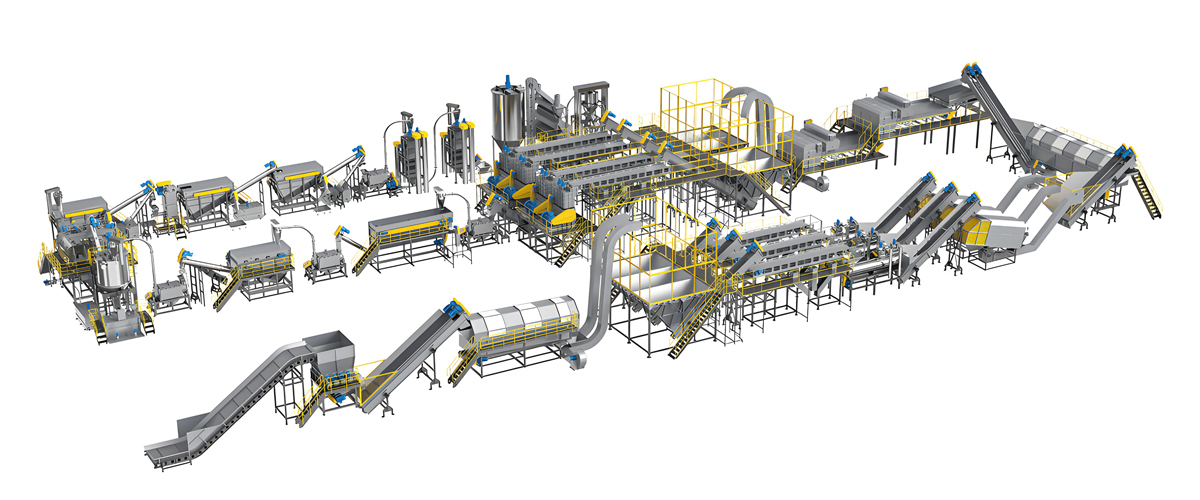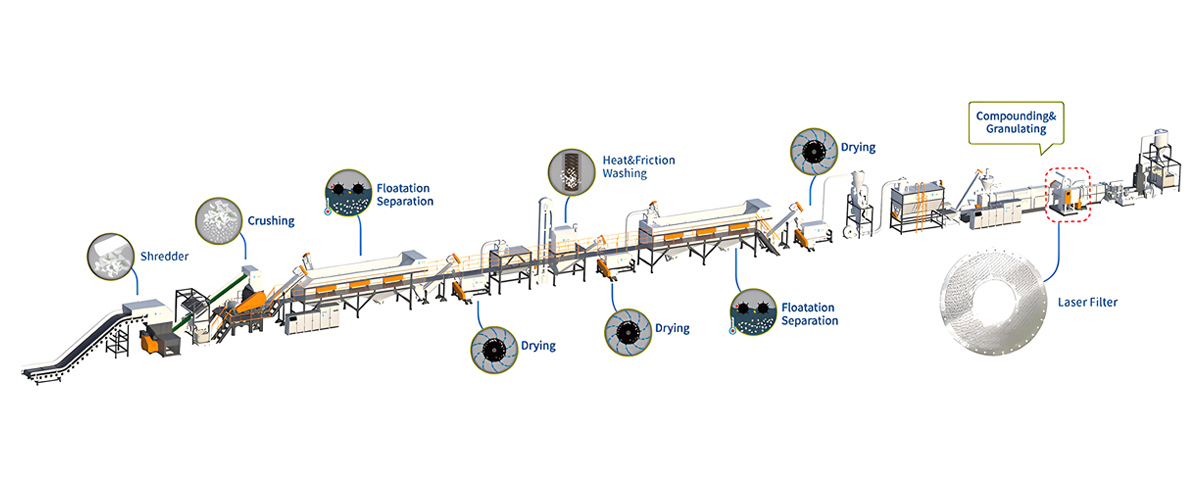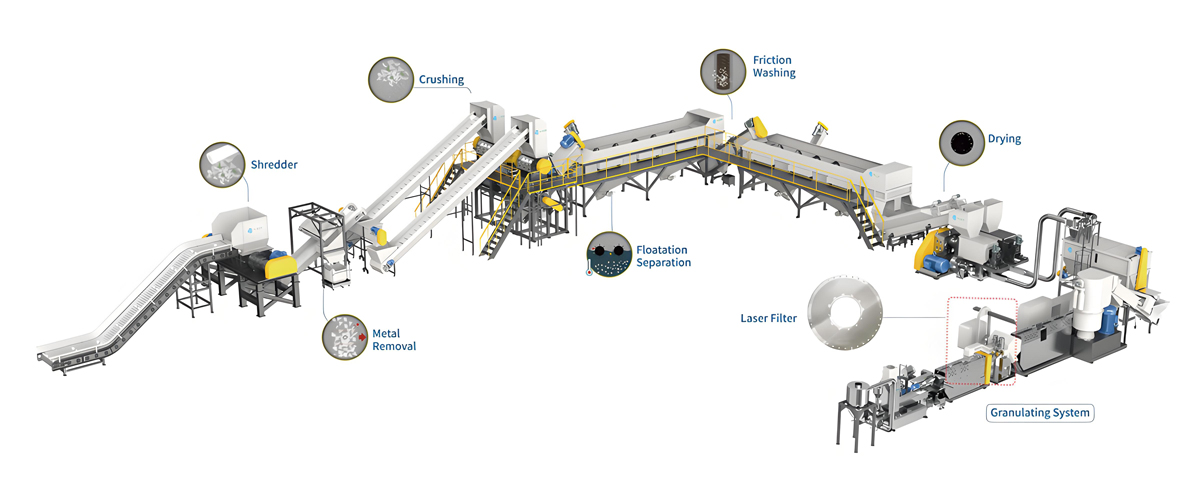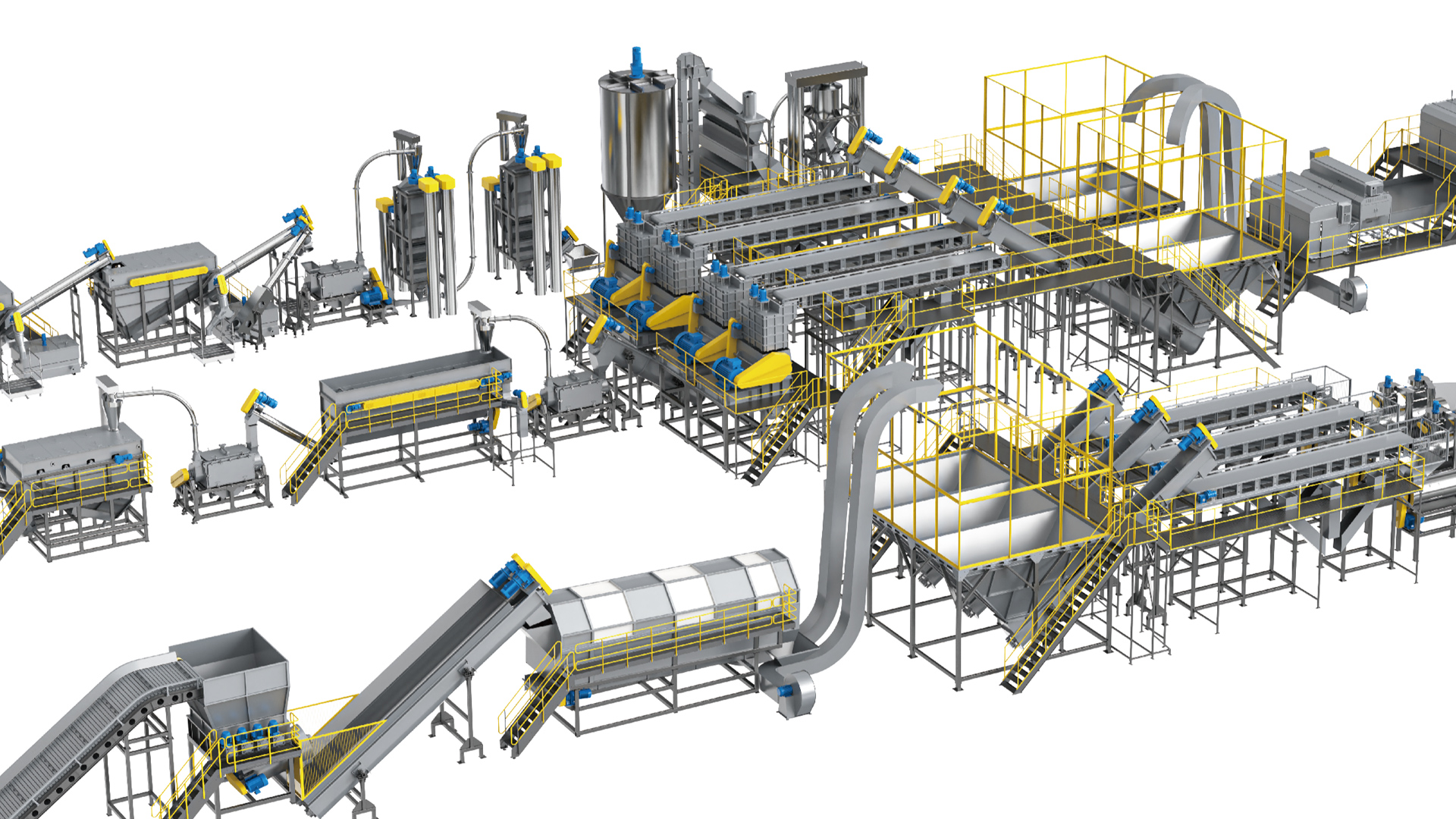

Modern plastic recycling operations face increasing pressure to boost productivity while maintaining consistent quality standards. Automation has become the cornerstone of competitive recycling facilities, enabling operators to process larger volumes of materials with fewer labor resources and reduced operational costs. If you operate a plastic recycling line or are planning to upgrade your facility, understanding how to improve automation levels can transform your business from a labor-intensive operation into a streamlined, high-efficiency production system. This comprehensive guide explores proven strategies for upgrading your plastic recycling machine infrastructure, implementing intelligent control systems, and achieving measurable improvements in throughput and profitability.
Understanding the Current State of Your Plastic Recycling Line
Before implementing any automation upgrades, conducting a thorough assessment of your existing plastic recycling equipment forms the foundation of successful modernization. Many facility operators jump directly into purchasing new machinery without first identifying the specific bottlenecks and inefficiencies within their current setup. This approach often leads to unnecessary capital expenditure on equipment that does not address the root causes of production limitations. A comprehensive audit should examine every stage of your recycling process, from material intake and sorting through washing, shredding, granulating, and packaging.
Identifying Production Bottlenecks
Production bottlenecks occur at points in your plastic recycling line where material flow slows down or stops entirely, causing downstream equipment to operate below capacity. Common bottleneck locations include manual sorting stations where workers struggle to keep pace with conveyor belt speeds, washing systems that cannot handle incoming material volumes efficiently, and granulating machines that become overwhelmed during peak processing periods. Observing your operation during typical working hours reveals these constraints more clearly than theoretical analysis ever could. Track which stations cause the longest delays and which equipment sits idle while waiting for upstream processes to complete.
Measuring Current Throughput Performance
Establishing baseline metrics provides essential data for evaluating the success of future automation investments. Measure your current hourly throughput in kilograms or tons per shift, calculate your equipment utilization rates, and record downtime incidents and their causes. These measurements create a performance benchmark against which you can compare post-automation results. Without such baseline data, proving the return on investment for automation upgrades becomes difficult, and you may miss opportunities to identify the most impactful improvement areas. Document your findings thoroughly, as this information guides every subsequent decision in your automation journey.
Implementing Intelligent Control Systems for Plastic Recycler Equipment
Programmable Logic Controllers and SCADA Integration
Modern plastic recycling machine operations benefit enormously from programmable logic controller (PLC) technology that replaces outdated manual control systems. PLCs enable precise coordination between different pieces of equipment on your recycling line, ensuring that conveyor speeds, feeding rates, and processing parameters adjust automatically based on real-time conditions. Supervisory control and data acquisition (SCADA) systems take this coordination further by providing centralized monitoring and control capabilities across your entire facility. Operators can view production data, adjust parameters, and respond to alerts from a single control station rather than walking between individual machines to make adjustments manually.
The integration of PLC and SCADA technology typically costs between $15,000 and $50,000 depending on the complexity of your recycling line and the number of controlled points. Smaller facilities with basic plastic recycling equipment may invest at the lower end of this range, while larger operations with multiple processing lines and sophisticated sorting systems require more substantial investments. Despite the initial capital outlay, most facilities recover these costs within twelve to eighteen months through reduced labor requirements and improved production consistency. The long-term operational savings justify automation investments for most serious recycling operations.
Sensors and Real-Time Monitoring Technologies
Intelligent automation depends heavily on sensor technologies that provide real-time data about material properties, equipment status, and process conditions. Temperature sensors embedded in plastic granulating machines alert operators when operating temperatures exceed optimal ranges, preventing equipment damage and ensuring consistent pellet quality. Vibration sensors mounted on shredding equipment detect abnormal wear patterns that indicate impending component failures, enabling preventive maintenance before costly breakdowns occur. Optical sensors can assess material cleanliness and color consistency, triggering automatic adjustments to washing and processing parameters.
Investing in comprehensive sensor networks for your plastic recycling line costs approximately $8,000 to $25,000 for mid-sized operations. This investment includes sensor hardware, installation labor, and integration with your existing control systems. The return on investment manifests through multiple channels including reduced spoilage from quality issues, extended equipment lifespan through predictive maintenance, and decreased manual inspection requirements. Modern sensor systems can even connect to cloud-based analytics platforms, enabling remote monitoring and data-driven process optimization that was impossible with older equipment generations.
Upgrading Material Handling Through Automation
Automated Sorting and Separation Systems
Manual sorting represents one of the most labor-intensive and inconsistent aspects of plastic recycling operations. Workers sorting materials by hand face physical exhaustion, inconsistent separation accuracy, and limited throughput capacity. Automated sorting systems using near-infrared (NIR) spectroscopy can identify and separate different plastic types at speeds far exceeding human capability while maintaining consistently high accuracy rates. These systems analyze the molecular composition of materials as they travel on conveyor belts, directing pneumatic ejectors to separate materials into appropriate collection channels with millisecond timing precision.
NIR automated sorting systems for plastic recycling lines range in price from $40,000 to $150,000 depending on throughput capacity and sorting complexity. High-capacity systems capable of processing two to five tons per hour typically fall in the $80,000 to $120,000 range. While these systems require significant capital investment, they typically replace three to five manual sorting positions, generating annual labor savings of $75,000 to $150,000 depending on local wage rates. Additionally, automated sorting consistently achieves ninety-eight to ninety-nine percent accuracy compared to eighty-five to ninety-two percent accuracy for experienced manual sorters, improving downstream processing efficiency and final product quality.
Conveyor System Automation and Integration
Efficient material transport between processing stages dramatically impacts overall line productivity. Traditional conveyor systems rely on fixed speed settings that cannot adapt to varying material volumes or processing requirements. Modern automated conveyor systems incorporate variable frequency drives (VFDs) that adjust belt speeds based on input conditions, ensuring consistent material loading without overflow or starvation of downstream equipment. Integration with upstream and downstream equipment through the central control system enables synchronized operation where conveyor speeds automatically increase or decrease to match production demands.
Upgrading a mid-sized plastic recycling line with automated conveyor systems typically costs between $20,000 and $60,000 including equipment, installation, and control integration. This investment proves especially valuable for facilities processing multiple material types or experiencing variable input conditions. Automated conveyors with sensing capabilities can detect material jams and reverse direction automatically, preventing damage and reducing emergency stoppages. Some facilities report throughput improvements of fifteen to twenty-five percent after implementing intelligent conveyor control, validating this automation investment with measurable production gains.
Enhancing Plastic Granulating Machine Automation
Automatic Feed Control and Material Distribution
Plastic granulating machines serve as the heart of most recycling operations, converting shredded plastic materials into uniform granules suitable for reprocessing. Traditional granulating equipment requires constant manual attention to maintain proper feed rates, with operators adjusting input speeds based on visual observations of machine performance. Automated feed control systems use load sensors and optical detection to monitor incoming material volume and machine processing capacity, automatically adjusting feed rates to maintain optimal operating conditions. This automation prevents overloading that causes equipment damage and underloading that wastes potential throughput capacity.
Advanced granulating systems also incorporate automatic screen changing capabilities that adjust output particle size based on downstream requirements. Rather than manually swapping screens when specifications change, automated systems can rotate through preset screen configurations in seconds, enabling rapid product changeovers that previously required extended downtime. These capabilities prove especially valuable for facilities producing multiple product grades or serving diverse customer requirements. Automated granulating machine upgrades typically cost between $12,000 and $35,000 for control system additions, with full machine replacements running $40,000 to $100,000 depending on capacity and features.
Quality Control Automation in Granulation
Maintaining consistent product quality throughout production runs requires continuous monitoring that manual processes cannot provide reliably. Automated quality control systems for plastic granulating equipment incorporate inline inspection technologies that analyze pellet characteristics including size distribution, shape uniformity, and contamination presence. When these systems detect quality deviations, they can automatically adjust machine parameters, divert off-specification material to separate collection, or alert operators to emerging problems. This real-time response capability prevents large quantities of substandard product from accumulating before quality issues become apparent.
Integration of automated quality control adds approximately $15,000 to $40,000 to your plastic recycling equipment investment. The cost depends heavily on the sophistication of inspection technologies employed and the integration complexity with existing control systems. However, facilities implementing these systems consistently report reduced customer complaints, decreased product returns, and improved reputation for quality consistency. These intangible benefits translate into tangible business outcomes including higher average selling prices and improved customer retention rates.
Implementing Predictive Maintenance Systems
Condition Monitoring and Failure Prediction
Unexpected equipment failures represent one of the most disruptive events in plastic recycling operations, causing production losses, emergency repair costs, and customer delivery delays. Traditional maintenance approaches react to failures after they occur, while modern automation enables predictive maintenance that identifies impending problems before they cause production interruptions. Condition monitoring systems continuously track equipment operating parameters including motor current draw, bearing temperatures, vibration patterns, and lubrication levels. Machine learning algorithms analyze this data to identify patterns that precede specific failure modes, alerting maintenance personnel to emerging concerns while problems remain minor and manageable.
Predictive maintenance systems for plastic recycling facilities typically require $25,000 to $75,000 for initial implementation including sensor installation, data infrastructure, and software platform deployment. Ongoing subscription costs for analytics software add approximately $3,000 to $8,000 annually. Most facilities achieve return on investment within eight to fourteen months through reduced unplanned downtime, extended equipment life, and optimized maintenance scheduling. Beyond financial benefits, predictive maintenance improves workplace safety by identifying hazardous equipment conditions before they develop into dangerous situations.
Automated Lubrication and Service Systems
Regular lubrication represents a critical but often neglected maintenance task in busy recycling operations. Inconsistent lubrication practices lead to accelerated equipment wear and premature component failures. Automated lubrication systems deliver precise quantities of appropriate lubricants to bearing points on your plastic recycling equipment according to preset schedules or real-time operating conditions. These systems ensure consistent lubrication coverage regardless of operator attention or production pressures, extending equipment life and reducing maintenance labor requirements.
Centralized automated lubrication systems for medium-sized recycling operations cost between $10,000 and $30,000 including installation and calibration. Individual automatic lubricators for specific equipment components cost $200 to $800 each, providing a more incremental upgrade path for facilities with limited capital availability. Combined with condition monitoring systems, automated lubrication enables maintenance teams to focus on value-added activities rather than routine service tasks, improving overall maintenance efficiency while ensuring more reliable equipment performance.
Labor Transition and Workforce Development
Managing Workforce Changes During Automation
Automation investments inevitably impact workforce requirements and job responsibilities within plastic recycling facilities. Rather than simply reducing headcount, successful automation strategies retrain existing workers for new roles focused on system monitoring, exception handling, and process optimization. Workers who previously performed manual sorting or equipment operation transition to supervisory positions where they oversee automated systems, respond to alerts, and handle unusual situations that automated procedures cannot address. This transition preserves institutional knowledge while leveraging the consistency and speed advantages that automation provides.
Planning for workforce transitions should begin before automation equipment installation, ensuring that workers understand how their roles will evolve and what training opportunities will be available. Facilities that invest in worker retraining typically see higher morale, lower turnover, and smoother automation implementation compared to those that treat workers as disposable assets. Training costs vary widely depending on current skill levels and complexity of new systems, but most facilities budget between $2,000 and $5,000 per affected worker for comprehensive automation-related training programs.
Developing Technical Support Capabilities
Highly automated plastic recycling operations require different technical skills than traditional facilities. Maintenance technicians must understand programmable logic controllers, sensor systems, and networked equipment controls in addition to traditional mechanical and electrical skills. Investing in technical capability development ensures that your facility can support complex automation systems without excessive reliance on external service providers. Developing in-house technical expertise reduces service costs, shortens response times when problems occur, and enables continuous optimization of automated processes.
Technical training for maintenance personnel typically costs $5,000 to $15,000 per technician for comprehensive automation system training. Many equipment manufacturers and third-party training providers offer courses specific to plastic recycling equipment and control systems. Building a team of two to four technicians with advanced automation skills provides adequate support for most medium-sized recycling operations. The investment in technical capability development pays dividends throughout the operational life of your automation systems.
Phased Automation Implementation Strategies
Prioritizing Automation Investments for Maximum Impact
Completing comprehensive automation in a single project overwhelms many facilities with implementation complexity and capital requirements. Phased implementation approaches break automation upgrades into manageable stages, enabling facilities to realize benefits earlier while spreading capital expenditure over multiple budget periods. Effective prioritization focuses on high-impact, lower-complexity projects first, building organizational capability and generating returns that fund subsequent phases. This approach also allows facilities to validate automation concepts on smaller scales before committing to full implementation.
First-phase automation projects typically target obvious bottlenecks that constrain overall line throughput, automated conveyor control integration, or basic sensor addition to critical equipment. These projects often cost between $30,000 and $80,000 and can be completed within three to six months. The improvements they generate help build organizational confidence in automation while providing funds and learning for subsequent phases. Second-phase projects typically address more complex automation areas such as comprehensive sorting systems or advanced quality control. Third and subsequent phases complete remaining automation gaps and optimize overall system integration.
Budget Planning and Return on Investment Analysis
Automation investments require careful financial analysis to ensure that capital allocation generates appropriate returns. Calculate expected benefits including labor cost reductions, throughput improvements, quality gains, and maintenance savings. Compare these benefits against implementation costs including equipment, installation, training, and ongoing operational expenses. Target automation projects that demonstrate payback periods of eighteen months or less for initial phases, with longer payback periods acceptable for later phases once organizational capability has developed. Present detailed financial analyses to stakeholders when seeking capital approval, demonstrating that automation investments follow sound business principles rather than technological enthusiasm.
Typical total automation investments for medium-sized plastic recycling facilities range from $150,000 to $400,000 when implementing comprehensive upgrades across multiple phases over two to three years. Facilities can expect annual savings of $50,000 to $150,000 from labor optimization, $30,000 to $100,000 from improved throughput, and $15,000 to $40,000 from reduced maintenance costs. These combined savings typically exceed initial investment costs within two years while generating ongoing operational advantages throughout equipment life.
Evaluating Automation Technology Partners
Selecting Equipment Suppliers and System Integrators
The success of automation initiatives depends heavily on choosing appropriate technology partners for equipment supply and system integration. Look for suppliers with documented experience in plastic recycling applications specifically, as general automation expertise does not automatically translate to understanding the unique requirements of recycling environments. Evaluate potential partners based on their understanding of your specific material challenges, their track record with similar facilities, and their commitment to ongoing support relationships rather than one-time transactions.
Request references from facilities similar to yours that have completed automation projects with each potential partner. Contact these references to understand implementation experiences, ongoing support quality, and actual performance results compared to initial projections. Pay attention to how partners respond to problems during reference conversations, as these responses reveal their true commitment to customer success. The lowest-cost provider rarely represents the best value when automation reliability and support quality significantly impact operational outcomes.
Ensuring System Compatibility and Future Expandability
Automation investments should integrate seamlessly with existing equipment while maintaining flexibility for future upgrades and expansions. Verify that proposed automation components can communicate with your existing control systems using standard protocols. Avoid proprietary systems that lock you into single suppliers or create compatibility issues with future technology additions. Open architecture systems enable you to mix components from different manufacturers, take advantage of continuing technology improvements, and avoid excessive dependence on any single supplier relationship.
Modern plastic recycling automation platforms increasingly leverage industrial internet of things (IIoT) technologies that connect equipment to cloud-based analytics and remote monitoring services. Evaluate how prospective automation systems will integrate with these emerging capabilities, as future optimization opportunities may depend on current infrastructure decisions. Systems designed for future connectivity provide flexibility that closed architectures cannot match, protecting your automation investments against obsolescence while enabling participation in continuing industry advances.
Measuring Success and Continuous Improvement
Establishing Key Performance Indicators for Automated Operations
Automation implementation without measurement produces inconsistent results and missed optimization opportunities. Define clear key performance indicators (KPIs) that track automation effectiveness across multiple dimensions including throughput, quality, efficiency, and reliability. Establish baseline measurements before automation implementation, track progress throughout deployment, and continue monitoring after completion to identify ongoing optimization opportunities. Regular KPI review meetings keep automation improvement efforts focused and accountable while demonstrating value to stakeholders.
Essential KPIs for automated plastic recycling operations include overall equipment effectiveness (OEE), which combines availability, performance, and quality metrics into a single measure of operational excellence. Track throughput in kilograms per hour, quality reject rates, equipment downtime hours, and energy consumption per unit of production. Compare these metrics against pre-automation baselines and industry benchmarks to understand where your facility stands and where improvement opportunities remain. Comprehensive KPI tracking typically requires investment in data collection and visualization systems costing $5,000 to $20,000, but this investment pays for itself through improved decision-making and performance management.
Ongoing Optimization and Technology Upgrades
Automation implementation represents a beginning rather than an endpoint in operational improvement. The most successful recycling facilities treat automation systems as platforms for continuous optimization, regularly analyzing performance data to identify improvement opportunities and implementing incremental enhancements that compound over time. Technology capabilities continue advancing rapidly, with new sensors, control algorithms, and optimization techniques regularly becoming available. Staying current with relevant technology developments ensures that your facility maintains competitive advantages rather than allowing them to erode as industry standards rise.
Allocate ongoing budget resources for automation optimization, typically three to five percent of initial automation investment annually. These funds cover software updates, hardware upgrades, training refreshers, and incremental improvements identified through operational experience. Facilities that continuously optimize their automated systems consistently outperform those that treat automation as a completed project, generating cumulative advantages that become increasingly difficult for competitors to match over time.
Conclusion
Improving automation levels in plastic recycling lines delivers substantial benefits for facilities willing to invest thoughtfully in modernization. From basic sensor addition and control system upgrades to comprehensive sorting automation and predictive maintenance implementation, numerous opportunities exist for facilities at every automation maturity level. Success requires systematic assessment of current capabilities, strategic prioritization of improvement investments, careful partner selection, and commitment to ongoing optimization. Facilities that follow these principles transform their operations into competitive, efficient, and profitable plastic recycling enterprises capable of meeting growing market demands while controlling costs and maintaining quality standards. The journey toward advanced automation may seem daunting, but each incremental improvement builds toward transformative results that distinguish leading recycling operations from their competitors.
Begin your automation improvement journey by assessing your current operation honestly, identifying the highest-impact opportunities, and developing a phased implementation plan that matches your capital availability and organizational capability. The combination of improved productivity, reduced labor costs, enhanced quality consistency, and extended equipment life creates compelling returns that justify automation investments across virtually all competitive plastic recycling facilities. Take the first step today toward building the automated plastic recycling operation that will serve your business well for years to come.