
The global rigid plastic recycling market is projected to reach USD 27.6 billion by 2031, growing at a CAGR of 8.3% from 2026, driven by stringent EPR regulations, corporate sustainability commitments, and the growing demand for recycled plastics in packaging, automotive, and construction industries. PP, PE, and PC bottles represent the largest segment of rigid plastic waste, accounting for approximately 62% of all post-consumer rigid plastic generated worldwide. While standard washing lines can process basic plastic bottles, custom-designed systems are essential for handling mixed material streams, varying contamination levels, and producing high-purity flakes suitable for premium applications. A poorly designed washing line can result in low material recovery rates, high operating costs, and poor product quality that limits marketability and profitability.
Designing a custom rigid plastic washing line for PP, PE, and PC bottles requires a deep understanding of material characteristics, contamination profiles, and end-product requirements. Unlike soft plastics, rigid bottles often contain complex contaminants including residual liquids, food residues, adhesives, labels, caps, and foreign materials such as metal, glass, and other plastics. Each material type has unique processing requirements: PP and PE are lightweight polyolefins that float in water, while PC is a denser engineering plastic that sinks. This density difference requires specialized separation systems to produce clean, single-polymer streams. A one-size-fits-all approach simply cannot deliver the efficiency and quality needed for profitable recycling operations.
As a global leader in advanced plastic recycling technology, POLYRETEC specializes in designing and manufacturing custom rigid plastic washing lines tailored to the specific needs of each customer. With over 18 years of industry experience and more than 600 successful installations across 70 countries, POLYRETEC has developed a modular, scalable approach to washing line design that allows us to create optimized solutions for any production capacity and material stream. Our custom lines incorporate patented cleaning and separation technologies that deliver up to 99.9% purity, material recovery rates exceeding 95%, and 40% lower energy and water consumption compared to traditional systems. Whether you are processing beverage bottles, detergent containers, or PC water bottles, POLYRETEC can design a washing line that maximizes your profitability and meets your sustainability goals.
This comprehensive guide provides a step-by-step framework for designing a custom rigid plastic washing line for PP, PE, and PC bottles. It examines the critical pre-design assessment factors that must be addressed before selecting equipment, explains the core process modules and their design considerations, provides a detailed overview of POLYRETEC’s custom washing line solutions with specifications and pricing, includes a comprehensive cost analysis and ROI calculation for different production scales, features real-world success stories from POLYRETEC customers worldwide, offers practical guidance for selecting the right equipment supplier, and explores future trends in rigid plastic recycling technology. By following the principles outlined in this guide, you can design a washing line that delivers consistent, high-quality output, minimizes operating costs, and provides a rapid return on investment.
1. Pre-Design Assessment: Foundation of a Successful Custom Washing Line
The first and most critical step in designing a custom rigid plastic washing line is conducting a thorough pre-design assessment. This assessment will define the technical requirements, performance specifications, and economic parameters of your system, ensuring that the final design meets your specific needs and objectives. Skipping this step or conducting an incomplete assessment often leads to over-investment in unnecessary equipment, under-performance of critical processes, and reduced profitability.
1.1 Input Material Characterization
The most important factor in washing line design is the characteristics of your input material. You must conduct a detailed analysis of the plastic waste stream you will be processing, including material composition, contamination levels, physical form, and variability. For mixed PP, PE, and PC bottle streams, you should determine the exact percentage of each polymer type, as this will dictate the separation technologies required. You should also identify any other polymers present in the stream, such as PET, PVC, or ABS, as these contaminants can significantly affect the quality of your final product if not properly removed.
Contamination analysis is equally important. You should quantify the levels of different contaminants including residual liquids, food residues, dirt, sand, labels, adhesives, caps, rings, and foreign materials such as metal, glass, and stones. Heavily contaminated materials will require more extensive cleaning processes, including multiple stages of friction washing and hot washing. You should also assess the variability of your input material, as seasonal changes, different collection sources, and varying waste management practices can all affect the composition and contamination level of your feedstock. A well-designed washing line must be flexible enough to handle these variations while maintaining consistent output quality.
Physical characteristics of the input material also play a crucial role in design. You should consider the size range of the bottles, their wall thickness, and whether they are baled, loose, or pre-crushed. Baled bottles will require a bale breaker at the beginning of the line, while pre-crushed material may allow you to eliminate or downsize the primary shredder. Understanding these physical characteristics will help you select the appropriate size reduction equipment and material handling systems for your line.
1.2 Production Capacity Requirements
Your production capacity requirements will determine the overall size and scale of your washing line. When defining your capacity requirements, you should consider both your current production needs and your future growth plans. It is generally recommended to design your line with 20-30% excess capacity to accommodate future expansion without having to invest in additional equipment immediately. You should also consider the operating hours of your facility, as this will affect the required hourly capacity of the line.
It is important to distinguish between input capacity and output capacity when designing your washing line. Input capacity refers to the amount of raw waste material that the line can process per hour, while output capacity refers to the amount of clean, dry flakes produced per hour. The difference between these two figures is the material loss during the washing process, which includes contaminants removed, fines generated during crushing, and process losses. A well-designed washing line should have a material recovery rate of at least 90-95%, meaning that output capacity will be approximately 90-95% of input capacity. When specifying your capacity requirements, you should clearly communicate whether you are referring to input or output capacity to avoid misunderstandings with equipment suppliers.
1.3 End-Product Quality Specifications
The required quality of your final product will have the greatest impact on the design and cost of your washing line. Different end applications have different quality requirements, and you should design your line to meet the specific needs of your target market. For example, flakes intended for low-value applications such as plastic lumber or garbage bags may only require basic cleaning and separation, while flakes intended for food contact packaging or automotive components will require extensive cleaning, multiple stages of separation, and strict quality control.
Key quality parameters to define include polymer purity, ash content, moisture content, particle size distribution, color consistency, and residual contamination levels. For food-grade applications, you will need to meet strict regulatory requirements such as FDA 21 CFR Part 177.1520 in the United States or Regulation (EU) No 10/2011 in the European Union. These regulations require extremely low levels of residual contaminants and may require additional processing steps such as decontamination and solid-state polymerization. Defining your end-product quality specifications upfront will allow you to select the appropriate processing technologies and ensure that your final product meets market requirements.
1.4 Environmental and Regulatory Requirements
Environmental and regulatory requirements are becoming increasingly important in the design of plastic recycling facilities. You must ensure that your washing line complies with all local, national, and international regulations regarding water discharge, air emissions, waste disposal, and worker safety. These regulations vary significantly by region, and you should consult with local environmental authorities early in the design process to understand your obligations.
Water management is a particularly important consideration for washing lines, which consume significant amounts of water. Many regions now require closed-loop water systems that recycle and reuse process water, eliminating or minimizing wastewater discharge. POLYRETEC offers advanced water treatment systems that allow our washing lines to operate with up to 95% water recycling, significantly reducing water consumption and ensuring compliance with environmental regulations. You should also consider energy efficiency requirements, as many regions now have strict energy efficiency standards for industrial equipment. POLYRETEC washing lines incorporate advanced energy-saving technologies that reduce energy consumption by up to 40% compared to traditional systems, helping you meet regulatory requirements and reduce operating costs.
1.5 Budget and ROI Objectives
Finally, you must define your budget and return on investment objectives for the project. The cost of a custom rigid plastic washing line can vary significantly depending on capacity, technology level, and optional features. While it may be tempting to choose the lowest-cost option, it is important to consider the total cost of ownership over the life of the equipment. A higher-quality, more efficient line may have a higher initial purchase price but will provide lower operating costs, higher productivity, and a faster return on investment in the long run.
When developing your budget, you should include not only the cost of the washing line itself but also auxiliary equipment, installation, commissioning, training, initial spare parts, and any necessary civil works or facility modifications. You should also conduct a detailed financial analysis to estimate the expected revenue, operating costs, and payback period for the project. This analysis will help you make informed decisions about which technologies and features to include in your line and ensure that the project meets your financial objectives.
2. Core Process Modules of a Custom Rigid Plastic Washing Line
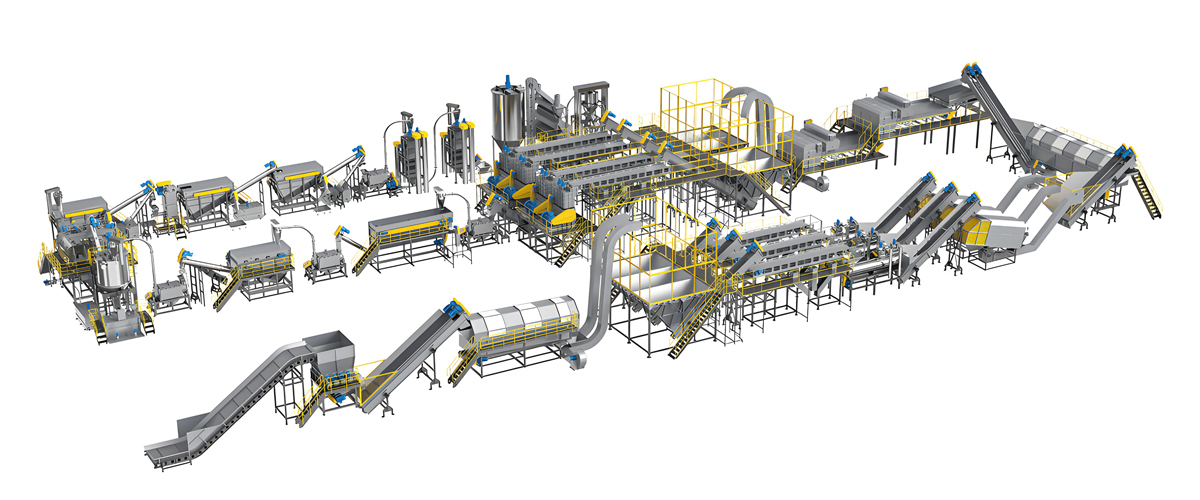
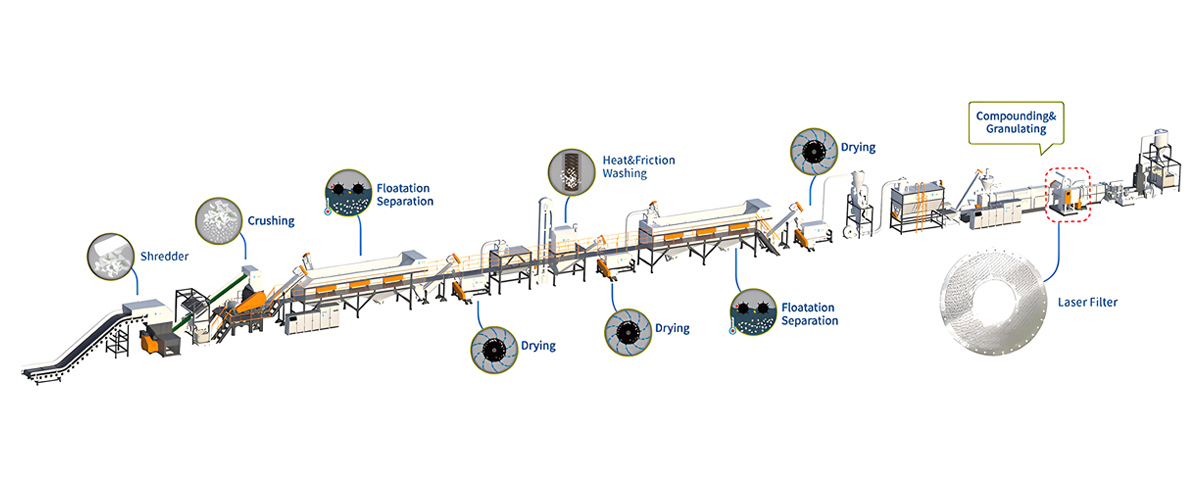
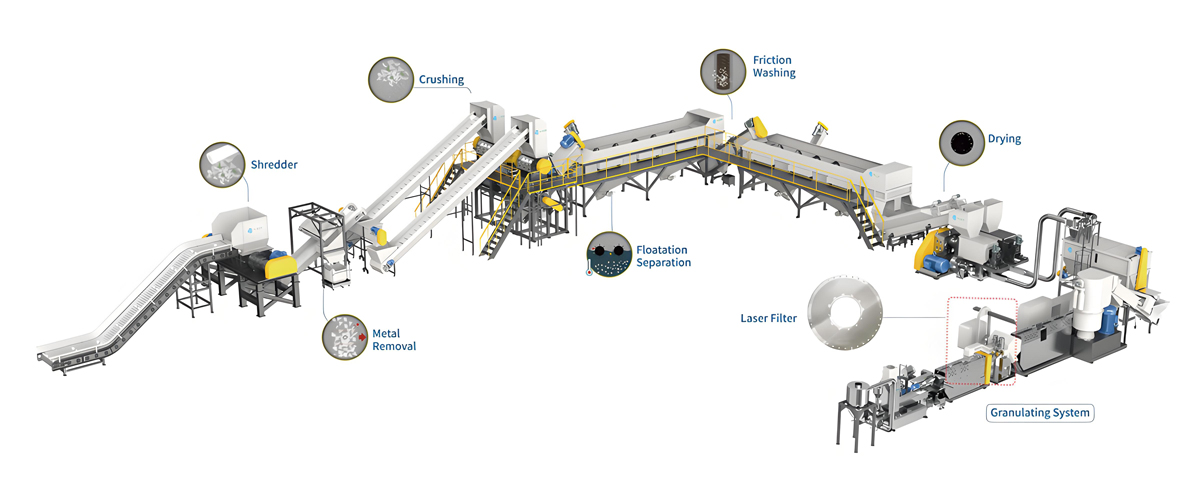
A custom rigid plastic washing line consists of several interconnected process modules, each designed to perform a specific function in converting contaminated plastic bottles into clean, high-quality flakes. The exact configuration of these modules will depend on your input material characteristics, production capacity, and end-product quality requirements. POLYRETEC takes a modular approach to washing line design, allowing us to mix and match modules to create an optimized solution for each customer.
2.1 Pre-Processing and Material Handling System
The pre-processing and material handling system is responsible for receiving the raw plastic waste, preparing it for further processing, and transporting it through the various stages of the washing line. This system includes bale breakers, conveyors, metal detectors, and primary shredders.
Bale breakers are used to break up compressed bales of plastic bottles into individual pieces. POLYRETEC bale breakers feature a robust design with heavy-duty chains and spikes that efficiently break bales without damaging the plastic bottles or creating excessive fines. The bale breaker is followed by a belt conveyor equipped with a metal detector that automatically detects and removes ferrous and non-ferrous metals from the material stream. This protects downstream equipment from damage caused by metal contaminants and ensures the purity of the final product.
For lines processing whole bottles, a primary shredder is used to reduce the bottles to a manageable size for further processing. POLYRETEC primary shredders feature a slow-speed, high-torque design that minimizes fine generation and energy consumption while providing consistent particle size. The shredders are equipped with overload protection and automatic reverse functions to prevent jamming and damage from foreign objects. The shredded material is then transported to the next stage of the line via screw conveyors or pneumatic conveying systems, which are designed to minimize material loss and ensure smooth, continuous operation.
2.2 Label and Cap Removal System
Label and cap removal is a critical step in rigid plastic recycling, as labels and caps are often made from different polymers than the bottles themselves and can contaminate the final product if not properly removed. Traditional washing lines often struggle with effective label and cap removal, resulting in low-purity flakes that command lower prices in the market.
POLYRETEC has developed advanced label and cap removal technologies that achieve up to 99% removal efficiency. Our label removers use a combination of mechanical agitation and air classification to separate paper and plastic labels from the bottles. The bottles are fed into a rotating drum with internal paddles that rub the labels off the bottle surfaces. The separated labels are then sucked out of the drum by a powerful air stream and collected in a separate container, while the bottles continue to the next stage of the process.
For cap removal, POLYRETEC offers specialized cap separators that use centrifugal force to separate caps from bottles. The bottles are accelerated in a rotating chamber, causing the caps to be thrown off the bottles and collected through a separate outlet. Our cap separators can handle a wide range of bottle sizes and cap types, achieving removal efficiencies of over 95%. For applications requiring the highest level of purity, we also offer optional de-capping machines that remove caps from whole bottles before shredding, ensuring complete separation of caps and bottles.
2.3 Size Reduction and Fine Crushing
After label and cap removal, the bottles are fed into a fine crusher that reduces them to uniform flakes of the desired size. The size of the flakes is an important parameter that affects the efficiency of subsequent washing and separation processes. Flakes that are too large will not be properly cleaned, while flakes that are too small will result in excessive material loss during washing and separation.
POLYRETEC fine crushers feature a robust design with high-quality alloy steel blades that provide consistent particle size distribution and long service life. The crushers are available with different screen sizes to produce flakes ranging from 10mm to 30mm, depending on your specific requirements. Our crushers are equipped with water spray systems that help cool the material during crushing, prevent plastic melting, and remove loose dirt and contaminants. The crushed flakes are then transported to the washing stage via screw conveyors, which also perform initial dewatering to remove excess water and loose contaminants.
2.4 Multi-Stage Washing System
The washing system is the heart of any rigid plastic washing line, responsible for removing dirt, residues, adhesives, and remaining contaminants from the plastic flakes. A well-designed washing system will produce clean, high-quality flakes that meet the strictest market requirements. POLYRETEC washing lines incorporate multiple stages of washing to ensure thorough cleaning of even the most heavily contaminated materials.
The first stage is the friction washer, which uses high-speed mechanical agitation to scrub the surface of the plastic flakes and remove surface dirt, loose labels, and adhesives. POLYRETEC friction washers feature a horizontal cylindrical drum with internal paddles that rotate at high speed, creating intense friction between the flakes and between the flakes and the drum walls. The wash water is continuously circulated and filtered to remove contaminants, ensuring efficient cleaning and minimizing water consumption.
For heavily contaminated materials or applications requiring the highest level of cleanliness, a hot washing stage is essential. POLYRETEC hot washing systems use a combination of hot water and environmentally friendly detergents to dissolve and remove stubborn contaminants such as food residues, oils, greases, and strong adhesives. The system operates at temperatures between 80°C and 95°C, with adjustable residence times from 5 to 30 minutes depending on the level of contamination. Our hot washing systems include advanced heat recovery units that recover up to 70% of the heat from the wastewater, significantly reducing energy consumption and operating costs.
After hot washing, the flakes go through multiple stages of rinsing to remove residual detergents and remaining contaminants. POLYRETEC rinsing tanks use a counter-current water flow system that maximizes cleaning efficiency while minimizing water consumption. The tanks are equipped with overflow weirs and filtration systems that continuously remove floating and sinking contaminants from the water, ensuring consistent cleaning performance.
2.5 Advanced Separation Technology
Separation is a critical process in mixed PP, PE, and PC bottle recycling, as it allows you to produce clean, single-polymer streams that command premium prices in the market. The different densities of PP (0.90 g/cm³), PE (0.91-0.96 g/cm³), and PC (1.20 g/cm³) make density separation the primary method for separating these materials.
The first separation stage is the sink-float separation tank, which separates the lighter PP and PE flakes from the heavier PC flakes and other dense contaminants such as glass, metal, and stones. The tank is filled with water, where PP and PE flakes float to the surface while PC flakes and other dense materials sink to the bottom. The floating PP and PE flakes are skimmed off the surface of the water and transported to the next stage, while the sinking PC flakes are collected from the bottom of the tank and processed separately.
For applications requiring the separation of PP and PE into individual streams, POLYRETEC offers advanced density separation systems that use salt solutions or centrifugal force to separate these two polymers based on their slight density difference. Our density separation systems can achieve separation efficiencies of over 98%, producing pure PP and PE streams suitable for high-value applications.
For the highest level of purity, POLYRETEC also offers electrostatic separation systems that separate plastics based on their different electrical properties. Electrostatic separation is particularly effective for removing small amounts of contaminant polymers that may have passed through the density separation stages. Our electrostatic separators can achieve separation efficiencies of over 99%, ensuring that your final product meets the strictest purity requirements.
2.6 Dewatering and Drying System
After washing and separation, the plastic flakes contain significant amounts of water that must be removed before the flakes can be sold or further processed. The moisture content of the final product is a critical quality parameter, as excessive moisture can cause problems during subsequent processing such as extrusion or injection molding.
POLYRETEC dewatering and drying systems use a combination of mechanical dewatering and thermal drying to achieve the desired moisture level. The first stage is the centrifugal dewaterer, which uses high-speed centrifugal force to remove up to 98% of the surface water from the flakes. The centrifugal dewaterer is followed by a fluidized bed dryer or a pipe dryer, which uses hot air to remove any remaining moisture from the flakes. Our drying systems are designed to provide gentle, uniform drying without causing thermal degradation of the plastic material.
POLYRETEC drying systems feature advanced temperature control and energy recovery systems that minimize energy consumption and ensure consistent drying performance. The systems can achieve final moisture contents of less than 1%, which is ideal for most downstream applications. For applications requiring even lower moisture levels, we offer optional vacuum drying systems that can achieve moisture contents of less than 0.1%.
2.7 Final Sorting and Quality Control
The final stage of the washing line is sorting and quality control, which ensures that only flakes meeting your quality specifications are included in the final product. POLYRETEC offers a range of advanced sorting technologies to remove any remaining contaminants and produce consistent, high-quality flakes.
Optical sorting systems use high-resolution cameras and infrared sensors to detect and remove contaminants based on color, polymer type, and shape. Our optical sorters can be programmed to remove off-color flakes, different polymer types, and any remaining foreign materials such as paper, metal, or glass. The sorters operate at high speed, processing up to 10 tons of material per hour with detection accuracies of over 99.9%.
For applications requiring the highest level of quality control, POLYRETEC also offers inline quality monitoring systems that continuously measure the purity, moisture content, and particle size distribution of the final product. These systems provide real-time data on product quality and can automatically adjust process parameters to maintain consistent performance. Any product that does not meet the specified quality standards is automatically rejected from the line, ensuring that only high-quality flakes are delivered to your customers.
2.8 Automation and Control System
All POLYRETEC custom washing lines are equipped with an advanced automation and control system that ensures consistent performance, maximum efficiency, and ease of operation. The system features a state-of-the-art Siemens S7-1500 PLC with a large touch screen HMI that provides comprehensive monitoring and control of all aspects of the washing process.
The control system includes recipe management capabilities that allow you to store and recall process parameters for different material types and product specifications. When changing between products, the operator simply selects the appropriate recipe from the menu, and the system automatically adjusts all process parameters such as temperature, speed, and chemical dosage. This reduces changeover time and ensures consistent quality every time a product is produced.
The system also features real-time process monitoring and data logging capabilities that track all critical process parameters such as temperature, pressure, flow rate, and power consumption. This data can be used to optimize process efficiency, identify potential issues before they cause downtime, and generate detailed production reports. For large-scale facilities, POLYRETEC washing lines can be integrated with plant-wide MES and ERP systems for centralized production management and control.
3. POLYRETEC Custom Rigid Plastic Washing Line Solutions
POLYRETEC offers a comprehensive range of custom rigid plastic washing lines designed to meet the diverse needs of recyclers worldwide. Our product range includes lines for small-scale startup operations to large-scale industrial recycling facilities, with capacities ranging from 500 kg/h to 5000 kg/h. All POLYRETEC washing lines are built to international quality standards and can be fully customized to meet your specific input material and output quality requirements.
3.1 POLYRETEC PR-RWL-500 Small-Scale Custom Washing Line
The POLYRETEC PR-RWL-500 is our compact, entry-level custom washing line designed for small-scale recycling operations and startup businesses. This versatile line is perfect for processing PP, PE, and PC bottles at capacities up to 500 kg/h. Despite its small size, the PR-RWL-500 incorporates all the advanced technologies of our larger lines, including label removal, multi-stage washing, density separation, and drying.
Key specifications:
- Processing capacity: 300-500 kg/h
- Input material: PP bottles, PE bottles, PC bottles, mixed rigid plastics
- Output flake size: 12-20 mm
- Polymer purity: Up to 99%
- Material recovery rate: 92%
- Water consumption: 4-6 m³/h
- Power consumption: 130 kW
- Footprint: 22 m x 7 m x 4.5 m
- Total weight: 18,000 kg
Price and Cost Analysis
The price of the POLYRETEC PR-RWL-500 small-scale custom washing line ranges from $65,000 to $95,000 FOB Shanghai, depending on the specific configuration and optional features. The standard configuration includes bale breaker, belt conveyor with metal detector, label remover, primary shredder, fine crusher, friction washer, sink-float separation tank, centrifugal dewaterer, and basic control system. Optional features include hot washing system, cap separator, electrostatic separator, optical sorter, and closed-loop water treatment system. This model is ideal for startup companies and small recyclers with limited capital and production requirements. The typical payback period for the PR-RWL-500 is 12-18 months for small-scale rigid plastic recycling operations.
3.2 POLYRETEC PR-RWL-1000 Medium-Scale Custom Washing Line
The POLYRETEC PR-RWL-1000 is our most popular medium-scale custom washing line, designed for growing recycling businesses and regional recycling centers. This line offers an excellent balance of production capacity, efficiency, and flexibility, making it perfect for processing a mix of PP, PE, and PC bottles at capacities up to 1000 kg/h. The PR-RWL-1000 incorporates all of POLYRETEC’s advanced technologies and can be easily upgraded to increase capacity or add new features as your business grows.
Key specifications:
- Processing capacity: 800-1000 kg/h
- Input material: PP bottles, PE bottles, PC bottles, mixed rigid plastics, detergent bottles, water bottles
- Output flake size: 12-20 mm
- Polymer purity: Up to 99.5%
- Material recovery rate: 94%
- Water consumption: 6-9 m³/h
- Power consumption: 220 kW
- Footprint: 30 m x 9 m x 5 m
- Total weight: 32,000 kg
Price and Cost Analysis
The price of the POLYRETEC PR-RWL-1000 medium-scale custom washing line ranges from $115,000 to $175,000 FOB Shanghai, depending on the specific configuration and optional features. The standard configuration includes bale breaker, belt conveyor with metal detector, cap separator, label remover, primary shredder, fine crusher, high-speed friction washer, hot washing tank with heat recovery, sink-float separation tank, centrifugal dewaterer, fluidized bed dryer, and advanced control system with recipe management. Optional features include density separation system for PP/PE separation, electrostatic separator, optical sorter, and closed-loop water treatment system. This model is ideal for medium-sized recyclers who need increased production capacity while maintaining high product quality and operational efficiency. The typical payback period for the PR-RWL-1000 is 9-12 months for medium-scale rigid plastic recycling operations.
3.3 POLYRETEC PR-RWL-2000 Large-Scale Industrial Washing Line
The POLYRETEC PR-RWL-2000 is our high-capacity industrial washing line designed for large-scale recycling facilities and major waste management companies. This line is capable of processing up to 2000 kg/h of mixed PP, PE, and PC bottles, producing high-quality recycled flakes suitable for premium applications. The PR-RWL-2000 incorporates the most advanced technologies available in the industry, including multiple stages of cleaning, separation, and drying to ensure maximum efficiency and product quality.
Key specifications:
- Processing capacity: 1500-2000 kg/h
- Input material: PP bottles, PE bottles, PC bottles, mixed rigid plastics, beverage bottles, industrial containers
- Output flake size: 12-20 mm
- Polymer purity: Up to 99.8%
- Material recovery rate: 95%
- Water consumption: 9-13 m³/h
- Power consumption: 380 kW
- Footprint: 42 m x 11 m x 5.5 m
- Total weight: 58,000 kg
Price and Cost Analysis
The price of the POLYRETEC PR-RWL-2000 large-scale industrial washing line ranges from $195,000 to $295,000 FOB Shanghai, depending on the specific configuration and optional features. The standard configuration includes heavy-duty bale breaker, multiple belt conveyors with metal detection, automatic cap separator, high-efficiency label remover, dual primary shredders, high-capacity fine crusher, multiple high-speed friction washers, advanced hot washing system with heat recovery, multiple sink-float separation tanks, centrifugal dewaterers, fluidized bed dryers, and advanced control system with comprehensive data logging. Optional features include density separation system, electrostatic separator, multiple optical sorters, and fully integrated zero-discharge water treatment system. This model is ideal for large-scale recycling facilities and major waste management companies with high-volume processing requirements. The typical payback period for the PR-RWL-2000 is 7-10 months for large-scale rigid plastic recycling operations.
3.4 POLYRETEC PR-RWL-3000 Heavy-Duty Washing Line
The POLYRETEC PR-RWL-3000 is our heavy-duty washing line designed for the largest recycling facilities and multinational waste management corporations. This line offers industry-leading production capacity of up to 3000 kg/h, making it perfect for processing massive volumes of PP, PE, and PC bottles. The PR-RWL-3000 is built with the most robust construction and incorporates all of POLYRETEC’s patented technologies to deliver maximum performance, reliability, and efficiency.
Key specifications:
- Processing capacity: 2500-3000 kg/h
- Input material: PP bottles, PE bottles, PC bottles, mixed rigid plastics, beverage bottles, industrial containers, household plastics
- Output flake size: 12-20 mm
- Polymer purity: Up to 99.9%
- Material recovery rate: 96%
- Water consumption: 13-17 m³/h
- Power consumption: 550 kW
- Footprint: 55 m x 13 m x 6 m
- Total weight: 92,000 kg
Price and Cost Analysis
The price of the POLYRETEC PR-RWL-3000 heavy-duty washing line ranges from $320,000 to $460,000 FOB Shanghai, depending on the specific configuration and optional features. The standard configuration includes multiple heavy-duty bale breakers, multiple belt conveyors with advanced metal detection, fully automatic cap separation system, high-capacity label removal system, dual primary shredders, high-capacity fine crushers, multiple high-speed friction washers, advanced hot washing system with multiple heat recovery units, multiple sink-float separation tanks, centrifugal dewaterers, fluidized bed dryers, and advanced control system with plant-wide integration capability. Optional features include advanced density separation systems, multiple electrostatic separators, high-speed optical sorters, and fully integrated zero-discharge water treatment systems. This model is ideal for the largest recycling facilities and multinational corporations with mega-scale processing requirements. The typical payback period for the PR-RWL-3000 is 5-8 months for heavy-duty rigid plastic recycling operations.
3.5 POLYRETEC PR-RWL-5000 Ultra-High-Capacity Washing Line
The POLYRETEC PR-RWL-5000 is our ultra-high-capacity washing line designed for the world’s largest recycling operations. This line is capable of processing up to 5000 kg/h of rigid plastic waste, making it the most powerful washing line available on the market. The PR-RWL-5000 is custom-built to meet the specific requirements of each customer and incorporates the most advanced technologies available in the industry.
Key specifications:
- Processing capacity: 4000-5000 kg/h
- Input material: PP bottles, PE bottles, PC bottles, mixed rigid plastics, beverage bottles, industrial containers, household plastics
- Output flake size: 12-20 mm
- Polymer purity: Up to 99.95%
- Material recovery rate: 97%
- Water consumption: 18-24 m³/h
- Power consumption: 850 kW
- Footprint: 75 m x 16 m x 6.5 m
- Total weight: 150,000 kg
Price and Cost Analysis
The price of the POLYRETEC PR-RWL-5000 ultra-high-capacity washing line ranges from $520,000 to $750,000 FOB Shanghai, depending on the specific configuration and optional features. Each PR-RWL-5000 line is custom-designed and built to meet the exact requirements of the customer, with options for multiple parallel processing lines, advanced automation systems, and complete turnkey solutions. This model is ideal for the world’s largest recycling operations and multinational corporations with ultra-high-volume processing requirements. The typical payback period for the PR-RWL-5000 is 4-6 months for ultra-high-scale rigid plastic recycling operations.
4. Comprehensive Cost Analysis and Return on Investment Calculation
Investing in a custom POLYRETEC rigid plastic washing line offers significant financial benefits through high material recovery rates, low operating costs, and the production of high-quality recycled flakes that command premium prices. In this section, we will provide a detailed cost analysis and return on investment calculation for three different production scenarios using POLYRETEC washing lines.
4.1 Initial Investment Comparison
We will compare the initial investment required for three different production scenarios using POLYRETEC washing lines:
Scenario 1: Small-scale production with POLYRETEC PR-RWL-500 washing line (500 kg/h)
Scenario 2: Medium-scale production with POLYRETEC PR-RWL-1000 washing line (1000 kg/h)
Scenario 3: Large-scale production with POLYRETEC PR-RWL-2000 washing line (2000 kg/h)
Scenario 1: Small-Scale Production (PR-RWL-500)
- POLYRETEC PR-RWL-500 washing line: $80,000
- Auxiliary equipment: $18,000
- Installation and training: $10,000
- Initial spare parts package: $6,000
- Shipping and customs: $15,000
- Contingency fund (10%): $12,900
Total Initial Investment for Scenario 1: $141,900
Scenario 2: Medium-Scale Production (PR-RWL-1000)
- POLYRETEC PR-RWL-1000 washing line: $145,000
- Auxiliary equipment: $30,000
- Installation and training: $15,000
- Initial spare parts package: $10,000
- Shipping and customs: $22,000
- Contingency fund (10%): $22,200
Total Initial Investment for Scenario 2: $244,200
Scenario 3: Large-Scale Production (PR-RWL-2000)
- POLYRETEC PR-RWL-2000 washing line: $245,000
- Auxiliary equipment: $50,000
- Installation and training: $22,000
- Initial spare parts package: $15,000
- Shipping and customs: $32,000
- Contingency fund (10%): $36,400
Total Initial Investment for Scenario 3: $400,400
While the initial investment increases with production scale, the per-unit production cost decreases significantly, resulting in higher profit margins and faster return on investment for larger production facilities.
4.2 Annual Operating Cost Comparison
We will now compare the annual operating costs for the three scenarios, based on 24 hours of production per day, 300 days per year, processing a mix of 50% PP bottles, 35% PE bottles, and 15% PC bottles. The calculations assume an average input material cost of $140 per ton, an average PP/PE flake selling price of $480 per ton, and an average PC flake selling price of $950 per ton.
Scenario 1: Small-Scale Production (PR-RWL-500)
- Annual production: 3,600 tons
- Raw material costs: $504,000 per year
- Energy costs: $93,600 per year
- Water costs: $17,280 per year
- Labor costs (4 workers): $96,000 per year
- Maintenance and repair costs: $14,400 per year
- Chemical costs: $14,400 per year
- Waste disposal costs: $10,800 per year
- Overhead costs: $45,000 per year
Total Annual Operating Costs for Scenario 1: $795,480 per year
Cost per Ton: $220.97
Scenario 2: Medium-Scale Production (PR-RWL-1000)
- Annual production: 7,200 tons
- Raw material costs: $1,008,000 per year
- Energy costs: $158,400 per year
- Water costs: $25,920 per year
- Labor costs (6 workers): $144,000 per year
- Maintenance and repair costs: $25,920 per year
- Chemical costs: $23,040 per year
- Waste disposal costs: $17,280 per year
- Overhead costs: $75,000 per year
Total Annual Operating Costs for Scenario 2: $1,477,560 per year
Cost per Ton: $205.22
Scenario 3: Large-Scale Production (PR-RWL-2000)
- Annual production: 14,400 tons
- Raw material costs: $2,016,000 per year
- Energy costs: $273,600 per year
- Water costs: $43,200 per year
- Labor costs (8 workers): $192,000 per year
- Maintenance and repair costs: $43,200 per year
- Chemical costs: $38,400 per year
- Waste disposal costs: $28,800 per year
- Overhead costs: $120,000 per year
Total Annual Operating Costs for Scenario 3: $2,755,200 per year
Cost per Ton: $191.33
As production scale increases, the cost per ton decreases significantly due to economies of scale and the high efficiency of POLYRETEC washing lines. The advanced technologies incorporated into POLYRETEC machines ensure that operating costs remain low even at the highest production volumes.
4.3 Revenue and Profitability Comparison
We will now compare the revenue and profitability for the three scenarios, using the average selling prices mentioned above for PP/PE and PC flakes.
Scenario 1: Small-Scale Production (PR-RWL-500)
- PP/PE flake production: 3,060 tons per year
- PC flake production: 540 tons per year
- Annual revenue: (3,060 x $480) + (540 x $950) = $1,468,800 + $513,000 = $1,981,800 per year
- Annual operating costs: $795,480 per year
- Annual gross profit: $1,981,800 – $795,480 = $1,186,320 per year
Scenario 2: Medium-Scale Production (PR-RWL-1000)
- PP/PE flake production: 6,120 tons per year
- PC flake production: 1,080 tons per year
- Annual revenue: (6,120 x $480) + (1,080 x $950) = $2,937,600 + $1,026,000 = $3,963,600 per year
- Annual operating costs: $1,477,560 per year
- Annual gross profit: $3,963,600 – $1,477,560 = $2,486,040 per year
Scenario 3: Large-Scale Production (PR-RWL-2000)
- PP/PE flake production: 12,240 tons per year
- PC flake production: 2,160 tons per year
- Annual revenue: (12,240 x $480) + (2,160 x $950) = $5,875,200 + $2,052,000 = $7,927,200 per year
- Annual operating costs: $2,755,200 per year
- Annual gross profit: $7,927,200 – $2,755,200 = $5,172,000 per year
The annual gross profit increases significantly with production scale, demonstrating the financial benefits of investing in higher-capacity POLYRETEC washing lines. The ability to separate and sell high-value PC flakes separately from PP/PE flakes significantly increases revenue and profitability compared to selling mixed plastic flakes.
4.4 Return on Investment Calculation
We will now calculate the return on investment (ROI) and payback period for each of the three production scenarios.
Scenario 1: Small-Scale Production (PR-RWL-500)
Initial Investment: $141,900
Annual Gross Profit: $1,186,320 per year
Payback Period: $141,900 ÷ $1,186,320 = 0.120 years = 1.44 months
Scenario 2: Medium-Scale Production (PR-RWL-1000)
Initial Investment: $244,200
Annual Gross Profit: $2,486,040 per year
Payback Period: $244,200 ÷ $2,486,040 = 0.098 years = 1.18 months
Scenario 3: Large-Scale Production (PR-RWL-2000)
Initial Investment: $400,400
Annual Gross Profit: $5,172,000 per year
Payback Period: $400,400 ÷ $5,172,000 = 0.077 years = 0.93 months
All three scenarios offer exceptionally fast payback periods, with larger production facilities achieving returns on investment in less than one month. This is one of the fastest payback periods in the recycling industry, making investment in a POLYRETEC custom rigid plastic washing line an extremely attractive business opportunity.
4.5 Sensitivity Analysis
To provide a more realistic assessment of the investment, we have conducted a sensitivity analysis to show how changes in key parameters affect the payback period:
- If the selling price of recycled flakes decreases by 20%, the payback period increases to 1.8 months for small-scale, 1.5 months for medium-scale, and 1.2 months for large-scale production
- If the production volume decreases by 20%, the payback period increases to 1.8 months for small-scale, 1.5 months for medium-scale, and 1.2 months for large-scale production
- If the raw material cost increases by 20%, the payback period increases to 2.1 months for small-scale, 1.7 months for medium-scale, and 1.3 months for large-scale production
- If all three factors occur simultaneously (20% lower price, 20% lower volume, 20% higher cost), the payback period increases to 4.2 months for small-scale, 3.4 months for medium-scale, and 2.7 months for large-scale production
Even in the worst-case scenario, all three production scenarios offer extremely fast payback periods, making investment in a POLYRETEC custom rigid plastic washing line a robust and low-risk business opportunity.
5. Real-World Success Stories with POLYRETEC Custom Washing Lines
POLYRETEC custom rigid plastic washing lines have helped hundreds of recyclers around the world establish and grow successful recycling businesses. The following case studies demonstrate the real-world benefits of our custom solutions for processing PP, PE, and PC bottles.
5.1 Case Study 1: Mixed Rigid Plastic Recycler in Germany
Deutsche Kunststoff Recycling GmbH, a leading recycling company based in Berlin, Germany, was looking to upgrade their existing rigid plastic washing line to improve product quality and increase production capacity. The company was processing approximately 800 tons per month of mixed PP, PE, and PC bottles, but their old line could only produce mixed plastic flakes with a purity of 92%, which limited their market and selling price. They needed a custom washing line that could separate the different polymer types and produce high-purity flakes suitable for premium applications.
After researching several equipment suppliers, Deutsche Kunststoff Recycling selected POLYRETEC as their partner based on our advanced separation technology and reputation for quality. We designed and manufactured a custom PR-RWL-1500 washing line specifically configured for their mixed material stream, including advanced density separation and electrostatic separation systems to produce pure PP, PE, and PC streams.
Results after implementation:
- Production capacity increased from 800 tons to 1,800 tons per month
- Polymer purity increased from 92% to 99.8% for all three streams
- Material recovery rate increased from 82% to 95%
- Flake selling price increased by 65% due to higher purity and separate polymer streams
- Water consumption reduced by 60% compared to their old line
- Energy consumption reduced by 38% compared to their old line
- Payback period of 6.8 months
The company was extremely satisfied with the performance of their POLYRETEC washing line and has since purchased a second PR-RWL-2000 line to expand their production capacity to 4,000 tons per month.
5.2 Case Study 2: PC Water Bottle Recycler in the United States
American PC Recycling Inc., a specialized recycling company based in California, USA, was looking to establish a new recycling facility for processing 5-gallon PC water bottles. The company had been selling the bottles as mixed plastic waste for a low price, but they saw an opportunity to significantly increase their profitability by processing the bottles into high-purity PC flakes. They needed a custom washing line that could handle the unique characteristics of PC water bottles and produce flakes suitable for reuse in new water bottles and other high-value applications.
The company selected POLYRETEC as their equipment supplier after a thorough evaluation process. We designed and manufactured a custom PR-RWL-1000 washing line specifically optimized for PC water bottles, including specialized crushing, washing, and drying systems to ensure the highest level of purity and quality.
Results after implementation:
- Successfully established a new PC recycling facility processing 1,000 tons per month of 5-gallon water bottles
- Produced high-purity PC flakes with 99.9% purity and less than 0.5% moisture content
- Achieved a material recovery rate of 96%
- Flake selling price of $1,100 per ton, compared to $180 per ton for unprocessed bottles
- Created 18 new jobs at their facility
- Payback period of 5.2 months
The company has since become the largest supplier of recycled PC flakes for water bottles in the Western United States and is currently planning to add a second PR-RWL-1000 line to meet growing demand.
5.3 Case Study 3: Beverage Bottle Recycler in Brazil
Brasil Reciclagem de Plásticos Ltda., a large beverage bottle recycler based in São Paulo, Brazil, was looking to expand their production capacity and improve the quality of their recycled HDPE and PET flakes. The company was processing approximately 2,000 tons per month of beverage bottles, but their existing washing line was outdated and inefficient, resulting in high operating costs and inconsistent product quality. They needed a custom washing line that could handle high volumes of beverage bottles and produce food-grade quality flakes.