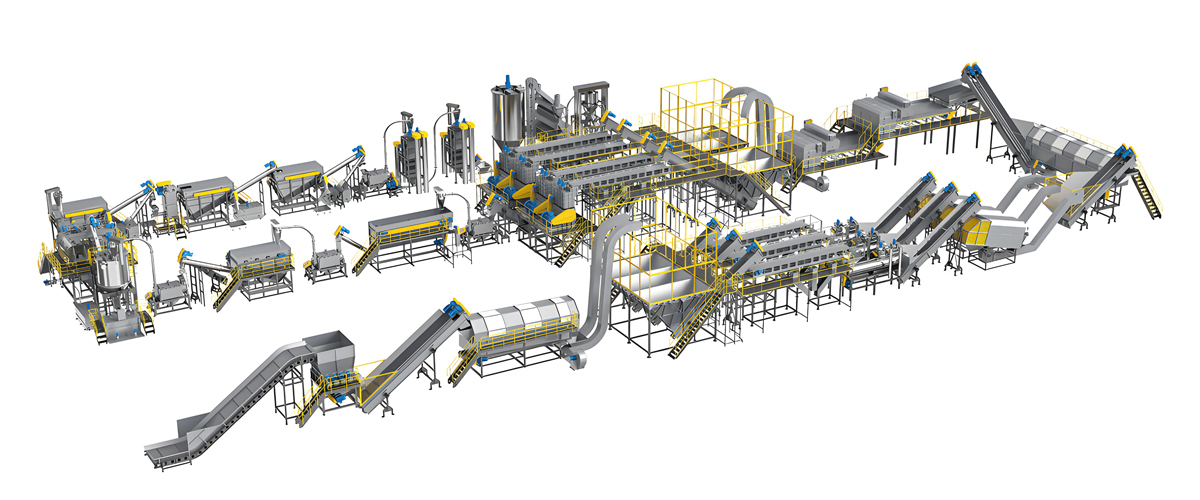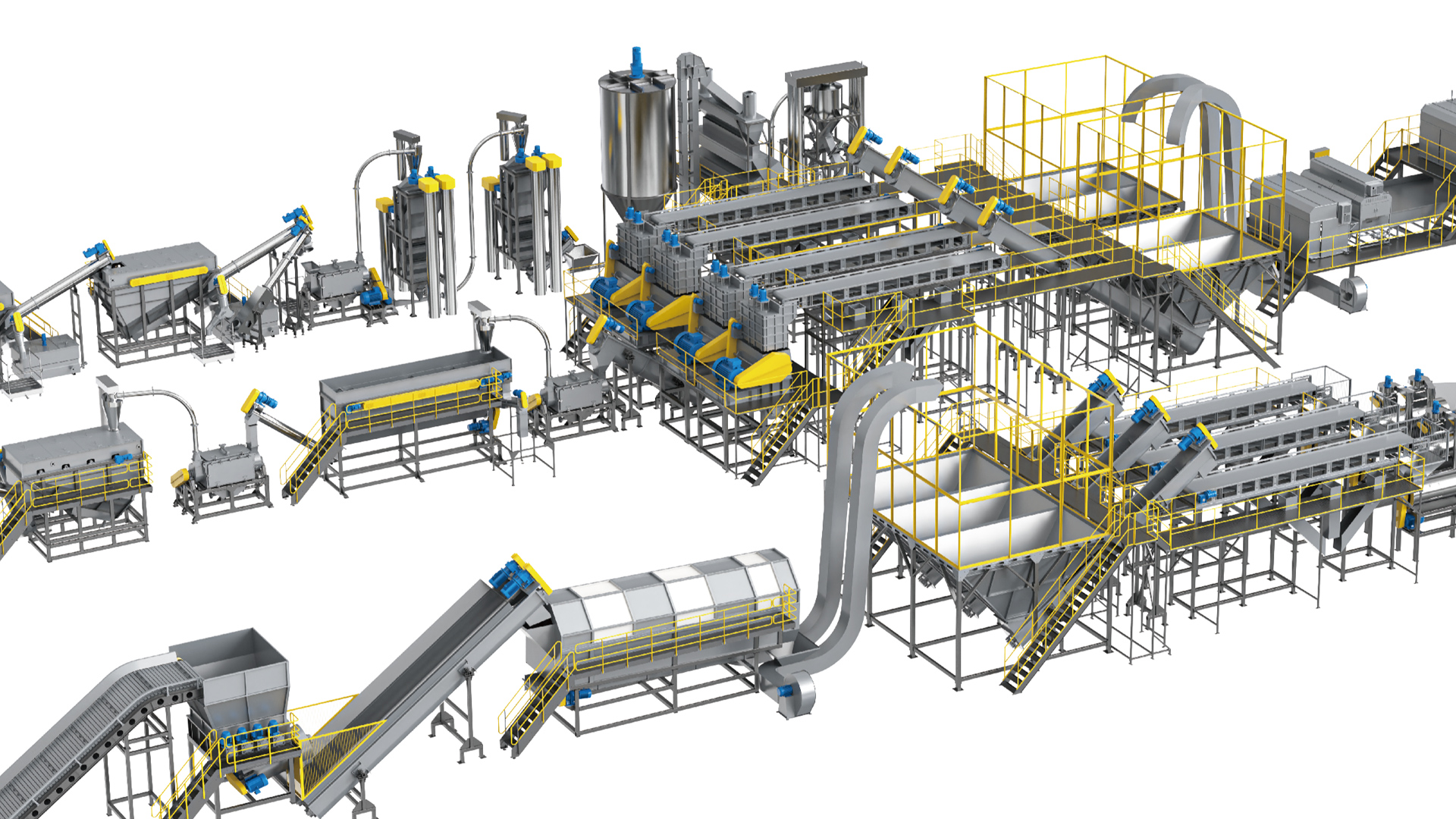

The question that every recycler, investor, and plastics buyer asks first is the same: how much does a plastic recycling plant cost? The short answer is that it depends very heavily on what you want the plant to do, at what capacity, and to what quality standard. A single shredder can be installed for a relatively small amount, while a complete food-grade bottle recycling facility with washing, drying, and pelletizing can require a very large investment. This article gives you a complete, practical 2026 cost breakdown for plastic recycling plants. It explains every major piece of equipment and its price range, how capacity and automation change the total, the cost of food-grade versus commodity output, typical payback periods, and how to plan the budget so the plant is profitable from a clear date rather than a vague hope. The goal is to help you compare real options and choose the plant that matches your budget and your market.
Why There Is No Single Price for a Recycling Plant
The price of a plastic recycling plant is not one number because a plant is not one machine. A recycling operation is a chain of equipment, and each link changes the total. The four things that most change the price are the feedstock you process, the capacity, the finished product, and the quality standard.
A plant that only shreds and sells loose flake is much simpler and cheaper than one that washes, dries, and pelletizes food-grade material. A 500 kg per hour line costs a fraction of a 2000 kg per hour line. A commodity-grade setup that accepts variable quality is far cheaper than one engineered to hold tight specifications for premium buyers. Before you can shop for equipment, you need to decide what output and quality you must achieve, because this decision sets the whole budget.
A useful way to think about it is as a spectrum. At the low end, a simple granulation or shredding setup for clean internal scrap is inexpensive. At the high end, a complete, automated, food-grade washing and pelletizing plant for post-consumer waste is a major capital investment. Most serious recyclers who want to sell high-quality recycled material sit in the middle and upper part of this range.
The Equipment That Makes Up a Plant and What Each Costs
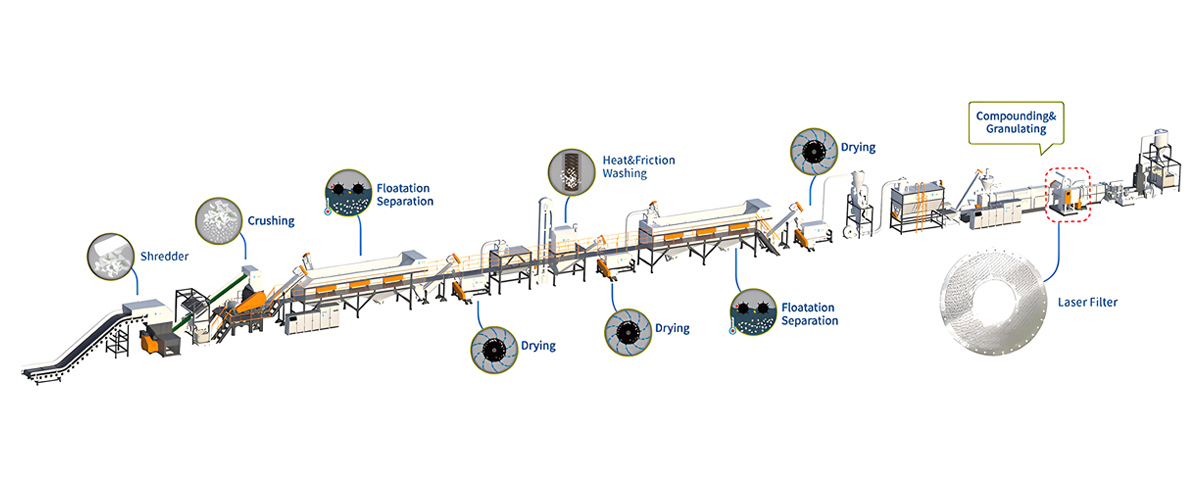
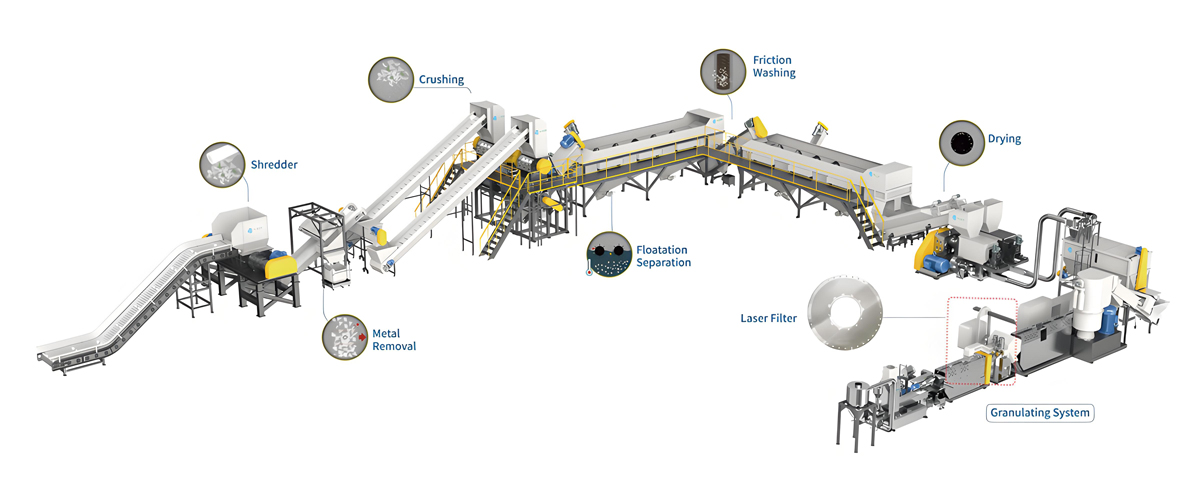
Every complete recycling plant is built from the same family of equipment. Understanding the role and price of each unit helps you see where the money goes and where you can scale.
Shredder
A shredder breaks down large bales, bottles, and bulky items before further processing. Prices vary widely with tonnage, motor power, and blade design. A small single-shaft shredder for modest volumes is the least expensive major piece, while a heavy-duty two-shaft shredder sized for a large plant is a significantly larger investment. The shredder is often the first stage and must be matched to the size of the items you receive.
Crusher or Granulator
A crusher or granulator reduces the shredded material into smaller, uniform flakes. Its cost depends on motor size, rotor design, and whether it is built for rigid plastic or for soft film, which needs special handling. For most line the crusher is a meaningful cost item but generally less than the washing and pelletizing stages.
Washing Line
The washing line is the heart of a recycling plant and a major share of the total cost. It typically includes a friction washer, a hot washer with caustic and heating, a float-sink tank, and a rinse stage. The cost depends on capacity, whether hot washing is included, how many cleaning stages there are, and the level of automation. A food-grade washing line with caustic hot washing costs more than an elementary cold rinse line, and for good reason: it produces much higher-value material. Washing line cost is also the place where quality survival is decided, so this is not where to save on a food-grade project.
Dewatering and Drying
After washing, the flake carries a large amount of water that must be removed before extrusion. A mechanical dewatering unit, centrifugal dryer, and sometimes a thermal dryer make up this stage. Drying equipment is a real cost that is often underestimated, but controlled moisture is essential for pellet quality. Sizing and configuring this stage correctly protects the value of everything that comes after.
Pelletizing Extruder
The pelletizing extruder melts the clean flake and turns it into uniform pellets. Cost depends on screw design, motor power, whether it is single-screw or twin-screw for compounding, and whether it includes an automatic screen changer. The extruder is one of the larger single investments in a complete line, and it is where flake becomes a sellable, transportable product.
Separators, Sorters, and Ancillary Equipment
Beyond the main line, the total includes metal detectors, magnetic separators, optical sorters to remove PVC and other wrong polymers, color sorters, conveyors, and controls. The more automation and the higher the purity target, the more this category costs. These items are frequently the difference between a plant that ships consistent premium material and one that ships variable commodity material.
Illustrative 2026 Cost Ranges
The table below is an approximate guide based on typical recent offers, to give you a basis for comparison rather than a fixed quote. Actual prices depend on manufacturer, configuration, shipping, and the market.
Entry-level shredding and granulation setup, for clean internal scrap, from around $20,000 to $80,000.
Small complete bottle or film washing line, around 300 to 500 kg per hour, from around $60,000 to $160,000.
Mid-size complete washing line, around 800 to 1500 kg per hour, from around $120,000 to $300,000.
High-capacity complete recycling line, 2000 kg per hour and above, with washing, drying, and controls, from around $220,000 to $500,000 and more.
Complete food-grade rPET bottle washing and pelletizing plant, from around $350,000 to $1,000,000 and beyond, depending on capacity and automation.
Add pelletizing extruder to a washing line, from around $60,000 to $200,000 depending on size and whether it is a compounding machine.
Upgrades such as hot washing, optical sorting, metal detection, and color sorting, from around $20,000 to each stage adds.
These figures are only a starting point. The most helpful figure for any project is the delivered, installed, commissioned price of a complete matched line, because that is the number that lets you plan your budget and your payback with confidence.
How Capacity and Automation Change the Total
Capacity is the single biggest multiplier in recycling plant cost because every stage must be sized to the same throughput. Doubling capacity roughly requires bigger shredders, washers, dryers, and extruders, and the relationship is not linear, so doubling capacity often increases cost by less than double for the machinery itself but more once building, power, and ancillaries are included.
Automation is the second multiplier. A plant with automatic de-baling, automatic feed, sensor-driven control, and automatic screen changing costs more upfront but needs fewer operators and produces more consistent output. Automation changes the shape of the business case, trading higher capital cost for lower running cost and a higher-quality, more stable product.
The most cost-effective decision is usually to size every stage to the same target output and to choose a level of automation that matches the wages and labor availability in your location. Over-sizing one stage or under-sizing another creates a bottleneck that wastes the investment.
Food-Grade Output Costs More, and Is Worth More
The difference between a commodity line and a food-grade line is one of the most important budget choices in recycling. Food-grade output, especially rPET that meets food-contact standards, requires a caustic hot washing process, stricter separation, more thorough rinsing, and often more documentation and certification.
These requirements raise the capital cost of the washing line and the complexity of the process. But food-grade recycled flakes and pellets are sold at a notable premium over commodity grades, and they are the stream that the biggest brands and the strictest regulations demand. For recyclers who can achieve food-grade quality, the higher investment is usually repaid faster because the per-kilogram revenue is higher and the market is more stable.
This is the reasoning behind choosing a food-grade PET bottle washing line when the target market is beverage and food packaging. The extra cost of hot washing and control is offset by a product that commands a premium and is easier to sell in volume.
Building, Power, Water, and Operating Costs
Equipment is not the whole investment. A realistic plant budget must include the building or hall, electrical installation, water supply and treatment, drainage, permits, and working capital. Power is a large and steady operating cost in recycling, especially for shredding, heating washing water, and running the extruder. Water is both a supply cost and a disposal cost, because wash water must be treated or recycled.
A well-planned plant recycles its wash water rather than continuously drawing fresh water, and it manages power usage carefully by running equipment only when needed. These choices lower the on-going cost and shorten the payback period. When you compare equipment offers, consider them together with site preparation and on-going utilities, because these costs are often comparable to the machinery over the first years.
How Payback Is Calculated
Payback period answers the question of how long until the plant earns back its cost. The calculation is straightforward once you have your numbers: total capital investment divided by net annual profit. Net profit is revenue from selling flake or pellets, minus feedstock cost, labor, power, water, maintenance, and other operating expenses.
A realistic example makes it concrete. Suppose a mid-size complete washing and pelletizing line costs $250,000 installed. If the plant runs, for example, 300 kg per hour of output at, on average, a $600 per tonne premium of pellets over the fully loaded cost of producing them, that is about $180 per hour of net contribution, or roughly $1,400 per 8-hour shift, and well over $400,000 in a good year of full operation. Such an example, reduced and made realistic, points to payback in the range of ten to twenty months for a well-run line, while a lower-output or lower-margin plant can take two to three years.
The three levers that most shorten payback are final product quality, running reliability, and operating cost efficiency. Higher-quality product sells at a higher margin per tonne. Reliable running maximizes the production hours that contribute revenue. Efficient power and water use lowers the cost that is subtracted each month. A complete, well-engineered line improves all three at once.
Choosing a Complete Line Versus a Single Machine
It is possible to buy a single washing machine or extruder and build a plant piece by piece, but experienced recyclers usually prefer a complete matched line from a single supplier. The reason is that recycling is a chain, and a weak or mismatched link breaks the whole process. A crusher that is smaller than the washer, or an extruder that is larger than the dryer can support, caps the full line and wastes part of the investment.
Polyretec supplies complete recycling lines engineered so that every stage is matched to the same target output. This includes the Soft Plastic Crushing and Washing Line for film and the food-grade PET bottle washing line for bottles, together with pelletizing extruders and compounding lines. Buying a complete line also brings single-point responsibility for commissioning, training, spare parts, and support, which reduces the hidden project risks and costs that a piecemeal approach can hide.
Getting an Accurate Quote and a Defensible Budget
The most reliable way to answer the cost question for your specific plant is to prepare the right information and request a concrete quotation. A good supplier gives a firm budget once they know a few key facts, and preparing them saves you time and gives you a budget you can defend.
Feedstock and quality: what plastics you process, how contaminated they are, and whether they are rigid, film, or a mix.
Target output and capacity: the finished product you want, flake or pellets, and the hourly or daily output you need.
Quality standard: whether you need commodity, high-purity, or food-grade output, because this changes the line and the price.
Site and utilities: the space, available power, water supply, and drainage of your facility, because these affect installation and running cost.
Budget range and intended market: being clear about your capital and your buyer helps the supplier propose the right configuration.
With this information, Polyretec can quote a complete, delivered, and commissioned line and let you calculate your own payback with real numbers rather than estimates.
Common Budgeting Mistakes
A few budgeting mistakes repeatedly undermine otherwise sound recycling projects, and planning against them protects your investment.
Choosing capacity before deciding quality, which usually leads to buying a line that is the wrong size for the product that actually sells.
Cutting the washing and drying stages to save money, which lowers product grade and forces every batch to sell at a discount, lengthening payback.
Ignoring site, power, water, and permits, which can add a large unplanned cost after the machinery quote.
Buying mismatched machines to save on individual units, which creates bottlenecks and unexpected upgrade costs later.
Forgetting the value of commissioning and training, which turns good equipment into poorly operated, unreliable output.
Summary and Recommendation
The honest answer to how much a plastic recycling plant costs in 2026 is that it depends on your feedstock, capacity, and quality target, and ranges from a modest sum for a simple shredding setup to over a million dollars for a food-grade washing and pelletizing facility. The essential budgeting principle is to define your output and quality first and then size a complete, matched line to that target.
For most commercial recyclers wishing to sell high-quality recycled flakes or pellets, the realistic investment sits in the mid-to-upper range, and it is a capital decision with a clear, measurable payback, typically one to three years for a well-run line selling premium product. The way to shorten payback is a complete line that protects yield, uptime, and quality, and efficient power and water use that keeps operating cost low.
Polyretec supplies complete recycling lines that match every stage to a single target output, from the food-grade PET bottle washing line and soft plastic washing line to the pelletizing extruder and compounding line, with installation and after-sales support. If you want a concrete answer for your plant, contact Polyretec with your feedstock, capacity, and quality targets, and they will give you the complete line configuration and price you need to build a defensible budget and a profitable recycling plant.
Scaling Up: Small, Medium, and Industrial Plants
Recycling plants are usually planned at one of three scales, each with its own budget, market, and equipment. Understanding which scale matches your situation prevents both under-investing and over-spending.
A small plant, typically from a few hundred kilograms per hour and below, suits a recycler with a modest, steady feedstock and a local market. A small complete washing line with a matching extruder keeps the capital low, runs on limited power and a single hall, and is often the right size for a first recycling business or a producer recycling its own internal scrap. The trade-off is a lower output and therefore a longer time to earn back the investment, but it is an accessible entry point.
A medium plant, roughly from five hundred to fifteen hundred kilograms per hour, is the workhorse of the industry. It processes enough volume to build a real customer base and to hold stable premiums, while the machinery remains a manageable investment. Most serious recyclers who sell to packaging producers operate at this scale. The medium washing line and pelletizing extruder can be matched for continuous, dependable production.
An industrial plant, from two thousand kilograms per hour and up, is a major facility that processes very large volumes of post-consumer waste. It needs a sizable site, three-phase power in large capacity, significant water handling, and automation to keep labor costs under control. The capital is high, but so is the return, because industrial output at good margins on several lines generates revenue that a small plant cannot reach.
Polyretec supplies complete lines at all three scales, from a small soft plastic washing line to a high-capacity food-grade PET plant. The practical advice is to choose the scale your feedstock and market support today, and to select equipment that can be expanded later. Starting at the wrong scale, either too small to be profitable or too large for your feedstock, is one of the most common and most expensive mistakes in recycling planning.
Financing, Grants, and Making the Investment Work
Because recycling plants are a significant capital outlay, most serious projects involve financing. The good news is that recycling equipment and facilities often qualify for favorable treatment, because they support widely supported sustainability goals. Some regions offer grants, low-interest loans, or tax incentives for recycling infrastructure, food-grade capacity, and circular-economy projects.
A lender assessing a recycling project asks for a clear business case: a realistic feedstock supply, a defined product and market, a defensible revenue estimate, and a plant design that protects quality and uptime. A complete line from an established supplier, with commissioning and support, is easier to finance than a piecemeal setup, because it has a single cost, a single schedule, and a single responsible partner.
The most effective way to work with a lender or an investor is to present the numbers from a complete, quoted line rather than an estimate. Once you have a firm delivered and commissioned price for a matched line, you can calculate your monthly output, your margin per tonne, and your payback, and present a plan that is specific rather than vague. This is where working with a supplier that quotes a full line adds measurable value to your project.
Frequently Asked Questions
What is the minimum budget to start a small plastic recycling plant?
A very small operation that only shreds clean material can start with a modest budget for a single shredder, while a complete washing line for real output usually requires a larger investment in the range of a small-complete-line figure. The minimum depends on the quality of the product you must sell.
Is a plastic recycling plant profitable?
A well-planned, well-run plant processing the right feedstock into premium-quality pellets is profitable, because those pellets sell at a margin over the fully loaded production cost. Profitability depends on yield, uptime, and product quality, which a complete line protects.
How long does it take to pay back a plastic recycling plant?
A typical payback for a complete, well-run line selling premium product is roughly one to three years, depending on capacity, margin per tonne, and running reliability. Higher-value food-grade output and efficient operation shorten the period.
What increases the cost of a recycling line the most?
Capacity and the quality standard are the two biggest cost drivers. Food-grade output and high-capacity, highly automated lines cost the most, but they also earn the highest revenue per kilogram and need fewer operators.
Should I buy a complete line or build it from separate machines?
For most projects a complete matched line from a single supplier is more reliable, because the stages are correctly sized and integration is handled by one responsible supplier. This reduces the hidden costs and risks of a piecemeal setup.
Cost is only one half of the decision; revenue and payback are the other. By matching your budget to a complete, quality-protecting line from Polyretec, you turn a capital outlay into a recycling plant with clear cost, clear output, and a clear payback date.