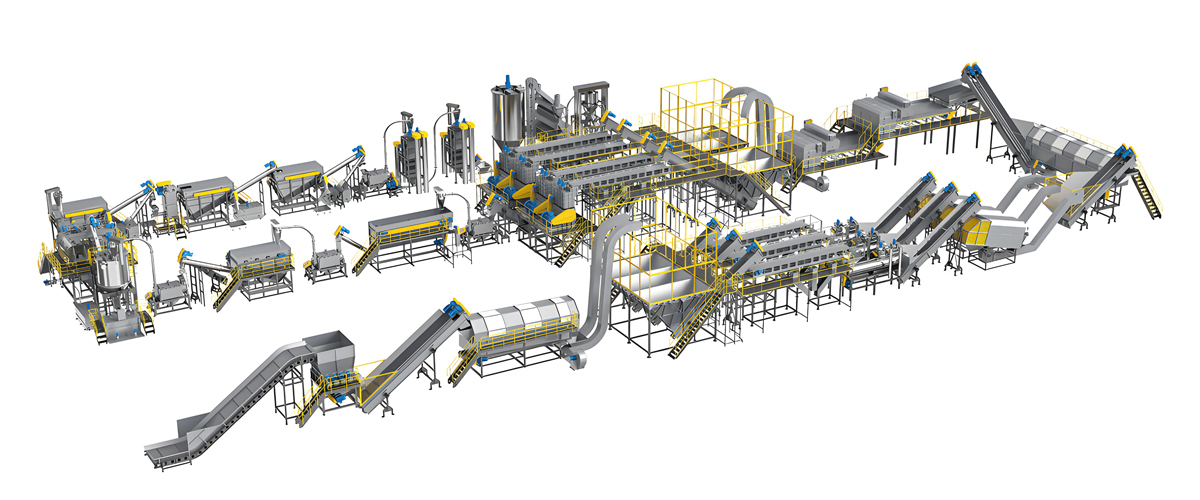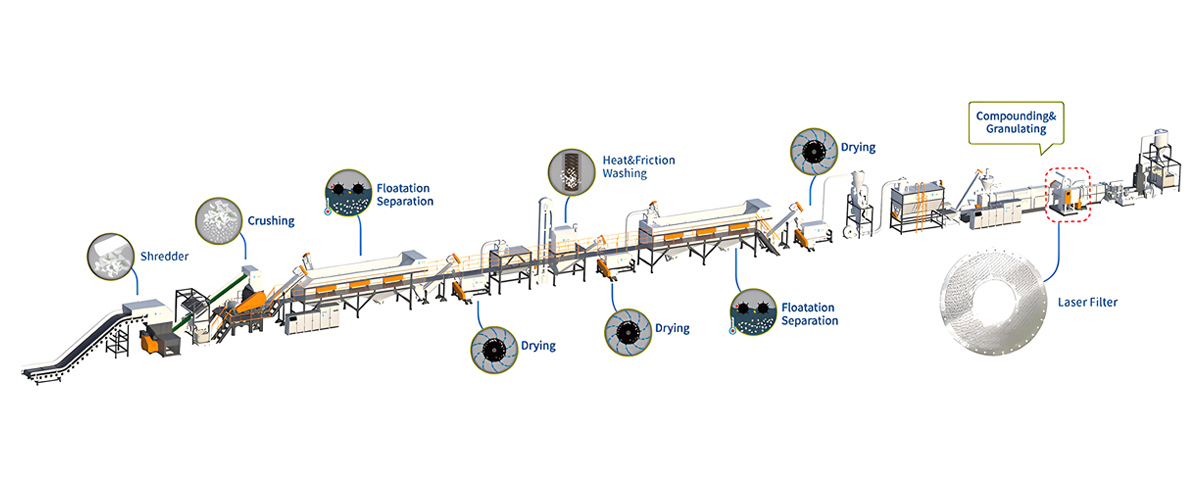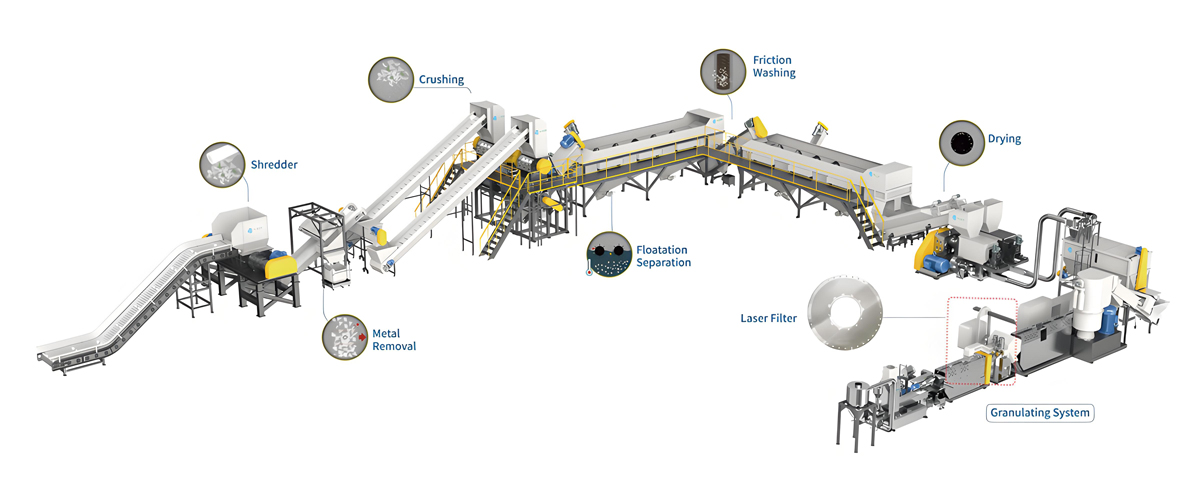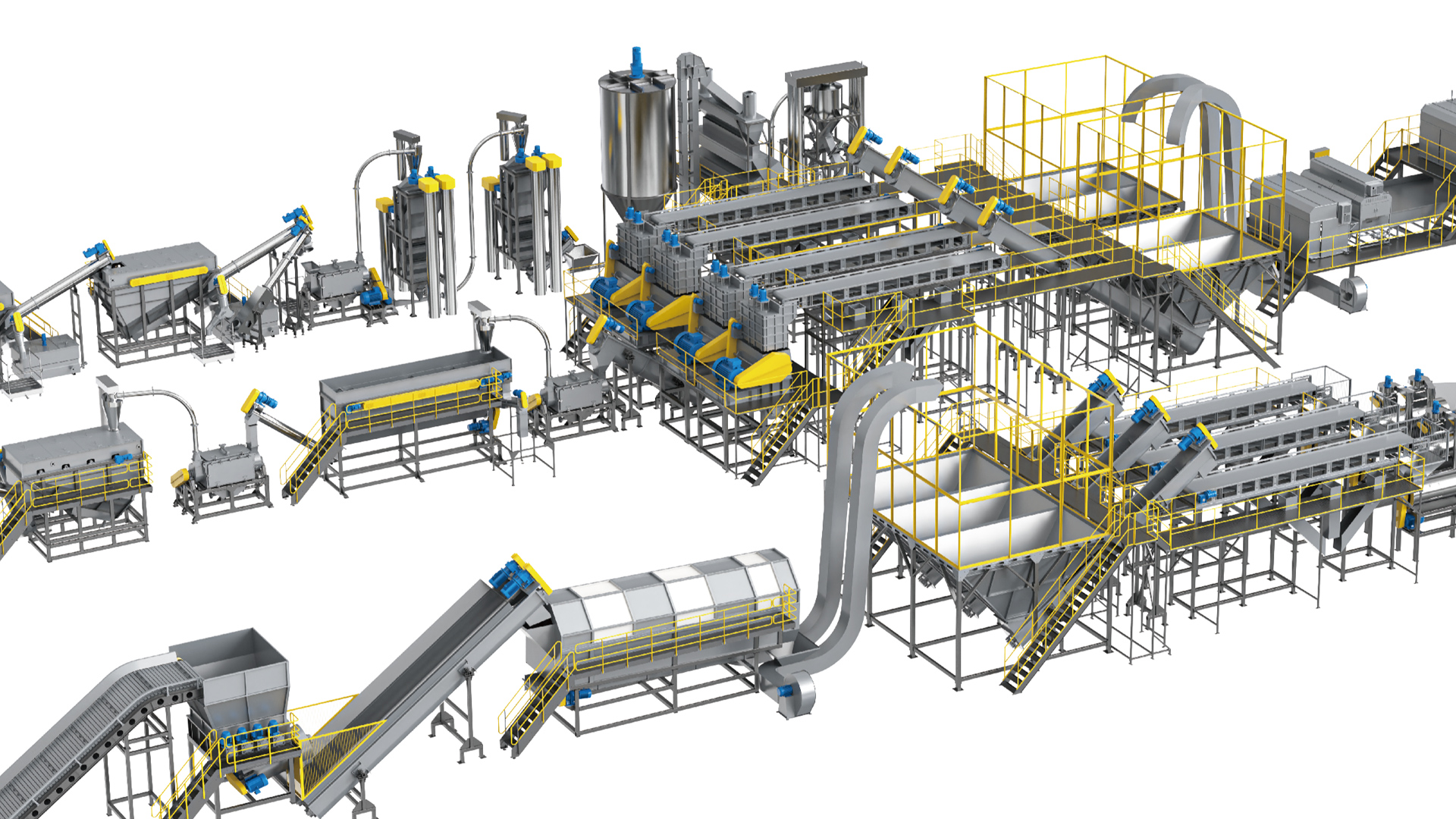

Choosing the right plastic recycling machine is critical to ensuring efficient processing, high-quality output, and maximum profitability. Different plastic materials have unique properties that require specific equipment configurations. This guide will help you select the optimal recycling machine based on the type of plastic waste you handle.
Understanding Common Plastic Types and Their Recycling Requirements
Plastic waste can be categorized into several main types, each with distinct characteristics that influence recycling equipment selection:
Polyethylene Terephthalate (PET)
PET is widely used in beverage bottles, food containers, and textile fibers. It is highly recyclable but requires thorough cleaning to remove contaminants like labels and adhesives. PET recycling typically involves shredding, hot washing, and drying processes to produce food-grade flakes or pellets.
High-Density Polyethylene (HDPE)
HDPE is commonly found in milk jugs, detergent bottles, and plastic pipes. It is durable and chemically resistant, making it suitable for closed-loop recycling. HDPE recycling often includes sorting, shredding, and washing to remove non-plastic components.
Low-Density Polyethylene (LDPE)
LDPE is used for plastic bags, shrink wrap, and flexible packaging. It is lightweight and flexible, requiring specialized equipment to handle its low density. LDPE recycling may involve compaction to reduce volume before processing.
Polypropylene (PP)
PP is used in food containers, automotive parts, and packaging tapes. It has high melting point and chemical resistance, making it suitable for various applications. PP recycling often requires precise temperature control during extrusion.
Polyvinyl Chloride (PVC)
PVC is found in pipes, vinyl flooring, and medical devices. It contains chlorine, which can release harmful emissions if not processed correctly. PVC recycling requires equipment with proper ventilation and emission control systems.
Polystyrene (PS)
PS is used in foam packaging, disposable cutlery, and insulation materials. It is lightweight and fragile, requiring gentle handling to avoid breakage. PS recycling may involve compactors to reduce volume before melting.
Key Factors to Consider When Selecting a Plastic Recycling Machine
1. Material Type and Composition
The type of plastic you process will determine the primary machine type needed. For example:
- Single-material streams (e.g., PET bottles) can use dedicated shredders and wash lines.
- Mixed plastics require sorting systems (optical or manual) before processing.
- Contaminated waste needs robust washing and decontamination units.
2. Processing Capacity
Your daily or hourly processing volume will dictate machine size and throughput. Small-scale operations (100-500 kg/h) may use compact machines, while large facilities (1,000-5,000 kg/h) need industrial-scale lines with multiple stages.
3. Output Quality Requirements
The intended end-use of recycled plastic will determine necessary processing steps. For example:
- Food-grade rPET requires strict quality control and thorough washing.
- Industrial-grade pellets may allow for higher contamination levels.
4. Energy Efficiency and Environmental Impact
Modern recycling machines incorporate energy-saving features like variable frequency drives and heat recovery systems. Choosing eco-friendly equipment can reduce operational costs and align with sustainability goals.
5. Maintenance and Durability
Consider the machine’s lifespan and maintenance requirements. Robust components (e.g., hardened steel blades) and modular designs can minimize downtime and replacement costs.
Recommended Machine Configurations by Plastic Type
PET Recycling
Equipment Configuration:
- Label remover: Removes paper labels before shredding.
- Single-shaft shredder: Reduces bottles to uniform flakes (10-20mm).
- Hot wash system: Uses temperature-controlled water (60-80°C) to remove adhesives and contaminants.
- Centrifugal dryer: Reduces moisture content to <1% for extrusion.
- Extruder with underwater pelletizing: Produces high-quality PET pellets.
Key Considerations:
- Ensure food-grade compliance through stainless steel construction and strict hygiene protocols.
- Integrate optical sorting to separate PET from other plastics.
HDPE Recycling
Equipment Configuration:
- Double-shaft shredder: Handles rigid HDPE containers and pipes.
- Float-sink tank: Separates HDPE from lighter contaminants like labels.
- Scrubbing washer: Removes surface dirt and residues.
- Granulator: Produces uniform pellets (3-5mm diameter).
Key Considerations:
- Use magnetic separation to remove metal components from post-consumer waste.
- Optimize melt temperature for HDPE (300-320°C) to ensure consistent quality.
LDPE Film Recycling
Equipment Configuration:
- Bale breaker: Opens compressed film bales for processing.
- Single-shaft shredder with screen: Reduces film to small flakes.
- Friction washer: Removes surface contaminants without damaging film integrity.
- Compactor-extruder combination: Increases density and melts film for pelletizing.
Key Considerations:
- Use air classification to remove light impurities like paper fibers.
- Implement low-temperature extrusion to prevent LDPE degradation.
PP Recycling
Equipment Configuration:
- Granulator with sound enclosure: Reduces noise during processing.
- Wash tank with detergent injection: Removes grease and oil from food containers.
- Extruder with degassing system: Eliminates volatile compounds during melting.
Key Considerations:
- Use screw conveyors to handle sticky PP materials efficiently.
- Optimize screw design to achieve uniform melt temperature.
PVC Recycling
Equipment Configuration:
- Double-shaft shredder with dust extraction: Minimizes PVC dust emissions.
- Water cooling system: Prevents thermal degradation during processing.
- Extruder with chlorine gas recovery: Ensures environmental compliance.
Key Considerations:
- Implement strict safety protocols to handle chlorine-related hazards.
- Use specialized lubricants to reduce wear on equipment caused by PVC’s abrasive properties.
Case Studies: Successful Machine Selection
Case 1: PET Bottle Recycling Plant
Scenario: A beverage company wanted to establish a closed-loop recycling system for its PET bottles.
Equipment Chosen: Automatic label remover, single-shaft shredder, hot wash line, and underwater pelletizer.
Results: Achieved 98% purity in recycled PET pellets, meeting food-grade standards. Reduced raw material costs by 30% using recycled content.
Case 2: Mixed Rigid Plastic Recycling Facility
Scenario: A municipal recycling center needed to process mixed HDPE, PP, and PS waste.
Equipment Chosen: Multi-stream sorting system, double-shaft shredder, and modular wash line.
Results: Increased recycling rate from 40% to 75% by separating plastics into pure streams. Reduced landfill disposal costs by $500,000 annually.
Conclusion: Making the Right Choice
Selecting the right plastic recycling machine requires a thorough understanding of your material types, processing volume, and output quality requirements. By considering factors like equipment configuration, energy efficiency, and maintenance needs, you can build a cost-effective recycling operation that meets both business and environmental goals. Partnering with experienced equipment suppliers and conducting pilot tests can further ensure success in your recycling venture.