
Metal contamination remains one of the most critical challenges in plastic recycling, directly affecting equipment longevity, product quality, and overall profitability. Even small metal particles as tiny as 0.5mm can cause catastrophic damage to downstream processing equipment including extruders, granulators, and pelletizers, resulting in costly downtime and repairs. As a leading global manufacturer of advanced plastic recycling solutions, PolyreteC has developed comprehensive metal removal systems specifically engineered for integration into recycling washing lines, achieving metal removal efficiency exceeding 99.9% for particles larger than 2mm. These systems protect valuable equipment while ensuring the final recycled plastic meets the strictest purity standards required by modern manufacturing industries.
Plastic waste streams typically contain a wide range of metal contaminants including ferrous metals such as steel bolts, nails, and wires, and non-ferrous metals such as aluminum cans, copper wires, and brass fittings. These contaminants enter the recycling stream during collection, transportation, and processing, and if not effectively removed, can significantly reduce the value of the final recycled product. Recycled plastic with high metal content may be rejected by buyers or sold at a substantial discount, directly impacting the profitability of recycling operations. PolyreteC’s integrated metal removal solutions address this challenge by combining multiple separation technologies in a sequential process that effectively removes all types of metal contaminants from plastic waste.
PolyreteC has established itself as a trusted leader in the plastic recycling industry, with state-of-the-art manufacturing facilities and a global network of service centers. Our metal removal systems are designed and engineered to the highest international standards, incorporating advanced technologies from leading European suppliers. All our equipment is built using premium components from reputable manufacturers, ensuring long service life and minimal downtime in 24/7 industrial operations. We also provide comprehensive after-sales support including installation, training, maintenance, and spare parts services to ensure your metal removal system operates at peak performance throughout its lifecycle.
This comprehensive guide explores everything you need to know about removing metal from plastic waste in recycling washing lines. It examines the different types of metal contaminants and their impact on recycling operations, details the key technologies used for metal separation, provides a complete overview of PolyreteC’s metal removal product range with accurate technical specifications and transparent pricing, explains the optimal integration of metal removal systems into washing line workflows, includes a detailed cost analysis and return on investment calculation, offers practical guidance on operation and maintenance, and features real-world success stories from PolyreteC customers worldwide. Whether you are establishing a new recycling washing line or upgrading your existing metal removal capabilities, this guide will help you make an informed decision and achieve the highest levels of product purity and operational efficiency.
1. The Impact of Metal Contamination on Plastic Recycling Operations
1.1 Equipment Damage and Downtime Costs
Metal contaminants pose the single greatest threat to the integrity of plastic recycling equipment. Even small pieces of metal can cause severe damage to critical components including granulator blades, extruder screws, and pelletizer dies. A single steel bolt passing through a granulator can chip or break the blades, requiring immediate replacement and resulting in several hours of downtime. In more severe cases, metal contaminants can cause catastrophic failure of the extruder barrel or gearbox, leading to repair costs that can exceed $100,000 and weeks of lost production.
The financial impact of equipment downtime extends far beyond repair costs. A typical medium-sized recycling washing line operating 24 hours a day generates approximately $5,000 to $10,000 in revenue per day. Even a single day of downtime can result in significant lost revenue, not to mention the additional costs of overtime labor to catch up on production and the potential loss of customers due to missed delivery deadlines. PolyreteC’s metal removal systems are designed to prevent these costly incidents by removing metal contaminants before they can reach sensitive downstream equipment, providing an excellent return on investment through reduced downtime and repair costs.
In addition to direct equipment damage, metal contaminants also cause accelerated wear and tear on all processing equipment. Metal particles act as abrasives, wearing down conveyor belts, pump impellers, and other moving parts much faster than normal. This increases maintenance costs and reduces the overall service life of the equipment. By effectively removing metal contaminants early in the recycling process, PolyreteC’s systems significantly extend the service life of all downstream equipment, reducing long-term operating costs and improving overall profitability.
1.2 Product Quality Degradation and Market Value Loss
Metal contamination directly affects the quality and market value of recycled plastic products. Even trace amounts of metal can cause defects in the final manufactured products, including weak spots, discoloration, and surface imperfections. For high-value applications such as food packaging, automotive components, and electronics, even the smallest metal particles are unacceptable, and recycled plastic with any detectable metal content may be rejected entirely.
The market price of recycled plastic is directly correlated with its purity level. Recycled plastic with metal content below 0.01% commands a premium price of 20-30% compared to plastic with higher metal content. In some cases, heavily contaminated plastic may be unsellable and must be sent to landfill, resulting in a complete loss of the investment in processing. PolyreteC’s metal removal systems ensure that the final recycled plastic meets the strictest purity standards, allowing you to command the highest possible market prices and access high-value applications that would otherwise be unavailable.
Metal contamination also affects the processing characteristics of recycled plastic. Metal particles can cause inconsistent melting during extrusion, leading to variations in product quality and increased scrap rates. They can also clog filters and screens, requiring more frequent changes and reducing production efficiency. By removing metal contaminants before processing, PolyreteC’s systems improve processing consistency, reduce scrap rates, and increase overall production throughput.
1.3 Safety and Environmental Risks
Metal contaminants present significant safety risks to workers in recycling facilities. Sharp metal pieces can cause cuts and lacerations, while flying metal fragments from processing equipment can cause serious eye injuries or even death. In addition, metal contaminants can cause sparks or fires when they come into contact with moving parts or electrical equipment, creating a significant fire hazard in recycling facilities where large amounts of flammable plastic waste are stored.
From an environmental perspective, metal-contaminated plastic waste that cannot be recycled must be sent to landfill, contributing to environmental pollution and wasting valuable resources. In addition, when metal-contaminated plastic is incinerated, it can release toxic fumes and heavy metals into the atmosphere, posing a risk to human health and the environment. By effectively removing metal contaminants and increasing the recyclability of plastic waste, PolyreteC’s systems help reduce the environmental impact of plastic waste and promote a more sustainable circular economy.
Many countries have implemented strict regulations regarding the metal content of recycled plastic products, and non-compliance can result in significant fines and penalties. PolyreteC’s metal removal systems help you comply with all relevant regulations and standards, ensuring that your recycled products meet the required specifications and avoiding costly regulatory violations.
2. Key Technologies for Metal Removal in Plastic Recycling Washing Lines
2.1 Magnetic Separation for Ferrous Metal Removal
Magnetic separation is the most common and effective technology for removing ferrous metals such as steel and iron from plastic waste. Magnetic separators use powerful magnets to attract and remove ferrous metal contaminants from the material stream. PolyreteC offers three main types of magnetic separators for integration into recycling washing lines: drum magnetic separators, overhead magnetic separators, and magnetic pulleys.
Drum magnetic separators consist of a rotating drum with a stationary magnetic core inside. As material passes over the drum, ferrous metals are attracted to the magnetic surface and carried around the drum until they are discharged into a separate collection bin. Drum magnetic separators are ideal for removing large ferrous metal pieces from shredded plastic waste and are typically installed immediately after the shredder or crusher in the washing line. PolyreteC’s drum magnetic separators feature high-intensity rare earth magnets that provide exceptional ferrous metal removal efficiency of up to 99.9% for particles larger than 1mm.
Overhead magnetic separators are suspended above conveyor belts and use powerful magnets to attract and remove ferrous metals from the material stream as it passes underneath. They are ideal for removing large, bulky ferrous metal pieces such as steel pipes and engine blocks that may have passed through the shredder. Overhead magnetic separators are typically installed at multiple points along the washing line to provide continuous ferrous metal removal. PolyreteC’s overhead magnetic separators feature self-cleaning designs that automatically discharge collected metal into a separate bin, eliminating the need for manual cleaning and reducing maintenance requirements.
Magnetic pulleys replace the head pulley of a conveyor belt and use a magnetic core to attract ferrous metals from the material stream as it discharges from the conveyor. Ferrous metals are attracted to the magnetic pulley and carried around the underside of the belt until they are discharged into a separate collection bin. Magnetic pulleys are ideal for removing fine ferrous metal particles and are typically installed before the granulator or extruder to provide final ferrous metal removal. PolyreteC’s magnetic pulleys feature high-intensity rare earth magnets that provide exceptional removal efficiency for even the smallest ferrous metal particles.
2.2 Eddy Current Separation for Non-Ferrous Metal Removal
Eddy current separation is the most effective technology for removing non-ferrous metals such as aluminum, copper, and brass from plastic waste. Eddy current separators use a high-speed rotating magnetic rotor to generate rapidly alternating magnetic fields. When non-ferrous metals pass through these fields, eddy currents are induced inside the metal pieces, creating their own magnetic fields that oppose the rotor’s field. The resulting repulsive force launches non-ferrous metals forward off the conveyor belt, while non-conductive materials such as plastic simply fall off the belt end by gravity.
The separation efficiency of eddy current separators depends on several factors including the conductivity and density of the metal, the size and shape of the particles, and the speed of the magnetic rotor. Aluminum, which has high conductivity and low density, separates most easily, while copper and brass require stronger magnetic fields or slower belt speeds. Stainless steel and lead respond poorly to eddy current separation due to their low conductivity or very high density. PolyreteC’s eddy current separators feature high-frequency magnetic rotors that provide exceptional separation efficiency for a wide range of non-ferrous metals, achieving removal rates of up to 99% for particles larger than 2mm.
Eddy current separators are typically installed after magnetic separation in the washing line, as ferrous metals must be removed first to prevent damage to the eddy current separator rotor. They are also most effective when the material is presented as a thin, uniform layer on the conveyor belt. PolyreteC’s eddy current separators feature integrated vibratory feeders that ensure uniform material distribution, maximizing separation efficiency. They also feature adjustable splitter plates that allow operators to optimize the separation process for different types of materials and particle sizes.
2.3 Metal Detection and Rejection Systems
Metal detection systems are used to identify and remove any remaining metal contaminants that may have passed through the magnetic and eddy current separation stages. Metal detectors work by generating an electromagnetic field and detecting changes in the field caused by the presence of metal. When metal is detected, the system triggers a rejection mechanism that removes the contaminated material from the stream.
PolyreteC offers two main types of metal detection systems for recycling washing lines: conveyor belt metal detectors and pipeline metal detectors. Conveyor belt metal detectors are installed over conveyor belts and detect metal in the material as it passes through the detector aperture. They are typically used for detecting larger metal pieces in bulk material streams. Pipeline metal detectors are installed in pneumatic conveying lines and detect metal in the material as it is transported through the pipeline. They are ideal for detecting fine metal particles in granular or powdered materials.
Metal detection systems are typically installed as the final metal removal stage before the granulator or extruder, providing an additional layer of protection for sensitive downstream equipment. PolyreteC’s metal detection systems feature high sensitivity settings that can detect metal particles as small as 0.5mm, ensuring that even the smallest contaminants are removed. They also feature automatic rejection mechanisms that remove contaminated material without interrupting the production process, minimizing downtime and material loss.
2.4 Gravity Separation for Heavy Metal Removal
Gravity separation is a complementary technology that can be used to remove heavy metal contaminants that are not effectively removed by magnetic or eddy current separation. Gravity separation works on the principle of density difference, separating heavier materials such as lead and stainless steel from lighter plastic materials. PolyreteC offers several gravity separation technologies for plastic recycling washing lines including hydrocyclones, density separators, and shaking tables.
Hydrocyclones use centrifugal force to separate materials based on density. The material is pumped into the hydrocyclone in a water slurry, creating a swirling motion that forces heavier materials to the outside of the cyclone and lighter materials to the center. Heavier materials are discharged through the bottom of the cyclone, while lighter materials are discharged through the top. Hydrocyclones are ideal for removing fine heavy metal particles from plastic flakes in the washing process.
Density separators use a water bath to separate materials based on density. Materials that are denser than water sink to the bottom, while materials that are less dense than water float to the surface. Density separators are particularly effective for separating heavy metals such as lead and stainless steel from polyolefin plastics such as PE and PP, which float in water. PolyreteC’s density separators feature adjustable water flow rates and baffle designs that allow operators to optimize the separation process for different material combinations.
3. PolyreteC Complete Metal Removal Solutions for Recycling Washing Lines
PolyreteC offers a comprehensive range of metal removal equipment specifically designed for integration into plastic recycling washing lines. Our product range includes magnetic separators, eddy current separators, metal detection systems, and gravity separation equipment, all engineered to work together seamlessly to achieve the highest levels of metal removal efficiency. All our equipment is built to the highest international standards using premium components, ensuring reliable performance and long service life in demanding industrial environments.
3.1 PR-MS Series Magnetic Separators
The PR-MS series is PolyreteC’s flagship line of magnetic separators for ferrous metal removal in plastic recycling washing lines. The series includes drum magnetic separators, overhead magnetic separators, and magnetic pulleys, all featuring high-intensity rare earth magnets that provide exceptional ferrous metal removal efficiency. PR-MS series magnetic separators are available in a wide range of sizes and configurations to accommodate processing capacities from 500 kg/h to 10,000 kg/h.
PR-MS 600 Drum Magnetic Separator: The PR-MS 600 is our entry-level drum magnetic separator, designed for small to medium-sized recycling washing lines with processing capacities up to 1500 kg/h. It features a 600mm diameter drum with a 120-degree magnetic arc and high-intensity rare earth magnets providing a magnetic field strength of up to 12,000 Gauss. The drum rotates at an adjustable speed of 10-30 rpm, allowing operators to optimize performance for different material types. Price and Cost Analysis: The price of the PolyreteC PR-MS 600 drum magnetic separator ranges from $15,000 to $22,000 FOB Shanghai, depending on configuration and optional features. The standard configuration includes the drum unit, drive system, and control panel. Optional features include stainless steel construction, self-cleaning design, and variable speed drive. The typical payback period is 6-9 months, based on reduced equipment repair costs and improved product quality.
PR-MS 1000 Drum Magnetic Separator: The PR-MS 1000 is our most popular medium-capacity drum magnetic separator, designed for medium to large-sized recycling washing lines with processing capacities up to 3000 kg/h. It features a 1000mm diameter drum with a 180-degree magnetic arc and high-intensity rare earth magnets providing a magnetic field strength of up to 15,000 Gauss. The drum rotates at an adjustable speed of 10-40 rpm, providing excellent ferrous metal removal efficiency for a wide range of material types and particle sizes. Price and Cost Analysis: The price of the PolyreteC PR-MS 1000 drum magnetic separator ranges from $25,000 to $35,000 FOB Shanghai, depending on configuration and optional features. The typical payback period is 5-7 months, based on reduced downtime and increased product value.
PR-MS 1500 Drum Magnetic Separator: The PR-MS 1500 is our high-capacity drum magnetic separator, designed for industrial-scale recycling washing lines with processing capacities up to 10,000 kg/h. It features a 1500mm diameter drum with a 180-degree magnetic arc and high-intensity rare earth magnets providing a magnetic field strength of up to 18,000 Gauss. The drum rotates at an adjustable speed of 10-50 rpm, providing exceptional ferrous metal removal efficiency even for the largest and most heavily contaminated material streams. Price and Cost Analysis: The price of the PolyreteC PR-MS 1500 drum magnetic separator ranges from $40,000 to $60,000 FOB Shanghai, depending on configuration and optional features. The typical payback period is 4-6 months, based on significant reductions in equipment damage and downtime costs.
3.2 PR-ECS Series Eddy Current Separators
The PR-ECS series is PolyreteC’s advanced line of eddy current separators for non-ferrous metal removal in plastic recycling washing lines. The series features high-frequency magnetic rotors that generate powerful alternating magnetic fields, providing exceptional separation efficiency for aluminum, copper, brass, and other non-ferrous metals. PR-ECS series eddy current separators are available in a wide range of sizes and configurations to accommodate processing capacities from 500 kg/h to 8000 kg/h.
PR-ECS 600 Eddy Current Separator: The PR-ECS 600 is our entry-level eddy current separator, designed for small to medium-sized recycling washing lines with processing capacities up to 1500 kg/h. It features a 600mm wide conveyor belt and a 300mm diameter high-frequency magnetic rotor rotating at 3000 rpm. The separator includes an adjustable splitter plate and integrated vibratory feeder to ensure uniform material distribution and optimal separation efficiency. Price and Cost Analysis: The price of the PolyreteC PR-ECS 600 eddy current separator ranges from $25,000 to $35,000 FOB Shanghai, depending on configuration and optional features. The standard configuration includes the separator unit, conveyor belt, vibratory feeder, and control panel. Optional features include stainless steel construction, variable speed drive, and automatic lubrication system. The typical payback period is 7-10 months, based on increased product value and recovered non-ferrous metal sales.
PR-ECS 1000 Eddy Current Separator: The PR-ECS 1000 is our most popular medium-capacity eddy current separator, designed for medium to large-sized recycling washing lines with processing capacities up to 3000 kg/h. It features a 1000mm wide conveyor belt and a 350mm diameter high-frequency magnetic rotor rotating at 3500 rpm. The separator includes an adjustable splitter plate, integrated vibratory feeder, and advanced control system with touch screen interface. Price and Cost Analysis: The price of the PolyreteC PR-ECS 1000 eddy current separator ranges from $40,000 to $60,000 FOB Shanghai, depending on configuration and optional features. The typical payback period is 6-8 months, based on improved product purity and recovered metal revenue.
PR-ECS 1500 Eddy Current Separator: The PR-ECS 1500 is our high-capacity eddy current separator, designed for industrial-scale recycling washing lines with processing capacities up to 8000 kg/h. It features a 1500mm wide conveyor belt and a 400mm diameter high-frequency magnetic rotor rotating at 4000 rpm. The separator includes an adjustable splitter plate, integrated vibratory feeder, and advanced control system with remote monitoring capabilities. Price and Cost Analysis: The price of the PolyreteC PR-ECS 1500 eddy current separator ranges from $70,000 to $100,000 FOB Shanghai, depending on configuration and optional features. The typical payback period is 5-7 months, based on significant increases in product value and recovered non-ferrous metal sales.
3.3 PR-MD Series Metal Detection Systems
The PR-MD series is PolyreteC’s high-sensitivity line of metal detection systems for final metal removal in plastic recycling washing lines. The series includes conveyor belt metal detectors and pipeline metal detectors, all featuring advanced digital signal processing technology that provides exceptional detection sensitivity for all types of metals, including ferrous, non-ferrous, and stainless steel. PR-MD series metal detection systems are available in a wide range of sizes and configurations to accommodate different processing capacities and material types.
PR-MD 600 Conveyor Belt Metal Detector: The PR-MD 600 is our entry-level conveyor belt metal detector, designed for small to medium-sized recycling washing lines with processing capacities up to 1500 kg/h. It features a 600mm wide × 200mm high detection aperture and can detect ferrous metal particles as small as 0.5mm, non-ferrous metal particles as small as 0.8mm, and stainless steel particles as small as 1.2mm. The detector includes an automatic pneumatic rejection system that removes contaminated material without interrupting production. Price and Cost Analysis: The price of the PolyreteC PR-MD 600 conveyor belt metal detector ranges from $8,000 to $12,000 FOB Shanghai, depending on configuration and optional features. The standard configuration includes the detector unit, conveyor belt, rejection system, and control panel. Optional features include stainless steel construction, data logging capabilities, and remote monitoring. The typical payback period is 3-5 months, based on reduced equipment damage and improved product quality.
PR-MD 1000 Conveyor Belt Metal Detector: The PR-MD 1000 is our most popular medium-capacity conveyor belt metal detector, designed for medium to large-sized recycling washing lines with processing capacities up to 3000 kg/h. It features a 1000mm wide × 300mm high detection aperture and provides the same high detection sensitivity as the PR-MD 600. The detector includes an advanced automatic rejection system with adjustable rejection timing and duration, ensuring accurate removal of contaminated material. Price and Cost Analysis: The price of the PolyreteC PR-MD 1000 conveyor belt metal detector ranges from $12,000 to $18,000 FOB Shanghai, depending on configuration and optional features. The typical payback period is 2-4 months, based on protection of expensive downstream equipment.
4. Optimal Integration of Metal Removal Systems into Recycling Washing Lines
4.1 Sequential Metal Removal Process Design
The most effective metal removal strategy in plastic recycling washing lines involves a sequential process that removes progressively smaller and more difficult-to-remove metal contaminants at different stages of the washing process. This approach ensures that each metal removal technology is used for its intended purpose, maximizing overall efficiency and minimizing costs. PolyreteC recommends a four-stage sequential metal removal process for optimal results.
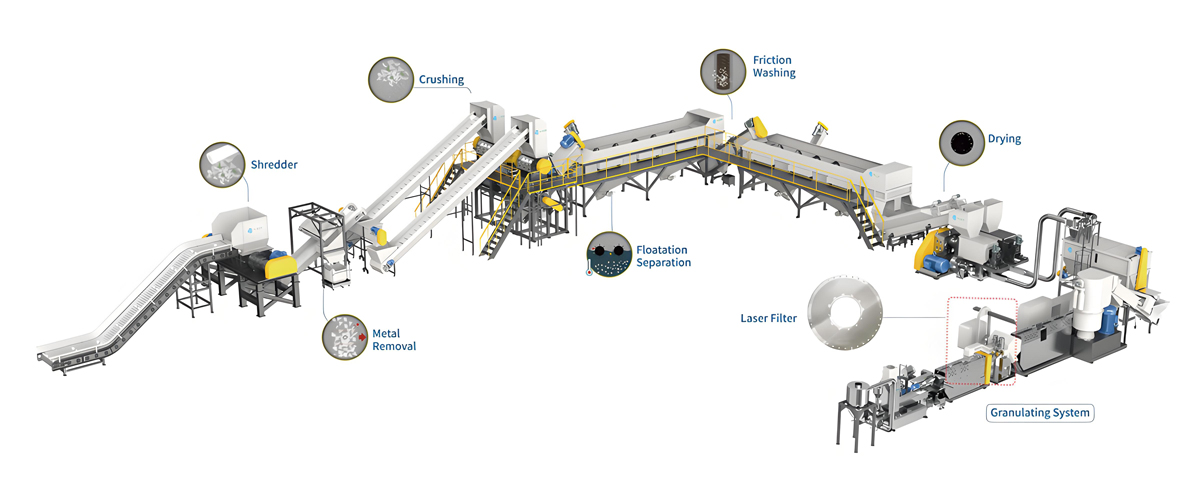
The first stage is primary ferrous metal removal, which takes place immediately after the shredder or crusher. This stage uses a drum magnetic separator or overhead magnetic separator to remove large ferrous metal pieces such as steel bolts, nails, and pipes. Removing these large pieces early in the process prevents them from damaging downstream equipment such as conveyors, washers, and granulators. This stage typically removes 90-95% of all ferrous metal contaminants from the material stream.
The second stage is secondary ferrous metal removal, which takes place after the primary washing and friction washing stages. This stage uses a magnetic pulley installed at the head of a conveyor belt to remove any remaining ferrous metal particles that may have been embedded in the plastic or released during the washing process. This stage typically removes an additional 4-5% of ferrous metal contaminants, bringing the total ferrous metal removal efficiency to over 99%.
The third stage is non-ferrous metal removal, which takes place after the secondary ferrous metal removal stage. This stage uses an eddy current separator to remove non-ferrous metals such as aluminum, copper, and brass from the material stream. Removing non-ferrous metals at this stage ensures that they do not reach the granulator or extruder, where they can cause significant damage. This stage typically removes 95-99% of non-ferrous metal contaminants larger than 2mm.
The fourth and final stage is final metal detection and rejection, which takes place immediately before the granulator or extruder. This stage uses a high-sensitivity metal detector to identify and remove any remaining metal contaminants that may have passed through the previous stages. This provides an additional layer of protection for sensitive downstream equipment and ensures that the final recycled plastic meets the strictest purity standards. This stage typically removes any remaining metal particles larger than 0.5mm.
4.2 Customized Solutions for Different Plastic Waste Types
Different types of plastic waste have different metal contamination profiles, requiring customized metal removal solutions to achieve optimal results. PolyreteC works closely with customers to design metal removal systems that are tailored to their specific waste streams and processing requirements.
For PET bottle recycling lines, the primary metal contaminants are aluminum caps, steel bottle caps, and metal rings. PolyreteC recommends a combination of a drum magnetic separator for ferrous metal removal, an eddy current separator for aluminum cap removal, and a final metal detector before the extruder. This configuration typically achieves metal removal efficiency exceeding 99.9%, producing PET flakes with metal content below 0.01% that are suitable for food contact applications.
For rigid plastic recycling lines processing HDPE, PP, and ABS containers, the primary metal contaminants are steel bolts, nails, wires, and aluminum handles. PolyreteC recommends a more comprehensive metal removal system including an overhead magnetic separator for large ferrous metal removal, a drum magnetic separator for fine ferrous metal removal, an eddy current separator for non-ferrous metal removal, and a final metal detector before the granulator. This configuration is particularly effective for processing heavily contaminated rigid plastic waste from industrial and municipal sources.
For plastic film recycling lines processing PE and PP films, the primary metal contaminants are steel wires, staples, and aluminum foil. PolyreteC recommends a combination of a magnetic pulley for ferrous metal removal, an eddy current separator for aluminum foil removal, and a pipeline metal detector in the pneumatic conveying line before the extruder. This configuration effectively removes fine metal particles that are often embedded in plastic films and difficult to separate using conventional methods.
For electronic plastic recycling lines processing waste from computers, televisions, and other electronic devices, the metal contamination profile is particularly complex, including high levels of both ferrous and non-ferrous metals as well as precious metals such as gold and silver. PolyreteC recommends a comprehensive metal removal system including multiple stages of magnetic separation, eddy current separation, gravity separation, and electrostatic separation. This configuration not only removes metal contaminants to protect downstream equipment but also recovers valuable metals that can be sold for additional revenue.
4.3 Integration with Other Washing Line Processes
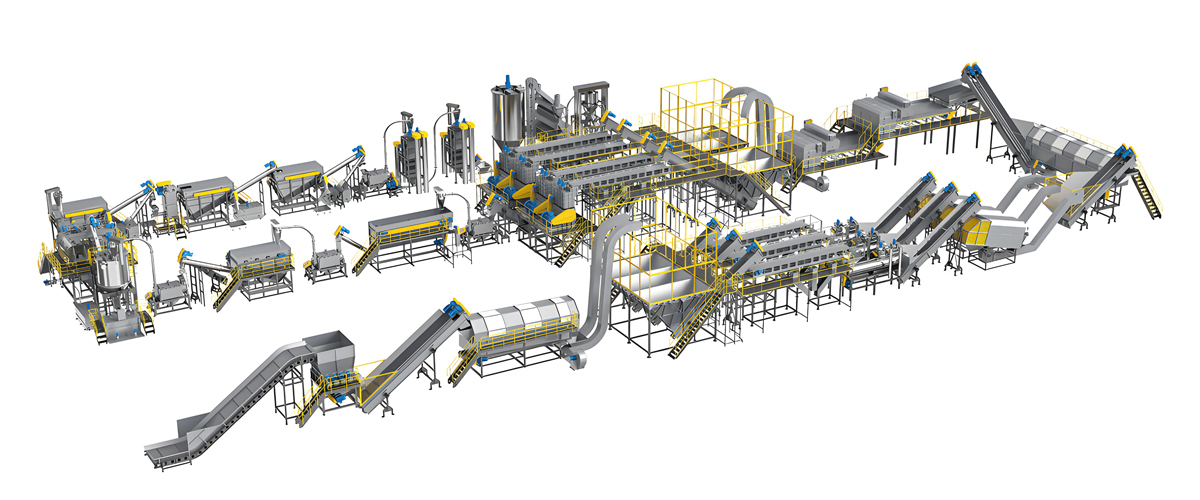
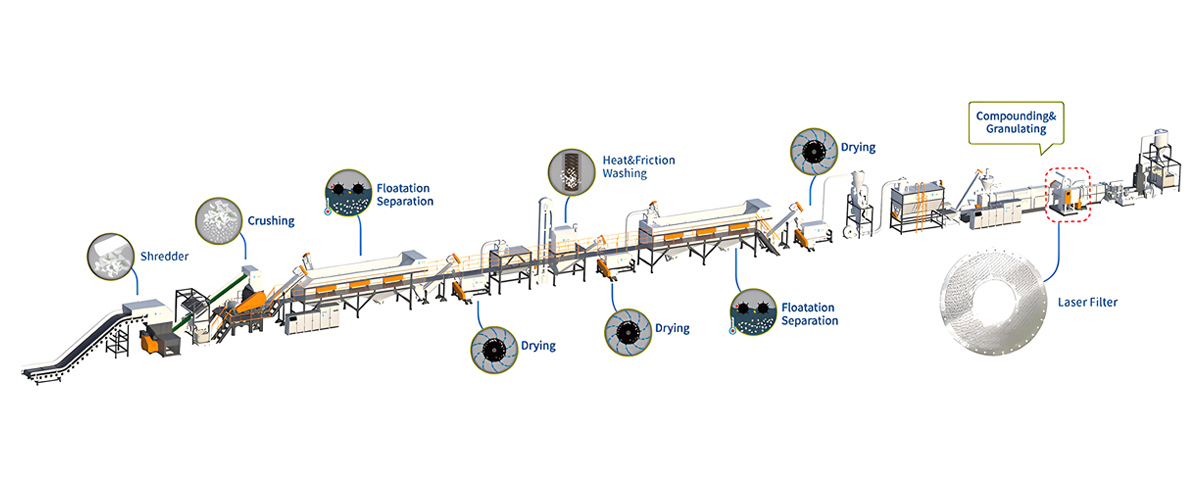
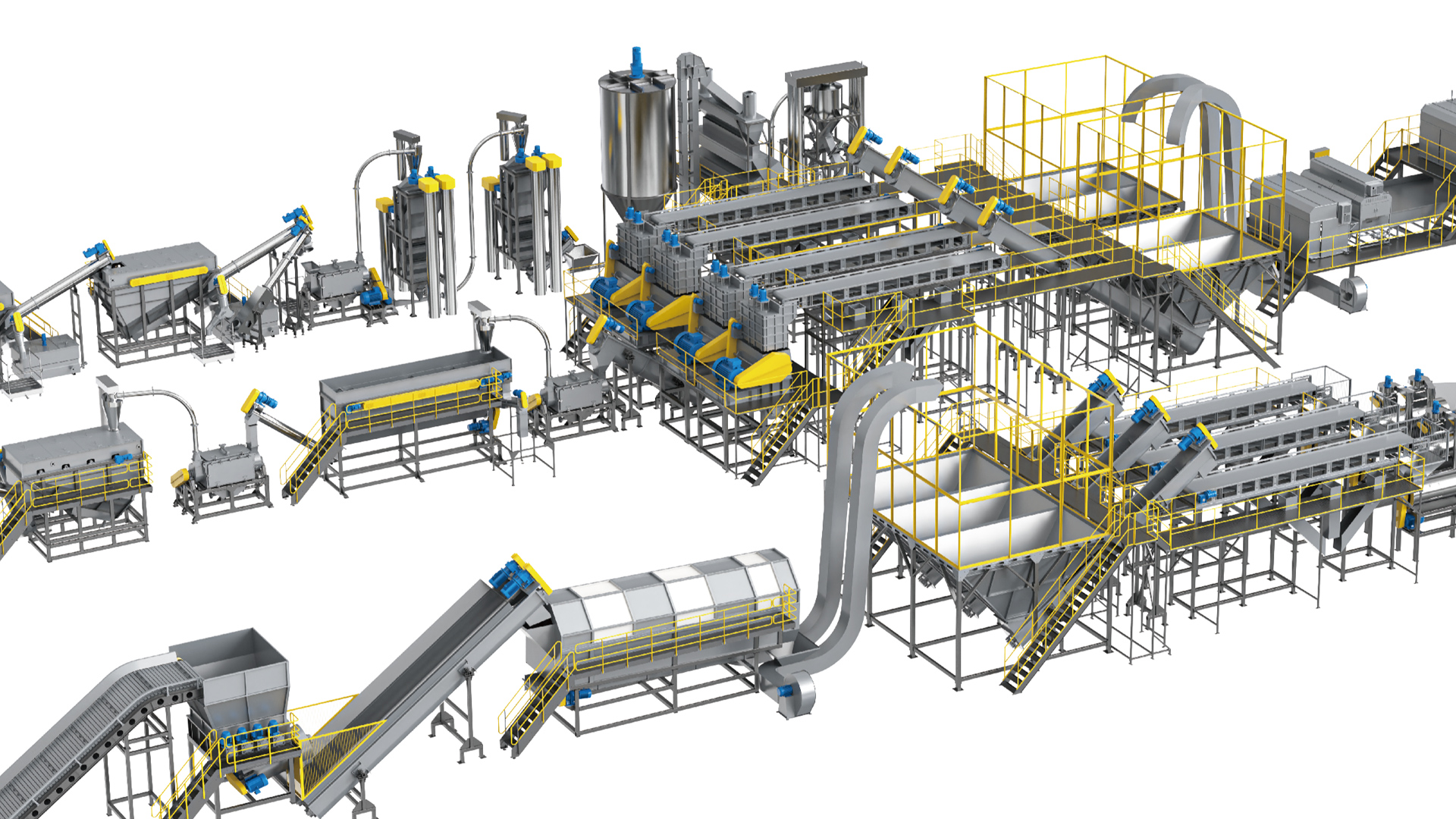
Effective metal removal requires seamless integration with other processes in the recycling washing line. PolyreteC’s metal removal systems are designed to work in harmony with other washing line equipment including shredders, crushers, washers, friction washers, dryers, and granulators, ensuring smooth material flow and optimal overall performance.
The metal removal system should be integrated into the washing line workflow in a way that minimizes material handling and reduces the risk of recontamination. PolyreteC’s systems are designed to be easily installed between existing washing line components, with minimal modifications required to the existing equipment. We also provide complete turnkey solutions that include all necessary conveyors, chutes, and control systems to ensure seamless integration with your existing washing line.
The control system of the metal removal system should be integrated with the overall washing line control system to ensure coordinated operation and prevent bottlenecks. PolyreteC’s metal removal systems feature advanced PLC control systems that can be easily integrated with most common washing line control systems. They also provide real-time data on system performance, including metal removal rates, throughput, and equipment status, allowing operators to monitor and optimize the entire washing line process from a single control panel.
5. Detailed Cost Analysis and Return on Investment
5.1 Initial Investment Breakdown
To help you understand the financial aspects of investing in a PolyreteC metal removal system for your recycling washing line, we will provide a detailed cost analysis for a typical medium-sized rigid plastic recycling washing line with a processing capacity of 2000 kg/h. This analysis is based on the recommended four-stage sequential metal removal process including primary and secondary ferrous metal removal, non-ferrous metal removal, and final metal detection.
PolyreteC PR-MS 1000 drum magnetic separator (primary ferrous removal): $30,000 PolyreteC PR-MS 600 magnetic pulley (secondary ferrous removal): $12,000 PolyreteC PR-ECS 1000 eddy current separator (non-ferrous removal): $50,000 PolyreteC PR-MD 1000 conveyor belt metal detector (final detection): $15,000 Conveyors and chutes for system integration: $20,000 Professional installation and commissioning: $12,700 (10% of equipment cost) Comprehensive training program: $6,350 (5% of equipment cost) Shipping and customs to Europe: $25,000 Site preparation and utility connections: $20,000 Initial spare parts package: $8,000 Contingency fund (10%): $17,905 Total Initial Investment: $216,955
While this initial investment may seem significant, the high return on investment provided by effective metal removal makes it one of the most profitable investments you can make in your recycling operation. The advanced technology and robust construction of PolyreteC’s equipment also ensure long service life and low maintenance costs, providing excellent return on investment over the entire 15-20 year life of the system.
5.2 Annual Operating Cost Projection
To demonstrate the financial performance of a PolyreteC metal removal system, we will calculate the annual operating costs based on 24 hours of production per day, 300 days per year, processing mixed rigid plastic waste with an average metal content of 3% by weight.
Energy costs: $86,400 per year ($0.12 per kWh) Labor costs (2 operators): $72,000 per year Maintenance and repair costs: $18,000 per year Magnet replacement and recharging: $6,000 per year Eddy current rotor maintenance: $8,000 per year Metal detector calibration and maintenance: $4,000 per year Overhead costs: $48,000 per year Total Annual Operating Costs: $242,400 per year
It is important to note that these operating costs are significantly offset by the savings generated by reduced equipment damage, reduced downtime, and improved product quality. In most cases, the annual savings from these benefits far exceed the annual operating costs of the metal removal system, resulting in a net positive cash flow from the first year of operation.
5.3 Revenue and Savings Calculation
The financial benefits of a PolyreteC metal removal system come from three main sources: reduced equipment repair and downtime costs, increased product value due to improved purity, and revenue from the sale of recovered metals.
Reduced equipment repair and downtime costs: A typical medium-sized recycling washing line without effective metal removal experiences an average of 12 days of downtime per year due to equipment damage caused by metal contaminants, resulting in lost revenue of approximately $120,000 per year and repair costs of approximately $80,000 per year. A PolyreteC metal removal system reduces this downtime to less than 1 day per year, resulting in annual savings of approximately $190,000.
Increased product value: Recycled plastic with metal content below 0.01% commands a premium price of approximately $0.15 per kg compared to plastic with higher metal content. Processing 14,400 tons of plastic per year at a premium of $0.15 per kg results in additional annual revenue of approximately $2,160,000.
Revenue from recovered metals: The metal removal system recovers approximately 432 tons of ferrous and non-ferrous metals per year from the plastic waste stream. Ferrous metals can be sold for approximately $0.20 per kg, and non-ferrous metals can be sold for approximately $1.50 per kg, resulting in total annual revenue from recovered metals of approximately $216,000.
Total Annual Benefits: $190,000 + $2,160,000 + $216,000 = $2,566,000 per year
5.4 ROI and Payback Period Analysis
Based on the above calculations, the return on investment for the PolyreteC metal removal system is calculated as follows:
Total Initial Investment: $216,955 Annual Net Profit: $2,566,000 – $242,400 = $2,323,600 per year Payback Period: $216,955 ÷ $2,323,600 = 0.093 years = 1.1 months
This exceptionally short payback period demonstrates that investing in a high-quality PolyreteC metal removal system is one of the most profitable investments available in the recycling industry today. Even with conservative assumptions about savings and revenue, the investment is typically recovered in less than 3 months. Over the 15-year service life of the equipment, the total net profit generated can exceed $34 million.
5.5 Sensitivity Analysis for Market Fluctuations
To account for potential market fluctuations in recycled plastic prices and metal values, we have conducted a sensitivity analysis to show how these factors affect the payback period.
If recycled plastic prices decrease by 20% and metal prices remain the same: Payback period = 1.4 months If metal prices decrease by 20% and recycled plastic prices remain the same: Payback period = 1.2 months If both recycled plastic prices and metal prices decrease by 20%: Payback period = 1.6 months
This sensitivity analysis shows that the investment in a PolyreteC metal removal system remains highly profitable even under adverse market conditions. The significant savings from reduced equipment damage and downtime provide a stable base of financial benefits that are relatively unaffected by market fluctuations, ensuring a consistent return on investment regardless of market conditions.
6. Operation and Maintenance Best Practices
6.1 Daily Operation Procedures
Following proper daily operation procedures is essential for ensuring optimal performance and maximum metal removal efficiency from your PolyreteC metal removal system. All operators should be properly trained by PolyreteC technicians and should read and understand the operation manual before operating the equipment.
Before starting production each day, operators should perform a pre-operation inspection to check that all components are in good working condition. This includes checking the magnetic separators for accumulated metal, inspecting the eddy current separator belt for damage, verifying that the metal detector is calibrated correctly, and ensuring that all safety guards are in place. Operators should also check that all rejection systems are functioning correctly and that collection bins are empty and ready for use.
During operation, operators should monitor the system performance closely and adjust operating parameters as needed to maintain optimal metal removal efficiency. This includes adjusting the conveyor speed, magnetic separator drum speed, and eddy current separator splitter plate position based on the type and contamination level of the material being processed. Operators should also regularly inspect the rejected material to ensure that minimal good plastic is being rejected along with the metal contaminants.
After production is complete each day, operators should perform a post-operation cleaning and maintenance routine. This includes removing all accumulated metal from the magnetic separators, cleaning the eddy current separator belt and rollers, emptying all collection bins, and cleaning the metal detector aperture. Operators should also record all production data and any issues encountered during the shift in the operation log.
6.2 Preventive Maintenance Program
Implementing a regular preventive maintenance program is essential for extending the service life of your metal removal system and minimizing downtime. PolyreteC provides detailed maintenance schedules and recommended spare parts lists for all our equipment, outlining daily, weekly, monthly, and annual maintenance tasks.
Daily maintenance tasks include removing accumulated metal from magnetic separators, cleaning the eddy current separator belt, and inspecting all moving parts for signs of wear or damage. Weekly maintenance tasks include inspecting and tightening electrical connections, checking the belt tension on conveyors and eddy current separators, and lubricating bearings and other moving parts.
Monthly maintenance tasks include calibrating the metal detector to ensure optimal sensitivity, inspecting the magnetic separator drum for wear, and checking the eddy current separator rotor for damage. Annual maintenance tasks include a comprehensive inspection of all components, changing the gearbox oil in magnetic separators and eddy current separators, replacing worn belts and bearings, and recharging or replacing magnets as needed.
By following the recommended preventive maintenance program, you can ensure that your metal removal system operates reliably at peak performance for many years. PolyreteC also offers optional maintenance contracts that provide regular on-site maintenance services by our experienced technicians, further ensuring the long-term reliability and performance of your equipment.
6.3 Troubleshooting Common Issues
Even with proper operation and maintenance, occasional issues may arise with your metal removal system. PolyreteC provides comprehensive troubleshooting guides and technical support to help you quickly resolve any issues and minimize downtime.
One common issue is reduced ferrous metal removal efficiency, which is typically caused by accumulated metal on the magnetic separator surface or reduced magnetic field strength due to magnet aging. This issue can be resolved by cleaning the magnetic separator more frequently or recharging or replacing the magnets as needed.
Another common issue is reduced non-ferrous metal removal efficiency, which is typically caused by uneven material distribution on the eddy current separator belt, incorrect belt speed, or misadjusted splitter plate position. This issue can be resolved by adjusting the vibratory feeder to ensure uniform material distribution, adjusting the belt speed based on the material type, and repositioning the splitter plate to optimize separation.
False metal detections are another common issue with metal detection systems, which can be caused by product effect, electrical interference, or incorrect calibration. This issue can be resolved by recalibrating the metal detector for the specific product being processed, ensuring proper electrical grounding, and adjusting the sensitivity settings to minimize false detections while maintaining adequate metal detection capability.
If you encounter any issues that you cannot resolve using the troubleshooting guide, PolyreteC’s technical support team is available 24/7 to provide assistance. We can also dispatch technicians to your facility for on-site support if needed, ensuring that your equipment is back up and running as quickly as possible.
7. Real-World Success Stories: PolyreteC Metal Removal Systems in Action
7.1 Case Study 1: Rigid Plastic Recycler in Germany
A leading rigid plastic recycler in Germany was experiencing significant problems with metal contamination in their recycling washing line. The company was processing approximately 12,000 tons of mixed rigid plastic waste annually, including HDPE, PP, and ABS containers from industrial and municipal sources. Their existing metal removal system was ineffective, resulting in frequent equipment damage, high downtime, and low product quality. The company was losing approximately $250,000 per year due to equipment repairs and lost production, and their recycled plastic was being sold at a 25% discount due to high metal content.
After extensive research and evaluation, the company selected PolyreteC to provide a comprehensive metal removal solution for their washing line. PolyreteC designed and installed a four-stage sequential metal removal system including a PR-MS 1000 drum magnetic separator, a PR-MS 600 magnetic pulley, a PR-ECS 1000 eddy current separator, and a PR-MD 1000 conveyor belt metal detector. The system was integrated into the existing washing line with minimal modifications and was commissioned in just 20 days.
Results after implementation: Equipment downtime reduced from 15 days per year to less than 1 day per year Equipment repair costs reduced by 90% from $150,000 per year to $15,000 per year Recycled plastic metal content reduced from 0.5% to less than 0.01% Product value increased by 25%, generating additional revenue of $1.8 million per year Recovered metal sales generated additional revenue of $180,000 per year Payback period of 0.9 months for the entire investment
The company was extremely satisfied with the performance of the PolyreteC metal removal system and has since upgraded all their washing lines with PolyreteC metal removal equipment. They have also expanded their product range to include high-purity recycled plastic for automotive and electronics applications, significantly increasing their profitability and market share.
7.2 Case Study 2: PET Bottle Recycler in the United States
A large PET bottle recycler in the United States was looking to upgrade their metal removal system to meet the strict purity requirements for food-contact recycled PET. The company was processing approximately 30,000 tons of PET bottle bales annually and needed to achieve a final metal content of less than 0.005% to qualify for bottle-to-bottle recycling applications. Their existing metal removal system was unable to meet this requirement, limiting their ability to access the high-value bottle-to-bottle market.
The company selected PolyreteC based on our advanced technology and proven track record in PET recycling applications. PolyreteC designed and installed a customized metal removal system including a PR-MS 1200 drum magnetic separator, a PR-MS 800 magnetic pulley, a PR-ECS 1200 eddy current separator optimized for aluminum cap removal, and two PR-MD 1200 conveyor belt metal detectors for final inspection. The system was integrated into the company’s existing bottle-to-bottle washing line and was fully commissioned in 30 days.
Results after implementation: Final PET flake metal content reduced to less than 0.003%, exceeding the bottle-to-bottle requirement Aluminum cap removal efficiency increased from 95% to 99.9% Product value increased by 30%, generating additional revenue of $4.5 million per year Equipment downtime reduced by 85% Recovered aluminum sales generated additional revenue of $450,000 per year Payback period of 1.2 months for the entire investment
The company has since become a leading supplier of food-contact recycled PET in the United States, supplying major beverage companies with high-quality recycled PET for bottle production. They have praised PolyreteC for the exceptional performance of the metal removal system and the quality of the technical support provided.
8. Conclusion
Effective metal removal is essential for the success of any plastic recycling washing line, protecting valuable equipment, ensuring product quality, and maximizing profitability. Metal contaminants can cause catastrophic equipment damage, reduce product value, and create safety and environmental risks, making them one of the most significant challenges facing the recycling industry today. PolyreteC’s comprehensive metal removal solutions address this challenge by combining advanced separation technologies in a sequential process that achieves metal removal efficiency exceeding 99.9%.
Our PR-MS series magnetic separators, PR-ECS series eddy current separators, and PR-MD series metal detection systems are built to the highest international standards using premium components, ensuring reliable performance and long service life in demanding industrial environments. When integrated into a sequential metal removal process, these systems provide complete protection for downstream equipment and produce recycled plastic with the purity levels required for high-value applications including food packaging, automotive components, and electronics.