
PET Bottle Washing Line: How Sorting, Washing and Drying Stages Determine Flake Quality and Food Grade Compliance
Recovered PET flakes hold value only when they meet strict cleanliness and food grade standards. A properly engineered PET Bottle Washing Line determines whether recycled material enters closed loop systems or ends up as downgraded industrial filler. Polyretec combines Austrian engineering precision with Chinese manufacturing scale to deliver reliable recycling solutions. This guide details every critical stage from initial sorting and crushing through washing chemistry, water treatment, drying, and final quality testing. We examine defect diagnosis protocols that identify contamination sources before they compromise batch integrity. A full cost analysis reveals typical investment ranges for a Food Grade PET Bottle Washing Line, generally between 150,000 and 400,000 US dollars depending on capacity and automation level, though these figures vary by region and configuration. Understanding how each unit operation affects flake purity helps operators optimize throughput while maintaining compliance with FDA and EFSA regulations. Readers will gain practical insights into selecting appropriate equipment configurations, troubleshooting common quality issues, and calculating return on investment for high purity recycling operations. By mastering these process variables, recyclers can consistently produce market ready PET flakes that command premium prices in food contact applications.
Why Flake Quality Determines the Value of Recycled PET
The market value of recycled PET flake is strictly governed by purity levels, color consistency, and residual contamination. A single percentage point increase in PVC content can render an entire batch unsuitable for bottle to bottle recycling, forcing operators into lower margin applications like fiber or sheet extrusion. This downgrading destroys profitability because the processing costs remain identical while the revenue potential collapses. Each stage within a PET Bottle Washing Line acts as a critical filter where failure creates bottlenecks that reduce overall throughput and compromise final quality. For instance, inadequate hot washing leaves adhesive residues that clog downstream screens, forcing frequent manual cleaning stops that erode operational efficiency.
Indicative market data shows a significant price gap between high purity food grade flake and standard industrial grade material. While prices fluctuate based on regional supply chains, the premium for certified food grade output often exceeds standard baled material by thirty to fifty percent per tonne. This differential justifies the capital investment in robust processing equipment. A basic Hard/Rigid Bottles Crushing and Washing Line might cost between one hundred thousand and three hundred thousand US dollars depending on capacity, whereas a full Food Grade PET Bottle Washing Line with advanced filtration and drying systems can range from five hundred thousand to over one million US dollars. These figures are indicative budget ranges only and vary by configuration. Operators must recognize that skipping intermediate washing stages saves initial capital but guarantees long term revenue loss through inconsistent flake quality and rejected shipments.
The market value of recycled PET flake is directly tied to its residual contamination levels and color consistency. A bale containing mixed colors or adhesive residues typically fetches between 400 and 600 US dollars per ton, whereas high purity clear flake suitable for food contact can command 900 to 1200 US dollars. This significant margin difference highlights why precise process control is non negotiable during the washing phase. When a Hard/Rigid Bottles Crushing and Washing Line fails to remove labels or glue effectively, the resulting material cannot meet strict regulatory standards for virgin equivalent quality. Consequently, processors are forced to sell into lower tier applications like fiber production, where prices drop sharply due to limited demand and higher impurity tolerance.
Throughput bottlenecks in any single stage of a PET Bottle Washing Line degrade overall economics by forcing idle time on downstream equipment. If the drying phase is underpowered relative to the wash section, moisture content remains high, causing clumping and inconsistent pelletizing later. This inefficiency increases energy costs per ton while reducing the final flake density that buyers expect. Investing in a balanced Food Grade PET Bottle Washing Line ensures that each unit operates at its designed capacity, preventing quality drift that could otherwise render an entire batch unsellable for premium markets.
Stages of a PET Bottle Washing Line
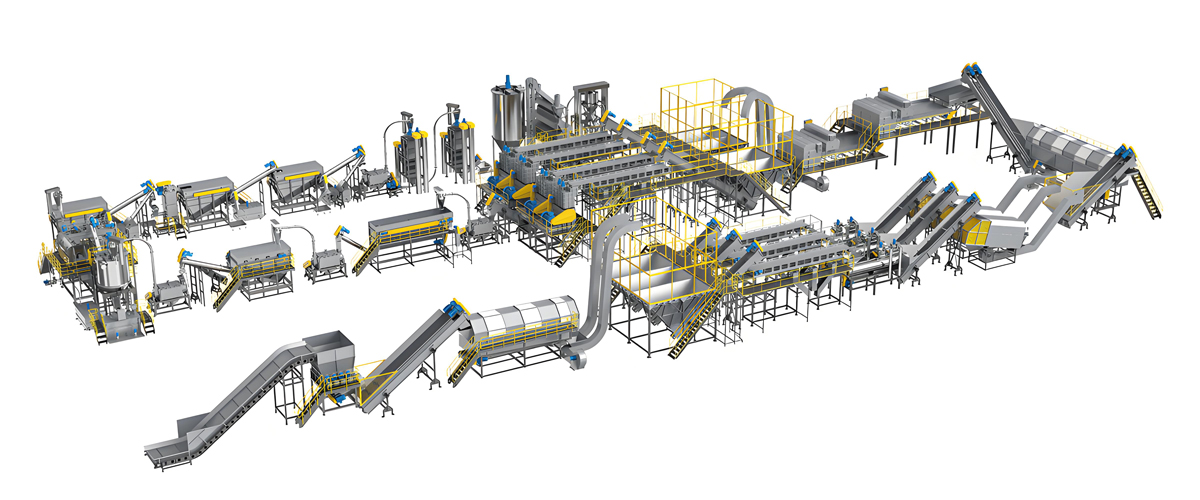
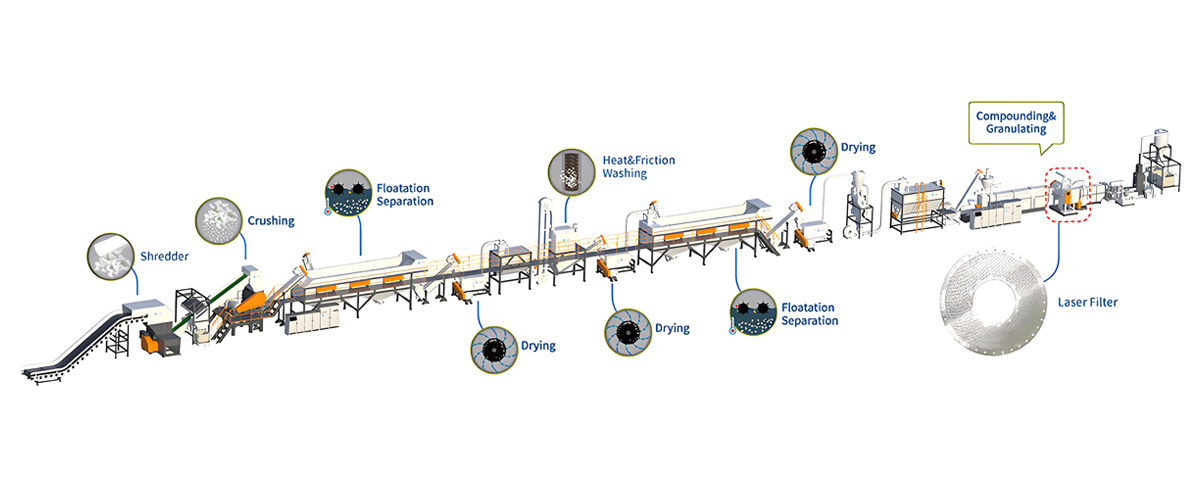
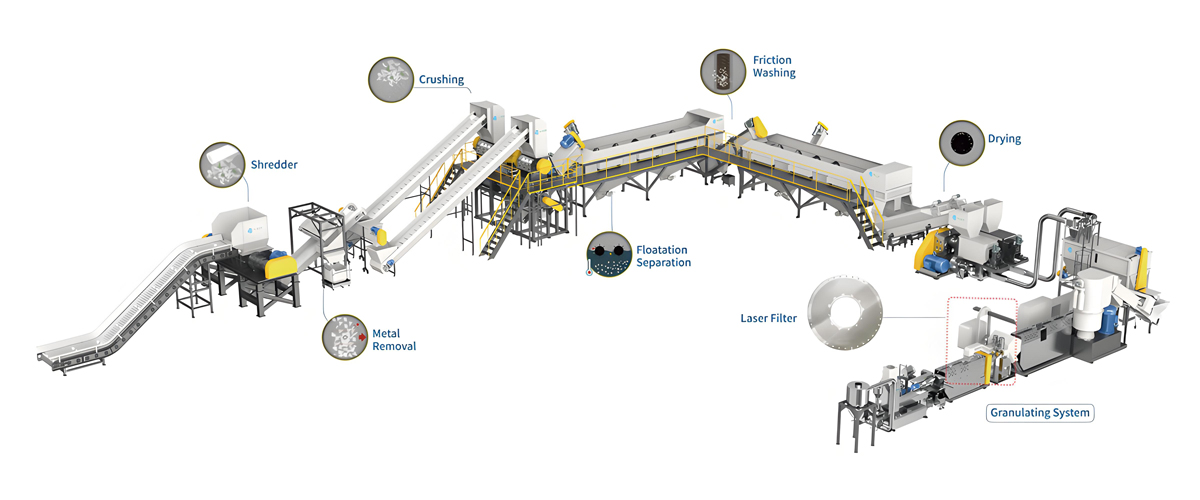
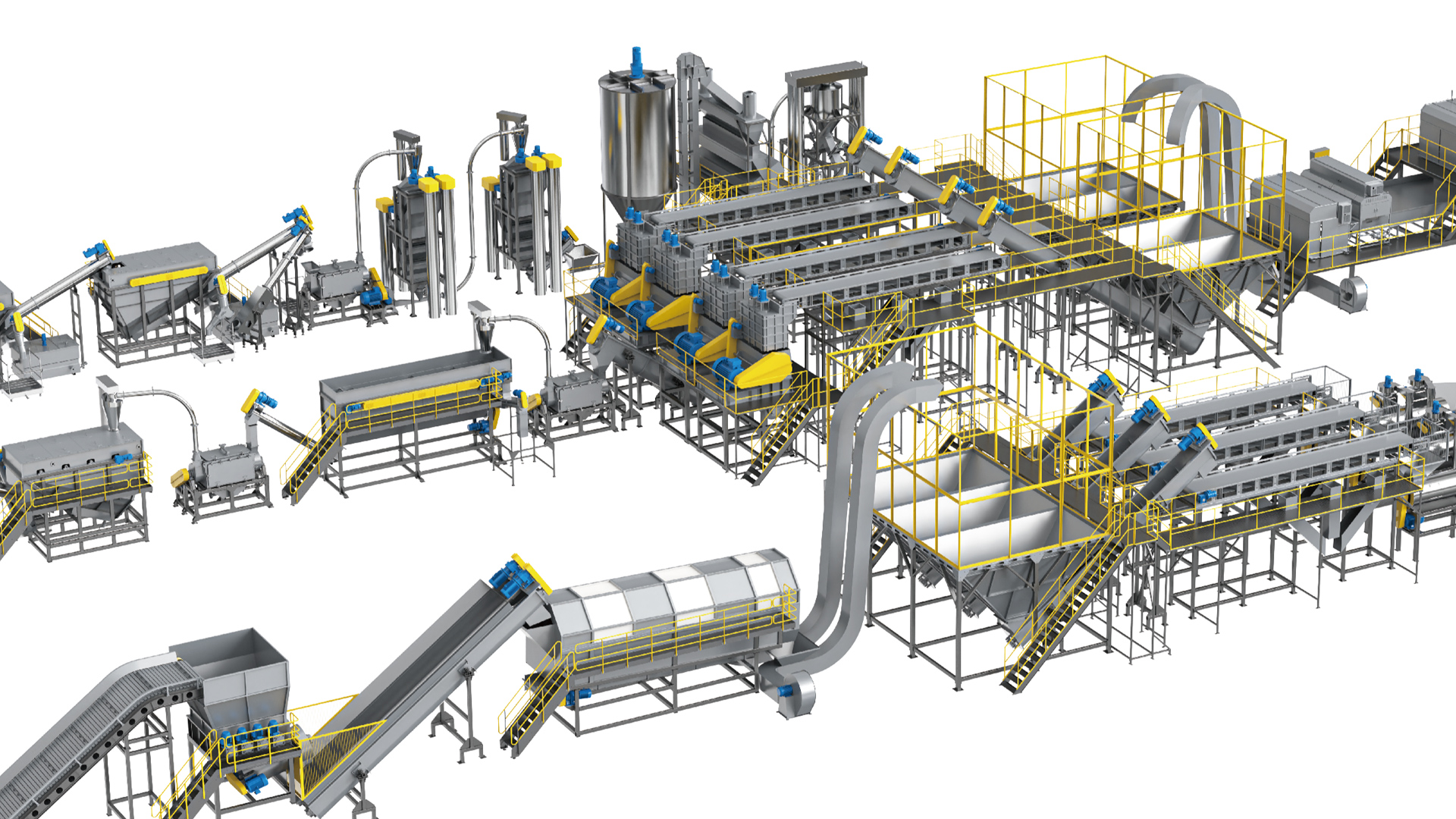
The operational sequence begins with bale breaking and manual or automated sorting to remove non PET contaminants like PVC caps which can degrade melt viscosity if left untreated. A robust Plastic Shredder often precedes the primary crusher to handle dense bales efficiently. Label removal typically occurs via a pre wash tank where hot water loosens adhesives before material enters the Plastic Crusher for size reduction into three to ten millimeter flakes. Friction washing follows, mechanically stripping residual dirt and glue from flake surfaces through high shear forces. This is critical because mechanical action alone cannot remove all chemical residues. Subsequently, caustic washing at sixty to eighty degrees Celsius with one to two percent sodium hydroxide solution dissolves remaining polymers and organic matter. Multiple counter current rinsing stages then neutralize alkalinity to prevent corrosion in downstream dryers. Centrifugal drying reduces moisture content to below one percent, ensuring stable storage and processing. Final classification via air separators or screens removes fines and heavy contaminants. Capacity balance is vital; if the crushing stage outpaces washing, bottlenecks occur, reducing throughput by up to twenty percent. A standard Food Grade PET Bottle Washing Line requires tighter control than a Hard/Rigid Bottles Crushing and Washing Line because rigid bottles often contain thicker walls and different additives that demand longer wash times. Indicative budget ranges for a complete line vary from one hundred fifty thousand to four hundred thousand US dollars depending on capacity and automation levels, though this estimate excludes installation costs and site preparation. Proper sequencing ensures consistent flake purity essential for food contact applications.
Bale breaking initiates the process, separating compressed blocks into individual units for downstream handling. Automated optical sorters then isolate clear PET from colored streams, a critical step for food grade compliance that typically adds fifteen thousand dollars to the initial investment. Label removal follows, often employing dry friction or wet agitation to strip adhesives without damaging the polymer. The Plastic Shredder reduces bottles to manageable fragments before they enter the crushing stage, where the Plastic Crusher creates uniform flakes. Friction washing removes surface contaminants through mechanical action, while caustic washing dissolves remaining glue and organic residues using heated sodium hydroxide solutions. Rinsing stages must follow immediately to neutralize alkalinity, preventing chemical degradation of the PET matrix. Hot air drying eliminates moisture content, which is vital for pelletizing efficiency later in the process. Finally, vibratory screens classify flakes by size, ensuring consistency. Capacity balancing is essential; if the sorting rate exceeds washing throughput, bottlenecks occur, reducing overall line efficiency and increasing operational costs per ton of processed material.
Sorting, Label Removal and Pre Treatment
Sorting establishes the absolute ceiling on final flake quality because downstream washing cannot correct upstream contamination. A single PVC bottle mixed into ten thousand PET units releases hydrochloric acid during extrusion, degrading melt flow index and ruining an entire batch worth thousands of dollars. Therefore, rigorous pre treatment is non negotiable. Manual sorting remains essential for removing obvious contaminants like glass or metal caps, but optical sorting systems using near infrared sensors detect polymer types at speeds exceeding ten meters per second with accuracy above ninety nine percent. This technology effectively separates PVC, PP, and PE from the PET stream before crushing begins. Label removal follows immediately since adhesive residues cause gels that clog filters in the New Generation Pelletizing Line. Hot wash tanks at eighty degrees Celsius combined with mechanical friction strip paper labels efficiently. Metal detection units protect high value equipment such as the Plastic Crusher by stopping ferrous and non ferrous contaminants before they enter the rotor. Bale opening requires specialized machinery to ensure consistent feeding rates without jamming. For a complete Food Grade PET Bottle Washing Line, operators should budget between one hundred fifty thousand and four hundred fifty thousand US dollars depending on capacity and automation level. These figures are indicative ranges for standard configurations and may vary based on local installation requirements. Skipping these steps guarantees off spec output regardless of subsequent washing intensity.
Optical sorting systems utilizing near infrared sensors represent a critical investment for high throughput facilities, often costing between 150,000 and 300,000 USD per unit. These machines identify polymer types at speeds exceeding ten meters per second, ensuring that PET is separated from PVC, PA, or PC contaminants before mechanical processing begins. Manual pre sorting remains necessary for mixed bales where optical systems cannot distinguish between colored and clear PET grades effectively. A single gram of PVC contamination can degrade the thermal stability of an entire ton of rPET, leading to yellowing and brittleness during extrusion. This renders the material unsuitable for food contact applications, resulting in rejected batches that cost processors thousands of dollars in lost revenue.
Label removal efficiency directly impacts washing efficacy because adhesive residues shield bottle surfaces from hot caustic solutions. Bale opening machines must gently separate compressed bales to prevent label fragmentation and cap entanglement within the feed stream. Metal detection units installed after bale opening protect downstream Plastic Crushers from damage caused by embedded steel staples or wire ties. Pre washing in a dedicated tank removes loose dirt, sand, and organic matter before the bottles enter the main wash zone. This preliminary step reduces chemical consumption by up to twenty percent, lowering operational expenses while ensuring that subsequent caustic washing targets only stubborn adhesives and polymers rather than bulk soil.
Crushing and Granulation
Crushing represents the critical transition from whole bottles to processable flakes within any Food Grade PET Bottle Washing Line. This stage dictates particle geometry, which directly influences washing efficiency and final purity. Operators typically employ a Plastic Shredder for initial volume reduction followed by a Precision Plastic Crusher to achieve target dimensions. Screen selection is paramount because mesh openings between ten and fifteen millimeters produce uniform flakes that allow water and detergents to penetrate effectively during subsequent agitation. If screens are too large, oversized fragments trap contaminants in crevices that mechanical action cannot reach. Conversely, overly small screens generate excessive fines that complicate separation and increase material loss.
Wet crushing is preferred for PET applications because it suppresses dust, reduces heat buildup, and lubricates cutting edges to extend knife life significantly. Dry crushing generates substantial frictional heat which can soften polymer surfaces, leading to agglomeration and degraded optical clarity. Knife wear must be monitored closely as dull blades cause tearing rather than clean shearing, resulting in irregular shapes that hinder consistent drying later. A narrow flake size distribution ensures uniform residence time in wash tanks and hot air dryers. For a complete Hard/Rigid Bottles Crushing and Washing Line setup, expect indicative equipment costs between forty thousand and one hundred twenty thousand US dollars depending on throughput capacity and automation level. This investment pays off through higher yield and reduced energy consumption during the washing phase.
The Plastic Shredder initiates size reduction by tearing rigid PET bottles into coarse fragments, preparing them for finer processing. This primary stage must handle varying wall thicknesses without jamming, ensuring consistent throughput. Following shredding, the Plastic Crusher refines these fragments into target flake sizes. Screen selection here is critical; a two millimeter mesh yields uniform flakes that maximize surface area for effective detergent penetration during subsequent washing cycles. Undersized screens create excessive fines which clog wash tanks and complicate filtration systems.
Wet crushing introduces water directly into the chamber to suppress dust and cool cutting edges, extending knife life by roughly forty percent compared to dry operation. Dry crushing avoids wastewater generation but risks thermal degradation if feed rates exceed machine capacity. Excessive heat softens PET, causing material to smear rather than shear cleanly, resulting in irregular shapes that trap contaminants. Knife replacement intervals vary with throughput, typically requiring maintenance every eight hundred hours at a cost near three hundred dollars per set. Properly calibrated flake distribution ensures downstream rinsing removes labels and adhesives efficiently, directly influencing final purity levels for food grade certification.
Washing Chemistry, Temperature and Contact Time
Effective washing chemistry is the cornerstone of producing high purity PET flake suitable for food grade applications. In a typical Food Grade PET Bottle Washing Line operators must balance caustic soda concentration, temperature and contact time to dissolve adhesives and remove label residues without degrading the polymer matrix. Standard protocols often employ sodium hydroxide concentrations between one and three percent by weight at temperatures ranging from sixty to eighty degrees Celsius. These parameters are indicative and require precise calibration based on incoming bale composition and local water hardness. Agitation intensity further influences removal efficiency ensuring thorough penetration of the chemical solution into crevices and around residual glue spots.
Detergents play a secondary but vital role by lowering surface tension and emulsifying oils while friction washing mechanically dislodges stubborn contaminants. Density separation tanks then isolate PET flakes from lighter polyolefin labels and heavier glass or metal fragments. Under washing leaves adhesive residues and label fragments that compromise intrinsic viscosity and cause yellowing during subsequent processing. Conversely over washing with excessive alkalinity or prolonged heat exposure hydrolyzes the polymer chains reducing molecular weight and weakening mechanical properties. This damage manifests as brittle flakes that fracture during pelletizing. Properly calibrated systems prevent these extremes maintaining consistent flake quality. While specific chemical dosages vary by feedstock a well designed line ensures uniform treatment across all batches. Investment in robust washing stages directly impacts downstream value. A complete Food Grade PET Bottle Washing Line typically requires an initial capital outlay ranging from one hundred fifty thousand to four hundred fifty thousand US dollars depending on capacity and automation levels. This estimate excludes site preparation and utility connections which can add significant cost. Accurate process control minimizes chemical waste and energy consumption protecting both product integrity and operational budgets over the long term.
Water Treatment and Recycling
Water management within a PET Bottle Washing Line dictates both operational expenditure and final flake purity. Dirty wash water redeposits organic residues, adhesives, and micro plastics onto surfaces during subsequent stages, severely compromising food grade compliance. Therefore, robust filtration and dissolved air flotation systems are essential to remove suspended solids before water re enters the friction washer or hot caustic tank. These units typically handle flow rates of ten to twenty cubic meters per hour, depending on line capacity. Sludge generated from these processes requires dewatering via filter presses to reduce disposal volume by up to sixty percent, lowering waste hauling fees significantly.
A closed loop water recycling system reduces fresh water consumption by seventy to eighty five percent compared to single pass operations. This reduction directly cuts utility bills and minimizes wastewater treatment plant charges. For a standard Food Grade PET Bottle Washing Line processing two thousand kilograms per hour, an indicative budget for the complete water treatment subsystem ranges from forty five thousand to ninety thousand US dollars. This estimate covers pumps, flotation cells, filtration media, and chemical dosing units but excludes installation labor and site specific civil works. Prices vary based on local environmental regulations and required effluent quality standards. Integrating these components early in the design phase prevents costly retrofits later. Consistent water quality ensures uniform cleaning efficiency across all batches, which is critical for maintaining certification requirements in rigid packaging applications. Proper maintenance of screens and air injectors prevents fouling that could otherwise disrupt the hydraulic balance of the entire washing circuit.
Drying and Moisture Control
Residual moisture is the silent killer of PET recycling quality. Even after rigorous washing in a Food Grade PET Bottle Washing Line, flakes retain surface water that ruins downstream processing. High moisture levels cause hydrolysis during extrusion, breaking polymer chains and degrading intrinsic viscosity. This chemical breakdown prevents recycled material from meeting strict food grade compliance standards required for bottle to bottle applications. Furthermore, wet flakes create steam pockets inside the extruder barrel, leading to unstable melt flow and visible defects in final pellets.
Centrifugal drying removes bulk water mechanically, typically reducing moisture to five percent or higher. This initial step is efficient but insufficient for high value output. Thermal dryers, often integrated into lines like the Hard/Rigid Bottles Crushing and Washing Line, use heated air to evaporate remaining surface and bound moisture. Operators must measure flake moisture using calibrated halogen moisture analyzers before feeding the extruder. If moisture exceeds acceptable limits, the resulting pellets exhibit yellowing and brittleness. For food grade applications, an indicative target is below fifty parts per million after drying, though this varies by resin source and contamination levels. A robust thermal drying system typically costs between fifteen thousand and forty thousand US dollars depending on capacity, offering a critical return on investment by protecting expensive pelletizing equipment.
Flake Quality Testing and Food Grade Requirements
Evaluating flake quality requires rigorous assessment of intrinsic viscosity, color uniformity, and residual contamination. Intrinsic viscosity must typically remain above 0.75 deciliters per gram for bottle grade applications to ensure mechanical integrity during reprocessing. Moisture content should stay below one percent to prevent hydrolysis during pelletizing. Label residue, often polypropylene or paper, must be minimized through effective separation in the Hard/Rigid Bottles Crushing and Washing Line stages. Visual inspection identifies discoloration caused by thermal degradation or foreign polymers.
Food grade compliance demands strict control over contaminants such as PVC, which can release harmful chlorinated compounds when heated. Traceability is essential for meeting regulatory standards set by bodies like the FDA or EFSA. Process control ensures that each batch meets specifications consistently. Sampling protocols require collecting representative material from multiple points in the line to detect localized issues. If a quality failure occurs, engineers must trace it back to specific stages, such as inadequate rinsing in the Food Grade PET Bottle Washing Line or poor sorting upstream.
Investing in precise testing equipment is critical. A basic laboratory setup for IV measurement and moisture analysis costs approximately five thousand to ten thousand US dollars, depending on automation levels. This investment pays off by reducing rejected batches and ensuring market acceptance. Consistent sampling methods, such as using a rotating splitter, prevent bias. When defects are found, immediate adjustment of wash temperatures or screen sizes in the Plastic Crusher stage can correct the issue. Without robust testing and traceability, even high quality equipment like the New Generation Pelletizing Line cannot guarantee safe output.
Diagnosing Washing Line Quality Problems
Operators frequently encounter dark specks in output flakes when inspecting material from a Food Grade PET Bottle Washing Line. These contaminants typically originate from inadequate pre sorting or circulating wash water that exceeds acceptable turbidity levels above fifty parts per million. Immediate corrective action requires upgrading manual sort stations or installing better filtration loops to remove suspended solids before they embed into the polymer surface. Residual adhesive traces present another common challenge, often stemming from insufficient caustic concentration or wash temperatures dropping below eighty five degrees Celsius. To resolve this, operators must verify sodium hydroxide levels between two and four percent and ensure heating elements maintain consistent thermal input throughout the agitation tanks. Off color flakes usually indicate mixed feedstock contamination, where non PET polymers like polyethylene enter the stream during initial crushing. Strict incoming material inspection protocols are essential to prevent such cross contamination which ruins batch value. High moisture content in final product signals drying stage inefficiency rather than washing failure. This issue often arises when centrifugal driers operate below optimal rotational speeds or when hot air exhaust systems become clogged with fines. Regular maintenance of these components ensures residual moisture stays under one percent, critical for downstream pelletizing quality. Investing in robust auxiliary equipment within a Hard/Rigid Bottles Crushing and Washing Line setup costs approximately forty thousand to sixty five thousand US dollars depending on capacity. These indicative budget ranges help plant managers plan upgrades without overcommitting capital while maintaining strict compliance standards for food contact applications.
Cost and Price Analysis of a PET Washing Line
Capital expenditure for a PET Bottle Washing Line varies significantly based on throughput capacity and regulatory requirements. For small scale operations processing one to two tons per hour, a basic Hard/Rigid Bottles Crushing and Washing Line typically requires an initial investment between eighty thousand and one hundred twenty thousand US dollars. This configuration usually includes a Plastic Shredder, a Plastic Crusher, and standard hot wash tanks. In contrast, a Food Grade PET Bottle Washing Line designed for rPET applications demands more rigorous decontamination systems, advanced filtration, and higher grade stainless steel construction. Budgets for such compliant lines generally range from two hundred fifty thousand to five hundred thousand US dollars, depending on automation levels and local environmental standards.
Operational expenses must be calculated per ton of output to determine true profitability. Energy consumption averages sixty to eighty kilowatt hours per ton, costing approximately ten to fifteen dollars at industrial rates. Water usage requires forty to fifty liters per kilogram of feedstock, with treatment adding five to eight dollars per ton. Chemicals like caustic soda and detergents contribute another three to six dollars per ton. Labor costs depend on regional wages but often add ten to twenty dollars per ton for semi automated setups. Consequently, total operating expenses frequently fall between thirty and fifty dollars per ton of clean flake.
Payback periods typically span two to four years for food grade lines due to higher rPET sale prices, which can reach one thousand two hundred dollars per ton compared to seven hundred for standard flakes. A Plastic Squeezing Machine may be added to reduce drying energy costs by fifteen percent, improving margins. These figures serve as rough budget estimates rather than firm quotes. Actual pricing depends heavily on specific configuration choices, local utility rates, and feedstock contamination levels. Engineers must model these variables precisely to ensure the chosen PET Bottle Washing Line aligns with financial goals while meeting strict quality standards for food contact applications.
Operation, Changeover and Throughput
A disciplined startup of the Food Grade PET Bottle Washing Line begins with verifying incoming bale quality to ensure contamination levels remain below five percent. Operators must precisely set caustic concentrations at two percent and maintain wash temperatures between eighty five and ninety five degrees Celsius to effectively dissolve adhesives without degrading polymer chains. Balancing conveyor speeds is critical, as mismatched rates cause bottlenecks or starvation that reduce throughput efficiency. Regular visual checks at each stage ensure flakes meet size specifications before entering the final rinse. Feed variation significantly impacts line stability; sudden spikes in label content require immediate adjustment of flotation tank air pressure to prevent sink contamination. Operators respond by slowing feed rates and increasing chemical dosing to maintain separation integrity. For food grade traceability, rigorous record keeping is mandatory. Every batch must be logged with source origin, processing parameters, and final flake analysis results. This documentation supports compliance audits and ensures full chain of custody from bale to pellet. A typical Food Grade PET Bottle Washing Line costs between one hundred fifty thousand and four hundred thousand US dollars, depending on capacity and automation level. These indicative budget ranges assume standard installation conditions and exclude local utility modifications. Consistent operation relies on trained personnel who understand the interplay between mechanical action and chemical efficacy. By maintaining strict operational discipline, facilities achieve high purity levels necessary for bottle to bottle recycling applications while minimizing downtime and maximizing long term return on investment through reliable performance metrics.
Maintenance for Washing Lines
Effective maintenance is the backbone of any reliable PET Bottle Washing Line, directly influencing flake purity and regulatory compliance. Operators must adhere to strict schedules for crushers, friction washers, pumps, filters, dryers, and conveyors. Worn crusher knives in a Plastic Crusher or Hard/Rigid Bottles Crushing and Washing Line generate oversized particles that evade separation screens, silently contaminating downstream batches. Similarly, clogged filters in circulation loops reduce water exchange rates, allowing organic residues to accumulate on flakes. This degradation often goes unnoticed until final product testing fails, resulting in costly reprocessing. Scheduled service prevents these silent failures by ensuring mechanical integrity and hydraulic efficiency. For instance, replacing knife sets every 500 operating hours maintains cut precision within two millimeters tolerance. Pump seals and impeller inspections should occur monthly to prevent pressure drops that compromise friction washer performance. Conveyor belts require regular tension checks to avoid slippage that causes uneven feeding. Neglecting these tasks risks throughput losses exceeding fifteen percent annually. While specific costs vary by region, a comprehensive annual maintenance budget for a mid scale line typically ranges from 15,000 to 30,000 US dollars, depending on wear intensity and spare part availability. This investment is modest compared to the revenue lost from rejected food grade batches. Proactive care ensures consistent output quality and extends equipment life significantly.
How Polyretec Supports Recycling Projects
Polyretec was established in 2017 with roots dating back to 2010, combining Austrian technology with Chinese manufacturing to deliver reliable plastic recycling equipment. Our engineering team guides buyers through sizing a washing line based on hourly throughput requirements and input material characteristics. We configure specific stages within the Food Grade PET Bottle Washing Line to ensure removal of adhesives, labels, and contaminants that compromise resin purity. Proper configuration is critical for meeting strict food grade compliance standards without unnecessary energy waste or water consumption.
We assist in planning upstream preparation using our Plastic Shredder and Plastic Crusher to achieve uniform particle sizes before washing. This integration ensures efficient downstream processing and reduces wear on hot wash tanks. For projects requiring rigid bottle handling, we recommend the Hard/Rigid Bottles Crushing and Washing Line to manage high impact loads effectively. Our experts calculate utility demands including steam generation and wastewater treatment capacity during the design phase.
Indicative budget ranges for a complete system typically start around 150,000 US dollars for smaller capacities, scaling up to over 500,000 US dollars for high volume food grade lines, though actual costs depend on local infrastructure and specific automation levels. We provide detailed layouts that optimize space and workflow, ensuring long term operational stability. By aligning equipment selection with precise quality targets, we help recyclers achieve consistent flake purity suitable for demanding applications while maintaining manageable operating expenses throughout the plant lifecycle.
Conclusion
Flake quality and food grade compliance depend on the seamless integration of sorting precision, washing chemistry, water treatment efficiency, and drying performance. A well configured PET Bottle Washing Line ensures contaminants are removed at each stage, preventing downstream failures that compromise purity. The Food Grade PET Bottle Washing Line exemplifies this holistic approach, delivering consistent output suitable for closed loop applications. Similarly, the Hard/Rigid Bottles Crushing and Washing Line provides robust pre treatment for mixed streams. Investing in proper configuration reduces operational waste and reprocessing costs significantly. While specific capital outlays vary by capacity, indicative budgets for complete washing systems typically range from 150,000 to 400,000 US dollars depending on throughput and automation levels. This initial investment yields long term savings through higher yield rates and reduced energy consumption. Properly balanced parameters minimize water usage and chemical inputs, directly impacting profitability. Polyretec combines Austrian engineering standards with efficient manufacturing to support customers in achieving reliable, high quality recycling outcomes tailored to their specific material streams and market requirements.