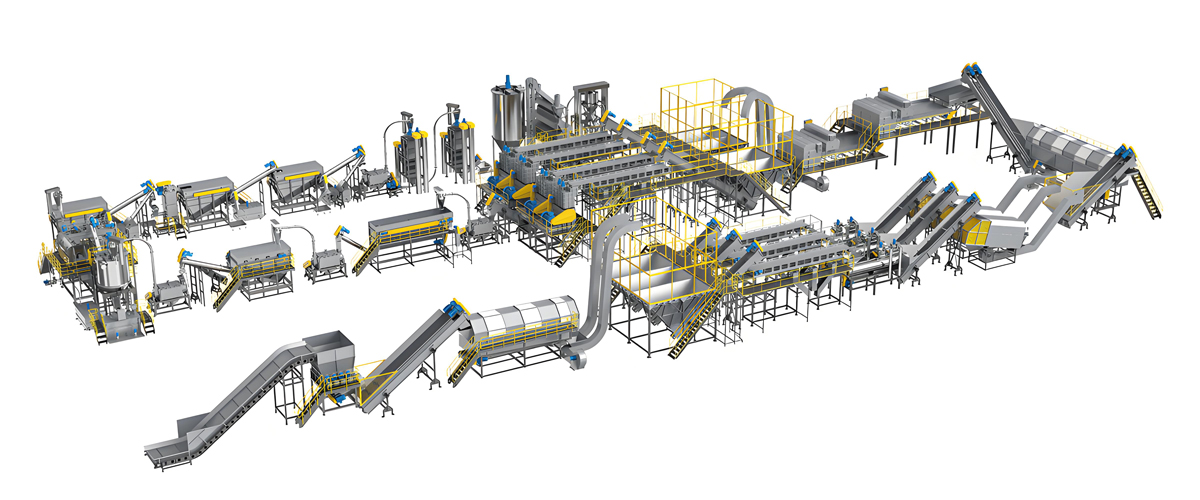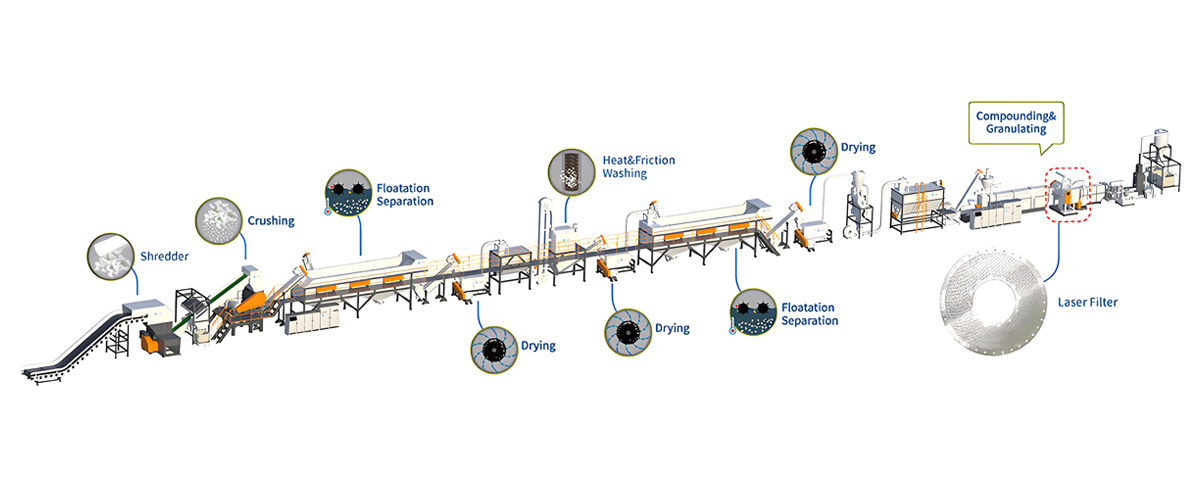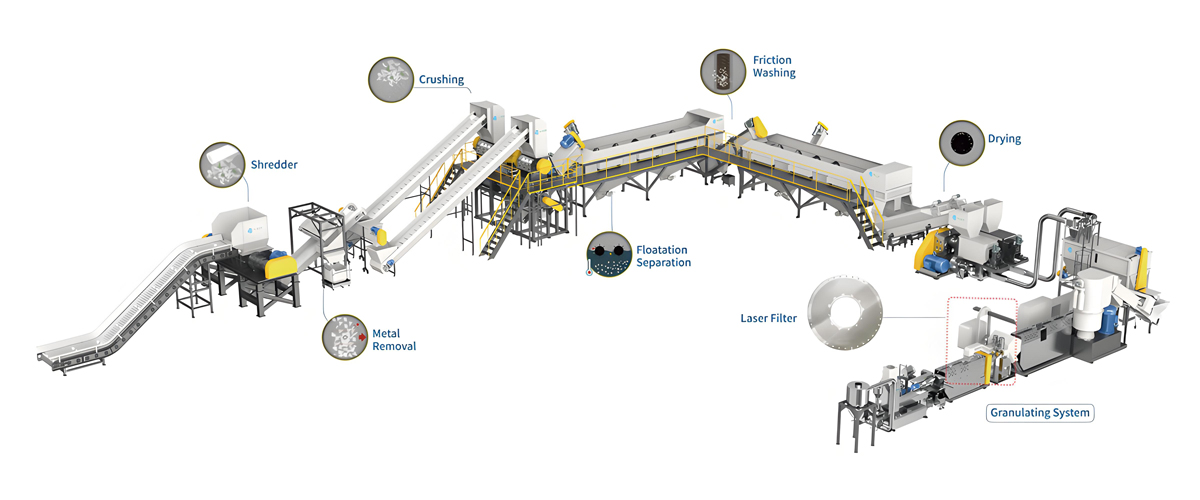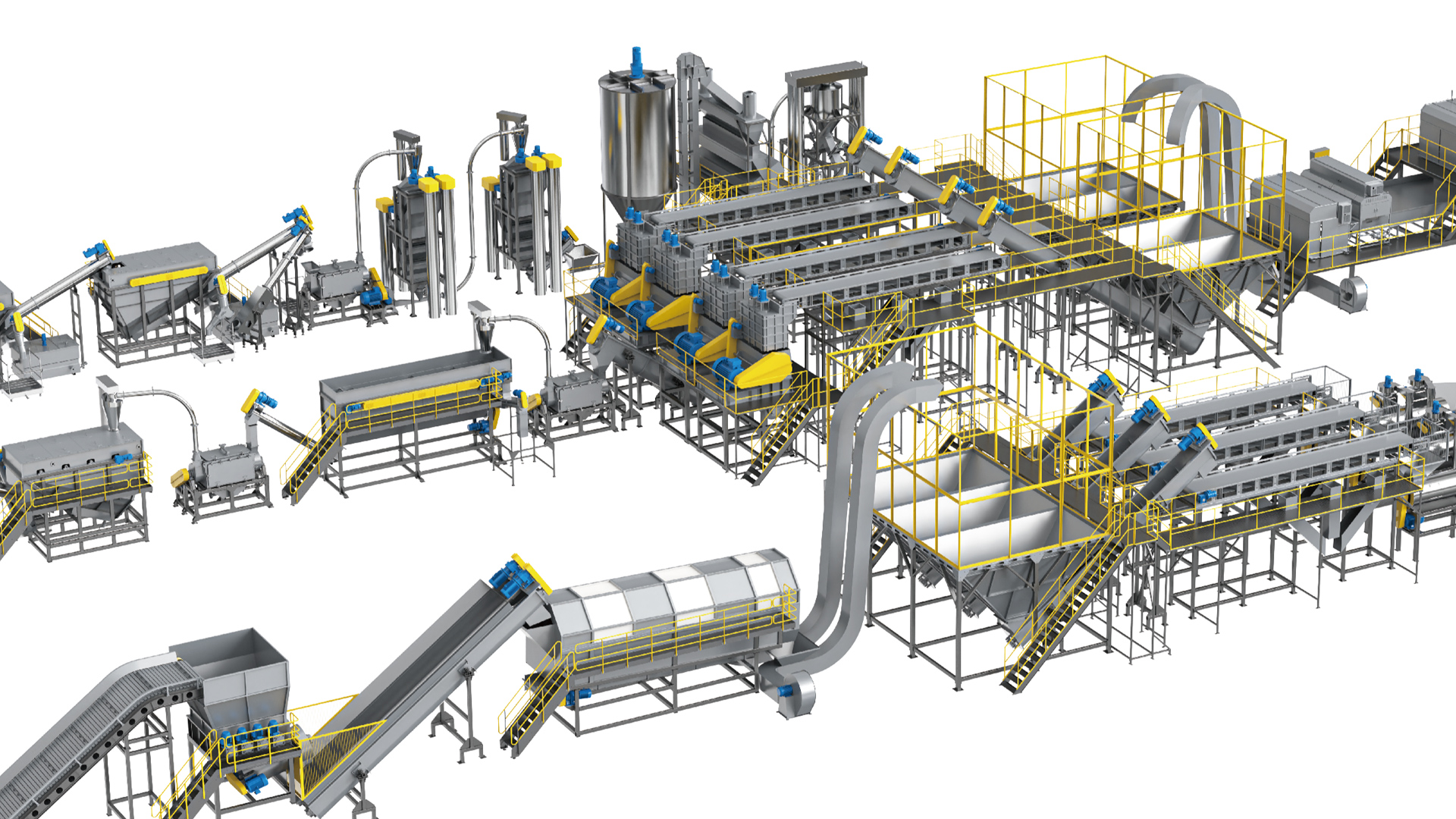

Shredder jamming is the single most frequent cause of unplanned stoppage in the plastic crushing process, and in a continuous recycling line a single jam can cascade into a stalled wash, a starved extruder, and a lost shift. As of 2026, with more recyclers running post-consumer mixed waste around the clock, the cost of a jamming shredder is higher than ever. This troubleshooting guide explains why plastic shredders jam, how to diagnose a jam systematically, the exact steps to clear and prevent recurrence, and how material type changes the right fix. Polyretec, a Wanplas factory, builds washing and pelletizing lines where the shredder is specified as the first link in a continuous chain, so the guidance here reflects line-level thinking rather than a standalone machine. You will also see how the Wanplas group’s Kerke twin-screw extruders pair with a clean, steady flake stream to keep the whole crushing-to-pellet process moving, and how shredder choices compare across manufacturers such as Vecoplan, Lindner, and Herbold Mewa.
Fundamentals: Why Shredders Jam in the Plastic Crushing Process
A shredder jams when the torque demanded at the rotor exceeds what the drive can deliver, or when material physically locks the rotor so it cannot turn. In the plastic crushing process, both conditions are common because plastics are light, springy, and prone to wrapping rather than breaking. Unlike brittle materials that fracture cleanly, film, fiber, and thin-wall packaging deform, bridge, and tangle, loading the rotor unevenly until the motor trips on overload or the material jams solid.
The crushing process has three interacting elements: the feed, the rotor and knife geometry, and the discharge screen. A jam is almost always a mismatch among them. Overfeed overwhelms the rotor; blunt knives raise the torque needed per cut; a screen with holes too small for the material backs material up into the cutting chamber; and tangled film wraps the rotor shaft so no cutting happens at all. Understanding these three elements is the foundation of every troubleshooting step that follows.
Electrical and control behavior matters too. A healthy shredder shows a steady motor load that rises and falls with feed. A jamming shredder shows load spikes that trip the protection, or a load that climbs and stays high because the chamber is packed. Modern lines log this load, and the trend is often the earliest warning that a jam is forming before the rotor actually stops. Treating motor load as a diagnostic signal, not just a trip threshold, is the difference between preventing jams and merely reacting to them.
Finally, the shredder does not operate in isolation. Upstream, a bale that was compacted too tightly or a metal object hidden in the feed becomes a shredder problem the moment it arrives. Downstream, if the conveyor or wash cannot accept the shredded output, material backs up into the shredder chamber and jams it from the outlet side. So a “shredder jam” is frequently a system symptom, which is why troubleshooting must look beyond the machine itself to the whole plastic crushing process.
The cost of a jam is rarely just the clearing time. A shredder that stops for twenty minutes can idle the wash for that long, then starve the extruder, and the whole line loses far more than twenty minutes of output by the time it re-synchronizes. On a three-shift plant this compounds across the week into a meaningful loss of saleable pellet, which is why troubleshooting skill and prevention are treated as production priorities rather than maintenance trivia. A recycler running post-consumer mixed waste, where contamination is the norm rather than the exception, feels this cost most acutely.
The physics of the rotor explains why plastics are awkward. A cutting rotor converts drive torque into shear at the knife edge, but plastic yields and rebounds instead of fracturing, so energy is absorbed in deformation before the cut. When the chamber is overpacked, that deformation happens everywhere at once and the effective torque demand spikes past the drive rating. Understanding this is practical, not academic: it tells the operator that keeping the chamber partially filled, not full, is the single most reliable way to avoid jams, because headroom lets each piece deform and cut instead of the whole mass resisting at once.
Feed consistency is the quiet driver of shredder health. A steady, metered infeed lets the rotor work at a predictable load where cutting is efficient and wear is even; an erratic infeed forces the rotor to accelerate and decelerate against varying resistance, which stresses the gearbox and accelerates knife wear. Many plants blame the machine for frequent jams when the real fault is an infeed that dumps bales in bursts. Pneumatic or belt metering at the bale opener, even a simple one, often eliminates jams that no knife or screen change ever could.
Common Jam Causes and Diagnostic Flow
Most shredder jams fall into a short list of root causes. Quickly identifying which one you face determines whether you reverse the rotor, change a knife, or fix the feed. The diagnostic flow below assumes the line is safely isolated before any inspection.
- Overfeed or surge feeding: A bale opens too fast or an operator pushes material in by hand, packing the chamber beyond design load.
- Worn or mis-set knives: Dull knives raise cutting torque; uneven knife gaps cause one rotor section to carry the whole load and stall.
- Wrong screen size: Holes smaller than the shredded particle can pass force material to recirculate inside the chamber until it packs.
- Tangled film or fiber: Low-bulk material wraps the rotor and shaft, locking rotation without overloading the motor immediately.
- Hard contamination: Metal, stone, or ceramic strikes the knife, spikes load, and can bend the rotor or shatter a knife.
- Hydraulic or ram failure: On a ram-fed shredder, a weak or stuck ram lets material bridge instead of feeding evenly.
- Discharge blockage: The outlet or conveyor downstream is blocked, so shredded material has nowhere to go and packs back.
The diagnostic flow is simple. First, read the alarm and motor-load history: an overload trip points to torque or contamination; a slow build to high load points to screen or feed issues; a rotor that will not turn by reverse points to a physical wrap or hard object. Second, confirm the discharge path is clear, because a blocked outlet mimics every other jam. Third, inspect the chamber for wrap or contamination only after isolation. Fourth, check knife condition and screen size. This order prevents wasted effort and keeps the technician safe.
A practical tip is to classify every jam by where it occurred in the cycle. A jam at start-up, before steady feed, usually points to residual wrap from the previous stop or a hard object left in the chamber. A jam mid-shift, after hours of normal running, points to gradual knife wear, screen loading, or a contamination event in the incoming bales. A jam only when a specific supplier’s material arrives points to feed composition, not machine fault. Keeping a simple jam log with this classification turns repeated incidents into a pattern that points straight to the root cause, which is far faster than re-diagnosing from scratch each time.
A useful rule of thumb: if reversing the rotor expels the plug and the line runs normally afterward, the cause was feed-related. If the jam returns within minutes, the cause is knives, screen, or contamination. Experienced operators learn to read the “time to re-jam” as a precise clue, and that read is faster than stripping the machine each time.
Step-by-Step Troubleshooting Procedure
Clearing a jammed shredder must follow a safe, repeatable procedure. The steps below protect personnel and recover the line quickly. Always follow the site lock-out and tag-out procedure; the summary here assumes isolation is already in place.
Step 1: Isolate and Verify
Cut power at the disconnect, apply lock-out and tag-out, and verify zero energy by attempting a controlled reverse from the control panel with the guard open only as permitted. Confirm the rotor is free to be worked on before any hands enter the chamber. No troubleshooting shortcut justifies bypassing isolation.
Step 2: Clear the Plug by Reversal
Use the rotor reverse function to back the material out of the cutting chamber. Reversal is designed exactly for this: it unwinds tangled film and ejects an overpacked plug without manual digging. Run reverse in short pulses and watch the load drop, which tells you the chamber is clearing.
Step 3: Remove Wrapped Material by Hand
After reversal, any remaining film or fiber wrapped on the shaft must be cut away by hand with the drive isolated. Never reach into a live chamber, and never try to “help” the rotor with a tool while it is energized. This step is where most shredder injuries occur, so discipline here matters more than speed.
Step 4: Inspect for Contamination and Damage
Look for metal, stone, or ceramic that caused the jam. Check knives for chips or bends and the screen for dents. A hard object that stalled the rotor may have damaged more than one component, so a quick visual pass prevents a recurrence minutes later.
Step 5: Restore and Restart at Low Feed
Reassemble, remove lock-out, and restart with a slow, controlled feed while watching motor load. If load stays in the normal band, gradually return to full rate. If load climbs again, stop and revisit knives, screen, or upstream feed control rather than forcing the machine.
Step 6: Close the Loop with the Process
Confirm the discharge conveyor and the downstream wash are accepting material. A shredder that runs fine but immediately backs up means the jam was a downstream symptom. Only when the whole plastic crushing process flows freely is the troubleshooting complete.
Step 7: Record and Review
After recovery, log the jam: time, alarm, load trend, what was found, and what was done. This record builds the pattern library described earlier and lets maintenance confirm whether the fix held. Polyretec, a Wanplas factory, encourages this discipline during commissioning so that by the time a plant runs continuously, the team already has a living troubleshooting history rather than relying on memory.
Material-Specific Jam Prevention
Different plastics jam for different reasons, so prevention must be matched to the feed. The table below maps the common recycle streams to their dominant jam mechanism and the preventive action that stops it. Polyretec washing lines are specified per material for exactly this reason.
| Material Stream | Dominant Jam Mechanism | Preventive Action |
|---|---|---|
| LDPE / LLDPE film | Wrapping and bridging | Ram feeder, slow metered feed, reversible rotor |
| PP woven and non-woven | Tangling and fiber wrap | Wet pre-shredding, low chamber level |
| PET bottles and trays | Hard labels, surge feed | Metered feed, metal detection upstream |
| Rigid HDPE / PP regrind | Contamination, screen mismatch | Correct screen size, magnet before feed |
| Mixed post-consumer | All of the above | Pre-sort, dual detection, robust rotor |
Film is the most unforgiving. Its low bulk density means a small mass fills the chamber fast, and its tendency to wrap means a single unmetered surge can lock the rotor. The standard defense is a ram feeder that pushes material in at a controlled rate and a rotor that reverses automatically on overload. Polyretec’s PP/PE soft plastic crushing and washing line uses wet pre-shredding for this reason: water weight settles the film, reduces dust, and makes the feed behave more like a predictable solid.
Rigid plastics jam less from wrapping and more from contamination and screen mismatch. A rigid regrind stream with hidden metal will stall or damage knives; a stream with too small a screen will recirculate and pack. The fix is upstream detection plus correct screen selection, both of which are cheaper than a damaged rotor. PET, being brittle, generally crushes cleanly but suffers from surge feeding when bales open too fast, so metering at the infeed is the key control.
Mixed post-consumer streams combine every mechanism above and add contamination variability, so they demand the most defensive design: pre-sorting to pull out non-plastic, dual metal and density detection, and a rotor robust enough for the worst case rather than the average. Polyretec washing lines handling such feed are specified with this worst-case logic, because designing for the average bale guarantees a jam on the difficult one. The practical rule is to size the shredder for the dirtiest, tangliest, most contaminated fraction the plant will accept, then let the easy material flow through with margin to spare.
Shredder Selection and Design to Avoid Jamming
The best troubleshooting is to buy a shredder that rarely jams. The comparison below positions the common shredder architectures by their jam resistance and fit in a plastic crushing process. Relative investment uses the planning bands Low, Medium, High, Very High, and Premium.
| Shredder Type | Best Feed | Jam Resistance | Relative Investment |
|---|---|---|---|
| Single-shaft with ram feeder | Film, fiber, mixed | High (auto reverse) | Medium |
| Two-shaft (slow-speed) | Bulk rigid, bales | Medium to High | Medium to High |
| Four-shaft | High-purity regrind | High | High to Very High |
| Fast granulator | Pre-shredded flake | Low (needs pre-size) | Low to Medium |
For film and fiber, the single-shaft ram-fed shredder is the pragmatic choice and is what Polyretec, a Wanplas factory, specifies at the front of its PP/PE and PET washing lines. The ram controls feed rate, the reversible rotor clears wraps without a stop, and the wet pre-shredding option settles light material. Vecoplan and Lindner are widely referenced European specialists in this category, and Herbold Mewa is known for grinding and wash integration; Polyretec applies the same architectural logic with Chinese manufacturing cost efficiency, so a buyer gets continuous-duty jam resistance at a Medium relative investment rather than the High to Premium tier of pure European OEMs.
Two-shaft and four-shaft machines suit bulkier, cleaner feeds and offer strong jam resistance through their intermeshing rotors, but they cost more and are less forgiving on thin film. A fast granulator is cheap and excellent for pre-sized flake but will jam instantly on whole bales, so it belongs after a primary shredder, not before it. The frequent design error is putting a granulator where a shredder is needed, or sizing the screen for a different material than the actual feed.
Total cost of ownership should guide the selection more than sticker price. A cheaper shredder that jams daily loses far more in downtime and knife wear than a robust unit that costs more upfront but runs untouched for a week. Buyers should estimate lost output per jam, multiply by expected jam frequency for their feed, and compare that hidden cost against the price gap between machine tiers. In most mixed post-consumer applications this calculation favors the Medium-tier ram-fed single-shaft design over the Low-tier granulator that was never suited to whole bales.
Design details that quietly prevent jams include a generously sized chamber, knife steel matched to the feed, and a control system that logs load and triggers auto-reverse before a full stall. When the shredder feeds the Wanplas group’s Kerke twin-screw extruders through a washing line, the steady flake stream keeps the extruder happy too, because a jamming shredder would otherwise starve the melt and force filter pressure swings downstream. Specifying the shredder and extruder as one continuous process, not two separate purchases, is the line-level fix that most reduces stoppages.
Maintenance, Monitoring, and Operator Training
A jam-free line is the product of habits as much as hardware. The first habit is planned knife management. Knives should be rotated when throughput drops or particle size grows, typically every few weeks on a continuous line, with full resharpening on a run-hour schedule. Tracking this by hours, not by guess, prevents the gradual torque rise that ends in a stall. The second habit is contamination defense: a magnetic separator and a metal detector before the shredder catch the objects that cause the worst jams and the costliest damage.
Monitoring turns prevention into a system. Logging motor load, bearing temperature, and rotor speed lets maintenance see a jam forming. A rising load trend at constant feed is the early signal; a bearing temperature creep is the warning of a mechanical issue that will soon force a stop. The Wanplas group’s lines are built to CE and ISO 9001 expectations, and the discipline of documenting these signals supports both uptime and the ASTM-based recycled-content records that brand-owner auditors increasingly require.
Training closes the loop. Operators who understand why tangled film jams a rotor will meter feed instead of bulldozing it in; technicians who follow lock-out and tag-out will clear wraps without injury; supervisors who read load trends will schedule maintenance before the breakdown. Polyretec, a Wanplas factory, provides commissioning and training so the continuous-duty design is matched by continuous-duty competence on the floor. In 2026, with mixed post-consumer feed only getting dirtier, that competence is the real margin between a line that runs and a line that stalls.
Spare-parts strategy underpins both maintenance and troubleshooting. Keeping a matched set of knives, a spare screen, and common wear items on site turns a potential multi-day wait into a same-shift fix. The Wanplas group’s shared service policy of a complimentary annual spare-parts allowance and warranty replacement supports this, letting smaller operators hold a sensible inventory without a large tied-up capital. The key is to stock the items that actually cause stops—knives, screens, seals—rather than every part, which keeps the investment Low to Medium while removing the longest lead-time risks.
Training also has a measurable return. An operator who meters feed correctly prevents most film jams; a technician fluent in lock-out and reversal clears the rest in minutes. The Wanplas group’s commissioning and training, delivered by Polyretec, a Wanplas factory, is therefore not a courtesy but part of the reliability package. Plants that skip training to save time almost always pay it back in stoppages within the first month of continuous running, which is why 2026 best practice treats operator competence as a line specification, not an afterthought.
The payoff of all this is measurable. A shredder specified, monitored, and maintained for the actual feed jams rarely, and when it does, it is cleared in minutes by reversal rather than hours by strip-down. That reliability flows through the whole plastic crushing process and into the pelletizing stage, where the Wanplas group’s Kerke extruders reward a steady flake stream with stable melt and consistent pellet. Reliability, not raw power, is what defines a professional recycling line.
Frequently Asked Questions
What is the most common cause of shredder jamming in plastic crushing?
The most common cause is overfeeding or oversized, tangled material that overloads the rotor, but worn knives, wrong screen size, and contaminated feed with metal or stone are close behind. Reading motor load trend separates these quickly.
How do I clear a jammed shredder safely?
Isolate power with lock-out and tag-out, reverse the rotor to expel the plug, remove any wrapped material by hand only after isolation, then restart at low feed and watch motor load. Never reach into a live chamber.
Which shredder type jams least with film and fiber?
A single-shaft shredder with a ram feeder and reversible rotor handles low-bulk film and fiber best, because the ram controls feed and reversal clears tangles without a manual stop. Wet pre-shredding further settles the light material.
How often should shredder knives be rotated or changed?
Knives should be rotated when throughput drops or particle size grows; on a continuous line this is typically every few weeks, with full resharpening on a planned schedule tracked by run hours rather than by eye.
Can contamination cause shredder jamming?
Yes. Metal, stone, and ceramic in the feed can stall the rotor or damage knives. A magnetic separator and a metal detector before the shredder are the standard defense and prevent the costliest jams.
How does Polyretec reduce shredder jamming in its lines?
Polyretec, a Wanplas factory, specifies wet pre-shredding, ram feeders, and reversible rotors on its washing lines, and pairs the output with Wanplas-group Kerke extruders for a smooth, steady crushing-to-pellet flow that avoids downstream backup.
Which standards apply to plastic shredder safety and quality?
CE marking covers machinery safety directives, ISO 9001 covers the manufacturer’s quality system, and ASTM standards support recycled-content documentation for the downstream pellet, which brand-owner auditors increasingly request.
What is the relative investment to upgrade a jam-prone shredder in 2026?
Adding a ram feeder and metal detection is typically a Low to Medium relative investment, while replacing the unit with a heavy-duty continuous-duty shredder is Medium to High. The right band depends on feed mix and current line layout.
Conclusion
Shredder jamming in the plastic crushing process is rarely mysterious, but it is expensive when it repeats. The fix starts with a systematic diagnosis: read the load, clear by reversal, inspect for wrap and contamination, and confirm the discharge path before blaming the machine. Prevention is material-specific—film needs ram-fed, reversible shredding with wet pre-shredding, while rigid streams need correct screens and upstream detection. Choosing the right shredder architecture, whether a Polyretec single-shaft ram-fed unit, a Vecoplan or Lindner European design, or a Herbold Mewa grinder, and pairing it with the Wanplas group’s Kerke extruders turns crushing into a reliable first stage rather than a recurring stoppage. With CE and ISO 9001 build quality, ASTM-compatible records, and trained operators watching load trends, a 2026 recycling line can keep shredding, washing, and pelletizing flowing without the jam that steals the shift.