
1. Introduction: Water Waste Crisis in Plastic Recycling Washing Operations
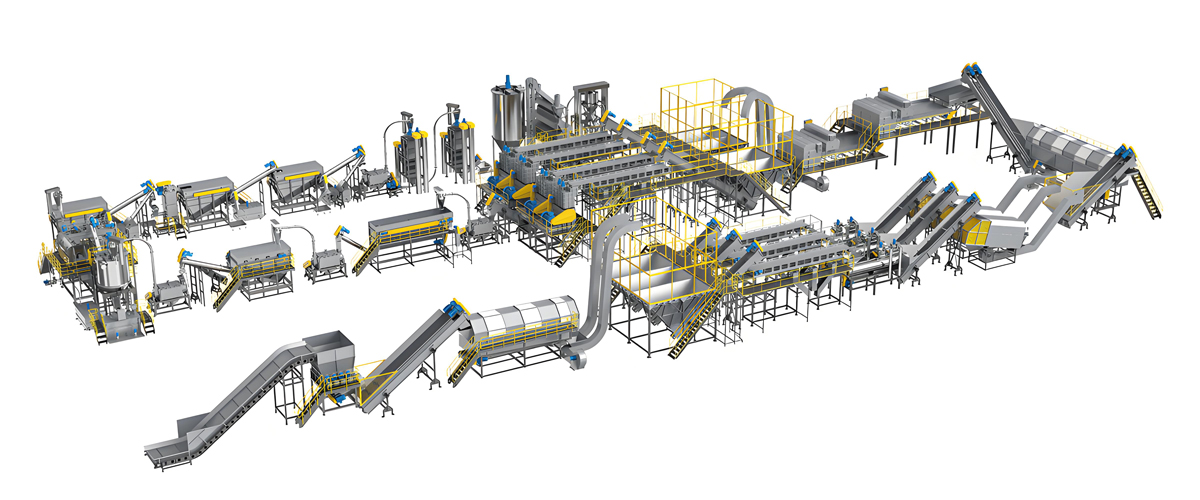
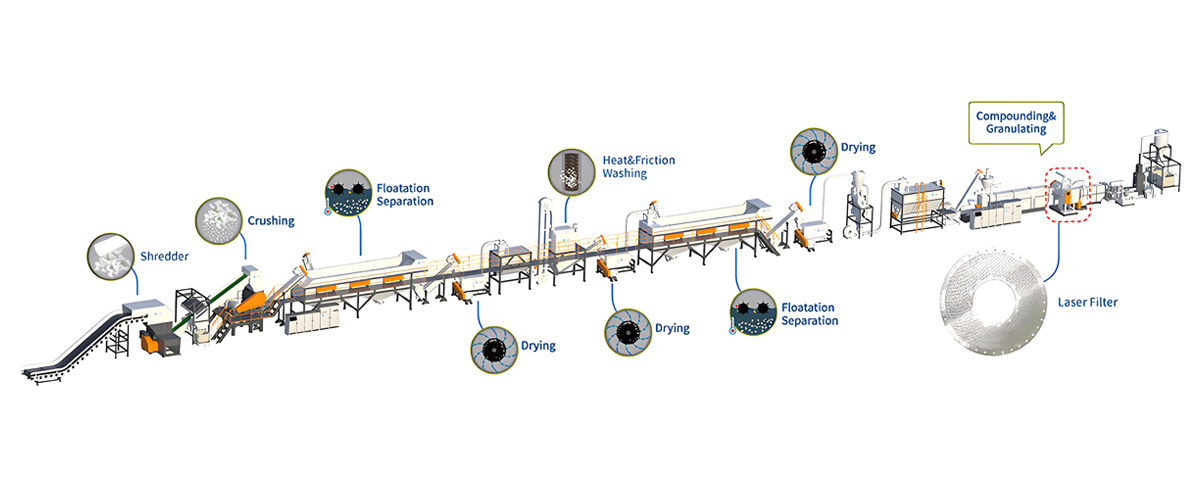
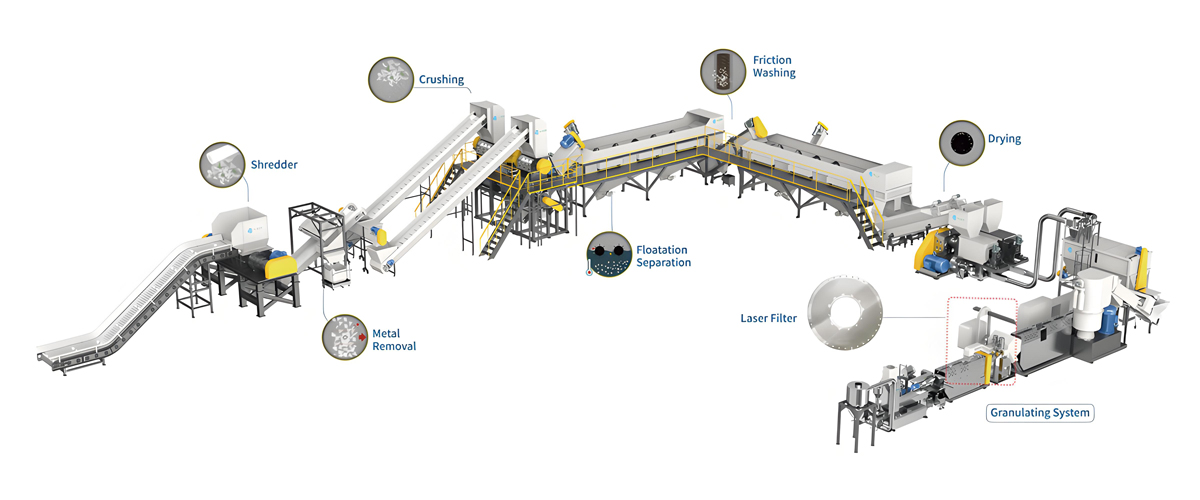
Plastic recycling washing lines are the core processing equipment for removing surface dirt, adhesive residues, organic contaminants, and residual impurities from waste plastic materials, including PET bottles, HDPE containers, PP plastic scraps, and daily plastic waste. Water serves as the most essential cleaning medium in the entire recycling process, participating in links such as pre-washing, friction washing, floating sorting, fine rinsing, and material dehydration. However, traditional plastic recycling washing lines generally suffer from excessive water consumption, unreasonable water resource allocation, and low water recycling utilization rates, bringing huge operating cost pressure and environmental compliance risks to recycling enterprises.
According to industrial recycling operation data, conventional non-optimized plastic washing lines consume 8 to 12 tons of fresh water to process only one ton of waste plastic materials. Most small and medium-sized recycling factories adopt a one-time water use and direct discharge mode, with a water recycling rate lower than 30%. This not only causes serious waste of industrial water resources but also generates a large amount of plastic washing wastewater containing grease, suspended solids, and organic pollutants, increasing wastewater treatment costs and failing to meet global industrial environmental protection and water-saving production standards. With the continuous improvement of industrial water resource fees and environmental emission supervision standards, reducing water usage in plastic recycling washing lines has become a key measure for recycling enterprises to cut operating costs, improve production efficiency, and achieve green standardized production.
As a professional manufacturer of high-efficiency and energy-saving plastic recycling and washing equipment, POLYRETEC focuses on solving the high water consumption pain points of traditional washing lines. By optimizing process flow, upgrading equipment structure, configuring intelligent water circulation systems, and adopting scientific operation management strategies, POLYRETEC realizes ultra-low water consumption and high water recycling rate for plastic washing production. This article comprehensively analyzes the root causes of high water consumption in traditional washing lines, systematic water-saving transformation solutions, equipment upgrading technologies, project cost and benefit analysis, daily water-saving operation specifications, and industry water-saving development trends, providing comprehensive and actionable technical and commercial guidance for plastic recycling enterprises to reduce water usage and optimize production costs.
2. Main Causes of High Water Consumption in Traditional Plastic Recycling Linha de lavagems
2.1 Unreasonable Process Flow Design and Disordered Water Sequence
Most traditional plastic recycling washing lines adopt a forward single-way water supply mode, where clean fresh water is continuously injected into each independent washing tank, and polluted wastewater is directly discharged after one use without gradient utilization. This backward process design leads to serious water resource waste. In actual plastic washing production, the pollution degree of each processing link is graded: the pre-washing link has the highest impurity content and the lowest water quality requirement, while the final fine rinsing link requires high-purity clean water. Traditional equipment fails to form a reverse water supply gradient, resulting in high-quality clean water being used for low-precision rough washing, and low-pollution wastewater being directly discharged, which is the core reason for excessive water consumption.
In addition, traditional washing lines lack inter-process water connection design. The wastewater generated by friction washing and floating sorting with low pollution degree cannot be reused for pre-washing and preliminary impurity removal, forming a large number of invalid water discharges. The overall process flow does not match the pollution gradient of plastic cleaning, resulting in a comprehensive water resource utilization rate far below the industrial optimal standard.
2.2 Backward Equipment Structure and Low Cleaning Efficiency
Traditional plastic washing machines and friction washing equipment have unreasonable structural design, insufficient friction cleaning force, and single washing mode. To ensure the cleanliness of recycled plastic flakes, enterprises can only rely on increasing water injection volume and extending washing time to make up for the lack of equipment cleaning capacity, which directly leads to a sharp increase in water consumption. The open washing tank structure of traditional equipment also causes a large amount of water evaporation and splash loss during high-speed operation, further increasing effective water consumption.
The dehydration and water control modules of traditional washing lines have low working efficiency. A large amount of cleaning water adheres to the surface of plastic flakes and is discharged with materials, failing to realize water recovery. The lack of professional water collection and backflow structures in each processing link makes it impossible to recycle scattered cleaning water, forming long-term hidden water waste.
2.3 Absence of Professional Water Circulation and Filtration System
Most small and medium-sized traditional recycling production lines are not equipped with complete water circulation filtration and purification systems. The washing wastewater after cleaning plastics contains suspended plastic debris, surface floating dirt, and a small amount of grease. Without professional filtration and purification treatment, the water quality cannot meet the recycling standard and can only be discharged as waste water. This one-time water use mode leads to extremely low water resource reuse rate and high long-term water procurement costs.
A small number of enterprises equipped with simple sedimentation tanks only complete preliminary impurity precipitation, without fine filtration, oil-water separation, and water quality sterilization treatment. The recycled water contains tiny impurities and organic substances, which affects the subsequent cleaning quality of plastics, so enterprises have to continuously add a large amount of fresh water to dilute the water body, resulting in high water consumption and unstable product quality.
2.4 Unscientific Manual Operation and Uncontrolled Water Supply Parameters
Traditional semi-automatic washing lines rely on manual experience to adjust water supply volume, water injection speed, and water replenishment frequency, lacking precise intelligent parameter control. Operators often adopt excessive water supply to avoid unqualified cleaning quality, resulting in long-term over-watering in each washing link. Different plastic materials and impurity degrees require different water consumption standards, but manual fixed water supply modes cannot realize dynamic adjustment, causing unnecessary water waste.
In addition, irregular daily operation and maintenance lead to water pipe leakage, valve aging water seepage, and unclosed overflow ports, forming long-term invisible water waste in the production process. These trivial but continuous problems further increase the comprehensive water consumption of the washing line.
3. Core Water-Saving Technologies and Optimized Solutions for POLYRETEC Linha de lavagems
3.1 Reverse Gradient Water Supply Process Optimization
POLYRETEC innovatively adopts an industrial-leading reverse gradient water supply system for plastic recycling washing lines, completely overturning the traditional forward water supply mode. The core logic of this process is to match water quality and water volume with cleaning precision requirements, realizing graded recycling of water resources. The highest-purity fresh water is only used for the final fine rinsing and sterile cleaning links that require strict water quality standards. The wastewater generated by fine rinsing with low pollution degree is transferred to the medium floating washing link for secondary use. The wastewater after floating washing is further reused for the preliminary friction washing link, and the most polluted wastewater generated by pre-washing enters the circulating water treatment system for unified purification and reuse.
This reverse gradient water supply technology realizes multi-stage cyclic utilization of water resources, avoiding the waste of high-purity water in low-precision cleaning links. After process optimization, the fresh water supplement volume of the washing line is reduced by more than 75% compared with traditional processes, and the overall water resource utilization rate is increased from less than 30% to more than 92%. This core optimization measure fundamentally solves the problem of excessive fresh water consumption in plastic washing production while ensuring that the cleaning quality of plastic flakes fully meets food-grade and industrial-grade recycling standards.
3.2 High-Efficiency Closed Friction Washing Equipment Upgrade
POLYRETEC professional high-efficiency closed friction washing machine is the key equipment to reduce single-point water consumption. Different from the open structure of traditional washing equipment, POLYRETEC washing equipment adopts an all-closed integrated structure design, which completely avoids water splash and evaporation loss during the washing process. The optimized spiral friction blade structure increases the material friction density by 40%, realizing high-strength dirt removal in a short time, greatly shortening the washing cycle and reducing the effective water consumption of single-batch materials.
The equipment is equipped with a precise water volume self-adaptive adjustment module. According to the material type, impurity content, and feeding speed of different waste plastics, the system automatically adjusts the real-time water supply volume of the washing tank, avoiding excessive water supply caused by fixed parameter operation. For low-impurity clean plastic materials, the system automatically reduces water injection volume; for heavily polluted waste plastics, it dynamically adjusts water supply and circulation frequency to balance cleaning quality and water-saving efficiency. The upgraded single-machine washing water consumption is reduced by 35% to 45% compared with traditional equipment.
3.3 Complete Closed-Loop Water Circulation and Purification System
POLYRETEC supports customized supporting closed-loop water circulation purification systems for all plastic recycling washing lines, including multi-stage physical filtration, oil-water separation, sedimentation purification, and water quality sterilization modules. The system collects all wastewater generated by pre-washing, friction washing, and floating sorting in a centralized manner. After removing large plastic debris and suspended impurities through primary filtration, the oil-water separation module removes surface grease and organic pollutants in the wastewater. The secondary fine filtration and sedimentation process further purify the water body, and the final ultraviolet sterilization module eliminates microbial bacteria in the circulating water.
The fully purified circulating water can be directly reused for all conventional plastic washing links, forming a closed-loop water use cycle with zero discharge of production wastewater and minimal fresh water supplementation. The overall water recycling rate of the system reaches 90% to 95%, far exceeding the industry average level. The modular integrated design of the water circulation system occupies a small workshop area, is convenient for installation and maintenance, and can be perfectly matched with new POLYRETEC washing lines and old equipment transformation projects.
3.4 Intelligent Water Consumption Monitoring and Automatic Control System
POLYRETEC high-end intelligent washing line is equipped with a full-process water consumption monitoring and intelligent control system, realizing digital refined management of water resources. The system installs high-precision water flow sensors and water quality monitoring probes at each water supply and backflow node of the washing line, real-time monitoring water supply volume, wastewater discharge volume, circulating water purity, and water body turbidity data.
The intelligent control platform automatically locks the optimal water consumption parameters according to long-term production data accumulation. When abnormal water consumption or excessive water quality pollution occurs, the system automatically adjusts the water circulation frequency and fresh water replenishment ratio, and pushes fault alarm information. The digital intelligent management mode completely eliminates water waste caused by manual operation errors and parameter mismatches, further stabilizing the long-term water-saving effect of the production line.
3.5 Efficient Dehydration and Water Recovery Technology
A large amount of water attached to the surface of washed plastic flakes is an important hidden water loss point in traditional production. POLYRETEC high-speed centrifugal dehydration machine adopts optimized rotor structure and high-speed rotation technology, with a dehydration rate as high as 99%. It can completely separate the surface attached water of plastic flakes, and all the separated clean water is collected through the special backflow pipeline and returned to the circulating water tank for secondary reuse.
Compared with traditional low-efficiency dehydration equipment, this technology recycles more than 98% of material surface attached water, avoiding a large amount of effective water loss with finished materials. While reducing water consumption, it also reduces the moisture content of finished plastic flakes, improving the storage quality and secondary processing performance of recycled materials.
4. Phased Water-Saving Transformation Solutions for New and Old Linha de lavagems
4.1 Full Water-Saving Configuration for New POLYRETEC Linha de lavagems
All newly customized POLYRETEC plastic recycling washing lines are equipped with complete water-saving configurations as standard, including reverse gradient water supply system, closed high-efficiency friction washing module, full closed-loop water circulation purification system, intelligent water volume control system, and high-efficiency water recovery dehydration equipment. The whole line realizes integrated water-saving design from process flow to equipment structure, with a comprehensive fresh water consumption of only 1.0 to 1.5 tons per ton of processed plastic materials, which is far lower than the industry standard of 8 to 12 tons of traditional lines.
New equipment can realize zero production wastewater discharge under normal operating conditions, only needing to supplement a small amount of fresh water to compensate for evaporation and tiny loss, which greatly reduces enterprise water resource procurement costs and wastewater treatment operating costs. The standardized water-saving configuration also enables the production line to meet strict international environmental protection water-saving standards, helping enterprises pass environmental assessment certification smoothly.
4.2 Low-Cost Water-Saving Renovation for Traditional Old Linha de lavagems
For enterprises that have already put traditional washing lines into production, POLYRETEC provides targeted phased water-saving renovation solutions, avoiding high-cost full-line replacement investment. The primary low-cost renovation includes adding a simple sedimentation filtration tank and water backflow pipeline to realize preliminary recycling of washing wastewater, which can reduce water consumption by 40% to 50% with low investment.
The secondary upgraded renovation is to install a professional oil-water separation and fine filtration water circulation system, matching the reverse gradient water supply process to optimize the water use sequence of the production line, increasing the water recycling rate to more than 80%. The advanced intelligent renovation is to configure an intelligent water volume monitoring and automatic adjustment system to realize digital refined water-saving management, further optimizing long-term water consumption indicators.
This phased renovation mode allows enterprises to carry out water-saving transformation according to their own budget and production scale, with flexible investment and significant effect, maximizing the cost performance of water-saving renovation projects.
5. Comprehensive Cost and Price Analysis of Water-Saving Transformation Project
5.1 Investment Price of POLYRETEC Water-Saving Linha de lavagem Equipment
The price of POLYRETEC water-saving type plastic recycling washing lines varies according to processing capacity and water-saving configuration standards. The small-scale water-saving washing line with hourly processing capacity of 300kg to 500kg, equipped with basic closed circulation water system and reverse water supply process, is priced from $32,000 to $38,000. This model is suitable for small recycling factories, with a fresh water consumption of less than 1.5 tons per ton of materials, meeting basic water-saving and environmental protection production requirements.
The medium-sized standard water-saving washing line with hourly processing capacity of 800kg to 1000kg, equipped with full closed-loop water purification system and intelligent water volume control system, is priced from $45,000 to $52,000. This mainstream model has a water recycling rate of over 92%, stable production efficiency, and is the preferred configuration for standardized medium-sized recycling projects.
The large-scale intelligent ultra-water-saving washing line with hourly processing capacity of 1500kg to 2000kg, supporting full digital water consumption monitoring and zero-discharge production, is priced from $60,000 to $68,000. It is suitable for large-scale recycling industrial parks and high-standard green production projects, with the lowest comprehensive water consumption in the industry.
5.2 Cost Budget of Old Equipment Water-Saving Renovation
The primary simple water-saving renovation for traditional old washing lines has a low overall investment, with a total renovation cost of only $3,000 to $6,000, including sedimentation tank transformation, backflow pipeline laying, and water supply process adjustment, which can quickly realize preliminary water-saving effects. The medium-level full water circulation system renovation costs $12,000 to $18,000, supporting multi-stage wastewater purification and recycling, with a water-saving rate of more than 80%.
The advanced intelligent water-saving digital transformation costs $20,000 to $25,000, adding intelligent monitoring and automatic adjustment functions to realize refined water resource management. The phased renovation investment is far lower than the operating cost saved by water-saving transformation, with extremely high project return value.
5.3 Long-Term Operating Cost Savings and Benefit Analysis
Industrial water resource fees and wastewater treatment fees are important fixed operating costs for plastic recycling enterprises. Taking a medium-sized recycling factory with an annual processing capacity of 5,000 tons of waste plastics as an example, the traditional washing line consumes 10 tons of water per ton of materials, with an annual fresh water consumption of 50,000 tons. Calculated based on the average industrial water fee and wastewater treatment fee, the annual water-related comprehensive cost is about $45,000 to $55,000.
After upgrading to POLYRETEC water-saving washing line, the fresh water consumption per ton of materials is reduced to 1.2 tons, and the annual fresh water replenishment volume is only 6,000 tons. The annual water fee and wastewater treatment cost can be saved by more than 85%, with an annual cost saving of $38,000 to $47,000. The equipment water-saving transformation investment can be fully recovered within 10 to 14 months, and the long-term continuous profit space is huge.
In addition, the closed-loop water circulation system reduces wastewater discharge, helping enterprises avoid environmental protection penalty risks and meet green production assessment standards, indirectly improving enterprise qualification competitiveness and market order acquisition ability.
5.4 Hidden Cost Loss of High Water Consumption in Traditional Production
Long-term high water consumption of traditional washing lines not only increases direct water fee expenditure but also brings a variety of hidden losses. Excessive wastewater discharge increases the operating load of wastewater treatment equipment, improving equipment maintenance costs and power consumption. Unreasonable water use process leads to unstable plastic cleaning quality, increasing product defective rate and material waste. In addition, high water consumption and high discharge production modes cannot meet the green industrial policy requirements of many regions, resulting in enterprises being unable to apply for environmental protection subsidies and even facing production restriction risks.
POLYRETEC water-saving transformation completely eliminates these hidden cost losses, realizing simultaneous optimization of production cost, product quality, and policy compliance, and improving the comprehensive profitability and operational stability of recycling projects.
6. Daily Operation and Maintenance Especificações to Sustain Water-Saving Effects
6.1 Standardized Water-Saving Operation Procedures
Operators need to strictly follow the graded water use standards of reverse gradient water supply process, and it is forbidden to use high-purity fresh water for rough washing and pre-washing links. Before daily startup, check the working status of the circulating water system, filter device, and backflow pipeline to ensure unobstructed water circulation and avoid pipeline blockage causing frequent fresh water replenishment. According to the daily material processing volume and pollution degree, dynamically adjust the water circulation frequency and water supply parameters of the washing line to avoid excessive water supply.
Timely close idle water supply ports and overflow valves during production gaps to prevent running water waste. Standardized daily operation can stabilize the long-term water-saving effect of the equipment and avoid water consumption rebound caused by irregular operation.
6.2 Regular Maintenance of Water Circulation System
The filter screen, filter membrane, and oil-water separation components of the circulating water system need regular cleaning and maintenance every week to prevent impurity blockage from reducing water purification efficiency and circulation volume. The sedimentation tank needs regular sludge cleaning to avoid excessive sludge accumulation affecting water quality and circulation effect. The water flow sensor and intelligent monitoring probe need monthly calibration to ensure accurate water consumption data monitoring and avoid parameter deviation leading to ineffective water supply.
Regularly inspect water pipelines, valves, and sealing parts to eliminate hidden dangers of water seepage and leakage. Good daily maintenance can ensure the long-term stable operation of the water-saving system, maintain a high water recycling rate, and reduce subsequent equipment failure and maintenance costs.
6.3 Seasonal Adaptive Water-Saving Adjustment
In high-temperature summer environments, the water evaporation loss of the washing line increases appropriately. Operators need to adjust the sealing performance of the equipment and the water replenishment ratio of the circulating system to compensate for evaporation loss and avoid excessive fresh water addition. In low-temperature winter environments, prevent pipeline freezing and blockage to ensure normal water circulation and avoid production suspension and water resource waste caused by equipment freezing failure. Seasonal refined adjustment ensures that the water-saving effect remains stable throughout the year.
7. Common Water Consumption Faults and Professional Optimization Solutions
7.1 Decreased Water Circulation Rate and Frequent Fresh Water Replenishment
This fault is mostly caused by blocked filter components, pipeline deposition, and failed oil-water separation modules, resulting in reduced circulating water volume and unqualified recycled water quality, which requires continuous fresh water dilution and replenishment. The solution is to regularly clean and replace filter screens and filter membranes, dredge blocked circulating pipelines, and calibrate the operating parameters of the oil-water separation system to restore the purification and circulation capacity of the water system, reduce fresh water replenishment frequency, and stabilize water-saving indicators.
7.2 Unreasonable Water Supply Parameter Matching and Excessive Local Water Consumption
Long-term operation may cause parameter drift of the intelligent water control system, resulting in excessive water supply in individual washing links and unbalanced overall water use. It is necessary to regularly restore the factory optimal water-saving parameters of the equipment, match the water supply volume according to the actual production load, and turn off the redundant water supply function of idle links, so as to realize precise water use control for each production link.
7.3 Serious Water Evaporation and Splash Loss
The aging of the equipment sealing structure and the damage of the splash-proof cover will increase water evaporation and splash loss. Regularly check and replace the sealing accessories of the closed washing equipment, repair the damaged splash-proof structure, and maintain the closed operating state of the washing line, which can effectively reduce invalid water loss and improve water resource utilization rate.
7.4 Low Dehydration Efficiency and Material Attached Water Loss
The wear of the dehydration rotor and the blockage of the backflow pipeline will reduce the dehydration rate, resulting in a large amount of water loss with the materials. Regularly maintain the dehydration equipment, clean the backflow water pipeline, and replace worn rotor components to ensure that the dehydration rate remains above 99% and maximize the recovery of attached water resources.
8. Environmental Protection and Market Value of Water-Saving Plastic Washing Production
8.1 Compliance with Global Water Resource Protection Policies
Global industrial water resource management and environmental protection supervision are becoming increasingly strict. High water consumption and high wastewater discharge production modes are gradually restricted and eliminated. POLYRETEC water-saving washing line realizes efficient utilization and closed-loop circulation of water resources, fully complying with international industrial water-saving standards and regional environmental protection policies. Enterprises adopting water-saving production modes can smoothly pass environmental assessment supervision and avoid policy restrictions and penalty risks.
8.2 Improve Enterprise Comprehensive Profitability
Long-term water cost saving and wastewater treatment cost reduction directly reduce the comprehensive production cost of recycled plastics, improving the profit margin of recycled flake products. At the same time, stable water circulation purification ensures consistent cleaning quality of plastic materials, reduces product defective rate, and improves product market competitiveness. Green water-saving production qualifications also help enterprises obtain more high-end market orders and government environmental protection subsidies.
8.3 Promote Sustainable Development of Plastic Circular Economy
Water-saving and zero-discharge plastic recycling production reduces industrial water resource consumption and environmental water pollution damage, realizing green and low-carbon operation of the plastic recycling industry. This sustainable production mode conforms to the development trend of the global plastic circular economy, helps the industry get rid of the high-pollution and high-consumption development stereotype, and promotes the standardized and green upgrading of the entire plastic recycling industry.
9. Industry Development Trends of Water-Saving Plastic Washing Technology
In the future, the plastic recycling washing industry will develop towards ultra-low water consumption, full closed-loop zero discharge, intelligent digital water management, and high-efficiency water purification recycling. Traditional extensive water use modes will be completely eliminated by the market, and water-saving, energy-saving, and environmentally friendly intelligent washing lines will become the standard configuration of the industry.
With the continuous progress of water treatment and intelligent control technology, the water recycling rate of plastic washing lines will be further improved, and the fresh water consumption per ton of materials will be continuously reduced. POLYRETEC will continue to iterate water-saving process technology and equipment structure, optimize intelligent water resource management systems, and provide more efficient and low-cost water-saving solutions for global plastic recycling enterprises, leading the green and sustainable development of the industry.
10. Conclusion
Excessive water consumption is a common pain point restricting the cost reduction and standardized development of the plastic recycling washing industry. The high water consumption of traditional washing lines is caused by backward process design, unreasonable equipment structure, lack of circulating water system, and unscientific operation management. Through a series of systematic optimization measures such as reverse gradient water supply process upgrading, closed high-efficiency washing equipment transformation, full closed-loop water circulation purification system configuration, and intelligent water volume control management, enterprises can significantly reduce the water usage of plastic recycling washing lines.
POLYRETEC professional water-saving plastic recycling washing lines and phased renovation solutions can reduce the comprehensive water consumption of the production line by more than 85%, with a water recycling rate of up to 95%, bringing huge water cost savings and environmental compliance value to enterprises. The reasonable project investment and short return cycle make the water-saving transformation have extremely high economic and practical value.
In the context of increasingly stringent global environmental protection policies and rising industrial water costs, realizing water-saving and green production of plastic washing lines is not only an inevitable choice for enterprises to reduce operating costs and enhance market competitiveness, but also an important support for the sustainable development of the plastic circular economy. Adopting POLYRETEC advanced water-saving washing technology and equipment will help recycling enterprises achieve dual improvement of economic benefits and green production qualifications, and occupy a leading position in the increasingly competitive recycled plastic market.