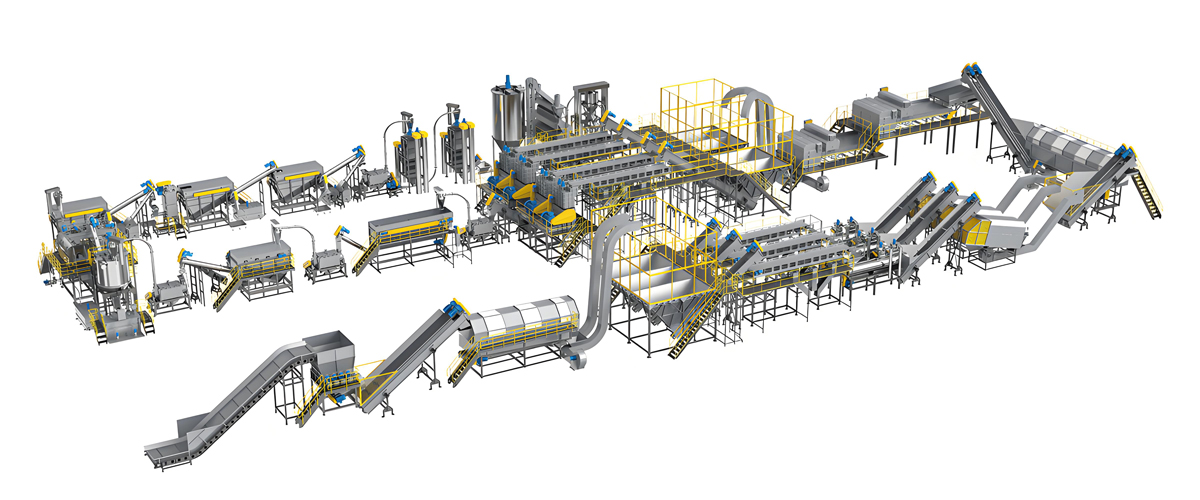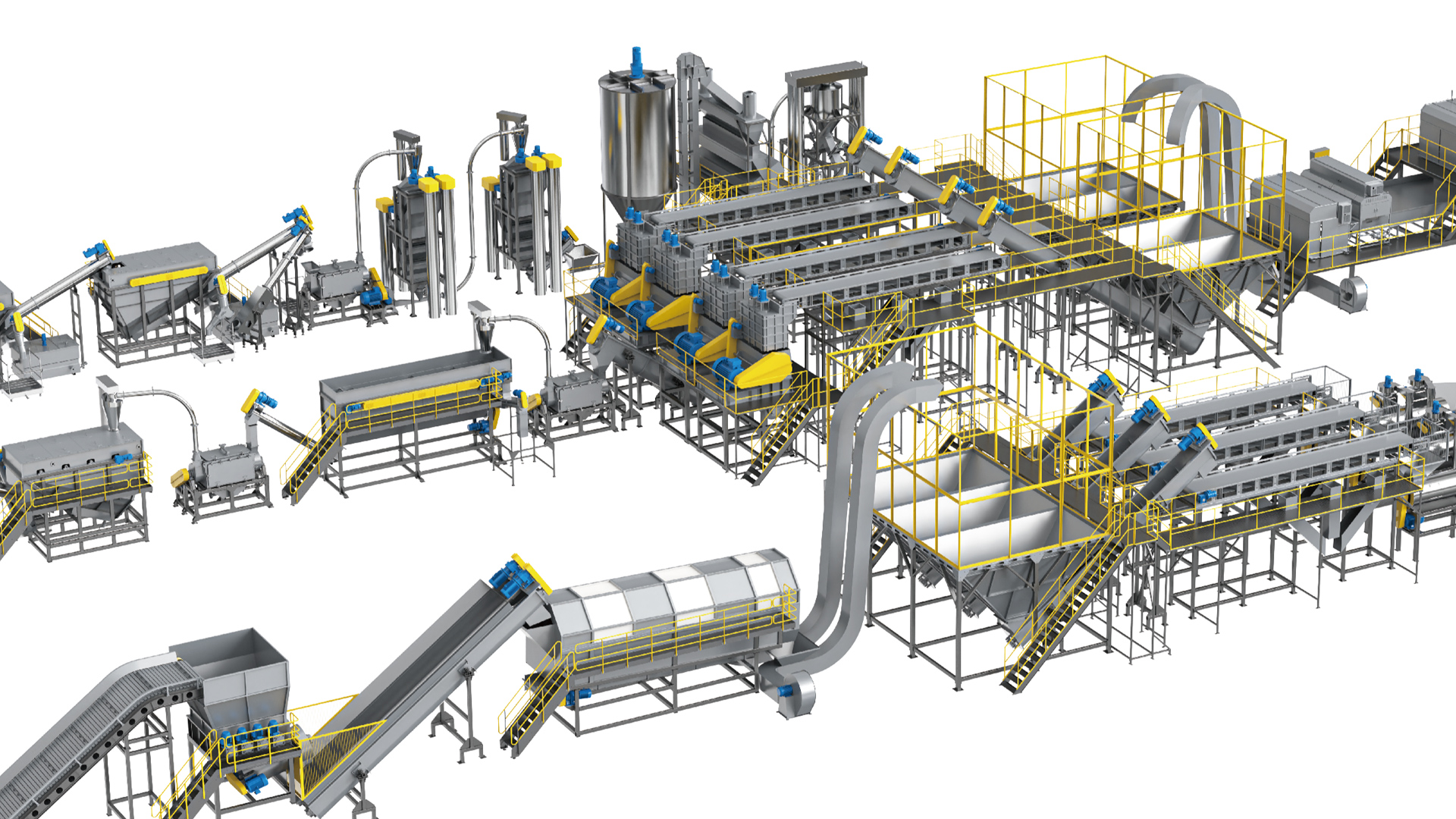

1. Introduction to Soft Plastic Linha de lavagem for Non-woven Fabric and TPE Glove Waste Recycling
1.1 Industry Background of Non-woven Fabric and TPE Glove Waste Recycling
With the rapid expansion of the medical protection, daily hygiene, and industrial auxiliary material industries, the global output of non-woven fabric waste and TPE glove waste has increased year by year. Disposable non-woven fabrics are widely used in medical masks, protective clothing, hygiene products and industrial filter materials, while TPE elastic gloves have replaced traditional PVC gloves in large quantities due to their environmental protection, elasticity and non-toxic characteristics, becoming mainstream disposable protective supplies in medical catering, industrial processing and household scenarios. A large amount of leftover materials, defective products and post-consumer waste are generated in the production and use links of these two soft plastic materials. Random disposal and landfill will cause long-term white pollution and resource waste, while incineration will produce harmful gases and damage the ecological environment.
Non-woven fabric and TPE glove waste belong to typical low-density soft plastic waste, which is different from hard plastic waste such as plastic bottles and plastic pipes. They have the characteristics of light weight, easy winding, high impurity adhesion, soft texture and difficult separation of dirt. Traditional ordinary plastic washing lines are mostly designed for hard plastic cleaning and cannot solve the core pain points of soft plastic winding, dirt residue, fiber entanglement and low cleaning rate in the recycling process of non-woven fabrics and TPE gloves. Professional customized soft plastic washing lines have become indispensable core equipment for the standardized recycling and resource regeneration of such special soft plastic waste.
As a professional manufacturer of plastic recycling and cleaning equipment focusing on soft plastic waste treatment, POLYRETEC has independently developed a targeted soft plastic washing line for non-woven fabric and TPE glove waste. After years of technical iteration and field project verification, this equipment line has perfectly adapted to the physical characteristics and impurity distribution rules of non-woven fiber waste and TPE glove waste. It solves the industry problems of incomplete cleaning, material loss, equipment blockage and low regeneration particle quality in traditional soft plastic recycling, and provides high-efficiency, energy-saving and low-cost professional recycling solutions for global plastic recycling enterprises and waste resource processing factories.
1.2 Difficulties in Traditional Soft Plastic Waste Cleaning and Recycling
In the traditional recycling and processing of non-woven fabric and TPE glove waste, ordinary plastic washing equipment has many unavoidable technical defects. First of all, soft plastic materials are easy to wind and agglomerate during crushing and cleaning, which will block the equipment rotor and sorting screen, resulting in frequent shutdown and maintenance, seriously affecting production efficiency. Secondly, the surface of waste non-woven fabrics and TPE gloves is easy to adhere to dust, oil stains, fiber debris, colloidal impurities and residual protective agent components. Ordinary water washing processes can only remove surface floating dirt, and a large number of micro impurities remain inside the material fibers, resulting in low purity of recycled materials and inability to enter high-end reuse scenarios.
In addition, traditional cleaning lines have serious material loss problems in the processing of lightweight soft plastics. In the links of floating washing, dehydration and conveying, fine soft plastic fragments are easily taken away with water flow and wind force, resulting in low material recovery rate and increased production cost. Moreover, the traditional process has a single functional module, which cannot realize classified cleaning and targeted impurity removal for non-woven fabric fiber materials and elastic TPE plastic materials. The mixed processing of two different types of waste materials leads to unstable quality of final recycled particles, which greatly reduces the economic value of recycled products.
1.3 Core Advantages of POLYRETEC Custom Soft Plastic Linha de lavagem
The POLYRETEC soft plastic washing line specially developed for non-woven fabric and TPE glove waste has exclusive customized advantages in structural design, process flow and impurity removal technology compared with traditional universal plastic washing lines. In terms of anti-winding and anti-blocking performance, the equipment adopts optimized variable-frequency crushing structure and spiral anti-winding conveying design, which fundamentally solves the problem of soft plastic fiber entanglement and equipment blockage, realizing continuous and stable operation of the production line.
In terms of cleaning precision, the equipment is equipped with multi-stage graded cleaning, high-efficiency friction washing and precise floating and sinking sorting modules, which can effectively remove surface oil stains, internal fiber impurities, colloidal residues and mixed heteroplastic materials of non-woven fabrics and TPE gloves. The cleaning purity of finished recycled materials reaches high industrial standards. In terms of cost control and resource utilization, the supporting circulating water purification system reduces water consumption, and the closed-loop material recovery structure improves the finished material recovery rate to more than 98%. With stable operation, low failure rate and strong compatibility, the POLYRETEC soft plastic washing line can process two types of soft plastic waste in a single line, with outstanding comprehensive cost performance and market applicability.
2. Complete Process Flow and Princípio de funcionamento of POLYRETEC Soft Plastic Linha de lavagem
2.1 Overall Princípio de funcionamento for Non-woven and TPE Waste Treatment
The POLYRETEC soft plastic washing line adopts a full physical closed-loop recycling and cleaning principle, without adding chemical additives, realizing green and environmentally friendly treatment of non-woven fabric waste and TPE glove waste. The whole production line takes targeted material crushing, staged impurity removal, high-strength friction cleaning, precise floating-sinking sorting, closed-loop dehydration and drying as the core process logic. According to the different material density, texture characteristics and impurity types of non-woven fabrics and TPE gloves, the equipment adjusts the operating parameters of each module in real time to realize differentiated and precise cleaning of two types of soft plastic waste.
For lightweight fiber non-woven fabric waste, the equipment adopts low-speed uniform crushing and gentle friction cleaning to avoid fiber excessive crushing and loss, and removes surface dust and bonded impurities through multi-stage circulating water washing. For elastic TPE glove waste, high-strength friction washing and targeted oil removal process are adopted to eliminate surface oil stains, residual powder and colloidal impurities, and separate mixed heteroplastic impurities through density sorting. The whole process realizes automatic assembly line operation from raw material feeding to finished material drying, ensuring continuous, efficient and standardized recycling processing of soft plastic waste.
2.2 Full Automatic Production Process Step by Step
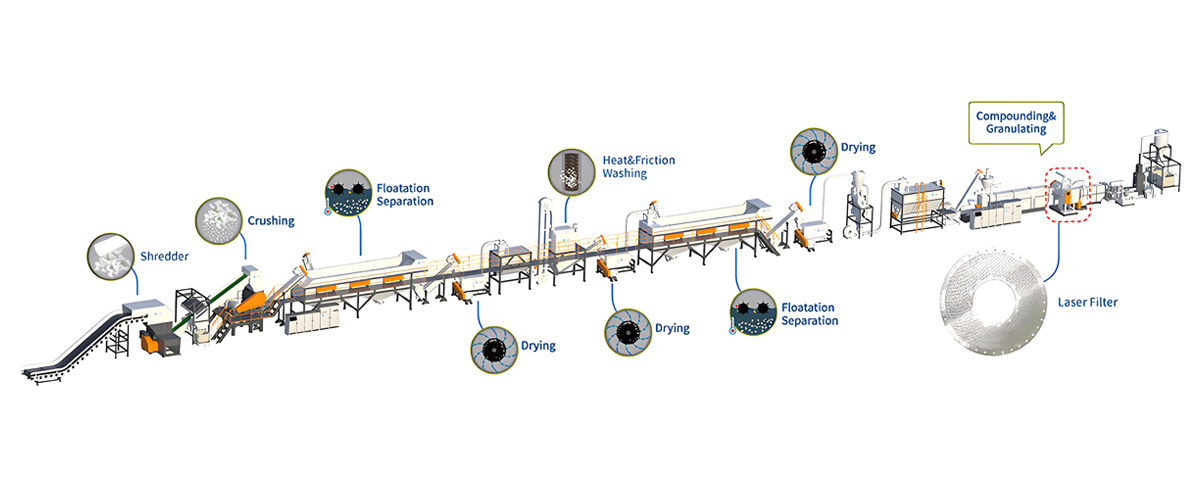
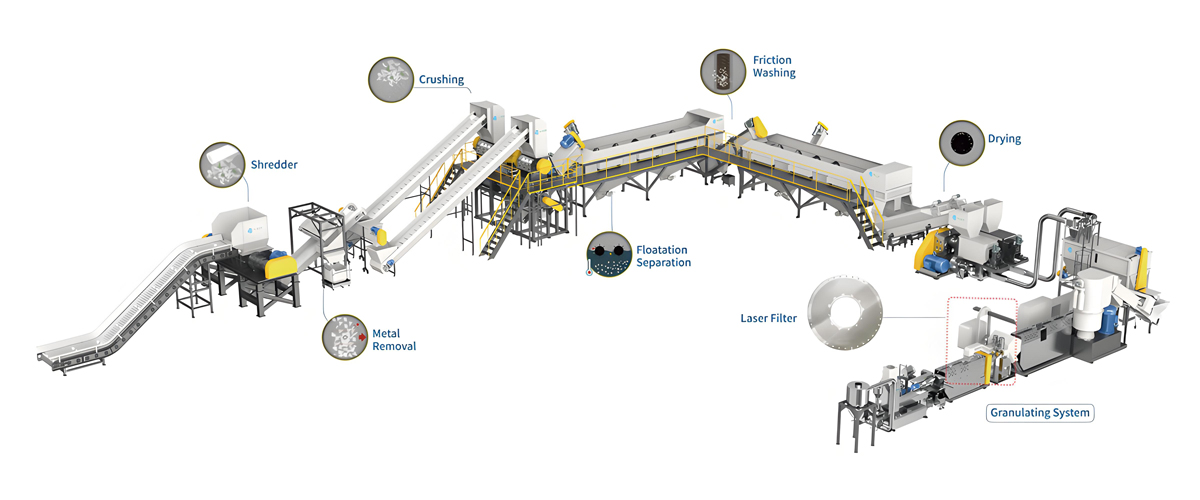
The complete processing flow of POLYRETEC soft plastic washing line for non-woven fabric and TPE glove waste includes raw material preliminary sorting, automatic feeding, targeted crushing, spiral conveying, multi-stage circulating water pre-washing, high-strength friction washing, floating-sinking density sorting, fine impurity removal, high-speed dehydration, hot air drying and finished material centralized collection. Each process module is closely connected and automatically controlled, with no manual intervention in the core processing link, ensuring stable batch processing quality and high production efficiency.
In the raw material pretreatment stage, the manual auxiliary sorting platform removes large foreign matters such as stones, metal fragments and hard plastic blocks mixed in the waste non-woven fabrics and TPE gloves to avoid damaging subsequent crushing and cleaning equipment. The sorted raw materials are automatically transported to the special soft plastic crusher through the belt conveyor. The optimized crushing cutter head structure performs uniform fine crushing according to the material characteristics, crushing the waste into uniform flaky and granular fragments suitable for cleaning, avoiding excessive fine crushing and material loss.
The crushed materials are stably conveyed to the multi-stage circulating water pre-washing tank through the anti-winding spiral conveyor. The pre-washing link removes most of the surface floating dust, loose fiber debris and water-soluble impurities to reduce the cleaning pressure of the subsequent main process. Then the materials enter the high-strength friction washing machine, which relies on high-speed rotating friction ribs to produce strong water flow friction, thoroughly strip stubborn oil stains, adhesive residues and embedded micro impurities on the surface of non-woven fabrics and TPE materials.
After friction cleaning, the materials enter the floating-sinking sorting module. According to the density difference between qualified soft plastic materials and heteroplastic impurities and sediment impurities, the equipment realizes automatic floating of effective materials and sinking of heavy impurities, completing precise material classification and impurity removal. The sorted pure materials are sent to the fine cleaning tank for secondary purification to remove residual tiny impurities, and then enter the high-speed centrifugal dehydration unit to remove surface moisture. Finally, the hot air drying system performs constant-temperature drying to reduce the material moisture content to the standard reuse range, and the finished clean materials are collected uniformly for subsequent granulation and reuse.
2.3 Core Process Parameter Standards for Stable Production
To ensure efficient cleaning and high-purity recycling of non-woven fabric and TPE glove waste, the POLYRETEC soft plastic washing line adopts fixed standardized operating parameters for batch production. The crushing particle size is stably controlled at 8-15mm, which adapts to the cleaning requirements of soft materials while avoiding excessive material loss. The rotating speed of the friction washing module is adjusted to 450-600r/min, which ensures sufficient friction cleaning strength without damaging the material matrix structure.
The floating-sinking sorting water tank maintains a constant water density and flow rate, with an impurity removal rate of more than 99% for heavy impurities and heteroplastic materials. The high-speed centrifugal dehydration speed is 2800-3200r/min, and the material dehydration rate reaches more than 98%. The constant-temperature hot air drying temperature is controlled at 65℃-75℃, which efficiently removes residual moisture without causing soft plastic material aging and deformation. The hourly processing capacity of the whole production line is 300-500kg, and the finished recycled material purity is higher than 99.2%, fully meeting the industrial reuse standards of recycled soft plastics.
3. Core Module Configuration and Functional Characteristics of POLYRETEC Linha de lavagem
3.1 Special Anti-winding Trituração de plástico mole Module
The crushing module is the core pretreatment equipment for non-woven fabric and TPE glove waste processing, and it is also the key component to solve the problem of soft material processing. The POLYRETEC customized soft plastic crusher adopts a unique staggered cutter head layout and variable-frequency speed regulation structure, which is specially optimized for flexible, easy-to-wind and elastic soft plastic materials. Different from ordinary hard plastic crushers, this equipment reduces the rigid impact force, increases the shear crushing force, and can evenly crush fluffy non-woven fibers and elastic TPE gloves without winding, blocking or sticking to the cutter head.
The equipment shell and cutter head are made of high-strength wear-resistant alloy steel, which has long service life and low wear loss. The independent dust and debris collecting structure is equipped to reduce fiber dust overflow during crushing and improve the workshop production environment. The variable-frequency speed regulation function can adjust the crushing speed in real time according to the material thickness and impurity content, ensuring uniform crushing particle size of batch materials and laying a foundation for subsequent efficient cleaning and sorting.
3.2 Multi-stage Circulating Water Pre-washing and Friction Washing Module
The multi-stage circulating water cleaning system is the core functional module to ensure the cleaning purity of soft plastic waste. The primary circulating water pre-washing tank removes loose floating impurities and water-soluble dirt through large-flow circulating water flow, reducing the load of the subsequent fine cleaning process. The high-strength friction washing module is equipped with a reinforced spiral friction structure, which generates strong relative friction between materials and water flow, thoroughly stripping stubborn oil stains, adhesive residues and embedded micro fiber impurities on the surface of TPE gloves and non-woven fabrics that cannot be removed by ordinary water washing.
The whole cleaning system adopts closed circulating water design, which can realize water recycling after filtration and purification, greatly reducing production water consumption and production cost. The graded cleaning mode of pre-washing and fine washing avoids incomplete cleaning caused by one-time washing, and effectively improves the finished product purity of recycled materials. All water tank structures adopt anti-corrosion stainless steel materials, which are durable and not easy to rust, avoiding secondary pollution of materials caused by equipment rust.
3.3 High-precision Floating and Sinking Sorting Module
Aiming at the problem of mixed impurities in non-woven fabric and TPE glove waste, POLYRETEC is equipped with an upgraded high-precision floating-sinking sorting module. Based on the density difference between soft plastic materials and impurities, the equipment automatically separates light effective materials and heavy impurities such as sediment, metal particles and hard plastic fragments. The adjustable water flow speed and sorting tank structure can adapt to the density characteristics of different batches of non-woven and TPE materials, ensuring no material loss and thorough impurity removal.
Different from single sorting equipment on the market, this module supports targeted sorting of two different soft plastic materials, can distinguish mixed non-woven fiber fragments and TPE elastic materials in mixed waste materials, and realize classified collection and separate cleaning of different materials, effectively improving the classification accuracy and reuse value of recycled materials.
3.4 High-efficiency Dehydration and Constant-temperature Drying Module
The dehydration and drying module determines the final moisture content and storage stability of recycled soft plastic materials. The high-speed centrifugal dehydrator adopted by POLYRETEC uses high-speed rotating centrifugal force to quickly separate the surface moisture of cleaned materials, with a dehydration rate of up to 98%, avoiding material mildew and deterioration caused by excessive moisture. The equipment has a self-cleaning function, which can prevent soft fiber materials from adhering to the rotating drum and ensure long-term stable dehydration efficiency.
The supporting constant-temperature hot air drying system adopts uniform hot air circulation heating technology, which evenly dries the inside and outside of the materials at a low constant temperature, completely removes residual moisture, and controls the final material moisture content below 2%, meeting the production requirements of subsequent plastic granulation and product remanufacturing. The closed drying structure avoids external dust pollution and ensures the high purity of finished recycled materials.
3.5 Intelligent Automatic Control and Safety Protection System
The whole POLYRETEC soft plastic washing line is equipped with an integrated intelligent PLC automatic control system, which realizes one-key start and stop, automatic parameter adjustment, real-time operation monitoring and fault self-detection of the whole line. Operators can view the operating status, processing capacity and equipment parameters of each module in real time through the touch screen, which is simple and efficient to operate. The system has an automatic alarm and shutdown protection function for equipment blockage, overload and material shortage, which effectively avoids equipment damage and production safety accidents.
The whole production line is equipped with closed dust and noise reduction structures, which reduces workshop dust pollution and equipment operating noise, meets environmental protection production standards, and improves the working environment of the production workshop. The modular integrated design facilitates equipment installation, daily maintenance and later function upgrading, reducing the operation and maintenance difficulty of enterprise production lines.
4. 2026 Complete Price and Project Cost-Benefit Analysis
4.1 POLYRETEC Soft Plastic Linha de lavagem Official Quotation
The POLYRETEC soft plastic washing line for non-woven fabric and TPE glove waste is divided into three configuration grades according to processing capacity and functional configuration, all professionally customized for soft plastic special waste cleaning and recycling. The standard configuration model, with an hourly processing capacity of 300kg, suitable for small-scale recycling factories and workshop-type production, has a FOB quotation of $32,800-$36,500. This configuration includes basic crushing, circulating water cleaning, floating-sinking sorting and dehydration drying modules, meeting the basic standardized cleaning needs of non-woven and TPE waste.
The upgraded high-efficiency configuration model, with an hourly processing capacity of 400kg, equipped with enhanced anti-winding crushing structure, high-precision sorting module and energy-saving circulating water system, with higher cleaning purity and more stable operation, is priced at $37,200-$41,800. This model is suitable for medium-sized plastic recycling enterprises with stable batch processing needs. The high-end intelligent fully automatic model, with an hourly processing capacity of 500kg, equipped with full intelligent parameter adjustment, automatic fault diagnosis and high-efficiency drying system, with a material recovery rate of up to 98.5%, has a quotation of $42,500-$46,900, meeting the high-efficiency and high-standard production needs of large-scale environmental protection recycling enterprises.
4.2 Complete Production Line Supporting Investment Cost
A complete POLYRETEC soft plastic washing production line needs to be equipped with professional supporting auxiliary equipment, including automatic feeding conveyor, finished material collecting machine, circulating water filtering and purifying equipment, workshop dust removal device and electrical control auxiliary system. The total investment cost of standardized supporting auxiliary equipment is $5,200-$7,500, realizing full-process automated and environmentally friendly production.
In terms of plant and installation costs, the single production line covers an area of about 60-80 square meters, adapting to conventional environmental protection workshop production standards. The equipment on-site installation, pipeline debugging, parameter calibration and production commissioning cost is $1,500-$2,200. Compared with imported soft plastic recycling cleaning lines with the same processing precision, POLYRETEC complete production line investment is reduced by more than 45%, with lower project entry threshold and more prominent cost advantages.
4.3 Long-Term Operation and Daily Maintenance Cost Budget
The POLYRETEC soft plastic washing line adopts energy-saving frequency conversion technology and high-efficiency circulating water system, with low comprehensive energy consumption and water consumption. The hourly comprehensive power consumption of the whole line is 22-26 degrees, which saves 25%-30% of energy consumption compared with traditional soft plastic cleaning equipment. The closed circulating water recycling system reduces daily water consumption by more than 80%, greatly saving enterprise water resource costs.
In terms of daily maintenance, the core components of the equipment adopt wear-resistant and anti-corrosion materials, with a service life of more than 10 years under standardized operation. The annual routine maintenance costs including cutter head polishing, sealing part replacement, water tank cleaning and electrical module calibration are only $750-$1,100. The highly automated production mode only requires 1-2 operators to complete the whole line operation, greatly saving long-term labor costs for enterprises.
4.4 Project Investment Return Cycle Analysis
Based on the medium configuration model with an hourly processing capacity of 400kg and 20-hour daily production, the daily waste processing capacity reaches 8 tons, and the monthly stable processing capacity exceeds 240 tons. The cleaned and purified non-woven and TPE recycled materials have high market value, which can be directly used for plastic granulation, new protective supplies processing and industrial auxiliary material production, with stable market demand and high unit profit. After deducting raw material auxiliary costs, equipment energy consumption costs, labor costs and maintenance costs, the project maintains a stable profit margin.
The comprehensive investment recovery cycle of the entire soft plastic washing line project is 7-9 months, with fast capital return and low investment risk. For plastic recycling entrepreneurs and environmental protection processing enterprises, the POLYRETEC soft plastic washing line has significant economic benefits and environmental benefits, which can realize the resource reuse of waste soft plastics and create stable long-term economic income for enterprises.
5. Processing Characteristics and Recycled Product Quality Standards
5.1 Targeted Processing Advantages for Non-woven Fabric Waste
Aiming at the characteristics of light weight, easy fiber falling and easy winding of non-woven fabric waste, the POLYRETEC soft plastic washing line adopts low-shear gentle crushing and multi-stage circulating cleaning technology. It avoids excessive crushing and loss of non-woven fibers, effectively removes surface dust, floating fibers and residual stains, and maintains the integrity of recycled non-woven fiber materials. The processed non-woven recycled materials have uniform texture, high purity and no impurity residue, and can be reused to produce low-density non-woven products, plastic filling materials and industrial non-woven auxiliary materials.
5.2 Professional Cleaning Advantages for TPE Glove Waste
For elastic TPE glove waste with easy oil contamination and residual powder, the equipment’s high-strength friction washing and targeted oil removal process can thoroughly strip surface lubricating powder, oil stains and colloidal impurities. The unique soft material sorting technology avoids stretching and deformation of TPE materials during processing, ensuring that the recycled TPE materials maintain good elasticity and physical properties. The purified TPE recycled particles can be used for remanufacturing elastic protective gloves, plastic soft accessories and daily elastic plastic products, with high reuse value.
5.3 Finished Recycled Material Quality Standards
The non-woven fabric and TPE recycled materials processed by POLYRETEC soft plastic washing line meet national and international industrial recycled plastic standards. The impurity content of finished materials is controlled below 0.8%, the moisture content is less than 2%, and the material purity is higher than 99.2%. The recycled materials have stable physical and chemical properties, no peculiar smell, no residual harmful impurities, and can fully meet the production and processing requirements of secondary plastic products, realizing high-value resource reuse of waste soft plastics.
6. Main Application Scenarios of Processed Recycled Materials
6.1 Secondary Production of Protective Supplies
The high-purity recycled TPE and non-woven materials processed by the washing line can be used for the secondary production of low-grade protective gloves, industrial non-woven filter cloths and hygiene auxiliary materials. It effectively reduces the raw material cost of protective product manufacturers, realizes the circular reuse of resources, and meets the environmental protection production requirements of the protective supplies industry.
6.2 Industrial Plastic Auxiliary Material Processing
Recycled soft plastic particles can be widely used in the production of industrial plastic filling materials, flexible packaging accessories, plastic cushioning materials and daily plastic soft products. The stable material performance ensures the quality of secondary products, and is widely used in packaging industry, hardware processing industry and daily consumer goods manufacturing industry.
6.3 Environmental Protection Resource Projetos de reciclagem
This washing line is suitable for centralized waste plastic recycling and processing projects in industrial parks, environmental protection enterprises and urban waste sorting centers. It realizes standardized and large-scale disposal of non-woven and TPE soft plastic waste, reduces environmental pollution, and creates economic benefits through resource regeneration, which is in line with the development direction of global green environmental protection and circular economy.
7. Common Production Faults and Professional Solutions
7.1 Material Winding and Equipment Blockage
Material winding and equipment blockage are the most common faults in soft plastic processing, mainly caused by too fast crushing speed and unreasonable cutter head gap. Long-term blockage will lead to equipment overload shutdown and reduced production efficiency. The professional solution is to adjust the variable-frequency crushing speed according to the material thickness, regularly clean the cutter head and conveying spiral, and adjust the cutter head gap to ensure uniform material conveying and crushing, completely solving the winding and blockage problem.
7.2 Incomplete Cleaning and Residual Impurities
Incomplete cleaning of materials and residual micro impurities are mainly caused by insufficient friction washing time and unqualified circulating water filtration. It will lead to low purity of finished recycled materials and affect secondary use. The solving measures are to appropriately extend the friction washing time, replace the circulating water filter element regularly, strengthen the water body purification effect, and conduct secondary fine sorting of materials to ensure thorough impurity removal and clean materials.
7.3 Low Dehydration and Drying Efficiency
Unqualified material moisture content caused by low dehydration and drying efficiency is mainly due to the blockage of dehydrator screen holes and insufficient hot air circulation. The solution is to clean the dehydrator screen regularly to ensure smooth water leakage, check the hot air fan and air duct for blockage, adjust the drying temperature and air volume parameters, and ensure that the material moisture content meets the standard.
7.4 Low Material Recovery Rate
Material loss in the cleaning and conveying process leads to low recovery rate, which is caused by excessive water flow speed and unreasonable sorting parameters. It is necessary to adjust the circulating water flow rate and floating-sinking sorting parameters, install a fine material recovery device at the water outlet, collect fine soft plastic fragments, maximize the recovery rate of effective materials, and reduce production loss.
8. Standard Operation and Preventive Maintenance Guidelines
8.1 Pre-Production Inspection and Parameter Debugging
Before the daily operation of the POLYRETEC soft plastic washing line, conduct a full-line inspection, including the operating status of the crushing cutter head, the smoothness of the conveying system, the water level and cleanliness of the cleaning water tank, the operating stability of the dehydration and drying module, and the sensitivity of the intelligent control system. Check whether there are foreign matters in the equipment to avoid equipment damage. According to the type and impurity content of the raw materials to be processed, debug the crushing speed, washing time and sorting parameters to ensure the best processing effect.
8.2 Standard Operating Especificações for Batch Production
During continuous batch production, keep the operating parameters of each module stable, avoid frequent parameter adjustment, and ensure consistent processing quality of batch materials. Real-time monitor the equipment operating status and finished material quality, timely find and solve minor faults such as material winding and water flow abnormality. Record daily production output, material purity data and equipment operation status to form standardized production files, which is convenient for production traceability and parameter optimization.
8.3 Regular Equipment Maintenance and Cleaning Standards
Clean the crushing cavity, water tank, conveying pipeline and dehydrator screen of the equipment daily to avoid residual material fiber and dirt accumulation, which will affect the subsequent processing effect. Check the wear degree of the cutter head and friction accessories every week, and replace the worn parts in time. Calibrate the intelligent control parameters and sorting accuracy every month. Conduct a comprehensive overhaul of the whole line every quarter, including electrical circuits, transmission parts and heating systems, to ensure long-term stable and efficient operation of the equipment.
8.4 Environmental Protection and Safety Production Especificações
The production workshop shall keep ventilated and clean, and the supporting dust removal and sewage circulation equipment shall operate normally to ensure that the workshop dust and sewage discharge meet environmental protection standards. Operators must receive professional equipment operation training, wear standardized protective equipment, and operate in strict accordance with the operating specifications to avoid production safety accidents. Regularly carry out safety inspection and environmental protection detection to ensure that the production line meets industrial safety and environmental protection requirements.
9. Market Prospect and Industry Development Trend
With the continuous improvement of global environmental protection policies and the vigorous development of circular economy, the waste soft plastic recycling industry has ushered in a rapid development period. Non-woven fabric and TPE glove waste, as large-output and high-value renewable soft plastic resources, have a huge market space for recycling and reuse. The market has higher and higher requirements for the cleaning purity, processing efficiency and environmental protection performance of soft plastic recycling equipment, and traditional low-efficiency and high-consumption washing lines are gradually eliminated by the market.
POLYRETEC soft plastic washing line, with its professional targeted processing performance, high efficiency and energy saving, high material recovery rate and stable operation advantages, has become the mainstream equipment for non-woven fabric and TPE glove waste recycling. In the future, the soft plastic recycling industry will develop towards higher intelligence, more energy-saving and higher resource utilization rate. POLYRETEC will continue to optimize equipment technology, upgrade soft plastic targeted cleaning and impurity removal functions, and provide more high-quality and cost-effective professional recycling equipment solutions for global environmental protection recycling enterprises, promoting the standardized and high-quality development of the soft plastic circular economy industry.
10. Conclusion
The POLYRETEC soft plastic washing line is a professional targeted recycling and cleaning equipment specially developed for the pain points of difficult cleaning, easy winding and low recovery rate of non-woven fabric and TPE glove soft plastic waste. Adopting modular integrated design and targeted soft material processing technology, the equipment solves many industry problems of traditional universal washing lines in soft plastic waste treatment, and realizes efficient cleaning, precise impurity removal and high-value resource regeneration of non-woven and TPE waste.
With its anti-winding and anti-blocking structural design, multi-stage high-precision cleaning system, energy-saving circulating water technology and intelligent automatic control function, the POLYRETEC soft plastic washing line has the advantages of high processing efficiency, high finished product purity, low operating cost and long service life. It has outstanding economic and environmental benefits in the field of soft plastic waste recycling. It is the best professional washing line equipment for mass recycling and high-value reuse of non-woven fabric and TPE glove waste, and is widely recognized and applied by global plastic recycling and environmental protection enterprises.